
Reviewed · GOVERNMENT-LICENSED GUIDE TOURS
Kyoto 8hr Private Tour with Government-Licensed Guide
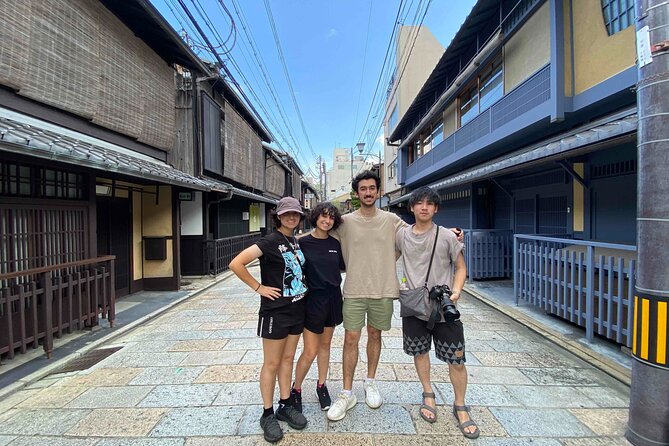
Kyoto is best understood one small piece at a time, and this private tour lets you choose those pieces. You select four to six sites from a long menu, then work with a licensed English-speaking guide to build a sensible day around your interests. That could mean temples and gardens, old neighborhoods, food stops, or a mix of all three.
I like the private format, which keeps the pace and conversation in your hands. I also like the chance to ask a guide such as Karkoo Tanigawa, Ichiro, or Shu to explain local customs instead of simply pointing out buildings. The main catch is that the $201.46 price does not include transport, meals, or most entrance fees, so your final cost will be higher.
Key points to know before booking
- Choose four to six stops: You can focus on temples, food, traditional streets, gardens, or a blend of Kyoto’s main sights.
- Licensed English-speaking guide: Your guide helps with context, route planning, and the practical challenge of moving around Kyoto.
- Eight hours on foot and by public transport: Pickup and drop-off are on foot within a designated Kyoto area. A private vehicle is not provided.
- Many famous sights are available: Options include Fushimi Inari, Kiyomizu-dera, Nijo Castle, Gion, Nishiki Market, Kinkaku-ji, and Arashiyama.
- Entrance fees are extra: Tickets, transportation, lunch, and personal expenses are not part of the tour price.
- Best for advance planners: Reserve at least two weeks ahead, and note that the experience is often booked about 69 days in advance.
A private Kyoto day, not a checklist
The strongest feature here is choice. Kyoto offers far more temples, shrines, gardens, and historic districts than you can reasonably cover in one day. Instead of being locked into a fixed route, you can tell the guide what matters to you and build the day around four to six places.
That flexibility is useful for families, first-time visitors, and repeat visitors with a clear goal. You might ask for old wooden streets and tea culture, major Zen temples, Kyoto’s best gardens, or a food-focused day through Nishiki Market and Pontocho.
You can also ask for a suggested route if Kyoto’s long list feels overwhelming. The guide contacts you after booking to discuss your interests and plan the day. That conversation matters, since the difference between a pleasant day and an exhausting one often comes down to choosing sights that sit in the same part of town.
This is a walking tour with public transportation, not a chauffeured sightseeing day. Pickup and drop-off are on foot within the designated area, and you pay your own train, subway, bus, or other transport costs. Bring a transportation card if you have one. Having local currency and a transport card ready helped one private group begin promptly, a small but useful tip in a city where station transfers can consume time.
Other tours with a licensed guide in Kyoto:
- Kyoto 6hr Private Tour with Government-Licensed Guide
★ 5.0 · 1,369 reviews - Kyoto 4hr Private Tour with Government-Licensed Guide
★ 5.0 · 629 reviews - Kyoto: Private Tour with Local Licensed Guide
★ 4.8 · 463 reviews
What eight hours really allows
Eight hours sounds generous, but Kyoto is spread out. Fushimi Inari and Arashiyama are not next door to each other, and adding northern temples or imperial villas creates more transit time. A good guide should help you resist the urge to choose six far-flung sights.
The listed stop times, often 10 or 15 minutes for many locations, are best read as planning markers rather than a promise that you will fully visit every site. Major places such as Kiyomizu-dera, Eikando, and Sanjusangendo are listed with longer suggested visits, but your actual schedule depends on the four to six places you choose.
I would plan on three or four substantial stops, plus time for walking and transport, unless your chosen sites are close together. This gives you time to look around, ask questions, take photos, and pause for food. A rushed temple parade may sound productive, but Kyoto rewards attention more than speed.
The classic eastern Kyoto route
A first-time visitor may want to build a day around Fushimi Inari, Kiyomizu-dera, Gion, and perhaps Sanjusangendo or Kennin-ji. These stops sit on the eastern or southeastern side of the city and can form a more sensible route than mixing them with Arashiyama.
Fushimi Inari-taisha is known for its long rows of orange torii gates climbing the wooded hillside. The shrine is free, and the lower section is the easiest part to include in a busy day. If you want to walk farther uphill, tell the guide early, because that changes the pace and the amount of time available elsewhere.
Kiyomizu-dera is one of Kyoto’s essential temple visits. Its hillside setting and large wooden stage give you broad views toward the city, while the approach through historic streets adds to the experience. Admission is extra. A guide is especially useful here because the temple grounds include several points of interest, and the surrounding Higashiyama streets can be confusing at busy times.
Higashiyama Ward offers old Kyoto streets, traditional buildings, and a slower connection between major sights. It is a good choice if you care as much about atmosphere and architecture as formal temple visits. The drawback is that this area is best enjoyed at walking speed, so pairing it with too many distant stops can turn the day into a march.
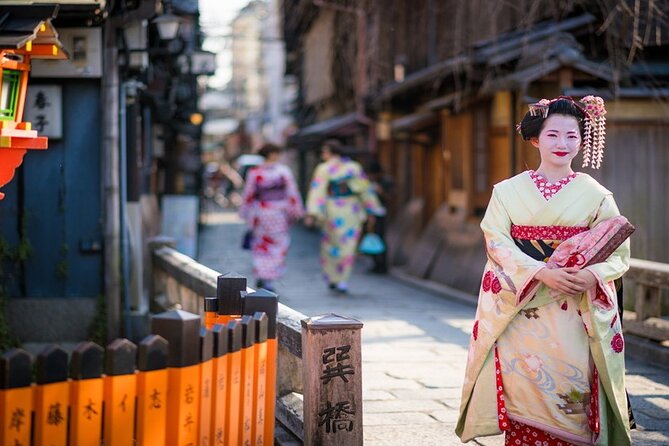
Gion is Kyoto’s famous geisha district, with narrow lanes and traditional facades. A guide can help you understand what you are seeing and avoid wandering into private areas. Treat the neighborhood as a living community, not a stage set. The tour includes the district without an entrance fee, but food, drinks, and personal purchases are extra.
Kennin-ji sits close to Hanamikoji and Shijo streets. Its spacious grounds and dry gardens make it a calm counterpoint to Gion’s narrow lanes. The listed visit is only one minute, which clearly is not enough for a meaningful stop, so select it only if your guide adjusts the timing.
Sanjusangendo is a strong choice for anyone interested in Buddhist art. The temple is famous for its 1,001 statues of Kannon, the goddess of mercy. It has a longer suggested visit than many other stops, and admission is extra. Pairing it with Kiyomizu-dera creates a temple-focused day without crossing the whole city.
Central Kyoto: castles, markets, and old dining lanes
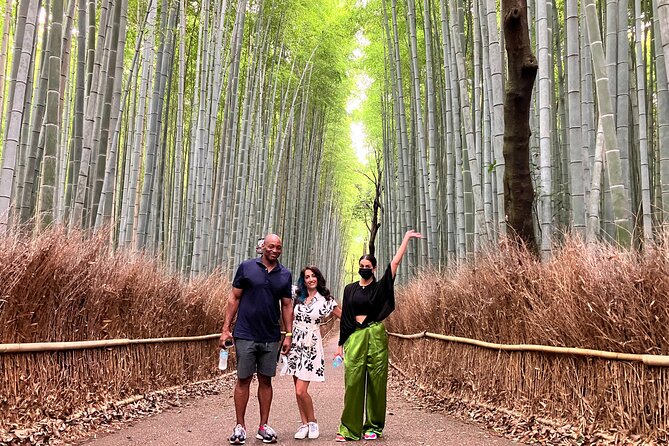
A different plan could combine Nijo Castle, Nishiki Market, Kyoto Imperial Palace, Pontocho, and Gion. These places give you a broader look at Kyoto, moving from political power to food and evening streets.
Nijo Castle was built in 1603 as the Kyoto residence of Tokugawa Ieyasu, the first shogun of the Edo period. Its importance is more than visual. You are seeing a place tied to the military government that ruled Japan for centuries. Admission is extra, and the grounds deserve more than a quick photo.
Nishiki Market runs for five blocks and is lined with more than 100 shops and restaurants. Known as Kyoto’s Kitchen, it is the natural place to ask questions about local ingredients and snack traditions. The market is narrow, so walk with care and avoid treating it like an all-you-can-sample corridor. Food purchases are your responsibility, and the time needed here depends on how much you want to eat or browse.
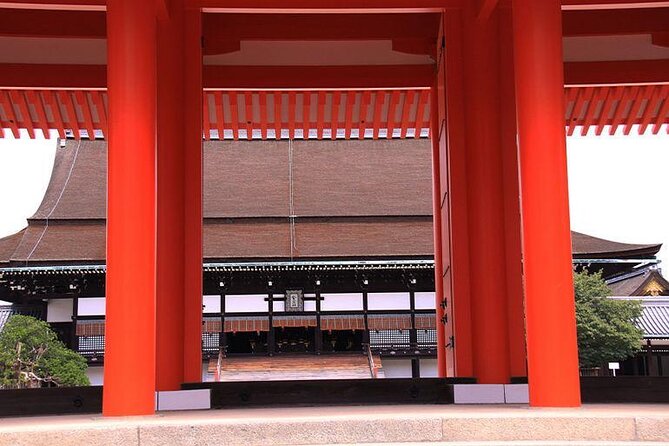
Kyoto Imperial Palace served as the Imperial Family’s residence until 1868, when the capital moved to Tokyo. Its spacious grounds offer a different scale from the tight lanes of Gion and Nishiki. Admission is listed separately, and the palace area can work well for visitors who want political and court history rather than only religious sites.
Pontocho is a narrow dining lane between Shijo-dori and Sanjo-dori, close to the Kamogawa River. It is atmospheric, especially when you are deciding where to eat, but the tour does not include dinner or restaurant charges. Ask the guide for help understanding the area, then make your own dining plans.
Same base, a different sort of day:
- PERFECT KYOTO 1-Day Bus Tour
★ 5.0 · 13,518 reviews - Kyoto: Fushimi Inari, Kinkakuji, Bamboo Grove 1 Day Bus Tour
★ 4.8 · 4,316 reviews - Kyoto: Tea Ceremony in a Traditional Tea House in Kiyomizu
★ 4.9 · 3,519 reviews - Kyoto Geisha Walking Tour: Gion District & Hidden Gems
★ 4.7 · 3,273 reviews
Northern and western Kyoto for gardens and Zen
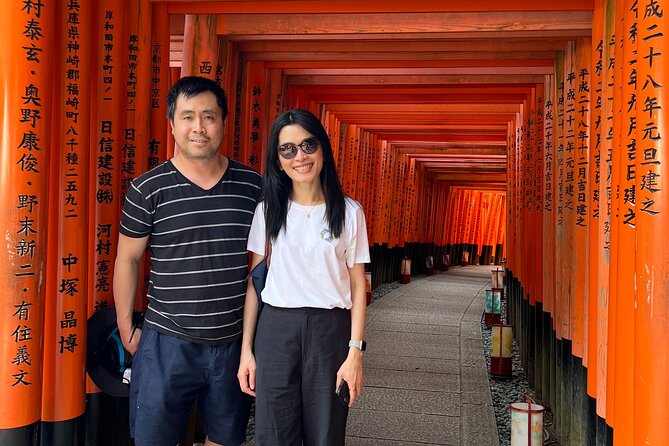
If gardens, quiet temple grounds, and classic views matter most to you, choose a northern or western route. Trying to add these sites to Fushimi Inari and southern Kyoto in one day may leave little time to enjoy them.
Kinkaku-ji, the Golden Pavilion, is one of Kyoto’s most recognizable sights. Its upper floors are covered in gold leaf, and the pavilion is reflected in the surrounding pond. Admission is extra, and the stop can be brief if you mainly want the famous view. A private guide adds value by explaining the building’s role as a former shogun’s retirement villa rather than leaving you with a quick photo.
Ryoan-ji contains Japan’s best-known rock garden. Its spare design rewards a quiet pause, not a rushed walk-through. If you like gardens and Zen ideas, pair it with Kinkaku-ji and perhaps Ninna-ji.
Ninna-ji was founded in 888 and is the head temple of the Omuro school of Shingon Buddhism. It offers a different religious setting from the better-known Zen temples. Admission is extra, and the grounds can add depth to a northern Kyoto day.
Daitoku-ji is a large walled temple complex with nearly two dozen subtemples. Myoshin-ji has a main complex and about 50 subtemples. Both are good choices for someone who wants a wider view of Zen practice, though their scale makes a short stop less satisfying.
Eikando Zenrinji is especially known for autumn colors and evening illumination. The suggested visit is 30 minutes, longer than many stops in the menu. It works well with Nanzenji, another major Zen temple at the foot of the Higashiyama mountains.
Nanzenji Suirokaku combines a major Zen temple with the striking brick aqueduct known as Suirokaku. It is a fine choice for visitors who enjoy both religious buildings and unusual engineering. Admission is extra.
Arashiyama needs its own half-day
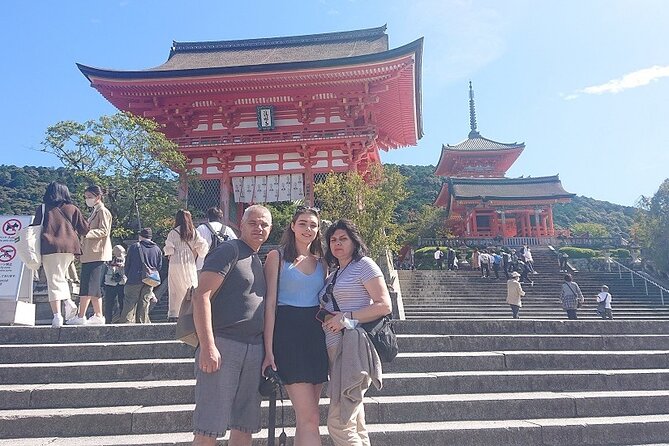
Arashiyama is tempting to add to any Kyoto plan, but it deserves room to breathe. The district sits on the western edge of the city, far from Fushimi Inari and the eastern temples. Choose it as the heart of your day rather than as a quick final stop.
Tenryu-ji is Arashiyama’s most important temple and a UNESCO World Heritage site. Its gardens and temple buildings make it a natural anchor for the area. Admission is extra.
The bamboo groves offer a memorable walk, though the path is not a private nature trail. It is a popular public route, so your guide can help you decide how much time to spend there and what else fits. The Togetsukyo Bridge, or Moon Crossing Bridge, is Arashiyama’s signature landmark and gives you a classic river view.
For a quieter addition, consider Okochi Sanso Garden, the former villa of actor Okochi Denjiro. The grounds include several gardens and buildings, with an admission charge. Jojakko-ji, Nison-in, and Gio-ji offer smaller temple settings, moss, maple trees, and a more subdued feel than the district’s headline sights.
Farther north, Adashino Nenbutsu-ji is associated with stone statues placed for the souls of the dead, while Otagi Nenbutsu-ji is known for 1,200 individually different stone figures. These are worthwhile for repeat visitors or anyone who prefers unusual religious sites over the most photographed ones.
Daikaku-ji, Katsura Imperial Villa, and Yoshimine-dera are also available, but each deserves careful route planning. Katsura Imperial Villa is admired for its architecture and garden design, while Yoshimine-dera sits in Kyoto’s western mountains. Ask the guide to confirm what can realistically fit before committing to a long cross-city route.
Northern mountains and quieter escapes
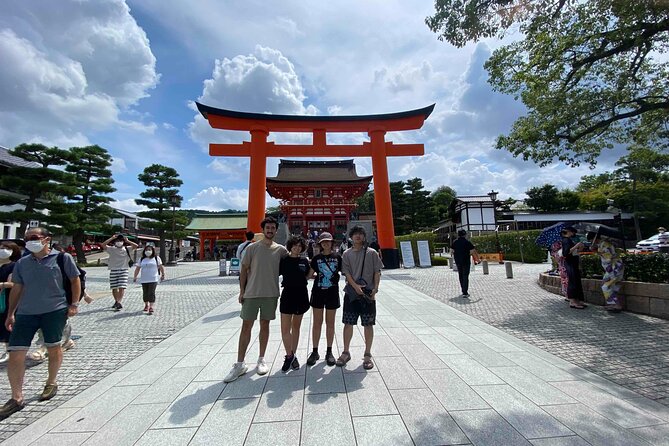
The menu reaches beyond central Kyoto to Shugakuin Imperial Villa, Kibune, Kurama-dera, and Tofuku-ji. These choices suit repeat visitors or anyone who wants a cooler, greener day away from the main sightseeing corridors.
Shugakuin Imperial Villa was built in the 17th century by Emperor Gomizuno and is managed by the Imperial Household Agency. Its three villa sections make it a special choice, but it is not a casual add-on to a central city route.
Kibune developed around Kifune Shrine in a forested northern valley. Kurama is a rural town less than an hour from central Kyoto and is known for Kurama-dera and a hot spring. These places can give you a more rural side of Kyoto, but the extra transport time means you should select them as the main purpose of the day.
Tofuku-ji, in southeastern Kyoto, is especially known for autumn colors. It can pair well with Fushimi Inari because of its location, though seasonal beauty depends on timing. Admission is extra.
Price, group size, and practical value
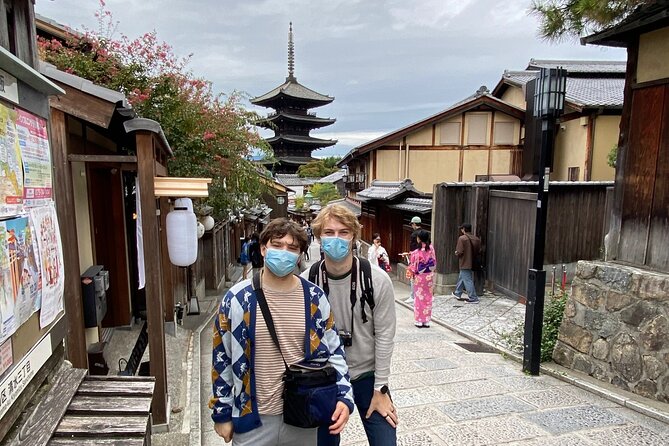
At $201.46 per person, this is not a budget walking tour. It can offer fair value for a group that wants private guidance, a custom route, and the freedom to ask questions throughout the day. The price is easier to justify when several people share one guide and group discounts apply.
A private group of six adults has used the format successfully, and the guide was able to adjust to the group. That is one reason this experience makes more sense for families or friends than for a solo visitor watching every dollar.
Budget separately for transportation, entry fees, lunch, and personal purchases. You cannot combine separate tour groups, and no private vehicle is included. Service animals are allowed, most people can participate, and the route is near public transportation, but this remains an eight-hour walking day. Wear comfortable shoes and be honest about how much walking your group wants.
The cancellation terms are simple: cancel at least 24 hours before the local start time for a full refund. Changes made inside that window are not accepted.
Who should book this Kyoto tour?
Book it if you want a guide who can connect Kyoto’s temples, streets, food, and customs to your own interests. It is especially useful for a first visit when the city’s long list feels confusing, and for families who need a flexible pace.
It also suits repeat visitors who would rather explore Daitoku-ji, Kibune, Otagi Nenbutsu-ji, or a specific garden than repeat the standard route. Guides including Karkoo Tanigawa, Ichiro, and Shu have led private days that put personal attention first.
Skip it if you prefer to move entirely on your own, already understand Kyoto’s transport system, or want a fixed-price package with tickets and a vehicle included. You will pay extra for many sights, and poor route choices can waste time.
FAQ
How long is the Kyoto private tour?
The tour lasts approximately eight hours.
How many places can I choose?
You can customize the day around four to six sites from the available list.
Is transportation included?
No. Transportation fees are separate, and the tour does not include a private vehicle. Pickup and drop-off are on foot within the designated Kyoto area.
Are entrance fees included?
Most entrance fees are not included. Guide entry fees are covered only for sights listed in the tour information.
Is this a private experience?
Yes. Only your group participates, and separate tour groups cannot be combined.
How far in advance should I reserve?
You should reserve at least two weeks in advance. The experience is often booked about 69 days ahead, so earlier planning is sensible for a particular date.
Just added in Kyoto
- Private Cooking Class Udon in Kyoto Japan★ 5.0 · 23 reviews
- Your Private Vacation Photography Session In Kyoto★ 5.0 · 110 reviews
- Kyoto: Zen Meditation at a Private Temple with a Monk★ 5.0 · 25 reviews
- Private Pewter Sake Cup Experience with a Kyoto Artisan★ 5.0 · 31 reviews
- Kyoto Wagashi(Japanese sweets) Cooking Class near Fushimiinari★ 5.0 · 60 reviews
- Kyoto:Family-Friendly Kimono & Yukata Experience at WARGO★ 5.0 · 147 reviews
- Private Guided Traditional Buddhist Cooking in Japan★ 5.0 · 16 reviews
- Kyoto: Gion Geisha District & Sake-in-Hand Walking Tour★ 5.0 · 37 reviews
Government-Licensed Guide Tours, compared.
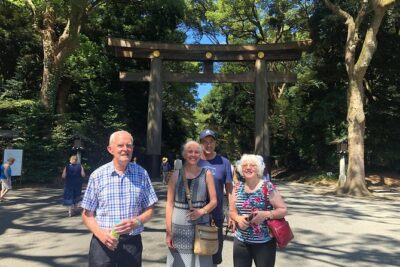
Tokyo 6hr Private Tour with Government-Licensed Guide
Read our review →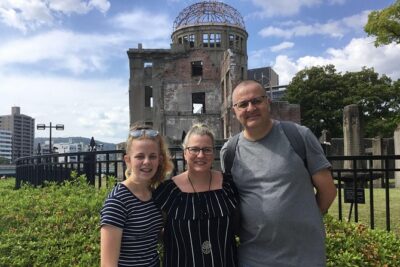
Hiroshima / Miyajima Full-day Private Tour with Government Licensed Guide
Read our review →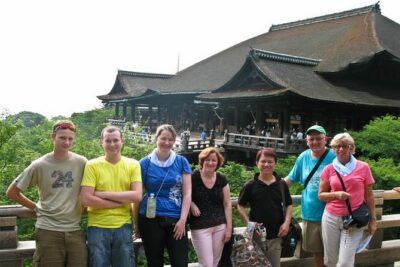
Kyoto 4hr Private Tour with Government-Licensed Guide
Read our review →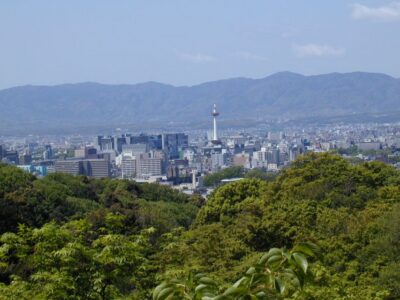
Hiroshima City 4hr Private Walking Tour with Licensed Guide
Read our review →
Private Kyoto Tour with Licensed Guide & Vehicle (Max 15 persons)
Read our review →
Nikko Full-Day Private Tour with Government-Licensed Guide
Read our review →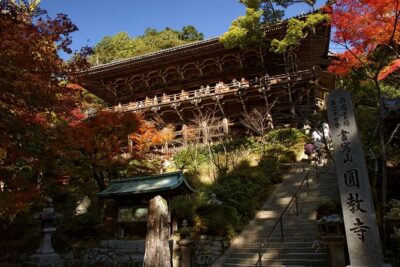
Himeji Half-Day Private Tour with Government-Licensed Guide
Read our review →Browse the lists this tour appears in