
Reviewed · GOVERNMENT-LICENSED GUIDE TOURS
Kyoto Early Morning Private Tour with Government-Licensed Guide
Kyoto is at its best before the day gets busy. This four-hour private tour lets you begin as early as 6:30 or 7 a.m., when Fushimi Inari’s red gates and Kiyomizu-dera’s temple grounds can feel calm rather than crowded. You choose two or three places, then explore with a licensed English-speaking guide.
I like the custom route and the personal attention. Guides such as Rie, Yasu, Tomy, Kay, and Mayumi have helped guests focus on temples, photography, food, local customs, or simple Kyoto orientation. I also like the early start, which can make a major difference in Kyoto.
The main catch is the four-hour limit. You cannot sensibly cover all 34 possible stops, and the price does not include transportation, meals, or most entrance fees. This works best as a focused introduction, not a complete Kyoto sightseeing day.
Why this early start matters in Kyoto
Kyoto’s famous places fill quickly. Fushimi Inari, Kiyomizu-dera, the Arashiyama Bamboo Forest, and Kinkaku-ji are all popular, and the difference between an early visit and a late-morning visit can be striking.
Starting around 6:30 or 7 a.m. gives you a quieter walk and cooler air. One guide began at 6:30 and took the group to Kiyomizu-dera and Fushimi Inari before the crowds arrived. Another guide led a group through four locations from 7 to 11 a.m., then left them at a favorite sushi restaurant for lunch.
The early hour also gives you a better chance to hear your guide without competing with large groups. At a shrine or temple, that matters. A short explanation of a gate, prayer ritual, garden, or architectural detail can make the visit far more rewarding than simply collecting photographs.
This is a private activity, so only your group participates. That makes it easier to ask questions, slow down for photographs, or change the plan if one attraction is too crowded.
The tour is flexible, but only within four hours
You are asked to choose two or three sites from a long list. The possible choices range from central Kyoto sights to places in Arashiyama, the northern mountains, and the western hills.
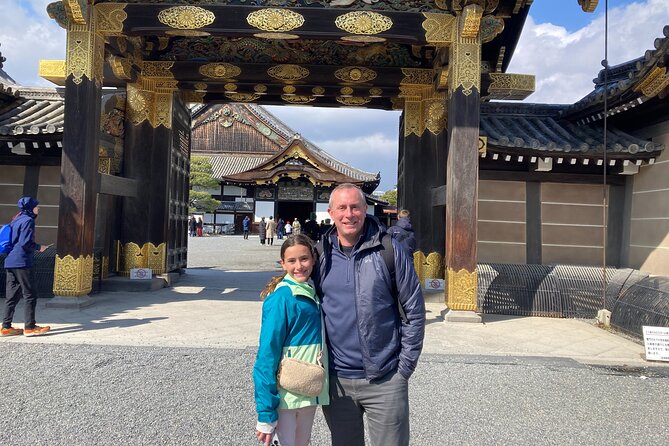
That range is useful, but it can also create unrealistic expectations. Fushimi Inari and Kiyomizu-dera can work together. Fushimi Inari and Arashiyama usually require more planning and public transportation. Adding Kinkaku-ji, Ginkaku-ji, or a distant imperial villa may leave little time for actual sightseeing.
I would choose your priorities before meeting the guide. A good plan might be:
- First visit to Kyoto: Fushimi Inari and Kiyomizu-dera
- Historic streets and food: Gion, Higashiyama, and Nishiki Market
- Classic photographs: Fushimi Inari and Arashiyama
- Zen temples: Ryoan-ji and Kinkaku-ji
- A quieter morning: Ginkaku-ji and Nanzen-ji
- Family-friendly variety: Arashiyama, the Bamboo Forest, and Togetsukyo Bridge
The guide can suggest a route, but you should tell them what matters most. Some guides have helped with first-day orientation, while others have focused on photography, Japanese culture, or food.
Other tours with a licensed guide in Kyoto:
- Kyoto 6hr Private Tour with Government-Licensed Guide
★ 5.0 · 1,369 reviews - Kyoto 4hr Private Tour with Government-Licensed Guide
★ 5.0 · 629 reviews - Kyoto: Private Tour with Local Licensed Guide
★ 4.8 · 463 reviews
Fushimi Inari, where the red gates are only the beginning
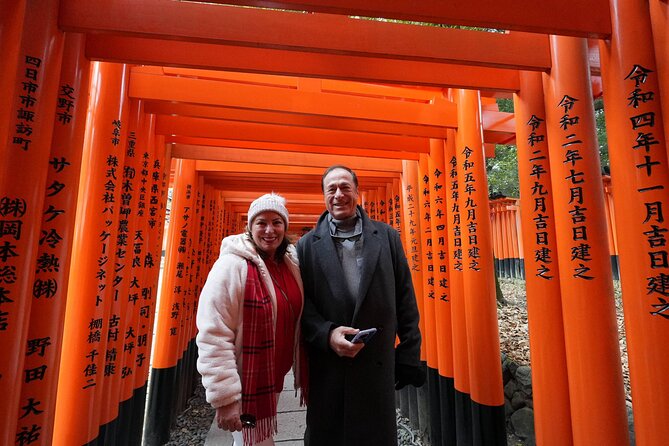
Fushimi Inari-taisha is the most obvious choice for an early tour. Its long corridors of vermillion torii gates climb into the wooded hills, creating one of Kyoto’s most recognizable scenes.
The shrine is more than a quick photo stop. Your guide can explain the shrine’s religious meaning, the role of fox images, and the way the torii gates relate to offerings. The lower paths are the easiest to reach, while the full mountain route takes much longer than a four-hour tour allows.
Go early if Fushimi Inari is your priority. The quiet atmosphere is a major part of the experience, and an early visit also makes it easier to walk at your own pace. You may still encounter other visitors, but the path is generally easier to manage than later in the day.
Kiyomizu-dera and the old streets of Higashiyama
Kiyomizu-dera is another strong early-morning choice. The temple is famous for its wooden stage and broad views across Kyoto, but the approach through the Higashiyama district is just as appealing.
The surrounding lanes lead through preserved-looking historic streets filled with shops, tea houses, and small restaurants. Early in the morning, many businesses may not yet be open, but the quieter streets make it easier to appreciate the buildings and temple approach.
A guide can explain the temple’s Buddhist traditions, the meaning of its famous water, and the details that are easy to miss when you are only looking for the best view. Admission is not included, so budget for the entrance fee.
One guide used a taxi to reach Kiyomizu-dera around 8 a.m. during cherry blossom season. That detail matters because this tour does not include a private vehicle. Public transportation, walking, and possibly a taxi paid by you may all be part of the plan.
Gion, Pontocho, and Nishiki Market
If you want Kyoto streets rather than a string of major temples, ask about Gion, Pontocho, and Nishiki Market.
Gion’s narrow lanes are linked with traditional entertainment and geisha culture. A guide helps you understand the district without treating it as a stage set. You can learn how the neighborhood functions, what kind of businesses operate there, and how to behave respectfully while walking through residential and commercial areas.
Pontocho is a narrow dining lane near the Kamogawa River. It is most atmospheric later in the day, but an early visit can help you get your bearings before returning for dinner.
Nishiki Market is known as Kyoto’s Kitchen. The covered shopping street runs for about five blocks and contains more than 100 shops and restaurants. It is a good choice if food is central to your trip, though a very early start may mean some vendors are not yet open.
These three stops can easily fill a morning if you want explanations and time to look around. They are not the best combination if your main goal is to visit several distant temples.
Same base, a different sort of day:
- PERFECT KYOTO 1-Day Bus Tour
★ 5.0 · 13,518 reviews - Kyoto: Fushimi Inari, Kinkakuji, Bamboo Grove 1 Day Bus Tour
★ 4.8 · 4,316 reviews - Kyoto: Tea Ceremony in a Traditional Tea House in Kiyomizu
★ 4.9 · 3,519 reviews - Kyoto Geisha Walking Tour: Gion District & Hidden Gems
★ 4.7 · 3,273 reviews
Arashiyama, bamboo, and the Moon Crossing Bridge
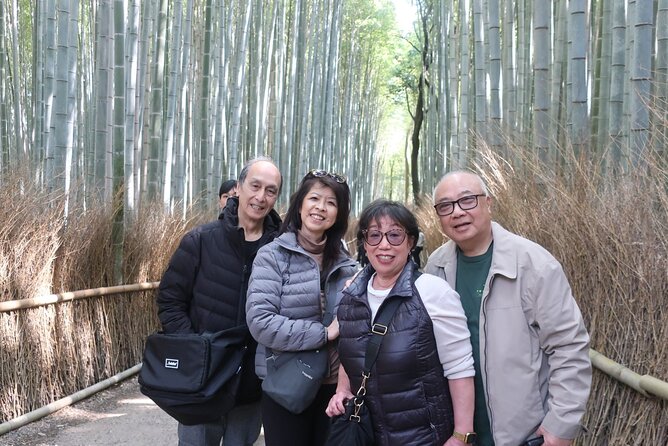
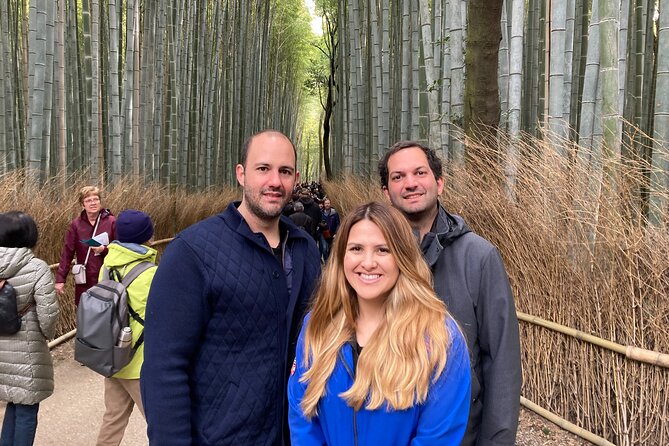
Arashiyama offers a different side of Kyoto. The area includes the Bamboo Forest, Togetsukyo Bridge, Tenryu-ji, riverside views, and several smaller hillside temples.
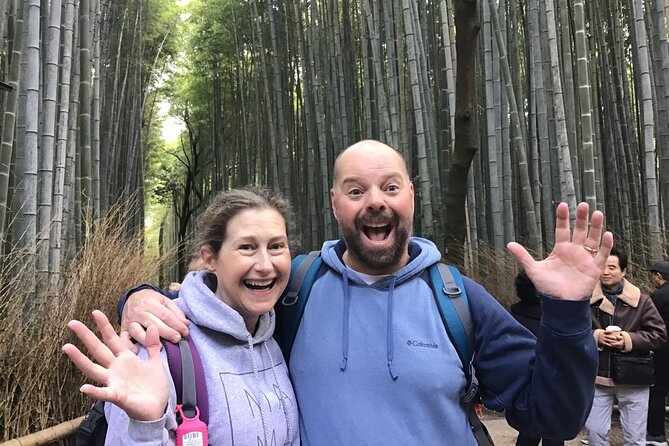
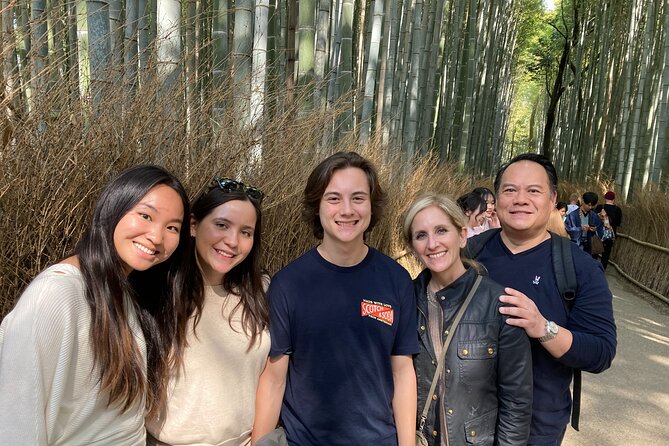
The Bamboo Forest is most enjoyable early, before the narrow paths become crowded. The tall stalks and filtered light create a memorable walk, but the path itself is not long enough to fill a four-hour tour. Pairing it with Tenryu-ji or Togetsukyo Bridge makes better use of your time.
Togetsukyo Bridge is a free outdoor stop with views along the river and toward the surrounding hills. Tenryu-ji, a major Zen temple and World Heritage site, adds gardens and architectural interest. Admission is extra.
If you want a quieter Arashiyama visit, ask about Jojakko-ji, Nison-in, Gio-ji, Adashino Nenbutsu-ji, or Otagi Nenbutsu-ji. These places are farther along the Saga-Toriimoto area and are known for moss, wooded paths, thatched roofs, or unusual stone figures. The tradeoff is simple: the more time you spend walking between smaller temples, the fewer major sights you can cover.
One group chose the Bamboo Forest, Monkey Park, and Fushimi Inari. That combination gives you nature, a Kyoto landmark, and a shrine, but it requires careful timing and transport planning.
Kinkaku-ji and Ryoan-ji for classic Kyoto
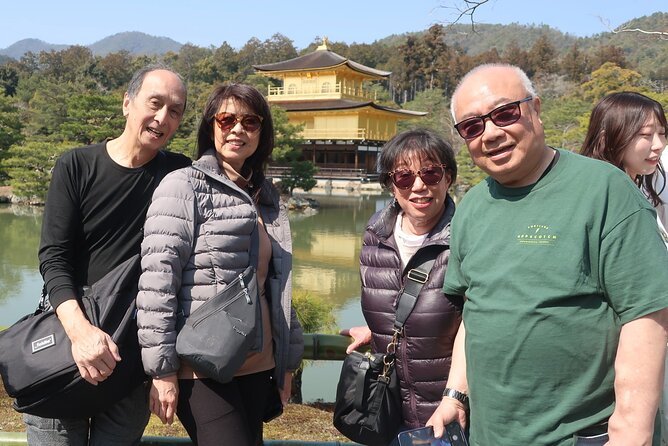
Kinkaku-ji, the Golden Pavilion, is among Kyoto’s most recognizable sights. Its upper floors are covered in gold leaf, and the building reflects in the pond when conditions are right.
The visit is visually powerful but fairly structured. You follow a set route rather than wandering freely, and the grounds can become crowded. The pavilion is also in northern Kyoto, so combining it with distant southern or western stops may be too ambitious.
Nearby Ryoan-ji is famous for its Zen rock garden. It offers a quieter, more contemplative visit, though the garden is small and can be busy. Pairing Ryoan-ji with Kinkaku-ji makes sense geographically and gives you two very different temple experiences.
Both charge admission, so include those costs when comparing the tour price with a self-guided day.
Ginkaku-ji, Nanzen-ji, and Tofuku-ji
Ginkaku-ji, the Silver Pavilion, was built as a retirement villa for shogun Ashikaga Yoshimasa. Despite its name, it is not covered in silver. Its appeal comes from its understated design, gardens, and connection to the eastern mountains.
Nanzen-ji has spacious grounds and is one of Kyoto’s major Zen temples. The brick aqueduct known as Nanzenji Suirokaku adds an unusual European-style feature to the temple setting. Tofuku-ji, in southeastern Kyoto, is particularly popular in autumn for its foliage.
These sights are better choices for someone who has already seen the most famous landmarks. They offer more room for quiet observation, but they may not satisfy you if this is your only morning in Kyoto and you want the classic icons.
Imperial villas and the northern mountains
The choices also include Kyoto Imperial Palace, Katsura Imperial Villa, Shugakuin Imperial Villa, Kibune, Kurama-dera, and Yoshimine-dera.
Kyoto Imperial Palace sits in a large park and was the home of Japan’s Imperial Family until the capital moved to Tokyo in 1868. Katsura and Shugakuin are known for carefully planned gardens and architecture, but they are not simple drop-in stops. Admission arrangements and travel time matter, so ask the provider about current access before choosing one.
Kibune is a forested mountain town built around Kifune Shrine. Kurama is farther north and is known for Kurama-dera and its hot spring. These areas can give you a more rural view of Kyoto, but they are poor choices if you also want to visit Fushimi Inari or Arashiyama in the same four-hour window.
What the guides add to the morning
The guide is the main reason to choose this tour over a self-guided visit. You are not paying only for directions. You are paying for context, route choices, translation help, and the ability to adjust the morning around your interests.
Rie contacted her group well before the trip and again during the week of the tour. She moved quickly through four sites on a busy January 2 morning, then suggested a sushi restaurant for lunch.
Yasu has guided groups by public transportation and helped families choose three locations. Tomy was praised for making Kiyomizu-dera and Fushimi Inari manageable at 6:30 a.m. Kay combined sightseeing with photography, especially at the Bamboo Forest and Fushimi Inari.
Mayumi added an extra half hour for a guest with ankle trouble. That is not a guaranteed feature, but it shows why a private guide can be more adaptable than a fixed group schedule. You should still tell the provider about mobility concerns before the tour.
The guides can also help after the tour ends. One guest received advice about navigating to later sights, which is useful if this is your first morning in Kyoto.
Price, transport, and what you really pay for
At $101.82 per person, the tour can be good value for a small group that wants personal guidance and an efficient first look at Kyoto. The value rises when you use the guide for cultural questions, route planning, and practical advice that will help with the rest of your stay.
It is less attractive if you only want transportation. No private vehicle is included, and the tour is described as a walking experience with pickup on foot in a designated Kyoto area. You pay your own transportation, entrance fees, lunch, and personal expenses.
The private format is important for families, couples, and friends with different interests. A group discount may improve the price for larger parties, but you cannot combine separate tour groups.
Free cancellation is available up to 24 hours before the start time. Cancellations or changes made within 24 hours are not refunded or accepted.
Who should book this Kyoto morning tour
I would choose this experience if you are visiting Kyoto for the first time, want help with cultural details, or dislike trying to connect several famous sites on your own.
It is also a strong option for families and small groups. You can set the pace, ask questions freely, and select sights that suit your interests. The early timing works especially well during busy seasons, hot weather, and major Japanese holidays.
I would skip it if you want a full-day tour, a private car, or a slow visit to many temples. Four hours passes quickly, especially once walking and transportation are counted.
Should you book it?
Book this tour if you can start early and are willing to limit yourself to two or three places. For the best balance, choose Fushimi Inari with Kiyomizu-dera, or choose Arashiyama with one or two nearby sights.
Tell the guide your priorities before the morning begins. Ask about entrance fees, transportation, and realistic travel times. With those expectations in place, this is a practical way to get your Kyoto bearings, avoid the worst crowds, and learn what you are looking at instead of simply photographing it.
Key points to know before booking
- Start around 6:30 or 7 a.m. for calmer visits to Fushimi Inari, Kiyomizu-dera, and the Bamboo Forest.
- Choose only two or three sights. Kyoto’s attractions are spread across the city, and four hours is not enough for the entire list.
- Use the guide for local context. Guides such as Rie, Yasu, Tomy, Kay, and Mayumi have helped with culture, photography, food, and route planning.
- Expect walking and public transportation. A private vehicle is not included, and pickup takes place on foot within a designated area.
- Budget for extras. Transportation, lunch, personal costs, and most entrance fees are separate.
- Pick this for flexibility, not quantity. The private format suits small groups that want a tailored morning rather than a fixed sightseeing circuit.
FAQ
How long is the Kyoto early morning private tour?
The tour lasts approximately four hours.
How many attractions can I choose?
The included format allows you to choose two or three sites from the available choices.
Is the tour private?
Yes. Only your group participates, and you cannot combine multiple tour groups.
Is hotel pickup included?
The guide meets you on foot within a designated area of Kyoto. A private vehicle is not included.
Are transportation and entrance fees included?
No. Transportation fees, entrance fees, lunch, and personal expenses are not included. Admission is specifically listed as not included for places such as Nijo Castle, Kiyomizu-dera, Kyoto Imperial Palace, Kinkaku-ji, and many temples.
Is the tour suitable for most people?
Most travelers can participate, and service animals are allowed. It is a walking tour, so you should share any mobility concerns with the provider before booking.
What is the cancellation policy?
You can cancel up to 24 hours before the experience for a full refund. Changes or cancellations within 24 hours are not accepted or refunded.
Just added in Kyoto
- Private Cooking Class Udon in Kyoto Japan★ 5.0 · 23 reviews
- Your Private Vacation Photography Session In Kyoto★ 5.0 · 110 reviews
- Kyoto: Zen Meditation at a Private Temple with a Monk★ 5.0 · 25 reviews
- Private Pewter Sake Cup Experience with a Kyoto Artisan★ 5.0 · 31 reviews
- Kyoto Wagashi(Japanese sweets) Cooking Class near Fushimiinari★ 5.0 · 60 reviews
- Kyoto:Family-Friendly Kimono & Yukata Experience at WARGO★ 5.0 · 147 reviews
- Private Guided Traditional Buddhist Cooking in Japan★ 5.0 · 16 reviews
- Kyoto: Gion Geisha District & Sake-in-Hand Walking Tour★ 5.0 · 37 reviews
Government-Licensed Guide Tours, compared.
Tokyo 6hr Private Tour with Government-Licensed Guide
Read our review →
Hiroshima / Miyajima Full-day Private Tour with Government Licensed Guide
Read our review →
Kyoto 4hr Private Tour with Government-Licensed Guide
Read our review →
Hiroshima City 4hr Private Walking Tour with Licensed Guide
Read our review →
Private Kyoto Tour with Licensed Guide & Vehicle (Max 15 persons)
Read our review →
Nikko Full-Day Private Tour with Government-Licensed Guide
Read our review →
Himeji Half-Day Private Tour with Government-Licensed Guide
Read our review →Browse the lists this tour appears in