
Reviewed · TOURS IN KYOTO
Kyoto 1 Day Tour from Kyoto
Kyoto’s famous sights are scattered across the city, and this tour gives you a practical way to reach six of them in one long day. You’ll see the gold-covered Kinkaku-ji, walk beneath the red gates of Fushimi Inari, and finish at Kiyomizu-dera with a fine city view. The included bus and admission fees save you from piecing together several train and taxi rides.
I especially like the mix of grand buildings and living religious sites, from the Tokugawa-era rooms at Nijo Castle to the thousands of statues at Sanjusangendo. I also like that guides such as KC, Miyuki, Yuki, and Yoshitaka Harada have earned praise for clear explanations, humor, and careful group management. The tradeoff is simple: six major stops in one day means a brisk pace, and a poor guide or hard-to-hear speaker can take the shine off the experience.
Kyoto’s major sights in one tightly planned day
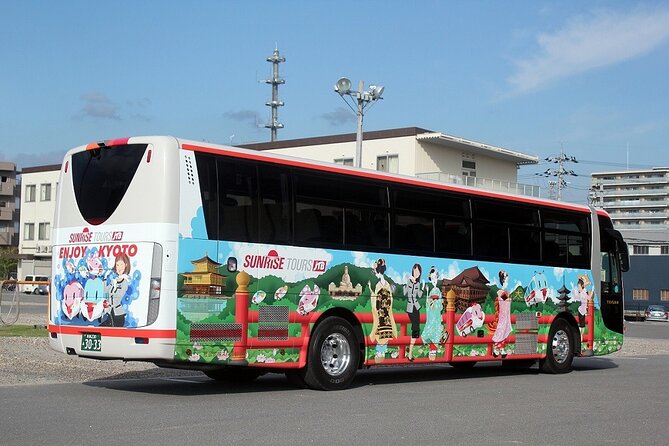
This is a classic sightseeing day rather than a slow cultural wander. You leave around 8:20 a.m., spend roughly 30 to 70 minutes at each site, and return to Kyoto Station at about 5:30 p.m. The air-conditioned and heated coach matters here, since Kyoto can be very hot, cold, or wet.
The tour is capped at 40 people, so you should expect a proper group outing, not a private guide. That can make the day feel efficient and social, but it also means keeping an eye on the meeting time and staying close to the guide.
The strongest reason to book is geography. These sights are spread around Kyoto, and covering them independently in one day would require careful route planning. The bus removes much of that work, while the English-speaking guide gives you basic context as you move from one place to the next.
The main limitation is time. You will see the key features at every stop, but you will not have a full morning to linger at one temple, browse every shop, or walk deep into the Fushimi Inari gates.
Nijo Castle opens the history lesson
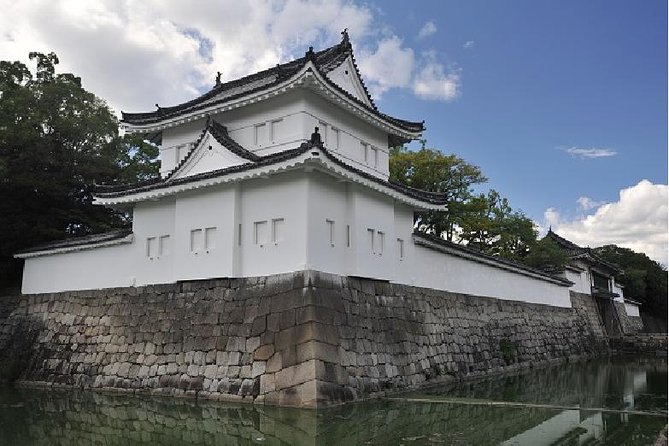
Nijo Castle is a good first stop because it gives the day a clear political beginning. Built in 1626 for the Tokugawa shogun, it also served as a protective presence beside the Kyoto Imperial Palace.
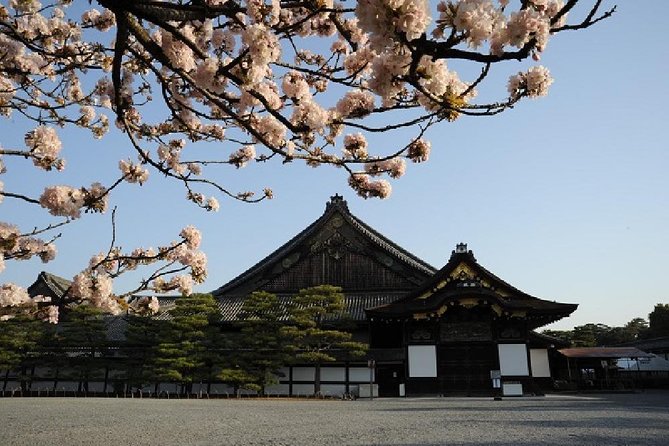
You have about 50 minutes here, with admission included. Inside, the decorated rooms use gold leaf, elaborate carvings, and strong colors to show the power of the shogunate. The castle may look restrained from outside, but its interiors are the real reason to pay attention.
Your guide’s explanation helps connect the architecture with the people who used it. This is one stop where a guide can add real value, since the building’s purpose and ceremonies are not always obvious from the rooms alone.
The schedule is not designed for a long stroll through the grounds. If you want a quiet, detailed look at every garden path, you may find the visit short. Still, Nijo Castle gives you more than a quick photograph, and it is one of the better stops for understanding Kyoto’s political past.
Other experiences people book in Kyoto:
- PERFECT KYOTO 1-Day Bus Tour
★ 5.0 · 13,518 reviews - Kyoto: Fushimi Inari, Kinkakuji, Bamboo Grove 1 Day Bus Tour
★ 4.8 · 4,316 reviews - Kyoto: Tea Ceremony in a Traditional Tea House in Kiyomizu
★ 4.9 · 3,519 reviews
Kinkaku-ji delivers the famous golden view
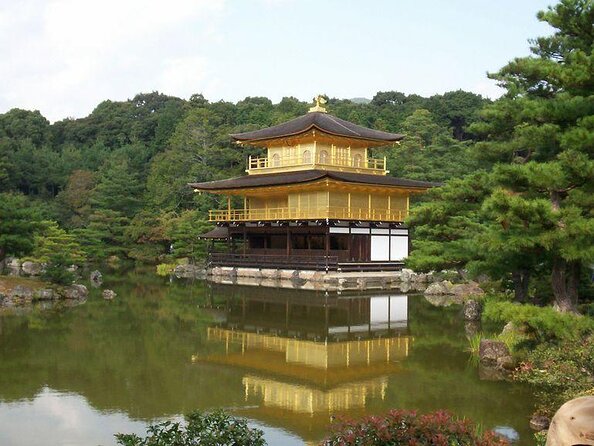
Kinkaku-ji, the Golden Pavilion, is the visual star of the day. The wooden structure is coated in thin layers of pure gold and reflected in a pond, with a carefully arranged Japanese garden around it.
You have about 45 minutes, including admission. That is enough to walk the main route, see the pavilion from its celebrated viewpoints, and take photographs. It is not enough for a long, unhurried garden visit, especially when the grounds are crowded.
The pavilion is often what people picture when they think of Kyoto, but the visit works best when you look beyond the gold. Notice the relationship between the building, water, trees, and surrounding garden. The setting is as important as the structure.
This stop can feel busy, and the route is shared with many other sightseers. Your guide helps you get oriented, but you will need to accept that this is a short visit to a very popular place.
Kyoto Imperial Palace shows a quieter side of power
The Kyoto Imperial Palace offers a change of mood after the glitter of Kinkaku-ji. The Emperor lived here until about 150 years ago, and the grounds present a more restrained style, with wide spaces, formal buildings, and a sense of ceremony.
The scheduled visit lasts about 40 minutes, and admission is included at no extra charge. Your guide can explain the palace’s former role and the customs tied to the imperial household, which gives the buildings more meaning than a quick walk alone.
The palace is not always available. It closes to visitors on Mondays, or the following day if Monday is a holiday, and it may also close during an Imperial Household Agency event. In those cases, the tour visits Kitano Tenmangu Shrine instead. If the closure falls on the 25th, the replacement is Nishi Hongan-ji Temple.
There is no refund for the substitute site, so check the date before booking if the Imperial Palace is essential to your Kyoto plans. The replacement sites are useful alternatives, but they are not the same experience.
Fushimi Inari requires your quickest walk
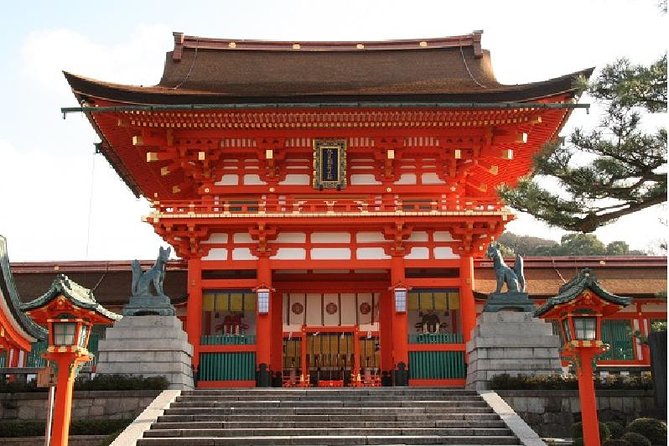
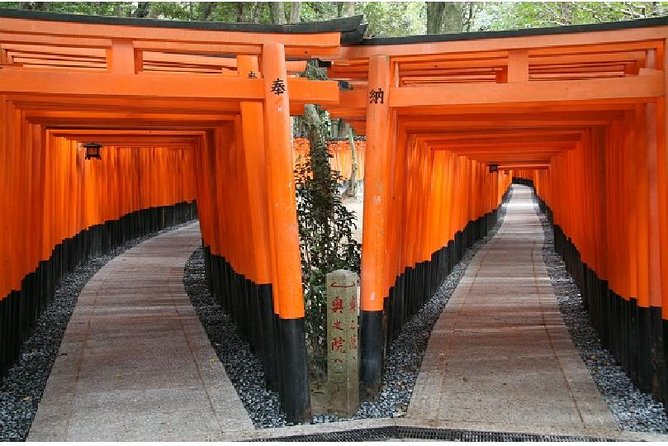
Fushimi Inari Taisha is the stop that most clearly rewards independent exploration, yet this tour gives you only about 30 minutes. The shrine is known for its bright red Senbon Torii gates, which climb the wooded slopes behind the main buildings.
The tour bus cannot simply drop you beside the most convenient entrance. You walk from the parking area to the shrine, about 15 minutes each way. That leaves limited time for the gates themselves, so put on comfortable shoes and stay alert to the return time.
You will not hike to the upper mountain on this schedule. Instead, you get a concentrated look at the lower shrine area and the first run of torii gates. It is enough to understand why Fushimi Inari is one of Kyoto’s essential sights, but not enough for a full shrine walk.
This is a useful point to manage expectations. If Fushimi Inari is your personal priority, plan a separate visit on another day. On this tour, it works as a memorable snapshot within a broad city overview.
Same base, a different sort of day:
- Kyoto Geisha Walking Tour: Gion District & Hidden Gems
★ 4.7 · 3,273 reviews - Kyoto: Tea Ceremony Ju-An at Jotokuji Temple
★ 4.9 · 3,207 reviews - Kyoto: Gion Magical Night Walking Tour with Geisha Trivia
★ 4.9 · 2,393 reviews - Kyoto: 45-Minute Tea Ceremony Lesson Experience
★ 4.3 · 2,378 reviews
Sanjusangendo brings remarkable detail indoors
Sanjusangendo gives the day a different kind of spectacle. The long wooden temple hall contains 1,001 life-size statues of Buddhist Kannon deities dating from the 13th century.
You spend about 30 minutes here, with admission included. The length of the hall and the repeated rows of statues create an effect that photographs do not capture well. This is a stop where a guide’s brief explanation helps you understand what you are seeing rather than simply walking through a large wooden building.
Because this visit is indoors, it can also provide a useful pause from Kyoto’s weather. The schedule remains short, but the hall is compact in terms of the route you cover, so the time feels more manageable than it does at Fushimi Inari.
Kiyomizu-dera makes a strong final stop
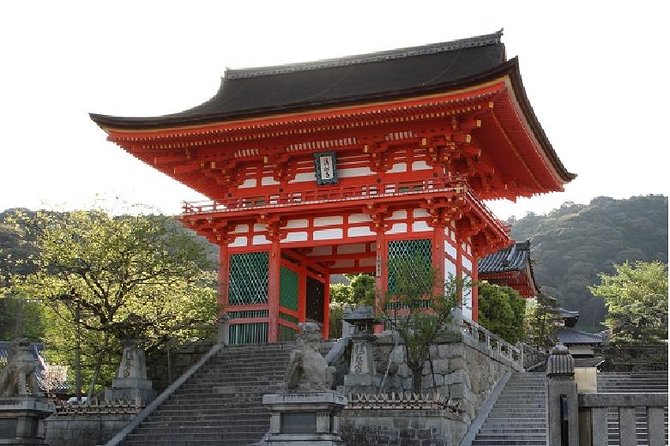
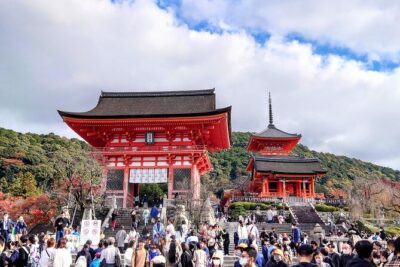
The day finishes at Kiyomizu-dera, one of Kyoto’s best places for a broad view over the city. You have about 70 minutes here, the longest stop on the route, and admission is included.
The temple’s wooden terrace is the main draw, but do not rush the approach. You walk along a charming lane lined with pottery shops before reaching the temple grounds. That lane adds a more everyday shopping element to a day otherwise focused on major monuments.
The terrace provides the panoramic view, while the temple setting gives you time to take in Kyoto’s hills and rooftops. You can also browse the approach before returning to the bus. The walk includes slopes and crowded sections, so comfortable footwear will help.
Ending here makes practical sense. Kiyomizu-dera gives you time for a final photograph and a less formal close to the day. Afterward, you return by coach and finish at Kyoto Station around 5:30 p.m.
What the guides add to the day
The guide can make or break a coach tour. The best guides on this route, including KC, Miyuki, Yuki, and Yoshitaka Harada, have been praised for clear English, humor, historical detail, and attention to the group. KC in particular has been noted for looking after people carefully during very hot weather.
You should also know the weak point. Some guide performances have been affected by fast walking, low-volume speakers, or explanations that were difficult to hear unless you stood close. With up to 40 people, this matters. Stay near the guide at each site, especially when the group leaves the coach.
The day is not only about dates and buildings. Strong guides add useful details about Japanese customs, daily life, ceremonies, and the meaning of the sites. That context is valuable when you are seeing several temples and shrines in quick succession.
The service can vary from one departure to another, so I would not book solely for a particular guide unless the operator confirms who is leading your tour. The structure of the tour remains useful, but the quality of the commentary may shape your experience.
Lunch choices and the Kyoto Station fallback
Lunch is optional, so you can choose the included Western-style set menu, an Indian thali meal, or no lunch. The Western-style meal can accommodate a vegetarian request if you provide it when booking. Same-day changes are not accepted.
The Indian thali is vegetarian and includes three curries, vegetable pakora, yogurt, naan or roti, rice, salad, and a non-alcoholic drink. Indian thali and Western-style diners eat in separate areas, and you cannot switch meal types during the tour.
Halal, gluten-free, and other meal requests are not available. If you choose no lunch, you have free time to eat around Kyoto Station, which can suit you if you prefer choosing your own food or have dietary needs the tour cannot handle.
Some people have found the station a convenient fallback, with the guide pointing out places to eat. The downside is that no-lunch participants do not get the same shared meal experience as those who book lunch. I would choose the meal option only if the set menu suits you. Otherwise, no lunch gives you more control.
Price, transport, and the real value
At $168.43 per person, this is not a budget stroll, but the price includes transportation, admission fees, and an English-speaking government-licensed guide. The included coach is important because the route covers six locations that are not arranged in one easy line.
The value is strongest if you have only one full day in Kyoto. Admission costs, local transport, and the time needed to plan each connection can add up quickly. You also avoid spending part of the day figuring out how to move between sites.
The value is weaker if you have several days in Kyoto and prefer slow visits. You could spend a full morning at Fushimi Inari, take your time at Kiyomizu-dera, or return to a favorite temple without watching the clock.
The comfortable coach is another plus, especially in rain or extreme heat. Seats may not be assigned, however, so you should not expect a specific place on the bus.
Practical details before you book
The meeting point is the JTB Sunrise Tours Desk in the basement of AVANTI near Kyoto Station, at Higashikujo Nishisannocho 31. The location can be harder to find than the station itself, so allow extra time. One person arrived an hour early and still needed much of that time to locate the desk.
The tour begins at 8:20 a.m. and lasts approximately 9 hours and 40 minutes. The order of stops and arrival times can change with traffic and congestion, so do not schedule a tight train connection immediately after the stated 5:30 p.m. finish.
You will walk between the parking area and Fushimi Inari, about 15 minutes each way, and every site includes additional walking. Most people can take part, but the pace is not ideal if you need frequent rest or find fast group walking difficult.
Children aged five and under may join free, but they do not receive a bus seat or lunch. If you need a seat or meal for a young child, book the child rate. Anyone under 18 needs written parental permission, and anyone under 15 or not yet in middle school must be accompanied by a parent or guardian.
Free cancellation is available up to 24 hours before the start time. Changes or cancellations inside that window are not refunded.
Who should book this Kyoto day tour?
Book it if you want an efficient first look at Kyoto’s major temples, shrines, palace, and castle. It suits first-time visitors, people with a short stay, and anyone who would rather let a guide handle transport and admissions.
It is also a good choice if you want historical context without arranging six separate visits. The strongest days come with a guide who speaks clearly and keeps the group together, so stay near the front when possible.
Think twice if you want long periods of quiet, independent exploration. Fushimi Inari and Kinkaku-ji receive only brief visits, and the whole day can feel like a sequence of photographs if you do not enjoy a brisk schedule.
My call: book this as a broad Kyoto introduction, not as a deep visit to every site. The route is well chosen, the transport saves effort, and the price is fair for a full day with admissions included. If you have extra time afterward, return independently to the one or two places that deserve a slower look.
FAQ
How long does the Kyoto tour last?
The tour lasts approximately 9 hours and 40 minutes. It starts at 8:20 a.m. and ends at Kyoto Station around 5:30 p.m.
Which sights are included?
The route includes Nijo Castle, Kinkaku-ji Temple, Kyoto Imperial Palace, Fushimi Inari Taisha Shrine, Sanjusangendo Temple, and Kiyomizu-dera Temple.
Is lunch included?
Lunch is included only if you select a lunch option when booking. You can choose a Western-style set menu, an Indian thali lunch, or no lunch.
What happens if Kyoto Imperial Palace is closed?
The tour visits Kitano Tenmangu Shrine when the palace is closed. If the closure falls on the 25th, the replacement is Nishi Hongan-ji Temple.
Is transportation included?
Yes. Transportation costs, admission fees, and the English-speaking government-licensed guide fee are included. The tour uses an air-conditioned and heated coach.
Where does the tour meet and finish?
The tour meets at the JTB Sunrise Tours Desk in the basement of AVANTI near Kyoto Station. It finishes at Kyoto Station around 5:30 p.m.
Just added in Kyoto
- Kyoto: Private Photoshoot Service★ 5.0 · 158 reviews
- Kyoto Rickshaw Tour★ 5.0 · 210 reviews
- Izakaya Style Cooking Class★ 5.0 · 219 reviews
- Kyoto: Traditional Concert at Townhouse or Bathhouse★ 4.9 · 224 reviews
- Ninja 2-hour Hands-on Lesson by Japanese master in Kyoto -Medium★ 5.0 · 218 reviews
- Kyoto: Arashiyama Bamboo, Temple, Matcha, Monkeys & secret spots★ 5.0 · 219 reviews
- Kyoto: Gion & Pontocho Food Tour with 13 Dishes★ 4.9 · 235 reviews
- Kyoto: Afternoon Japanese Izakaya Cooking Class★ 4.9 · 241 reviews
Tours in Kyoto, compared.
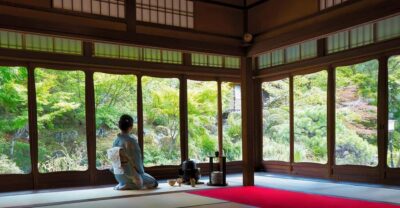
Tea Ceremony in a Traditional Tea House in Kiyomizu
Read our review →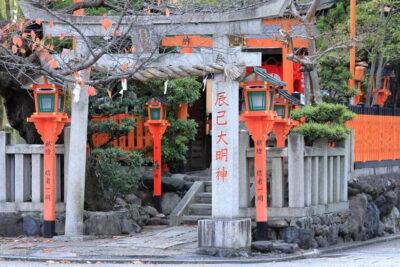
Kyoto Geisha Walking Tour: Gion District & Hidden Gems
Read our review →
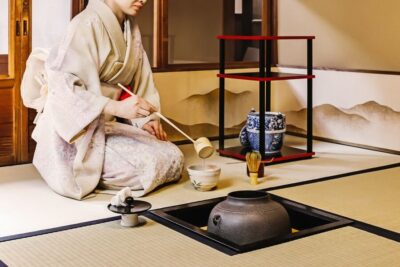
Gion Geisha District Walking Tour – Stories of Geisha
Read our review →
Best of Kyoto: Gion, Geisha, Pagodas & Cobblestones
Read our review →
Browse the lists this tour appears in