
Reviewed · TEA CEREMONY EXPERIENCES
Kyoto Private Tea Ceremony at a Japanese Inns
Kyoto’s temples may close after dark, but this candlelit tea ceremony keeps the evening open. Inside a long-established ryokan, you’ll sit in a normally private 20-tatami banquet room, where low light and quiet create a very different mood from daytime sightseeing.
I like the small private format, which gives your group room to ask questions and take photos without strangers crowding the scene. I also like the translator devices, since children and adults can communicate with hosts Matsuda and Mayumi in their own languages.
The main consideration is the short 59-minute schedule. You get several activities in one sitting, but this is an introduction to tea culture rather than a long, formal study of every rule and gesture. The photo session and costumes also make it part cultural presentation, part souvenir-making.
Key points to know before booking
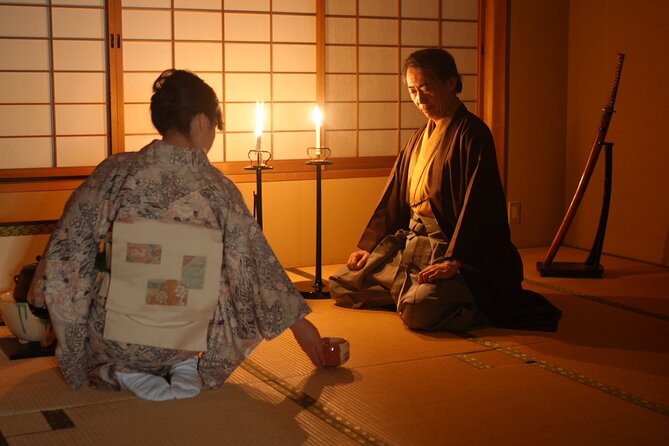
- A private 20-tatami room: Your group of two to six people uses a banquet hall that is normally closed to the public.
- Four experiences in 59 minutes: The schedule includes costume photos, Zen meditation, a tea demonstration, and matcha whisking.
- Candlelight changes the mood: This is an evening activity designed for atmosphere after Kyoto’s main sights have closed.
- Costumes and props are included: You may wear a bridal uchikake or men’s haori and pose with folding fans and swords.
- Language help is built in: Translation devices let you communicate with the hosts without Japanese.
- Good value for a private group: The stated adult price is ¥15,000 per person, with children under 15 priced at ¥3,000.
A candlelit Kyoto evening inside a working ryokan
The setting does much of the work here. You enter a traditional Kyoto inn and use a 20-tatami banquet room that is usually not open to the public. Tatami, candlelight, and the darkened room give the tea ceremony a quiet theatrical quality without requiring a late-night temple visit.
That setting matters because Kyoto’s best-known sights are not generally evening activities. After Kinkaku-ji, Ginkaku-ji, or Kiyomizu-dera closes, you may want something more substantial than a restaurant meal. This experience gives you a cultural activity in a controlled indoor space, with a clear beginning and end.
The room is private to your party. That makes a difference for families, couples, and small groups who want to take pictures or ask basic questions without worrying about holding up a larger class. The group size is limited to two to six people, so solo visitors cannot book this as an individual activity unless they join another arrangement, which is not indicated here.
The meeting point is ZEN: Tea Ceremony Experience in Kyoto, at 490 Kanayacho, Ryokufu-so, fourth floor, in Kyoto’s Shimogyo Ward. The postal code is 600-8323. It is near public transportation, but you should still allow time to locate the building and reach the fourth floor. The activity ends at the same place.
Other tea ceremonies in Kyoto people book:
- Kyoto: Tea Ceremony in a Traditional Tea House in Kiyomizu
★ 4.9 · 3,519 reviews - Kyoto: Tea Ceremony Ju-An at Jotokuji Temple
★ 4.9 · 3,207 reviews - Kyoto: 45-Minute Tea Ceremony Lesson Experience
★ 4.3 · 2,378 reviews
The first 15 minutes: kimono, props, and photographs
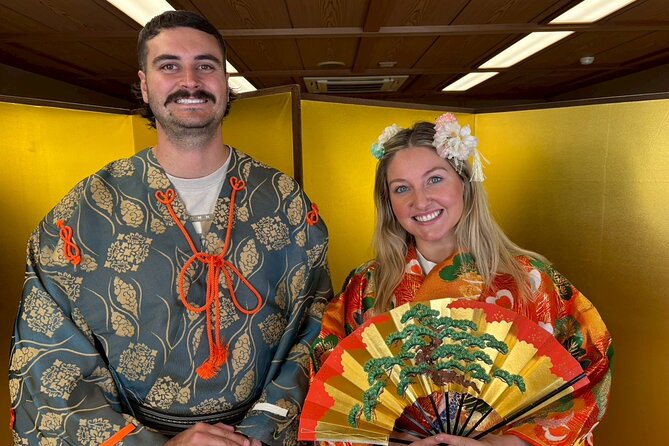
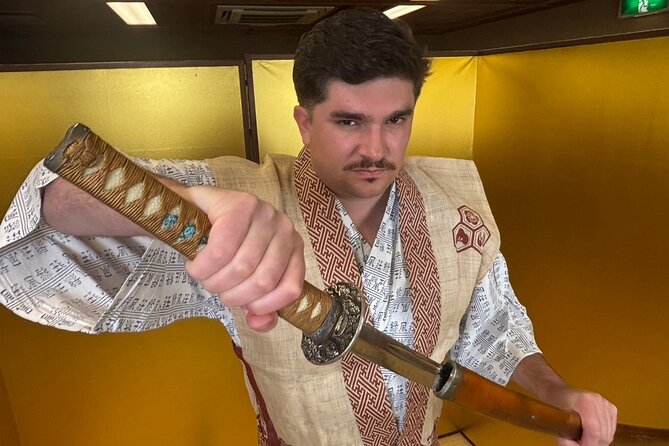
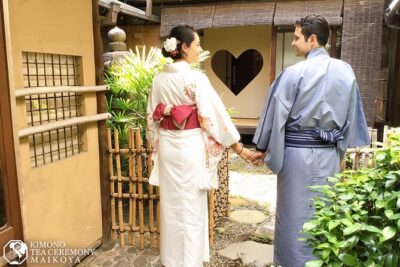
The session begins with a 15-minute costume and photo period. You can wear a bridal uchikake, the richly presented outer robe associated with formal Japanese dress, or a men’s haori. Props include folding fans and swords, and staff assist with photography using professional lighting.
This is not a minor add-on. It gives the evening a playful visual start before the more restrained tea ritual begins. If you are traveling with children, the props may help them engage with the experience right away. A child who does not speak English can also use the translation device to ask questions in their own language.
I would think of this portion as a portrait session with Japanese cultural styling, not as ordinary daily kimono wear. The bridal uchikake and sword props create a formal, staged look. That can be exactly what you want for family pictures or a special evening, but it may feel less traditional if your only goal is to study the tea ceremony itself.
You are welcome to take photographs throughout the activity. Staff help with the camera work, which means your whole party can appear in the pictures instead of leaving one person behind the lens. The professional lighting is useful in a dark room, where ordinary phone photos could easily come out dim.
Four minutes of Zen to settle the room
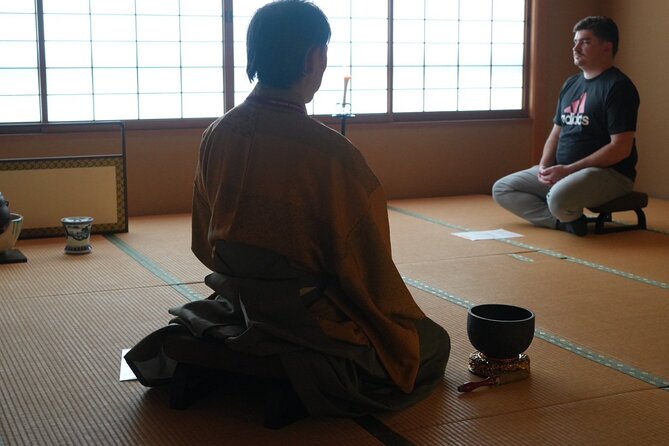
After the photographs, the program moves into a four-minute Zen meditation. It is brief, but the timing makes sense. You have just been changing clothes, posing, and handling props. The meditation gives you a chance to shift from a lively photo session into the quiet attention expected during tea.
Do not book this expecting a long meditation class. Four minutes is enough to introduce stillness, not enough for a detailed lesson in Zen practice. Its value is mainly practical: it slows the pace and prepares you to watch the ceremony.
The candlelit room helps here. In a brightly lit classroom, the transition might feel abrupt. In this setting, the low light and tatami floor support the change in mood. If sitting quietly is difficult for young children, the short length keeps the demand manageable.
The 20-minute tea ceremony demonstration
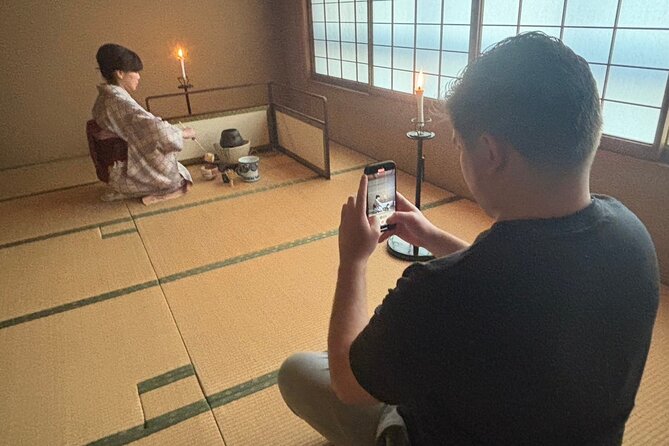
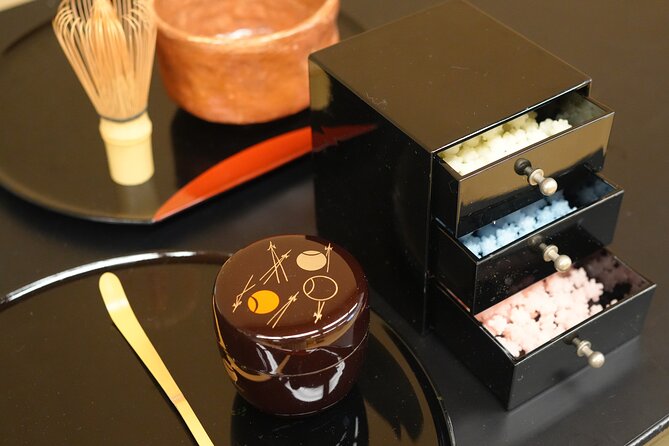
The central portion lasts about 20 minutes. You are welcomed as a guest, watch the preparation and serving of matcha, and receive a bowl of tea with Japanese sweets. The focus is on the flow of a tea gathering, including the courtesy shown to the person receiving the tea.
This is a useful format for first-time visitors because you can watch before you are asked to make anything yourself. You see the movements, utensils, and order of service, then have a chance to try the process later. The demonstration also gives context to the bowl of matcha and sweets, so the refreshment feels like part of a ritual rather than a quick drink.
The ceremony is presented in English with translation support available through devices. That removes one of the usual barriers to a Japanese cultural activity. You do not need Japanese to ask questions, follow instructions, or understand what is happening.
Still, keep the scale in mind. Twenty minutes cannot cover every school of tea, historical period, utensil, or rule of etiquette. You are getting a friendly introduction with a strong focus on the experience of being welcomed, watching the host, and taking part. If you already study tea ceremony, you may want a longer and more specialized lesson. If you are new to it, the compact format is easier to fit into a busy Kyoto itinerary.
The matcha itself comes with sweets. The listing describes coffee and/or tea as included, but matcha and sweets are the clear center of this program. Anyone with food allergies or strict dietary needs should ask the provider directly, since no ingredient information is supplied.
Other tea rooms and ceremonies in Kyoto:
- Kyoto: Table-Style Tea Ceremony at a Kyo-Machiya
★ 4.9 · 1,211 reviews - Kimono Tea Ceremony at Kyoto Maikoya, NISHIKI
★ 5.0 · 911 reviews - Kyoto: Arashiyama Bamboo Forest, Monkeys, Matcha & Temple Tour
★ 5.0 · 759 reviews - Kyoto: Tea Museum Tickets and Matcha Grinding Experience
★ 4.9 · 739 reviews
Twenty minutes to whisk your own matcha
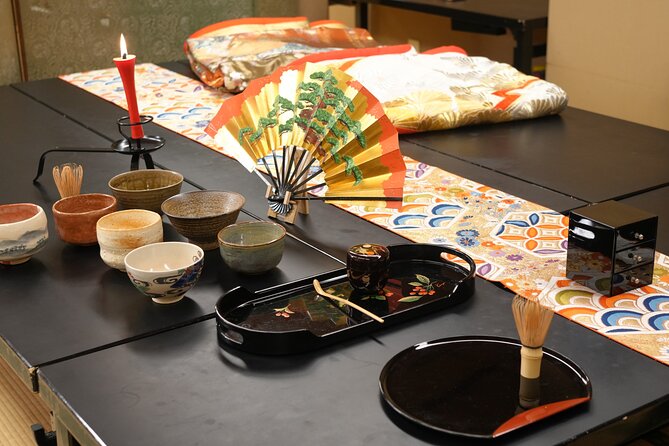
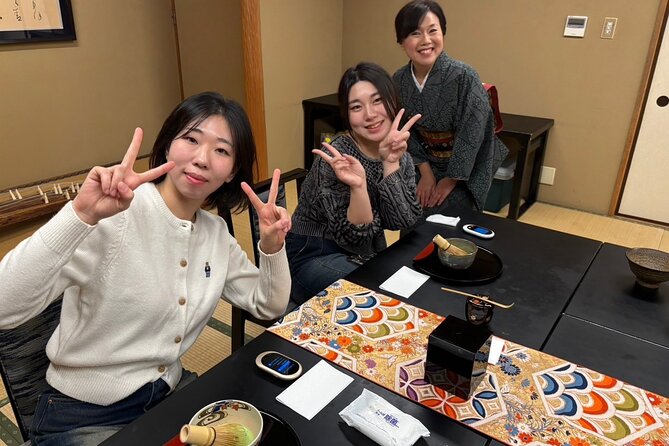
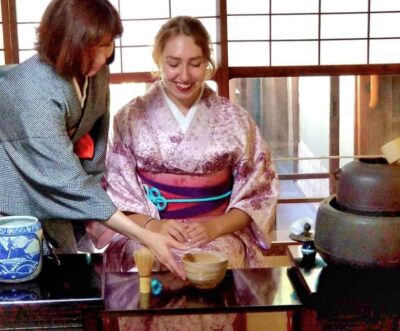
The final major activity is a 20-minute matcha-making session. After watching the hosts, you whisk your own tea using the provided utensils. This hands-on section is where the program becomes more than a performance.
You get to feel how the whisk works and see how your technique affects the drink. It also gives you a simple memory to take home: you did not just watch matcha being served, you prepared a bowl yourself.
The hosts can guide you through the process with translation devices. That is especially helpful when several small steps need to happen in the right order. The private setting means you can ask for clarification without feeling that a larger class is waiting for you.
The activity provides tea ceremony utensils, costumes, and katana props. You do not need to bring equipment. Photos are allowed, and staff assistance makes it easier to document the making process as well as the final portraits.
The tea-making portion is participatory, but it should not be confused with professional training. In 20 minutes, you learn the basic action and spirit of whisking matcha. You are not likely to leave with mastery of formal tea procedure, and that is fine. The point is to connect the ceremony’s visual grace with something you can do with your own hands.
What the ¥15,000 price buys you
The listed adult price is ¥15,000 per person, while children under 15 pay ¥3,000. The supplied booking price is $97.98 per person, so the final amount in your booking system may vary with exchange rates and booking conditions.
That price is high for a one-hour activity if you measure it only by the amount of tea served. It becomes easier to justify when you count the private room, staff-led ceremony, costume dressing, professional lighting, props, meditation, matcha preparation, translation devices, sweets, and photography assistance.
For a group of two to six, privacy is a real part of the value. You are not buying a seat in a large demonstration. You are paying for a compact cultural program arranged around your party, with time to interact directly with the hosts.
Families also get a notable price break for children. A child under 15 is listed at ¥3,000, far below the adult rate. Since children can use the translation equipment and take part in the costume photographs and matcha activity, this may work well for a family looking for an evening outing that is more engaging than a lecture.
The value is weaker for someone who wants only a formal, serious tea lesson. The costume photography takes 15 minutes, and the Zen meditation takes four. Those parts reduce the time available for the tea ceremony itself. Book this for the full mix of tradition, atmosphere, photos, and participation, not for tea instruction alone.
Who will enjoy this most
I would point this experience toward several kinds of visitors:
- Families: Children can wear costumes, pose with props, ask questions through translation devices, and make matcha.
- Couples: The candlelit room and assisted photography create a special evening without requiring a full night tour.
- First-time Kyoto visitors: You get an approachable introduction to tea ceremony without needing prior knowledge.
- Small private groups: Two to six people can share the room and ask questions at their own pace.
- Photography-minded visitors: Professional lighting, costumes, fans, swords, and staff assistance make photos a major part of the program.
- Evening planners: The activity fills a post-sightseeing hour when major temples are closed.
It may not suit you if you dislike staged photographs, have limited interest in costumes, or want a long and highly formal tea lesson. The session packs in several elements, so the pace is organized and fairly quick.
Language, etiquette, and comfort
You do not need to speak Japanese. Translation devices are available, and the hosts can use them to explain the ceremony and answer questions. That is more useful than relying on a memorized script, especially when children or mixed-language families are involved.
The program takes place in a private 20-tatami room, so you should expect a traditional floor-based setting. The supplied details do not state whether chairs or other seating options are available. If sitting on tatami is difficult for you, ask the provider before booking.
Photos are welcome throughout. Staff assist with photography, but the activity does not promise a professional photo package or delivered images. Bring your phone or camera if you want copies for yourself.
The experience requires advance reservation. Confirmation arrives at booking, and mobile tickets are supported. Free cancellation is available if you cancel at least 24 hours before the start time. Changes or cancellations inside 24 hours are not accepted and are not refunded. The stated policy also says poor weather or failure to meet a minimum number of participants can lead to a rescheduled date or full refund.
The weather condition is worth noting even though the ceremony is indoors. Since the policy lists good weather as a requirement, check your messages on the day of the activity and keep your schedule flexible enough to handle a change.
Getting the most from your 59 minutes
Arrive with your phone charged. Photography is part of the design, and a dark room with professional lighting is ideal for pictures, but you will still want enough battery for the full session.
Wear clothes that are easy to change out of if you plan to use the costumes. The supplied information does not describe the dressing process in detail, so avoid building a tight connection immediately before the activity.
If you are traveling with children, explain that the ceremony has two different moods. The opening allows for photos, fans, and swords. The later tea and meditation portions ask for quiet attention. That small bit of preparation can make the shift easier.
Use the translation device freely. The best value comes from understanding what the hosts are showing you, not simply copying their movements. Ask about the utensils, the order of service, and the meaning of the welcome. The hosts, Matsuda and Mayumi, are described as friendly and eager to explain the details, so the personal exchange is an important part of the hour.
Should you book the Kyoto private tea ceremony?
Book it if you want an evening cultural activity with atmosphere, personal attention, and memorable photographs. The private room, candlelight, translation support, and hands-on matcha session make it accessible to families and first-time visitors. The hosts’ warm, welcoming approach is central to the experience, and the format removes much of the worry about language or etiquette.
Think twice if your priority is a long, strictly formal tea ceremony. Nearly half the schedule goes to costumes, meditation, and hands-on whisking, so this is best understood as a polished cultural introduction rather than advanced instruction.
For most small groups, the strongest reason to book is the combination: you receive tea, learn a little, make your own matcha, dress in Japanese formal wear, and leave with photographs from a private Kyoto setting. At ¥15,000 for adults, it is not a casual cup of tea, but it offers more than a refreshment stop and fills an otherwise quiet evening well.
FAQ
Where does the tea ceremony take place?
It takes place at ZEN: Tea Ceremony Experience in Kyoto, located at 490 Kanayacho, Ryokufu-so, fourth floor, Shimogyo Ward, Kyoto, Japan, postal code 600-8323.
How long does the experience last?
The activity lasts approximately 59 minutes.
How many people can join a booking?
The experience is private and is designed for groups of two to six people.
What is included in the activity?
The program includes matcha, sweets, tea ceremony utensils, costumes, katana props, photography assistance, a licensed guide, and access to translation devices.
What happens during the session?
You spend about 15 minutes in costume for photographs, four minutes in Zen meditation, 20 minutes watching a tea ceremony demonstration, and 20 minutes whisking your own matcha.
Do I need to speak Japanese?
No. Translation devices are available so you can communicate with the hosts without speaking Japanese.
What is the price for adults and children?
The stated price is ¥15,000 for adults and ¥3,000 for children under 15.
Can I cancel for a refund?
You can receive a full refund if you cancel at least 24 hours before the start time. Cancellations or changes within 24 hours are not refunded or accepted.
Just added in Kyoto
- Private Cooking Class Udon in Kyoto Japan★ 5.0 · 23 reviews
- Your Private Vacation Photography Session In Kyoto★ 5.0 · 110 reviews
- Kyoto: Zen Meditation at a Private Temple with a Monk★ 5.0 · 25 reviews
- Private Pewter Sake Cup Experience with a Kyoto Artisan★ 5.0 · 31 reviews
- Kyoto Wagashi(Japanese sweets) Cooking Class near Fushimiinari★ 5.0 · 60 reviews
- Private Guided Traditional Buddhist Cooking in Japan★ 5.0 · 16 reviews
- Kyoto: Gion Geisha District & Sake-in-Hand Walking Tour★ 5.0 · 37 reviews
- Kyoto:Family-Friendly Kimono & Yukata Experience at WARGO★ 5.0 · 147 reviews
Tea Ceremony Experiences, compared.
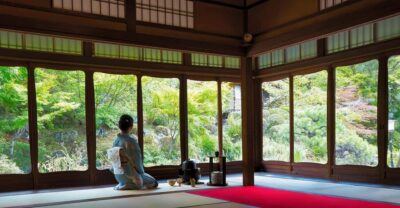
Tea Ceremony in a Traditional Tea House in Kiyomizu
Read our review →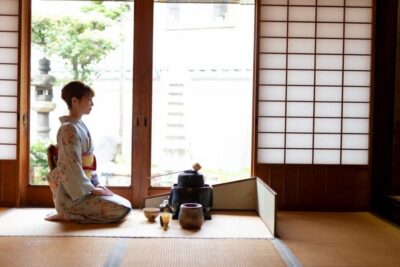
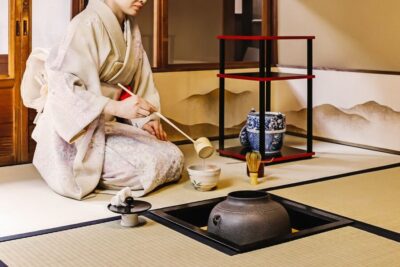
World Heritage Kyoto & Nara Uji Authentic Matcha Experience
Read our review →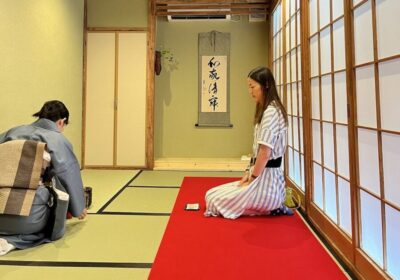
Arashiyama Bamboo Forest, Monkeys, Matcha & Temple Tour
Read our review →Browse the lists this tour appears in