Reviewed · TOURS IN KYOTO
Explore Hidden Alleyway with a Local Expert (Afternoon Tour)
Kyoto’s best moments often happen between the famous sights. This three-hour bike ride takes you through narrow lanes, old wooden houses, quiet river paths, and the city’s better-known districts, giving you a useful mix of daily Kyoto and postcard Kyoto. You may ride with Yuichi, a guide praised for being funny, warm, and well informed.
I especially like the small group size, capped at six people per guide, and the way the route links several different parts of town without making you spend the afternoon on buses. The chance to choose between bikes and a public-transport walking tour in rain is another smart touch. The main drawback is the price, $102.47 per person, which is a serious outlay for three hours, and you must be comfortable riding on city roads.
Key points at a glance
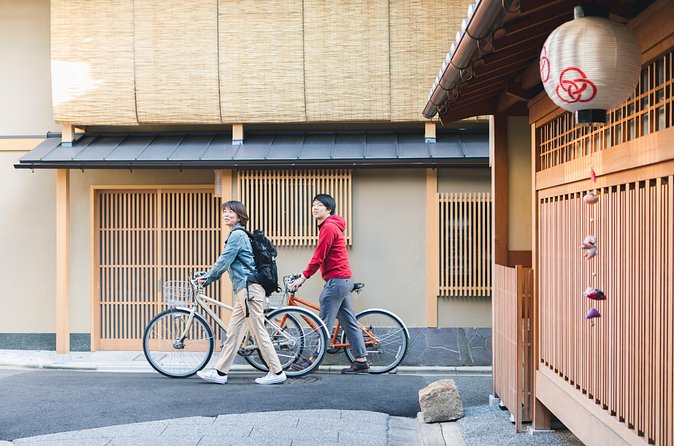
- Quiet Miyagawacho lanes: Ride past traditional wooden houses in one of Kyoto’s historic geisha districts.
- A useful Kyoto overview: See Gion, Tatsumi Bridge, the Imperial Palace, and the Kamo River in one afternoon.
- Small private groups: Two to six people ride with one guide, with an extra guide available for groups of seven to twelve.
- Professionally trained guides: Guides are taught traffic safety, group riding, and local etiquette, not just sightseeing facts.
- Rain does not automatically cancel the outing: You can continue by bike with a free poncho or switch to public transport and walking.
- Best for confident riders: Children must be at least 10 years old, 145 centimeters or taller, and able to ride safely on the road without help.
Why a bike is a smart way to see Kyoto
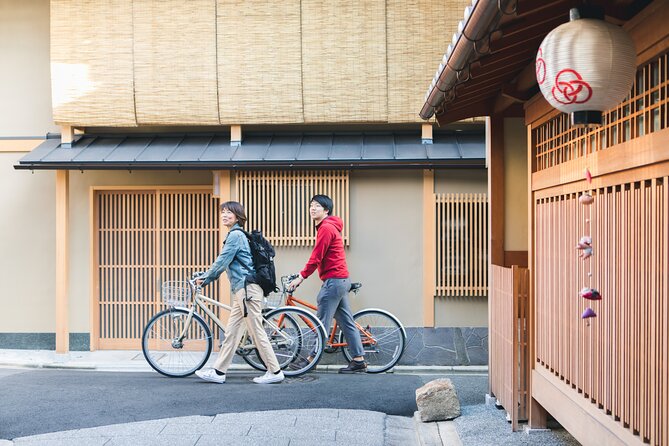
Kyoto’s central sights are spread across a broad area. Walking between them can take much of a day, while buses can be slow and crowded. A bicycle gives you a better sense of how the city fits together, especially when the route slips away from major roads.
The appeal here is not speed. The guide leads you through narrow backstreets where the city changes by the block. One lane may feel hushed, with wooden townhouses and very little traffic. A turn later, you may reach a main street full of shops and city movement. That change is one of the most useful parts of the ride because it shows Kyoto as a working city, not only as a set of temples and photo stops.
The afternoon start at 2:00 pm also works well for a first or second day in Kyoto. You can spend the morning at another major sight, then use the ride to get your bearings across several central neighborhoods. The tour returns to its starting point, so you are not left figuring out how to retrieve luggage or reach another part of town.
The route appears to use e-bikes, based on the experience details, although the general tour description calls them bikes. If an electric bicycle matters to you, confirm that point when booking. An e-bike can make the ride more comfortable, but it does not remove the need to steer, brake, and ride safely around traffic.
Other experiences people book in Kyoto:
- PERFECT KYOTO 1-Day Bus Tour
★ 5.0 · 13,518 reviews - Kyoto: Fushimi Inari, Kinkakuji, Bamboo Grove 1 Day Bus Tour
★ 4.8 · 4,316 reviews - Kyoto: Tea Ceremony in a Traditional Tea House in Kiyomizu
★ 4.9 · 3,519 reviews
Miyagawacho, where old Kyoto still feels close
The first stop is Miyagawacho Kaburenjo, in Miyagawacho, the second largest of Kyoto’s five geisha districts. The stop lasts about 15 minutes, and admission is free.
This is a strong opening because the area gives you a quick look at Kyoto’s older street design. Traditional wooden houses line the alley, and the setting feels calmer than the city’s main tourist corridors. You are not simply looking at one isolated building. You are seeing how a whole neighborhood keeps its old character.
A short stop means you should expect an introduction rather than a long historical talk or an interior visit. The value comes from the guide pointing out the details around you and explaining how the district functions. Keep your camera respectful. Geisha districts are working neighborhoods, not open-air stages, and the local etiquette briefing is useful here.
The bike is also helpful in Miyagawacho. You can reach the area without making a long approach on foot, then continue before the narrow lanes become tiring. This is one place where a small group matters. Six riders are easier to manage in a tight alley than a large organized line.
Gion and the polished face of Kyoto
The ride continues to Gion, one of Kyoto’s best-known geisha districts. The listed stop is about 15 minutes, with no admission charge.
Gion is where many people picture Kyoto: refined streets, old facades, tea houses, and the possibility of seeing maiko or geiko moving between appointments. The district developed around entertainment and hospitality, and the old atmosphere remains part of its appeal.
It is also the most familiar stop on the route, so do not book this ride expecting every minute to reveal something unknown. The benefit is seeing Gion as part of a wider ride rather than arriving by bus, taking a few photographs, and leaving. Your guide can connect Gion with Miyagawacho and show how the two districts relate to the surrounding city.
The tour’s etiquette training matters particularly here. Quiet voices, no blocking lanes, and careful photography help protect the neighborhood’s daily life. A guide who understands local customs can make this stop more comfortable for you and for the people who live and work there.
Tatsumi Bridge and the streamside pause
Tatsumi Bridge brings a different mood. The route follows a winding stream, with willow trees moving in the breeze. The stop takes about 15 minutes and is free.
This is the kind of place where the bike tour earns its keep. You get a short break from traffic, but you do not lose much time reaching the next part of Kyoto. The water and willows provide a softer setting after the more formal streets of Gion.
The supplied schedule does not promise a long stop, so plan to enjoy the setting rather than linger for an hour. If you want extensive photography or a slow café break, this tour may feel brisk. If you like variety and want to keep moving, the timing is sensible.
I also like the contrast built into the route. Kyoto is not presented as one unchanging old town. Within a short ride, you move from geisha-district streets to a streamside path, then on toward a large public garden. That range gives you a clearer feel for the city’s scale.
Same base, a different sort of day:
- Kyoto Geisha Walking Tour: Gion District & Hidden Gems
★ 4.7 · 3,273 reviews - Kyoto: Tea Ceremony Ju-An at Jotokuji Temple
★ 4.9 · 3,207 reviews - Kyoto: Gion Magical Night Walking Tour with Geisha Trivia
★ 4.9 · 2,393 reviews - Kyoto: 45-Minute Tea Ceremony Lesson Experience
★ 4.3 · 2,378 reviews
Kyoto Imperial Palace and its broad open grounds
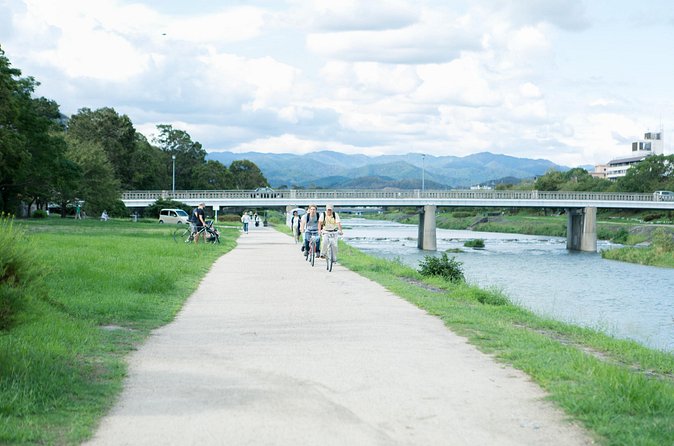
The Imperial Palace stop lasts about 20 minutes. The former residence of Japan’s Imperial Family is now open to the public as a national garden, with seasonal flowers and gravel paths.
You cycle along the gravel paths rather than treating the palace as a full guided palace visit. That distinction matters. This is a chance to see the grounds and place the palace in Kyoto’s history, not a substitute for a dedicated palace tour.
After the tight lanes of Miyagawacho and Gion, the open grounds offer a welcome change. You have room to ride, and the guide can point out the seasonal character of the garden. Since flowers vary by time of year, your experience will depend on when you visit.
The gravel surface may be less smooth than ordinary pavement, so follow the guide’s pace and handle the bicycle carefully. The 20-minute stop is enough to take in the setting, but not enough for a full circuit of every corner. If the Imperial Palace is your main reason for visiting Kyoto, set aside separate time for a more detailed visit.
Kashiwayacho and the Kamo River
The final listed stop is Kashiwayacho, where you can relax beside the Kamo River. This stop lasts about 20 minutes and includes admission.
The river is a favorite local gathering place, and it gives the ride a relaxed finish. After several historic districts and formal sights, sitting near the water helps you see how residents use central Kyoto in ordinary life. It is less about a single monument and more about the rhythm of the city.
This may also be the best place to ask your guide practical questions. You can discuss other parts of Kyoto, local customs, or what to see after the tour. Since the ride ends back at the original meeting point, the river stop does not leave you stranded across town.
The schedule has five main stops, but the ride between them is part of the experience. Do not judge the tour only by the number of minutes spent standing at each sight. The quiet lanes, transitions, and changes in atmosphere are the main reason to choose a bicycle route.
What the guide adds to the ride
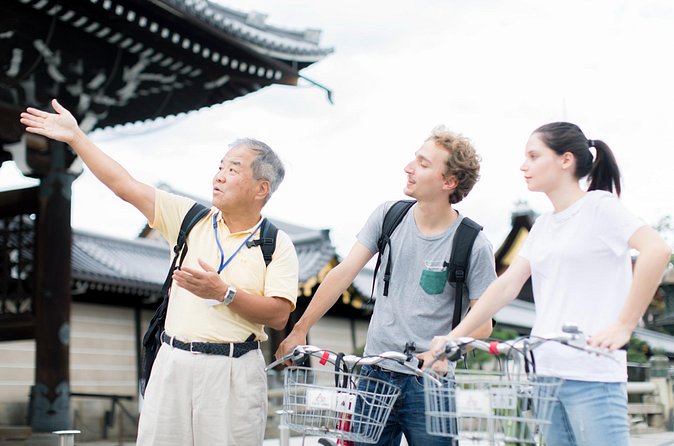
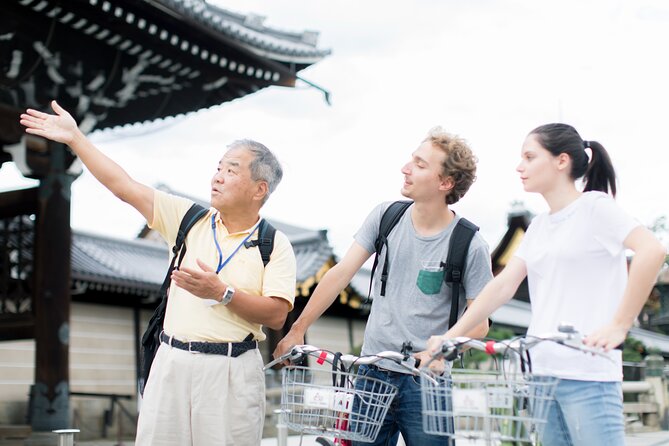
The guides are trained through the operator’s own program. Their preparation covers Kyoto culture, traffic safety, riding as a group, and local etiquette. That combination matters more than a long list of facts on a three-hour city ride.
A bike guide must watch the road, keep the group together, and choose safe places to stop. In narrow Kyoto lanes, this practical skill can make the difference between a pleasant outing and a stressful one. The group limit of two to six people per guide gives the guide a manageable number of riders to monitor.
Yuichi received especially strong praise for being personable, informative, and funny. You are not guaranteed to have him, but that feedback gives you a useful sense of the tone to hope for. A good guide can make short stops feel worthwhile by explaining what you are seeing without turning the afternoon into a lecture.
For groups of seven to twelve, an extra guide can be arranged. That keeps the riding group smaller and safer than placing a dozen people behind one leader. Solo bookings are not accepted, and at least two people are required.
The $102.47 price and what you get for it
At $102.47 per person, this is not a budget way to cover Kyoto. You are paying for a private activity, a small group, bicycle use, a local guide, route planning, and three hours of supervision in city traffic. The value is strongest if your time is limited or if you want a guide to handle the route instead of studying maps and transport connections.
The price makes more sense for a family or pair who wants one focused afternoon. One experience described the ride as a good way to see several places when time is tight, and that is the right way to judge it. You are not buying deep visits to five attractions. You are buying a connected look at central Kyoto.
It is less compelling if you already know these neighborhoods well, dislike cycling, or want long visits at each sight. You could visit Gion, the Imperial Palace grounds, and the Kamo River independently for less money. The tour earns its extra cost through efficiency, local explanation, and access to quieter streets.
The rating is 4.9 from 17 reviews, with 100 percent recommending it. That is a strong record, but the sample is small. I would focus less on the number and more on whether the format fits your plans.
Rain, riding ability, and practical limits
The tour operates in rain. You can continue by bicycle with a free rain poncho, or switch to a walking tour using public buses or the metro, with that transport included in the tour fee.
That choice is a real advantage in Kyoto, where weather can change plans quickly. Still, a rainy bike ride is not the same as a dry one. If you dislike wet roads or have young riders in your group, the walking option may be more comfortable.
Children must be at least 10 years old and 145 centimeters or taller. They also need to ride safely on the road without assistance. This is not a bike-path outing designed for beginners who need close physical help.
The tour is private, so only your group participates. That is useful for families and friends with similar riding speeds. It also means you can ask more questions than you might in a large group, though the exact level of customization is not specified.
The meeting point is 552-13 Higashiaburanokōjichō in Shimogyo Ward. Bring your mobile ticket, arrive ready for a 2:00 pm start, and wear clothing suited to cycling. Since the tour returns to the meeting point, you can plan the rest of your day from there.
One booking detail deserves care. The supplied terms say the experience is non-refundable and cannot be changed, while the additional notes say cancellation or rescheduling at least three days before the date, by 6:00 pm Japan time, may allow a refund or change. Because these statements do not match, check the final cancellation terms before paying.
Who should book this Kyoto bike tour
I would choose this tour if you have only a short time in Kyoto and want to connect several central areas without spending the afternoon on buses. It also suits people who enjoy seeing ordinary streets, not just major landmarks.
Families can benefit from the private format, provided every child meets the age, height, and road-riding rules. Couples and small friend groups will likely appreciate the freedom of a group capped at six.
I would skip it if you are not confident on a bicycle, want a full tour inside the Imperial Palace, or prefer slow, unstructured sightseeing. The stop times are short, and the route asks you to keep moving.
Should you book it?
Book it if you want an efficient, human-scale introduction to Kyoto, especially if quiet lanes and local neighborhoods appeal more than a checklist of major temples. The strongest reasons are the small group, the trained cycling guides, the private format, and the route’s useful mix of geisha districts, water, gardens, and city streets.
Think twice if $102.47 feels high for three hours or if you would rather spend half a day at one sight. Confirm the bicycle type and cancellation terms before booking. For confident riders with limited time, this is a practical way to see Kyoto from street level and get a better sense of how its famous districts fit into everyday life.
FAQ
How long does the Kyoto bike tour last?
The tour lasts approximately three hours.
What time does the tour start?
The tour starts at 2:00 pm.
Where does the tour begin?
The meeting point is 552-13 Higashiaburanokōjichō, Shimogyo Ward, Kyoto, 600-8235, Japan.
Where does the tour end?
The activity ends back at the meeting point.
How many people can join one guide?
A minimum of two and a maximum of six guests can join one guide. For groups of seven to twelve, an additional guide can be arranged.
Can children join the tour?
Children must be at least 10 years old, at least 145 centimeters tall, and able to ride a bicycle safely on the road without assistance.
What happens if it rains?
You can continue by bicycle with a free rain poncho or switch to a walking tour using public transportation. Bus or metro costs are included in the tour fee.
Is admission included at the stops?
The listed stops at Miyagawacho Kaburenjo, Gion, Tatsumi Bridge, and Kyoto Imperial Palace have no admission charge. Kashiwayacho is listed as including admission.
Just added in Kyoto
- Kyoto: Zen Meditation at a Private Temple with a Monk★ 5.0 · 25 reviews
- Private Cooking Class Udon in Kyoto Japan★ 5.0 · 23 reviews
- Your Private Vacation Photography Session In Kyoto★ 5.0 · 110 reviews
- Private Pewter Sake Cup Experience with a Kyoto Artisan★ 5.0 · 31 reviews
- Kyoto Wagashi(Japanese sweets) Cooking Class near Fushimiinari★ 5.0 · 60 reviews
- Kyoto:Family-Friendly Kimono & Yukata Experience at WARGO★ 5.0 · 147 reviews
- Private Guided Traditional Buddhist Cooking in Japan★ 5.0 · 16 reviews
- Kyoto: Gion Geisha District & Sake-in-Hand Walking Tour★ 5.0 · 37 reviews
Tours in Kyoto, compared.

Tea Ceremony in a Traditional Tea House in Kiyomizu
Read our review →
Kyoto Geisha Walking Tour: Gion District & Hidden Gems
Read our review →


Gion Geisha District Walking Tour – Stories of Geisha
Read our review →
Best of Kyoto: Gion, Geisha, Pagodas & Cobblestones
Read our review →