
Reviewed · TEA CEREMONY EXPERIENCES
KYOTO: Private Tea Ceremony in Hidden Townhouse (Kid-Friendly)
A short film about tea plantations, a real stone mill, and your own bowl of matcha make this more than a quick tea tasting. At WOM-Way of Matcha, your private group visits a Kyoto townhouse for a 45-minute introduction to how matcha is made and served.
I like the personal attention, especially for families with children, and I like that you learn a method you can repeat at home. Host Yuki has been praised for being polite, friendly, and careful in explaining each step. The main drawback is the short running time, so this is an introduction rather than a full, formal tea ceremony.
Key points at a glance
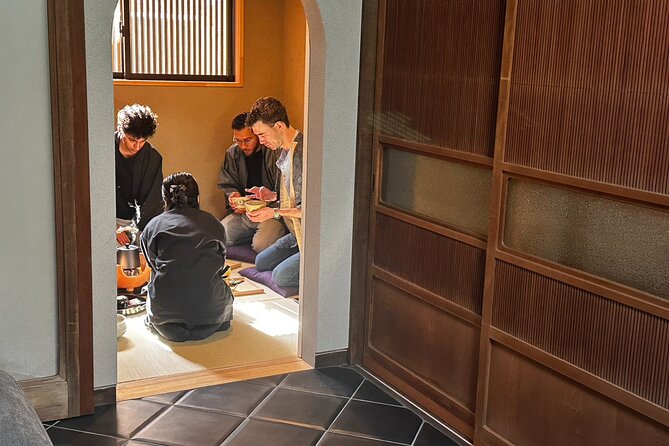
- Private townhouse setting: Only your own group takes part, which keeps the experience calm and easy to follow.
- Stone-milled matcha: You get to make matcha powder with a traditional stone-milling step, not simply receive a prepared drink.
- Hands-on preparation: You prepare your own cup after watching the ceremony demonstration.
- Family-friendly format: Children are welcome, and the private arrangement allows the pace to work better for a mixed-age group.
- Matcha latte included: The session goes beyond traditional tea with tasting and latte making.
- Simple timing: The activity lasts about 45 minutes, starts and ends at the same Kyoto meeting point, and accepts a mobile ticket.
A private introduction to Kyoto tea culture
Many tea experiences in Kyoto focus on watching a host perform a polished ceremony while you sit quietly. This one gives you a more active role. You see how matcha begins, watch the preparation, and then make a cup yourself.
That difference matters if you are curious about the ingredients and tools, not just the finished drink. You will not spend the whole visit trying to remember the correct way to bow or hold a bowl. Instead, the session gives you a practical look at matcha production and preparation in a small setting.
The experience takes place at WOM-Way of Matcha, at 863-41 Jurakucho in Kyoto’s Kamigyo Ward. It begins and ends at the same location, so you do not need to arrange transport between separate parts of the activity.
The townhouse setting also changes the mood. You are not joining a large class where it may be hard to see the demonstration or ask a question. Since only your personal group participates, you can pay attention to the details that interest you and take photos without working around a crowd.
Other tea ceremonies in Kyoto people book:
- Kyoto: Tea Ceremony in a Traditional Tea House in Kiyomizu
★ 4.9 · 3,519 reviews - Kyoto: Tea Ceremony Ju-An at Jotokuji Temple
★ 4.9 · 3,207 reviews - Kyoto: 45-Minute Tea Ceremony Lesson Experience
★ 4.3 · 2,378 reviews
What the 45-minute schedule includes
The session is short, but it has several distinct parts. You begin by watching footage of tea plantations. This gives you a visual starting point before you handle the tea yourself.
The film is useful because matcha can seem like a simple green powder until you learn that it comes from tea leaves prepared in a particular way. Seeing the plantations first helps connect the drink in your bowl with the plant and the production process.
Next comes the stone-milling step. You make matcha powder with a stone mill, an unusual feature for a short city activity. This is likely to be one of the most memorable parts for children and adults alike because it turns an abstract production method into something you can see and take part in.
You should expect this to be a hands-on demonstration rather than a large-scale tea production lesson. The available details do not specify how long each stage lasts, so the 45-minute schedule will move at a steady pace.
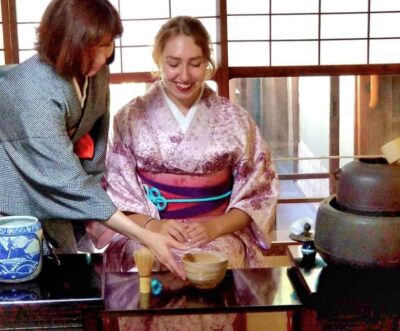
After that, the host demonstrates the tea ceremony. This is your chance to watch the order of preparation before trying it yourself. A demonstration first is helpful, particularly if you have never made matcha and are unsure how much powder or water to use.
The final main section is hands-on tea making, tasting, and matcha latte making. You prepare your own cup, then taste it. The latte element adds a more familiar option for children or anyone who finds traditional matcha slightly strong or bitter.
Because everything happens within one short visit, the activity works well as a first taste of Japanese tea culture. It does not try to cover every rule or historical detail. Instead, it gives you a clear sequence: tea plantations, powder, ceremony, preparation, and tasting.
Why the private format helps
The private arrangement is the strongest practical feature here. Your group is not combined with strangers, and that can make a large difference when you are visiting with children.
Children may want to ask questions, move at a different speed, or take part in the hands-on sections more than once. In a private session, the host can give your group more direct attention. You can also take photos without worrying about including people outside your party.
This format suits couples, families, and small groups who want a quieter cultural activity between sightseeing stops. It is also useful if one person in your group has never tried matcha and wants a little more guidance.
The tradeoff is price. At $51.24 per person, this costs more than simply ordering matcha at a café. You are paying for a private setting, instruction, equipment, participation, and the chance to ask questions directly. For a group that values personal attention, that can be fair value.
Still, I would not book it expecting a long ceremonial performance or a full morning workshop. The listed duration is approximately 45 minutes. The price makes the most sense when you treat the session as a compact cultural class, not as a drink stop.
Learning from Yuki in a calm setting
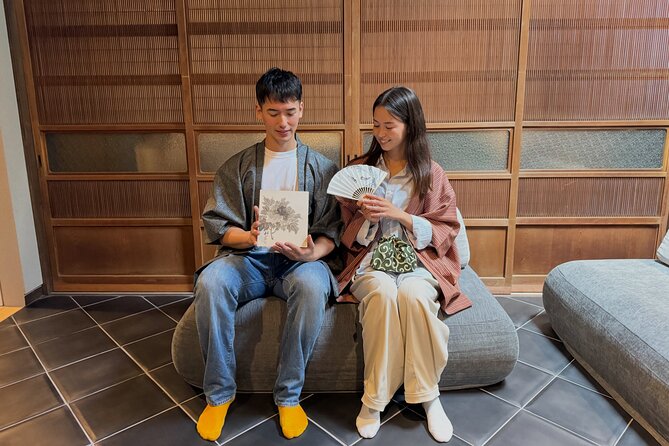
Yuki is the named host associated with the experience, and the available feedback highlights a polite, friendly manner and careful explanations. Those qualities matter in a tea activity because the unfamiliar parts are often small: how the powder is handled, how the preparation is ordered, and how the bowl is used.
You do not need prior knowledge of tea ceremony customs. The format is designed to show you what to do before asking you to make your own cup. If you are worried about getting something wrong, a private class is a comfortable way to try it.
The host’s role is especially important for families. A child who is bored by a long formal ceremony may be more interested in turning the stone mill, whisking tea, or making a latte. Adults can focus on the traditional method while younger participants have something active to do.
The experience has a 4.9 rating from 20 reviews, with 100 percent recommending it. That is a strong response, though the sample is modest. I would read it as a sign that the personal teaching style and private format are working well, rather than as proof that every visitor will have the same preferences.
Other tea rooms and ceremonies in Kyoto:
- Kyoto: Table-Style Tea Ceremony at a Kyo-Machiya
★ 4.9 · 1,211 reviews - Kimono Tea Ceremony at Kyoto Maikoya, NISHIKI
★ 5.0 · 911 reviews - Kyoto: Arashiyama Bamboo Forest, Monkeys, Matcha & Temple Tour
★ 5.0 · 759 reviews - Kyoto: Tea Museum Tickets and Matcha Grinding Experience
★ 4.9 · 739 reviews
Stone-milling matcha makes the visit memorable
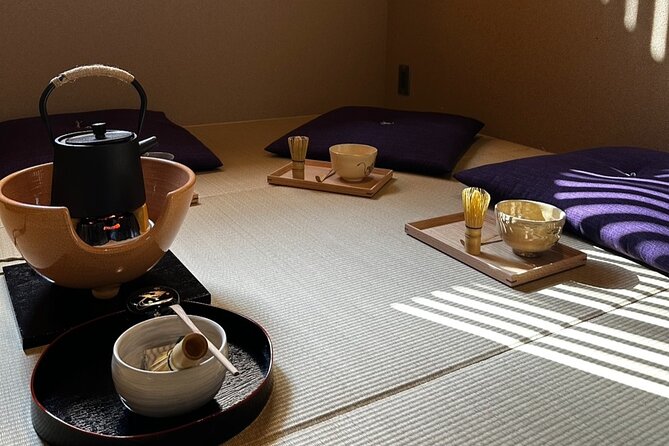
The stone mill gives this activity a useful point of difference. Many visitors know matcha as a bright green drink, but fewer get to see the powder being made.
The process also makes the experience easier to remember after you leave Kyoto. You are not simply told that matcha is finely ground. You take part in the step and then use the powder in your own tea.
That practical connection is one reason this activity may suit people who want something they can repeat at home. The overview specifically presents the preparation techniques as something you can recreate. You should leave with a better sense of the basic process, though the available information does not list a recipe, equipment guide, or exact quantities for home use.
The stone-milling section may also be the most appealing part for children. It gives them a concrete job in a setting that might otherwise feel quiet and formal. Parents should still remember that the activity lasts only about 45 minutes, so each stage is likely to be brief.
Traditional tea and the more approachable matcha latte
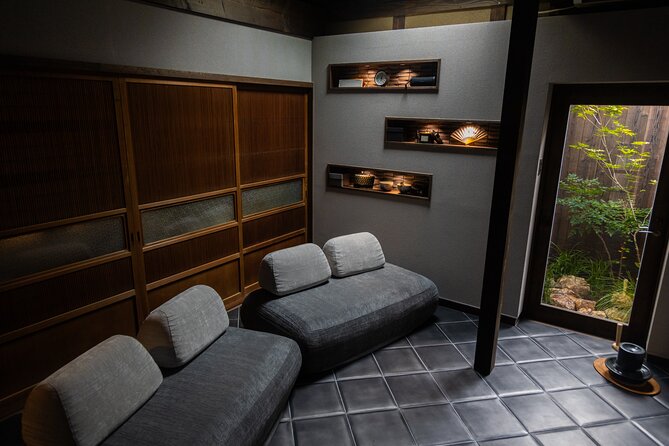
The tea ceremony demonstration gives the session its traditional core. You watch the host prepare the tea, then follow with your own hands-on cup.
That order is sensible. It lets you see the full sequence before you try it. You can focus on the movements instead of trying to understand the process while also performing it.
The tasting then shows you the result of your work. Matcha has a distinct flavor and texture, and tasting your own preparation makes the lesson feel complete. If you are new to powdered green tea, this is a better introduction than drinking a prepared cup without seeing how it is made.
The matcha latte is a useful addition. It broadens the activity beyond strict ceremony and may appeal to children or anyone who prefers a sweeter, milk-based drink. The supplied information does not specify the ingredients or whether the latte is made by each participant, so you should regard it as part of the tasting portion rather than expect a full café-style lesson.
Time for photos without rushing through a crowd
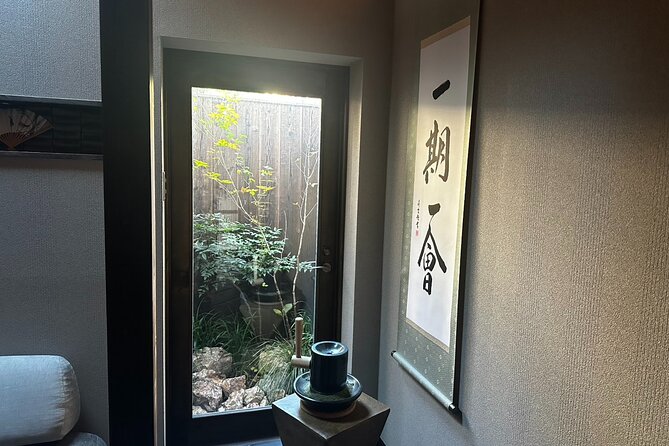
Photo time is specifically included as part of the experience. That is a small detail, but it matters in a private cultural activity.
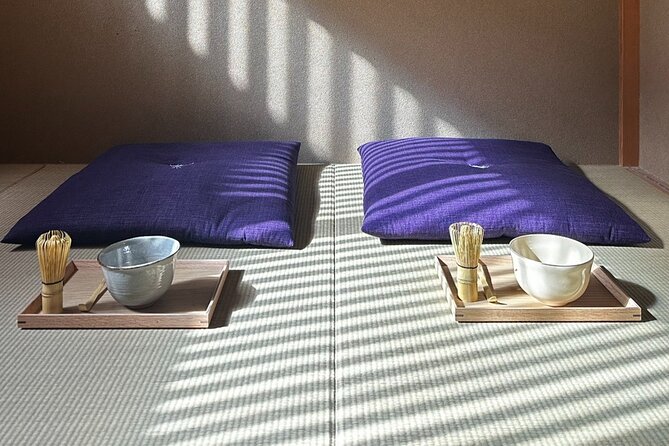
A tea ceremony has visual appeal: the bowl, the powder, the whisk, the stone mill, and the townhouse room can all help you remember the visit. In a large group, stopping for a picture can feel awkward. Here, you can photograph your own tea-making process and the finished cup with fewer distractions.
You should still keep your camera use polite and follow the host’s instructions. The activity is about participation first, but the private setup gives you more freedom to capture a few useful images.
For families, photos can also record the children taking part rather than simply watching an adult demonstration. That makes the experience easier to recall once the family has moved on to the next Kyoto sight.
Who will get the most from this experience
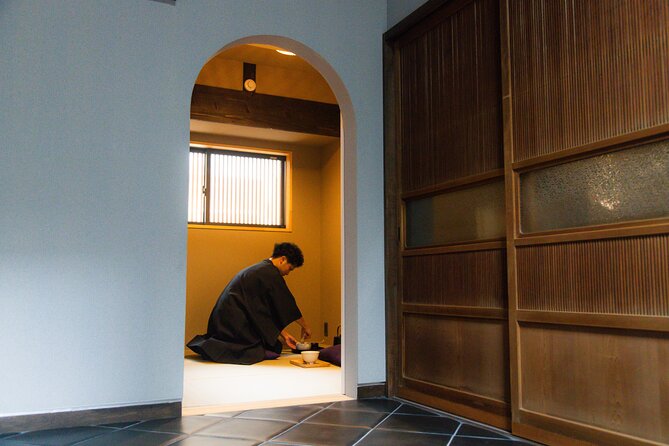
I would recommend this to you if you want a short, hands-on cultural activity rather than a lengthy formal ceremony. It is a good fit for first-time matcha drinkers, small private groups, couples, and families with children.
You will likely appreciate it most if you enjoy learning by doing. The stone milling and personal tea preparation give you something to handle, while the film and demonstration provide context before the practical work begins.
It also suits a busy Kyoto day. At about 45 minutes, the activity can fit between other plans more easily than a multi-hour class. Since you return to the meeting point, the logistics are simple.
I would think twice if you want a highly formal ceremony with a long explanation of etiquette, seasonal objects, or the history of tea practice. Those subjects may come up, but they are not promised in the information provided. This experience is built around a compact sequence of viewing, making, tasting, and photographing.
The same applies if you dislike matcha. The latte may be more approachable, but the central purpose is still tea preparation and tasting. It is best booked by people who are curious about matcha, even if they are not sure they will love the flavor.
Location, tickets, and cancellation
The meeting point is private tea ceremony, WOM-Way of Matcha, at 863-41 Jurakucho, Kamigyo Ward, Kyoto, postal code 602-8156, Japan. The activity ends back at this same point.
A mobile ticket is accepted, and confirmation is received when you book. Since the meeting point is a specific townhouse address, give yourself enough time to locate it before the scheduled start, especially if you are moving through Kyoto with children. The supplied details do not identify a nearby station or provide walking directions, so check the address in your map app before setting out.
The price is $51.24 per person. For a 45-minute private activity, this is not a budget tea stop. Its value comes from the personal format and the amount of participation. If you are booking for a family, calculate the total carefully, then decide if private instruction is worth more to you than a public demonstration.
Free cancellation is available if you cancel at least 24 hours before the start time. Cancellations or changes made less than 24 hours in advance are not accepted for a refund. The cut-off follows Kyoto local time.
Should you book the private Kyoto tea ceremony?
Book it if you want a short, friendly introduction to matcha where you can handle the tools, make your own tea, and ask questions in a private room. The stone mill, hands-on preparation, matcha latte, and family-friendly format give it more substance than a simple tasting.
The strongest reasons to choose it are the personal attention and the chance to learn a technique you can try again at home. Yuki’s careful, friendly teaching style is another reason this works well for people who prefer a guided introduction over silent observation.
Skip it if your priority is a long, highly formal tea ceremony or the lowest possible price. At 45 minutes, this is a compact lesson. For everyone else, especially families and first-time matcha drinkers, it offers a practical and pleasant way to add Japanese tea culture to a Kyoto itinerary.
FAQ
How long does the tea ceremony experience last?
The experience lasts approximately 45 minutes.
Where does the activity take place?
It takes place at WOM-Way of Matcha, 863-41 Jurakucho, Kamigyo Ward, Kyoto, 602-8156, Japan.
Where does the activity finish?
The activity ends back at the meeting point.
Is this a private experience?
Yes. Only your own group participates in the activity.
Are children allowed to join?
Yes. The experience is described as family-friendly, and children are welcome.
What does the session include?
It includes tea-plantation footage, matcha powder making with a stone mill, a tea ceremony demonstration, hands-on tea preparation, tasting, and matcha latte making.
Can I use a mobile ticket?
Yes. The experience accepts a mobile ticket.
Can I cancel for a full refund?
Yes, if you cancel at least 24 hours before the experience start time. Cancellations or changes made less than 24 hours before the start time are not accepted for a refund.
Just added in Kyoto
- Private Cooking Class Udon in Kyoto Japan★ 5.0 · 23 reviews
- Your Private Vacation Photography Session In Kyoto★ 5.0 · 110 reviews
- Kyoto: Zen Meditation at a Private Temple with a Monk★ 5.0 · 25 reviews
- Private Pewter Sake Cup Experience with a Kyoto Artisan★ 5.0 · 31 reviews
- Kyoto Wagashi(Japanese sweets) Cooking Class near Fushimiinari★ 5.0 · 60 reviews
- Kyoto:Family-Friendly Kimono & Yukata Experience at WARGO★ 5.0 · 147 reviews
- Private Guided Traditional Buddhist Cooking in Japan★ 5.0 · 16 reviews
- Kyoto: Gion Geisha District & Sake-in-Hand Walking Tour★ 5.0 · 37 reviews
Tea Ceremony Experiences, compared.
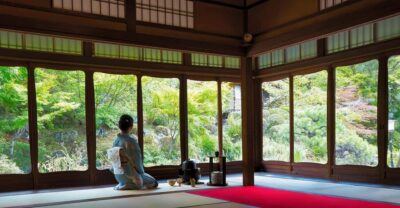
Tea Ceremony in a Traditional Tea House in Kiyomizu
Read our review →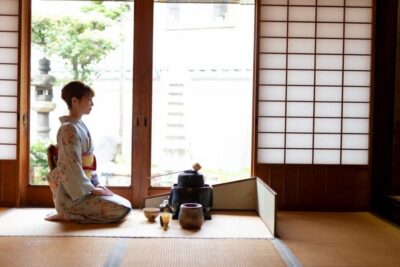
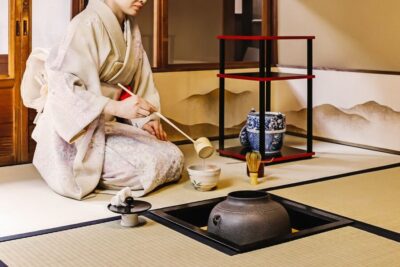

World Heritage Kyoto & Nara Uji Authentic Matcha Experience
Read our review →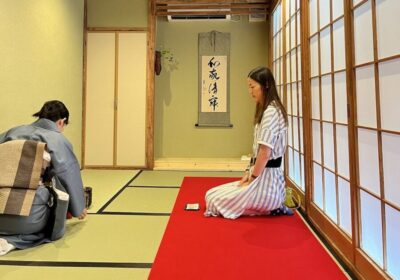
Arashiyama Bamboo Forest, Monkeys, Matcha & Temple Tour
Read our review →Browse the lists this tour appears in