
Reviewed · GOVERNMENT-LICENSED GUIDE TOURS
Private Kyoto Tour with Licensed Guide & Vehicle (Max 15 persons)
Kyoto’s biggest challenge is not finding beautiful places. It is getting between them. This private tour lets you move by car instead of wrestling with crowded buses and confusing connections, while a licensed guide handles the history, timing, and local details. I especially like the door-to-door pickup and the freedom to choose three or four sights rather than follow a fixed route.
I also like that the guides can adjust the day for families, older adults, wheelchair users, food interests, and changing weather. Guides such as Ken, Haru, Yuka, Noriko, Michi, and Tomy have received especially warm praise for clear English, local knowledge, humor, and flexibility. The catch is simple: six hours is not enough for all 24 suggested stops, and the $634.72 group price is a serious expense for two people.
Key points to know before booking
- Private car and driver: Avoid Kyoto’s packed buses and save energy for temples, markets, and historic lanes.
- Choose three or four sights: You decide the focus from a long menu of Kyoto highlights.
- Strong guide roster: Ken, Haru, Yuka, Noriko, Michi, Tomy, and others are noted for patient explanations and personal attention.
- Best for tight schedules: A private vehicle works well if you have one day in Kyoto, arrive by train, or want to cover several districts.
- Entrance fees cost extra: Temple, castle, and imperial villa admissions are not included.
- Do not overpack the day: Kyoto’s sights are spread out, and traffic plus walking time limits what you can reasonably see.
Why a private vehicle matters in Kyoto
Kyoto is easy to understand on a map and harder to cross in real life. Fushimi Inari is in the southeast, Kinkaku-ji is in the northwest, Arashiyama is farther west, and Ginkaku-ji sits along the eastern mountains. Add narrow streets, packed buses, and busy temple entrances, and a day of independent sightseeing can become a string of small delays.
This tour solves the biggest practical problem: getting around. You are collected at your hotel, or another agreed pickup point, and driven between districts. The guide joins you for the sights, while the driver handles the city streets and parking. Several groups have also used the service from Kyoto Station, making it useful for a same-day visit between trains.
The car does not turn Kyoto into a drive-by city. You still walk at each stop, and the most memorable parts remain on foot: passing through the orange gates at Fushimi Inari, wandering Gion’s lanes, or crossing the approach to Kiyomizu-dera. The car simply removes the tiring gaps between those places.
Other tours with a licensed guide in Kyoto:
- Kyoto 6hr Private Tour with Government-Licensed Guide
★ 5.0 · 1,369 reviews - Kyoto 4hr Private Tour with Government-Licensed Guide
★ 5.0 · 629 reviews - Kyoto: Private Tour with Local Licensed Guide
★ 4.8 · 463 reviews
What six hours can realistically cover
The tour offers a choice of three or four sites from a long list. The many destinations can look generous, but they are options, not a promise that you will visit them all. A group that saw Kinkaku-ji, Nijo Castle, Nishiki Market, and Fushimi Inari in six hours had a full day with little wasted time. That is a sensible upper limit for major sights on opposite sides of Kyoto.
You should decide your priorities before pickup. If you want famous temples, choose a compact route such as Fushimi Inari, Kiyomizu-dera, Gion, and Nishiki Market. If you prefer gardens and Zen architecture, consider Kinkaku-ji, Ryoan-ji, Nijo Castle, and one eastern Kyoto stop.
Do not treat the fifteen-minute stop labels as enough time to properly visit every site. Kinkaku-ji, Kiyomizu-dera, Nijo Castle, and Arashiyama all deserve more than a quick photograph. The guide can help you balance ambition with walking time, crowd levels, and opening hours.
Fushimi Inari, Kiyomizu-dera, and eastern Kyoto
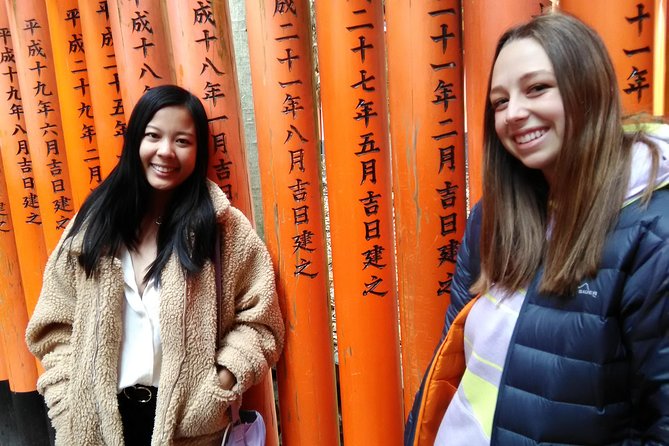
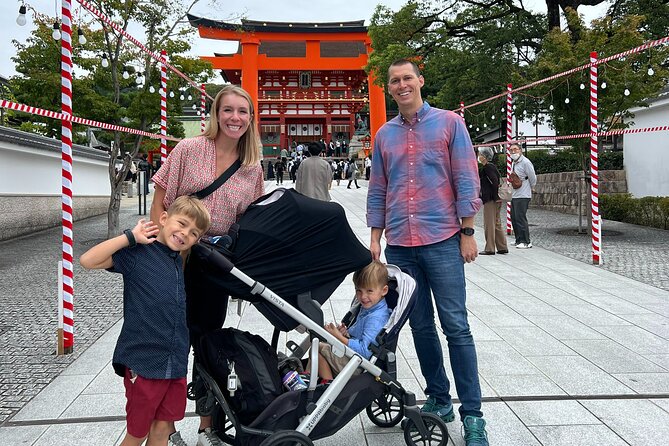
Fushimi Inari-taisha is one of the easiest places to recognize in Kyoto. Its long corridors of orange torii gates rise into the wooded hills behind the shrine. You can take a short walk through the lower gates for the famous photographs, or ask the guide how far you should go based on your time and energy.
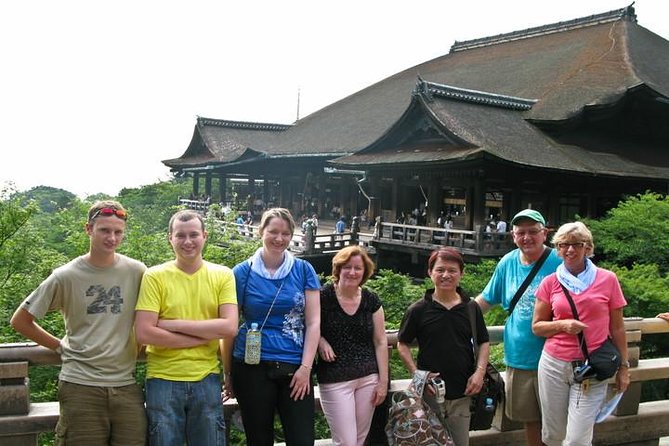
Kiyomizu-dera offers a different view of the city. The temple sits on a hillside, with broad wooden structures and a well-known outlook across Kyoto. The approach streets can be crowded, and the grounds involve slopes and stairs, so tell your guide about mobility limits before the day begins. One guide, Noriko, was especially praised for adjusting walking and stair demands for an older participant.
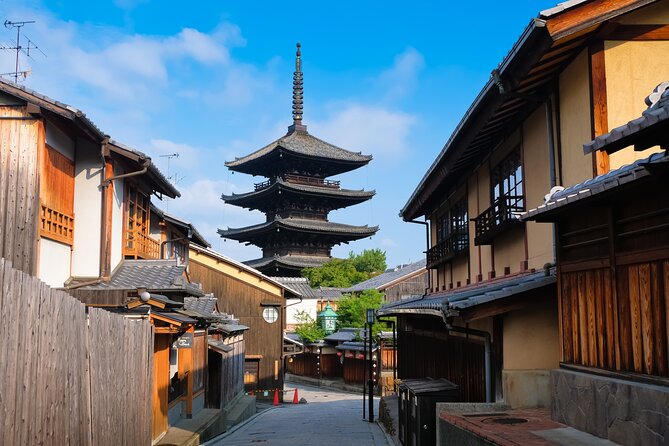
Gion and Higashiyama are best understood slowly. Gion’s narrow streets, traditional buildings, and old entertainment history make it atmospheric, but it is not a stage set for intrusive photography. Your guide can explain how to behave respectfully and point out details you might miss while wandering alone.
Higashiyama covers a larger historic area along Kyoto’s eastern foothills. It works well with Kiyomizu-dera, Gion, or Kennin-ji. Pontocho, the narrow restaurant lane by the Kamogawa River, makes a good evening-oriented stop, though a six-hour daytime tour will give you only a taste of its dining scene.
Kinkaku-ji, Ryoan-ji, and the northwest temples
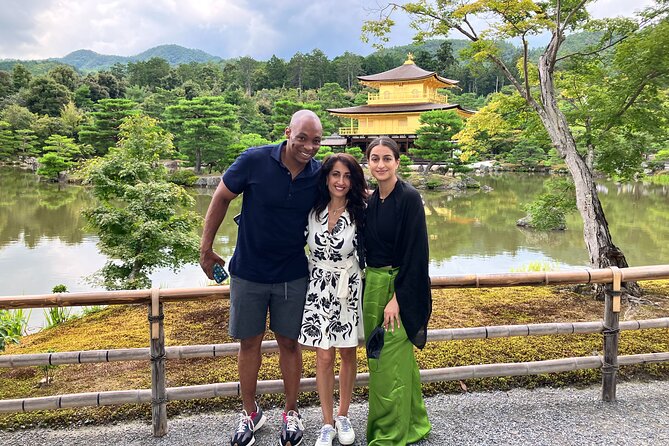
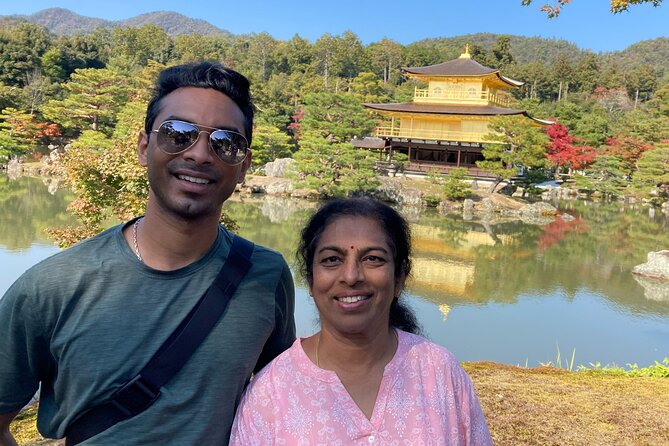
Kinkaku-ji, the Golden Pavilion, is Kyoto’s most instantly recognizable sight. Its upper floors are covered in gold leaf and reflect in the pond, creating the classic Kyoto image. It is also one of the busiest stops, with school groups and crowds often filling the viewing path. Go for the visual impact, but expect limited time at the best viewpoint.
Ryoan-ji offers a quieter kind of fame. Its dry rock garden is spare, composed, and intentionally open to interpretation. The garden itself is not large, and crowds can make quiet thought difficult, but the surrounding temple grounds and pond add room to breathe.
Ninna-ji is a World Heritage temple with long imperial connections and broad grounds. It pairs naturally with Kinkaku-ji and Ryoan-ji because all three sit in northwest Kyoto. That route gives you famous architecture without crossing the city repeatedly.
Nanzen-ji and the Nanzenji Suirokaku are better choices if you want a spacious Zen setting and a handsome brick aqueduct. Ginkaku-ji, the Silver Pavilion, brings a more restrained style, with gardens and mountain scenery rather than glitter. These eastern stops work well with Gion and Higashiyama, but combining them with Arashiyama may leave you spending too much of the day in the car.
Same base, a different sort of day:
- PERFECT KYOTO 1-Day Bus Tour
★ 5.0 · 13,518 reviews - Kyoto: Fushimi Inari, Kinkakuji, Bamboo Grove 1 Day Bus Tour
★ 4.8 · 4,316 reviews - Kyoto: Tea Ceremony in a Traditional Tea House in Kiyomizu
★ 4.9 · 3,519 reviews - Kyoto Geisha Walking Tour: Gion District & Hidden Gems
★ 4.7 · 3,273 reviews
Nijo Castle, the Imperial Palace, and central Kyoto
Nijo Castle connects Kyoto to the Tokugawa shoguns. Built in 1603 as the Kyoto residence of Tokugawa Ieyasu, it gives you a look at political power during the Edo period. Its admission is extra, as is the admission at several other major sights, so carry cash or confirm accepted payment methods before setting out.
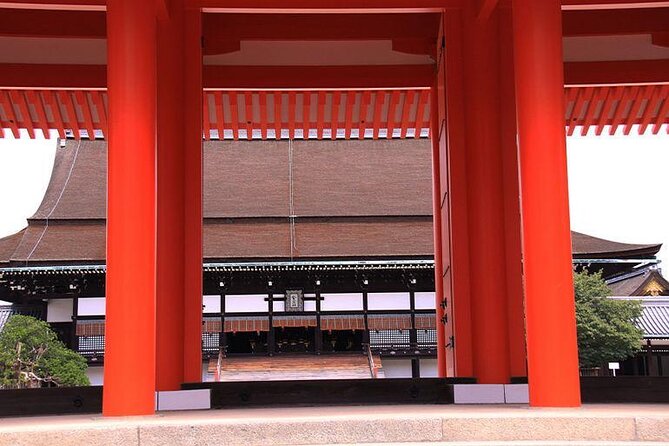
The Kyoto Imperial Palace served as the imperial residence until 1868, when the emperor and capital moved to Tokyo. The grounds are spacious, and the site helps explain Kyoto’s role as Japan’s imperial center. It is less about one dramatic view and more about scale, ceremony, and the layout of the former court area.
Nishiki Market is a narrow, five-block shopping street known as Kyoto’s Kitchen. It is a good place to see local food products, small shops, and prepared snacks in one concentrated stretch. It can be crowded, and the lane is not ideal for a slow, relaxed meal during a tightly timed tour. Still, several guides have arranged lunch there or suggested nearby places, including a conveyor-belt sushi restaurant and okonomiyaki.
Kennin-ji, close to Gion and Hanamikoji Street, offers dry gardens and a calmer temple setting near the city center. It is a smart alternative if you want temple architecture without committing to a distant district.
Arashiyama and western Kyoto
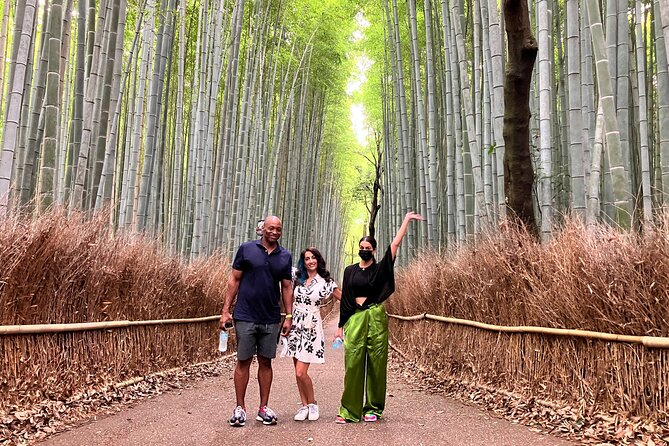
Arashiyama is a district, not a single attraction. The bamboo grove is the best-known walk, but the area also includes the important Zen temple Tenryu-ji, river views, and the wider Sagano district. It is popular and often crowded, so your guide’s value lies in deciding what fits rather than promising an empty path.
Tenryu-ji is the main temple choice here, with gardens and a strong connection to Zen history. Daikaku-ji, once a detached imperial palace, gives you a more spacious temple setting in northern Sagano. Katsura Imperial Villa is an outstanding example of Japanese garden and residential design, but its access rules and admission arrangements require attention, so confirm whether it can fit your date.
Yoshimine-dera lies in Kyoto’s western mountains and requires more travel than the central sights. It is a poor choice if your goal is maximum variety in six hours, but it may suit you if mountain temples matter more than a checklist of famous names.
The same logic applies to Shugakuin Imperial Villa in the northeast, Kibune River, and Kurama-dera in the northern mountains. These places offer a change from central Kyoto’s crowds, but each consumes driving time. Choose one northern or western excursion, not several distant ones.
Tofuku-ji, Toji, and the southern route
Tofuku-ji is a large Zen temple in southeastern Kyoto, especially famous for autumn color. It works well with Fushimi Inari because both are in the southeast, allowing you to keep the car moving through one part of town.
Toji, the East Temple, dates to the early Heian period, shortly after Kyoto became the capital. Its pagoda and temple grounds provide a useful introduction to Kyoto’s early Buddhist history. It can pair with Fushimi Inari or a Kyoto Station pickup, depending on your timing.
These southern stops are easy to overlook when planning around Kinkaku-ji and Arashiyama, but they can produce a more efficient day. Ask your guide to group sights by district. That one request may save more time than trying to add one extra temple.
Guides, communication, and the human side of the day
The quality of this tour depends heavily on the guide assigned to you. The strongest accounts describe guides who ask what you want, explain the background in clear English, take photographs, and adjust the pace without fuss.
Haru is praised for humor and for building a practical route around the group’s needs. Yuka is noted for strong English, energy, and cultural explanations. Ken receives high marks for useful information, courtesy, and flexibility. Noriko is a particularly good name to request if mobility or a gentler walking pace matters, though guide assignments cannot be assumed.
Michi stayed beyond the scheduled end to help a group find a particular meal. Tomy was praised for communicating before the tour, meeting a group at an out-of-the-way ryokan, and knowing where the driver could slow down for extra views. Hiroko handled a family with two active boys and kept the day lively.
The weaker outcomes came when the guide did not respond closely to the group’s preferences or offered thin storytelling. That is the main risk of a private tour: you pay for personal attention, but the day still depends on the individual guide. Send your priorities in advance and be direct at pickup. If you want food, gardens, photography, fewer stairs, or more history, say so early.
Price, group size, and overall value
At $634.72 per group of up to two, this is expensive for a couple. It becomes more defensible for a larger private group, since the price is set by the group rather than by each person, though the stated maximum is 15 people and the included vehicle arrangement should be confirmed for a larger party.
The real value is time and energy. You are paying to avoid confusing transport, reduce backtracking, park closer to selected sights, and have a guide interpret what you see. One group arriving from Tokyo by bullet train saw four major stops before an afternoon departure, which would be difficult by public transport.
Admissions, lunch, and personal expenses are extra. Budget separately for the temples and castle you select. The guide’s entry fees are covered only for sights listed in the tour details, so ask before adding a place outside the stated choices.
Pickup is offered, mobile tickets are used, and free cancellation is available up to 24 hours before the start time. Service animals are allowed. A limited number of child seats and booster seats exist, but rear-facing seats are not available, so contact the operator directly if you need one.
Who should book this Kyoto tour
I would choose this tour if you have one day in Kyoto, dislike crowded public transport, are traveling with children or older relatives, or want a guide to handle the route. It is also useful for a small group arriving by train and trying to see several major sights before continuing elsewhere.
It suits people who value flexibility more than a low price. You can ask for a slower pace, fewer stairs, a particular lunch, or a focus on photography and local customs. Wheelchair planning has also been handled successfully, but you should communicate access needs before the day.
I would skip it if you have several days in Kyoto and enjoy using trains, buses, and your own walking route. You will likely get better value by visiting one district at a time. I would also skip it if your main goal is to visit a long list of temples, since six hours will not allow meaningful time at all of them.
Final verdict: a smart splurge with a strict daily limit
This is a practical way to see Kyoto when time, energy, or transport confidence is limited. The private car is the main advantage, while the guide can turn a hurried sightseeing day into something more personal and understandable.
Book it for three or four carefully chosen stops, not the entire menu. Request your priorities early, ask about entrance fees, and treat the assigned guide as the key variable. For a family, a group of friends, or a couple with only one Kyoto day, the convenience can justify the cost. For a longer stay, slow independent exploration will usually offer better value.
FAQ
How long does the private Kyoto tour last?
The tour lasts approximately six hours.
How many people can join?
The activity is private, with a listed maximum of 15 people. The advertised price is $634.72 per group of up to two people.
What is included in the tour?
A licensed local English-speaking guide, a private vehicle, and a customizable walking tour covering your choice of three or four sites from the listed options are included.
Are hotel transfers available?
Yes. Pickup is offered, and door-to-door hotel transfers are included in the tour description.
Are entrance fees included?
No. Entrance fees, lunch, and personal expenses are not included. Guide entry fees are covered only for sights listed in the tour details.
Can I choose which Kyoto sights to visit?
Yes. You can choose three or four sites from options including Fushimi Inari-taisha, Nijo Castle, Gion, Nishiki Market, Kiyomizu-dera, Kinkaku-ji, Arashiyama, and others.
Are child seats available?
A limited number of car seats and booster seats are available. Rear-facing car seats are not available, and you must contact the operator directly if you need a seat.
What is the cancellation policy?
You can cancel up to 24 hours before the experience start time for a full refund. Cancellations or changes made less than 24 hours before the start time are not accepted for a refund.
Just added in Kyoto
- Kyoto: Private Photoshoot Service★ 5.0 · 158 reviews
- Kyoto Rickshaw Tour★ 5.0 · 210 reviews
- Kyoto: Arashiyama Bamboo, Temple, Matcha, Monkeys & secret spots★ 5.0 · 219 reviews
- Izakaya Style Cooking Class★ 5.0 · 219 reviews
- Kyoto: Traditional Concert at Townhouse or Bathhouse★ 4.9 · 224 reviews
- Ninja 2-hour Hands-on Lesson by Japanese master in Kyoto -Medium★ 5.0 · 218 reviews
- Kyoto: Afternoon Japanese Izakaya Cooking Class★ 4.9 · 241 reviews
- Samurai Training with Modern day Musashi in Kyoto★ 5.0 · 256 reviews
Government-Licensed Guide Tours, compared.
Tokyo 6hr Private Tour with Government-Licensed Guide
Read our review →
Hiroshima / Miyajima Full-day Private Tour with Government Licensed Guide
Read our review →
Kyoto 4hr Private Tour with Government-Licensed Guide
Read our review →
Hiroshima City 4hr Private Walking Tour with Licensed Guide
Read our review →
Nikko Full-Day Private Tour with Government-Licensed Guide
Read our review →
Himeji Half-Day Private Tour with Government-Licensed Guide
Read our review →Browse the lists this tour appears in