
Reviewed · SAMURAI & NINJA EXPERIENCES
Samurai School in Kyoto: Samurai for a Day
A sword comes out of its scabbard with a controlled sweep, not a movie flourish. At Kyoto’s Kembu Dojo, you learn that difference firsthand, starting with a respectful bow and moving through basic sword actions, strikes, and stylized kenbu choreography. I like the hands-on teaching and the chance to dress in samurai clothing for photos. The one thing to watch is the timing: the class or performance can run longer than expected.
I also like the small maximum group of 10, which gives the instructor room to correct your movements. The English instruction is clear, and the experience works well for families, teens, and adults who want more than a museum explanation. The photo session can feel rushed if several groups are waiting, so set your expectations accordingly.
Key points at a glance
- A real beginner lesson: Learn to bow, draw and return a sword, strike, thrust, and handle it safely under instruction.
- Choose your lesson length: The longer option adds walking, folding-fan movements, and a more demanding kenbu sequence.
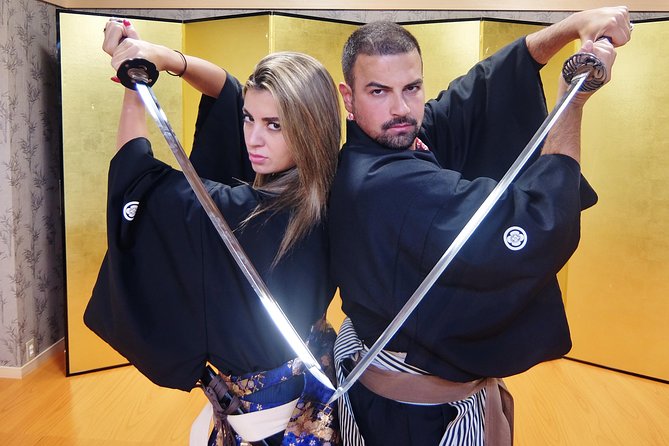
- Costume photos are included: Dress in samurai attire, pose with your sword, and take home a certificate and tenugui towel.
- A performance may be part of the visit: The skilled stage presentation helps you understand the movements you have just practiced.
- Good for active families: Children from ages 5 to 11 should preferably have some class or martial arts experience.
- Plan for practical details: Meet at the first basement floor of the GOZAN building, arrive early, and wear flexible clothes suitable for changing.
What the Kyoto samurai class really teaches
This is not a kendo tournament, a sword-fighting free-for-all, or a quick costume photo stop. The lesson focuses on kenbu, a Japanese samurai performing art that combines controlled sword movements, posture, music, and poetry.
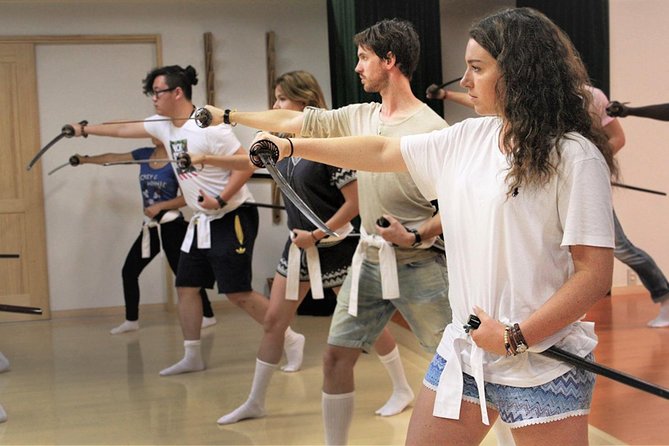
You begin with form and discipline. The bow matters because it sets the tone for the class: the sword is handled with care, and you follow the instructor’s directions closely. You then learn how to draw the sword from its protective scabbard, replace it, and perform basic striking actions.
That careful progression is a strength. You are not simply handed a prop and told to swing. Each movement has a set order, and the instructor demonstrates before you try it. The lesson remains accessible to beginners, but it still asks you to pay attention.
I would not book this expecting a detailed academic lecture on medieval Japan. You receive a short three-minute film about samurai practices, along with explanations during the class. The emphasis is physical learning, which makes this a good choice if you lose patience in museums or prefer to understand a tradition by trying its movements.
Other swordplay and stealth sessions in Kyoto:
- Kyoto Samurai Experience
★ 5.0 · 1,294 reviews - Kyoto: Kendo and Samurai Experience with Uniform and Gear
★ 4.9 · 815 reviews - Kyoto: Samurai Sword Class by Experts in Traditional Arts
★ 4.9 · 657 reviews
Arriving at Kembu Kyoto Dojo
The meeting point is at 35 Sanchome, in Kyoto’s Higashiyama Ward, postal code 605-0005. The activity is near public transportation and ends at the same meeting point, so you do not need to arrange a separate ride afterward.
The building detail matters. On arrival, go to the first basement floor using the stairs on the right side of the GOZAN building. Give yourself time to find the entrance, especially if you are coordinating a family group or arriving during a busy sightseeing day.
The operator asks you to arrive shortly before the start, with the practical guidance indicating about 10 to 3 minutes ahead. I would use the earlier end of that window. Costume changes and introductions take time, and arriving late can make the opening instructions harder to follow.
The maximum group size is 10 people. That is small enough for the instructor to keep an eye on basic form, though the experience can still feel different depending on the mix of participants. A quiet couple may receive more focused correction, while a larger family group can make the room more lively.
The opening film, bow, and sword handling
A short film introduces the basic practices of the samurai. It gives you useful context before the physical lesson, but it is only a starting point. The class itself carries most of the educational value because you see how posture, timing, and movement fit together.
After the introduction, you change into a samurai uniform. The outfit includes a white belt, Japanese-style socks, and a sword. You also have a chance to wear traditional costume for photographs later in the session.
The first physical skill is the bow. This may sound simple, but it shows how the class treats the sword as part of a formal practice rather than a toy. From there, you learn to draw the blade and return it to the scabbard. The motion requires coordination, so do not be surprised if your first attempt feels awkward.
Next come basic strikes and thrusts. The instructor demonstrates the correct way to hold the sword, then guides you through the movement. You will not become a samurai warrior in 90 minutes, of course, but you will understand how much control is required to make the action look smooth.
This part works especially well for teenagers and adults who want a clear activity with a beginning, middle, and end. It also suits families, though younger children need to listen carefully and follow the safety rules. The stated guidance recommends that children ages 5 to 11 have some kind of class or martial arts background.
Costume time and the photo session
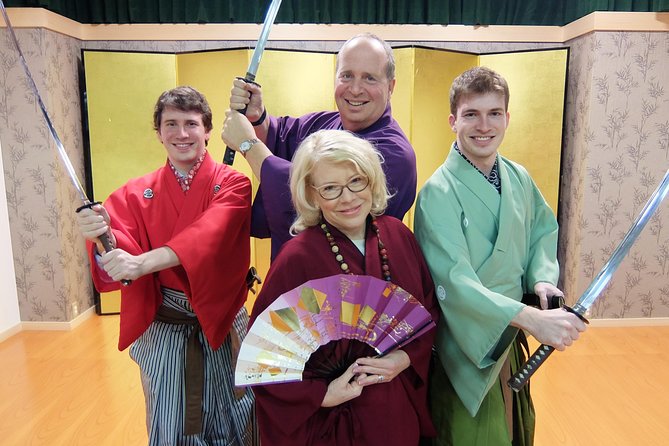
At some point in the lesson, you put on a more traditional samurai costume for photographs. This is one of the most memorable parts for many people because it turns an abstract history lesson into a personal keepsake.
You can pose with the sword and take photos in costume. A certificate of completion and tenugui towel are included, giving you two small souvenirs beyond the pictures. The towel is a traditional Japanese hand towel, and the certificate makes a nice memento for children or anyone marking a special trip.
Keep the photo session in perspective. It is included, but it is not presented as a professional portrait appointment. If another class is waiting, the staff may need to move things along. Bring a phone or camera that is ready to use, and have a few pose ideas in mind before changing clothes.
One practical clothing tip is easy to miss. Wear exercise-friendly clothes that allow movement and make costume changes manageable. A single bulky hoodie or tight outfit is not suitable. Flexible layers are the sensible choice.
Same base, a different sort of day:
- PERFECT KYOTO 1-Day Bus Tour
★ 5.0 · 13,518 reviews - Kyoto: Fushimi Inari, Kinkakuji, Bamboo Grove 1 Day Bus Tour
★ 4.8 · 4,316 reviews - Kyoto: Tea Ceremony in a Traditional Tea House in Kiyomizu
★ 4.9 · 3,519 reviews - Kyoto Geisha Walking Tour: Gion District & Hidden Gems
★ 4.7 · 3,273 reviews
The optional longer lesson and kenbu performance
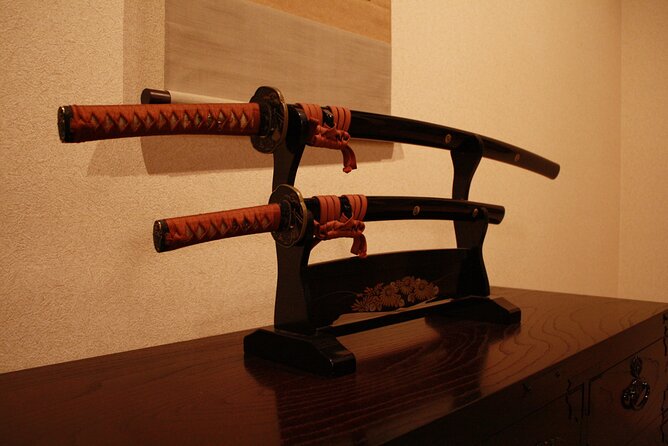
The standard class gives you an introduction to bowing, drawing, sheathing, striking, and basic sword use. If you choose the longer practice option, you spend more time refining the movements and learning additional elements of kenbu.
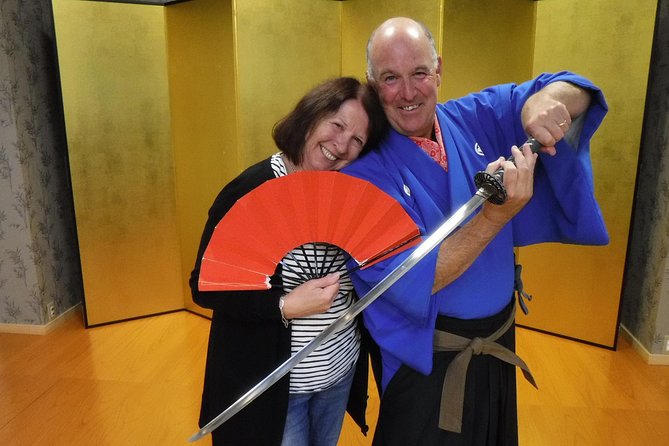
The extended lesson can include the way a samurai walks and the use of a folding fan. These details may seem small, but they show that kenbu is a performing art, not simply a set of fighting techniques. The fan changes the hand positions and rhythm, while the walking practice connects the individual sword movements into a composed sequence.
The longer option finishes with choreography performed on stage with a sword, poem, and music. This is the point at which the pieces begin to make sense. You are no longer repeating isolated actions. You are trying to hold posture, timing, direction, and expression together.
A performance by the staff may also be included during the visit. It gives you a useful contrast: your beginner movements are careful and deliberate, while the trained performers make the same style look quick and effortless. Several class formats are possible, so the exact order of the lesson and performance can vary.
Pay attention to the duration you book. One short session can feel compact, while a longer lesson gives you more time to practice. Some people also find that the performance portion takes longer than expected. If you have a restaurant booking, train connection, or another timed activity, leave room after the scheduled 90 minutes.
How authentic is the experience?
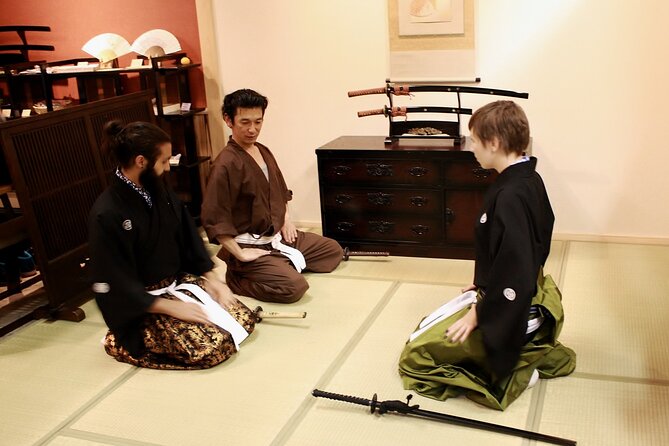
The word samurai covers a long and complicated period of Japanese history, and this class is not trying to recreate battlefield combat. It presents a stylized art form shaped by samurai traditions. That distinction matters.
You learn formal movements, controlled sword handling, costume details, and performance structure. The experience gives you a respectful taste of the culture, but it should not replace a museum visit or a fuller study of Japan’s warrior class from the 12th through the 19th century.
For me, that balance is part of its appeal. You get enough background to understand what you are doing, then spend most of your time practicing. The class does not ask you to sit through a long lecture before touching a sword.
The instructors are also an important part of the experience. The teaching is in English, and the staff are described as patient, organized, and serious about safety. One instructor is an active competitor and part of a family with seven generations of training in the samurai arts, though individual instructor assignments can vary by session.
Is $66.32 good value?
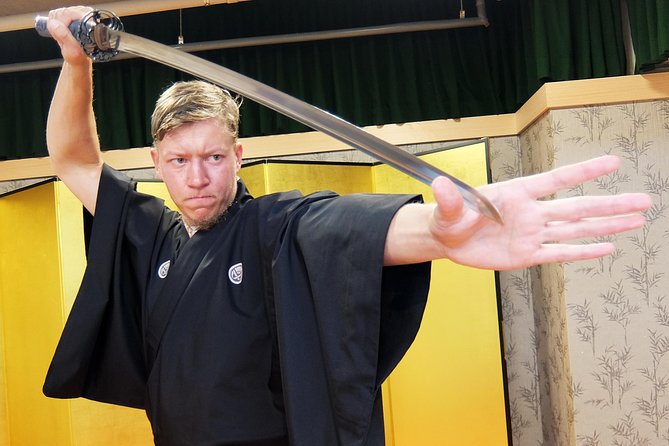
At $66.32 per person, this is not the cheapest short activity in Kyoto. It is also more than a simple photo stop. Your fee covers instruction, costume use, the photo session, a completion certificate, a tenugui towel, and access to the structured experience.
The value is strongest if you want active participation. You are paying for a guided lesson in a small group, not just an admission ticket to watch a show. Families can also get good value because children and adults can take part together, and the activity gives everyone a shared focus.
The value is weaker if you mainly want polished portrait photos or a long historical talk. The photo session may be brief, and the history portion is short. In that case, you may feel that the price is high for the amount of background information.
The longer option makes more sense for martial arts fans, history buffs, and anyone who wants to work on the movements rather than simply try the sword once. If you want a quick cultural activity between sightseeing stops, the shorter class may be enough.
Who should book this Kyoto experience?
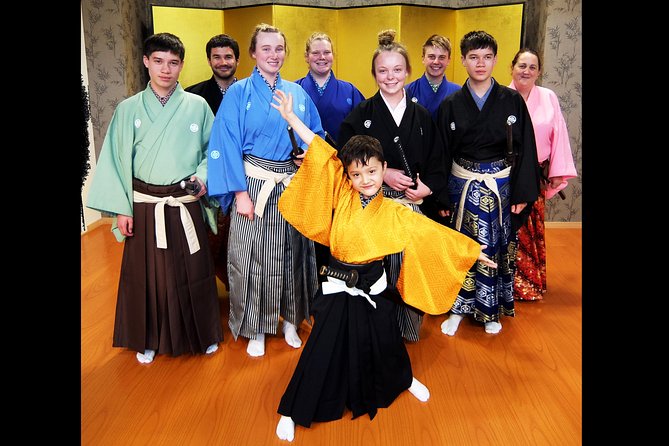
I would put this near the top of the list for:
- Families with older children and teens who enjoy hands-on activities
- Couples looking for unusual keepsake photos
- Martial arts enthusiasts curious about kenbu
- History buffs who want a physical connection to samurai traditions
- Visitors seeking an indoor activity on a rainy day
- People who prefer a small-group lesson to a large stage attraction
It is also a good fit for a family member who has little interest in museums. The pace changes between explanation, movement, costume, photography, and performance, so the experience does not rely on a long spoken presentation.
I would think twice if you dislike dressing up, have limited mobility, or do not enjoy following precise instructions. The activity requires a moderate level of physical fitness and enough flexibility to move around in costume. The operator specifically asks participants to follow safety instructions.
Young children may enjoy the clothing and photos but struggle with the discipline of the lesson. The guidance recommends martial arts or similar class experience for ages 5 to 11. That is useful advice, not a minor footnote.
Practical planning advice before you go
Book with enough time around the session. The listed duration is about one hour and 30 minutes, but the experience can run over, especially when a performance or longer practice session is involved.
Wear comfortable clothing that works under or alongside the costume. Avoid a lone hoodie or tight clothing that makes changing difficult. You will be moving, standing, bowing, and handling a sword, so comfort matters more than looking dressed up before you arrive.
The ticket is mobile, and confirmation is provided when you book. Hotel pickup, hotel drop-off, food, and drinks are not included. You make your own way to the GOZAN building and leave from the same place.
The cancellation policy is generous if your plans change early: you can cancel for a full refund up to 24 hours before the start time. Changes or cancellations inside that window are not accepted for a refund, and the cutoff follows local Kyoto time.
Should you book Samurai for a Day?
I would book this if you want to do something active and distinctly Japanese, especially with a partner, teenagers, or a family group. The best parts are the patient step-by-step sword lesson, the disciplined bow and drawing technique, the costumes, and the chance to see how trained performers shape those movements into kenbu.
Choose the longer option if the sword work is your main reason for coming. Choose the shorter format if you want a lively introduction with photos and a certificate, but leave extra time in your schedule. Just remember that the costume pictures may be quick and the historical explanation is limited.
For most visitors, the price is fair because you take part rather than simply watch. This is a playful experience, but it is not careless or purely theatrical. You leave with a better sense of the control behind samurai performance, a few photographs, and a memorable Kyoto activity that works particularly well when rain disrupts outdoor plans.
FAQ
Where does the samurai class take place?
The activity takes place at Kembu Kyoto Dojo, at 35 Sanchome in Kyoto’s Higashiyama Ward, postal code 605-0005. Enter the first basement floor using the stairs on the right side of the GOZAN building.
How long does the experience last?
The listed duration is approximately one hour and 30 minutes. The exact length depends on the option selected, and the session may sometimes run longer.
What will I learn during the class?
You will learn how to bow, draw and return a samurai sword to its scabbard, perform basic strikes and thrusts, and practice stylized kenbu movements. The longer session can include walking, folding-fan use, and choreography.
Is the class taught in English?
Yes. An English-speaking local guide or instructor leads the activity.
Is a costume included?
Yes. You wear a samurai uniform during the lesson and can dress in traditional samurai costume for the photo session.
Are photos included?
A photo shoot is included. You can take souvenir photos in samurai costume, though the session may be brief if other classes are waiting.
What souvenirs do I receive?
You receive a lesson completion certificate and a tenugui, which is a traditional Japanese towel.
Is the activity suitable for children?
Children can take part, but participants ages 5 to 11 should preferably have some experience attending a class or martial arts school. Everyone must follow the instructor’s safety directions.
What should I wear?
Wear clothing suited to exercise and movement, with enough flexibility for changing into the costume. A single hoodie or tight clothing is not suitable for the costume change.
What does the price include?
The price includes the English-speaking instructor, the lesson, the photo shoot, a tenugui towel, and a completion certificate. Hotel transfers, food, and drinks are not included.
Just added in Kyoto
- Private Cooking Class Udon in Kyoto Japan★ 5.0 · 23 reviews
- Your Private Vacation Photography Session In Kyoto★ 5.0 · 110 reviews
- Kyoto: Zen Meditation at a Private Temple with a Monk★ 5.0 · 25 reviews
- Private Pewter Sake Cup Experience with a Kyoto Artisan★ 5.0 · 31 reviews
- Kyoto Wagashi(Japanese sweets) Cooking Class near Fushimiinari★ 5.0 · 60 reviews
- Kyoto:Family-Friendly Kimono & Yukata Experience at WARGO★ 5.0 · 147 reviews
- Private Guided Traditional Buddhist Cooking in Japan★ 5.0 · 16 reviews
- Kyoto: Gion Geisha District & Sake-in-Hand Walking Tour★ 5.0 · 37 reviews
Samurai & Ninja Experiences, compared.
Samurai Ninja Museum Guided tour and Experience
Read our review →
Kendo and Samurai Experience with Uniform and Gear
Read our review →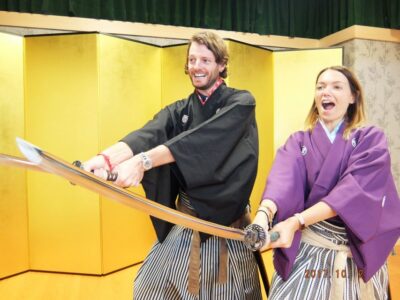
Samurai Sword Class by Experts in Traditional Arts
Read our review →
Skip the lines Basic Ticket at SAMURAI NINJA MUSEUM KYOTO
Read our review →
Samurai Sword & Archery Class from Samurai Descendant
Read our review →
Browse the lists this tour appears in