
Reviewed · SAMURAI & NINJA EXPERIENCES
Samurai Performance and Casual Experience: Kyoto Ticket
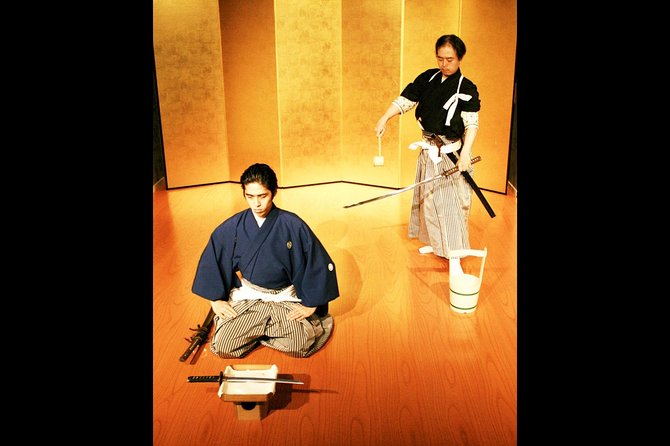
Kyoto’s Samurai Kembu performance is less a sword fight and more a theatrical lesson in samurai discipline. Performers wield swords, recite poems once associated with warriors before battle, and explain the meaning behind gestures, fans, and seppuku. The result is part stage show, part cultural introduction, and part photo opportunity.
I like the clear storytelling before each demonstration, and I like the short hands-on session at the end. You do not simply sit and watch: you get to handle a sword and fan, learn a few movements, and take photos with the performers. The main thing to consider is that this is not a realistic battle display or a serious martial-arts class. It includes plenty of narration, comedy, and theatrical performance.
Key points at a glance
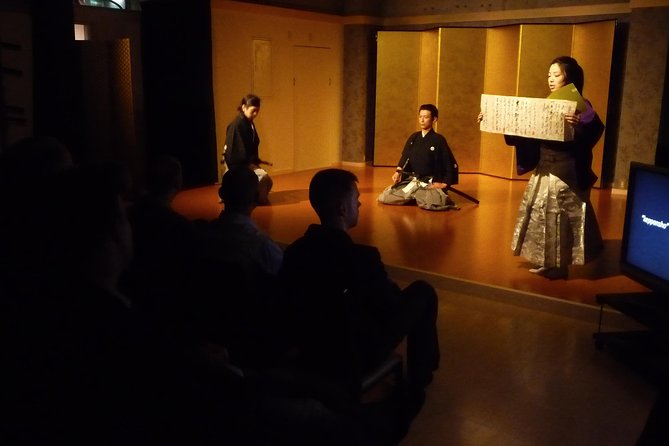
- About 40 minutes of stage performance: Traditional and new-style Kembu are presented with explanations of samurai customs and sword movements.
- A small, intimate theater: You remove your shoes before taking your seat, with both low and regular chairs available.
- A hands-on finale: Try simple sword and fan movements, then take photos with the performers.
- Useful Kyoto timing: The evening show fits neatly after sightseeing, with two showtimes available.
- A family-friendly cultural lesson: Children can follow the visual action, while adults get more context about samurai practice and symbolism.
- Good value at $33.03: The ticket covers the show and mini experience, but not food, drinks, or transportation.
What the Kyoto Samurai Kembu show really offers
Kembu is a traditional Japanese sword performance linked with samurai culture. It combines controlled sword movements, formal gestures, poetry, costume, and music or narration to express ideas such as courage, concentration, and dignity.
That distinction matters. If you arrive expecting choreographed combat with long sword battles, you may find the show more talk-heavy and theatrical than expected. If you want a compact introduction to an older Japanese art form, it makes much more sense.
The performance takes place at the Samurai Kembu Theater in central Kyoto. Its location near public transportation makes it easy to add to a day spent around downtown Kyoto or the Gion area. The show lasts about an hour, but only around 40 minutes is devoted to the formal performance. The remaining time is used for the mini experience and photographs.
At $33.03 per person, the ticket is not the cheapest way to spend an hour in Kyoto. Still, it covers more than a stage seat. You receive an English introduction, several demonstrations, historical explanations, and an interactive ending. For families or first-time visitors who want something beyond temples and gardens, the price is reasonable.
Other swordplay and stealth sessions in Kyoto:
- Kyoto Samurai Experience
★ 5.0 · 1,294 reviews - Kyoto: Kendo and Samurai Experience with Uniform and Gear
★ 4.9 · 815 reviews - Kyoto: Samurai Sword Class by Experts in Traditional Arts
★ 4.9 · 657 reviews
Entering the theater and getting settled
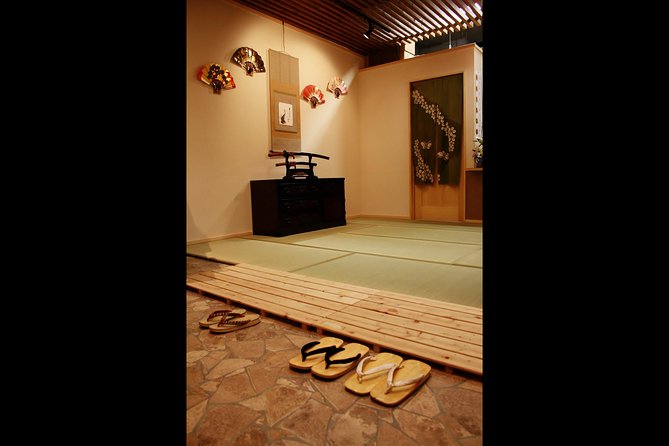
You are asked to remove your shoes before entering, following a familiar Japanese custom. This small detail helps set the tone, but wear socks you are comfortable being seen in. Seating includes low chairs close to the floor and regular chairs, which is helpful if sitting low is uncomfortable.
The theater is small enough to feel personal rather than distant. That suits Kembu, because the fine hand movements and sword handling would lose some effect in a large auditorium. It also means the presentation feels more like a cultural demonstration than a grand stage spectacle.
Plan to arrive 15 to 5 minutes before the start. The directions provided say to go down the stairs on the right side toward the GOZAN building and continue to the reception desk. Allow a little extra time if you are unfamiliar with central Kyoto streets.
The listed start time is 4:15 pm, and the experience offers two showtimes to fit different sightseeing plans. Check your selected time carefully when booking. The evening format is especially useful after a temple visit, shopping, or a walk through Gion.
The introduction explains more than sword handling
Before the demonstrations begin, a performer introduces Kembu and gives an overview of samurai culture. The explanations cover a warrior class that shaped Japan from the 12th through the 19th centuries, along with the idea that Kembu helped samurai build courage and mental focus.
This background gives the movements a purpose. You are not just watching someone swing a sword. You are being shown how posture, timing, facial expression, and controlled gestures can communicate a particular state of mind.
English is used throughout the presentation. Several people found the explanations helpful and easy to follow, while one person found the pronunciation difficult at times. If English is not your first language, sit where you can watch the demonstrations closely. The visual action carries much of the meaning, even if you miss a sentence or two.
The style is friendly rather than solemn. The performers use humor, and some of the dialogue is designed to keep the audience relaxed. That works well for families and casual visitors, though it may disappoint anyone expecting a formal, silent display of swordsmanship.
Traditional and new-style Kembu on stage
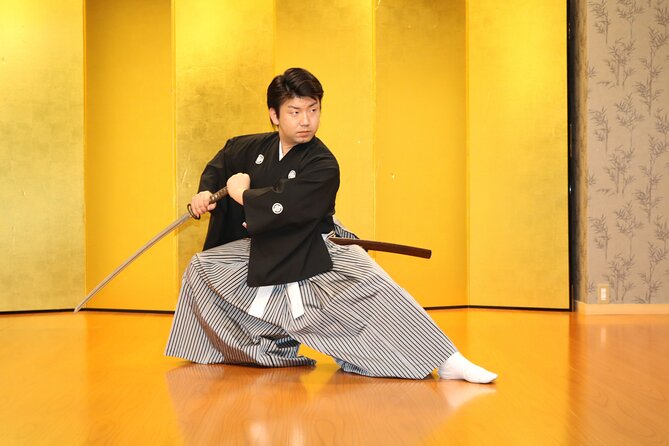
The main performance is divided into short demonstrations. Before each section, you hear a brief explanation of the custom or story connected with it. The performers then use swords and other gestures to present the piece.
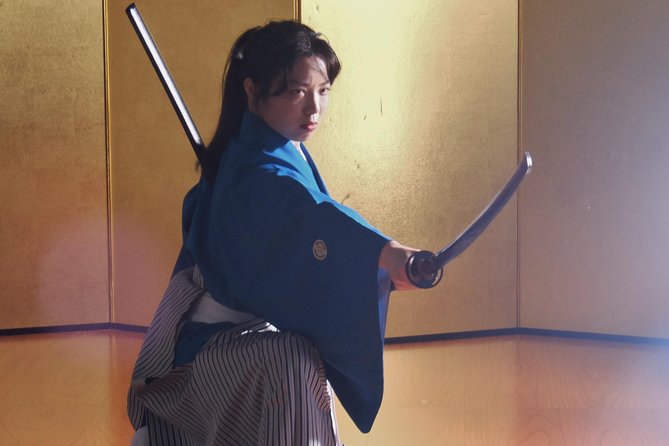
Traditional Kembu includes the recitation of short poems associated with samurai before battle. The poems and movements give the performance a ceremonial quality. The sword is not treated only as a weapon. It becomes part of a controlled sequence of posture, rhythm, and expression.
New-style Kembu is also included. This gives the show a little more variety and helps explain how the art has been adapted for a modern audience. You will see performers brandish their swords in intricate movements, but the focus remains on form and meaning rather than mock combat.
The action is carefully choreographed and theatrical. One especially memorable aspect is the contrast between stillness and sudden motion. A performer may pause, hold a pose, then cut through the air with a precise movement. The effect can feel closer to dance or live opera than to a fight scene.
That theatrical quality is one of the show’s strengths. It also explains the main limitation. You will not learn practical battlefield techniques, and you should not expect a training session in fighting methods. The show presents samurai ideals through performance.
Same base, a different sort of day:
- PERFECT KYOTO 1-Day Bus Tour
★ 5.0 · 13,518 reviews - Kyoto: Fushimi Inari, Kinkakuji, Bamboo Grove 1 Day Bus Tour
★ 4.8 · 4,316 reviews - Kyoto: Tea Ceremony in a Traditional Tea House in Kiyomizu
★ 4.9 · 3,519 reviews - Kyoto Geisha Walking Tour: Gion District & Hidden Gems
★ 4.7 · 3,273 reviews
Fans, poems, and the meaning behind the gestures
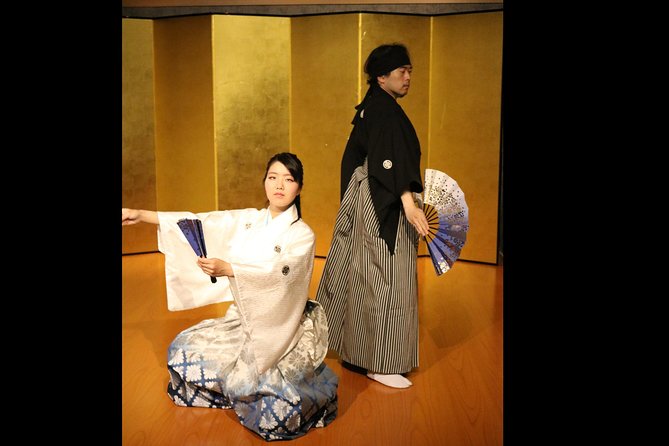
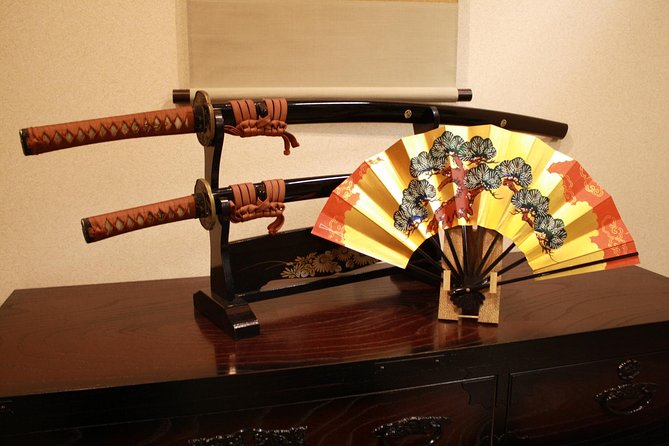
The program also introduces the Japanese folding fan. In this setting, the fan is part of the performance language. Its movement can suggest ceremony, emotion, or a particular character, rather than simply providing relief from heat.
The presentation also addresses seppuku, sometimes called hara-kiri. This is a serious subject, and the show places it within its explanation of samurai custom. It is presented as part of the culture and beliefs surrounding the warrior class, not as a casual stunt.
These explanations are valuable because they keep the performance from becoming a costume display without context. You learn why a performer uses a fan, why a poem is recited, and why certain gestures carry weight.
You may find the historical treatment fairly light. The program is designed for a general audience and lasts only about an hour, so it cannot provide a full study of samurai society. Still, it gives you enough information to watch the movements with greater understanding.
The mini experience turns spectators into participants
After the formal show, you get a chance to try simple sword and fan movements yourself. This is not a full lesson, but it changes the mood of the evening. The audience shifts from watching trained performers to taking part in a small, guided activity.
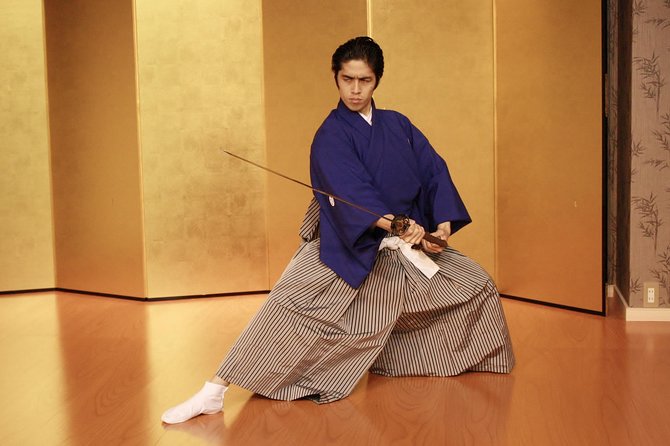
The sword handling is arranged for the experience, and you can pose with a performer while holding a sword and fan. The staff take photos, and the result makes a good family picture or travel keepsake.
This section is playful. It includes laughter and a little awkwardness, especially if you have never tried formal fan or sword movements before. That is part of the appeal. You do not need previous knowledge or physical training to participate.
One useful tip is to ask about dressing up if you want a more polished practice photo. An attendee wished they had known that costumes were available for the practice portion. The supplied details do not specify the costume options or any extra cost, so ask the theater directly if this matters to you.
The hands-on ending is also why this experience works well for children. They may not remember every historical explanation, but they are likely to remember holding a sword, learning a movement, and posing with the performers.
Who will get the most from this experience
I would choose this show for several types of visitors:
- Families looking for an indoor activity that combines history and participation.
- First-time visitors who want a cultural program beyond temples and shrines.
- Adults who enjoy theater, dance, costume, and historical storytelling.
- Anyone with a rainy afternoon or evening in Kyoto.
- Visitors staying near central Kyoto who want an activity that fits around dinner or a walk through Gion.
It is less suitable if your main goal is combat instruction. You will not receive a detailed lesson in sword fighting, and the show includes more explanation than action. It may also feel too light for someone seeking a strictly formal or academic presentation of samurai history.
The tone is approachable. The performers use humor, and the photo session keeps the experience from becoming stiff. That makes it a good choice when your group has mixed interests. A history fan can listen to the explanations, while younger children can focus on the costumes, swords, movement, and participation.
How the timing affects your Kyoto day
The one-hour duration is one of the easiest features to use. You can visit the theater without giving up half a day of sightseeing. The evening schedule makes it possible to spend the earlier part of the day at temples, museums, or markets, then attend the show before dinner.
Because the formal performance takes about 40 minutes, the pace is brisk. You receive several demonstrations without being asked to sit through a long production. The mini experience follows directly, so you do not need to arrange a separate activity.
The central location is another practical advantage. The theater is near public transportation, and the surrounding area gives you options for continuing your evening. The information provided places it near the Gion district, making a post-show walk possible.
Food and drinks are not included. Plan dinner separately, and do not assume that the ticket includes hotel pickup or drop-off. You make your own way to the theater and return under your own arrangements.
Value, limitations, and the 91 percent recommendation
The price of $33.03 is fair if you value a guided cultural activity with a personal ending. You get a performance, historical narration, a short interactive lesson, and photos. The small venue also makes the presentation feel more direct than a large commercial stage show.
The value is weaker if you only want action. Much of the program consists of narration and short demonstrations, not continuous swordplay. Some people have found the show less serious and less physically intense than expected.
The overall rating is 4.6 out of 5, with 91 percent recommending it. The most consistently praised elements are the friendly staff, clear historical explanations, impressive performers, and enjoyable photo session. The strongest individual reactions describe the sword work as precise and theatrical, with costumes and physical control adding to the effect.
The more reserved reactions are useful, too. They point out that there is a lot of talking and less action, and that the experience is aimed more at families and general audiences than experts in Japanese culture. That is not a flaw for the right visitor, but it is important to know before paying.
Practical details before you book
Your mobile ticket is confirmed at booking. Most people can participate, and the experience is near public transportation. You should arrive no later than five minutes before the start, with 15 minutes early being the safer choice.
Wear comfortable clothing for sitting and for the short practice session. Remember that shoes come off at the theater. If you hope to use low seating, regular seating, or a costume, ask at reception rather than assuming every option is available.
Free cancellation is offered when you cancel at least 24 hours before the local start time. Cancellations or changes made inside that window are not refunded, and you must handle the cancellation yourself through Viator.
The experience is provided by Ginbu Co., LTD., formerly known as Samurai Kenbu Co., LTD. Food, drinks, and transportation are not included.
Should you book the Kyoto Samurai Kembu experience?
Book it if you want a short, friendly introduction to samurai culture with live performance and a chance to take part. The show is especially well suited to families, rainy-day planning, and anyone who wants a break from Kyoto’s usual temple circuit.
Skip it if you are hoping for a realistic sword battle, advanced martial-arts instruction, or a long historical lecture. For $33.03, I think the experience earns its price through the combination of performance, explanation, and photographs, but only if you appreciate theater and cultural storytelling as much as sword action.
FAQ
How long does the Samurai Kembu experience last?
The experience lasts approximately one hour. About 40 minutes is devoted to the formal show, followed by the mini sword and photo experience.
How much does the ticket cost?
The listed price is $33.03 per person.
Is the ticket mobile?
Yes. The experience includes a mobile ticket.
What is included?
The ticket includes the Kembu performance and the mini experience with a sword, fan movements, and photographs with the performers.
Are food and drinks included?
No. Food and drinks are not included.
Do I need to remove my shoes?
Yes. You remove your shoes before entering the theater and taking your seat.
Are there different seating options?
Yes. The theater has low chairs close to the floor and regular chairs.
What time should I arrive?
You should arrive between 15 and 5 minutes before the selected start time. One listed start time is 4:15 pm, and the experience offers two showtimes.
Can I cancel for a full refund?
Yes, if you cancel at least 24 hours before the experience’s local start time. Cancellations or changes made less than 24 hours before the start are not refunded.
Just added in Kyoto
- Private Cooking Class Udon in Kyoto Japan★ 5.0 · 23 reviews
- Your Private Vacation Photography Session In Kyoto★ 5.0 · 110 reviews
- Kyoto: Zen Meditation at a Private Temple with a Monk★ 5.0 · 25 reviews
- Private Pewter Sake Cup Experience with a Kyoto Artisan★ 5.0 · 31 reviews
- Kyoto Wagashi(Japanese sweets) Cooking Class near Fushimiinari★ 5.0 · 60 reviews
- Kyoto:Family-Friendly Kimono & Yukata Experience at WARGO★ 5.0 · 147 reviews
- Private Guided Traditional Buddhist Cooking in Japan★ 5.0 · 16 reviews
- Kyoto: Gion Geisha District & Sake-in-Hand Walking Tour★ 5.0 · 37 reviews
Samurai & Ninja Experiences, compared.
Samurai Ninja Museum Guided tour and Experience
Read our review →
Kendo and Samurai Experience with Uniform and Gear
Read our review →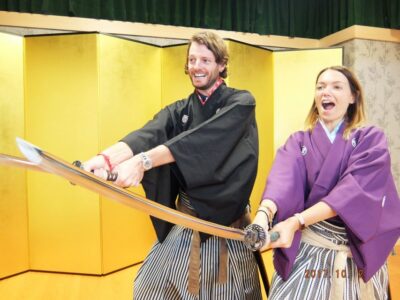
Samurai Sword Class by Experts in Traditional Arts
Read our review →
Skip the lines Basic Ticket at SAMURAI NINJA MUSEUM KYOTO
Read our review →
Samurai Sword & Archery Class from Samurai Descendant
Read our review →
Browse the lists this tour appears in