Reviewed · TOURS IN KYOTO
Hanakoushi cotton Scarf Class
The best part of this Kyoto experience is that you do not simply buy a textile souvenir. You fold and dye your own scarf, using a simplified version of the traditional hanakoushi shibori method. Your small private class gives you direct help, and the finished piece is ready to take home after the dye sets.
I like two things right away: the class is short enough to fit into a busy Kyoto day, and the museum gives your craft some useful context. I also like that you choose the color yourself and leave with something practical, not just another small trinket. The main consideration is that the hands-on work is fairly simple, so anyone expecting hours of intricate fabric tying may find the class too light.
Key points
- Private instruction: Only your party takes part, so you can ask questions and work at an easy pace.
- Traditional technique: You fold and dye fabric using hanakoushi shibori, a form of Japanese resist dyeing.
- A useful souvenir: The finished scarf measures about 175 by 50 centimeters, making it easy to wear or give as a gift.
- Museum time included: While the fabric dries, you can view shibori artwork, tools, samples, and a historical video.
- Friendly named instructors: Nina and Yokahama-san are specifically noted for patient, clear guidance.
- Good schedule fit: The class is usually 30 to 60 minutes, but drying time may add another half hour.
A handmade Kyoto souvenir in about half an hour
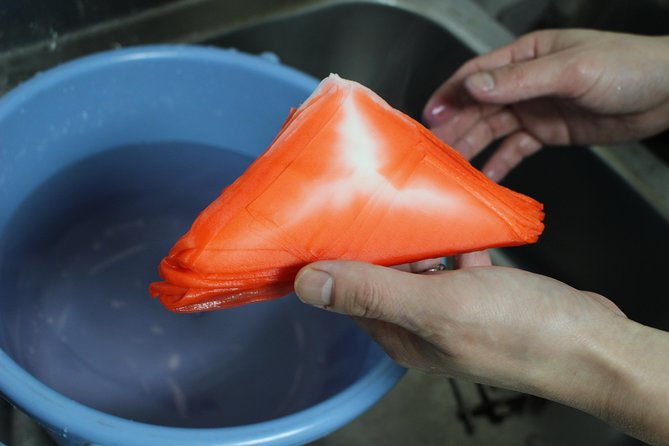
Shibori is a Japanese textile art in which fabric is folded, tied, compressed, or otherwise protected before dyeing. The covered sections resist the color, leaving patterned areas when the cloth is opened. It can be a painstaking craft, with some designs requiring careful work on many small sections of fabric.
This class gives you a manageable introduction rather than the full workshop experience of a textile artist. You learn a particular folding method, apply one color, and watch the pattern appear when the material is opened. That makes the activity approachable for families, couples, solo visitors, and anyone who wants to try a traditional craft without giving up half a day.
The finished scarf is a generous size, about 70 by 17 inches, or 175 by 50 centimeters. That matters when you compare this class with small souvenir-making activities. You leave with something you can wear, wrap, or give to a parent or friend.
One detail needs checking before you reserve. The class description identifies the fabric as cotton, while other supplied details refer to silk, including several comments about making silk scarves. Confirm the current material with the Kyoto Shibori Museum if fabric type matters to you.
Other experiences people book in Kyoto:
- PERFECT KYOTO 1-Day Bus Tour
★ 5.0 · 13,518 reviews - Kyoto: Fushimi Inari, Kinkakuji, Bamboo Grove 1 Day Bus Tour
★ 4.8 · 4,316 reviews - Kyoto: Tea Ceremony in a Traditional Tea House in Kiyomizu
★ 4.9 · 3,519 reviews
Choosing a color and folding the cloth
Your session begins at the Kyoto Shibori Museum, at 135-5 Shikiamicho in Nakagyo Ward. The museum is near public transportation, and the activity begins and ends at this same location.
First, you choose a color. This small decision gives the class a personal touch, since the pattern comes from the folding but the overall character of the scarf depends heavily on the dye you select.
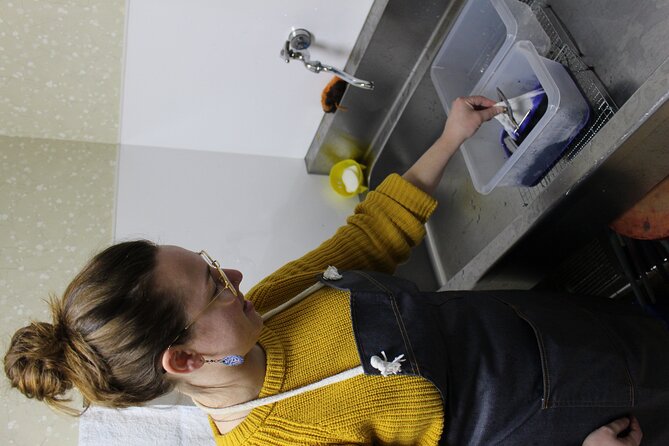
An instructor then demonstrates how to fold the fabric. You will not be left to guess your way through the process. Nina is named as one instructor who guides participants in a clear and friendly manner, while Yokahama-san is praised for helping families understand both the practical steps and the larger importance of the craft.
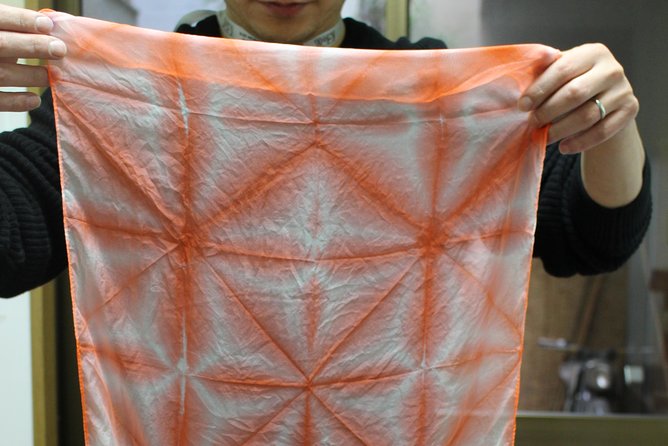
The folding is hands-on, but the method has been simplified for a short visitor class. That is good news if you want a finished scarf without spending hours tying tiny sections of fabric. It is also the main limitation for serious craft enthusiasts. You get a taste of the process, not a full apprenticeship.
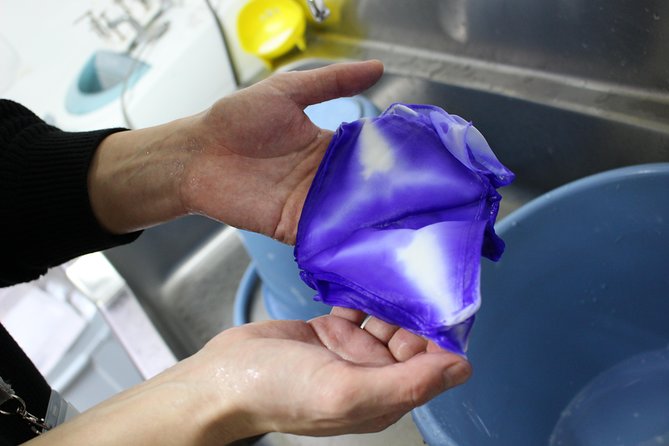
Once folded, the fabric is dyed in your chosen color. The protected folds create the design. The result is partly controlled and partly a pleasant surprise, which is a large part of the fun.
The reveal comes after the dye dries
The fabric needs about 30 minutes to dry. Depending on the exact booking and the pace of your session, the class itself may take 30 to 60 minutes, with drying time handled afterward.
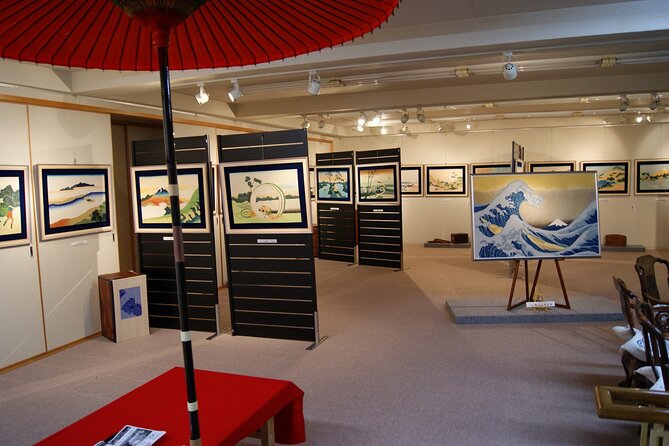
Use that pause to see the museum. It is described as small, but the collection gives you a better sense of how much skill can sit behind a simple-looking pattern. You can view finished shibori pieces, tools, fabric samples, and other examples of the art.
A historical video and demonstrations help explain the process. This part is important because the scarf-making itself is intentionally easy. The museum shows you what professional and traditional shibori can involve, from basic resist patterns to highly detailed textile work.
When your scarf is ready, the opening is the payoff. Folded cloth can look plain or mysterious before dyeing. Once opened, it reveals a pattern shaped by the choices you made. You may not get a perfectly predictable result, and that is part of the appeal.
What the private format really adds
This is a private activity for your party only. That does not mean you receive a long, custom-designed textile lesson, but it does give you a quieter setting than a large group class.
You can ask for the folding steps to be repeated, take your time choosing a color, and work without keeping up with strangers. That helps families with children and couples working on two scarves at once. One couple made a scarf each, and a family of five took part together.
The private format also gives you a better chance to ask about the tools, patterns, and museum pieces. If you are curious about why one fold creates a certain mark, this is the time to ask.
The class works well for solo visitors too. Nina has guided an individual participant through the process, making the session feel worthwhile even when one person is attending alone. You do not need a large group to make the booking practical.
Same base, a different sort of day:
- Kyoto Geisha Walking Tour: Gion District & Hidden Gems
★ 4.7 · 3,273 reviews - Kyoto: Tea Ceremony Ju-An at Jotokuji Temple
★ 4.9 · 3,207 reviews - Kyoto: Gion Magical Night Walking Tour with Geisha Trivia
★ 4.9 · 2,393 reviews - Kyoto: 45-Minute Tea Ceremony Lesson Experience
★ 4.3 · 2,378 reviews
A small museum with more than a quick craft display
Do not expect a major museum complex. The Kyoto Shibori Museum is small, and one person found it best treated as a short stop rather than a full afternoon attraction.
Still, its size suits the class. You move from the practical activity to the displays without losing the thread of the story. The tools and samples help you see the difference between a basic tourist project and the painstaking work behind fine shibori textiles.
The art also gives you a reason to slow down after the dyeing. You can examine finished pieces, watch the historical video, and learn about techniques beyond the one used for your scarf. That context adds value to the class because your souvenir becomes connected to a living Japanese handcraft tradition.
I would not book this experience mainly for the museum alone unless you are already interested in textiles. The museum is described as compact. Its strongest role is as an informative companion to the workshop.
Shopping for shibori after class
The museum shop sells shibori fabrics, souvenirs, purses, clothing, and other handmade items. Some participants have bought a purse for a parent and samue clothing for a family member after completing the class.
This is useful if you want to compare your own work with more finished pieces. Your scarf is a personal souvenir, while the shop offers items made with more complex techniques and a wider range of patterns.
The shop can also tempt you to spend more than planned. The class price is $43.35 per person, and that already includes a substantial scarf-making activity. Set a budget before browsing if you are trying to keep souvenir costs under control.
Is $43.35 a fair price?
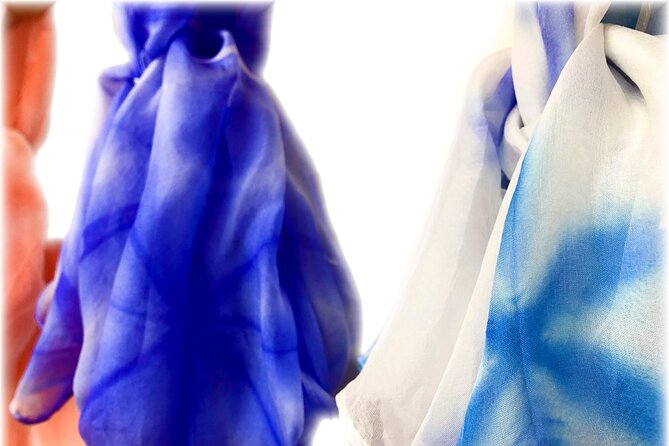
For about $43.35 per person, you receive private instruction, materials, a large scarf, access to the museum displays, and time to learn about shibori. I consider that a fair price for a short craft activity, especially because the finished item is useful and personal.
The value depends on what you want from the class. If you mainly want a low-cost souvenir, a ready-made scarf from a shop may cost less effort and possibly less money. If you want a story attached to the item, the class makes more sense. You choose the color, fold the fabric yourself, and see how the pattern forms.
The private setup is another reason the price can work. A group of two or three people can share the experience without being placed with strangers. For a family, the total cost rises quickly, so consider how many people truly want to make a scarf.
The short duration helps with planning. You can place the class between sightseeing stops, though I would not schedule a tight connection immediately afterward. Drying takes about 30 minutes, and the class may last anywhere from 30 to 60 minutes.
Who will enjoy this class most?
I would recommend it to you if you like hands-on activities, want a practical keepsake, or need a break from temples and city walking. It also suits people who enjoy Japanese crafts but do not have the time or patience for a highly technical workshop.
Families should find the private setting helpful. Everyone can make a scarf, and the process is simple enough to follow with direct instruction. The museum displays also give children something to look at while the fabric dries.
Couples can make matching or contrasting scarves. Solo visitors are not out of place, since the session can be held for one person and the instructor can guide you directly.
The class may disappoint you if you want to master traditional shibori in one visit. The work has been adapted for a short tourist schedule. You will learn the basic idea and make a finished piece, but you will not spend hours on the tiny, exact ties used in more advanced designs.
Timing, transport, and cancellation details
The meeting point is the Kyoto Shibori Museum, and the activity returns there at the end. It is near public transportation, which makes it easier to fit into a day in central Kyoto.
The experience is offered with a mobile ticket, and confirmation is sent at booking. Most people can participate, though the supplied details do not describe specific accessibility arrangements.
Plan around the full visit rather than only the stated class time. Allow 30 to 60 minutes for the class, then about 30 minutes for drying and museum viewing. You can also spend extra time in the shop if you want to browse.
Free cancellation is available up to 24 hours before the local start time for a full refund. Changes or cancellations made within 24 hours are not refunded, so keep your Kyoto schedule reasonably firm once that deadline passes.
Should you book the Hanakoushi cotton Scarf Class?
I would book this if you want a short, personal Kyoto activity with a souvenir you actually use. The private format, kind instruction, museum displays, and large finished scarf give the experience more substance than a simple dye-and-go craft.
I would skip it if your main goal is an advanced lesson in traditional textile work, or if you have very little interest in making something by hand. The technique is intentionally simplified, and the museum is small.
For most visitors, the strongest reason to go is the balance: you get a clear introduction to shibori, a pleasant half-hour of making, and a personal scarf without giving up a full morning. Confirm whether the current scarf fabric is cotton or silk, allow time for drying, and you should know exactly what you are paying for.
FAQ
Where does the Hanakoushi cotton Scarf Class take place?
The class takes place at the Kyoto Shibori Museum, located at 135-5 Shikiamicho, Nakagyo Ward, Kyoto, Japan.
How long does the class take?
The class usually takes about 30 to 60 minutes. The fabric then needs about 30 minutes to dry, during which you can explore the museum.
How much does the experience cost?
The listed price is $43.35 per person.
Is the class private?
Yes. Only your party participates in the activity.
What kind of scarf will I make?
You will make a scarf measuring about 175 by 50 centimeters, or approximately 70 by 17 inches. The supplied information describes the scarf as cotton in one section and silk in others, so confirm the current material before booking if this matters to you.
Which shibori method will I learn?
The class teaches the hanakoushi shibori method. The activity also introduces you to traditional Japanese resist dyeing and other shibori techniques through the museum displays.
What happens while the scarf dries?
You can look at shibori artwork, tools, and fabric samples in the museum. A historical video and other explanatory material may also be available.
Can I shop after making the scarf?
Yes. The museum shop sells shibori items, souvenirs, fabrics, purses, clothing, and other handmade goods.
Can I cancel for a full refund?
You can cancel at least 24 hours before the experience start time for a full refund. Cancellations or changes made within 24 hours are not refunded.
Just added in Kyoto
- Private Cooking Class Udon in Kyoto Japan★ 5.0 · 23 reviews
- Your Private Vacation Photography Session In Kyoto★ 5.0 · 110 reviews
- Kyoto: Zen Meditation at a Private Temple with a Monk★ 5.0 · 25 reviews
- Private Pewter Sake Cup Experience with a Kyoto Artisan★ 5.0 · 31 reviews
- Kyoto Wagashi(Japanese sweets) Cooking Class near Fushimiinari★ 5.0 · 60 reviews
- Kyoto:Family-Friendly Kimono & Yukata Experience at WARGO★ 5.0 · 147 reviews
- Private Guided Traditional Buddhist Cooking in Japan★ 5.0 · 16 reviews
- Kyoto: Gion Geisha District & Sake-in-Hand Walking Tour★ 5.0 · 37 reviews
Tours in Kyoto, compared.


Tea Ceremony in a Traditional Tea House in Kiyomizu
Read our review →
Kyoto Geisha Walking Tour: Gion District & Hidden Gems
Read our review →


Gion Geisha District Walking Tour – Stories of Geisha
Read our review →
Best of Kyoto: Gion, Geisha, Pagodas & Cobblestones
Read our review →