
Reviewed · SAMURAI & NINJA EXPERIENCES
Samurai Training with Modern day Musashi in Kyoto
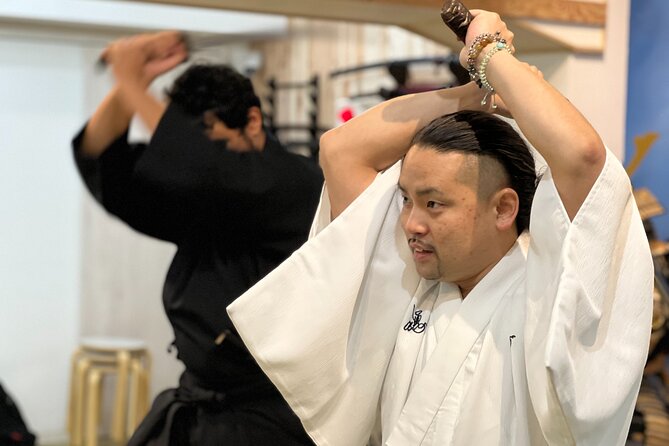
The unusual part of this Kyoto activity is its setting: you train inside a working dojo, not a stage built only for tourists. Yushin Sensei, who has more than 20 years of experience, leads instruction with help from Jordan and English-speaking staff such as John. You put on samurai training clothes, handle a katana, and learn a real kata before watching a two-katana performance.
I like the small-class format, with a stated limit of six participants in many sessions and an overall maximum of nine. I also like the balance between hands-on practice and cultural context. You are not simply handed a sword for a photograph. You learn how to draw, sheath, and hold it safely, while hearing about samurai customs and sword parts.
The main consideration is that mat cutting with a real katana is not currently offered. Older descriptions of the experience may mention cutting, but the present program focuses on controlled training, kata, and demonstrations. That makes it safer and more accessible, but it may disappoint anyone expecting a dramatic cutting lesson.
Key points before you book
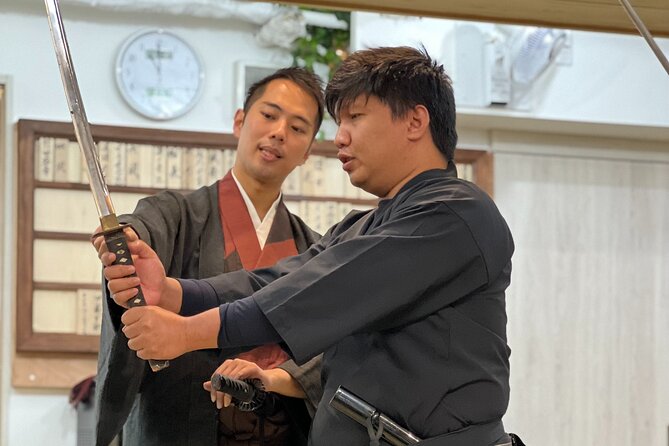
- Train in a real dojo: The session takes place at Yushinkan International, a functioning martial arts center with a shrine and student name plaques.
- Meet Yushin Sensei: The head instructor brings more than 20 years of swordsmanship experience to the lesson and performs with two swords.
- Wear full training gear: You put on a dōgi, obi, and hakama before beginning the practical work.
- Learn a complete short kata: The lesson covers drawing, sheathing, stance, movement, and a formal sword sequence.
- Expect a compact class: The intended group size is six, though a class can be larger when bookings require it, up to nine people.
- Plan about 1 hour 45 minutes: The session can run from 1.5 to 2 hours, depending on group size.
A real Kyoto dojo, not a quick photo stop
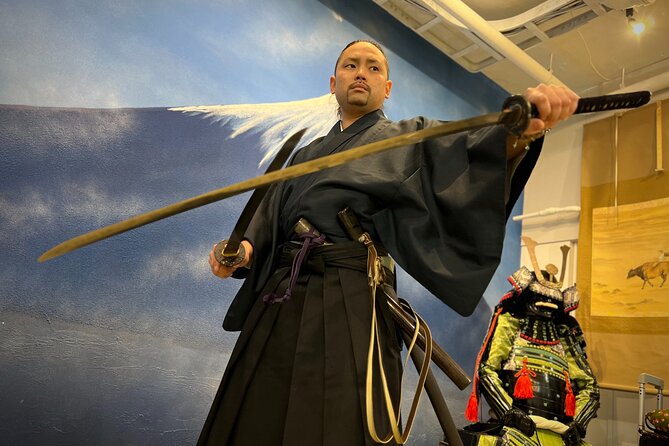
The address is 452-4 Matsugaechō in Nakagyo Ward, central Kyoto. The dojo is in a basement-level complex, so do not expect a grand temple entrance or a polished museum hall. You are entering a training space where students practice, wooden name plaques line the wall, and a small Shinto shrine adds a clear sense of place.
That setting matters. A costume photo studio can give you the look of a samurai for ten minutes. Here, the clothing is part of a lesson. You dress for movement, stand in the training area, and follow the same broad etiquette that shapes a martial arts class. The atmosphere is serious enough to feel meaningful, but the instructors keep it friendly and approachable.
I would allow a few extra minutes to find the building and reach the dojo. The meeting point is supplied with the booking, and the location is near public transportation. Since the activity ends at the same place, you do not need to arrange a second pickup point.
Other swordplay and stealth sessions in Kyoto:
- Kyoto Samurai Experience
★ 5.0 · 1,294 reviews - Kyoto: Kendo and Samurai Experience with Uniform and Gear
★ 4.9 · 815 reviews - Kyoto: Samurai Sword Class by Experts in Traditional Arts
★ 4.9 · 657 reviews
Putting on dōgi, obi, and hakama
The session begins with dressing. You wear a dōgi, the standard training jacket, along with an obi belt and hakama trousers. This is not just a costume change. The clothing affects how you stand, walk, and move your arms, which helps you understand why posture and control matter in sword practice.
It also makes the experience work well for families and teenagers. Children must be at least 12 years old, and participants need a moderate level of physical fitness. You do not need prior martial arts training, but you should be comfortable standing, turning, bending, and repeating movements for much of the session.
Take care with the fit of the hakama and belt before the lesson starts. Loose clothing can distract you once practice begins. The class is built around instruction, not speed, so you should have time to make adjustments and ask for help.
Learning what the samurai sword meant
Before you begin swinging, the instructors explain samurai culture, sword etiquette, and the role of the katana. The emphasis is not only on how a sword moves, but also on why a formal sequence exists in the first place.
This is one of the strongest parts of the experience for me. A sword without context is just a prop. The lesson gives you a clearer picture of the discipline behind the weapon, including who historically used samurai swords, how they were handled, and why careful behavior matters in a dojo.
You may also learn about the construction and parts of a Japanese sword. Historical swords and their components have been shown during sessions, giving the discussion a useful physical reference. That is much better than hearing a long lecture with nothing in front of you.
The English support is another practical advantage. Yushin Sensei teaches with help from instructors including Jordan and John, and English and Japanese are used during the class. The result should suit international visitors who want direct explanations instead of trying to follow a lesson through gestures alone.
Drawing, sheathing, and handling the katana
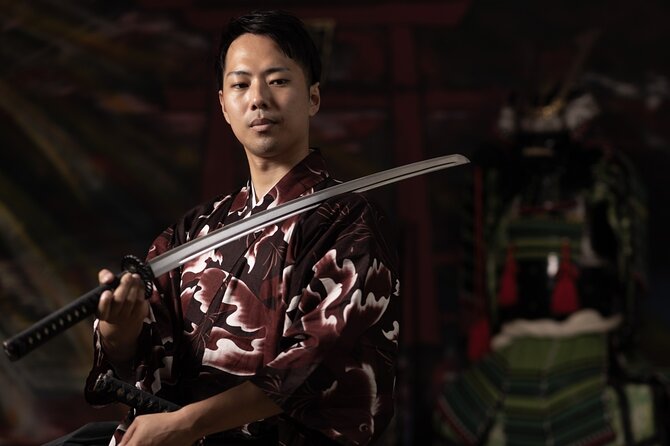
The practical training starts with the basics. You learn how to draw the katana, control its path, and return it to the sheath. You also work on grip, stance, arm position, and the direction of your movement.
This is where the class feels different from a simple dress-up activity. Sword handling looks easy until you try to coordinate your feet, hands, shoulders, and eyes. The instructors pay attention to form and make corrections, which is especially useful for first-time participants.
The pace is deliberate. You should not expect a long combat session or free sparring. The goal is controlled practice, with safety and precision ahead of speed. That makes the class a good choice for beginners, families, and people who are curious about martial arts but have no wish to be thrown into an intense workout.
The swords used for training are described by the provider as iaito, which are made for practice. Some past participants also describe using real but less-sharpened katana-style swords. Either way, you must treat the weapon seriously and follow every instruction. The current experience does not include cutting mats with a live blade.
Same base, a different sort of day:
- PERFECT KYOTO 1-Day Bus Tour
★ 5.0 · 13,518 reviews - Kyoto: Fushimi Inari, Kinkakuji, Bamboo Grove 1 Day Bus Tour
★ 4.8 · 4,316 reviews - Kyoto: Tea Ceremony in a Traditional Tea House in Kiyomizu
★ 4.9 · 3,519 reviews - Kyoto Geisha Walking Tour: Gion District & Hidden Gems
★ 4.7 · 3,273 reviews
Learning one full kata
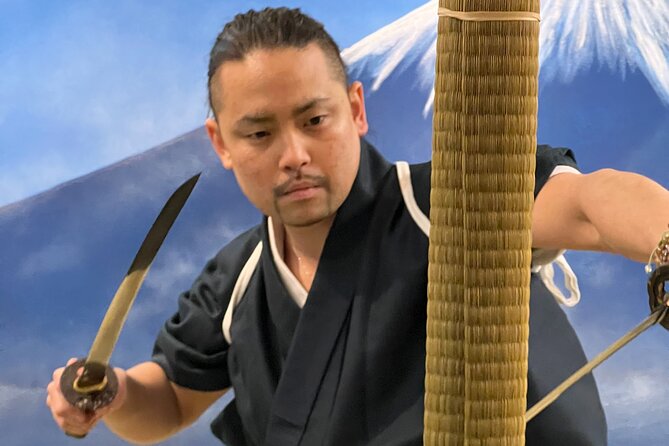
The centerpiece of the lesson is a short kata, or formal sequence. You learn a set pattern rather than isolated sword motions. That pattern connects the draw, stance, cut, pause, and sheathing movement into one controlled routine.
A kata gives the class structure. You can see how individual techniques fit together, and you have something clear to practice and remember afterward. It also shows why small corrections matter. A turned foot or raised shoulder can change the whole appearance of the sequence.
You should expect to repeat the movements several times. The instructors may adjust your hands or remind you to slow down. This hands-on correction is one reason the limited group size has real value. With a maximum of nine people, the session cannot provide one instructor for every participant, but it is still far more personal than a large demonstration with no individual guidance.
If you are visiting Kyoto with teenagers, this section will likely hold their attention better than a long cultural talk. They get a physical task, a clear goal, and the satisfaction of completing a recognizable routine. Parents can take part too. Several families have found that the adults enjoyed the training as much as the children.
Yushin Sensei’s two-katana performance
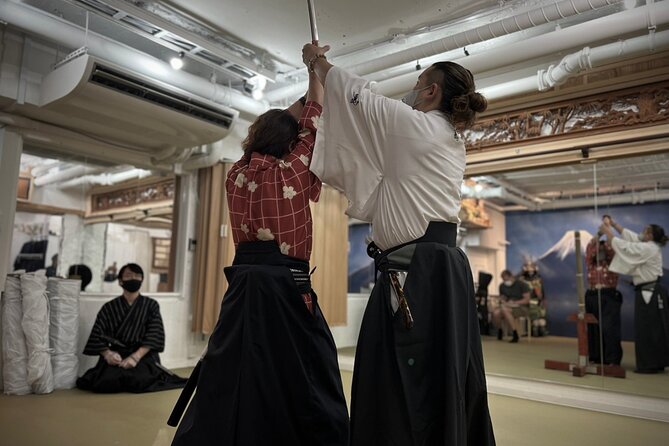
After you have learned the basics, Yushin Sensei demonstrates his own skill. The two-katana performance is the most distinctive feature of the experience and gives you a sharp contrast with your careful beginner movements.
You will see the difference between learning a first kata and watching a seasoned practitioner work with speed, balance, and control. The display is not a substitute for the lesson. It works best after you have tried the basics yourself, because you understand how much concentration even a simple draw requires.
The demonstration is also an opportunity to see swordsmanship as a performance discipline without turning the entire class into a show. The instructors explain what you are seeing, and the dojo setting keeps the focus on practice rather than theatrical effects.
Photography and video have been allowed during parts of the lesson, according to the experience details, but you should follow the staff’s instructions about when it is appropriate. Keep your phone out of the way during active training and safety briefings.
What the price delivers at $132.65
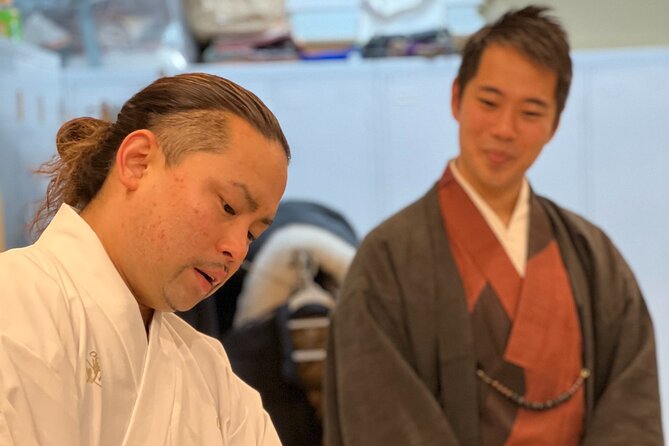
At $132.65 per person, this is not a cheap add-on activity. I would compare it with other hands-on cultural experiences in Kyoto, not with a museum ticket or a brief photo opportunity.
You are paying for roughly 1 hour 45 minutes, traditional training clothing, instruction from an experienced sensei, help from additional instructors, a structured kata lesson, and a specialist demonstration. The working dojo is the key value. You are not only hearing about samurai culture, you are learning a small part of the discipline through movement.
The value improves if you want active participation. If your ideal Kyoto day is built around temples, gardens, and quiet sightseeing, you may find the price high for a short indoor activity. If you want one memorable break from sightseeing and enjoy martial arts, the personal instruction makes the cost easier to justify.
The experience has been booked frequently, and its overall recommendation record is very strong. I would still judge it by your expectations. The price is fair for an authentic introductory lesson, but it is not designed as a full martial arts course or a private swordsmanship session.
How long the session takes and who it suits
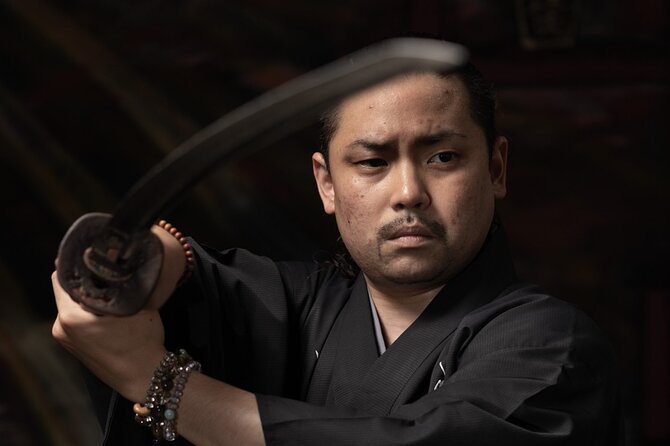
The advertised duration is about 1 hour 45 minutes. In practice, the activity can take between 1.5 and 2 hours depending on the number of participants. A larger class may require more time for everyone to dress, practice, and receive corrections.
The session suits:
- First-time visitors curious about samurai culture
- Families with children aged 12 and older
- Teenagers who enjoy active, unusual activities
- Martial arts students seeking a short introduction to iaido
- Adults who want a cultural activity with real participation
- Visitors who prefer a working dojo to a staged tourist show
You need moderate physical fitness. The lesson involves standing, repeated movements, and handling a sword in a controlled manner. It is not described as a strenuous workout, but it is also not a seated demonstration.
The activity may be less suitable if you specifically want to cut tatami mats. That element is not currently available. It may also be less suitable for very young children, since the minimum age is 12.
A few practical details that affect your choice
The experience uses a mobile ticket, which keeps check-in simple. Confirmation is sent within 48 hours of booking, subject to availability, so do not leave a last-minute reservation until the day before if your Kyoto schedule is tight.
The meeting point and end point are the same. That makes it easy to combine with other central Kyoto plans, though you should leave enough time to get there and locate the basement dojo.
Free cancellation is available if you cancel at least 24 hours before the start time. Cancellations or changes made within 24 hours are not refunded. The cut-off follows local Kyoto time, so check the clock carefully if you are changing plans.
The stated group limit is nine people. The intended class size is six, but the provider notes that more than six may attend when there are only a small number of booking parties. If having the smallest possible group matters to you, confirm the expected size before booking.
How this compares with a typical samurai photo activity
A photo session usually gives you fast access to costumes and a memorable picture. This activity gives you more time with the meaning behind the clothing and sword. You learn etiquette, practice a kata, and watch a master demonstrate skills that you have just begun to understand.
That does not make it better for everyone. A visitor who wants a quick, lighthearted souvenir may prefer a shorter costume experience. You should book this one if you are willing to listen, repeat movements, and treat the dojo with respect.
The tone is welcoming rather than stiff. The instructors use humor and personal attention, while still taking the practice seriously. That balance is important for families. Children can enjoy the clothes and swords without the session becoming careless or purely playful.
Should you book Samurai Training with Modern-day Musashi?
I would book this experience if you want real instruction in a genuine dojo, especially if you are visiting Kyoto with teenagers or adults who enjoy martial arts. The combination of traditional dress, a short kata, samurai culture, and Yushin Sensei’s two-katana performance gives you a full experience in less than two hours.
I would skip it if mat cutting is the main reason you are interested, since that is not currently offered. I would also think twice if $132.65 feels high for a short activity or if you prefer passive sightseeing.
For everyone else, this is a strong choice for a memorable Kyoto afternoon. You leave with more than a photograph. You have practiced a formal sword sequence, learned how much control the art demands, and seen a master demonstrate what years of training can produce.
FAQ
Where does the samurai training take place?
The activity takes place at Yushinkan International, located at 452-4 Matsugaechō, Nakagyo Ward, Kyoto, 604-8034, Japan.
How long does the activity last?
The session lasts about 1 hour 45 minutes. The total time can range from 1.5 to 2 hours depending on the number of participants.
What clothing do participants wear?
You dress in samurai training gear consisting of a dōgi, obi, and hakama.
Do I need previous martial arts experience?
Previous experience is not listed as a requirement. The session teaches basic sword handling, drawing, sheathing, and a short kata.
Is mat cutting with a real katana included?
No. Mat cutting with a real katana is not currently offered.
What is the minimum age?
Participants must be at least 12 years old.
How many people can join the class?
The intended class size is six participants. The activity may have more than six people when there are only a small number of booking parties, with a maximum of nine travelers.
Is the activity physically demanding?
You should have a moderate level of physical fitness. The class involves standing and practicing controlled sword movements.
Can I cancel for a full refund?
Yes, if you cancel at least 24 hours before the experience starts. Cancellations or changes made less than 24 hours before the start time are not refunded.
Just added in Kyoto
- Kyoto: Private Photoshoot Service★ 5.0 · 158 reviews
- Kyoto Rickshaw Tour★ 5.0 · 210 reviews
- Izakaya Style Cooking Class★ 5.0 · 219 reviews
- Kyoto: Traditional Concert at Townhouse or Bathhouse★ 4.9 · 224 reviews
- Ninja 2-hour Hands-on Lesson by Japanese master in Kyoto -Medium★ 5.0 · 218 reviews
- Kyoto: Arashiyama Bamboo, Temple, Matcha, Monkeys & secret spots★ 5.0 · 219 reviews
- The right way to know Kyoto★ 5.0 · 257 reviews
- Kyoto Geisha District Walking Tour in Gion★ 5.0 · 232 reviews
Samurai & Ninja Experiences, compared.
Samurai Ninja Museum Guided tour and Experience
Read our review →
Kendo and Samurai Experience with Uniform and Gear
Read our review →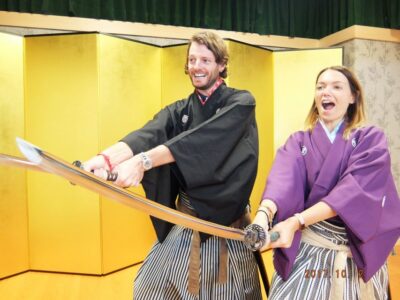
Samurai Sword Class by Experts in Traditional Arts
Read our review →
Skip the lines Basic Ticket at SAMURAI NINJA MUSEUM KYOTO
Read our review →
Samurai Sword & Archery Class from Samurai Descendant
Read our review →
Browse the lists this tour appears in