Reviewed · TOURS IN KYOTO
Shamisen Experience in Kyoto 【Private】
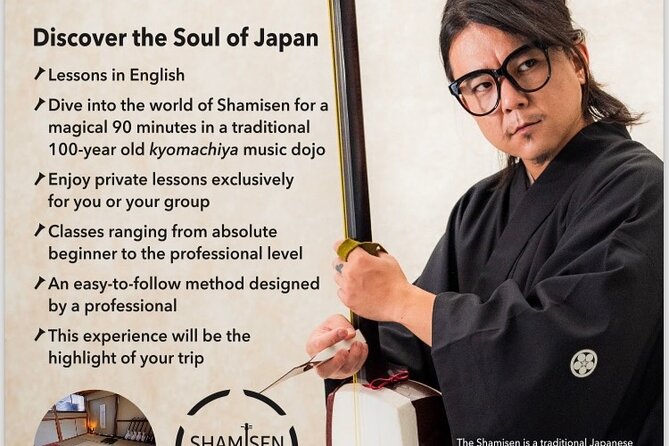
Kyoto offers plenty of temples, gardens, and crowded photo stops. This private shamisen lesson gives you something more personal: time with an instrument, a teacher, and a traditional song you can actually play by the end. Jack, the owner and a professional shamisen player, teaches in English and adjusts the lesson to your pace. I especially like the one-to-one format and the relaxed tea break. One consideration: at about $99 per person for 90 minutes, this is a special-interest activity rather than a budget attraction.
I also like that beginners start with the useful basics, including posture and tuning, instead of being pushed straight into a performance. The final jam with Jack gives the lesson a satisfying finish. Left-handed players are welcome, since lefty shamisen are available, though you should still expect a focused music lesson rather than a broad introduction to all of Japanese culture.
Key points to know before booking

- Private lesson with Jack: You receive individual guidance from the owner and professional shamisen player.
- English instruction: The lesson is designed for English-speaking visitors, making technical explanations easier to follow.
- A real song by the end: The curriculum leads beginners toward playing a traditional Japanese melody.
- Tea and conversation included: Japanese tea gives the lesson a calm pause and a chance to talk with Jack.
- Traditional-scale jam session: You play alongside Jack while he guides you through melodies and expression.
- Left-handed players can participate: Lefty shamisen are available at the dojo.
A quiet musical hour in Kyoto
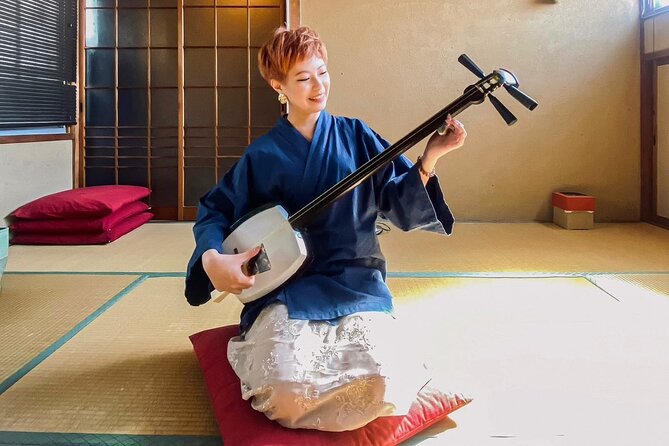
The shamisen is a three-stringed Japanese instrument with a distinctive, bright sound. Learning it offers a different way to meet Japanese culture. You are not only looking at an object in a museum or listening to a performance from a seat. You are holding the instrument, learning how it works, and trying to make it speak.
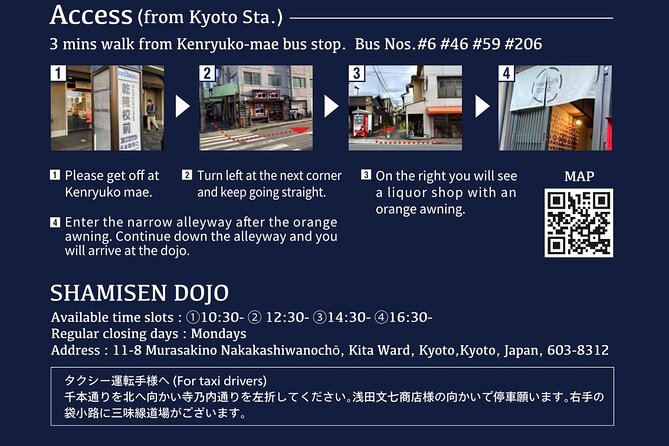
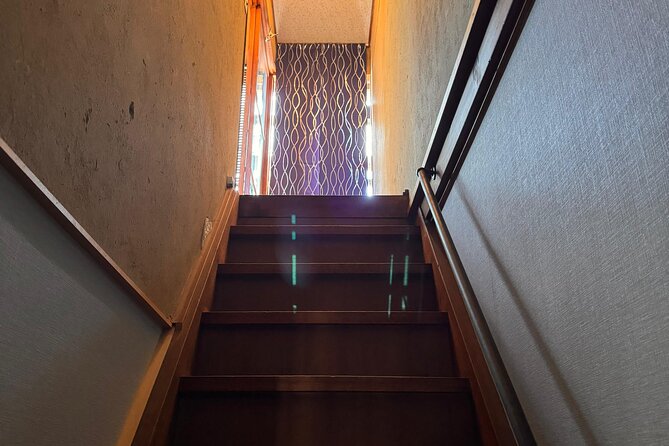
This lesson takes place at Shamisen Dojo in Murasakino Nakakashiwanocho, in Kyoto’s Kita Ward. The activity begins and ends at the same meeting point, and the location is near public transportation. The supplied information does not give a station name or detailed walking directions, so check the exact meeting instructions when you book.
The full session lasts about 90 minutes. That is long enough to cover the fundamentals, try a traditional song, and play with Jack, without taking an entire afternoon away from sightseeing. I see it working particularly well on a rainy day, when a hands-on indoor activity feels more rewarding than another hurried walk through wet streets.
Other experiences people book in Kyoto:
- PERFECT KYOTO 1-Day Bus Tour
★ 5.0 · 13,518 reviews - Kyoto: Fushimi Inari, Kinkakuji, Bamboo Grove 1 Day Bus Tour
★ 4.8 · 4,316 reviews - Kyoto: Tea Ceremony in a Traditional Tea House in Kiyomizu
★ 4.9 · 3,519 reviews
Meeting Jack at Shamisen Dojo
Jack is both the teacher and the owner, which gives the lesson a personal feel from the start. He speaks English well enough to teach the instrument and hold relaxed conversations during the tea break. That matters here. A shamisen lesson includes unfamiliar terms, hand positions, rhythm, and technique. Clear instruction is much more useful than simply watching a demonstration.
Because the class is private, only your group takes part. You do not have to keep up with a room full of beginners, and you can ask questions without interrupting a larger class. If you already play an instrument, you may move through the first steps more quickly. If you have never touched a musical instrument, Jack can focus on the fundamentals.
This private setup is also useful for small groups with different ability levels. One person may want to ask about tuning, while another needs more time with posture or picking. The lesson can respond to those differences in a way a large workshop usually cannot.
Starting with posture, tuning, and technique
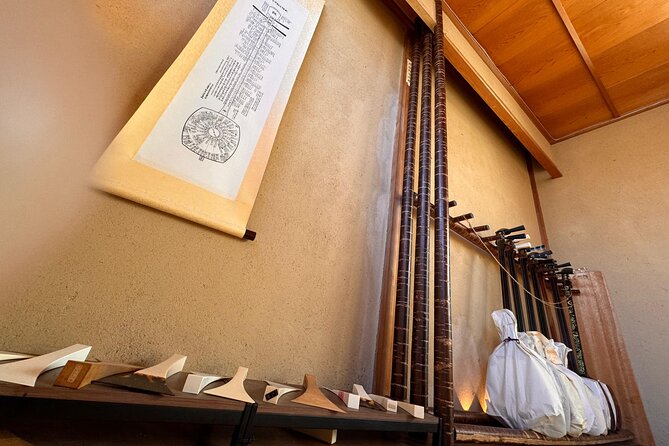
The first part of the class builds a foundation. You learn how to sit and hold the shamisen properly, along with the posture needed to play comfortably. That may sound basic, but it is the difference between simply making a noise and beginning to control the instrument.
You also learn how to tune the shamisen. This is a practical skill, particularly if the lesson inspires you to continue playing after your visit. One participant used the tuning and seating instruction as preparation for learning on a personal shamisen, which points to one of the activity’s strengths: the lesson is not only a quick photo opportunity.
Jack then introduces the basic way to play. The available information does not promise that you will master the instrument in 90 minutes, and it should not. The shamisen has its own technique and feel. But the class is arranged so that a first-time player can make useful progress and work toward a traditional song.
If you have musical experience, tell Jack early. One person with prior shamisen experience received extra instruction beyond the normal beginner material. The lesson is suitable for beginners, but it is not limited to people starting from zero.
Learning a traditional Japanese song
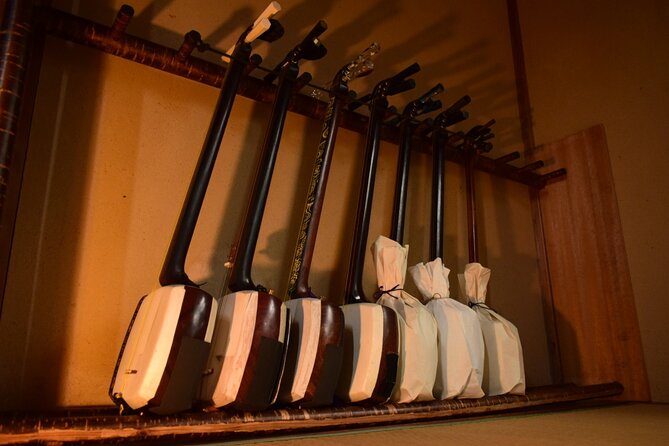
The main musical goal is learning a traditional Japanese song. This gives the lesson structure. Rather than practicing disconnected movements, you use the new skills in a recognizable piece of music.
For a complete beginner, playing a full traditional song after a short lesson can be a satisfying target. You will still be learning the instrument, but you have something concrete to take away. The pace may vary depending on your group, your musical background, and how quickly the basic technique feels natural.
I would book this with the right expectation. You are not signing up for professional-level training or a formal concert performance. You are getting a carefully planned first lesson that introduces the instrument and helps you produce music during the visit.
That distinction matters when considering the price. At $99.10 per person, the cost is higher than a casual cultural demonstration. You are paying for a private session, English instruction, the use of a traditional instrument, tea, a souvenir, and direct time with a professional musician. If you want personal instruction rather than passive sightseeing, the price can make sense. If you only want to hear shamisen music, a performance would be a different and possibly better fit.
Same base, a different sort of day:
- Kyoto Geisha Walking Tour: Gion District & Hidden Gems
★ 4.7 · 3,273 reviews - Kyoto: Tea Ceremony Ju-An at Jotokuji Temple
★ 4.9 · 3,207 reviews - Kyoto: Gion Magical Night Walking Tour with Geisha Trivia
★ 4.9 · 2,393 reviews - Kyoto: 45-Minute Tea Ceremony Lesson Experience
★ 4.3 · 2,378 reviews
The tea break and conversation with Jack
The Japanese tea break is a small but important part of the rhythm. Learning an unfamiliar instrument requires concentration, especially when you are thinking about posture, hand position, and timing. Tea gives you a natural pause before returning to the music.
This is also a chance to speak with Jack in a less formal setting. The lesson is not just a sequence of instructions. The relaxed conversation helps you understand the person behind the instrument and ask questions that may not fit into the playing portion.
The tea is included, but the information does not specify the type of tea or any food. I would therefore treat it as a refreshment and conversation break, not a full tea ceremony or meal. You also receive a special souvenir, giving you a physical reminder of the session after you leave.
Playing together in the final jam
The most distinctive part of the lesson is the jam session with Jack. He accompanies you using traditional Japanese scales and guides you while allowing room for your own melodies and expression.
For a beginner, playing beside a professional musician can feel more encouraging than playing alone. Jack provides the musical framework, while you try out the sounds and patterns you have learned. The goal is not perfect technique. It is to experience how the shamisen functions as music.
This section also gives experienced players more freedom. If you already know some shamisen or have a musical background, you may have more room to explore. The activity information describes the program as recognized by experts in the shamisen community, but it does not explain the award or recognition in detail. I would treat that as useful context, not as a reason by itself to book.
The jam is likely to be the emotional high point of the session because it turns practice into a shared performance. You are not merely repeating an exercise. You are responding to another musician.
Why the private format matters
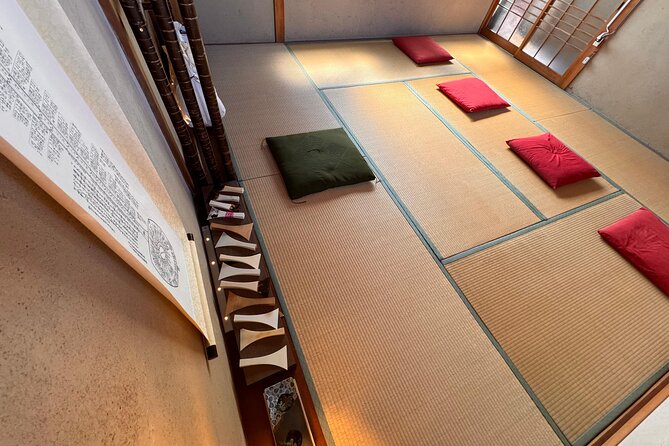
The private arrangement is the strongest practical reason to choose this activity. Only your group participates, so Jack’s attention is not divided among a large class. That is valuable when you need repeated explanations or want to ask detailed questions.
It also removes some common beginner pressure. You do not need to worry about holding up strangers, comparing your playing with a more experienced participant, or waiting for a turn with the instrument. The class can move at a comfortable pace.
The trade-off is that the experience may feel more like a lesson than a social group activity. If you enjoy meeting a large mix of people while learning, this private format will not provide that. You are choosing focused instruction and personal conversation instead.
The English-language format is another major advantage. Shamisen technique can be hard to understand through gestures alone. Jack’s ability to teach in English makes the activity practical for visitors who do not speak Japanese.
Who will get the most from this lesson
I would recommend this for several kinds of people:
- First-time musicians: The lesson is designed for beginners and starts with posture, tuning, and basic technique.
- Music lovers: You get to handle the instrument, learn a song, and play with a professional.
- Returning shamisen players: Jack can offer guidance beyond the basic material when your experience allows.
- Culture-focused visitors: The activity gives you direct contact with a traditional Japanese art form.
- Couples and small private groups: The one-group format keeps the lesson personal.
- Left-handed players: A lefty shamisen is available, which removes a common concern.
I would think twice if your Kyoto schedule is packed tightly around temple visits. The lesson itself lasts 90 minutes, but you also need time to reach the Kita Ward meeting point and return to your next stop. The location is near public transportation, yet exact station and route details are not provided here.
I would also reconsider if you expect a full professional recital or a long historical lecture. The focus is learning to play, not watching a concert or taking a broad classroom course on Japanese music.
Price, timing, and booking value
The price is $99.10 per person, and the experience is commonly booked about 35 days ahead. That booking pattern suggests you should not leave it until the last minute if this is important to your itinerary.
At this price, the value comes from the private teaching rather than the souvenir or tea alone. You receive roughly 90 minutes with Jack, use of a shamisen, English instruction, a traditional song, a jam session, Japanese tea, and a gift. The most important question is simple: do you want to learn something hands-on, or do you want to spend the same money on another sightseeing stop?
The published rating is 5 from 82 reviews, with 100% recommending the experience. The repeated strengths are clear: Jack’s patience, his friendly manner, his English, his ability to explain technique, and the feeling of making music after only a short lesson.
Cancellation is free if you cancel at least 24 hours before the local start time. Cancellations or changes made less than 24 hours before the activity are not refunded or accepted, so keep that deadline in mind when arranging a busy Kyoto day.
Should you book the Kyoto shamisen lesson?
Book it if you want a personal, useful cultural experience and like the idea of leaving Kyoto with a new skill rather than another set of photos. Jack’s English teaching, professional playing, patient instruction, and final jam make this more than a quick demonstration. The private format is especially valuable for beginners, musicians, couples, and small groups.
Skip it if you are only interested in watching shamisen music, need the cheapest possible activity, or have no room in your schedule for the trip to Kita Ward. At $99.10, this is a deliberate choice. For the right person, it offers a rare chance to make traditional Japanese music with a professional guide and carry a small part of that lesson home.
FAQ
How long does the shamisen lesson last?
The activity lasts approximately 1 hour and 30 minutes.
Where does the activity take place?
The meeting point is in Murasakino Nakakashiwanocho, Kita Ward, Kyoto, 603-8312, Japan.
Where does the activity end?
The lesson ends back at the same meeting point.
Is the lesson private?
Yes. Only your group participates in the activity.
Is the lesson taught in English?
Yes. The program is designed for learning shamisen in English, and Jack teaches and converses in English.
Do I need previous musical or shamisen experience?
No. The curriculum is beginner-friendly, and no previous experience is required.
What will I learn during the lesson?
You can learn basic shamisen technique, posture, tuning, and a traditional Japanese song. The session also includes a jam with Jack using traditional Japanese scales.
Are left-handed players able to participate?
Yes. Left-handed shamisen are available.
What is the cancellation policy?
You can cancel for a full refund at least 24 hours before the experience start time. Cancellations or changes made less than 24 hours before the local start time are not accepted or refunded.
Just added in Kyoto
- Private Cooking Class Udon in Kyoto Japan★ 5.0 · 23 reviews
- Your Private Vacation Photography Session In Kyoto★ 5.0 · 110 reviews
- Kyoto: Zen Meditation at a Private Temple with a Monk★ 5.0 · 25 reviews
- Private Pewter Sake Cup Experience with a Kyoto Artisan★ 5.0 · 31 reviews
- Kyoto Wagashi(Japanese sweets) Cooking Class near Fushimiinari★ 5.0 · 60 reviews
- Kyoto:Family-Friendly Kimono & Yukata Experience at WARGO★ 5.0 · 147 reviews
- Private Guided Traditional Buddhist Cooking in Japan★ 5.0 · 16 reviews
- Kyoto: Gion Geisha District & Sake-in-Hand Walking Tour★ 5.0 · 37 reviews
Tours in Kyoto, compared.

Tea Ceremony in a Traditional Tea House in Kiyomizu
Read our review →
Kyoto Geisha Walking Tour: Gion District & Hidden Gems
Read our review →


Gion Geisha District Walking Tour – Stories of Geisha
Read our review →
Best of Kyoto: Gion, Geisha, Pagodas & Cobblestones
Read our review →