Reviewed · TOURS IN KYOTO
TAIKO, Japanese Drum Experience from Kyoto
Taiko drumming is not a passive cultural show. You pick up the sticks, learn the basic movements, and finish by playing a short piece with the group. The professional demonstration gives you a thrilling taste of what the instrument can do, while the friendly lesson keeps the session approachable for complete beginners.
I like the combination of drumming and writing a wish in calligraphy on a hachimaki, and I like the careful transport plan from Kyoto Station to the studio. The main drawback is the strict meeting time: Kyoto Station is large, and a late arrival can mean missing the class with no refund.
Key points
- A real hands-on lesson: You learn basic taiko movements and rhythms, then perform a simple piece with the group.
- A professional demonstration: An instructor such as Aoi or Mr. Sakurai shows how powerful and physical taiko can be.
- More than drumming: You write a wish in Japanese calligraphy on a traditional hachimaki headband.
- Guided from Kyoto Station: An English-speaking guide meets you before the train ride to JR Takatsuki Station and the short cab transfer.
- Small-group access: The class has a maximum of 15 participants, with instruction adjusted to ability and fitness.
- A firm schedule: You must arrive 15 minutes early, since the train connection cannot wait for late arrivals.
Why This Taiko Class Is Worth Leaving Kyoto For
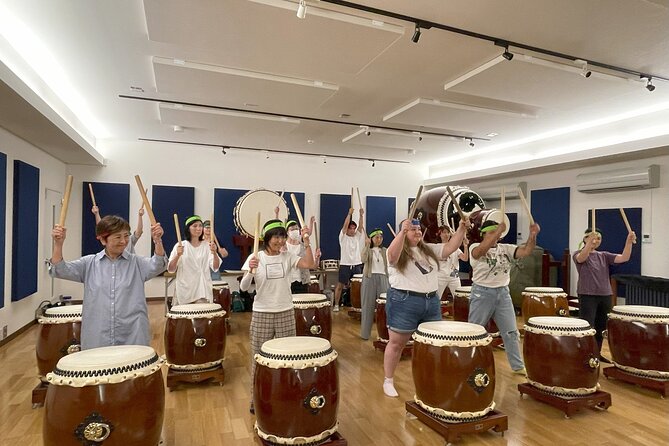
The class takes place outside central Kyoto, but the short trip is part of the experience. From Kyoto Station, you take a JR train for about 12 minutes to Takatsuki, followed by a cab ride of roughly 10 minutes to the studio.
I see this as a useful trade-off. You are not simply being shown a drum in a shop or watching a polished stage performance. You are going to a professional studio, meeting an instructor, and taking part in a structured lesson. The trip also gives you a glimpse of the area beyond Kyoto’s best-known sights.
The activity lasts about two and a half hours, including transfers. In practice, you should allow two and a half to three hours from the start at Kyoto Station until you return there. Do not book a tight lunch reservation, train connection, or major attraction immediately afterward.
The meeting instructions deserve serious attention. Kyoto Station has several large exits and ticket gates, so check the exact meeting point before the day of the class. The guidance specifies the central exit, not the Shinkansen central ticket gate. Arrive at least 15 minutes early, and give yourself extra time if you do not know the station.
Other experiences people book in Kyoto:
- PERFECT KYOTO 1-Day Bus Tour
★ 5.0 · 13,518 reviews - Kyoto: Fushimi Inari, Kinkakuji, Bamboo Grove 1 Day Bus Tour
★ 4.8 · 4,316 reviews - Kyoto: Tea Ceremony in a Traditional Tea House in Kiyomizu
★ 4.9 · 3,519 reviews
Beginning With Taiko History and Japanese Culture
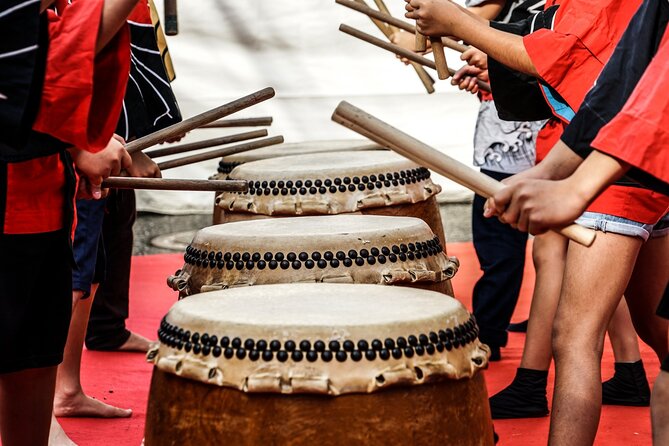
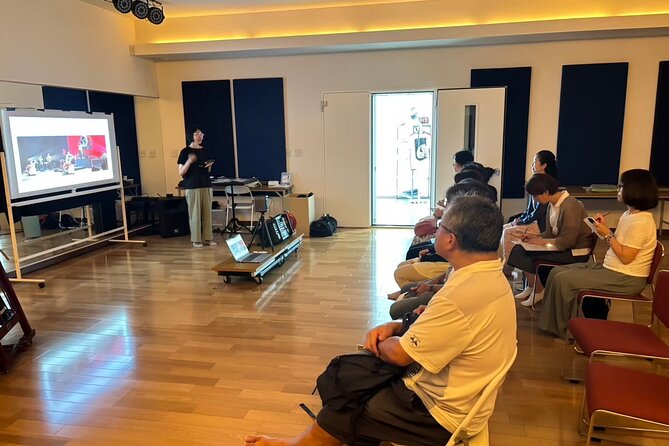
Once you reach the studio, the session begins with an explanation of taiko and its place in Japanese culture. You learn why the drums matter, how they have been used, and what makes the instrument more than a simple percussion tool.
This introduction helps the physical lesson make sense. You are not just copying arm movements without context. You get a basic understanding of the tradition before the sticks reach your hands.
The explanation is given in English through the guide and instructor. Guides named Michiko, Kumi, Akemi, Akiko, and Akayo have helped with translation and group support on different sessions. The exact guide depends on the date, but the format is designed for English-speaking participants.
The historical section is fairly brief, which is a good choice for this kind of activity. The main purpose is to get you playing, not to sit through a long lecture. If you want a detailed academic study of Japanese percussion, this is not that. If you want enough background to understand what you are about to do, it works well.
Writing Your Wish on a Hachimaki
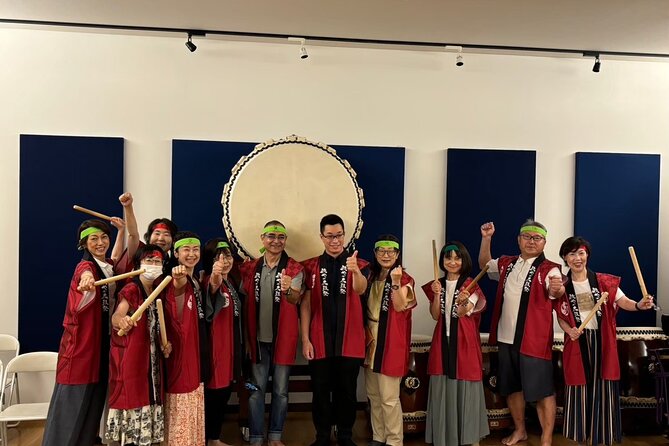
Before the main drumming lesson, you have the chance to write a simple wish or phrase in Japanese calligraphy on a hachimaki. This traditional headband becomes part of the final costume photo.
The calligraphy is a small part of the session, but it gives the class a personal touch. You create something connected to the day rather than simply receiving a standard souvenir. It also gives you a quiet activity before the louder, more physical portion begins.
You do not need to know Japanese to take part. The guide can help with the writing, and the activity is presented as simple calligraphy rather than a formal language lesson. Keep your expectations sensible: this is a short creative addition, not a full calligraphy workshop.
The headband also helps with the closing photograph. You wear it with a happi coat, a traditional festival-style garment, for a group or individual picture. If you enjoy taking home a visual record of an activity, this is more memorable than another ordinary sightseeing snapshot.
The Professional Taiko Demonstration
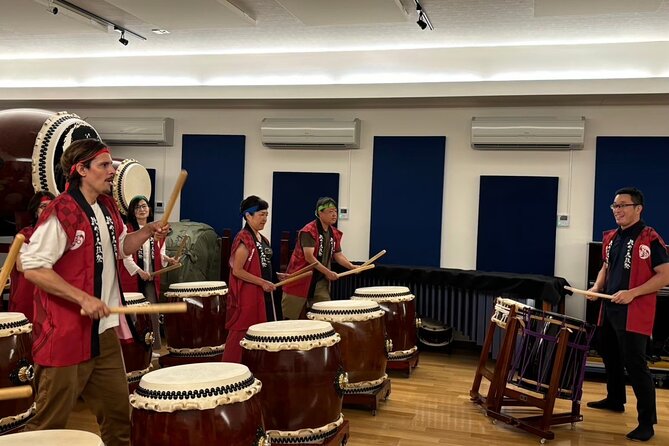
The demonstration is one of the strongest parts of the class. A professional instructor performs before you begin, letting you see the speed, control, timing, and force required to play well.
Names associated with the instruction include Aoi and Mr. Sakurai. The demonstration may involve a live drummer and, on some sessions, a recorded performance alongside the live player. The result is still a powerful introduction to the sound and physical presence of taiko.
This is where the class gains perspective. The drum looks simple at first, but the performance shows that good taiko playing depends on posture, timing, coordinated movement, and stamina. You also see why the instrument can feel like a full-body activity rather than a finger exercise.
I recommend paying close attention to stance and arm position during the demonstration. Beginners often focus only on hitting the drum. The instructor’s posture, recovery after each strike, and timing are just as important.
The performance is short enough to keep the lesson moving, but it gives you a clear goal. You are not expected to match a professional. You are given a manageable rhythm that lets the group create something together.
Same base, a different sort of day:
- Kyoto Geisha Walking Tour: Gion District & Hidden Gems
★ 4.7 · 3,273 reviews - Kyoto: Tea Ceremony Ju-An at Jotokuji Temple
★ 4.9 · 3,207 reviews - Kyoto: Gion Magical Night Walking Tour with Geisha Trivia
★ 4.9 · 2,393 reviews - Kyoto: 45-Minute Tea Ceremony Lesson Experience
★ 4.3 · 2,378 reviews
Learning Basic Movements Without Musical Experience
The lesson is built for beginners. You do not need to read music, play an instrument, or understand Japanese notation. Several people have found that the basic measures are easy to follow, even without musical training.
The instructor first explains the movement, then has you practice it. You learn how to hold the sticks, where to strike, and how to use your body safely. The teaching is adjusted to your ability and fitness level, so the session can work for people with different levels of coordination.
The pace also leaves room for encouragement. Guides help translate instructions and keep the group involved, while the instructor watches the participants and offers corrections. The friendly tone matters because taiko can feel intimidating for the first few minutes.
You may find the class mildly strenuous. One participant described it as a possible cardiovascular workout if you play with enough energy for long enough. The activity is not presented as a fitness class, but you will be standing, moving your arms, and repeating rhythms. Wear comfortable clothing and shoes that allow you to move easily.
Children under seven cannot participate. Older children can enjoy it, with several families using the class as a shared activity. The lesson has welcomed children around eight and eleven, but every child’s comfort with noise, instruction, and physical movement will differ.
Playing a Group Piece at the End
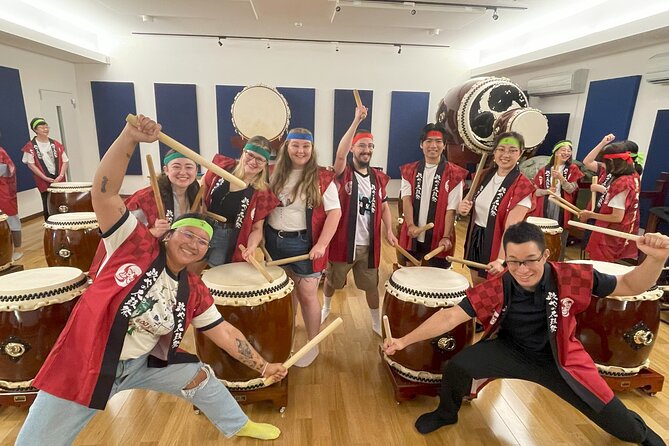
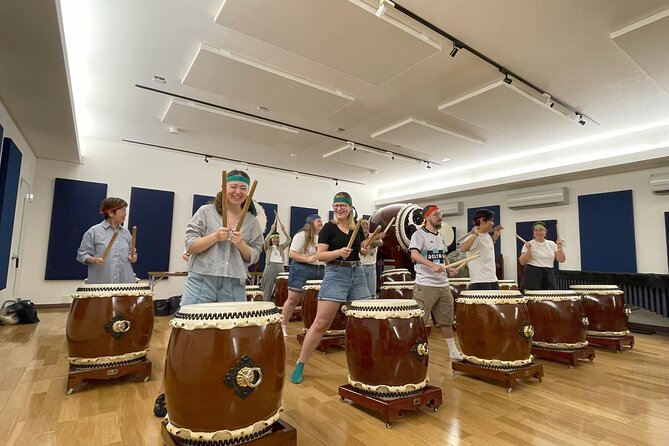
The class builds toward a simple group performance. By this point, you have learned a few patterns and practiced keeping time. The final piece lets you use those skills with the other participants.
This closing performance is valuable because it turns instruction into a shared result. You do not need to be perfect, and the group format takes away some pressure. If one person loses the rhythm, the rest of the group helps carry the piece.
The maximum group size is 15 people. That is large enough to create a strong combined sound but small enough for the instructor and guide to provide attention. A smaller booking may feel more personal, while a full group could produce a louder and more energetic performance.
You should not expect a long concert performed by the participants. The point is to learn a basic pattern and experience the satisfaction of playing together. The professional demonstration supplies the polished artistry. Your performance supplies the participation.
The final photograph, with the happi and hachimaki, marks the end of the class. It is a simple souvenir, but it also gives the session a clear ending after the lesson and recital.
What You Pay for at $115.62
At about $115.62 per person, this is not a low-cost drop-in activity. The price includes the taiko lesson, English-language support, the hachimaki, instruction from a taiko teacher, the train ticket to JR Takatsuki Station, and car transportation to and from the studio.
The transport matters because the studio is not conveniently reached by a direct Kyoto taxi. A taxi from Kyoto could take more than an hour and cost much more, especially in traffic. The organized train and cab connection removes that problem.
The included car transfer is described as costing about 2,000 yen, with up to four people sharing one cab. You should still pay attention to the exact instructions given for your date, since the transport arrangement depends on the group and schedule.
I think the price makes more sense if you value instruction and participation. You are paying for the guide, the transfer, the studio setting, the professional demonstration, the materials, and the chance to play a traditional instrument. If you only want to hear taiko for a few minutes, a performance ticket elsewhere may suit you better.
Observers who do not take part in the drumming pay 9,000 yen per person in cash at the studio. You must notify the provider in advance if someone plans to watch instead of participate, since transportation may not be arranged without notice. For most people, the better value is to join the lesson.
Who Will Enjoy This Most
I would recommend this experience to you if you want a cultural activity that involves your body and attention. It works especially well for first-time visitors who have already seen temples and gardens and want something more active.
Music lovers will appreciate the chance to study rhythm from a professional. Families with children aged seven and older may also enjoy it, provided everyone is comfortable with a loud instrument and a structured class.
The class is also a good choice for people who worry that traditional activities are too difficult. The instructions are broken into basic movements, the English-speaking guide helps throughout, and the final piece is designed for beginners.
You may want to skip it if your schedule is tightly packed or if you dislike fixed meeting times. The train departure cannot be delayed for late arrivals, and leaving the class early is not recommended. You also need to allow for a return to Kyoto Station around two and a half to three hours after the start.
The activity is suitable for most participants, but the supplied information does not give detailed accessibility guidance. If you have mobility, hearing, or other concerns, ask the provider before booking rather than assuming the studio setup will meet your needs.
Timing, Cancellation, and Simple Planning Advice
Free cancellation is available until 24 hours before the local start time. Cancellations or changes made less than 24 hours in advance are not refunded or accepted. If poor weather causes the activity to be canceled, you are offered another date or a full refund.
Some dates do not accept a booking for one person. If you are traveling alone, check availability carefully. On those dates, the provider may require a booking for two participants with payment for both.
Bring your booking confirmation and arrive early at Kyoto Station. A mobile ticket is available, but the digital ticket does not solve the main risk, which is reaching the correct meeting point on time.
I would also avoid planning a long taxi ride from Kyoto to the studio. The recommended route is the short JR train journey to Takatsuki followed by the arranged cab. Traffic can make a direct taxi slow and expensive.
Should You Book This Taiko Experience?
Book it if you want to make some noise in a useful way. The best parts are the professional demonstration, the patient beginner lesson, the chance to write a personal hachimaki, and the final group performance.
The key question is not the price alone. Ask yourself if you want a guided activity with transport and cultural context, or if you would rather spend the same time visiting another Kyoto sight. For an active introduction to taiko, the package offers good value, especially for families, couples, and first-time visitors who want more than photographs.
I would not book it for a rushed day, a participant under seven, or anyone unwilling to arrive early at Kyoto Station. Plan carefully, allow a full three-hour window, and you get an engaging introduction to Japanese drumming that you can actually feel in your arms.
FAQ
How long does the taiko experience last?
The activity takes about two hours and 30 minutes, including transportation. You should expect to return to Kyoto Station about two and a half to three hours after the start time.
Where do I meet the guide?
The meeting point is Kyoto Station, near the central exit area at Higashishiokoji Kamadonocho in Shimogyo Ward. The instructions specify the central exit, not the Shinkansen central ticket gate.
How do I reach the taiko studio?
You take a JR train from Kyoto Station to Takatsuki Station, a journey of about 12 minutes. A cab then takes you to the studio in roughly 10 minutes.
Is previous musical experience required?
No. The class is designed for all levels, including complete beginners. The instructor teaches the basic movements and techniques step by step.
Is the lesson taught in English?
English-language guiding is available. Guides help explain the history, translate instructions, and support you during the lesson.
What else happens besides drumming?
You receive an introduction to taiko, write a wish in calligraphy on a hachimaki, watch a professional demonstration, learn basic rhythms, perform a simple piece, and take a photo in a happi and hachimaki.
Can children participate?
Children under seven are not allowed to participate. The activity information does not set a maximum age.
Can someone attend without playing?
Yes, but observers pay 9,000 yen per person in cash at the studio. You must notify the provider in advance so transportation can be arranged.
What is the cancellation policy?
You can cancel up to 24 hours before the local start time for a full refund. Cancellations or changes made less than 24 hours before the start are not accepted or refunded.
Just added in Kyoto
- Private Cooking Class Udon in Kyoto Japan★ 5.0 · 23 reviews
- Your Private Vacation Photography Session In Kyoto★ 5.0 · 110 reviews
- Kyoto: Zen Meditation at a Private Temple with a Monk★ 5.0 · 25 reviews
- Private Pewter Sake Cup Experience with a Kyoto Artisan★ 5.0 · 31 reviews
- Kyoto Wagashi(Japanese sweets) Cooking Class near Fushimiinari★ 5.0 · 60 reviews
- Kyoto:Family-Friendly Kimono & Yukata Experience at WARGO★ 5.0 · 147 reviews
- Private Guided Traditional Buddhist Cooking in Japan★ 5.0 · 16 reviews
- Kyoto: Gion Geisha District & Sake-in-Hand Walking Tour★ 5.0 · 37 reviews
Tours in Kyoto, compared.
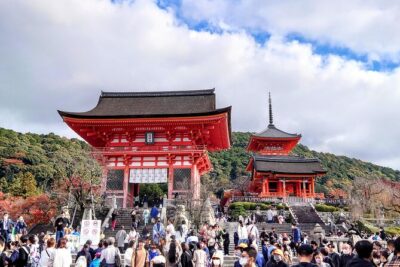
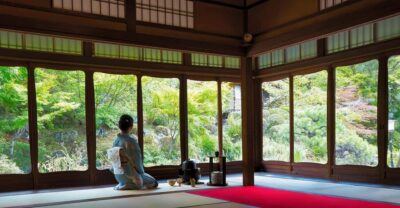
Tea Ceremony in a Traditional Tea House in Kiyomizu
Read our review →
Kyoto Geisha Walking Tour: Gion District & Hidden Gems
Read our review →

Gion Geisha District Walking Tour – Stories of Geisha
Read our review →
Best of Kyoto: Gion, Geisha, Pagodas & Cobblestones
Read our review →