
Reviewed · TEA CEREMONY EXPERIENCES
Tea Ceremony Experience in Traditional Kyoto Townhouse
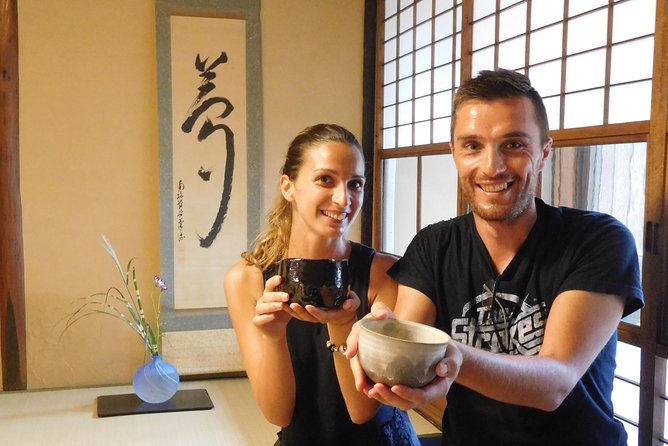
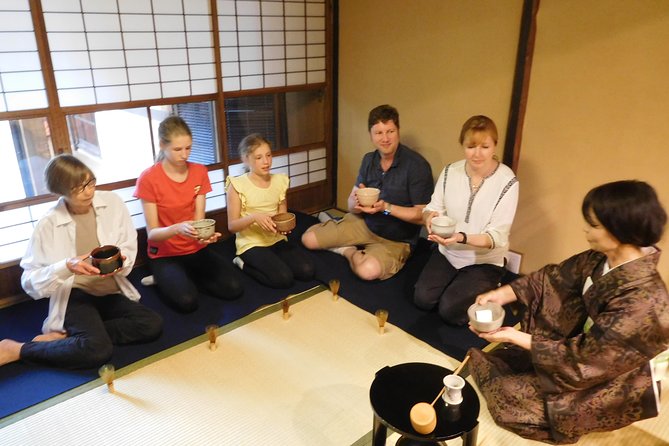
Kyoto’s tea culture becomes much easier to understand when you are sitting inside an 80-year-old machiya, whisking your own bowl of matcha. This one-hour session pairs a careful demonstration with hands-on practice, so you are not simply watching a ceremony from the sidelines.
I like the small maximum of six people, which gives the host room to answer questions and offer personal demonstrations. I also like the balance between culture and food: you learn why the ritual mattered to monks and samurai, then enjoy matcha with Japanese sweets. The main drawback is the short format. You get a good introduction, but not a long, formal tea-school lesson.
Key points
- An 80-year-old machiya: Spend the session inside one of Kyoto’s remaining traditional wooden townhouses.
- Hands-on matcha making: Watch the preparation, then brew your own bowl rather than only observing.
- Clear, simple instruction: Host Kimi and the Ami Kyoto team explain the ceremony in an approachable way.
- Small group size: The class accepts no more than six people, making it easier to follow along.
- Tea and sweets included: Your booking covers a bowl of matcha and Japanese confectionery.
- One-hour cultural stop: It fits neatly into a Kyoto day, though the time leaves little room for an extended ceremony.
Entering an 80-year-old Kyoto machiya
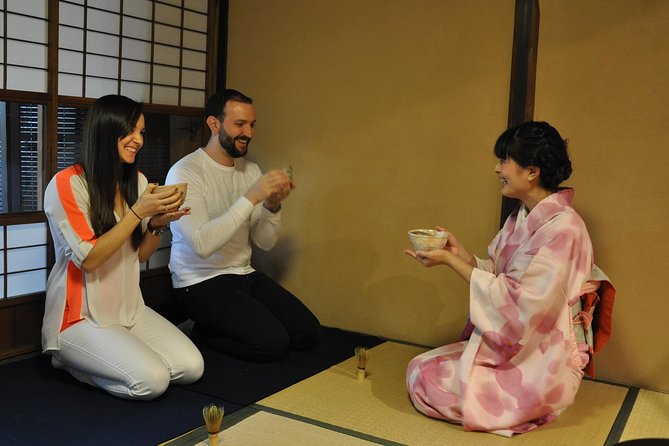
The setting gives this activity much of its character. Kyoto was once filled with machiya, narrow wooden townhouses built for daily life and work. Many have disappeared, so being welcomed into one is more than a change of scenery. The building gives the tea lesson a real sense of place.
Ami Kyoto’s machiya is about 80 years old. The available information describes it as a simple yet elegant house, which is exactly the right setting for a tea experience. You are not placed in a modern classroom with a few Japanese decorations added for effect. The house itself forms part of the lesson.
Expect a quaint interior rather than a grand temple or polished museum. That matters because tea ceremony is closely tied to the way a space is arranged, entered, and used. Even in a short class, the townhouse helps you understand why modest rooms, careful movements, and quiet attention are important parts of the tradition.
The meeting point is at 605 Nishidacho, Shimogyo Ward, Kyoto, postal code 600-8397. The activity begins and ends there, with no hotel pickup or drop-off. Since the location is near public transportation, you can combine it with other plans in central Kyoto, but leave enough time to find the townhouse and arrive without rushing.
Other tea ceremonies in Kyoto people book:
- Kyoto: Tea Ceremony in a Traditional Tea House in Kiyomizu
★ 4.9 · 3,519 reviews - Kyoto: Tea Ceremony Ju-An at Jotokuji Temple
★ 4.9 · 3,207 reviews - Kyoto: 45-Minute Tea Ceremony Lesson Experience
★ 4.3 · 2,378 reviews
What happens during the one-hour session
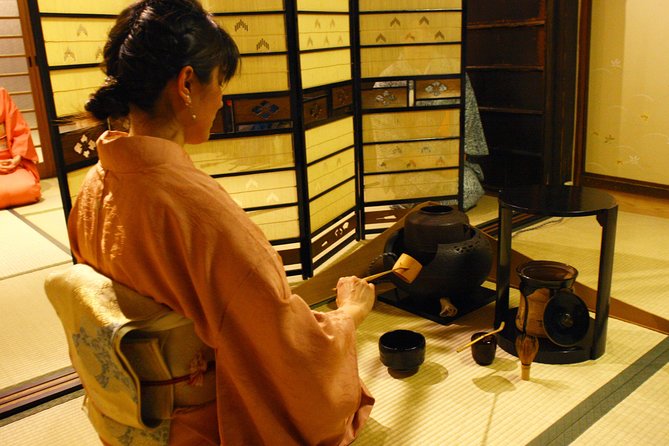
The experience is built around two connected parts: an explanation and demonstration of matcha preparation, followed by your own attempt. You learn the purpose behind the actions before you are asked to repeat them.
The host explains the background of Japanese tea culture, including its links to monks and samurai. This is useful context. Without it, whisking green tea can feel like a pretty but empty exercise. With it, the movements begin to make more sense as part of a cultural form shaped by discipline, hospitality, and attention to small details.
The demonstration is described as thorough, with explanations kept clear and simple. That should suit first-time visitors who know little about matcha. You are not expected to arrive with any knowledge of tea etiquette or Japanese customs.
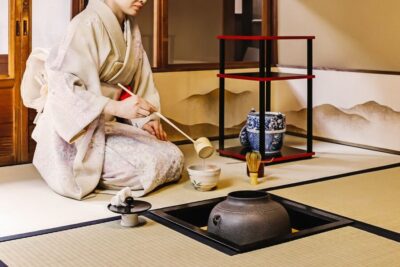
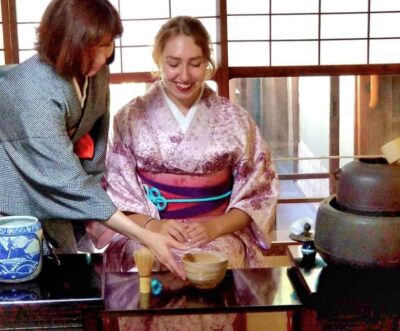
After watching, you prepare a bowl yourself. This hands-on section is the heart of the experience. You can see how the ingredients and tools work together, then try to create the fine, frothy texture associated with matcha. The exact level of personal instruction may depend on the group, but the six-person limit gives the host a reasonable chance to help each person.
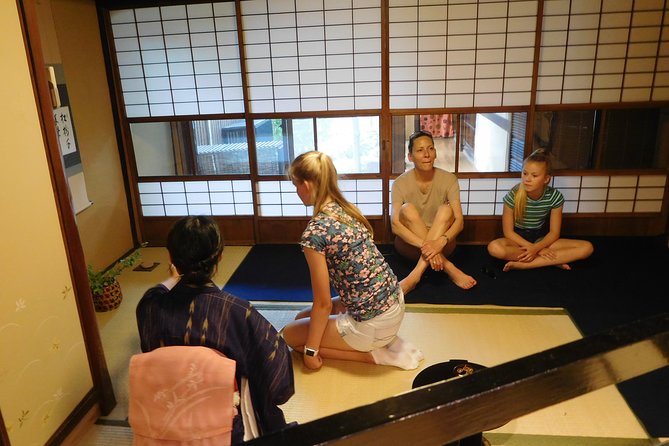
The format also works well for families. One account describes parents taking part and finding the explanations easy to follow, with the tea-making itself proving fun for everyone. That makes this a better choice for a mixed-age group than a long, highly formal ceremony where children may have to sit quietly for an extended period.
Matcha from an organic farm and Kyoto sweets
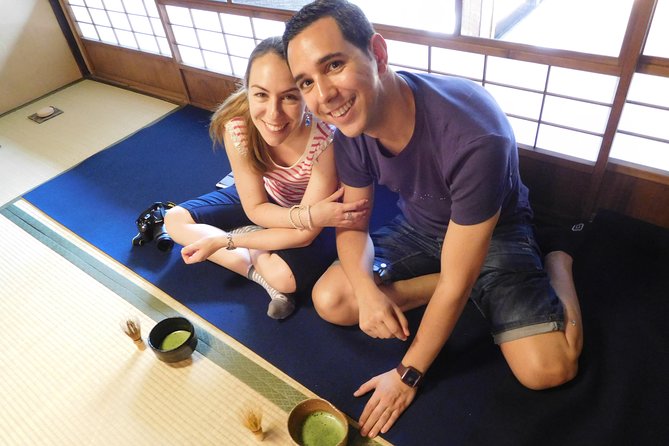
The tea is not treated as a prop. The class teaches you how to brew matcha from a stated organic farm, giving the preparation a little more substance than a quick cup served for tourists.
You receive one bowl of matcha, included in the price. The tea is paired with Japanese sweets from a famous Kyoto confectionary. This pairing is traditional in spirit: the sweet gives your palate a break from matcha’s bitter, grassy edge, while the tea keeps the confection from becoming overly sugary.
Do not expect a full meal. The included food is a small accompaniment, not lunch or a snack stop for a hungry schedule. If you book this around midday, plan another meal before or after the class.
For anyone already interested in matcha, the chance to prepare the tea yourself is the strongest reason to book. You leave with a better sense of the work behind a good bowl, rather than simply tasting a finished drink. If you are not a matcha fan, the sweets and cultural setting still give the hour value, but the tea remains the focus.
Why the tea ceremony background matters
A tea ceremony is easy to reduce to a list of movements: handle the bowl, add powder, whisk, serve. The historical explanation helps prevent that. Learning that the practice was once favored by monks and samurai gives you a starting point for understanding why it developed such careful rules.
The lesson also shows that the ceremony is not only about drinking tea. It brings together the room, the host, the guest, the utensils, the sweets, and the pace of the meeting. You may not study every part in detail during an hour, but you gain a useful frame for noticing those elements.
This is especially helpful if you plan to visit temples, gardens, or other cultural sites in Kyoto. You will begin to recognize the value placed on restraint, simplicity, and deliberate action. The class does not replace a longer study of tea practice, but it can make the rest of your time in Kyoto more meaningful.
The tone appears to be friendly and professional rather than stiff. Kimi, who responds on behalf of Ami Kyoto, is associated with the experience, and the teaching is described as easy to understand. That matters for visitors who want cultural information without a lecture full of specialist terms.
Other tea rooms and ceremonies in Kyoto:
- Kyoto: Table-Style Tea Ceremony at a Kyo-Machiya
★ 4.9 · 1,211 reviews - Kimono Tea Ceremony at Kyoto Maikoya, NISHIKI
★ 5.0 · 911 reviews - Kyoto: Arashiyama Bamboo Forest, Monkeys, Matcha & Temple Tour
★ 5.0 · 759 reviews - Kyoto: Tea Museum Tickets and Matcha Grinding Experience
★ 4.9 · 739 reviews
A small group makes the practical difference
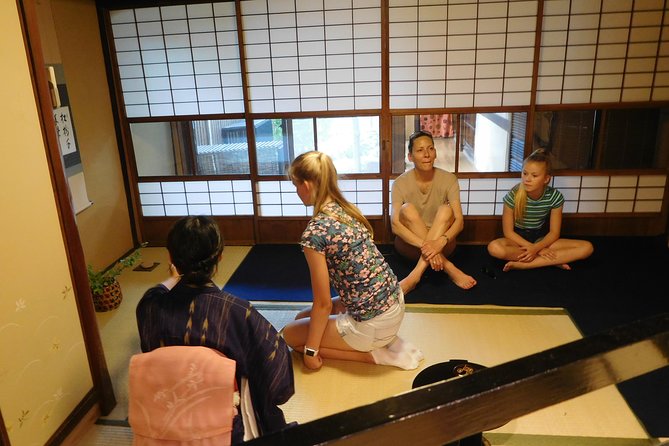
The maximum group size is six people. That is a strong feature for a hands-on class, because you are less likely to disappear in a crowd while trying to follow the demonstration.
A smaller group also helps when you have questions. Tea ceremony has plenty of small details that can be missed from the back of a busy room. Here, you should have a clearer view of the host’s movements and a better chance to receive guidance during your own preparation.
There is one tradeoff. A small class can feel more personal, but the exact mood depends on the people booked at the same time. You might share the hour with a family, a couple, or a mixed group. The six-person limit keeps the activity contained, but it cannot guarantee a private class.
The session lasts approximately one hour. That makes it easy to fit between sightseeing stops, but it also sets a clear limit on what you will learn. You can expect an introduction, a demonstration, hands-on practice, and tea with sweets. You should not expect a full ceremonial sequence lasting several hours or detailed training in every rule of tea etiquette.
Who will get the most from this experience
I would recommend this class to a first-time visitor who wants a short, active cultural experience. You learn by doing, and the hour does not demand a major reshuffle of your Kyoto plans.
It is also a good match for:
- People curious about matcha but unsure how it is prepared
- Families who want an activity that parents and children can share
- Couples looking for a calm cultural stop
- Visitors interested in traditional homes as well as Japanese food
- Anyone who prefers a small class over a large group demonstration
The class may be less suitable if you want a private, highly formal ceremony or already have advanced tea-training experience. The available details point to an accessible introduction, not a specialist workshop.
You should also consider your interest in the drink itself. Matcha has a distinct bitter taste and a fine, powdered texture. The Japanese sweets help balance it, but the experience is still built around matcha. If you strongly dislike green tea, the townhouse and historical explanation may not be enough to justify the booking.
Is $27.59 a fair price?
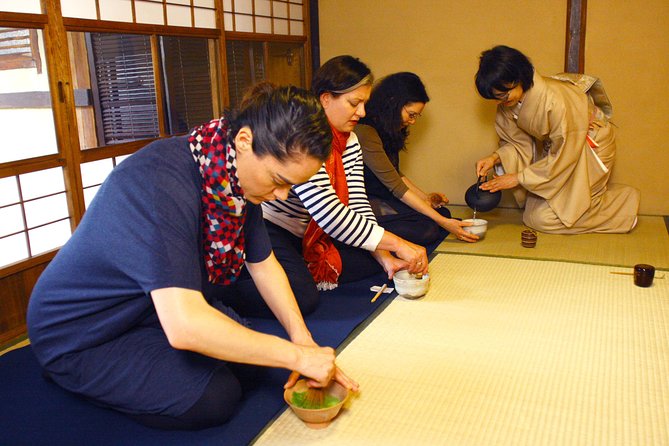
At $27.59 per person, the value comes from the combination rather than from the drink alone. A bowl of matcha and a sweet would not justify this price by themselves. You are also paying for access to a traditional townhouse, a guided explanation, a demonstration, and the chance to make the tea yourself.
The small group adds to the value. A cheaper, larger presentation might let you watch someone prepare matcha, but it might not give you the same chance to practice. Here, the hands-on element turns the class into an activity rather than a brief tasting.
The one-hour length keeps the cost reasonable for visitors with packed itineraries. You do not need to give up half a day, and the session can be paired with nearby sightseeing. The limitation is that you are paying for an introduction, not extensive instruction. If you want depth, seek a longer tea study. If you want an approachable taste of the tradition, the price is sensible.
The experience is currently rated five out of five, with a 100 percent recommendation rate across 19 ratings. That is a small sample, so I would not treat it as a guarantee. Still, the consistent themes are useful: kind and professional hosts, clear explanations, a thorough demonstration, and enjoyable hands-on tea making.
Planning the visit without overcomplicating it
The activity uses a mobile ticket, so keep your booking details easy to access on your phone. Confirmation is sent within 48 hours, subject to availability, so do not assume your place is final until you receive it.
The meeting point is near public transportation, and you will return there when the hour ends. There is no hotel transfer. That is normal for a short central Kyoto activity, but it means you need to plan your own route.
Try not to arrive at the last second. A tea session depends on a calm start, and rushing through Kyoto streets can put you in the wrong frame of mind. Give yourself time to locate 605 Nishidacho and enter the townhouse ready to pay attention.
Most people can take part, according to the supplied information. No special ability is stated as a requirement. If you have a concern about participating in the floor-based or traditional aspects of a tea setting, ask the provider before booking, since detailed seating information is not provided.
Free cancellation is available if you cancel at least 24 hours before the local start time. Cancellations or changes made inside that window are not accepted for a refund.
My verdict on the Ami Kyoto tea class
Book this experience if you want a compact, hands-on introduction to Kyoto tea culture in a setting with genuine character. The 80-year-old machiya, small group, clear teaching, and included sweets give the hour more weight than a simple matcha tasting.
I especially like it for first-time visitors and families. You get enough history to understand what you are doing, then enough practical work to make the lesson stick. The calm setting also offers a useful pause from a busy sightseeing day.
Skip it if you want a long, formal ceremony, a private booking, or advanced instruction. For everyone else, $27.59 buys a focused cultural experience with a personal feel, and the short duration makes it easy to add to a Kyoto itinerary.
FAQ
How long does the tea ceremony experience last?
The activity lasts approximately one hour.
Where does the experience begin and end?
It begins at Ami Kyoto, 605 Nishidacho, Shimogyo Ward, Kyoto, 600-8397, Japan, and ends back at the same meeting point.
What is included in the price?
Your booking includes one bowl of matcha green tea and Japanese sweets.
Is hotel pickup included?
No. Hotel pickup and drop-off are not included. You travel to and from the meeting point yourself.
How many people can join the activity?
The maximum group size is six people.
Can I cancel for a full refund?
Yes, if you cancel at least 24 hours before the experience start time. Cancellations or changes made less than 24 hours before the start time are not accepted for a refund.
Just added in Kyoto
- Private Cooking Class Udon in Kyoto Japan★ 5.0 · 23 reviews
- Your Private Vacation Photography Session In Kyoto★ 5.0 · 110 reviews
- Kyoto: Zen Meditation at a Private Temple with a Monk★ 5.0 · 25 reviews
- Private Pewter Sake Cup Experience with a Kyoto Artisan★ 5.0 · 31 reviews
- Kyoto Wagashi(Japanese sweets) Cooking Class near Fushimiinari★ 5.0 · 60 reviews
- Kyoto: Gion Geisha District & Sake-in-Hand Walking Tour★ 5.0 · 37 reviews
- Kyoto:Family-Friendly Kimono & Yukata Experience at WARGO★ 5.0 · 147 reviews
- Private Guided Traditional Buddhist Cooking in Japan★ 5.0 · 16 reviews
Tea Ceremony Experiences, compared.
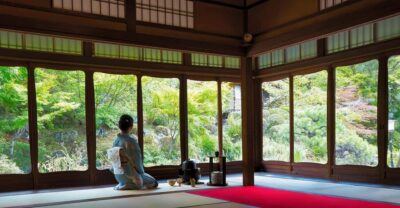
Tea Ceremony in a Traditional Tea House in Kiyomizu
Read our review →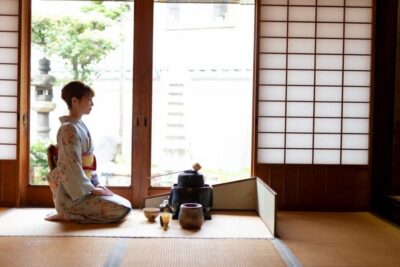
World Heritage Kyoto & Nara Uji Authentic Matcha Experience
Read our review →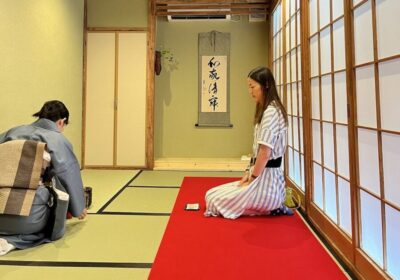
Arashiyama Bamboo Forest, Monkeys, Matcha & Temple Tour
Read our review →Browse the lists this tour appears in