
Reviewed · TEA CEREMONY EXPERIENCES
Tea Ceremony in 150 Years Old Townhouse with Tables and Chairs
The most appealing part of this Kyoto experience is its setting: a 150-year-old townhouse in the Ninenzaka area, where you learn the meaning behind the ceremony instead of simply watching a performance. The tea master explains the utensils, manners, and movements, then lets you prepare your own matcha.
I like the hands-on format and the chance to taste high-quality matcha from Uji with two handmade seasonal sweets. The main consideration is the group size, which can reach 15 people, and punctuality matters because one late group can hold up the whole session.
Key points at a glance
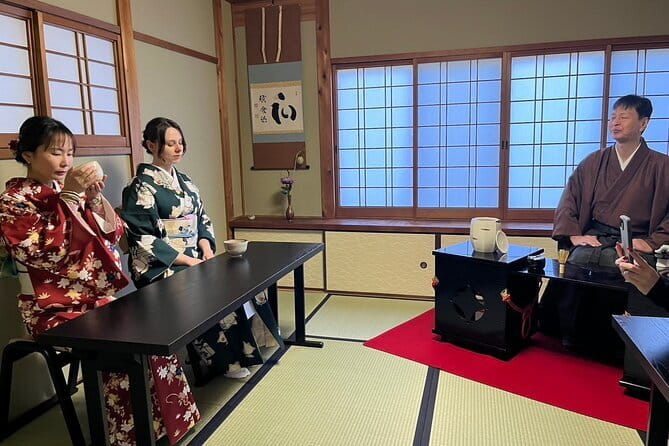
- Two cups of Uji matcha: Taste high-quality Kyoto matcha as part of the session.
- Make your own tea: The tea master gives step-by-step instructions before you whisk your cup.
- 150-year-old townhouse: Experience the ceremony in the Ninenzaka area, close to Sannenzaka.
- Seasonal Japanese sweets: Two different handmade sweets accompany the tea.
- English guidance: An English-speaking assistant helps explain the ceremony and answer questions.
- Simple practical rules: Wear socks, skip perfume, and do not record the instructor’s demonstration.
A 50-minute introduction to Kyoto tea culture
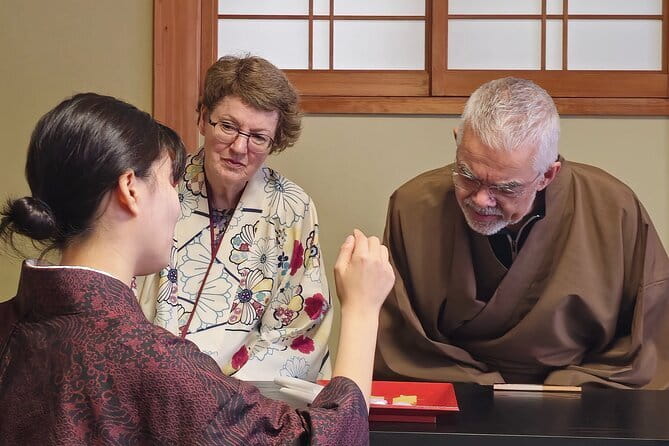
This is a compact cultural activity rather than a long formal tea-school lesson. In about 50 minutes, you receive an explanation of Japanese tea ceremony customs, see the main tools in use, taste matcha and sweets, and prepare your own cup.
That length works well in Kyoto. You can fit the session between visits to Kiyomizu-dera, Yasaka Shrine, or the narrow streets of Higashiyama without giving up half a day. At the same time, the short schedule means the experience stays focused. You will learn the key ideas, not every detail of tea history or every variation of Japanese tea practice.
I especially like that the session is designed for first-time visitors. You do not need to know how to hold a whisk, when to bow, or how to drink matcha before arriving. The tea master and English-speaking assistant explain the process in clear steps, so you can take part without worrying about getting a small gesture wrong.
The activity has a reported rating of 4.8 from 22 reviews, with 95 percent recommending it. That is a strong result, though the sample is still small enough that you should read the details carefully, especially the comments about group arrangements and timing.
Other tea ceremonies in Kyoto people book:
- Kyoto: Tea Ceremony in a Traditional Tea House in Kiyomizu
★ 4.9 · 3,519 reviews - Kyoto: Tea Ceremony Ju-An at Jotokuji Temple
★ 4.9 · 3,207 reviews - Kyoto: 45-Minute Tea Ceremony Lesson Experience
★ 4.3 · 2,378 reviews
Entering the old townhouse near Ninenzaka
The meeting point is Tea Ceremony and Cultural Experience Kangetsu Kyoto at 349-19 Masuyacho, Higashiyama Ward, Kyoto. The address is in the Ninenzaka and Sannenzaka area, one of Kyoto’s most atmospheric sightseeing districts.
This location adds real value. You are not attending a tea demonstration in a generic event room. The activity takes place in an old Kyoto townhouse, giving the ceremony a setting tied to the city’s traditional architecture and neighborhood streets.
The location also affects your planning. Ninenzaka and Sannenzaka are popular sightseeing areas, and the approach can be busy. Give yourself enough time to find the entrance. The activity provider sends a text with location guidance, which is useful because small Kyoto addresses are not always obvious from the main street.
You return to the same meeting point when the session ends. There is no transport between stops, and the only listed stop is the Sannenzaka and Ninenzaka area. That makes this easy to pair with nearby sightseeing, but it also means you should not treat it as a tour of Kyoto’s wider tea district.
What the tea master explains first
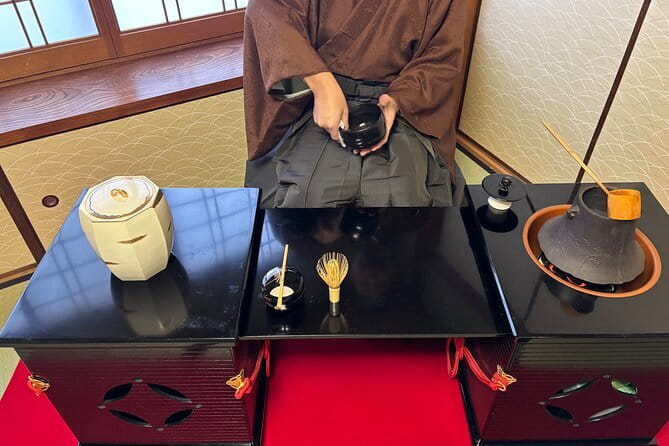
The session begins with the background and purpose of the tea ceremony. The tea master explains the meaning of the ritual, the role of the utensils, and the etiquette expected in the tea room.
This opening is important because matcha preparation is not just a recipe. The careful movements, the order of service, and the attention paid to the guest all express ideas of respect and concentration. You may not remember every Japanese term after 50 minutes, but you should leave with a clearer sense of why the ceremony has so many deliberate steps.
The English-speaking assistant helps make the explanations accessible. Several comments describe the interpretation as clear and step by step, which matters for a ceremony that can otherwise be difficult to follow. You are not left to guess why the tea master turns a bowl, cleans a tool, or pauses at a certain point.
The atmosphere is intended to be calm and respectful. That means this is not a loud, casual tasting with constant photography. Only smartphones are allowed in the tea room, and video recording during the demonstration is prohibited. You can take part in the moment, but you should not plan to document every movement.
Watching the ceremony, then taking part
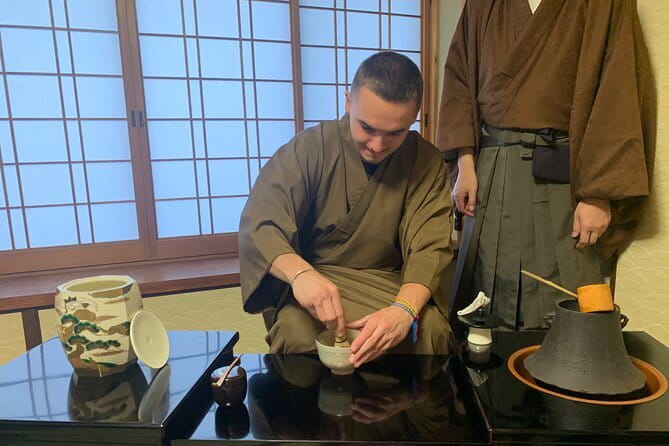
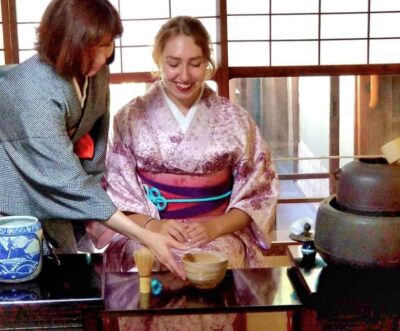
After the explanation, the tea master demonstrates how to prepare matcha. You learn how the tools are used and how the tea is whisked, then you get to make your own cup.
This is the strongest part of the experience for many first-time visitors. Watching a tea master can be interesting, but using the tools yourself gives you a better sense of the care involved. You also discover that making a smooth bowl of matcha is less automatic than it looks.
The instructions are designed to be approachable. You are guided through the process rather than expected to perform a formal ceremony alone. If you have never prepared matcha before, this removes much of the pressure.
The experience includes the tools needed for your preparation. You do not need to bring any equipment. The activity also includes two cups of high-quality matcha from Uji in Kyoto, so the tasting is not limited to the cup you prepare yourself.
The listing calls this a traditional tea ceremony, but it is best understood as an introduction for international visitors. It gives you a practical look at the ceremony and its customs in a friendly setting. Someone seeking advanced instruction in a particular tea school may find the session too short, but most people visiting Kyoto will appreciate its clear and manageable format.
Other tea rooms and ceremonies in Kyoto:
- Kyoto: Table-Style Tea Ceremony at a Kyo-Machiya
★ 4.9 · 1,211 reviews - Kimono Tea Ceremony at Kyoto Maikoya, NISHIKI
★ 5.0 · 911 reviews - Kyoto: Arashiyama Bamboo Forest, Monkeys, Matcha & Temple Tour
★ 5.0 · 759 reviews - Kyoto: Tea Museum Tickets and Matcha Grinding Experience
★ 4.9 · 739 reviews
Uji matcha and two seasonal sweets
Matcha can taste unfamiliar if you have only had sweetened green tea drinks. This tea is powdered green tea, whisked with hot water and served without milk. Its flavor can be grassy, bitter, creamy, or slightly sweet depending on the tea and preparation.
Here, the matcha comes from Uji, the Kyoto area closely associated with Japanese green tea. You receive two cups of matcha, along with two different handmade seasonal Japanese sweets.
The sweets are not just a dessert on the side. In Japanese tea culture, a sweet helps balance matcha’s stronger flavor. You generally taste the sweet before drinking the tea, which makes the matcha feel smoother and less bitter.
The seasonal element is a nice touch. The exact sweets can change, so you should not expect a fixed menu. That variety connects the activity to the Japanese habit of noticing the time of year through food, flowers, colors, and presentation.
I also like that the tea is part of the learning rather than an afterthought. You have a chance to compare the experience of drinking tea prepared by the tea master with the cup you prepare yourself. That small contrast makes the lesson more memorable.
If you enjoy the tea, high-quality matcha is available to purchase at the shop. This is optional, of course, but it gives you a useful way to continue the experience at home rather than leaving it as a one-time taste.
A small group, with some limits
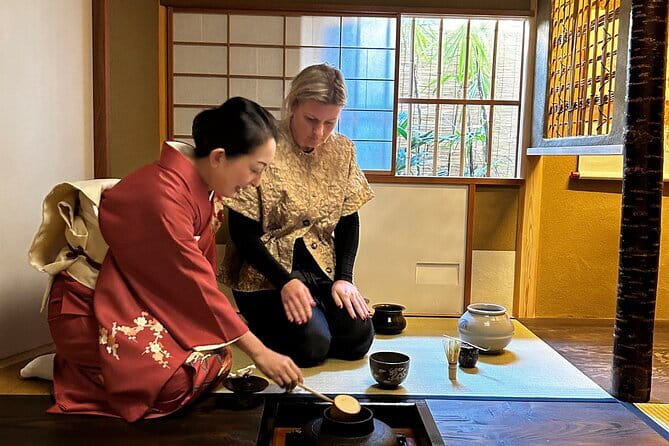
The maximum group size is 15 people. That is still fairly intimate compared with a large sightseeing tour, and the format allows the tea master and assistant to explain the steps to everyone.
The group size can also shape the mood. A smaller group may feel more personal, while a full session can feel more like a class. You should expect to share the attention of the tea master rather than receive a private lesson.
One important point is that this activity is a group session, not a private one-to-one ceremony. If you want a personal appointment for just yourself or your partner, you should choose a different product or confirm the arrangement carefully before booking. A misunderstanding about private versus group participation caused disappointment for one participant.
Arrive promptly. The schedule depends on several groups moving through the experience, and a late arrival can delay the tea master and everyone else. This is also a matter of courtesy in a ceremony where respect and timing are part of the subject.
The activity has received very positive marks for its relaxed tone, clear explanations, and friendly staff. It is not entirely free of practical frustrations, though. One person was annoyed when a previous group kept the next session waiting, and another objected to other participants behaving disrespectfully. These are not features of the planned activity, but they show why punctuality and quiet attention matter.
Clothing, perfume, children, and photography
The clothing rules are simple but important. Wear socks, since they are required in the tea room. If you forget, you can purchase socks, but it is easier to pack a clean pair in your day bag.
Choose clothing that does not expose too much skin. The ceremony is a formal cultural setting, even though the instruction is friendly and accessible.
Do not wear perfume. The provider specifically prohibits it because fragrance can interfere with the smell of incense and tea. This is more than a fussy rule. Scent is part of how the tea room is experienced, and strong perfume can affect everyone nearby.
Only smartphones are allowed in the tea room, and you cannot record the instructor’s demonstration on video. The restriction keeps the room quiet and protects the focus of the ceremony.
Children under seven cannot participate. Older children may find the activity engaging, especially because they get to prepare tea themselves. Families with children aged 11 and 13 have found the history and hands-on elements suitable. Tell the provider about allergies in advance, since sweets and tea are included.
Optional kimono rental for 1,000 yen
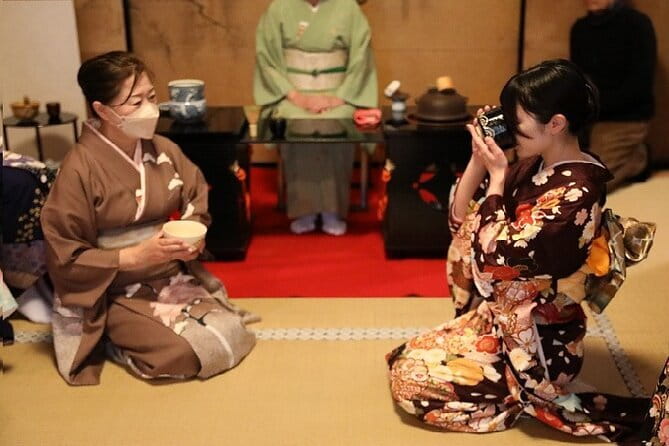
A kimono is not included in the base price. You can add a two-piece kimono for 1,000 Japanese yen per person.
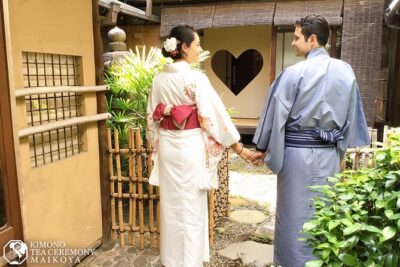
That low-cost option may appeal if you want photographs or a more dressed-up cultural experience. It can also make the visit feel more special in the old townhouse and the historic Ninenzaka setting.
Do not book this activity assuming traditional clothing is automatically part of the experience. It is an add-on, and the main session centers on tea rather than costume rental. If wearing a kimono is your top priority, check the exact arrangement and timing before you pay.
The separate kimono charge is still modest, especially compared with activities where traditional dress is the main feature. But adding it may make the visit take longer or change the practical feel of the session, so keep your schedule flexible.
Is $28.90 good value?
At $28.90 per person, this is reasonably priced for Kyoto. You receive instruction from a tea master, use of the tea tools, two cups of Uji matcha, two seasonal sweets, and an English-supported cultural lesson in a 150-year-old townhouse.
The value is strongest if you want more than a drink. A café can serve matcha for less, but it will not explain the ritual, teach you how to whisk the tea, or show you how the utensils fit into the ceremony.
The price also compares well with other organized cultural activities, especially since the session includes hands-on participation rather than a performance you only watch. The optional kimono rental remains separate, and bottled water, soda, and alcohol are not included. Those exclusions should not matter much because the activity lasts only about 50 minutes and centers on matcha.
I would consider this a good use of money for a first visit to Kyoto, particularly if you want a short activity that gives context to Japanese customs. It is less compelling for someone who already studies tea ceremony or wants a private, highly formal experience.
Free cancellation is available until 24 hours before the start time for a full refund. Changes or cancellations inside that window are not accepted for a refund. The activity also requires good weather under its stated policy, so a cancellation caused by poor weather results in a different date or a full refund.
Who will enjoy this most?
I would recommend this activity to you if you want a clear first introduction to matcha and Japanese tea ceremony without committing to a long class. The English guidance, simple instructions, and hands-on preparation make it friendly for beginners.
It suits couples, families with children aged seven and older, and solo visitors who enjoy small cultural activities. It also fits well into a day around Kiyomizu-dera and the Higashiyama streets because the meeting point is in the Ninenzaka area.
You may want another experience if you dislike group activities, need a private ceremony, or expect kimono rental to be included. You should also skip it if you cannot follow the clothing and fragrance rules, or if you want to film the demonstration.
Should you book the Kangetsu tea ceremony?
Book it if you want to understand what makes matcha special, prepare your own cup, and taste seasonal sweets in a traditional Kyoto townhouse. The combination of setting, English explanation, Uji tea, and hands-on instruction gives you more substance than a simple tea tasting.
Go in with the right expectations. This is a 50-minute group introduction with up to 15 participants, not a private tea-school course. Arrive early, wear socks, avoid perfume, and treat the quiet setting with respect.
For most first-time visitors to Kyoto, I think the price is fair and the format is well judged. The activity gives you a small but meaningful look at Japanese tea culture, then sends you back into Ninenzaka with a better understanding of the cup in your hand.
FAQ
Where does the tea ceremony take place?
It takes place at Tea Ceremony and Cultural Experience Kangetsu Kyoto, at 349-19 Masuyacho, Higashiyama Ward, Kyoto, 605-0826, Japan.
How long does the experience last?
The tea ceremony lasts approximately 50 minutes.
What area of Kyoto is the meeting point in?
The meeting point is in the Ninenzaka and Sannenzaka area of Kyoto.
Is the experience conducted in English?
Yes. English-language experiences are provided every day, and an English-speaking assistant helps explain the ceremony.
How many people can join the session?
The activity has a maximum group size of 15 people.
What is included in the price?
The price includes all fees and taxes, use of the tea-making tools, two cups of high-quality Uji matcha, and two different seasonal Japanese sweets.
Is a kimono included?
No. A two-piece kimono can be added for 1,000 Japanese yen per person.
What should I wear?
Wear socks and clothing that does not expose too much skin. Socks can be purchased if you forget them.
Can I wear perfume or record the demonstration?
Perfume is not allowed because it can interfere with the smell of incense and tea. Video recording during the instructor’s demonstration is also prohibited, and only smartphones are allowed in the tea room.
Are young children allowed to participate?
Children under seven years old are not allowed to participate. You should also tell the provider in advance about any allergies.
What is the cancellation policy?
You can cancel at least 24 hours before the start time for a full refund. Cancellations or changes made less than 24 hours before the start time are not accepted for a refund. If poor weather causes the activity to be canceled, you will be offered another date or a full refund.
Just added in Kyoto
- Private Cooking Class Udon in Kyoto Japan★ 5.0 · 23 reviews
- Your Private Vacation Photography Session In Kyoto★ 5.0 · 110 reviews
- Kyoto: Zen Meditation at a Private Temple with a Monk★ 5.0 · 25 reviews
- Private Pewter Sake Cup Experience with a Kyoto Artisan★ 5.0 · 31 reviews
- Kyoto Wagashi(Japanese sweets) Cooking Class near Fushimiinari★ 5.0 · 60 reviews
- Private Guided Traditional Buddhist Cooking in Japan★ 5.0 · 16 reviews
- Kyoto: Gion Geisha District & Sake-in-Hand Walking Tour★ 5.0 · 37 reviews
- Kyoto:Family-Friendly Kimono & Yukata Experience at WARGO★ 5.0 · 147 reviews
Tea Ceremony Experiences, compared.
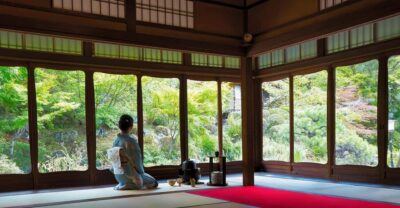
Tea Ceremony in a Traditional Tea House in Kiyomizu
Read our review →
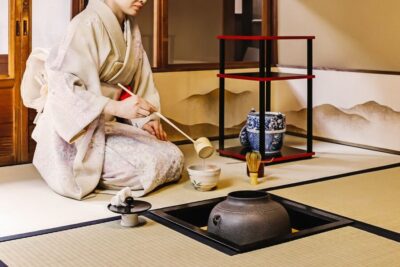
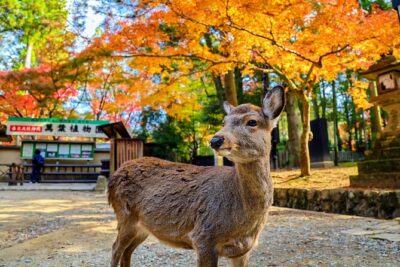
World Heritage Kyoto & Nara Uji Authentic Matcha Experience
Read our review →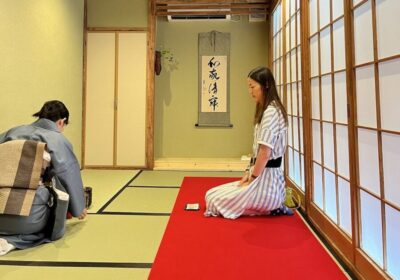
Arashiyama Bamboo Forest, Monkeys, Matcha & Temple Tour
Read our review →Browse the lists this tour appears in