Reviewed · TOURS IN KYOTO
Tour in Kyoto with a Goverment Certified Tour Guide
Kyoto’s big sights are spread across the city, and this tour tries to connect nine of them in six to eight hours. You can visit the vermilion gates at Fushimi Inari, the Golden Pavilion, Gion, Nishiki Market, and Arashiyama in one ambitious day, with a government-certified guide to explain what you are seeing.
I like the chance to customize the route around your interests and available time. I also like the human side of the tour: guides such as Andrea and Roberto have been praised for patience, strong English, useful cultural explanations, and help with practical jobs such as buying bullet-train tickets.
The main caution is logistics. Nine major stops are a lot for one day, and some bookings have involved late starts, changed meeting points, larger groups, or fewer sites than expected. Confirm the pickup location, start time, group size, and exact plan before you set aside your only day in Kyoto.
Key points to know before booking
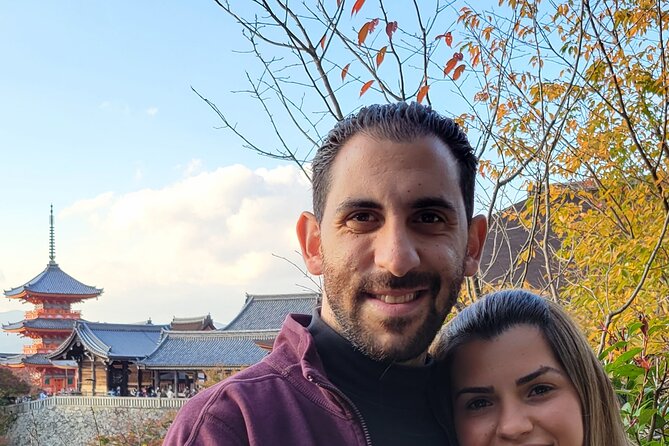
- Nine famous Kyoto stops: The planned route covers Fushimi Inari, Kiyomizu-dera, Nijo Castle, Gion, Nishiki Market, Kinkaku-ji, Ginkaku-ji, Arashiyama, and Tenryu-ji.
- A very ambitious schedule: The listed stop times total seven and a half hours before transport, meals, crowds, and delays.
- Customization is available: You can ask to focus on temples, shrines, old neighborhoods, food, or a shorter selection of sights.
- Strong individual guides: Andrea and Roberto receive especially warm praise for friendliness, explanations, flexibility, and personal help.
- Extra costs matter: Guide transport costs $5 to $8, food and drinks are separate, and some admission fees are not included.
- Communication needs care: Pickup and meeting arrangements have caused serious problems for some bookings, so confirm every detail in writing.
What the $110 price really buys you
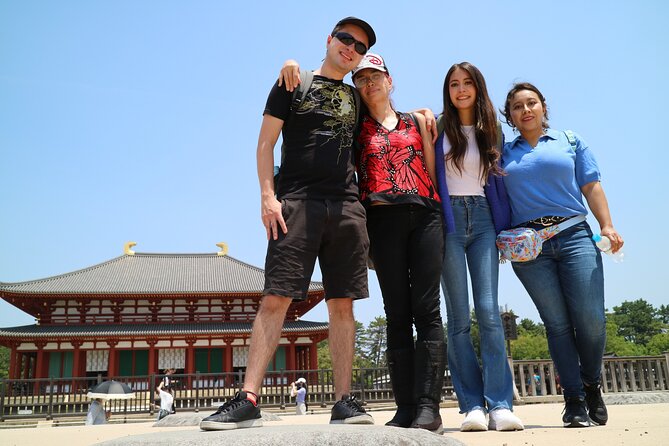
At $110 per person, this tour sits in the reasonable range for a private or small-group day with a certified guide, provided the advertised service is delivered. The value is not simply in entering temples. It is in having someone connect the symbols, customs, architecture, and stories as you move around Kyoto.
The guide fee also buys convenience. Kyoto’s sights are not arranged in a neat line. Fushimi Inari is in the southeast, Kinkaku-ji is in the northwest, and Arashiyama is farther west. A guide can help you decide what to cut when traffic, crowds, heat, or long queues take more time than planned.
Still, the price does not cover everything. You pay your own transportation, personal expenses, food, and drinks. Guide transportation adds about $5 to $8. Admission fees are also separate at some stops, including Ginkaku-ji at $8 per person. Nijo Castle and Tenryu-ji are also marked as having admission fees not included.
That makes the final cost higher than the headline price. It is worth asking for an estimate based on your chosen route, especially if you are booking for several people.
The phrase private tour needs particular attention. The planned format says only your group participates, but some bookings have changed into shared outings with other couples or larger groups. If privacy matters to you, ask for written confirmation that the booking will remain private, rather than assuming the phrase applies in all circumstances.
Other experiences people book in Kyoto:
- PERFECT KYOTO 1-Day Bus Tour
★ 5.0 · 13,518 reviews - Kyoto: Fushimi Inari, Kinkakuji, Bamboo Grove 1 Day Bus Tour
★ 4.8 · 4,316 reviews - Kyoto: Tea Ceremony in a Traditional Tea House in Kiyomizu
★ 4.9 · 3,519 reviews
Fushimi Inari and Kiyomizu-dera: the strongest opening pair
Fushimi Inari-taisha is one of Kyoto’s most recognizable sights. Its long run of orange torii gates climbs through wooded hills dedicated to Inari, the Shinto deity associated with rice and prosperity.
The scheduled hour gives you enough time to walk through the lower gate area and get a feel for the site. It does not allow a full climb to the upper sections. If you care most about the gates and photography, an hour can work. If you want a quieter walk higher up the mountain, you will need to sacrifice another stop.
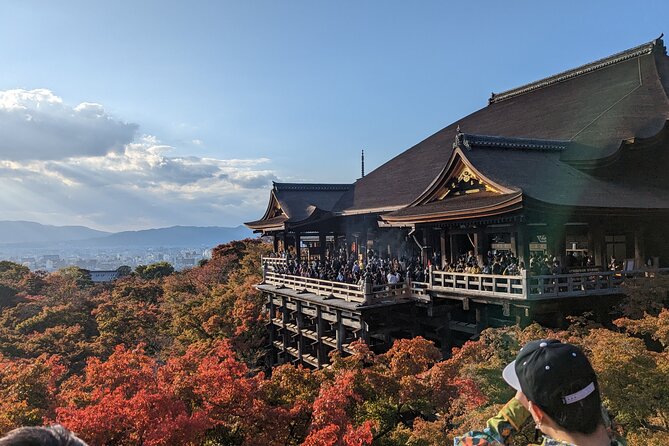
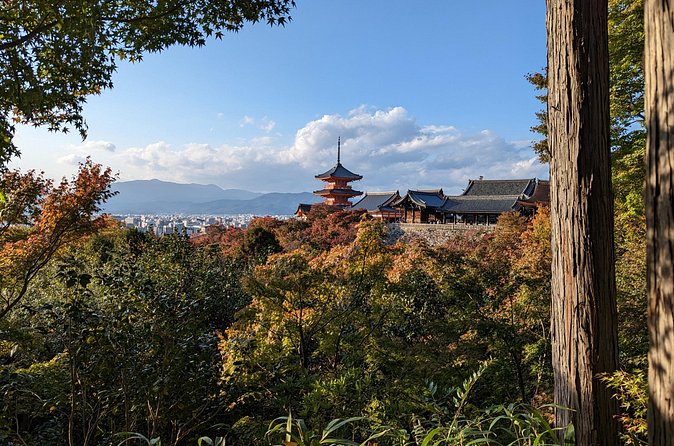
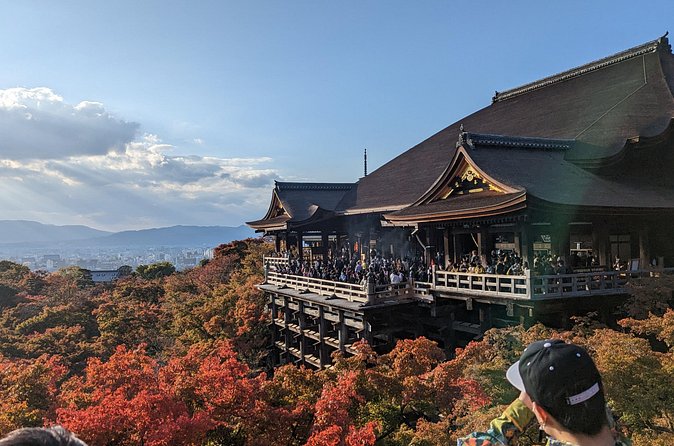
Kiyomizu-dera offers a different mood. The Buddhist temple sits on the hills of Higashiyama, with broad views over Kyoto and a famous wooden stage. The surrounding lanes add old-town atmosphere, but they also bring heavy foot traffic.
I would ask your guide to explain the temple’s religious details rather than treating it as a photo stop. The setting is impressive, yet the meaning of the buildings and rituals is what makes the visit worthwhile. One hour is useful for the main temple area, but it will feel tight if the approach roads are crowded.
These two sites make a sensible first section of the day because they show two sides of Kyoto: Shinto shrine practice at Fushimi Inari and Buddhist temple culture at Kiyomizu-dera. They also involve walking, steps, and hills, so comfortable shoes are essential.
Nijo Castle gives the day a political center
Nijo Castle brings samurai-era Kyoto into the plan. Built in the 17th century, it served as a residence and symbol of power. Its interiors, grounds, and historical role make it different from the city’s many religious sites.
The listed hour does not include admission, and entry costs extra. Ask your guide how much of the castle you will see before paying for admission. If your start is late, this is one of the places most likely to be shortened or removed.
I like having Nijo Castle in the route because it prevents the day from becoming a string of similar temples. The castle helps explain the political world behind Kyoto’s court culture, religious institutions, and samurai legends.
Gion and Nishiki Market bring Kyoto down to street level
Gion is best understood as a historic district, not a guaranteed geisha sighting. Its traditional buildings, narrow lanes, and preserved atmosphere offer a look at Kyoto’s entertainment quarters. A guide can also help you behave respectfully in a district where residents and working professionals share the streets with sightseers.
The one-hour slot is enough for a walk and an explanation of the area. It is not enough to explore every lane slowly, and the mood changes sharply when large crowds fill the streets. Keep your expectations focused on architecture, local customs, and the district’s history.
Nishiki Market offers a more everyday taste of Kyoto. The covered market stretches across several blocks and is known for local foods, fresh ingredients, traditional goods, and small shops. This is a good place to pause from temple viewing and sample something at your own expense.
Food is not included, so bring a separate budget. I would also ask before stopping to eat, since a market visit can easily run beyond the planned hour. If you are more interested in food than monuments, Nishiki may deserve extra time, while another temple can be left for a future day.
Same base, a different sort of day:
- Kyoto Geisha Walking Tour: Gion District & Hidden Gems
★ 4.7 · 3,273 reviews - Kyoto: Tea Ceremony Ju-An at Jotokuji Temple
★ 4.9 · 3,207 reviews - Kyoto: Gion Magical Night Walking Tour with Geisha Trivia
★ 4.9 · 2,393 reviews - Kyoto: 45-Minute Tea Ceremony Lesson Experience
★ 4.3 · 2,378 reviews
Kinkaku-ji and Ginkaku-ji are not interchangeable
Kinkaku-ji, the Golden Pavilion, is the showier of the two. Its gold-covered exterior reflects beside a pond, making it one of Kyoto’s most instantly recognizable views. The grounds provide a clear route through the main viewing areas, but crowds can slow the visit.
The one-hour schedule works for seeing the pavilion and grounds. It is less suitable if you want long periods for quiet photography or a detailed look at every garden feature. Ask the guide about the best order for the visit, since timing can affect how much time you spend waiting in the main viewing area.
Ginkaku-ji, the Silver Pavilion, offers a calmer and more restrained experience. Despite its name, it is not covered in silver. The appeal lies in its Zen setting, gardens, and simple design rather than flashy decoration.
The admission fee is listed separately at $8 per person. That cost is modest, but it matters because other entry fees may also arise. Ginkaku-ji is scheduled for an hour, and the guide can help you decide if its quieter character fits your priorities better than another major stop.
Trying to see both pavilions in one day gives you a useful contrast. Kinkaku-ji is about visual impact. Ginkaku-ji rewards a slower look at garden design and Zen taste. The drawback is distance and time. Adding both to a route that already includes southern Kyoto, central Kyoto, and Arashiyama leaves little room for delays.
Arashiyama and Tenryu-ji need more than a quick glance
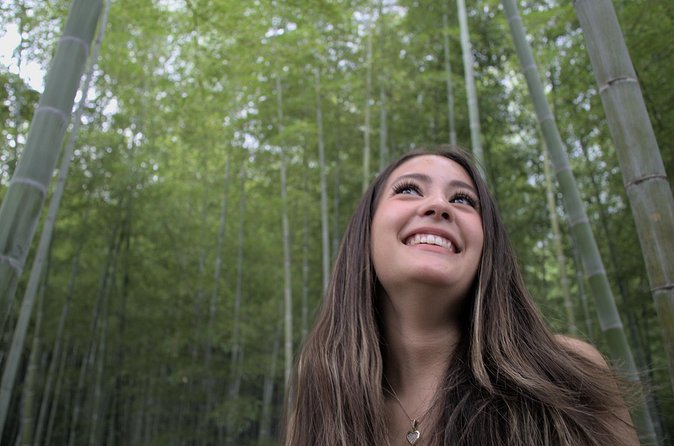
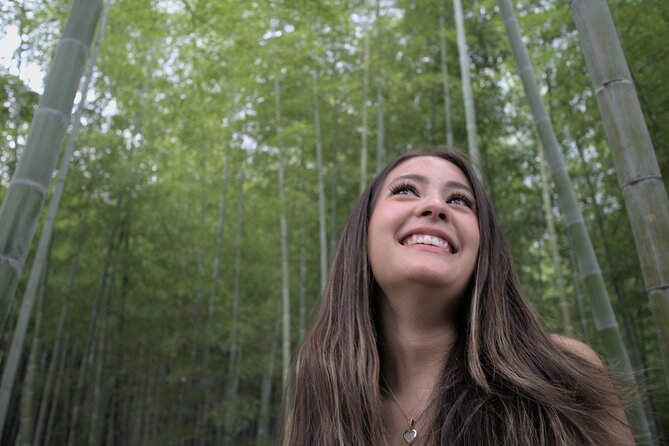
Arashiyama is listed for only 30 minutes, which is the clearest sign that this itinerary is designed for coverage rather than a slow visit. The bamboo area is photogenic, but a short stop may allow only a walk through part of the grove.
Crowds can be thick, especially at popular times. If the bamboo forest is one of your main reasons for visiting Kyoto, tell the guide at the start. You may prefer to give Arashiyama more time and drop one of the other temples.
Tenryu-ji is also allotted 30 minutes. This Zen temple, founded in the 14th century, is a UNESCO World Heritage Site in the Arashiyama district. Its temple buildings and garden make it a natural partner for the bamboo area, but admission is not included.
The two stops work well together geographically and thematically. The problem is the clock. After transport across Kyoto and a full day of walking, half an hour can feel like a preview. I would treat the published route as a menu of possible stops, not a promise that every site will receive a full, relaxed visit.
The guide can make or break the day
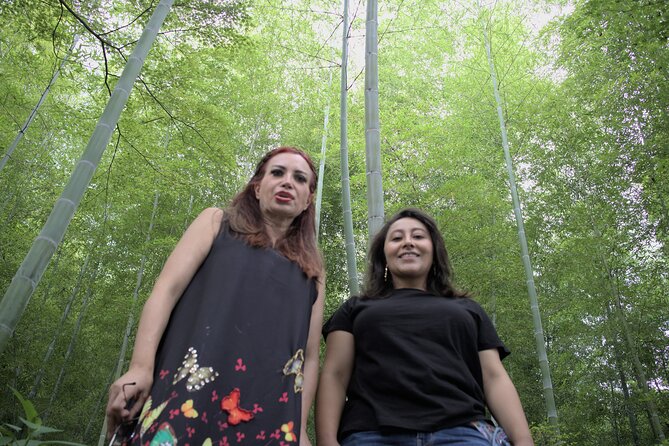
The best part of this experience is the guide-to-customer connection. Andrea is praised for being patient, friendly, detailed, and willing to adapt the day. One particularly strong account describes her helping visitors with disabilities and shaping the outing around their needs.
Roberto is also praised for taking guests to the places they most wanted to see, explaining religion and mythology, and helping with bullet-train tickets. Another guide is described as friendly, patient, eager to help, and fluent in English.
Those details matter. Kyoto is easier to understand when someone explains why a shrine uses certain symbols, how temple spaces differ, or how local customs affect a historic district. A good guide also knows when to stop explaining and let you enjoy the view.
The guide quality appears uneven, however. Some bookings have involved more than one guide, late starts, or a change from the expected private format to a larger shared group. That does not automatically mean your day will go badly, but it makes clear pre-tour communication important.
Send your preferred sights and any mobility, food, timing, or language needs before the tour. Ask who will meet you, where, and at what exact time. Also confirm how the guide will be identified, since unclear meeting arrangements have caused confusion.
Timing, transport, and the risk of a rushed day
The itinerary adds up to approximately seven and a half hours of sightseeing: one hour at each of seven major stops, followed by two half-hour stops. That total does not include travel between distant districts, buying tickets, finding meeting points, lunch, bathroom breaks, or crowded paths.
This is why the route is best seen as flexible. The tour description allows customization, and you should use it. A focused six-hour day covering Fushimi Inari, Kiyomizu-dera, Gion, and Nishiki Market may feel more satisfying than racing through all nine locations.
Transportation fees are separate. The guide’s transport costs about $5 to $8, while general transportation fees are also excluded. Because the route crosses much of Kyoto, ask how you will move between stops and what you should budget for the day.
A few bookings have started one to three hours late or finished with only a fraction of the advertised sites. Some problems involved unclear instructions, missed contact, or expectations about hotel pickup. The safest approach is to confirm the meeting point and pickup area well ahead of time, then keep the written confirmation available on your phone.
Pickup is offered, but the service is tied to Kyoto. A pickup request from Osaka, including Tempozan, is outside the stated coverage. If you are staying outside Kyoto, ask exactly where you must meet the guide.
Who will get the most from this Kyoto tour?
This tour suits you if you have one packed day and want an expert to help organize Kyoto’s major sights. It can be especially useful for first-time visitors who want cultural context rather than simply moving between photo stops.
It also suits families or couples who want to shape the day around personal interests. You can ask for more temples, more neighborhoods, food stops, or a shorter list. The strongest guide experiences suggest that the right guide can make the day work well for people with different abilities and energy levels.
I would be cautious if you dislike rushed sightseeing or have only one irreplaceable day in Kyoto. The distance between stops, separate admission fees, and reports of changed group sizes make this less predictable than a simple half-day outing.
It is also not the best choice if you want to explore one district properly. Arashiyama alone can fill several hours, and Gion, Higashiyama, or the northern temple route each deserve slower attention.
Cancellation is free up to 24 hours before the start time. Within 24 hours, the payment is not refundable. If the operator cancels because the minimum number is not met, you should be offered another date or experience, or a full refund.
Should you book it?
Book this tour if you value a flexible guide-led overview and will confirm the details before arrival. The price can be fair for a well-run private day, and guides such as Andrea and Roberto have shown how useful a thoughtful local escort can be.
Do not book it expecting nine leisurely visits. Treat the route as a list of possibilities, then agree on your top three or four sights. If the operator cannot clearly confirm the meeting place, start time, pickup arrangement, and private group status, choose another option.
My practical verdict is cautious but not dismissive: the itinerary is excellent on paper, and the best guide-led days sound genuinely rewarding. The uneven organization is the serious concern. Your odds improve if you set firm expectations, keep communication in writing, and accept that Kyoto’s crowds may force changes.
FAQ
How long does the Kyoto tour last?
The experience lasts approximately six to eight hours.
What locations can the tour include?
The planned route includes Fushimi Inari-taisha Shrine, Kiyomizu-dera Temple, Nijo Castle, Gion, Nishiki Market, Kinkaku-ji, Ginkaku-ji, Arashiyama, and Tenryu-ji Temple.
Can I customize the itinerary?
Yes. The tour allows you to customize the visit according to your interests and the time available.
Is this a private tour?
The experience is described as a private activity for your group, but solo customers or couples may be asked to join another solo customer or couple. Confirm the group arrangement before booking.
Is hotel pickup included?
Pickup is offered, but the available information does not promise pickup from every location. Pickup is described for Kyoto, not Osaka’s Tempozan area, so confirm the exact meeting point.
Are admission fees included?
No. Some admission fees are separate. Ginkaku-ji is listed at $8 per person, and Nijo Castle and Tenryu-ji also have admission fees not included.
Are transportation costs included?
No. Transportation fees are separate. The guide’s transportation cost is listed as approximately $5 to $8, and general transportation fees are also excluded.
Are food and drinks included?
No. Food and drinks are not included. Nishiki Market is part of the possible route, but any purchases there are your responsibility.
What is the cancellation policy?
You can cancel at least 24 hours before the start time for a full refund. Cancellations or changes made within 24 hours are not refundable or accepted.
Just added in Kyoto
- Private Cooking Class Udon in Kyoto Japan★ 5.0 · 23 reviews
- Your Private Vacation Photography Session In Kyoto★ 5.0 · 110 reviews
- Kyoto: Zen Meditation at a Private Temple with a Monk★ 5.0 · 25 reviews
- Private Pewter Sake Cup Experience with a Kyoto Artisan★ 5.0 · 31 reviews
- Kyoto Wagashi(Japanese sweets) Cooking Class near Fushimiinari★ 5.0 · 60 reviews
- Private Guided Traditional Buddhist Cooking in Japan★ 5.0 · 16 reviews
- Kyoto: Gion Geisha District & Sake-in-Hand Walking Tour★ 5.0 · 37 reviews
- Kyoto:Family-Friendly Kimono & Yukata Experience at WARGO★ 5.0 · 147 reviews
Tours in Kyoto, compared.

Tea Ceremony in a Traditional Tea House in Kiyomizu
Read our review →
Kyoto Geisha Walking Tour: Gion District & Hidden Gems
Read our review →


Gion Geisha District Walking Tour – Stories of Geisha
Read our review →
Best of Kyoto: Gion, Geisha, Pagodas & Cobblestones
Read our review →