Reviewed · TOURS IN KYOTO
Traditional Japanese Washi Papermaking- Kyoto morning
Making washi paper by hand is a fine way to slow down in Kyoto. In a small traditional Japanese-style house, you work with raw paper materials, arrange cherry blossoms and maple leaves, and leave with a souvenir you made yourself. I love the calm, hands-on pace and the chance to learn from Hiro and Junko, who explain the process in both Japanese and English.
I also like the tiny group size, capped at four people. You get close guidance instead of being lost in a crowd, and children, teens, and first-time crafters can follow along. The main consideration is time: the standard class lasts about one hour, so larger projects or extra gifts require an additional paid hour.
Key points to know before booking
- Make real paper from raw materials: You take part in the process instead of simply decorating a prepared sheet.
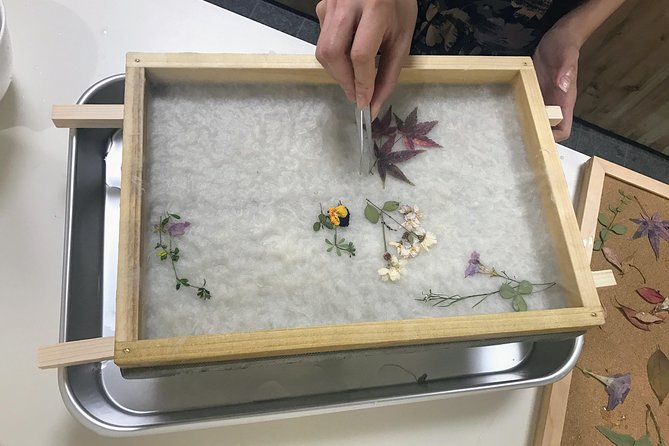
- Add seasonal Japanese design: Cherry blossoms, maple leaves, dried flowers, grass, and paper cut-outs are available for personal designs.
- Expect a very small class: The workshop accepts a maximum of four people, which allows plenty of help.
- Pick a finished project: Options include postcards, a table mat, a wraparound lampshade, or a tapestry panel.
- Plan your route carefully: The studio is a six-minute walk from Karasuma Oike Station Exit 6 and nine minutes from Shijo Station Exit 24 or Karasuma Station.
- Allow extra time for more paper: An additional hour of unlimited papermaking is available at your own expense.
A quiet craft break in central Kyoto
Kyoto can fill your morning with temples, shopping streets, and one busy sight after another. This workshop gives you a different kind of cultural experience. You sit down, listen, work with your hands, and pay attention to how a traditional object takes shape.
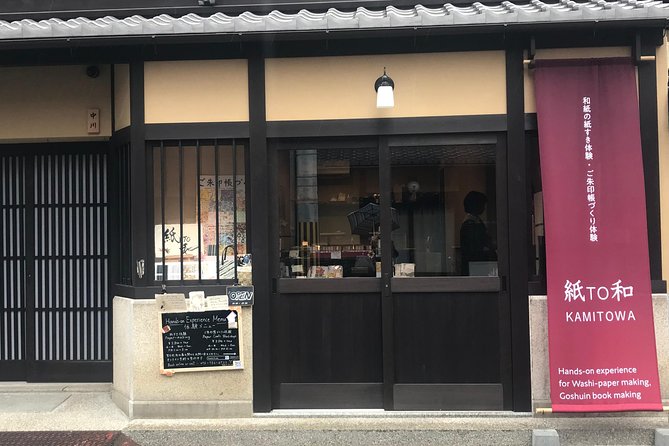
The class takes place at 紙TO和, listed at 345 Sanjōchō in Nakagyo Ward. You make your own way there, which keeps the experience simple but means transportation is not included. The location is central and close to several train and subway exits, so it fits neatly into a day around central Kyoto.
The setting matters. This is not a large visitor center with a long production line. The workshop is a small studio and shop in a Japanese-style house. The limited capacity of four gives the session a personal feel, with the instructor able to watch your technique and step in when you need help.
The bilingual instruction is another practical advantage. Hiro and Junko can explain the activity in English and Japanese, and the class is designed so you can follow the work step by step. You do not need prior craft experience.
Other experiences people book in Kyoto:
- PERFECT KYOTO 1-Day Bus Tour
★ 5.0 · 13,518 reviews - Kyoto: Fushimi Inari, Kinkakuji, Bamboo Grove 1 Day Bus Tour
★ 4.8 · 4,316 reviews - Kyoto: Tea Ceremony in a Traditional Tea House in Kiyomizu
★ 4.9 · 3,519 reviews
What happens during the 60-minute class
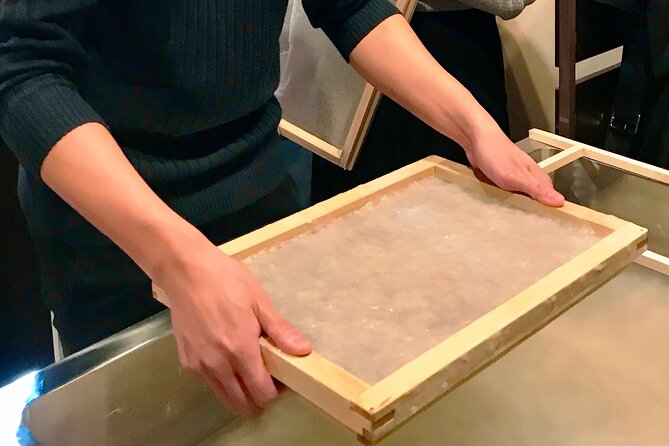
The session begins with introductions and an explanation of washi papermaking. You learn about the materials and the traditional method before starting your own sheet. The class also uses an educational video during drying time, giving you a look at the wider process and the many stages involved in making paper.
That drying period is useful. Instead of waiting around, you get more context about the craft. A short experience can easily become just a decorative activity, but the background helps you understand why handmade washi takes patience and care.
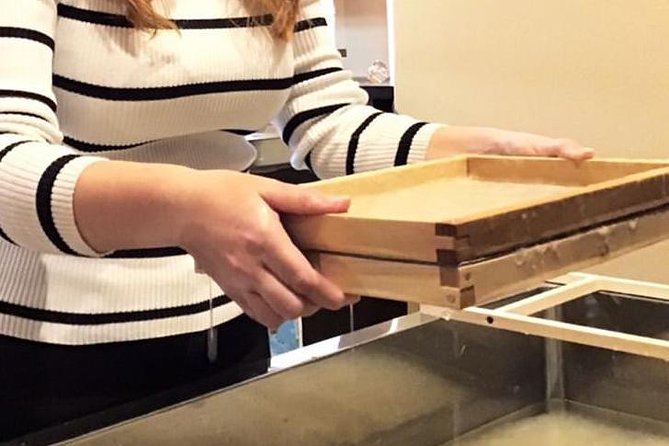
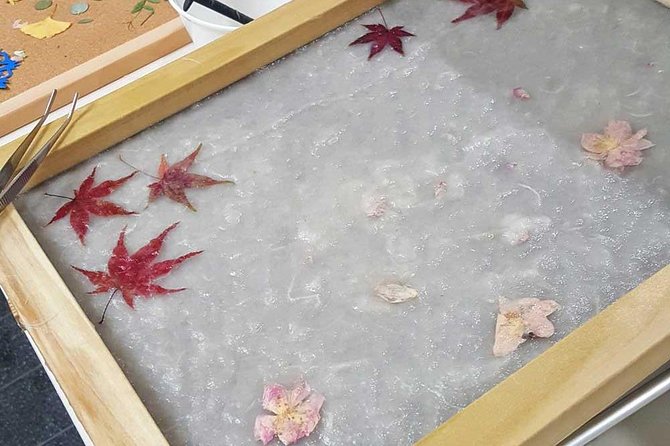
You then work with the paper mixture and form your paper. The instructors guide you through each part, keeping the process manageable even though traditional papermaking involves many steps. You can ask questions as you go, and the small group means the guidance is close at hand.
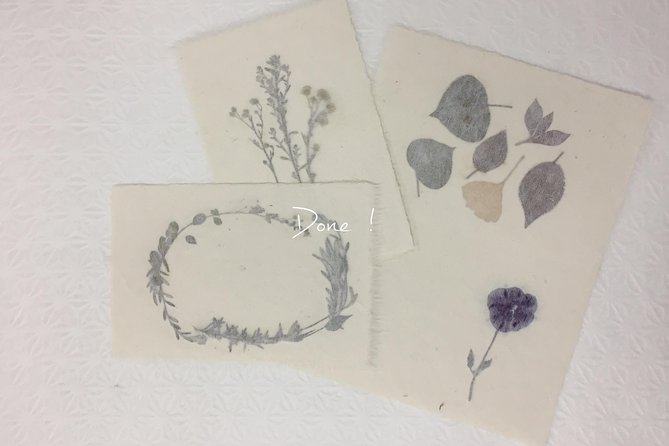
Once the paper is ready, the creative part begins. You choose from seasonal materials and other decorations, then arrange them on your sheet. Cherry blossoms and maple leaves give the design a clear Japanese touch, while dried flowers, grass, and paper cut-outs let you make something more personal.
The result is not a factory-perfect object. That is part of the appeal. The fibers, colors, and placement reflect your own choices, and the finished paper carries the small marks of having been made by hand.
Choosing between postcards, a mat, and a lampshade
The standard activity can produce a set of postcards, and one class description specifies four regular cards as part of the usual cost. This is a good choice if you want several small souvenirs or need something easy to pack.
A table mat gives you a larger surface for arranging leaves and flowers. It also lets you see the paper texture more clearly. For a more decorative object, you can choose a wraparound lampshade, also described in one account as a lantern, for an additional charge.
A tapestry panel is another option for a larger design. The available choices may affect the final price, so check the cost of your preferred item when booking or at the workshop. The base price is about $33.03 per person, but larger projects and optional upgrades can add to that amount.
The important value here is not the raw cost of paper. You are paying for instruction, materials, studio time, and the chance to make a traditional craft under supervision. At about an hour, the class is short enough to fit around other plans, yet it gives you something more meaningful than a mass-produced souvenir.
If you want to make presents for several people, consider adding the extra hour of unlimited papermaking. That option costs more, but it may be worthwhile for a family or group hoping to leave with several pieces. If you only want one personal keepsake, the standard hour should be enough.
Why the small group makes a difference
The maximum of four people is one of the strongest features of this activity. Handmade paper can be awkward at first, and you may need a quick correction with the tools or materials. In a crowded class, that help could be delayed. Here, the instructors can give each person close attention.
The format also works well for families. Children must be accompanied by an adult, but the activity is suitable for different ages. A seven-year-old and an eleven-year-old were able to enjoy the process, and a teenager found it both fun and educational. Younger children may need help with the practical steps, while older children can make more independent design choices.
You should still understand that this is a craft class, not a sightseeing tour with a large amount of spoken explanation. If you dislike making things or prefer a fast-moving schedule, the quiet pace may feel slow. If you enjoy creative work, the same pace becomes the main attraction.
The workshop also suits rainy mornings and breaks between major sights. You get an indoor activity without giving up a connection to Japanese culture. The nearby covered market makes it easy to pair the class with lunch or central Kyoto shopping.
Same base, a different sort of day:
- Kyoto Geisha Walking Tour: Gion District & Hidden Gems
★ 4.7 · 3,273 reviews - Kyoto: Tea Ceremony Ju-An at Jotokuji Temple
★ 4.9 · 3,207 reviews - Kyoto: Gion Magical Night Walking Tour with Geisha Trivia
★ 4.9 · 2,393 reviews - Kyoto: 45-Minute Tea Ceremony Lesson Experience
★ 4.3 · 2,378 reviews
The instructors and the teaching style
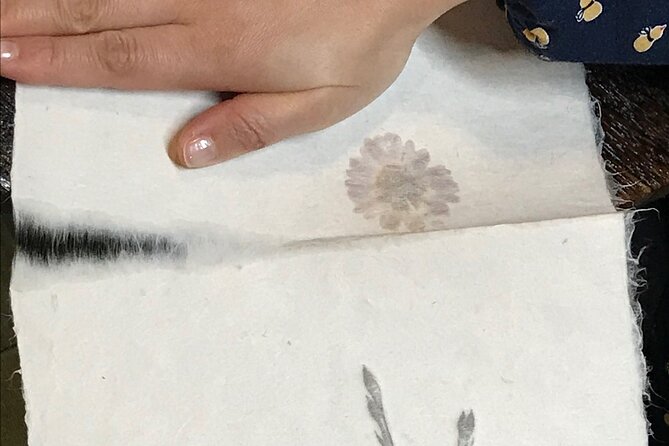
Hiro and Junko run the workshop with a friendly, patient approach. The instruction is practical, and the class is arranged so that you can see each stage from start to finish. You are not handed a finished sheet to decorate. You make the paper and then decide how to use it.
The explanations also cover the background of papermaking. This is valuable because washi is more than a pretty surface. The process involves repeated steps, careful handling, and a feel for the fibers. Seeing the method in person gives you a better respect for the paper products sold throughout Japan.
English support is available, but the activity remains visual and hands-on. You can watch the demonstration, copy the movement, and ask for help as needed. That makes this a comfortable choice if you want a Japanese cultural activity without needing Japanese language skills.
The hosts also seem attentive after the class. Finished pieces are packaged carefully, and help is available if you need assistance with something left behind or with taking your work home. The small shop sells local paper goods and other items, but there is no stated pressure to buy.
Getting there from Kyoto rail stations
You are responsible for reaching the workshop. The address is 345 Sanjōchō, Nakagyo Ward, Kyoto, postal code 604-8205.
The studio is:
- About six minutes on foot from Exit 6 of Karasuma Oike Station on the Kyoto Metro Karasuma Line
- About nine minutes on foot from Exit 24 of Shijo Station on the Kyoto Metro Karasuma Line
- About nine minutes from Karasuma Station on the Hankyu Line
Use the mobile ticket and allow enough time to find the house before the start. The workshop ends back at the meeting point, so you can continue directly to your next Kyoto activity.
Because this is a small class, arriving on time matters. A late arrival could be more disruptive here than at a large tour, where a guide can absorb delays. The location near public transportation makes the class easy to place in a morning schedule, but you should not count on included transfers.
What to carry home
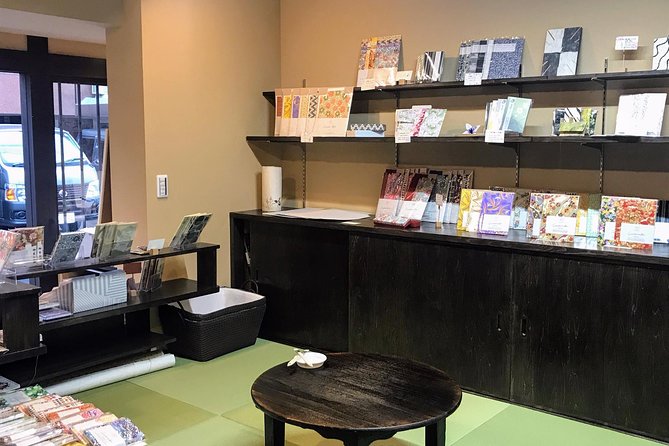
Your handmade paper is the main souvenir, and it has the advantage of being personal rather than generic. You choose the decorations, so the final piece can reflect the season and your own taste.
The paper is packaged for the journey, but you still need to carry it with you if you do not arrange to leave it behind. Keep that in mind if you are spending the rest of the day moving between sights. A flat postcard set is easier to manage than a larger panel or lampshade.
You can also browse the shop after the session. It contains paper goods and local creations, giving you a chance to compare your own work with finished Japanese paper products. There is no need to buy anything, but the shop adds context to the craft and may help you see how washi is used beyond the class.
Price, timing, and cancellation
The listed price is $33.03 per person, including taxes, fees, and handling charges. Transportation to and from the studio is not included. For a one-hour cultural activity with materials and instruction, the price is reasonable, especially if you value a handmade souvenir and a small class.
The main limit is the short duration. You can complete a project in the standard session, but you will not have unlimited time to experiment. Pay for the extra hour if you want several gifts or a larger design.
Free cancellation is available when you cancel at least 24 hours before the local start time. Cancellations made less than 24 hours before the start, along with late changes, are not refunded. Confirmation is provided when you book.
Who should book this Kyoto craft class
I would choose this workshop if you want a cultural activity with a clear result at the end. It suits couples, families, older children, teenagers, and solo visitors who like crafts. The small group is especially useful if you want patient help or prefer not to work in a noisy class.
It is also a smart choice for a rainy day or for a morning when you want to step away from temples and shopping. The nearby rail stations and central location make it easy to combine with other plans.
I would think twice if you want a long workshop, a deep technical course, or a fully guided excursion with transportation. The standard class is only about 60 minutes, and the finished project may cost more if you choose a larger format or add extra time.
Should you book it?
Yes, if you want a short, personal introduction to Japanese papermaking. The strongest reasons are the four-person limit, bilingual instruction, thoughtful help from Hiro and Junko, and the chance to make paper from the beginning rather than decorate a prepared souvenir.
Book the standard hour for one memorable keepsake. Add the extra hour if you want several postcards, gifts, or more time with the materials. For about $33.03 before optional upgrades, this is a useful Kyoto experience for anyone who prefers making something to simply buying it.
FAQ
Where does the washi papermaking class take place?
The class takes place at 紙TO和, at 345 Sanjōchō, Nakagyo Ward, Kyoto, 604-8205, Japan.
How long does the activity last?
The standard experience lasts approximately one hour.
How many people can join the class?
The activity has a maximum of four participants.
Is the class offered in English?
Yes. The activity is operated by a multilingual guide, with instruction available in Japanese and English.
What can I make during the workshop?
You can make postcards, a table mat, a wraparound lampshade, or a tapestry panel. Some options may require an additional fee.
What materials can I use to decorate the paper?
You can use seasonal materials such as cherry blossoms, maple leaves, dried flowers, grass, and paper cut-outs.
Is transportation to the workshop included?
No. You must make your own way to the meeting point. The studio is near public transportation.
Is the class suitable for children?
Yes. Children must be accompanied by an adult, and most people can participate.
Can I cancel for a full refund?
Yes, if you cancel at least 24 hours before the experience start time. Cancellations or changes made less than 24 hours before the start are not refunded.
Just added in Kyoto
- Private Cooking Class Udon in Kyoto Japan★ 5.0 · 23 reviews
- Your Private Vacation Photography Session In Kyoto★ 5.0 · 110 reviews
- Kyoto: Zen Meditation at a Private Temple with a Monk★ 5.0 · 25 reviews
- Private Pewter Sake Cup Experience with a Kyoto Artisan★ 5.0 · 31 reviews
- Kyoto Wagashi(Japanese sweets) Cooking Class near Fushimiinari★ 5.0 · 60 reviews
- Kyoto:Family-Friendly Kimono & Yukata Experience at WARGO★ 5.0 · 147 reviews
- Private Guided Traditional Buddhist Cooking in Japan★ 5.0 · 16 reviews
- Kyoto: Gion Geisha District & Sake-in-Hand Walking Tour★ 5.0 · 37 reviews
Tours in Kyoto, compared.
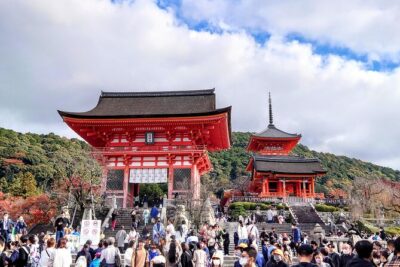
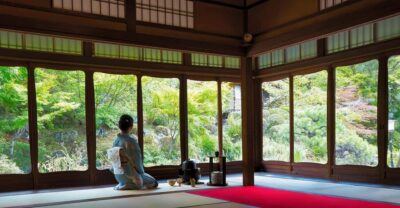
Tea Ceremony in a Traditional Tea House in Kiyomizu
Read our review →
Kyoto Geisha Walking Tour: Gion District & Hidden Gems
Read our review →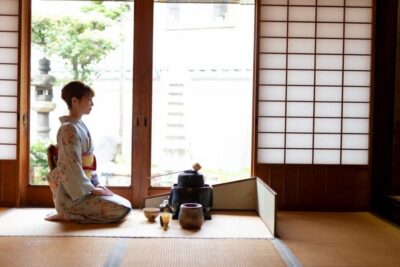

Gion Geisha District Walking Tour – Stories of Geisha
Read our review →
Best of Kyoto: Gion, Geisha, Pagodas & Cobblestones
Read our review →