
Reviewed · WALKING TOURS
Matsumoto Discovery – Half Day Walking Tour
Matsumoto Castle is the star here, a black-and-white fortress with steep wooden stairs, concealed defensive features, and a long view into Japan’s feudal past. I like that this tour gives the castle plenty of time, then connects it to the modern town through Nawate Street and Nakamachi Street. I also like the chance to shape the walk around your interests.
The main caution is simple: this is a walking tour, and the castle climb is demanding. The route can also change with your guide and your choices, so you should confirm what you most want to see rather than assume every museum or the wasabi farm will fit into three hours.
Key points at a glance
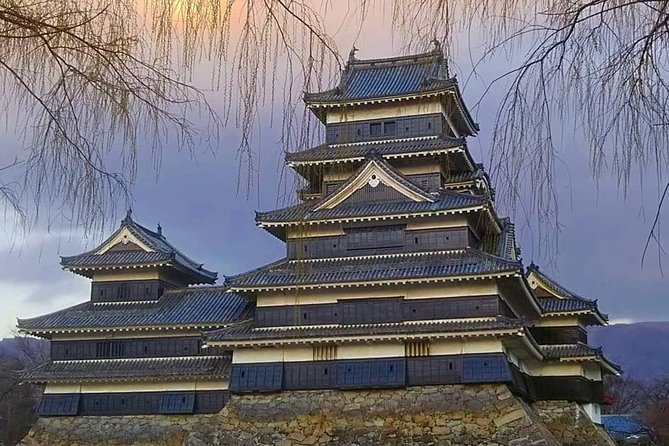
- Two full hours at Matsumoto Castle: The included admission and generous timing let you see more than the exterior.
- A guide who can add local context: Guides including Tom, Naomi, Shin, Kevin, Sayuko, and Sylvain have led tours, with some offering history, food tips, and everyday Japanese details.
- A useful introduction to the town layout: Nawate and Nakamachi make sense of Matsumoto beyond its famous castle.
- A flexible route: You can ask about museums, shrines, the Japan Ukiyoe Museum, Matsumoto City Museum of Art, or Daio Wasabi Farm.
- A manageable small-group size: The tour accepts no more than 15 people, though some departures may be private or very small.
- Convenient station start and finish: You meet at Matsumoto Station and can finish downtown at another location you choose.
Why Matsumoto Castle deserves the first two hours
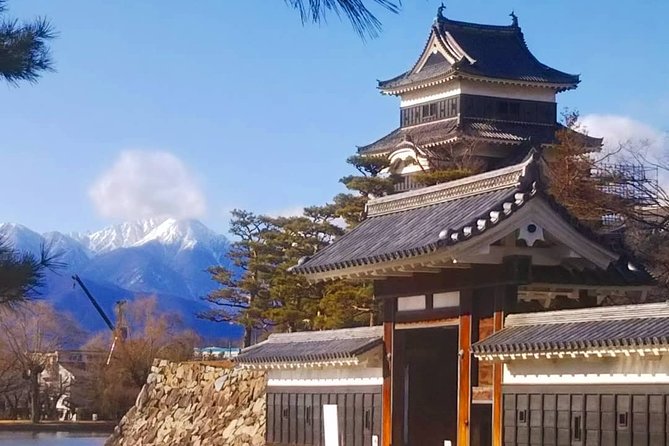
I would book this tour mainly for the castle. Matsumoto Castle is one of Japan’s five castles designated as National Treasures, and its surviving donjon dates back to the earliest years of construction, which began in 1592. Its black exterior gives it the nickname Crow Castle, though the important point for you is what happens inside.
A quick photo from the moat does not tell the full story. The interior is made of dark timber, narrow openings, steep stairways, and compact rooms built for defense rather than comfort. A guide can explain why the castle looks elegant from a distance but feels practical and severe once you enter.
The two-hour allocation is useful. You have time to study the outside, cross the interior floors, pause at viewing points, and hear how the structure worked. You also have room for questions. That matters because Matsumoto Castle can become a blur of beams and stairs if you move through it without context.
The stairs are the tour’s biggest physical challenge. They are steep, and one visitor in the feedback managed the climb at age 76, but that does not mean the ascent will feel easy for everyone. Hold the rail, wear shoes with a secure grip, and tell your guide if you need a slower pace.
I especially like the way the castle visit can become personal. Tom has been praised for explaining not only castle stories but also life as a long-term foreign resident married to a Japanese partner. Sayuko has provided detailed tours inside and outside the castle, while Naomi has helped families and solo visitors connect the fortress to the surrounding town.
The included castle ticket adds real value to the $64.73 price. You are not paying only for a walk to the gate. You are paying for entry, interpretation, and help making sense of one of Japan’s most important surviving castles.
Other walking tours in Nagano people book:
- Matsumoto Castle Town Walking Tour
★ 4.8 · 58 reviews - Food & Cultural Walking Tour around Zenkoji temple in Nagano
★ 5.0 · 58 reviews - From Matsumoto/Nagano: Nakasendo Trail Walking Tour
★ 4.9 · 33 reviews
Nawate Street and its friendly frog theme
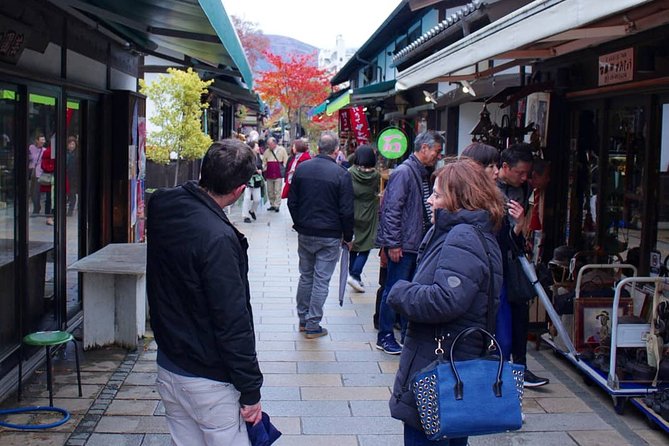
After the castle, the route can turn toward Nawate Shopping District. The street takes about 30 minutes and is an easy change of pace after the castle stairs.
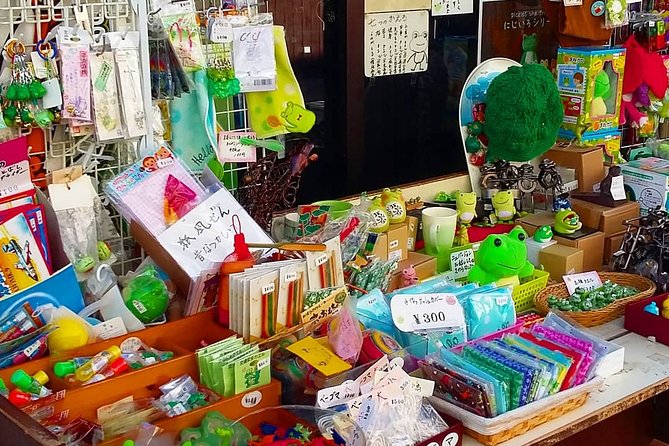
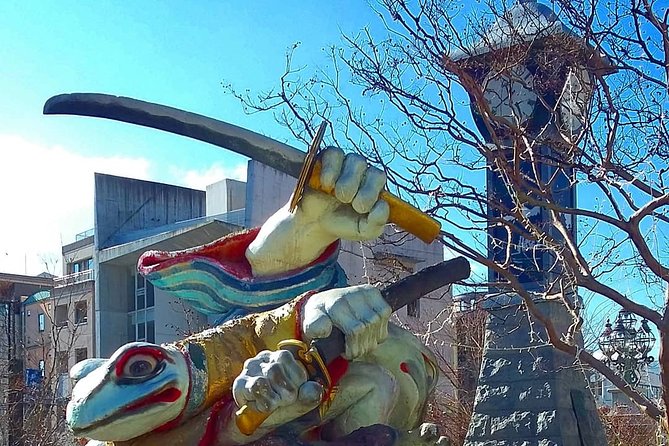
Nawate is lined with small shops, snack counters, souvenirs, and inexpensive odds and ends. A recurring frog theme gives the street its character. The Japanese word for frog, kaeru, can also suggest returning home, which helps explain why frog figures and products appear here, though your guide can provide the local version of the story.
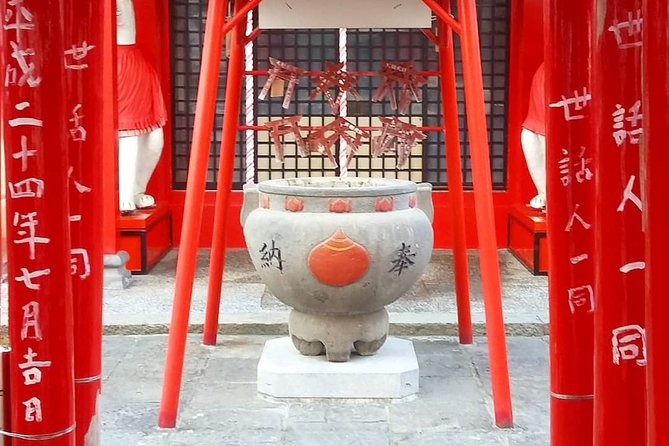
The point is not to spend half an hour racing from shop to shop. I would use this stop to try a small snack, browse for a light souvenir, and notice how the shopping street serves local life. Yohashira Shrine is also on Nawate Street, giving you a chance to add a religious site to the walk.
This is one place where a guide can save you time. Elodie has been praised for showing people the frog area and nearby streets, while other guides have pointed out shrines, temples, spring water wells, and small details that are easy to miss when you are focused on the castle.
Snacks and souvenirs are not included, so bring some yen if you want to buy something. The tour price covers the guide and Matsumoto Castle admission, not personal purchases or miscellaneous costs.
Nakamachi Street and the old storehouse town
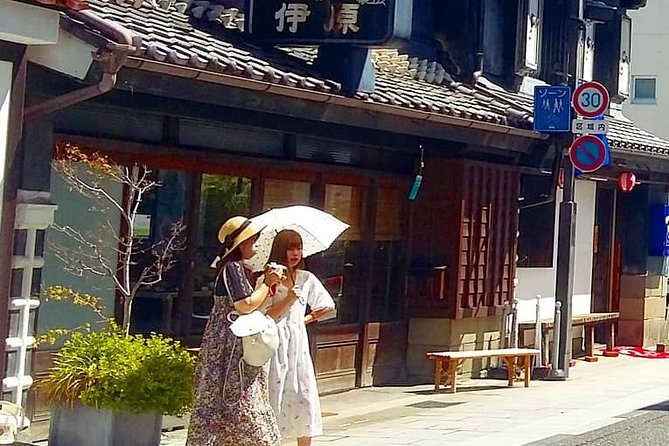
Nakamachi Street offers a more architectural stop. Its traditional storehouses, called kura, are known for black-and-white criss-cross patterned walls. These buildings give the street a strong visual identity without turning it into a museum set.
The scheduled visit is about 30 minutes, but the value comes from the explanation. A good guide can show you how the old castle town still appears beneath the modern city. Sylvain, for example, has explained how present-day streets can follow the paths of ancient roads. That kind of detail changes the way you look at an ordinary intersection.
I like this part because it puts the castle in context. Matsumoto was not just a fortress surrounded by empty land. It was a working town with routes, shops, religious sites, homes, and trade. Nakamachi helps you picture that wider setting.
The street also gives you a chance to ask practical questions about food and local customs. Shin has helped visitors find restaurants and interact with local people, while guides such as Kevin and Matt have focused on Japanese culture and the town’s past. Their individual styles will vary, but the format gives you a person to ask rather than a phone screen to consult.
A flexible route for museums, shrines, and Azumino

The core route is Matsumoto Castle, Nawate Street, and Nakamachi Street, but the experience is not locked to those three stops. You can discuss other choices with the guide, including the Matsumoto City Museum of Art and the Japan Ukiyoe Museum.
That flexibility is useful if you already know the castle is your priority but want to add a specific cultural interest. It is also helpful if you have visited Matsumoto before and want less time in the main shopping streets.
Daio Wasabi Farm in nearby Azumino City is another possible choice. The farm offers open scenery and a different setting from the compact city center. However, you should treat it as an alternative or custom addition, not assume it will be combined with the full three-hour city route. Transportation is not included, and the stated meeting and end points are at Matsumoto Station.
The best approach is to be specific when you book or meet your guide. Tell them if you want art, traditional architecture, food, shrines, the castle, or a look beyond central Matsumoto. A flexible tour only works well when you use that flexibility.
Other guided walks in Nagano:
- Kyoto Geisha Walking Tour: Gion District & Hidden Gems
★ 4.7 · 3,273 reviews - Tokyo Tsukiji Fish Market Food and Culture Walking Tour
★ 5.0 · 3,184 reviews - Kyoto: Gion Magical Night Walking Tour with Geisha Trivia
★ 4.9 · 2,393 reviews - Tokyo: Imperial Palace and Shogun Historical Walking Tour
★ 5.0 · 2,251 reviews
What the guides add to the walk
The guide is the part of this experience you cannot judge from the map. The company uses English-speaking guides with National Government Licensed Guide Interpreter certification, and several guide names appear in the tour’s feedback: Tom, Elodie, Sayuko, Tim, Shin, Naomi, Kevin, Matt, Sylvain, and others.
Tom has been especially useful for visitors who enjoy detailed explanations and conversation. His background as a retired teacher has shaped a clear, patient style, and he has handled questions about the castle, daily life, and local stories.
Shin has been praised for showing more of the city than a first-time visitor might find alone, suggesting restaurants and helping with local interactions. Sylvain has adjusted plans for lunch, helped a visitor find ibuprofen near the station, and added stories about how ancient roads fit into the present street plan.
Naomi has guided families and solo visitors, sometimes adding a park with cherry trees or another attraction when the timing allowed. Kevin has been described as well prepared, with strong English and useful explanations of Matsumoto and Japanese culture. These examples show the range you might get: castle specialist, local storyteller, practical helper, or flexible companion.
Still, I would keep expectations realistic. One piece of feedback found the guide less engaging and suggested the castle’s own daily tours as an alternative. That is a fair reminder that the person assigned to you matters. The listed rating is 4.9 from 43 reviews, with 98 percent recommending the experience, but no guide can suit every style.
If you want a fast, tightly scripted lecture, the castle’s own daily tour may be enough. If you want to ask about food, local customs, family travel, Japanese life, or the town’s layout, this format offers more room for conversation.
The value of $64.73 for three hours
At $64.73 per person, this is not the cheapest way to see Matsumoto Castle. You can walk around the city independently, pay for the castle ticket, and use a guidebook or audio app for less.
The value comes from the combination. Your ticket is included, the route begins at the station, and you receive roughly three hours of live explanation. You also get help deciding how to use limited time in Matsumoto. If you are arriving by train and have only a morning or afternoon, that planning help can be worth more than the difference in price.
Small groups improve the value further. The maximum is 15 people, and some departures have been private or nearly private. With fewer people, you can ask why a street curves, where to eat soba, what a shrine is used for, or how the castle town developed without holding up a large crowd.
The price makes less sense if you only want photographs of the castle exterior. It also may not suit you if you prefer to wander alone, spend a long time shopping, or visit several museums at your own pace.
Timing, meeting point, and practical comfort
The tour begins and normally ends at Matsumoto Station, at 1 Chome-1 Fukashi. That is convenient if you arrive by train and want to leave your day open afterward. You can also finish downtown at another location you choose, which may help if you plan lunch or another attraction.
The mobile ticket is handy, but you still need to arrive ready to walk. Transportation is not included, and personal costs such as snacks, souvenirs, and other fees are yours to cover.
Most people can participate, but the castle stairs deserve attention. The tour requires good weather, and poor weather can lead to a different date or a full refund. You can cancel for a full refund up to 24 hours before the start time. Inside 24 hours, the payment is not refunded, and changes are not accepted.
I would allow extra time before the meeting point if you are unfamiliar with Matsumoto Station. Comfortable shoes matter more than stylish ones here. The castle floors and stairs are the physical core of the experience, while the streets afterward are easier and more relaxed.
Who will get the most from this experience
I would recommend the tour to first-time visitors who want the castle explained rather than simply photographed. It also fits solo visitors well, since a guide can make a short stay feel more connected and can suggest where to eat or what to see next.
Families with children around 10 to 15 have enjoyed the mix of fortress, shops, shrine details, and open walking space. Older visitors can take part too, but anyone concerned about steep stairs should discuss the pace with the guide.
This is also a good choice if you are traveling through Matsumoto on the way to the Northern Alps. You get a clear introduction to the city without giving up an entire day. Art fans can ask about the city museum or Japan Ukiyoe Museum, while food-focused visitors can use the guide for restaurant suggestions and local specialties.
I would skip it if you want a quiet, self-directed museum day or if you dislike walking and stairs. I would also look elsewhere if your main goal is a full visit to Daio Wasabi Farm, since that requires a custom plan and transportation is not included.
Should you book the Matsumoto Discovery walk?
Book it if Matsumoto Castle is high on your Japan list and you want the surrounding town to make sense. The castle is worth the admission on its own, but a licensed local guide can turn the steep climb, old streets, shrines, storehouses, and shopping lanes into one connected story.
The strongest reason to choose this tour is its flexibility. Ask for Tom, Naomi, Shin, Sylvain, Kevin, or another available guide by name if the booking system allows, and state your interests clearly. For the best value, keep the castle as your anchor, use Nawate and Nakamachi to understand the town, and treat museums or Daio Wasabi Farm as custom additions rather than guaranteed stops.
FAQ
How long does the Matsumoto Discovery tour last?
The walking tour lasts approximately three hours. The usual plan includes about two hours at Matsumoto Castle, 30 minutes on Nawate Street, and 30 minutes on Nakamachi Street.
Is admission to Matsumoto Castle included?
Yes. Entry to Matsumoto Castle is included in the tour price.
Where does the tour start and finish?
The standard meeting point is Matsumoto Station at 1 Chome-1 Fukashi, Matsumoto, Nagano. The tour normally returns to Matsumoto Station, though you can finish downtown at another location you choose.
Is transportation included?
No. Transportation is not included. Personal expenses such as snacks, souvenirs, and other miscellaneous costs are also separate.
Can the tour be customized?
Yes. The tour can be adjusted to your interests. Possible attractions include Matsumoto Castle, the Matsumoto City Museum of Art, the Japan Ukiyoe Museum, and Daio Wasabi Farm in nearby Azumino City.
What is the cancellation policy?
You can cancel at least 24 hours before the start time for a full refund. Cancellations or changes made within 24 hours are not refunded or accepted. If poor weather causes the tour to be canceled, you will be offered another date or a full refund.
Just added in Nagano
- 1 Day Tour: Snow Monkeys & Snow Fun in Shiga Kogen★ 5.0 · 52 reviews
- Matsumoto Castle Town Walking Tour★ 4.8 · 58 reviews
- From Matsumoto/Nagano: Nakasendo Trail Walking Tour★ 4.9 · 33 reviews
- Full-Day Tour: Matsumoto Castle & Kamikochi Alpine Valley★ 4.8 · 78 reviews
- Matsumoto Castle Tour & Samurai Experience★ 4.9 · 128 reviews
- Nagano: 1-Day Snow Monkey & Cherry Blossom Tour in Spring★ 4.8 · 51 reviews
- Matsumoto Castle Tour & Samurai Experience★ 5.0 · 69 reviews
- 1-Day Winter Tour From Nozawa Onsen: Snow Monkeys, Zenko-ji Temple & Sake★ 5.0 · 32 reviews
Walking Tours, compared.
Kyoto Geisha Walking Tour: Gion District & Hidden Gems
Read our review →
Tokyo Tsukiji Fish Market Food and Culture Walking Tour
Read our review →
Imperial Palace and Shogun Historical Walking Tour
Read our review →
Gion Geisha District Walking Tour – Stories of Geisha
Read our review →
Shinjuku Local Bar and Izakaya Guided Walking Tour
Read our review →
Asakusa Walking Tour with Sensoji Temple Visit
Read our review →

Nishiki Market Brunch Walking Tour (7 Tastings + Brunch)
Read our review →Browse the lists this tour appears in