
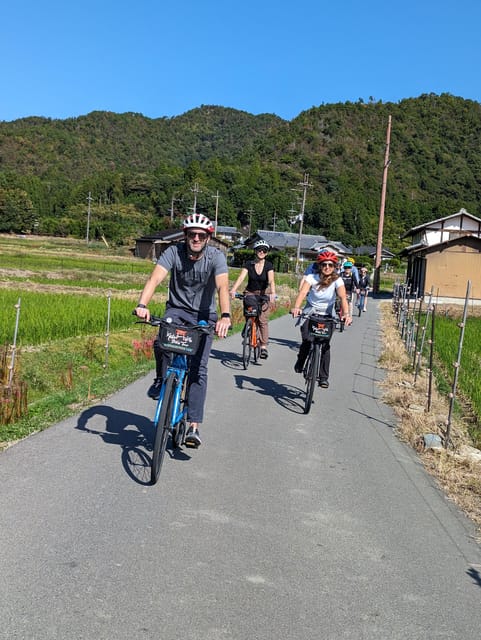
Reviewed · ARASHIYAMA & BAMBOO GROVE TOURS
Kyoto: Arashiyama Bamboo Forest Morning Tour by Bike
Arashiyama is at its best before the day’s crowds arrive, and this early-morning bike tour gets you into the famous bamboo forest while it is still calm enough to enjoy. I like the smart timing and the chance to see more than the usual photo stop, including Togetsukyo Bridge, Tenryuji’s gardens, and quieter roads beyond the main sights.
I also like the gentle pace. The route is mainly flat, with regular stops, and guides such as Milo, Rob, Ray, Yuki, and Peter have been praised for careful road riding and useful explanations of Japanese culture. The main drawback is the early start, plus the fact that this is still a cycling tour, so you need to feel comfortable riding on public roads.
Key points
- Early access to the bamboo forest: Reach Arashiyama before the busiest part of the day.
- More than bamboo: Visit Togetsukyo Bridge, Tenryuji’s gardens, shrines, temples, rice fields, and residential lanes.
- Mostly flat cycling: The route is designed for an enjoyable pace, with stops along the way.
- Small group of up to eight: Guides can keep an eye on the group and answer questions.
- Useful equipment included: You get a bicycle, helmet, bottled water, and admission fees.
- Strong guide lineup: Milo, Rob, Ray, Yuki, and Peter have all led highly praised tours, though your guide is assigned on the day.
Why a bike is the right way to see Arashiyama
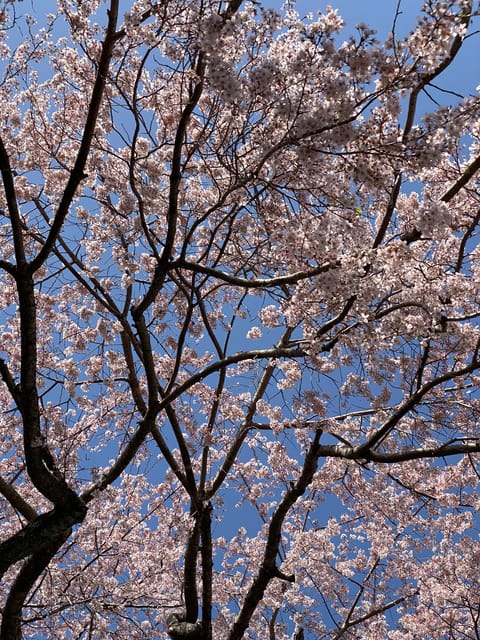
Arashiyama is one of Kyoto’s most popular districts, but the famous bamboo path is only one small part of it. On foot, you can reach the bamboo forest, Togetsukyo Bridge, and Tenryuji, but moving between those sights takes time. A bicycle lets you cover the main area and then slip into quieter parts of western Kyoto.
That change of pace is the real point of the tour. You are not simply taken from one major sight to another. You ride through narrow backstreets, pass homes, see rice paddies, and get a look at the ordinary side of the district. Several families with teenagers found this more interesting than a standard temple circuit because the route kept changing.
The ride lasts 210 minutes, or three and a half hours. That gives you enough time to stop often without turning the morning into a race. The route is described as mainly flat, and several people who were less confident cyclists still found it manageable. You should still be comfortable steering, stopping, and riding near other people.
Other mornings on the western edge of Kyoto:
- Kyoto: Fushimi Inari, Kinkakuji, Bamboo Grove 1 Day Bus Tour
★ 4.8 · 4,316 reviews - Osaka/Kyoto:Kinkakuji,Arashiyama,FushimiInariShrine,NaraPark
★ 4.1 · 1,596 reviews - Kyoto/Osaka: Nara, Fushimi Inari Taisha, Arashiyama Bus Tour
★ 4.7 · 1,275 reviews
The bamboo forest before the crowds arrive
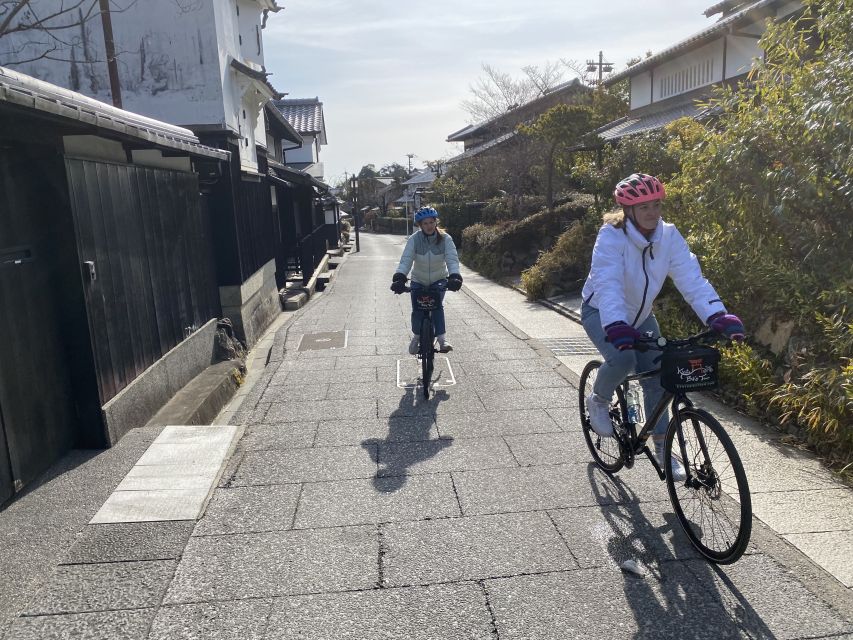
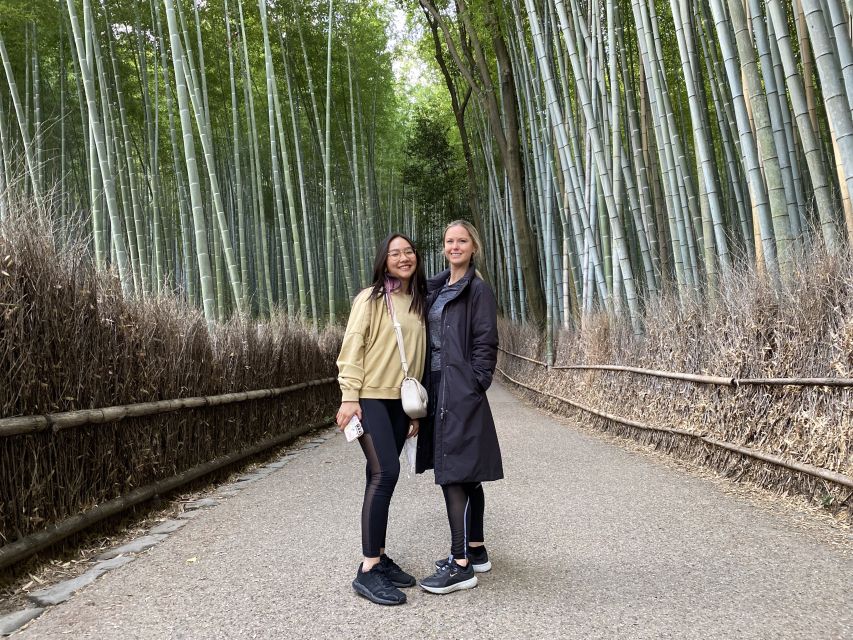
The tour is available only in the early morning. That is not a minor scheduling detail. Arashiyama’s bamboo grove becomes very busy, and the narrow path can lose much of its peaceful feel once large numbers of people arrive.
Getting there first gives you a better chance to notice the tall bamboo, filtered light, and sound of the stalks moving overhead. Your time inside the grove may not be completely quiet, but it should be calmer than later in the morning. The timing also helps with photographs, since there are fewer people competing for the same view.
Do not expect to spend all three and a half hours in the bamboo forest. That would be repetitive, and the tour is designed to show you the wider district. The forest is an important opening scene, not the whole performance.
For the best experience, treat the early start as part of the value. You may need to organize breakfast around it, but you gain a much more pleasant visit to one of Kyoto’s most heavily visited sights.
Togetsukyo Bridge and the river views
Togetsukyo Bridge is one of Arashiyama’s defining sights. The bridge crosses the Katsura River and gives you a broad view of the surrounding hills and water. From a bicycle, you can approach it without spending the morning walking along every busy street.
The bridge area can be more crowded than the quieter roads, so this is one place where the timing matters again. You will likely stop for views and photographs, but the exact amount of time can depend on the group and the day.
One point to keep in mind is that the tour favors variety over long, unhurried stops at each major sight. One person specifically felt there could have been more time around the bridge and central Arashiyama. If Togetsukyo is your main reason for coming, you may want to return after the tour for a slower look.
For most people, though, the bridge works well as part of a larger morning. You see the well-known view, then move on before the area becomes the only thing you remember.
Tenryuji’s gardens and temple setting
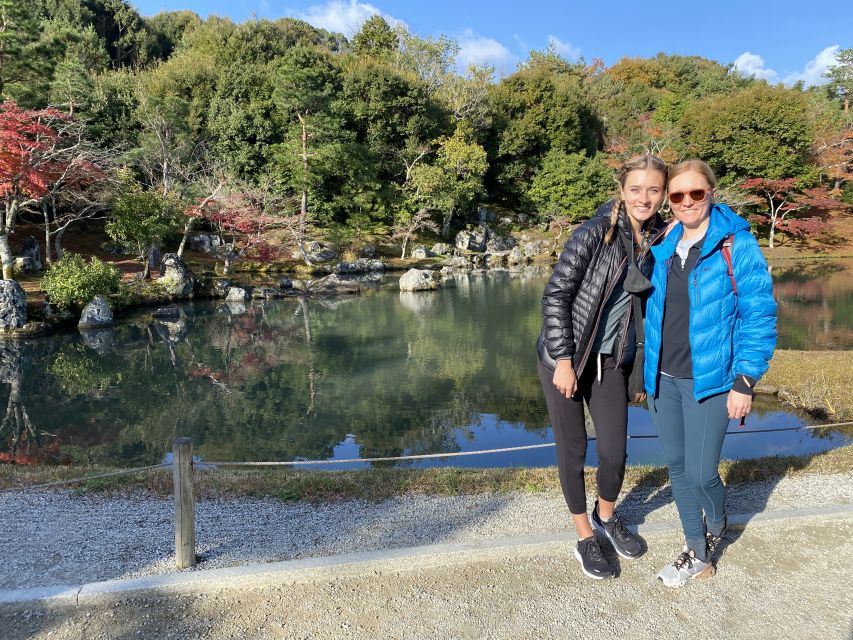
Tenryuji is a UNESCO World Heritage Site and one of Arashiyama’s most important temples. Its gardens are included in the tour, along with admission fees, so you do not have to decide on the spot whether to pay extra to enter.
The garden visit adds a quieter, more reflective section to the ride. After the movement of the streets and the open views near the river, the carefully arranged temple grounds give you a chance to slow down. Your guide can explain the setting, customs, and background in a way that makes the visit easier to understand.
The tour does not treat temples as empty photo backgrounds. Guides have explained how to behave at shrines and temples, and they often connect what you see with everyday Japanese customs. That practical context is useful if this is your first visit to Japan and you are unsure what certain gestures, buildings, or offerings mean.
You should not expect a long temple study session. The tour has several stops, so the emphasis is on seeing a range of places rather than spending hours at Tenryuji alone. If you want to inspect every garden path at length, plan extra time here after the ride.
Same base, a different sort of day:
- PERFECT KYOTO 1-Day Bus Tour
★ 5.0 · 13,518 reviews - Kyoto: Tea Ceremony in a Traditional Tea House in Kiyomizu
★ 4.9 · 3,519 reviews - Kyoto Geisha Walking Tour: Gion District & Hidden Gems
★ 4.7 · 3,273 reviews - Kyoto: Tea Ceremony Ju-An at Jotokuji Temple
★ 4.9 · 3,207 reviews
Rice fields, shrines, and ordinary Kyoto
The most memorable section for many people is often beyond the headline sights. The route can lead through rice fields, countryside, residential streets, and a smaller temple or shrine that you might not find on your own.
This is where the bicycle earns its keep. You pass from tourist Kyoto into a more local setting without needing a long taxi ride or a complicated train connection. In the warmer months, you may see farmers working in the paddies. The seasonal look of the fields changes the feel of the ride, and it gives your guide a chance to explain parts of Japanese life that are easy to miss in the temple districts.
The smaller shrines and temples can be especially rewarding. They may not have the name recognition of Tenryuji, but they offer a more relaxed place to ask questions and look closely. Guides have shared local stories, explained temple practices, and pointed out details with humorous or unusual connections.
The route is not a secret back road network known only to locals. You are still in a popular part of Kyoto. But you will see streets and views that most people on a first visit would skip, especially if they are moving only between the bamboo forest and the bridge.
The guide makes the difference
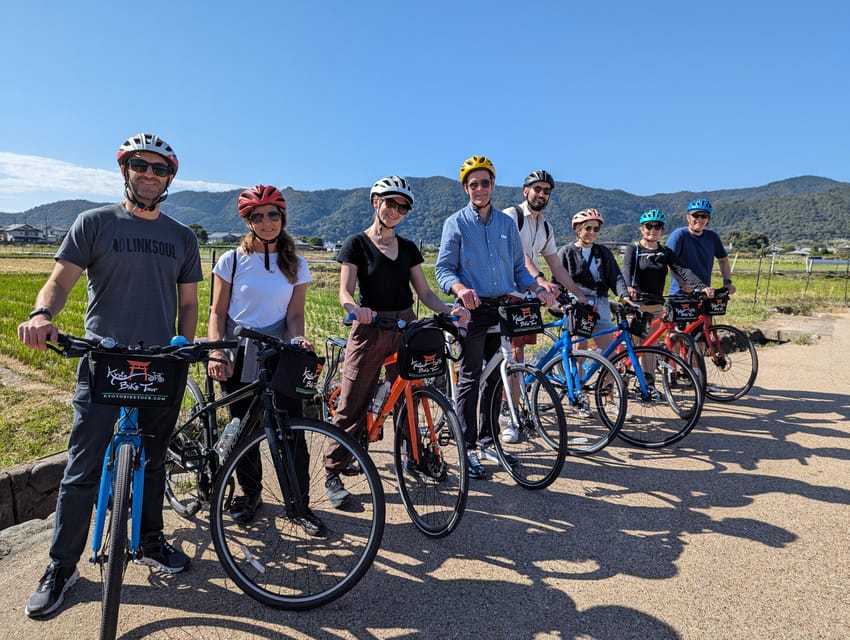
The tour is sold as a small-group experience for up to eight people, and that size matters. A guide can check that the group stays together, adjust the pace, and help a nervous cyclist without creating a long delay for everyone else.
Guides named in the feedback include Milo, Rob, Ray, Yuki, and Peter. Their approaches vary, but the qualities you want are consistent: clear explanations, calm road handling, and an ability to keep the group engaged during stops. Ray has been praised for detailed answers and thoughtful cultural explanations. Rob is known for humor, historical facts, and careful cycling guidance. Milo has been noted for finding unusual spots and taking good care of the group. Yuki has helped less confident riders feel safe, while Peter has worked especially well with families.
You cannot choose one of these guides when booking based on the information provided, so do not book solely because you hope for a particular person. The repeated praise for several guides is still a good sign. The provider appears to have a strong team rather than relying on one standout guide.
The tour is in English. If you enjoy asking questions, this format should suit you well. You can ask about history, culture, language, food, farming, or local customs as you go. The small group makes it easier to have a real conversation than on a large bus tour.
How hard is the ride?
The route is mainly flat and has been described as easy by several people. It is not presented as a serious athletic outing. You will ride between stops, but the regular breaks keep the morning from becoming a long continuous workout.
Still, you should not mistake easy for completely effortless. You must ride a bicycle for several hours, follow your guide through streets, and share roads with other cyclists, pedestrians, and vehicles. The tour is better for someone who rides occasionally than for someone who has not been on a bike in years.
Nervous cyclists may find the small group reassuring. Guides have checked regularly that everyone was together, helped riders who needed support, and paid attention to road safety. Families with children and teenagers have managed the route well, although each rider should be comfortable controlling a bike.
Bikes and helmets are provided. The equipment has been described as well maintained, with adjustable seats and helmets. One person specifically praised the Cannondale bikes used on the tour, though you should not assume a particular bicycle model will be available on your date. Bottled water is included, which is useful in Kyoto’s warmer months.
Wear clothes you can cycle in and shoes that stay secure on the pedals. Since the tour is early, mornings can feel cool in some seasons, while summer rides can become hot. The pace includes stops, but you should still prepare for the weather.
What the $103 price includes
At $103 per person, this is not the cheapest way to see Arashiyama. You are paying for more than bicycle hire, though. The price includes the bicycle, helmet, bottled water, English-speaking guide, and admission fees.
The strongest value comes from the time saved and the access to places you might not reach independently. In three and a half hours, you can combine the bamboo forest, bridge, temple gardens, rural views, shrines, and side streets. A self-guided visit could cost less, but you would need to arrange the bike, find the route, learn where to stop, and manage the busy roads yourself.
The tour is especially good value if you want cultural explanation rather than simple transport. The guide turns the ride into a moving lesson about Kyoto, with room for questions along the way. Several people also received practical suggestions for lunch and other places to visit afterward.
Food and drinks beyond the supplied water are not included. Hotel pickup and drop-off are also not included, so you need to reach the meeting point yourself. The provider sends the exact meeting details and pre-tour information after booking. Look for a guide wearing a bike helmet and a Kyoto Bike Tour shirt.
Weather, timing, and useful planning advice
Rain can affect the tour. If rain is forecast, the provider sends a message about possible rescheduling or cancellation. Keep your morning flexible and check your messages before setting out.
The tour has free cancellation up to 24 hours before departure for a full refund. You can also reserve now and pay later, which helps if your Kyoto schedule is still shifting.
Because the ride is early, think about where you will eat afterward. Arashiyama has plenty of places to continue your morning, and guides may suggest restaurants or nearby sights. The tour finishes with enough day left for more exploring, though the exact amount of free time depends on the start time.
You should also allow for the possibility that the bamboo forest will not be empty. Early morning reduces the crowds, but it cannot guarantee solitude. The reward is a calmer visit, not a private one.
Who should book this bike tour?
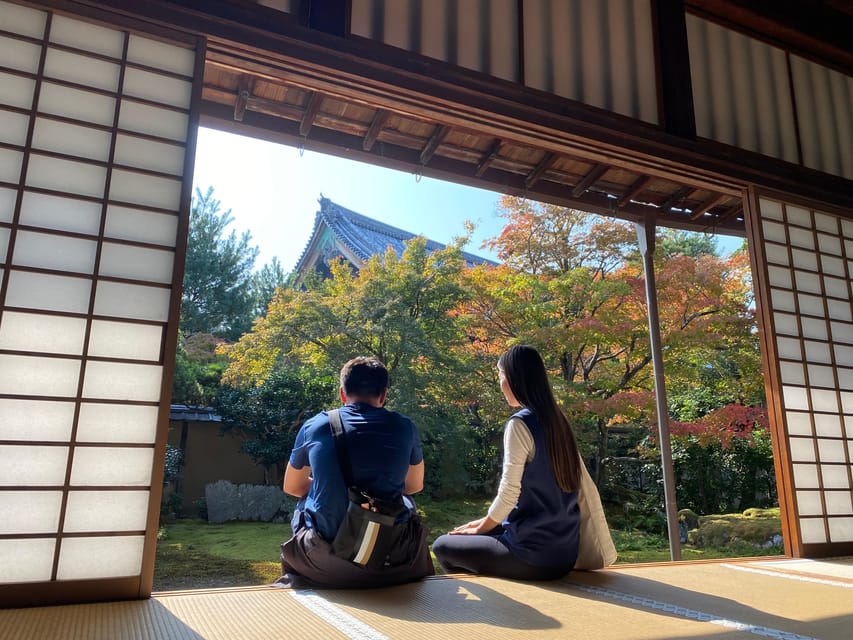
I would choose this tour if you want to see Arashiyama efficiently but do not want a bus, van, or long walking circuit. It works particularly well for first-time visitors who want the major sights plus a look at rice fields, shrines, homes, and quieter lanes.
Families with older children and teenagers are a good fit. The variety keeps the morning moving, and the regular stops make it easier than a long sightseeing walk. Couples and solo visitors who enjoy asking questions should also appreciate the small group.
I would be cautious if you dislike early mornings, feel unsafe on public roads, or want to spend most of your time inside Tenryuji or beside the bridge. You may prefer a walking tour or a self-guided visit that lets you linger longer at one place.
Should you book it?
Book this tour if you want Arashiyama’s famous bamboo forest before the main crowds, but also want to see the district’s quieter side. The strongest parts are the early timing, mostly flat route, small group, careful guides, and mix of temples, countryside, rice fields, and daily life.
Skip it if your priority is a slow, focused visit to one temple or if cycling is not comfortable for you. For most active visitors, though, $103 buys a well-organized half-day that covers far more ground than you could comfortably manage on foot. It is a particularly good first morning in western Kyoto, with enough freedom afterward to return to the sights you liked best.
FAQ
How long does the Arashiyama bike tour last?
The tour lasts 210 minutes, or three and a half hours.
Is the tour available in the afternoon?
No. This experience is available only in the early morning.
What sights are included?
The route includes the Arashiyama Bamboo Forest, Togetsukyo Bridge, and the gardens of Tenryuji Temple. It can also include shrines, smaller temples, rice fields, countryside, residential streets, and other local spots.
Is the cycling difficult?
The route is mainly flat and is described as an easy ride with regular stops. You still need to be comfortable riding a bicycle on public roads.
What is included in the price?
The price includes an English-speaking guide, bicycle, helmet, bottled water, and admission fees. Hotel pickup, drop-off, food, and other drinks are not included.
What happens if it rains?
If rain is forecast, the provider sends a message about possible rescheduling or cancellation. You can cancel up to 24 hours before the tour for a full refund.
Just added in Kyoto
- Your Private Vacation Photography Session In Kyoto★ 5.0 · 110 reviews
- Kyoto: Zen Meditation at a Private Temple with a Monk★ 5.0 · 25 reviews
- Private Cooking Class Udon in Kyoto Japan★ 5.0 · 23 reviews
- Private Pewter Sake Cup Experience with a Kyoto Artisan★ 5.0 · 31 reviews
- Kyoto Wagashi(Japanese sweets) Cooking Class near Fushimiinari★ 5.0 · 60 reviews
- Kyoto:Family-Friendly Kimono & Yukata Experience at WARGO★ 5.0 · 147 reviews
- Private Guided Traditional Buddhist Cooking in Japan★ 5.0 · 16 reviews
- Kyoto: Gion Geisha District & Sake-in-Hand Walking Tour★ 5.0 · 37 reviews
Arashiyama & Bamboo Grove Tours, compared.
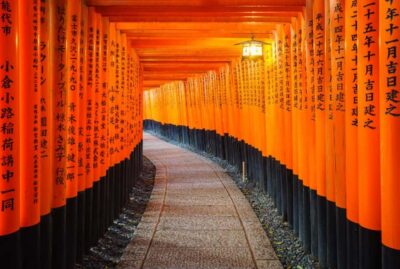
Osaka/Kyoto:Kinkakuji,Arashiyama,FushimiInariShrine,NaraPark
Read our review →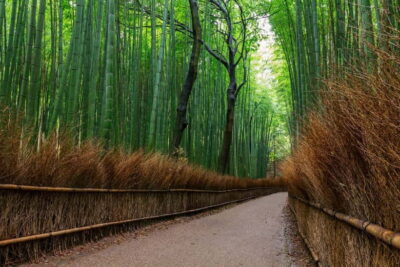
Kyoto/Osaka: Nara, Fushimi Inari Taisha, Arashiyama Bus Tour
Read our review →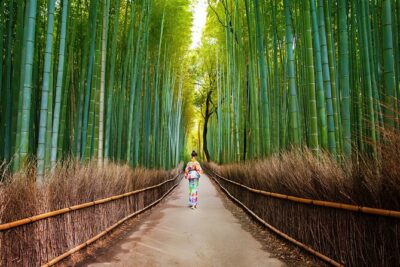
Kyoto Arashiyama Walking Tour: Bamboo, Monkeys, Gardens & Secrets
Read our review →
Arashiyama Bamboo, Temple, Monkeys, or Secret Sake Brewery
Read our review →
Arashiyama Bamboo Forest, Monkeys, Matcha & Temple Tour
Read our review →
Osaka/Kyoto: Arashiyama, Nara & Fushimi Inari Shrine w/Lunch
Read our review →
Nijo, Kinkaku-ji, Arashiyama, Kiyomizu & Fushimi Inari
Read our review →
Kyoto Ghost Tour: Dark Tales, Urban Legends, Bamboo Forest Night
Read our review →Browse the lists this tour appears in