
Reviewed · FOOD TOURS
Shinjuku: Food Tour – 15 Dishes at 4 Eateries
Shinjuku’s best food is often tucked into small restaurants and narrow alleys, not displayed behind English signs. This three-hour walk gives you a practical shortcut, with about 15 dishes at four eateries and a guide to explain what you are eating. You may try sashimi, tonkatsu, Okinawan dishes, local drinks, and more, depending on the day.
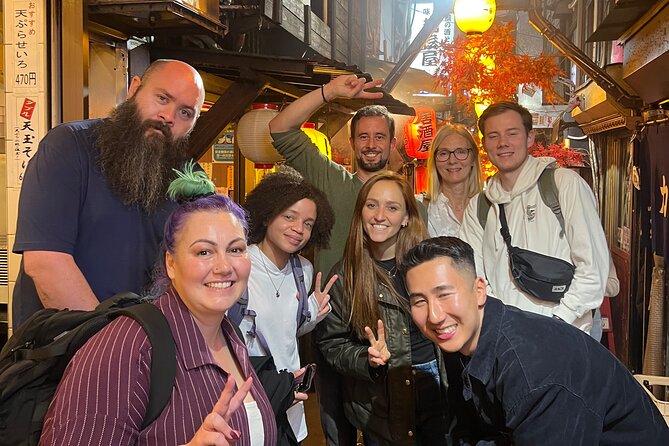
I like the small limit of 10 people, which makes it easier to ask questions and share dishes. I also like the mix of food and place: Kabukicho, Omoide Yokocho, and Nishishinjuku each show a different side of Shinjuku.
The main caution is the walking. The restaurants are spread out, and one rating specifically found the pace too quick. Food quality can also vary from stop to stop, so book this for variety, context, and discovery rather than a carefully staged gourmet meal.
Key points at a glance
- Four eateries and about 15 dishes: You get a proper meal, not just a few samples.
- Kabukicho after dark: The route introduces Shinjuku’s famous entertainment district through food and local stories.
- Omoide Yokocho: Walk past the narrow lane lined with old izakayas dating from the postwar era.
- Nishishinjuku dining: Eat in an area many short-term visitors miss.
- Drinks are included: Some outings feature sake sours and other Japanese beverages.
- A maximum of 10 people: The group size suits anyone who wants conversation without a large tour crowd.
Why this food walk works in Shinjuku
Shinjuku is a difficult district to read at first. Its station is among the busiest in the world, and the surrounding streets shift quickly from department stores to office towers, tiny bars, karaoke venues, and restaurants with room for only a handful of people.
That variety is exactly why a guided food walk helps. You could spend an entire evening choosing restaurants from signs you cannot read, then discover that the place is full or that you ordered one dish without understanding the menu. Here, the guide handles the restaurant choices and ordering while you focus on tasting and asking questions.
I also like that the food is tied to the district. This is not only a meal in four unrelated restaurants. The route uses Kabukicho, Omoide Yokocho, and Nishishinjuku to explain how Shinjuku functions as a center for nightlife, business, shopping, and local dining.
The tour costs $77.60 per person and lasts about three hours. That is fair value if you make good use of the food, drinks, and guide. The 15 dishes are shared or served as part of a tasting-style meal, so you should arrive hungry. You are paying for access and explanation as much as for the food itself.
Other food tours in Tokyo people book:
- Tokyo: Shinjuku Food Tour (13 Dishes at 4 Local Eateries)
★ 5.0 · 6,603 reviews - Tokyo: Shinjuku Food Tour (15 Dishes and 4 Eateries)
★ 4.9 · 2,033 reviews - Best of Shinjuku: Izakaya Food Tour (4 Stops, 14+ Tastings)
★ 5.0 · 1,863 reviews
Meeting your guide near Shinjuku Station
The starting point is AOKI Shinjukunishiguchi Honten at 1-chome-8-5 Nishishinjuku. This is near public transportation, but Shinjuku Station can be confusing, so allow time to find the correct exit and street.
The activity ends back at the meeting point. That is useful if you want to continue exploring Shinjuku afterward, since you are not left at an unfamiliar restaurant on the far side of the district.
Guides vary by departure. Dai has been praised for adding history and neighborhood details between meals. Mak is known for enthusiasm and food explanations, while Haydn has led outings that included extra information about local culture and the sights along the route. Other named guides include Lisa, Alma, Yota, Naoya, Naruto, Kaira, Agathe, Izzy, Fu, Lloyd, and Noah.
You should not book around one particular guide unless the booking system specifically confirms that person. Still, the range of guide names gives you a good sense of the tour’s format: the guide is meant to be active, social, and involved in the food rather than simply leading you from door to door.
Kabukicho: food in Tokyo’s entertainment district
The first major area is Kabukicho, one of Tokyo’s largest entertainment districts. Neon, signs, restaurants, bars, hotels, and theaters crowd the streets, giving you a quick look at the side of Shinjuku that becomes most active in the evening.
The first restaurant stop is in this area. Starting with food is smart. You settle into the group quickly, get your first drink or dish, and learn how the tasting portion of the night works.
Kabukicho also gives the guide plenty to explain. The district has a reputation for nightlife, and some guides discuss its social history, including stories about organized crime and the area’s past. Naruto, for example, has been praised for explaining the district and pointing out a narrow alley and a street connected with yakuza history.
That material may interest you, but it is worth knowing what kind of tour you are booking. The cultural talk can reach beyond food into the red-light district, nightlife, and the darker side of Tokyo’s entertainment zones. If you want nothing but a polished restaurant meal, this may feel like a distraction. If you want context for the streets around you, it adds substance.
Kabukicho is also where you may see the Godzilla Head above the buildings. It is a well-known photo point and gives the route a playful landmark amid the signs and towers. The stop is brief, but it helps you place yourself in the district.
Omoide Yokocho: a short look at old Tokyo
The walk continues past Omoide Yokocho, also called Memory Lane. This narrow stretch is lined with small izakayas and restaurants that recall the 1950s.
The itinerary allows about 15 minutes here, so think of this as a walk-through and orientation stop rather than a long meal. You will see compact dining spaces and a style of restaurant that feels very different from Shinjuku’s large commercial buildings.
Omoide Yokocho is useful because it shows how much food culture can fit into a tiny space. The old lanes are atmospheric, but they can also feel cramped. You may not spend enough time to understand every corner, and the group needs to keep moving to stay on schedule.
Still, this is one of the better reasons to take the tour. A first-time visitor can easily walk past the entrance without knowing what lies inside. Your guide can point out how these small izakayas work and explain the role of casual drinking and shared food in Japanese dining.
More eating your way round Tokyo:
- Tokyo Night Foodie Tour in Shinjuku – Seasonal Sushi, Wagyu Beef
★ 5.0 · 1,161 reviews - Eat and Drink Like a Local: Tokyo Ueno Food Tour-Taverns&Ramen
★ 5.0 · 957 reviews - Tokyo: Shibuya Food Tour (13 dishes and 4 Eateries)
★ 5.0 · 770 reviews - Tsukiji Fish Market: Street Food & Culture Walking Tour
★ 5.0 · 669 reviews
Nishishinjuku: local restaurants away from the main crowds
The route then reaches Nishishinjuku, an area known for local restaurants that many short-term visitors miss. This is where the tour shifts away from the most famous entertainment streets and gives you a look at everyday dining beyond the main station zones.
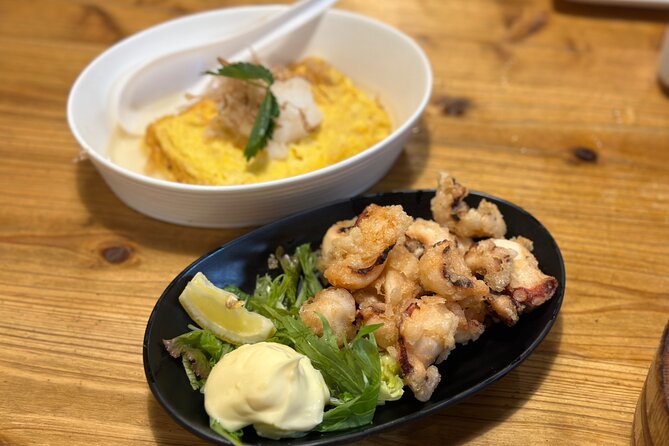
A second local restaurant stop takes place here, with more food and drinks included. The guide may introduce dishes from different parts of Japan rather than limiting the meal to the best-known Tokyo classics. Okinawan food has appeared on some outings, along with distinctive drinks such as sake sours.
That regional angle is one of the tour’s strongest features. Tokyo’s food scene is not only sushi, ramen, and tempura. A dish from Okinawa can show you another part of Japan without requiring a separate trip, and the guide can explain why it appears on a Shinjuku menu.
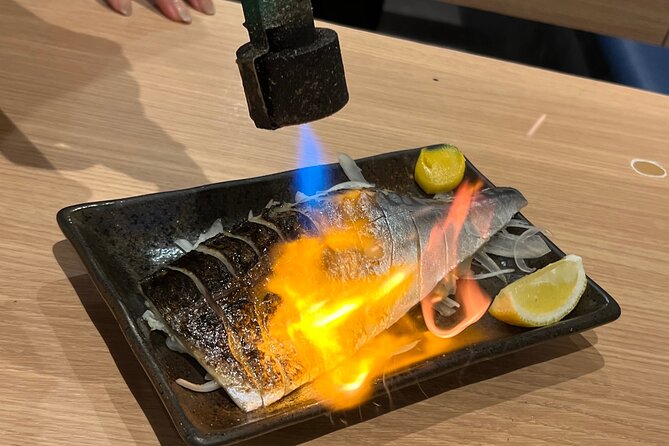
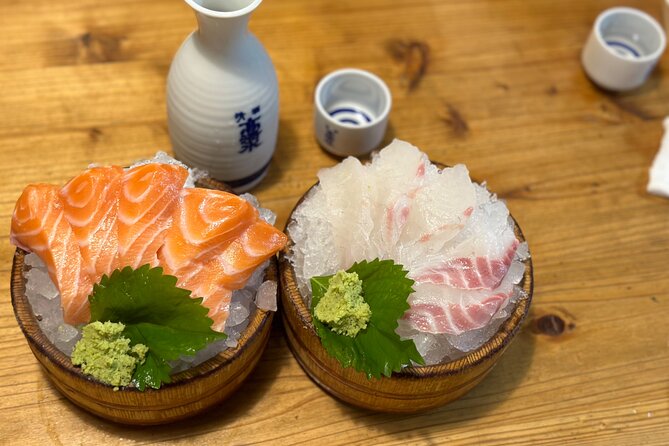
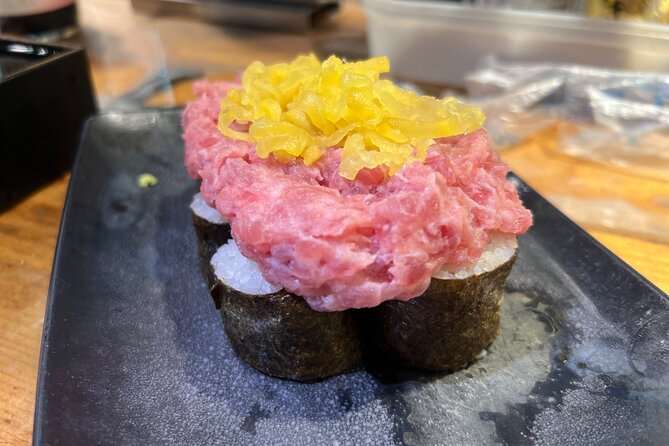
You may also encounter sashimi. One particularly praised outing included around seven varieties, described as fresh and filling. Menus can change, so you should treat this as an example rather than a promise. The same applies to tonkatsu, which has been singled out as a delicious part of one meal.
This is where expectations matter. Some people have found every stop satisfying, with plenty of food and drink. Others found the first restaurant strongest and later dishes more ordinary. The tour is designed around range and quantity, so not every plate will match the best one.
What the 15 dishes really mean
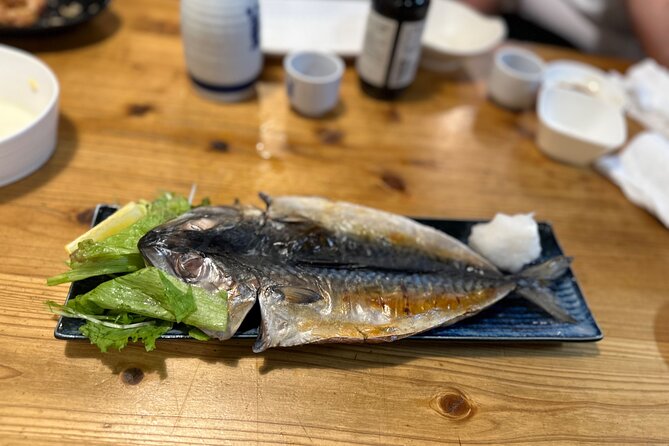
The number 15 sounds large, and it is. With four eateries in three hours, you get enough food to replace dinner for most people. The exact dishes are not fixed in the information provided, but past outings have included sashimi, tonkatsu, Okinawan specialties, and Japanese drinks.
The value comes from sampling several things without ordering full portions at every stop. You can try dishes you might otherwise skip because you do not recognize the name or cannot tell how much food will arrive.
I especially like this setup for couples, families with older children, and solo visitors who want to taste widely. Sharing makes it easier to compare flavors and decide what to order later during your Japan trip.
The tradeoff is that a tasting route cannot guarantee that every dish will suit you. One person may love the seafood and find the pork average. Another may prefer the tonkatsu and care less about the other plates. If you are vegetarian, have a serious allergy, or follow a strict diet, check with the operator before booking because the supplied details do not promise specific dietary substitutions.
Drinks are included. Some outings have featured sake sours, and non-drinkers can still judge the food, though the exact drink arrangements may vary. If you do not drink alcohol, ask about your options before the tour begins rather than assuming every stop has a nonalcoholic replacement.
A social evening with a useful group size
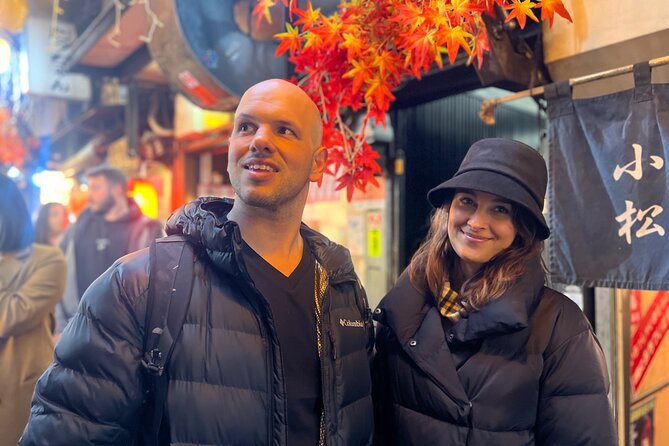
The maximum group size is 10 people. That is large enough for a social dinner but small enough for a guide to speak with the whole group.
This matters in a food tour. You need to hear the explanation, see the dish being introduced, and get a chance to ask about customs or ingredients. A smaller group also makes it easier to enter compact restaurants, where a large party could be awkward.
The social side is part of the appeal. Past outings have included people from around the world sharing dishes and walking together through Shinjuku. Guides such as Izzy, Fu, Lloyd, and Noah have been praised for keeping the mood friendly and adding local information along the way.
But a group tour has limits. One poor experience involved a guide walking too quickly and speaking mainly to the people nearest him. That is not the usual picture, but it points to a practical issue: stay near the guide, especially when crossing busy streets or leaving a restaurant.
Wear comfortable shoes. The route involves walking between eating stops, and one otherwise positive assessment found the distance between restaurants excessive. Shinjuku is interesting on foot, but the streets can be crowded and the pace may feel brisk after a full meal.
How the cultural explanation adds value
The guide is not there only to translate menus. The best outings use the gaps between restaurants to explain local customs, food, and the neighborhoods you are passing through.
You may learn how izakayas differ from other restaurants, why small dining rooms are common, and how various Japanese regions appear in Tokyo’s food scene. You may also hear about Kabukicho’s entertainment culture, Omoide Yokocho’s older restaurant lanes, and the contrast between central Shinjuku and Nishishinjuku.
Guides have received strong praise for clear English and for explaining customs in an approachable way. Naruto’s international work experience has helped him connect Japanese culture with what visitors already know. Yota has been praised for his food and drink explanations, while Naoya has been described as passionate and good at choosing places that show different sides of Tokyo dining.
The quality of this part depends on the guide assigned to your group. That is true of any walking tour, but it matters here because the food itself is only half the reason to go. You are buying local judgment and context, not merely a set menu.
Price, timing, and practical fit
At $77.60, this is not the cheapest way to eat in Tokyo. You can buy a filling meal for less, especially if you choose a casual chain or a simple neighborhood restaurant.
The comparison changes when you count four eateries, about 15 dishes, drinks, a guide, and three hours of walking through several parts of Shinjuku. You would probably spend more than expected trying to recreate that evening alone, especially if you ordered enough dishes to sample the same range.
The tour is best value when you take it early in your Japan visit. It can help you understand menus, recognize food styles, and choose restaurants with more confidence later. One useful suggestion from the supplied material is to schedule it on your first day in Japan, or near the start of your stay, because the orientation can shape the rest of your meals.
The activity is also useful on a short Tokyo visit. If you have only one evening in Shinjuku, you get food, neighborhood sightseeing, and cultural explanation in one booking.
Confirmation is provided at booking, and free cancellation is available until 24 hours before the start time. Changes or cancellations inside that 24-hour window are not refunded. Gratuity is optional and not included.
Who should book this Shinjuku food tour?
I would choose this tour if you want a friendly introduction to Japanese food and do not want to spend your first night guessing at menus. It suits solo visitors, couples, small groups, and anyone who values explanation as much as the meal.
It is also a good match if you want to taste broadly. The mix may include seafood, fried food, regional dishes, and drinks, rather than focusing on one specialty.
I would think twice if you dislike walking, need a quiet meal, or expect four destination restaurants chosen only for top-level food quality. The route is social and active. Some stops may be excellent, while others may feel merely adequate.
You should also ask about food restrictions before paying. The supplied information confirms that food and drinks are included, but it does not list a fixed menu or dietary plan.
Should you book it?
Book this Shinjuku food tour if you want a full evening of tasting, neighborhood stories, and easy access to small restaurants. The strongest reasons are the four-stop format, the small group limit, and the chance to try regional food such as Okinawan dishes alongside familiar Japanese favorites.
The main risk is inconsistency. The walking can be tiring, and the quality of individual dishes may vary. For most people, though, the $77.60 price is reasonable for a three-hour introduction that leaves you full and better oriented in Shinjuku.
Go near the beginning of your Tokyo stay, wear good shoes, stay close to the guide, and arrive hungry. That is the best way to get your money’s worth.
FAQ
How long is the Shinjuku food tour?
The tour lasts approximately three hours.
How many eateries does the tour visit?
The route visits four eateries and includes about 15 dishes, along with food and drinks.
How many people can join the tour?
The group has a maximum of 10 people.
Where does the tour start?
The meeting point is AOKI Shinjukunishiguchi Honten at 1-chome-8-5 Nishishinjuku, Shinjuku City, Tokyo 160-0023, Japan.
Where does the tour end?
The activity ends back at the meeting point.
Are food and drinks included?
Yes. Food and drinks are included in the tour price. Gratuity is optional and not included.
Can I cancel for a full refund?
Yes, if you cancel at least 24 hours before the experience start time. Cancellations or changes made less than 24 hours before the start time are not refunded.
Just added in Tokyo
- Nikko: Edo Wonderland Edomura Cultural Theme Park Ticket★ 4.3 · 205 reviews
- 《MEMBERS-ONLY-BAR-HOPPING》Discover Your Special Whiskey in Tokyo!★ 5.0 · 29 reviews
- Japanese Whisky Hunting《HIGH-QUALITY-ONLY》Rare Tasting Class★ 5.0 · 20 reviews
- Luxury Tokyo Sake, Cocktail, Whisky and Pairing Tour★ 5.0 · 18 reviews
- Wagyu & Sake Pairing in Shinjuku – Steak, Shabu-Shabu & More★ 5.0 · 112 reviews
- Small-Group Wagyu Beef and 7 Japanese Dishes Tokyo Cooking Class★ 5.0 · 190 reviews
- From Tokyo: Private Tour to Fuji/Hakone – Onsen, Art, Nature★ 5.0 · 116 reviews
- Tokyo: KABUKI Show at Kabukiza Theatre Admission Ticket★ 4.8 · 152 reviews
Food Tours, compared.
Shinjuku Food Tour (13 Dishes at 4 Local Eateries)
Read our review →
Osaka Food Tour: 13 Dishes at 5 Local Eateries
Read our review →
Best of Shinjuku: Izakaya Food Tour (4 Stops, 14+ Tastings)
Read our review →
Kyoto Night Foodie Tour in Gion (9+ dishes + 6 Sake tastings)
Read our review →
Hungry Osaka Street Food Tour:15 Tastings & 3 Drinks with a Local
Read our review →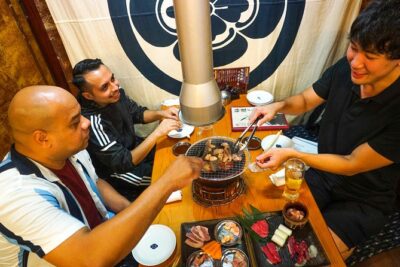
Tokyo Night Foodie Tour in Shinjuku – Seasonal Sushi, Wagyu Beef
Read our review →
Osaka Local Foodie Walking Tour in Dotonbori and Shinsekai
Read our review →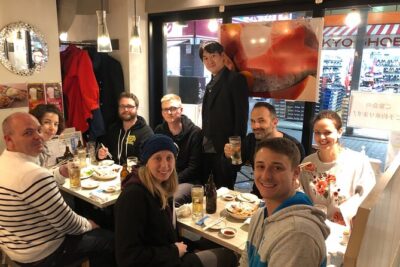
Eat and Drink Like a Local: Tokyo Ueno Food Tour-Taverns&Ramen
Read our review →Browse the lists this tour appears in