
Reviewed · TOURS IN KYOTO
Kyoto: Early Morning Tour with English-Speaking Guide
Kyoto’s famous sights are at their best before the crowds arrive. This early morning route takes you from the torii gates of Fushimi Inari to Arashiyama’s bamboo grove and the Golden Pavilion, all before lunch, with a guide handling the public transport. I like the efficient route and the chance to see three major sights in one morning. I also like that guides such as Haruki, Aya, Hina, and Rin add cultural context, photo help, and food suggestions.
The tradeoff is simple: this is a walking tour, not a comfortable sightseeing bus. You must meet at Kyoto Station on time, pay about 1,240 yen for transport and 500 yen to enter Kinkakuji, and be ready for stairs, station changes, and a brisk five hours.
Key points at a glance
- 6:45am starts beat the crowds: The early departure is the main reason to book, especially for Fushimi Inari and Arashiyama.
- Three headline sights in one morning: You visit Fushimi Inari Taisha, Arashiyama, and Kinkakuji before returning to Kyoto Station.
- Public transport is part of the lesson: Trains and buses connect the route, giving you useful practice for the rest of your Kyoto stay.
- Small groups keep the guide close: Numbers are limited to eight people, so questions and photo stops are easier than on a large coach tour.
- Budget extra cash: The $101 price excludes about 1,240 yen for transport, the 500-yen Kinkakuji entry fee, and lunch.
- Best for active first-time visitors: You cover a lot, but this suits people comfortable with walking and early starts, not stroller users or anyone needing a slower pace.
Why the early start makes such a difference
Kyoto’s top sights are no secret. By late morning, the narrow paths at Fushimi Inari and Arashiyama can feel less like quiet places of worship and more like pedestrian corridors. Starting early cannot guarantee solitude, but it gives you your best chance at a calmer visit.
The meeting time is commonly around 6:45am, though you should check the exact departure available for your date. You meet at the Central Ticket Gate inside Kyoto Station, near Kyoto Tower and a 7-Eleven. Look for the GuideMe Japan board, and keep WhatsApp ready because the guide uses it to confirm the meeting details.
Arrive five to ten minutes early. This point matters. The group cannot wait for late arrivals, and missing the start means you cannot join later or receive a refund. Kyoto Station is large, so give yourself time to find the correct gate if you are arriving by train.
I like the way this tour uses the quietest part of the day for the most atmospheric stops. It also finishes at Kyoto Station after about 330 minutes, usually around lunchtime, leaving your afternoon open for Nishiki Market, Gion, a museum, or a slower meal.
Other experiences people book in Kyoto:
- PERFECT KYOTO 1-Day Bus Tour
★ 5.0 · 13,518 reviews - Kyoto: Fushimi Inari, Kinkakuji, Bamboo Grove 1 Day Bus Tour
★ 4.8 · 4,316 reviews - Kyoto: Tea Ceremony in a Traditional Tea House in Kiyomizu
★ 4.9 · 3,519 reviews
Fushimi Inari before the crowds
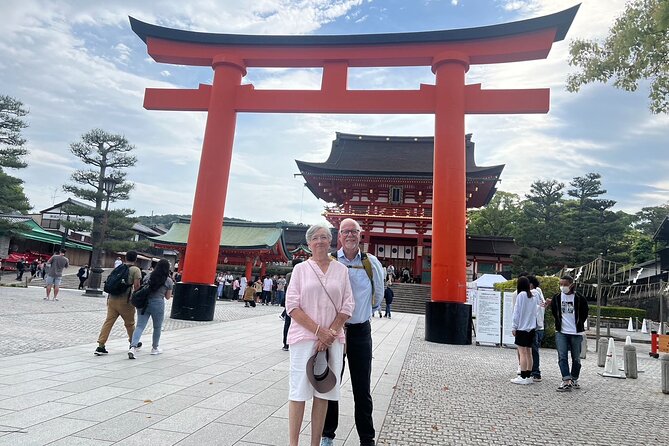
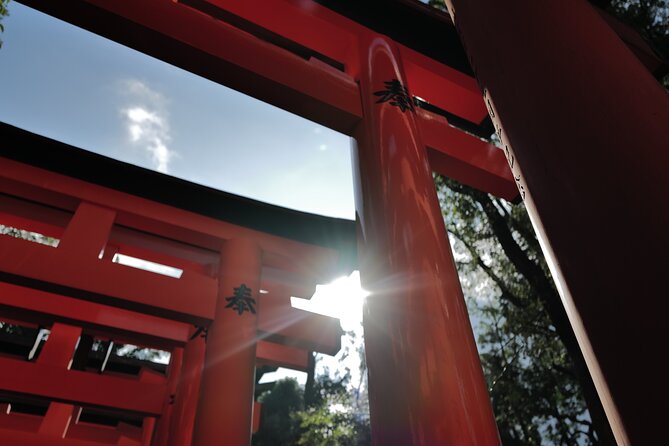
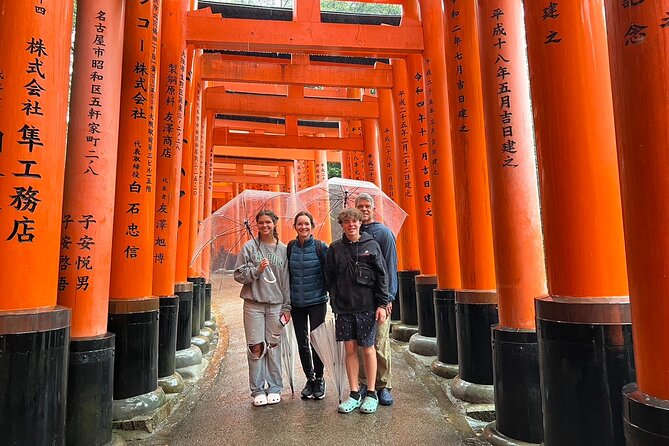
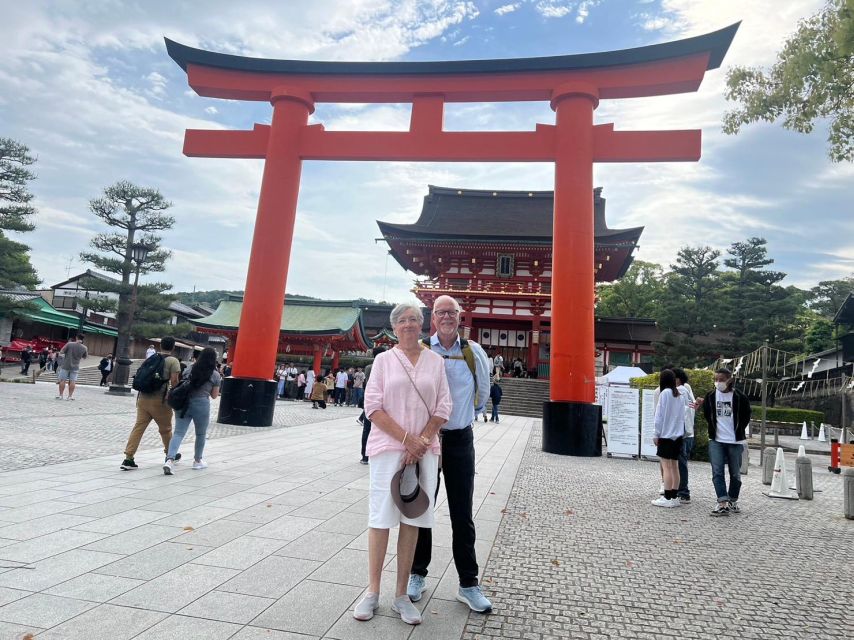
The first major stop is Fushimi Inari Taisha, reached by train in about ten minutes from Kyoto Station. You have around 70 minutes here, enough to walk beneath a section of the famous orange torii gates and hear how the shrine fits into Japanese Shinto practice.
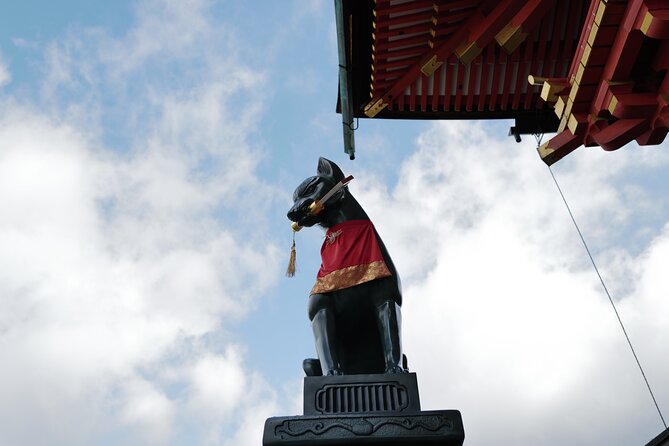
Fushimi Inari is dedicated to Inari, a Shinto deity associated with rice, prosperity, and business. Fox statues appear around the shrine because foxes are seen as Inari’s messengers. A guide can point out details that are easy to miss when you are focused only on getting the perfect photo.
The tour does not promise a full climb to the summit of Mount Inari. With only 70 minutes and two more major sights ahead, expect a guided visit to the main shrine area and part of the torii-lined route rather than an all-day hike. That is a sensible choice for this itinerary, but anyone hoping to complete the entire mountain circuit should return independently.
This is one of the strongest parts of the morning. The torii gates are still photogenic even when other people are present, and the early light gives the place a quieter mood. You get time to pause, look around, and ask questions instead of being pushed along by the later crowds.
Wear shoes with good grip. The route includes walking and some uneven or sloping sections. Comfortable footwear is listed as essential, and that advice applies even more once you add Arashiyama and the station transfers.
Arashiyama’s bamboo grove and the limits of a short visit
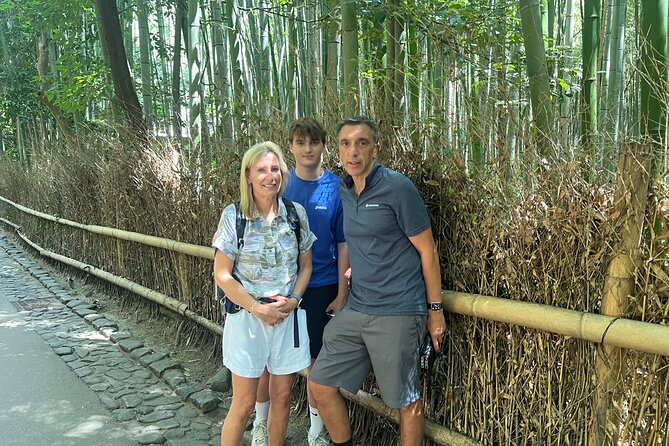
From Fushimi Inari, the group takes another train journey of about 30 minutes to Arashiyama. The guided visit lasts about an hour. The central draw is the bamboo grove, but Arashiyama is more than a single photo stop.
The tall bamboo is striking because the path narrows between green stalks that rise well above you. Early morning helps here. The grove is one of Kyoto’s most photographed locations, so getting there before the main daytime rush improves the experience and gives your guide a better chance to stop for photos.
Arashiyama also connects to temples, gardens, the Katsura River area, and scenic streets. This tour focuses on the main visitor area rather than trying to cover every corner. That keeps the schedule workable, but you should not book this morning expecting a slow, detailed tour of every temple in the district.
The hour is enough to see the key section and understand why Arashiyama matters. It is not enough for a relaxed independent exploration, long café stop, or extended temple visit. If the bamboo grove is your top priority, you may want to return later for more time.
Several guides receive praise for taking photos, explaining local customs, and helping with questions. Haruki is singled out for clear English, humor, and good photo spots. Aya is praised for bringing the sites to life with background on Japanese culture. Those details matter here, because the bamboo grove itself is visually powerful but easy to experience as a quick walk-through without explanation.
Kinkakuji, the Golden Pavilion, closes the morning
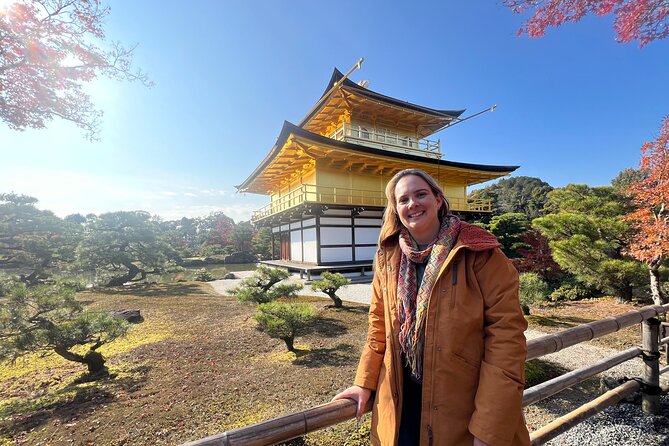
After Arashiyama, the route continues by train for about 15 minutes, followed by a bus ride of roughly 20 minutes to Kinkakuji. The final guided stop lasts around an hour.
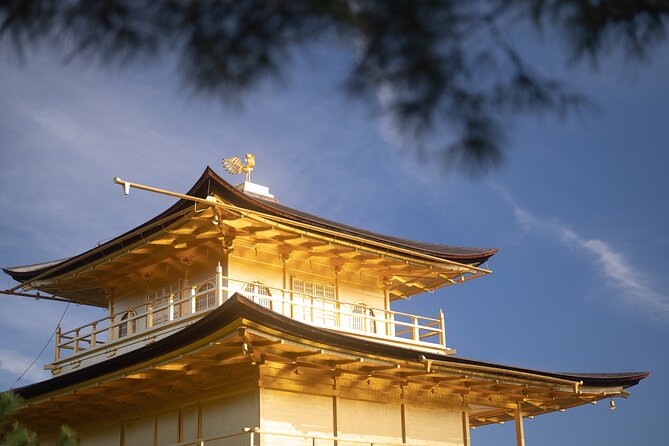
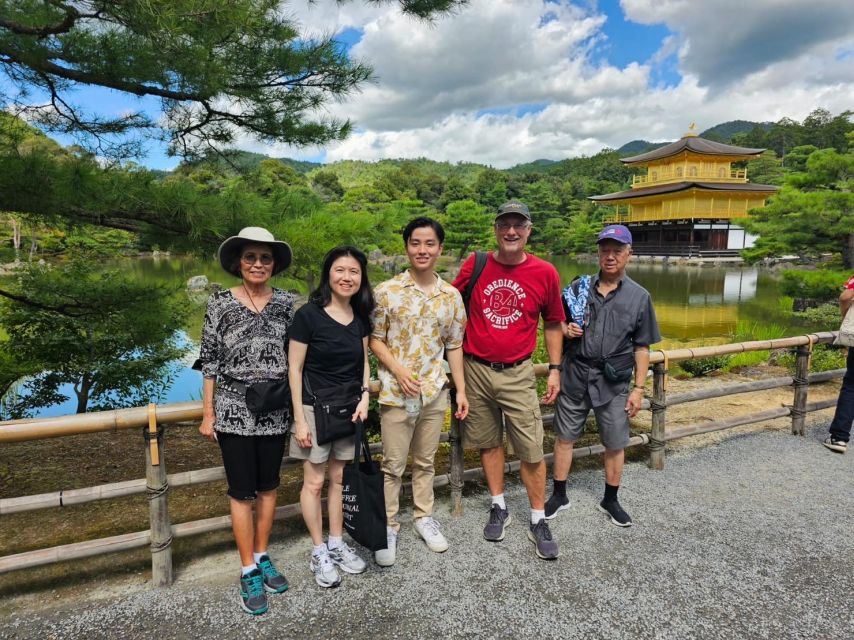
Kinkakuji, also called the Golden Pavilion, is a Zen Buddhist temple set beside a pond. The gold-covered upper levels reflect across the water, creating one of Kyoto’s most recognizable views. The setting is carefully composed, and the guide helps explain the temple’s Buddhist role and the meaning behind the buildings and garden.
You pay 500 yen for entry, which is not included in the tour price. Keep cash with you. The tour also recommends bringing an IC card such as Suica, ICOCA, or PASMO, or a valid JR Pass for the public transport sections. The transport cost is about 1,240 yen and is also separate.
Kinkakuji can be the busiest part of the route, partly because its main viewpoint is compact and partly because buses can be crowded or delayed. One winter visit required a taxi after a bus problem, and the guide handled the change well. That is useful to know, but it also shows why this is not a perfectly controlled itinerary. Road traffic, bus capacity, weather, and weekend demand can affect the final leg.
You may find the pavilion more crowded than Fushimi Inari or Arashiyama, especially later in the morning. Even so, placing it last makes practical sense. The group has already used the early hours for the two locations where crowd pressure is most noticeable.
Same base, a different sort of day:
- Kyoto Geisha Walking Tour: Gion District & Hidden Gems
★ 4.7 · 3,273 reviews - Kyoto: Tea Ceremony Ju-An at Jotokuji Temple
★ 4.9 · 3,207 reviews - Kyoto: Gion Magical Night Walking Tour with Geisha Trivia
★ 4.9 · 2,393 reviews - Kyoto: 45-Minute Tea Ceremony Lesson Experience
★ 4.3 · 2,378 reviews
What the public transport format really means
This is not a bus tour. You ride trains and buses with the guide, walk between stations and sights, and handle regular city transport as part of the experience.
That format has two clear benefits. First, it avoids spending the whole morning in traffic. Second, it teaches you how Kyoto works. Several guides help participants understand the train and bus connections, which can make the rest of your stay less intimidating.
The downside is less comfort and less control. You may need to stand on a train, wait for a bus, or adjust the plan if a connection is delayed. Sunday bus service and crowded periods can slow the Kinkakuji section. The guide can help, but no guide can remove Kyoto’s transport pressure during a busy season.
Bring an IC card if you have one. If you do not, bring enough yen for fares. The stated transport cost is about 1,240 yen, but actual costs can vary slightly with the route used. You should also carry cash for the 500-yen temple admission and any food or drink you buy after the tour.
Group size, guiding, and the human side of the tour
The group can include up to eight people. That is small enough for the guide to answer questions and keep track of the group without the distance you get on a large coach. It is not private, though, and the exact group size can vary.
The guiding is a major part of the value. The guides named in the feedback include Natsuki, Hinano Yoshida, Ramu, Koi, Genki, Karin, Haruki, Aya, Rin, Hina, Chihiro, Suzuka, Toshiya, and others. You cannot normally choose a specific guide, but the repeated strengths are clear: good English, friendly conversation, explanations of Shinto and Buddhism, photo assistance, and useful restaurant suggestions.
A guide also helps you make sense of small cultural details. At a shrine, you learn how the space differs from a Buddhist temple. At Kinkakuji, you get more than a picture of a gold building. In Arashiyama, the bamboo becomes part of a wider story about Kyoto’s famous districts and the pressure that popularity brings.
The tour also works well for families with older children. One guide was praised for including an 11-year-old in the conversation and keeping the child engaged. Still, the early start and amount of walking may be difficult for very young children.
Is $101 a fair price?
At $101 per person, this is not the cheapest way to visit the three sights. You also pay about 1,240 yen for transport and 500 yen for Kinkakuji, with lunch extra. If you are comfortable reading transit maps, buying tickets, and starting early on your own, you can spend less independently.
The value comes from time and coordination. Seeing Fushimi Inari, Arashiyama, and Kinkakuji in one morning requires a tight route. You have to choose the right order, understand the connections, watch the clock, and avoid getting turned around in Kyoto Station. The guide takes on that work while adding explanations and helping with photos.
For a short Kyoto stay, the price is easier to justify. One morning gives you a strong first look at three headline sights, and the rest of the day remains free. You are paying less for admission or transport than for the guide’s route planning, local knowledge, and ability to keep the group moving.
For a longer stay, the calculation changes. You may prefer to visit each district slowly, return to the places you like, and spend more time at smaller temples or local neighborhoods. In that case, this tour is best used as an orientation day rather than your complete Kyoto plan.
Who should book this morning tour?
I would choose this tour if you are visiting Kyoto for the first time, have limited time, and want the major sights handled in one efficient morning. It is also useful if public transport in Japan feels unfamiliar and you want a local guide to show you how trains and buses fit together.
It suits active couples, solo visitors, friends, and families with older children. The small group makes it easier to ask questions, and the English-speaking guide gives you cultural context that you may not get from a quick self-guided visit.
You should think twice if you dislike early starts, need frequent breaks, or want a private itinerary. This tour is not wheelchair or stroller accessible, and it is not recommended for people who use a cane. It is also not suitable for babies under one year, people with heart problems, or anyone over 95.
Plan for changing weather. Early mornings can be cold, and one visit included snow at Arashiyama and heavy crowds at Kinkakuji because the snow drew extra attention. Comfortable shoes, cash, and a phone with WhatsApp are the practical basics.
Final verdict: a strong first morning in Kyoto
Book this tour if your priority is seeing Kyoto’s three most recognizable sights before the day gets crowded, while learning how to move around the city. The early Fushimi Inari visit is the biggest advantage, and the route gives you a useful mix of Shinto shrine, bamboo grove, and Buddhist temple.
Skip it if you want slow photography, a full Mount Inari hike, long temple visits, or a private car. For everyone else, the combination of a small group, capable English-speaking guides, and a tightly planned public transport route makes $101 a reasonable price for a concentrated introduction to Kyoto.
FAQ
Where does the tour meet?
The meeting point is Kyoto Station’s Central Ticket Gate, near Kyoto Tower and a 7-Eleven. Look for the GuideMe Japan board. The guide will also contact you through WhatsApp with meeting details.
How early should I arrive?
Arrive five to ten minutes before the scheduled start. Late arrivals cannot join the tour, and the tour does not provide a refund if you miss the departure.
How long does the tour last?
The stated duration is 330 minutes, or about five and a half hours. The actual finish can vary by around 30 minutes before or after the estimated time.
Is this a private tour?
No. It is a small-group tour with up to eight participants.
Does the tour use a sightseeing bus?
No. You walk between locations and use public trains and buses. It is not a private or sightseeing bus tour.
What costs are not included?
Lunch is not included. You also pay about 1,240 yen for public transportation and 500 yen to enter Kinkakuji.
Is the tour wheelchair or stroller accessible?
No. The tour is not wheelchair or stroller accessible, and it is not recommended for people who use a cane. Baby strollers are not allowed.
What should I bring?
Bring comfortable walking shoes, cash, an IC card such as Suica, ICOCA, or PASMO, or a valid JR Pass. Download WhatsApp before the tour and provide a phone number that works in Japan.
Just added in Kyoto
- Kyoto: Private Photoshoot Service★ 5.0 · 158 reviews
- Kyoto Rickshaw Tour★ 5.0 · 210 reviews
- Kyoto: Arashiyama Bamboo, Temple, Matcha, Monkeys & secret spots★ 5.0 · 219 reviews
- Izakaya Style Cooking Class★ 5.0 · 219 reviews
- Kyoto: Traditional Concert at Townhouse or Bathhouse★ 4.9 · 224 reviews
- Ninja 2-hour Hands-on Lesson by Japanese master in Kyoto -Medium★ 5.0 · 218 reviews
- Kyoto: Afternoon Japanese Izakaya Cooking Class★ 4.9 · 241 reviews
- Samurai Training with Modern day Musashi in Kyoto★ 5.0 · 256 reviews
Tours in Kyoto, compared.
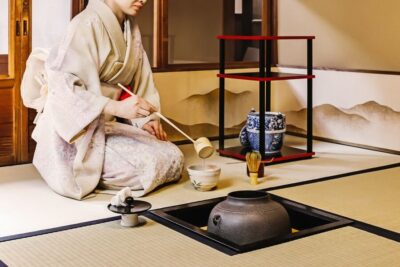
Tea Ceremony in a Traditional Tea House in Kiyomizu
Read our review →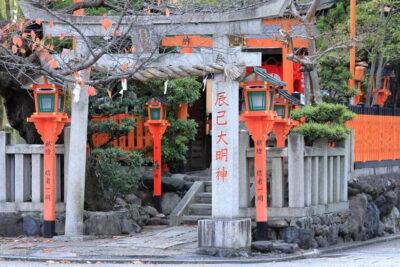
Kyoto Geisha Walking Tour: Gion District & Hidden Gems
Read our review →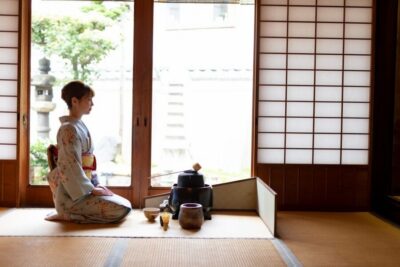
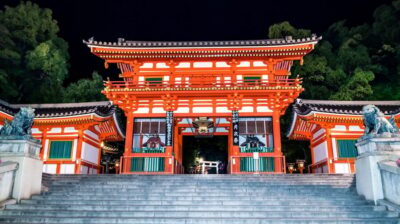
Gion Geisha District Walking Tour – Stories of Geisha
Read our review →
Best of Kyoto: Gion, Geisha, Pagodas & Cobblestones
Read our review →
Browse the lists this tour appears in