Reviewed · TOURS IN KYOTO
Kyoto: Japanese Koto & Shamisen Concert and Koto Class
Kyoto’s traditional music is often heard from a distance, behind temple walls or in formal halls. Here, you sit close to the performers in an old Japanese house, with the koto’s bright strings and the shamisen’s sharper voice filling a small, warm room. The concert covers classical pieces, newer music, and original compositions, so it feels like a living art rather than a museum display.
I like the personal contact with the musicians, including time for questions and photographs. I also like that you do not just watch: at the end, you sit at a koto and play a simple piece with professional help. The main drawback is practical rather than musical: the house can be tricky to find in a residential lane, and the narrow setting may not suit anyone wanting a large concert atmosphere.
Key points at a glance
- A concert inside a Kyoto home: The small house gives the music a direct, personal feel unlike a large theater.
- Koto and shamisen together: Hear two very different Japanese instruments, along with explanations of their history and unusual sheet music.
- Classical and contemporary repertoire: The program can include traditional songs, modern pieces, vocals, and original works.
- A real hands-on lesson: You try the koto after the performance and learn a simple piece with an instructor.
- English support and private options: The experience is offered in English and Japanese, with private or small-group bookings.
- Good value at $38: For a concert, cultural explanation, personal Q&A, lesson, instrument use, and photos, the price is strong.
The concert begins in a small Kyoto house
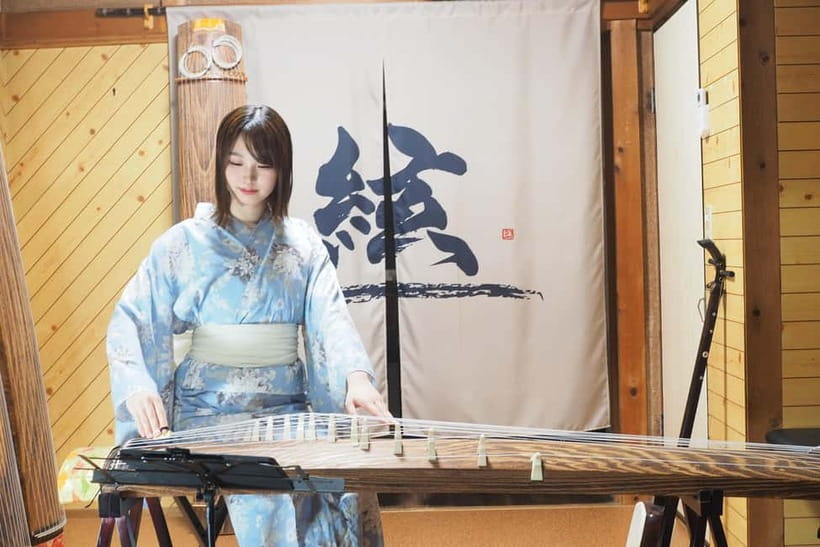
The first surprise is the setting. You are not entering a grand hall, temple, or restored townhouse built for public tours. You are visiting a small, older Japanese house in a residential area, where the room feels closer to a family sitting room than a performance venue.
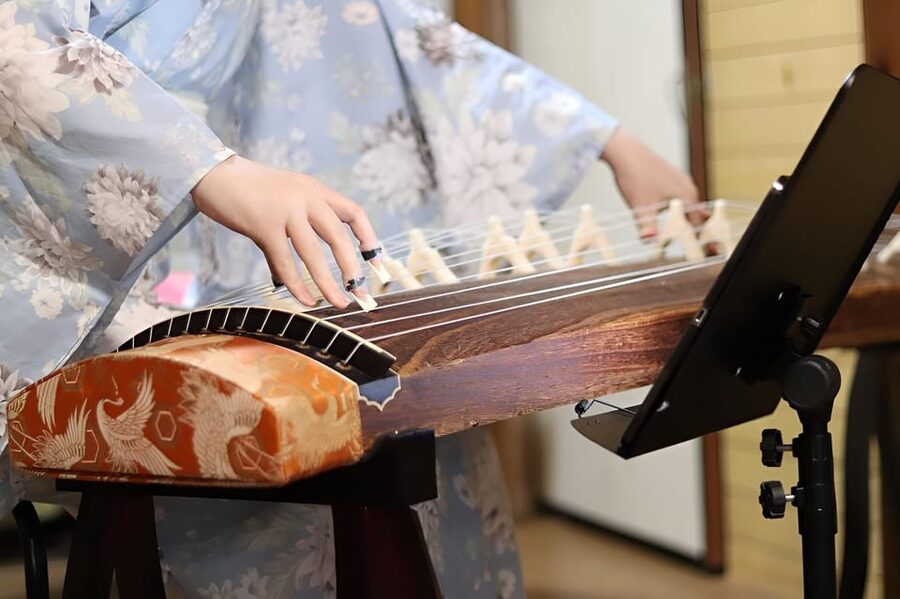
That scale shapes the whole hour. You sit near the performer, close enough to watch the hands work across the koto strings and to notice how the shamisen is handled. The sound is not softened by a large auditorium. A plucked note arrives plainly, and a change in technique can alter the tone at once.
The location does require a little patience. One person found the small house hard to spot in the residential streets, while another arrived by taxi and still had to wait outside until shortly before the show. Check the meeting instructions carefully, allow extra time, and do not expect a large sign or a formal lobby.
Once inside, the room’s simplicity becomes part of the appeal. You are there for the instruments and the people explaining them, not for polished staging. If you prefer big productions, this may feel too modest. If you want a close look at Japanese music, the setting works in your favor.
Other experiences people book in Kyoto:
- PERFECT KYOTO 1-Day Bus Tour
★ 5.0 · 13,518 reviews - Kyoto: Fushimi Inari, Kinkakuji, Bamboo Grove 1 Day Bus Tour
★ 4.8 · 4,316 reviews - Kyoto: Tea Ceremony in a Traditional Tea House in Kiyomizu
★ 4.9 · 3,519 reviews
Koto, shamisen, and music you can understand
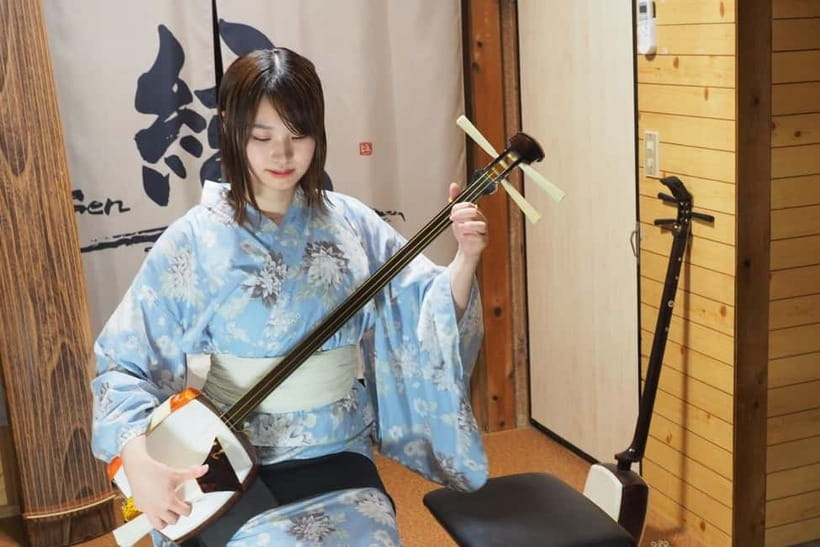
The program starts with a short introduction to the instruments. You learn what the koto and shamisen are, how they differ, and how Japanese musical notation works. That last point matters, since the sheet music does not look like the staff notation used in much Western music.
The koto is a long stringed instrument played while seated beside it. Its tone can sound delicate and clear, but the player can shape it in many ways. The shamisen has a distinct, more pointed sound and adds a different character to the program. Hearing both instruments in one sitting helps you understand why each has its own place in Japanese music.
The explanation is brief enough that it does not slow the concert. You get useful context, then hear the ideas in practice. This is especially helpful if you know little about Japanese music and do not want a lecture filled with technical terms.
The repertoire changes with the season and performer. You may hear classical pieces, contemporary works, and original compositions. Traditional pieces can include singing, while newer selections bring more energy and different moods. Aoi has been praised for both her koto playing and her singing, with particular attention to the feeling she brings to each piece.
That variety is one reason I would choose this over a performance devoted only to formal classical works. You get a sense of the tradition, but you also see how musicians use these instruments today. The exact balance is not fixed, so book this for a varied introduction rather than a guaranteed list of songs.
Watching Aoi and the performers at close range
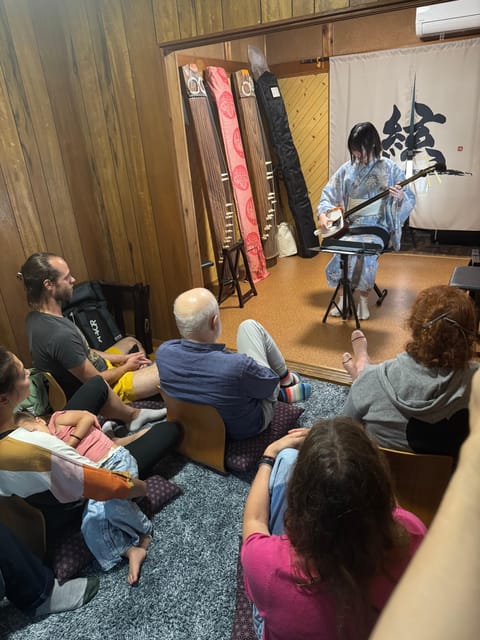
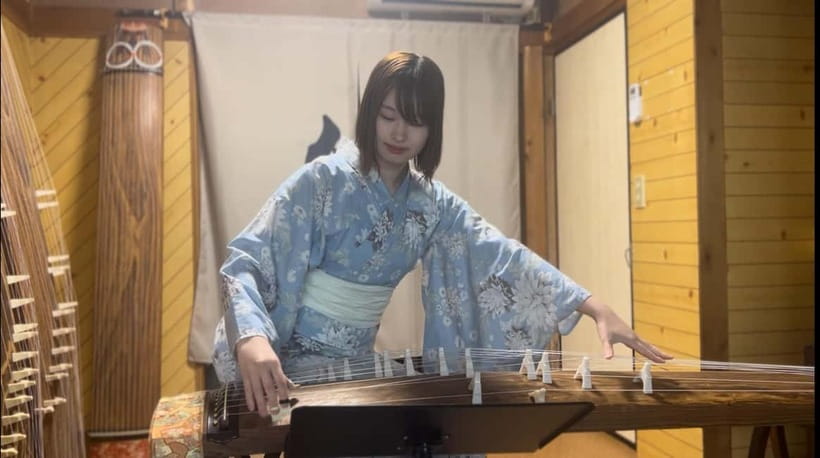
The performance is the heart of the experience. A professional musician plays the koto and shamisen, and the small room lets you watch technique instead of simply hearing the final sound. Different touches produce different tones, and you can follow how the performer changes the mood through rhythm, pressure, and attack.
Aoi is one of the performers associated with the experience, and her playing and voice have drawn especially warm praise. Kyoko has also helped make the lesson more open and flexible, encouraging participants to try their own ideas. Shohei is part of the friendly team connected with the sessions. The exact performer and guide may vary by booking, so check the option details if a particular person matters to you.
Some programs include vocals, which adds another layer to the traditional pieces. The voice and koto can create a very direct emotional effect, while the contemporary works may feel more animated. You are not simply ticking off two instruments from a cultural checklist. You are seeing how they can carry different moods and styles.
The close distance also makes small details easier to catch. You can watch how the player positions the hands, how the strings respond, and how the performer shifts between pieces. That visual contact is difficult to get in a formal concert unless you happen to sit in the front row.
Questions, photographs, and time with the musician
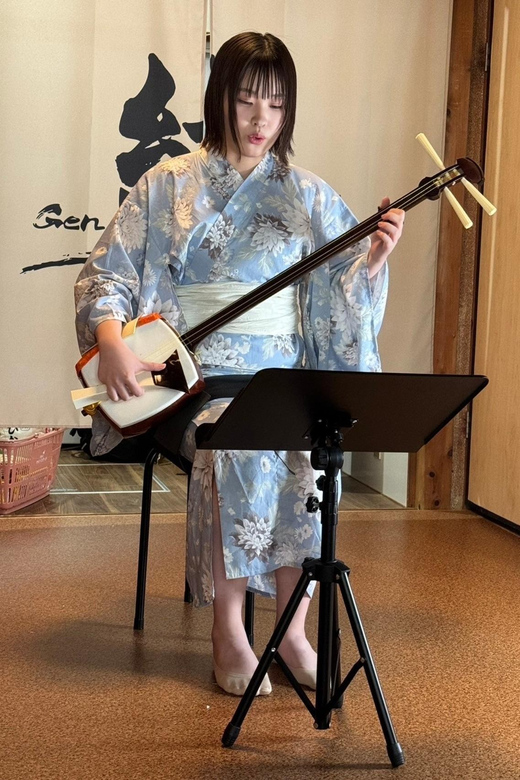
After the performance, the formal boundary between audience and performer becomes much thinner. You have time for a close-up question-and-answer session, and you can ask about the instruments, the music, or the methods used to play them.
This is a good point to ask about the sheet music introduced at the beginning. It is also your chance to clarify details you noticed during the concert. The session is designed to be friendly and accessible, not intimidating, so you do not need musical training to take part.
Photos are included, including pictures of you trying the instrument. That is a useful touch because it gives you a record of the hands-on part rather than only a snapshot of the room. Photo-taking is available after the performance, and special moments may be possible. One participant received a birthday song, though you should not assume that every booking includes a custom performance.
The Q&A is particularly useful for families. Children and adults often notice different things, and a small room makes it easier to ask a simple question without feeling lost in a crowd. Very young children are not suitable for the activity, with the stated age restrictions excluding babies and children under two, three, or four depending on the booking information. Confirm the exact option before paying if you are booking for a young child.
Same base, a different sort of day:
- Kyoto Geisha Walking Tour: Gion District & Hidden Gems
★ 4.7 · 3,273 reviews - Kyoto: Tea Ceremony Ju-An at Jotokuji Temple
★ 4.9 · 3,207 reviews - Kyoto: Gion Magical Night Walking Tour with Geisha Trivia
★ 4.9 · 2,393 reviews - Kyoto: 45-Minute Tea Ceremony Lesson Experience
★ 4.3 · 2,378 reviews
Your first koto lesson
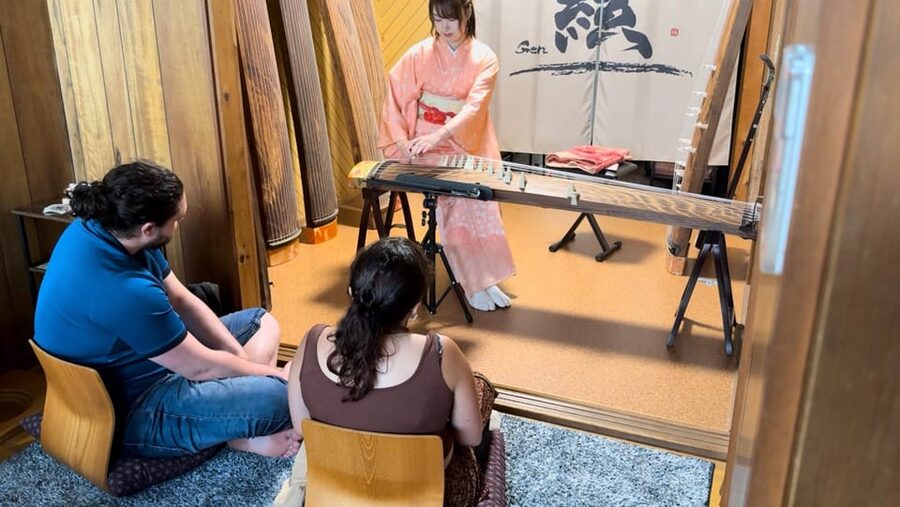
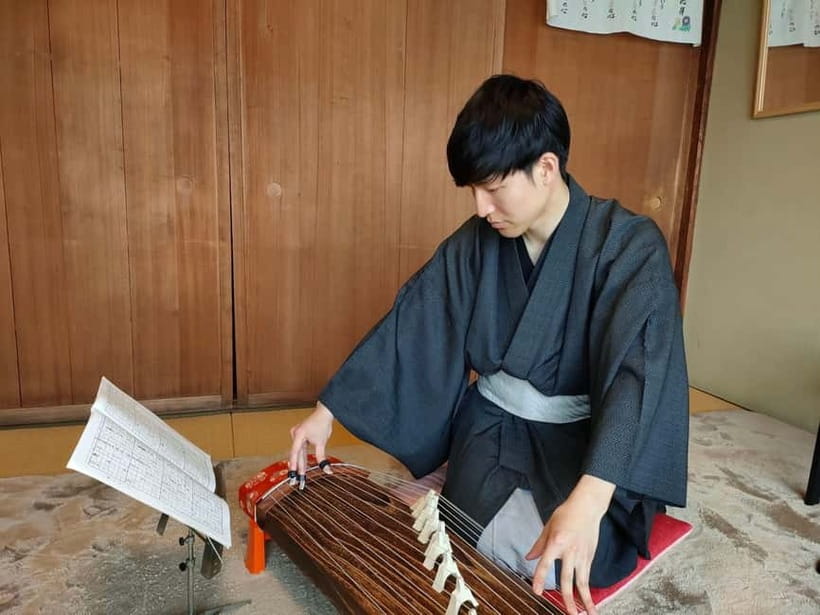
The final part changes the experience from a concert into a class. You sit at the koto and, with professional guidance, try a simple piece. All required materials and the instrument are provided, so you do not need to bring musical equipment.
Do not expect to become a koto player in one session. The value is in feeling how the instrument responds and learning that its sound comes from more than simply plucking a string. The instructor can show you basic technique and help you play a short passage.
The lesson is beginner-friendly. Several participants with no musical background found the basics approachable, while trained musicians appreciated being allowed to ask detailed questions and test their own ideas. That range is important. You can treat the class as a gentle first step, or pay closer attention to technique if you already play another instrument.
You may also have the chance to play alongside the performer on a simple piece. That creates a satisfying finish because the music you heard at the beginning now feels less remote. You have learned just enough to understand the challenge behind the polished performance.
The lesson may be especially meaningful for a parent and child or for friends who want a shared activity. It is not a passive cultural stop. You leave having heard the instruments, discussed them, and made a sound on one yourself.
How much time to allow, and where to place it in Kyoto
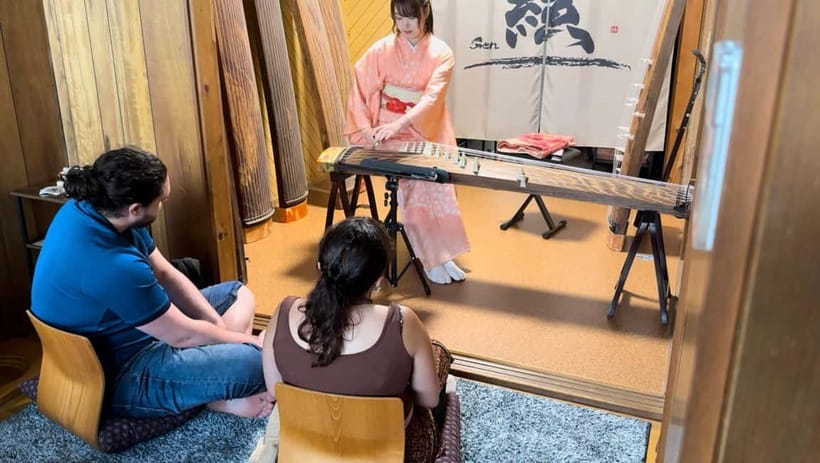
The experience lasts from one hour to 100 minutes, depending on the option and schedule. Check the available starting time and exact duration when booking. Late arrival can shorten your session, which matters here because the program is compact and each part has a purpose.
Allow time to locate the house. The residential setting is part of the charm, but it can be less obvious than a theater or hotel. A dark alley was a concern for one evening booking, so arriving before the last few minutes is sensible. You may need to wait outside until shortly before the show.
The venue is near useful Kyoto connections. Saiin Station offers access to both the Hankyu and Randen lines, making the experience workable before or after Arashiyama. Arashiyama is listed at about 25 minutes by train and on foot.
Nijo Castle is about 20 minutes away by train and on foot, with the route connecting toward Nijo Castle-mae on the Tozai Line. Kinkakuji takes about 20 to 25 minutes by bus and on foot from the Nishioji Sanjo bus stop. Nishiki Market is about 25 minutes by train and on foot, with direct Hankyu access toward Karasuma or Kawaramachi.
These times are useful planning estimates, not guarantees. Kyoto traffic, walking pace, and transfers can change them. I would place this activity before or after one nearby stop rather than trying to squeeze it between several major sights.
Is $38 a fair price?
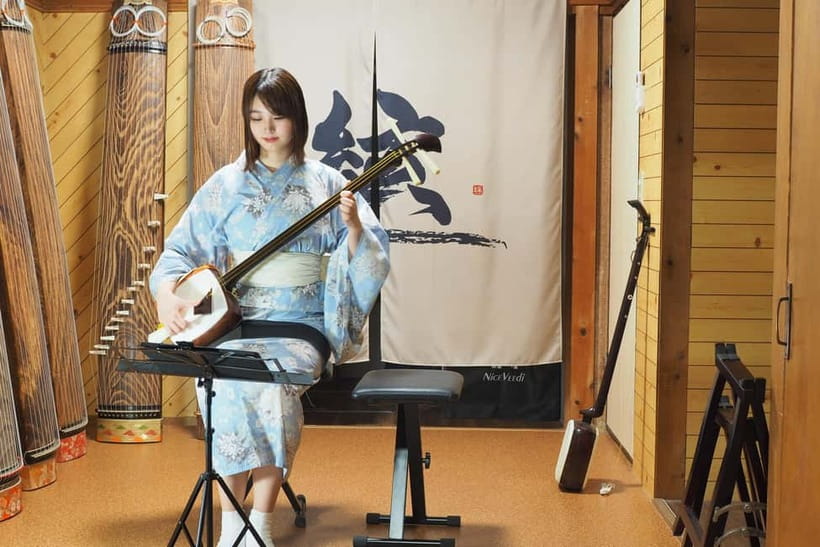
At $38 per person, the value is strong if you want more than a short performance. Your fee covers the live concert, cultural introduction, use of a koto, instructor guidance, the private or small-group format, and photos of the experience.
The intimate setting is the key reason the price works. A standard concert ticket might give you longer music, but not necessarily a close Q&A or a guided chance to play the instrument. Here, you pay for access as well as sound.
The price is less compelling if you only want to hear a concert and do not care about the class. A performance-only option may be available at a lower price, so compare the choices before booking. Food, drinks, transportation, souvenirs, and extra koto accessories are not included.
Private and small-group options also make this a useful choice for couples, families, and friends who want a quieter session. The exact group arrangement depends on the option you select, so read that detail carefully.
Who will enjoy this most?
I would recommend this to you if you want a cultural activity that feels personal and does not require prior knowledge. It suits curious adults, families with suitable-age children, music fans, and anyone who likes learning by doing.
It is also a good choice for someone who has already visited Kyoto’s temples and markets and wants a different side of the city. You are not just looking at an old building. You are meeting a musical tradition through sound, explanation, and practice.
The experience may be less suitable if you need step-free access or have physical limitations that affect sitting or playing, since no full accessibility details are provided. Contact the organizer in advance about any physical limitations or allergies.
You should also skip it if your schedule is so tight that you cannot arrive early. The house can take time to find, and late arrival may reduce the lesson or performance time. A calm arrival will make the small-room format feel welcoming rather than rushed.
Booking details worth knowing
The instructors speak English and Japanese. English support is part of the experience, including the introduction, Q&A, and lesson guidance.
The meeting point can vary by the option booked. Do not rely on a general map pin alone. Check your confirmation for the correct location and plan extra time for the final walk.
You can reserve now and pay later, which helps if your Kyoto schedule is still moving around. Free cancellation is available up to 24 hours in advance for a full refund. Transportation to and from the venue is your responsibility.
Should you book the Kyoto koto and shamisen experience?
Book it if you want a small, human-scale music experience with real participation. The strongest parts are the close performance, the chance to ask direct questions, and the simple koto lesson that turns listening into doing.
The concert is not a grand stage show, and the residential house may take effort to find. But at $38, you receive far more than a quick demonstration. You hear classical and newer music, meet the people behind it, and leave with a first-hand sense of how the koto works.
For a first encounter with Japanese instruments, this is an easy recommendation. Choose the longer class option if you want to play, arrive early, and keep the rest of your evening flexible.
FAQ
How long does the koto and shamisen experience last?
The activity lasts between one hour and 100 minutes, depending on the option booked. Check the available starting times and duration before reserving.
What instruments will I hear?
You will hear the traditional Japanese koto and shamisen, played by professional musicians.
Will I get to play the koto?
Yes. At the end of the program, you can try the koto and learn a simple piece with guidance from a professional instructor.
Is the experience suitable for beginners?
Yes. The class is designed to be accessible to people without previous musical training, and the instructor guides you through the basics.
Is the experience available in English?
Yes. The experience is offered in English and Japanese.
Is this a private activity?
Private and small-group options are available. The exact format depends on the option you choose.
What does the price include?
The price includes the concert, cultural introduction, required materials, use of the koto, instructor guidance, and photos of the experience.
Are meals or transportation included?
No. Transportation to and from the venue, meals, drinks, souvenirs, and additional koto accessories are not included.
How early should I arrive?
Arrive with enough time to find the small house in the residential area. Late arrivals may receive a shortened session.
Can I cancel for a refund?
You can cancel up to 24 hours in advance for a full refund. A reserve-now, pay-later option is also available.
Just added in Kyoto
- Private Cooking Class Udon in Kyoto Japan★ 5.0 · 23 reviews
- Your Private Vacation Photography Session In Kyoto★ 5.0 · 110 reviews
- Kyoto: Zen Meditation at a Private Temple with a Monk★ 5.0 · 25 reviews
- Private Pewter Sake Cup Experience with a Kyoto Artisan★ 5.0 · 31 reviews
- Kyoto Wagashi(Japanese sweets) Cooking Class near Fushimiinari★ 5.0 · 60 reviews
- Kyoto:Family-Friendly Kimono & Yukata Experience at WARGO★ 5.0 · 147 reviews
- Private Guided Traditional Buddhist Cooking in Japan★ 5.0 · 16 reviews
- Kyoto: Gion Geisha District & Sake-in-Hand Walking Tour★ 5.0 · 37 reviews
Tours in Kyoto, compared.

Tea Ceremony in a Traditional Tea House in Kiyomizu
Read our review →
Kyoto Geisha Walking Tour: Gion District & Hidden Gems
Read our review →


Gion Geisha District Walking Tour – Stories of Geisha
Read our review →
Best of Kyoto: Gion, Geisha, Pagodas & Cobblestones
Read our review →