Reviewed · TOURS IN KYOTO
Kyoto: Local Food Tasting Tour at the Nishiki Market
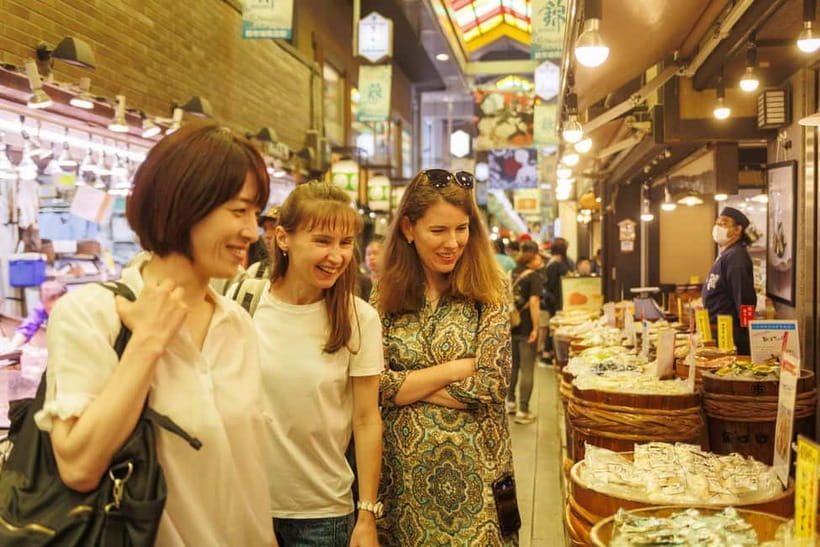
Nishiki Market is easy to enjoy badly: you walk in, face dozens of unfamiliar foods, and spend your time guessing. This small-group tour gives you a local guide, five selected tastings, and a clear route through Kyoto’s Kitchen. Hamo tempura and Wagyu steak skewers are among the featured bites, but the less flashy foods, such as yuba and obanzai home cooking, may teach you more about daily Kyoto eating.
I like the way the tour combines food with shrines, shopping arcades, and short history lessons. I also like the tiny group size, limited to six people, which gives guides such as Ayu, Toshi, Takuma, and Miho room to answer questions and adjust the pace. The main drawback is important: the tour cannot handle vegetarian, halal, kosher, gluten-free, or allergy-related diets.
Key points to know before booking
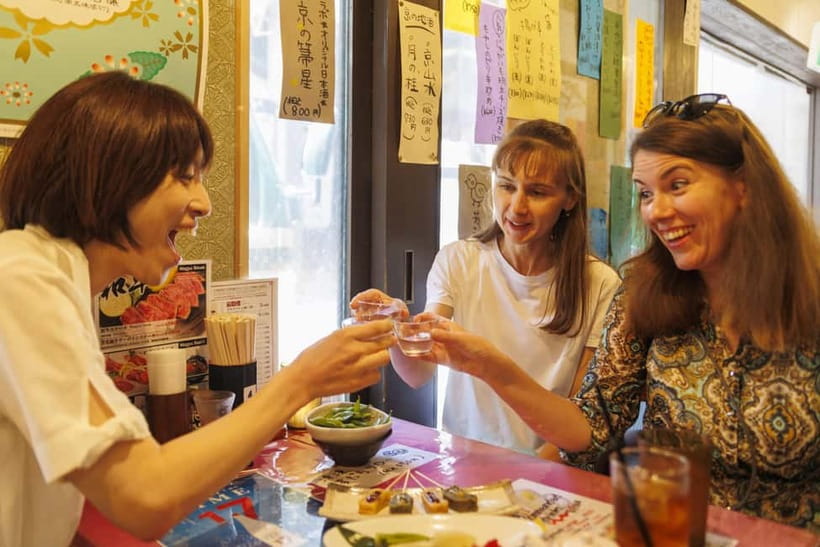
- Five planned tastings: Expect yuba, obanzai, hamo tempura, Wagyu steak skewers, and additional market samples such as crackers, Japanese seasonings, and flavored honey.
- A 400-year-old food market: Nishiki’s narrow passage contains about 130 food stalls, so a guide can save you from wandering past the best stops.
- More than a meal: The route adds Nishiki-Tenmangu Shrine, Shinkyogoku Shopping Arcade, Teramachi Street, and a lesser-known stop.
- Small groups matter: With no more than six participants, you can ask questions and keep up in crowded lanes.
- Optional tea ceremony: Add a 90-minute session at 2:00 PM with kimono dressing, a tea master, and time for photos.
- Come ready to walk: Wear comfortable shoes, carry rain gear if needed, and leave large bags and luggage behind.
Why Nishiki Market works best with a guide
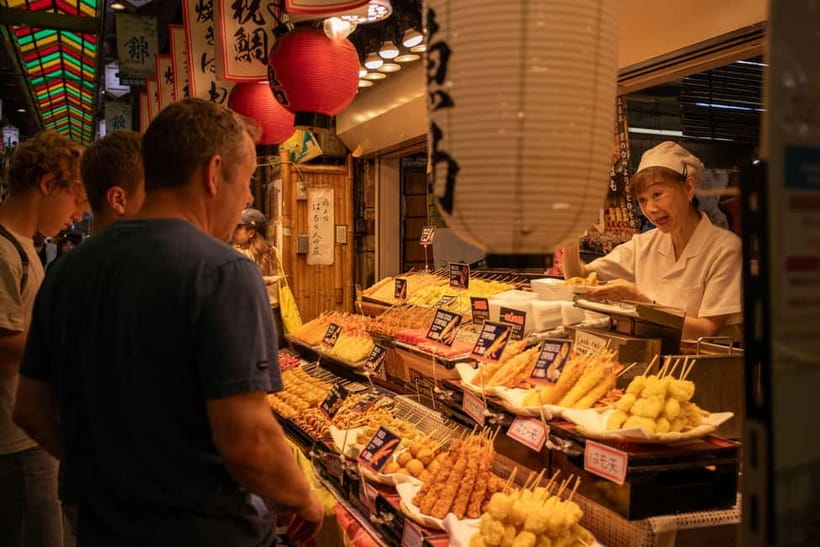
Nishiki Market is not a neat row of food stands designed for easy sightseeing. It is a long, narrow shopping street with many shops packed close together. The market has served Kyoto for roughly 400 years and is often called Kyoto’s Kitchen, a name that fits its role as a place for seafood, prepared foods, seasonings, sweets, pickles, and everyday ingredients.
You can certainly walk through it alone. The problem is knowing what is worth tasting, what is meant to be eaten on the spot, and what a shop is selling to local cooks rather than casual sightseers. A guide helps you make sense of those choices and handles the small points of ordering and eating that can slow down a first visit.
The group size is limited to six. That is a real advantage here. In a crowded market, a large tour can turn into a moving line, while a small group can pause around a stall without blocking the passage. Guides such as Miho have been praised for keeping a calm pace in the crowds, and guides such as Saki have helped people find foods they would have missed alone.
The tour is conducted in English. Guide quality will naturally vary by date, but the named guides in the feedback include Ayu, Toshi, Takuma, Yume, Saki, Miho, Annie, Nagisa, and others. The strongest pattern is not a particular dish or shop. It is the guides’ ability to explain food in plain terms and connect it to Japanese customs, Kyoto life, and the surrounding neighborhoods.
Other experiences people book in Kyoto:
- PERFECT KYOTO 1-Day Bus Tour
★ 5.0 · 13,518 reviews - Kyoto: Fushimi Inari, Kinkakuji, Bamboo Grove 1 Day Bus Tour
★ 4.8 · 4,316 reviews - Kyoto: Tea Ceremony in a Traditional Tea House in Kiyomizu
★ 4.9 · 3,519 reviews
The five tastings: small portions, useful introductions
This is a tasting walk, not a three-course lunch. That distinction matters. You stop at several selected shops and sample a range of foods, so you can try things without committing to a full serving of something unfamiliar.
The planned foods include yuba, the delicate skin that forms on the surface of simmering soy milk. It is closely associated with Kyoto’s traditional cuisine and has a soft, subtle character. Yuba is not a dramatic street snack, but it is exactly the kind of food that can be hard to understand from a menu alone.
You also taste obanzai, a term for homestyle Kyoto cooking. This offers a useful contrast to more famous Japanese dishes. Instead of focusing only on showy specialties, the tour introduces the kind of prepared food connected to ordinary meals and local habits.
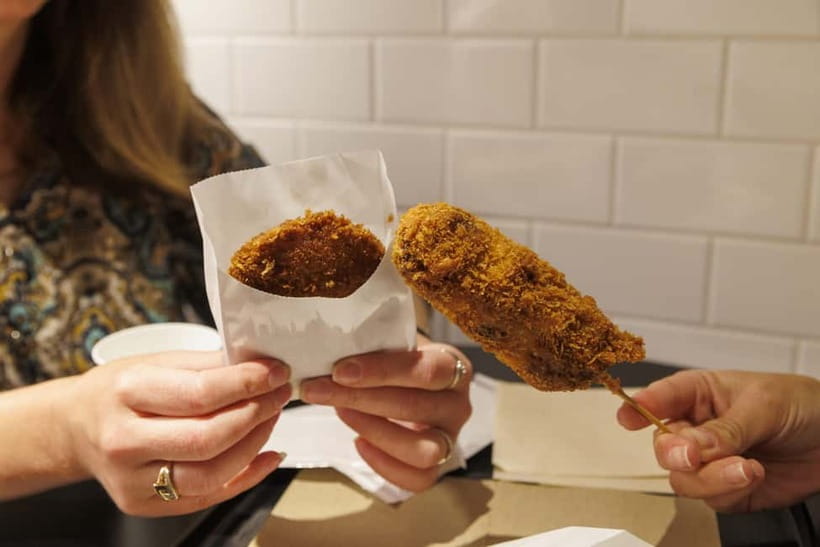
Hamo tempura is another highlight. Hamo is a pike conger eel often associated with Kyoto cuisine. Tempura gives it a crisp exterior and makes it more approachable if you have never tried it. One past participant specifically singled out hamo as a delicious discovery, and it is a good example of why a food guide can be worthwhile.
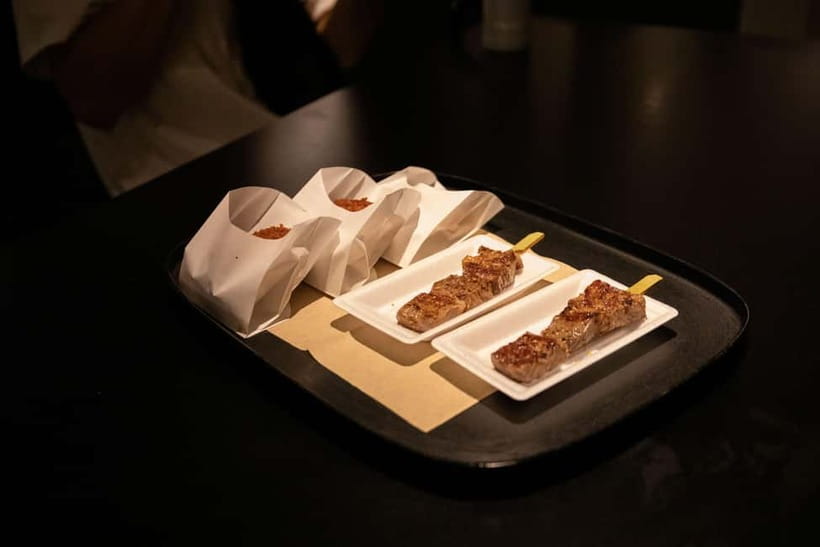
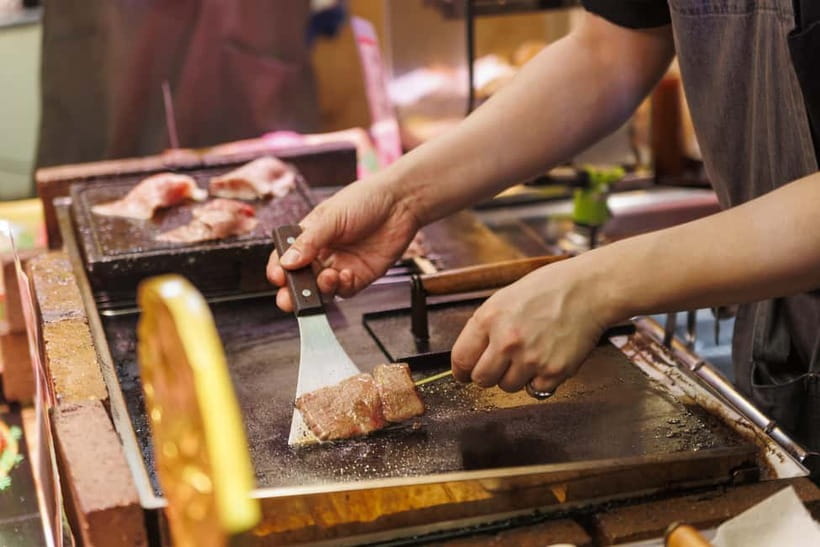
Wagyu steak skewers bring a more familiar crowd-pleaser to the route. You get the appeal of grilled beef in a small, easy-to-eat format, without turning the outing into an expensive steak meal. The mix of dishes gives you different textures and flavors rather than five versions of the same snack.
Additional tastes may include special Kyoto seasonings, crackers, Japanese-flavored honey, and other market foods. The exact selection can depend on the shops and season, so do not treat every item as guaranteed beyond the five advertised specialties. You should also plan to eat lightly beforehand. A past outing lasted about three and a half hours and included enough food that a large breakfast or lunch would have been unnecessary.
The route beyond the food stalls
The main Nishiki Market portion lasts about 90 minutes. That is long enough to sample several foods and hear explanations without making the market visit feel like a full-day commitment. It is also short enough that you still have energy for the surrounding streets.
The tour then reaches Nishiki-Tenmangu Shrine, with about 10 minutes for a guided visit. This small shrine adds a religious and historical layer to the food walk. It also gives you a break from the tight market passage and a chance to ask how local beliefs and traditions fit into everyday Kyoto.
Next comes Shinkyogoku Shopping Arcade, with around 45 minutes for guided sightseeing and shopping. This section broadens the experience beyond food. You can look at the changing mix of shops and get advice about items that catch your eye. Several people have enjoyed the shopping enough to admit they spent more time and money there than planned, so keep your budget in mind.
The route also includes a 10-minute visit to a less obvious stop, followed by about 30 minutes on Teramachi Street Shopping District. These sections make the tour more useful than a market-only tasting. You are shown how Nishiki connects with nearby commercial streets, shrines, and daily city life.
The itinerary lists three possible starting points and three possible drop-off locations, including the Shijo Street area, Nishiki Orizuruya, and Kyoto Takashimaya. Your exact meeting point depends on the option you book. Pay close attention to the meeting instructions, since one person found the starting location confusing, although the guide waited and helped sort it out.
What the walking pace feels like
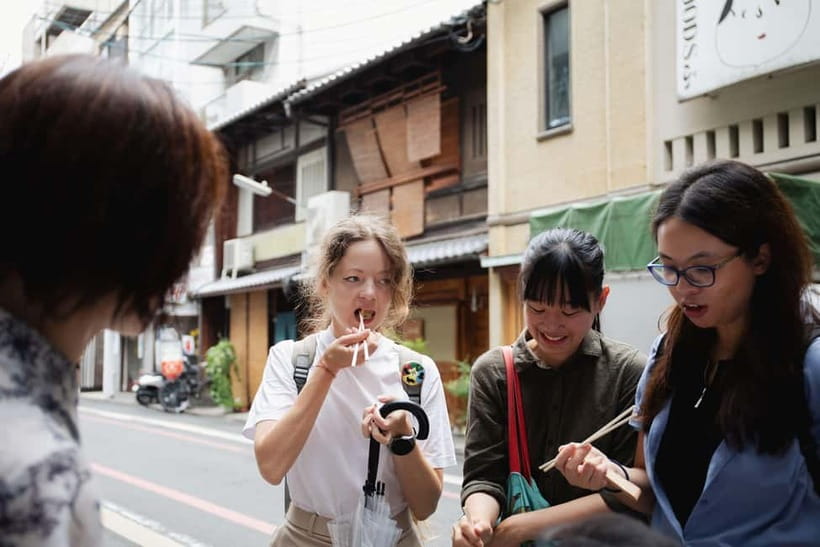
This is a group walking tour through narrow shopping streets. You will be on your feet for about three hours, and the advertised duration may extend toward 270 minutes depending on the outing. The route includes pauses for food, explanations, shopping, and shrines, but it is not designed for people who need frequent mobility support.
Comfortable shoes are essential. Rain gear is sensible because the activity continues outdoors, and you should avoid bringing luggage or large bags. Tight market lanes are difficult enough without a suitcase, and the tour provider does not accept pets.
The pace has been described as a good balance of walking, eating, and learning. Guides have also adjusted for families and slower walkers on some outings, but the formal information says the tour is not suitable for wheelchair users or people with mobility impairments. You should take that limitation seriously rather than relying on an informal adjustment.
Because the group is small, the experience may feel almost private if other bookings are light. One participant had a one-on-one outing, while another family of three adults and three children had the tour to themselves. You should not count on that arrangement, but the six-person maximum still keeps the group personal.
Same base, a different sort of day:
- Kyoto Geisha Walking Tour: Gion District & Hidden Gems
★ 4.7 · 3,273 reviews - Kyoto: Tea Ceremony Ju-An at Jotokuji Temple
★ 4.9 · 3,207 reviews - Kyoto: Gion Magical Night Walking Tour with Geisha Trivia
★ 4.9 · 2,393 reviews - Kyoto: 45-Minute Tea Ceremony Lesson Experience
★ 4.3 · 2,378 reviews
What you learn besides food
A good food tour should help you understand why a dish matters, not simply tell you its name. This route gives the guide time to explain the market, food traditions, shrine customs, and parts of Kyoto’s development.
Past guides have also answered questions about Japanese culture, geisha traditions, neighborhood differences, and places to visit later in the trip. Toshi, Takuma, Ayu, and others were singled out for giving practical suggestions beyond the scheduled route. That can be especially useful early in your Kyoto stay, when you are still working out how to spend your remaining days.
The historical content appears in short portions rather than as a formal lecture. That suits the setting. You might hear about the background of a food while standing at a stall, then move on before the explanation becomes too heavy. If you want a detailed history of every shop or a long lesson on Japanese culinary technique, this will probably feel light.
One four-star assessment made a fair point: the tour could be repeated independently after the first visit, and more background on staple foods would have been welcome. I agree with that tradeoff. You are paying partly for orientation and confidence, not for exclusive access to places you could never find alone.
The optional tea ceremony near Nishiki Market
If you select the tea ceremony option, the food tour is followed by a separate 90-minute experience beginning at 2:00 PM. You must make your own way to the tea ceremony venue near Nishiki Market after the walking tour, so allow time to finish the first activity and reach the second location.
The session begins with professional kimono dressing. You then take part in a traditional tea ceremony led by a tea master, who explains the meaning of the movements and gestures. The experience ends with time for commemorative photographs in a traditional setting.
This add-on changes the day from a food-and-neighborhood walk into a broader introduction to Japanese culture. It is a good choice if you want a structured cultural activity and photos in formal dress. It is less useful if your main goal is simply to eat and keep moving through Kyoto.
Check the timing carefully before choosing it. The tea ceremony begins at 2:00 PM, and the transfer is not described as part of the guided market walk. The option is only included if you select it when booking.
Is $78 a fair price?
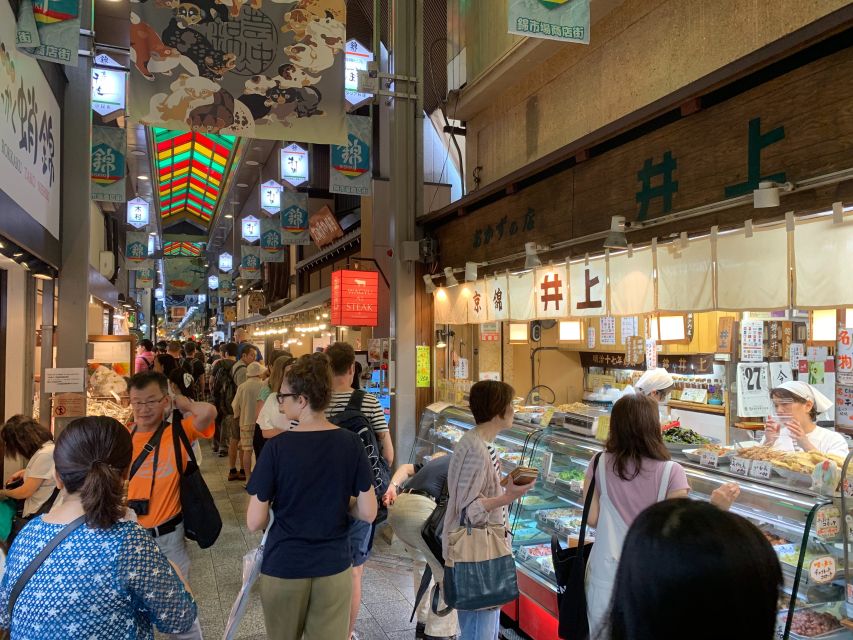
At $78 per person, the value depends on how much help you want in a crowded market. You are not paying for a full restaurant meal. You are paying for five planned tastings, an English-speaking local guide, a small group, neighborhood orientation, and the time saved by avoiding random choices.
I consider the price fair for a first Kyoto visit if you are curious about food but uneasy about ordering on your own. It is also a sensible early-trip activity because the guide can suggest other places and help you understand what you are seeing. The value is weaker for confident Japan visitors who already know Japanese food and are comfortable exploring markets independently.
The optional tea ceremony should be judged separately because it adds a second activity with kimono dressing, a tea master, and photography. Choose it for the cultural structure, not because the market tour requires it.
Free cancellation up to 24 hours before the start and reserve-now, pay-later booking make the plan less rigid. Those terms are useful if your Kyoto schedule is still shifting, but they do not change the food and accessibility limits.
Who should book this Kyoto food walk?
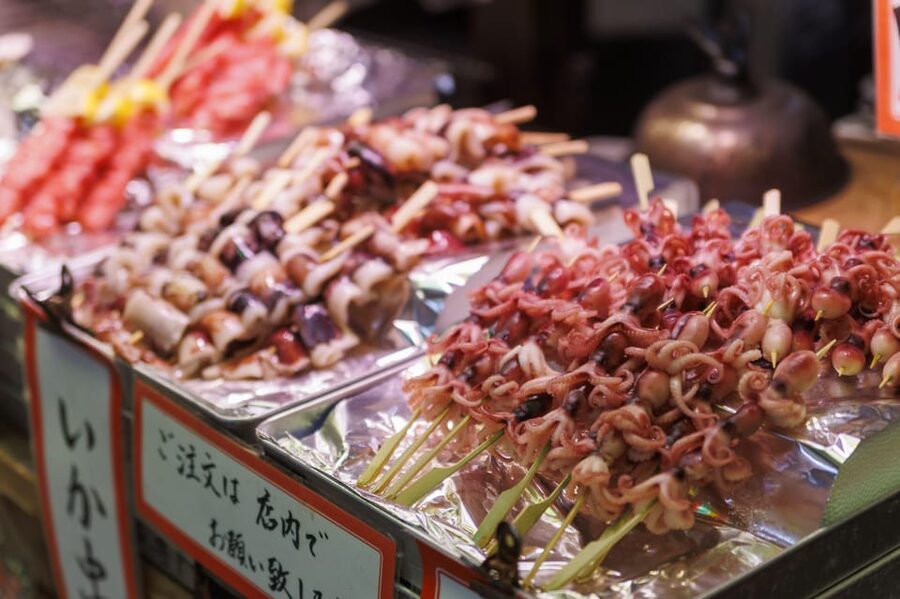
I would recommend it most strongly to first-time visitors, solo travelers, couples, and families who want an easy introduction to Japanese food. Children can enjoy the snack-by-snack format, and one 11-year-old participant was especially happy to try unfamiliar foods.
It also suits anyone who likes learning through conversation. Guides often provide more than the printed route, from suggestions for the rest of the trip to help understanding unfamiliar customs. A small group makes it easier to ask questions without holding up a large crowd.
You should think twice if you have strict dietary needs. The tour cannot accommodate vegetarian, halal, kosher, gluten-free, or allergy-related requests. Even if a guide tries to help informally, you should not book expecting a safe substitute menu.
The walk is also a poor fit if you dislike crowds, shopping, or standing. Nishiki Market and the surrounding arcades are active commercial areas, not quiet museum corridors. You will see plenty, but you will share the route with other shoppers.
FAQ
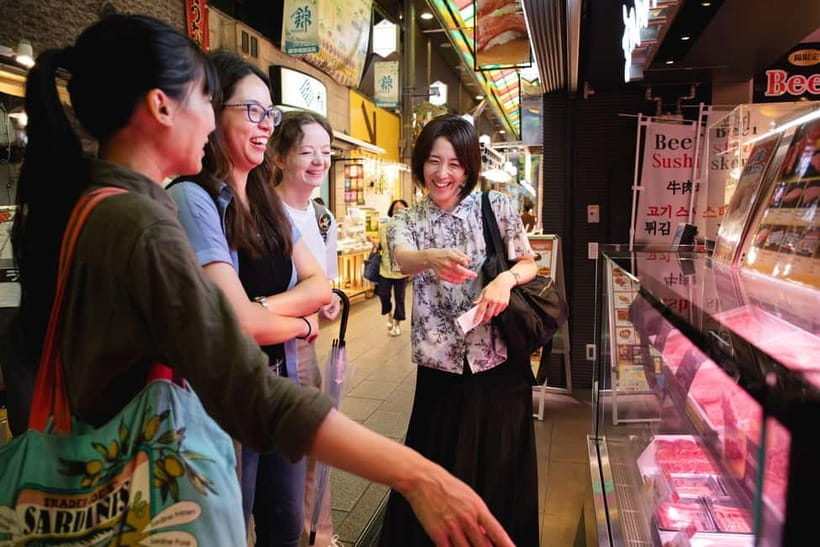
How long does the Nishiki Market food tour last?
The activity is listed as about three hours, with the stated duration also given as up to 270 minutes. The actual pace can vary, and some past outings lasted around three and a half hours.
What foods are included?
The included tastings feature yuba, obanzai local home cooking, hamo tempura, Wagyu steak skewers, and other samples. Additional tastes can include Kyoto seasonings, crackers, and Japanese-flavored honey.
How large is the group?
The tour is limited to six participants and includes an English-speaking live guide.
Can the tour accommodate dietary restrictions?
No. The tour cannot accommodate vegetarian, halal, kosher, gluten-free, or allergy-related requests.
What should I bring?
Wear comfortable shoes and bring rain gear. Pets, luggage, and large bags are not allowed.
What does the tea ceremony option include?
The optional tea ceremony begins at 2:00 PM near Nishiki Market and lasts 90 minutes. It includes professional kimono dressing, instruction from a tea master, an authentic tea ceremony, and time for commemorative photographs. You must make your own way to the venue after the food tour.
Should you book it?
Book this tour if you want Nishiki Market explained as you eat, rather than simply photographed as you pass through. The strongest reasons are the small group, the mix of ordinary Kyoto foods and special bites, and guides who can connect the market to shrines, shopping streets, and the rest of your itinerary.
Skip it if you have dietary restrictions, mobility limitations, or enough Japan experience to feel comfortable choosing every dish yourself. For most first-time Kyoto visitors who want a friendly, practical start, $78 buys more than food. It buys a clearer way into one of the city’s most confusing and rewarding streets.
Just added in Kyoto
- Kyoto: Zen Meditation at a Private Temple with a Monk★ 5.0 · 25 reviews
- Private Cooking Class Udon in Kyoto Japan★ 5.0 · 23 reviews
- Your Private Vacation Photography Session In Kyoto★ 5.0 · 110 reviews
- Private Pewter Sake Cup Experience with a Kyoto Artisan★ 5.0 · 31 reviews
- Kyoto Wagashi(Japanese sweets) Cooking Class near Fushimiinari★ 5.0 · 60 reviews
- Kyoto:Family-Friendly Kimono & Yukata Experience at WARGO★ 5.0 · 147 reviews
- Private Guided Traditional Buddhist Cooking in Japan★ 5.0 · 16 reviews
- Kyoto: Gion Geisha District & Sake-in-Hand Walking Tour★ 5.0 · 37 reviews
Tours in Kyoto, compared.
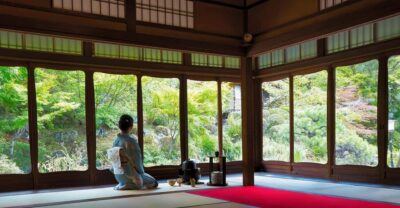
Tea Ceremony in a Traditional Tea House in Kiyomizu
Read our review →
Kyoto Geisha Walking Tour: Gion District & Hidden Gems
Read our review →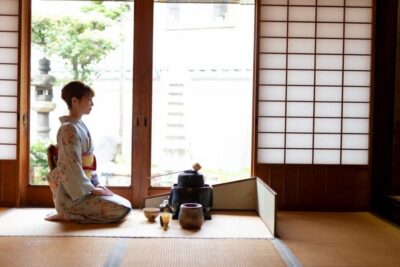
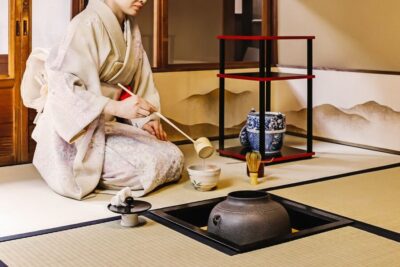

Gion Geisha District Walking Tour – Stories of Geisha
Read our review →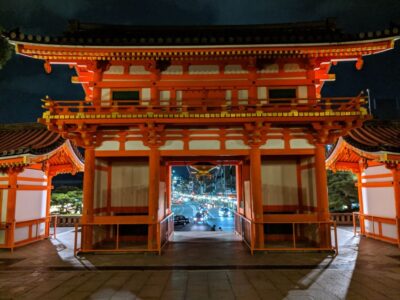
Best of Kyoto: Gion, Geisha, Pagodas & Cobblestones
Read our review →