
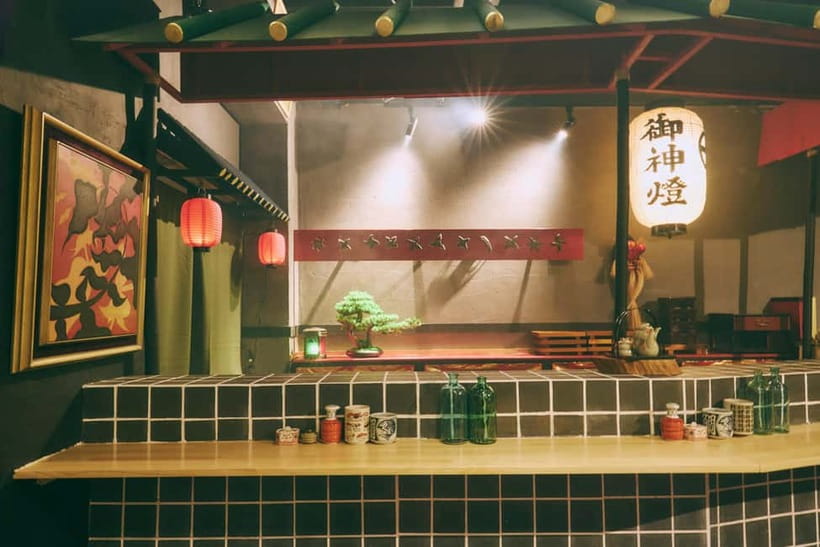
Reviewed · SAMURAI & NINJA EXPERIENCES
Kyoto: Forge Your Own Ninja Weapon with Japanese Tin Casting
The most interesting part of this Kyoto workshop is that you do not simply watch a craftsman work. You make a real tin piece yourself, starting with a sand mold and ending with a polished ninja object in its own box. You will handle the casting process, with staff supervising the molten metal, which reaches about 230 degrees Celsius.
I like two things right away: the activity is genuinely hands-on, and the finished souvenir has a personal story attached to it. I also like the easy location, just a three-minute walk from Demachiyanagi Station. The main consideration is time and heat. A shuriken or kunai takes about two hours, while an oni mask takes around two and a half, and the workshop asks for patience rather than a quick photo stop.
Key points at a glance
- Cast your own metal ninja piece: Choose a shuriken, kunai, or oni-inspired mask, then create it from a sand mold.
- Work through every stage: You shape the mold, pour tin under supervision, cool it in water, file it, and apply protective finishes.
- Pick the right challenge: Shuriken are the basic choice, while kunai and oni masks are optional upgrades with extra detail and time.
- Leave with a useful souvenir: Your finished piece is approximately 8 to 10 centimeters and comes with a dedicated box.
- Easy Kyoto access: The studio is a short walk from Demachiyanagi Station, making it simple to fit into a day around northeastern Kyoto.
- Good family appeal: Children can take part with staff assistance, but anyone under 15 must have a guardian present.
What you actually make at the Kyoto tin-casting workshop
This is a small metal-casting class built around Japanese ninja imagery. You choose one item, form its mold, cast the tin, and finish the surface by hand.
Your choices are:
- A shuriken, the familiar ninja star
- A kunai, shaped like a small ninja knife
- An oni-inspired metal mask
The shuriken is the straightforward option and takes about two hours. The kunai is an optional upgrade, and the oni mask adds even more work. The mask takes roughly two and a half hours because it involves extra finishing, gold leaf, and a cord that lets you wear it or display it.
The pieces are small, around 8 to 10 centimeters. That matters when you picture the activity. You are not producing a full-size blade or a large theatrical prop. You are making a compact metal object that fits easily into luggage and still feels substantial in your hand.
The word forge appears in the experience’s presentation, but the process is more precisely a tin-casting and finishing workshop. You will not hammer a glowing iron weapon into shape. Instead, you cast tin at a relatively low melting point, then use hand tools to refine the result.
Other swordplay and stealth sessions in Kyoto:
- Kyoto Samurai Experience
★ 5.0 · 1,294 reviews - Kyoto: Kendo and Samurai Experience with Uniform and Gear
★ 4.9 · 815 reviews - Kyoto: Samurai Sword Class by Experts in Traditional Arts
★ 4.9 · 657 reviews
From casting sand to a finished shuriken
The session follows a clear sequence, and each step gives you a different kind of work.
1. Choose your design
You begin by selecting a shuriken, kunai, or oni mask. This is the point to think about what you want to carry home and how much time you have.
The shuriken is a sensible choice if you want the basic class and a clean, recognizable souvenir. The kunai gives you a different silhouette and is a good pick if you want something less common. The mask is the most decorative option, but it costs extra and takes longer.
2. Press the shape into casting sand
You create the mold using special casting sand. This is more important than it may sound. The mold determines the outline and surface of the final piece, so careful work here helps you avoid rough edges or incomplete details later.
This stage also gives beginners a manageable introduction to casting. You are not expected to arrive with metalworking experience. Staff explain the process and help you get the sand into the right form before any molten tin is poured.
Same base, a different sort of day:
- PERFECT KYOTO 1-Day Bus Tour
★ 5.0 · 13,518 reviews - Kyoto: Fushimi Inari, Kinkakuji, Bamboo Grove 1 Day Bus Tour
★ 4.8 · 4,316 reviews - Kyoto: Tea Ceremony in a Traditional Tea House in Kiyomizu
★ 4.9 · 3,519 reviews - Kyoto Geisha Walking Tour: Gion District & Hidden Gems
★ 4.7 · 3,273 reviews
3. Melt and pour the tin
The studio uses tin, which melts at about 230 degrees Celsius. That is still hot enough to demand attention, but tin is easier to work with than metals that require much higher temperatures.
You pour the liquid metal into the prepared mold with staff supervision. This is the moment when the workshop feels most different from a standard craft class. You see a solid material turn liquid, fill the shape, and begin to form your object.
The activity rules are sensible and strict. Smoking, food, alcohol, drugs, and personal fire-making are not allowed. Follow the instructors closely and do not treat the casting step as a casual photo opportunity.
4. Cool the metal in water
Once the tin has filled the mold, it is cooled in water. The metal solidifies quickly, giving you the first look at the object you made.
At this stage, the piece will not yet look polished. It can have rough edges or extra metal that needs to be removed. That is intentional. Much of the satisfaction comes from seeing the rough cast gradually become a finished object.
5. Hammer, file, and polish
You shape the piece by hammering, then smooth it with a file and grinder. This is where your work becomes visible. You remove rough sections, soften the edges, and bring out the details of the design.
The process is simple enough for a beginner, but it is not completely effortless. The final appearance depends partly on how carefully you work. The instructors can show you where to file and how to improve the finish, but you still have a hand in the result.
That is one reason this makes a better souvenir than a shop-bought ninja item. A purchased object may look cleaner from the start, but your finished piece records your own decisions and effort.
6. Protect the surface
The last steps include soaking the piece in a rust-preventive solution and coating it with a special oil. These treatments help protect the finish and give the metal a better appearance.
The result is then placed in a dedicated box. The box is useful for carrying the piece through Japan and home again, especially if you are packing light or moving between several hotels.
The oni mask adds time, gold leaf, and display value
The oni mask is the most involved option. Along with casting, shaping, filing, and finishing, you apply gold leaf for a stronger visual accent.
You also choose and attach a cord. That lets you make the mask wearable or prepare it for display. The added steps explain the longer session, which takes about 2.5 hours rather than two.
I would choose the mask if the object itself matters more to you than keeping the class short. It has more presence than a small shuriken, and the gold leaf creates a clear finishing moment. The tradeoff is the optional upgrade cost and the need to allow extra time.
For a birthday, a special couple’s activity, or a family member who loves Japanese folklore, the mask can be the most memorable choice. For a simple souvenir, the shuriken is easier.
Why the instructors matter for first-time makers
The workshop is designed for beginners, and that is important. You receive an apron and use provided equipment, so you do not need to bring craft tools or protective clothing.
English and Japanese are offered. The class is structured around demonstrations and step-by-step help, so you can take part even if you have never worked with metal. Staff assistance is also available for children.
Daiki is one of the instructors associated with the class, along with a colleague. Personal guidance is a major part of the experience. You can ask questions while working, and the process allows room for conversation rather than forcing you through a silent production line.
That human contact adds value, especially if you are interested in more than the finished object. One attendee described receiving tips about things to do in Kyoto and Osaka during a one-on-one session. The exact amount of individual attention will depend on the group, but the workshop format can allow for relaxed conversation.
The strongest praise for the class centers on patience, clear explanations, and a welcoming approach. That is exactly what you want when working around hot metal and unfamiliar tools.
A practical Kyoto location near Demachiyanagi Station
The studio is three minutes on foot from Demachiyanagi Station. That makes this a convenient choice if you are staying in or visiting northeastern Kyoto.
You can fit the workshop around other plans without adding a long transfer across the city. It also gives you a useful indoor activity if the weather is poor or if you want a break from temples and walking tours.
The location is not presented as a sightseeing stop in itself, so plan this around the craft rather than expecting a major attraction inside the studio. Its strength is convenience. You arrive, work for two to two and a half hours, and leave with a boxed object.
Bring a drink. Water is not provided, and the workshop can involve standing, handling tools, and concentrating for a sustained period. Food and drinks other than what you bring are not part of the activity, and food is not allowed in the studio.
Is the 103 dollar price good value?
At $103 per person, this is not a cheap souvenir-making class. You should book it for the process, not simply for the amount of tin you take home.
The price includes the design stage, mold-making, tin, casting, hammering, filing, protective treatment, oil finishing, apron rental, and equipment rental. You also receive one finished weapon or mask in a dedicated box. The optional kunai and oni mask upgrades cost extra, so check the final price before choosing a more elaborate design.
I see the value in the amount of personal instruction and the number of stages included. You are not decorating a pre-made object. You work from mold to finish, with staff guiding you through a process that would be difficult to recreate on your own during a Japan trip.
The value is weaker if you want a low-cost, ready-made souvenir or if you have little interest in making things. The activity takes a substantial part of your day, and the basic result is a small piece of tin. Its worth comes from the memory, the skill involved, and the fact that you made it.
Who will enjoy this most?
This is a natural match for people interested in ninja culture, samurai themes, Japanese crafts, and hands-on activities. It also works well for couples, friends, solo visitors, and families with older children.
Children can participate with staff assistance, but the minimum age is five. Anyone under 15 must have a guardian. The heat, tools, and need to follow instructions mean that younger children may enjoy watching parts of the process more than managing every step themselves.
The class has a strong family angle. Children around school age can take home an object they made, which gives them a clear story to tell and a souvenir with personal value. Adults should not assume it is only for children, though. The casting and finishing work gives adults plenty to do, especially if you choose a kunai or mask.
It is also a good choice for a birthday. One participant used it as a birthday activity and found the staff especially helpful throughout the mask-making process. If you want a standard sightseeing schedule, this may feel like a detour. If you want one activity that breaks up temple visits and shopping, it fits well.
What the high ratings do and do not tell you
The experience has a perfect 5 rating from 48 reviews, with repeated praise for the instructors, clear explanations, easy-to-follow steps, and the unusual souvenir.
That consistency is useful. People repeatedly single out the staff’s patience and English ability, and several say the time passed quickly. The most common positive theme is not just that the activity is fun, but that beginners can get started without feeling lost.
The feedback also points to the workshop’s strongest practical feature: you do enough yourself to feel ownership of the final result. One participant made a shuriken and appreciated the staff tips during the finishing stage. Another described the piece as a personal souvenir rather than something bought in a regular shop.
There is less information about possible weak points. The perfect score does not tell you how crowded every session will be, and completion time can vary. You should also remember that the class involves heat, tools, and close attention. It is playful, but it is still a working craft session.
Booking details worth knowing before you go
The standard class lasts about two hours for a shuriken or kunai. The oni mask takes about two and a half hours. Allow a little flexibility because the exact finishing time can vary.
Cancellation is free up to 24 hours before the activity for a full refund. You can also reserve now and pay later, which helps if you are arranging a Kyoto schedule that may change.
Wear something suitable for a workshop and use the provided apron. Bring a drink, arrive ready to follow instructions, and leave extra space in your luggage for the boxed piece.
The activity is not suitable for children under five, babies under one, or people over 95. Those age limits are part of the stated booking information, so check them carefully when planning a family outing.
Should you book the Kyoto ninja casting class?
Book it if you want an activity where you make the souvenir from the start, rather than select one from a shelf. The three-minute walk from Demachiyanagi Station, beginner-friendly instruction, and compact finished piece make it easy to fit into a Kyoto itinerary.
Choose the shuriken for the simplest route, the kunai for a more unusual design, and the oni mask if you want the biggest visual result and do not mind the extra time and cost.
Skip it if $103 feels high for a small object, if your schedule cannot spare two to two and a half hours, or if hot-metal work sounds stressful. For everyone else, this is a focused, memorable craft session with enough real technique to make the finished tin piece feel earned.
FAQ
Where is the ninja casting workshop located?
The studio is a three-minute walk from Demachiyanagi Station in Kyoto.
How long does the activity take?
A shuriken or kunai takes approximately two hours. The oni mask takes approximately two and a half hours. Completion times can vary, so allow extra time.
What can I make?
You can choose a shuriken, a kunai, or an oni-inspired metal mask. The kunai and oni mask are optional upgrades.
How large is the finished weapon?
The weapon you create is approximately 8 to 10 centimeters in size.
Is the activity suitable for beginners?
Yes. Staff guide you through the casting and finishing steps, and the activity is suitable for beginners and children with staff assistance.
Can children take part?
Children aged five and older can take part. Anyone under 15 must be accompanied by a guardian.
What languages are available?
The instructors provide the activity in English and Japanese.
What should I bring?
Bring a drink, because water is not provided. Aprons, equipment, and the materials for one weapon are included.
Just added in Kyoto
- Private Cooking Class Udon in Kyoto Japan★ 5.0 · 23 reviews
- Your Private Vacation Photography Session In Kyoto★ 5.0 · 110 reviews
- Kyoto: Zen Meditation at a Private Temple with a Monk★ 5.0 · 25 reviews
- Private Pewter Sake Cup Experience with a Kyoto Artisan★ 5.0 · 31 reviews
- Kyoto Wagashi(Japanese sweets) Cooking Class near Fushimiinari★ 5.0 · 60 reviews
- Kyoto:Family-Friendly Kimono & Yukata Experience at WARGO★ 5.0 · 147 reviews
- Private Guided Traditional Buddhist Cooking in Japan★ 5.0 · 16 reviews
- Kyoto: Gion Geisha District & Sake-in-Hand Walking Tour★ 5.0 · 37 reviews
Samurai & Ninja Experiences, compared.

Samurai Ninja Museum Guided tour and Experience
Read our review →
Kendo and Samurai Experience with Uniform and Gear
Read our review →
Samurai Sword Class by Experts in Traditional Arts
Read our review →
Skip the lines Basic Ticket at SAMURAI NINJA MUSEUM KYOTO
Read our review →
Samurai Sword & Archery Class from Samurai Descendant
Read our review →
Browse the lists this tour appears in