
Reviewed · SAMURAI & NINJA EXPERIENCES
Kyoto: Samurai Kenbu Traditional Sword Dancing Show
Kyoto’s Samurai Kenbu show is less about sword fighting than about controlled movement, poetry, and samurai ideals. Performers turn battlefield stories into graceful dances, using swords and folding fans while an English narration explains the customs behind each scene.
I like the clear storytelling and the chance to handle a sword at the end. I also like the friendly, hands-on finish, when instructors help you try basic movements and take photographs. The main drawback is that the stage is not a huge action set, and the narration may be difficult to follow at times.
Key points
- Kenbu is sword dancing, not a staged duel: Expect elegant movements, dramatic poses, poems, and samurai stories rather than nonstop combat.
- English narration gives the show context: Each performance includes an explanation of samurai life and Kenbu techniques.
- The final lesson is hands-on: You can practice drawing, holding, and swinging a katana under instruction.
- Photos wait until the show ends: Cameras and video are not allowed during the performance, but there is time for photographs afterward.
- The theater is easy to reach: It is about four minutes from Sanjo Keihan Subway Station and five minutes from Sanjo Station on the Keihan Main Line.
- One hour keeps the experience manageable: The format works well for families, first-time visitors, and anyone fitting several Kyoto sights into one day.
What Kenbu reveals about the samurai
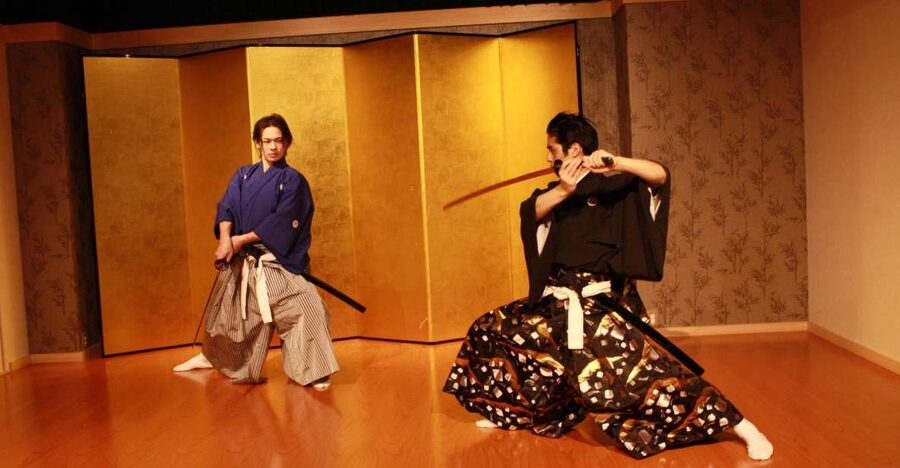
Kenbu, often written as Kembu, is a traditional Japanese sword dance built around the movements, poems, and values associated with the samurai. At the Samurai Kenbu Theater, the sword is not simply a weapon for a fight scene. It represents duty, discipline, readiness, and the serious responsibility of carrying it.
That distinction matters. If you arrive expecting a theatrical sword battle with constant clashes, you may find the performance quieter and more formal than expected. I think the restraint is part of its appeal. The performers make the sword look almost weightless, then a brief practice session shows you how much control even a simple movement requires.
The program looks back more than 700 years to Japan’s feudal period. It also covers samurai culture from the 12th through the 19th centuries, giving the hour a useful sense of time and change. The show is not a full history course, but it gives you a clearer frame for understanding the clothing, gestures, poems, and ceremonies on stage.
Other swordplay and stealth sessions in Kyoto:
- Kyoto Samurai Experience
★ 5.0 · 1,294 reviews - Kyoto: Kendo and Samurai Experience with Uniform and Gear
★ 4.9 · 815 reviews - Kyoto: Samurai Sword Class by Experts in Traditional Arts
★ 4.9 · 657 reviews
Arriving at the Samurai Kenbu Theater
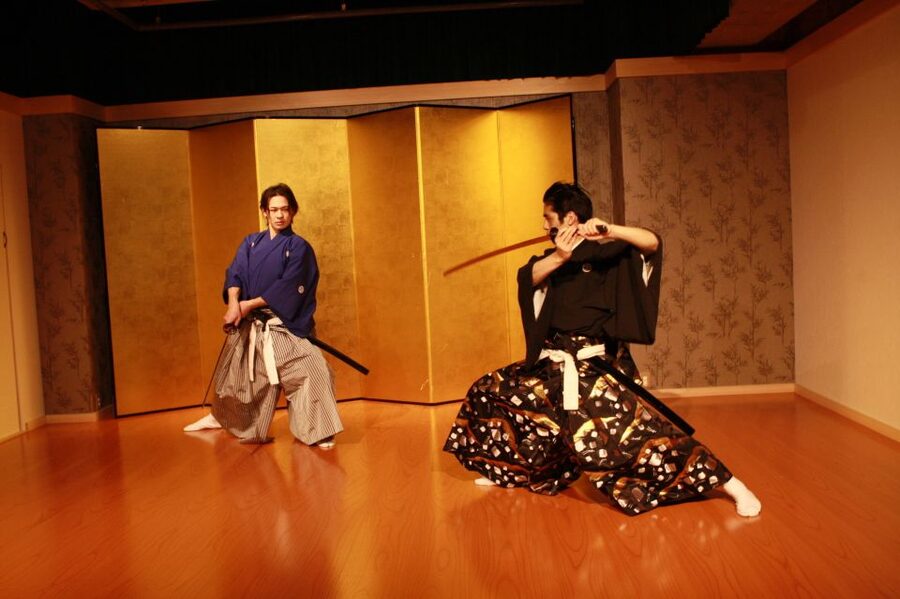
You meet at the Samurai Kenbu Theater in Kyoto. From Sanjo Keihan Subway Station, the walk takes about four minutes. From Sanjo Station on the Keihan Main Line, allow about five minutes.
I would arrive 5 to 15 minutes early. You will remove your shoes before entering, following the local custom, so wear socks you are comfortable walking in. There is no waiting room, and people without appointments cannot wait inside. Large suitcases and travel bags also have no place in the theater, so this is best scheduled between sightseeing stops rather than immediately after checking out of a hotel.
The setting is intentionally intimate rather than grand. One older account describes a very small audience, and the experience can feel close to the performers when attendance is light. That works in the show’s favor: you can focus on the details of posture, footwork, and facial expression instead of watching a distant stage.
The activity is wheelchair accessible. Still, because you remove your shoes and seating arrangements can vary, anyone with particular mobility needs should confirm the details when booking.
The English introduction sets the tone
The performance begins with an introduction to Kenbu, its history, and its techniques. The instructor explains the role of the samurai sword and the ideas connected with Bushido, the code of conduct often linked with samurai culture.
This opening helps you understand what follows. Without it, the sweeping gestures and sudden pauses might look like a stylized martial arts routine. With the explanation, you can read the sword dance as a form of storytelling. The performers are showing the mood and meaning of a scene, not simply demonstrating how quickly they can swing a blade.
The language is English and Japanese. The English narration is a major reason this works for international visitors, especially when you are new to Kenbu. Keep in mind that one part of the experience can be hard to understand, depending on the speaker and your comfort with spoken English. The visual performance carries much of the meaning, but this is not the ideal pick if you need every spoken detail to be perfectly clear.
Traditional and modern Kenbu performances
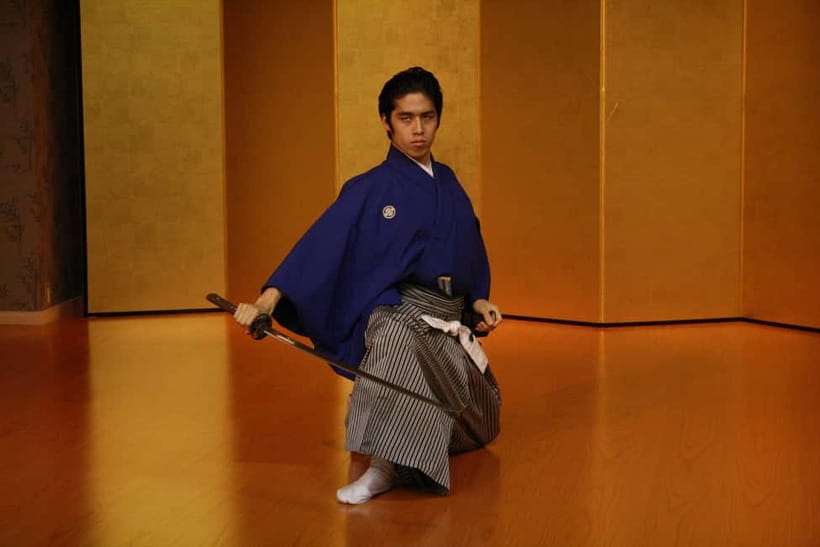
The main show presents several short Kenbu demonstrations. Each one comes with a brief explanation of the samurai culture or story behind it. You see both traditional-style and new-style Kenbu, so the program is not limited to one fixed form.
The performers swing their swords through carefully arranged movements that follow poems recited by samurai before going into battle. The result is graceful, serious, and sometimes forceful. A gesture may suggest a warrior preparing himself, facing danger, or accepting the weight of his duty. The performance mixes beauty with the knowledge that these dances are tied to stories of violence and death.
A folding fan is also part of the art. It may look like a small detail, but it gives the performers another way to express rank, emotion, or action. If you have seen Japanese theater or other traditional performance forms, you may recognize the importance of deliberate gestures and strong visual poses. If you have not, the instructor’s explanation makes the symbols easier to follow.
The show can include humor as well as solemn moments. One performance described in the supplied material used a little comic business around the character who was supposed to die. That kind of touch keeps the hour from feeling stiff or overly formal.
Same base, a different sort of day:
- PERFECT KYOTO 1-Day Bus Tour
★ 5.0 · 13,518 reviews - Kyoto: Fushimi Inari, Kinkakuji, Bamboo Grove 1 Day Bus Tour
★ 4.8 · 4,316 reviews - Kyoto: Tea Ceremony in a Traditional Tea House in Kiyomizu
★ 4.9 · 3,519 reviews - Kyoto Geisha Walking Tour: Gion District & Hidden Gems
★ 4.7 · 3,273 reviews
Why the sword movements are worth watching
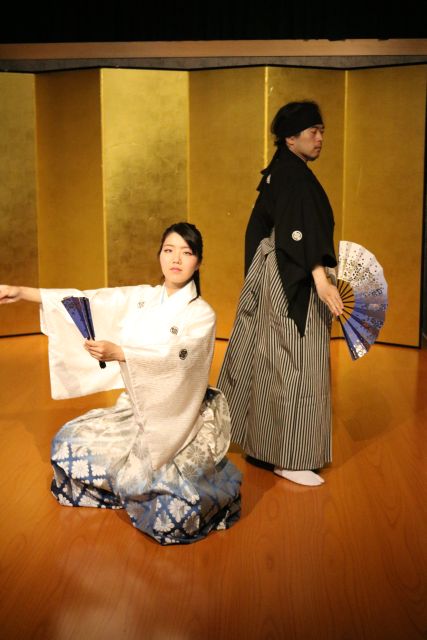
The best part of Kenbu is the contrast between apparent ease and actual control. The performers make a complicated sequence look smooth. A sword is drawn, raised, turned, and returned with precision, while the body follows the rhythm of the poem.
You can appreciate the skill even if you know nothing about Japanese martial traditions. Watch the transitions rather than waiting for a fight. The interest lies in how the performers shift from stillness to motion, how they hold a pose, and how the sword extends the line of the body.
The show also asks you to think about the samurai sword in a more serious way. The sword was not treated as an ordinary prop or accessory. Carrying one brought responsibility, and Kenbu preserves some of the ceremony and discipline connected with that responsibility.
That is why I would describe this as cultural theater with martial elements, not a combat show. One audience member expected a fight demonstration and found the stage smaller and the action more elegant than anticipated. If you want spectacular battles, this may feel restrained. If you want a compact introduction to samurai ideals and performance, the format works well.
The short sword lesson after the show
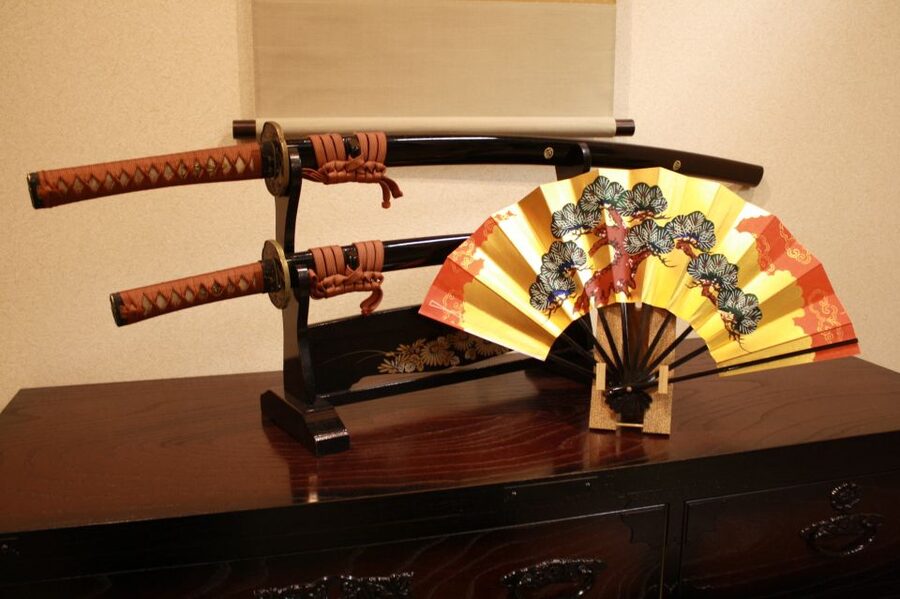
After the performance, the atmosphere becomes more relaxed. The instructors return for the mini-experience, and you get a chance to handle a sword under their direction.
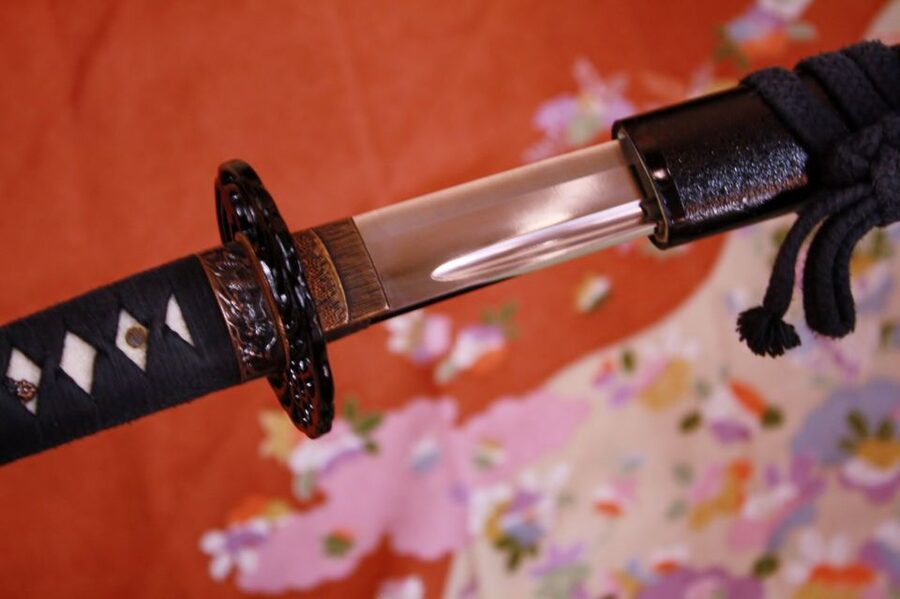
You begin by picking up the sword and slowly drawing it from its scabbard. At the instructor’s command, you practice a gentle swing, then add more force as directed. The lesson is short, so do not expect formal sword training. It is a controlled introduction that lets you feel the balance and responsibility of the object you just watched professionals use.
This is where the show becomes memorable for many people. From your seat, a katana can look effortless in the hands of a master swordsman. Once you try holding and moving one, even basic positions require attention. The instructors use humor to put people at ease, which is helpful if you are nervous about making a mistake in front of the group.
If time allows, you may also learn how to use the folding fan. The fan lesson is not guaranteed as a major part of the program, but it adds another glimpse into Kenbu’s expressive style.
The activity is suitable for families, and one family found it worked even with a three-year-old. Still, very young children may get more from the visual performance and photographs than from following the sword instructions. Teenagers and adults who enjoy history, Japanese culture, or samurai films are likely to appreciate the hands-on portion most.
Photographing the samurai after the performance
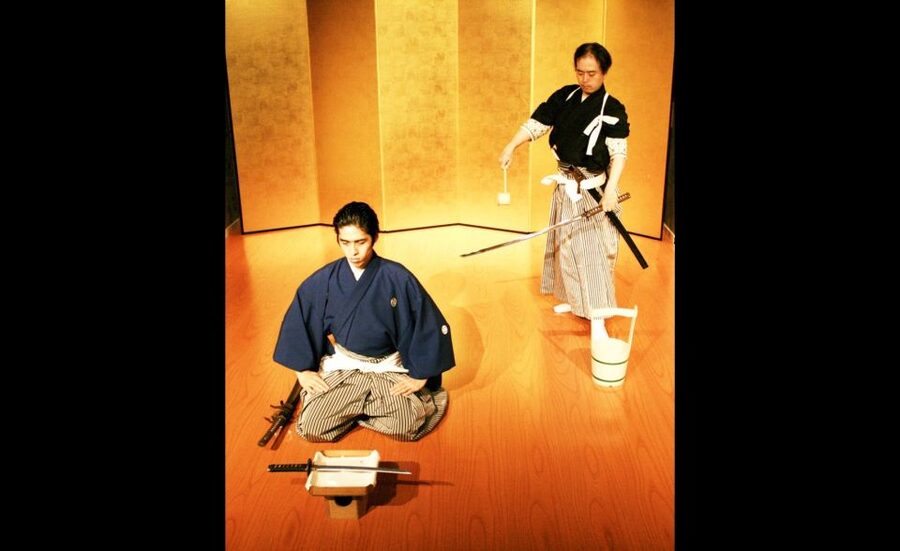
You cannot take photographs or record video during the show. This rule protects the performers’ concentration and keeps screens from distracting the audience, but it is worth knowing before you arrive. Put your camera away and watch the performance itself.
Afterward, you have time to take pictures with the performers. The staff can help capture photographs, and you may pose while holding a sword. This is a useful final touch, especially for families and children who want a souvenir beyond the memory of the show.
The photographs are not a substitute for filming the performance, of course. If recording is important to you, plan on leaving your camera packed away. The post-show photo session is the proper time to capture the costumes, swords, and your own brief samurai moment.
Is one hour enough for $32?
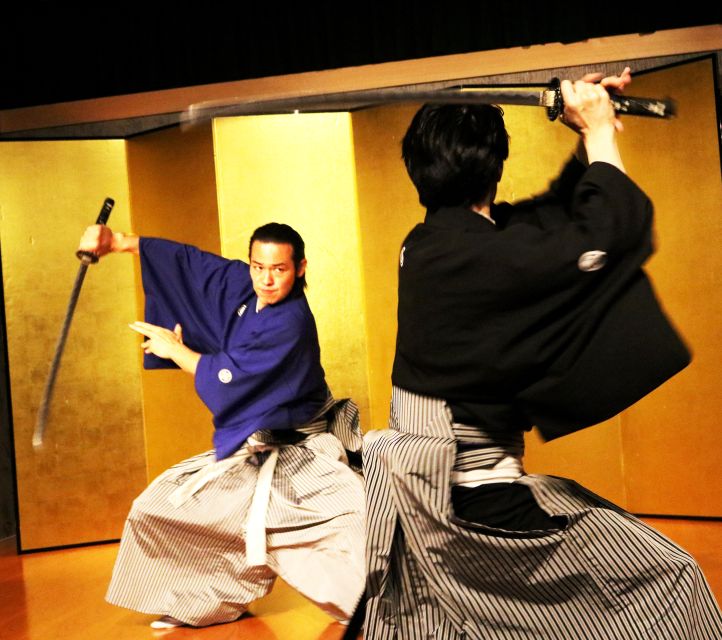
The price is $32 per person for a one-hour experience that includes theater admission, the Kenbu show, and the short sword lesson. Food, drinks, and transportation are not included.
I consider that reasonable value if you want both a performance and a small interactive activity. You are paying for the skill of the performers, the English explanation, the cultural context, and the chance to handle a sword rather than simply watch from a seat. The short duration also makes it easy to fit before dinner or between other Kyoto plans.
The value is weaker if you are buying a ticket only for sword fighting. Much of the hour is made up of demonstrations, narration, and traditional storytelling. The sword practice is brief, not a full class, and the stage presentation is elegant rather than explosive.
The one-hour length is mostly a strength. Several people found the time passed quickly, while one felt the program ran about 5 to 10 minutes longer than necessary. Your impression will depend on how much you enjoy the explanations and slower ceremonial movements.
Free cancellation is available up to 24 hours before the activity, and you can reserve now and pay later. You still need to manage any cancellation yourself through GetYourGuide. Do not arrive under the influence of alcohol, and leave large luggage elsewhere.
Who will enjoy this Kyoto performance?
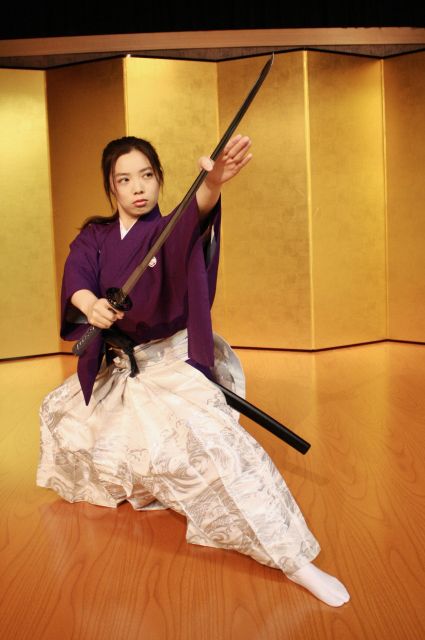
I would choose the Samurai Kenbu Theater for:
- First-time visitors to Japan who want a clear introduction to samurai culture.
- Families looking for a short activity with a visual show and a hands-on finish.
- History fans interested in how traditions and values were carried across centuries.
- Photographers and culture seekers who like a planned photo session after a performance.
- Visitors with limited time who want an organized one-hour activity near central Kyoto.
- Anyone curious about Japanese traditional arts but unsure about attending a longer formal performance.
I would think twice if your main goal is a staged battle, a large theater production, or extended martial arts instruction. The show focuses on grace, storytelling, ceremony, and control. The sword lesson is an enjoyable extra, not the main event.
Practical advice before you book
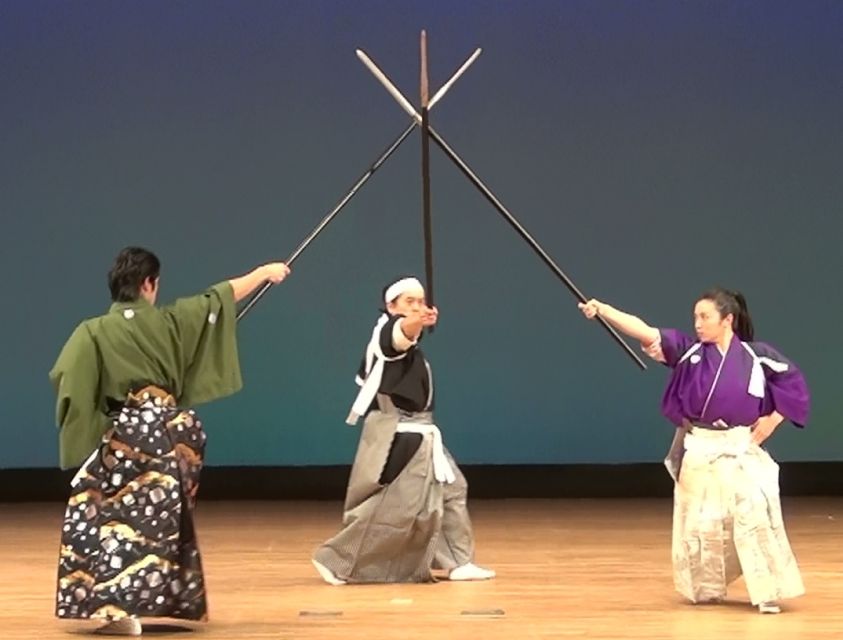
Arrive early enough to find the theater and settle in before the performance begins. The meeting point is central, but one person found the venue a little hard to locate, so do not leave the search until the last minute.
Wear comfortable socks because you remove your shoes. Travel light, since there is no room for large bags. Keep your camera ready for the end, but not during the show.
I would also prepare children by explaining that Kenbu is sword dancing, not a cartoon-style battle. That helps set expectations and lets them notice the poems, fan movements, poses, and stories. Adults should do the same. The show is exciting in a quiet, disciplined way.
Should you book the Samurai Kenbu show?
Book it if you want an approachable look at samurai culture, polished sword dancing, English narration, and a short chance to practice with a katana. The combination of performance and participation gives the $32 price a solid purpose.
Skip it if you need a large stage, frequent fight scenes, or a full sword-fighting lesson. For most visitors, though, this is a thoughtful one-hour Kyoto activity with skilled performers, a friendly finish, and enough history to make the movements mean something.
FAQ
Where does the Samurai Kenbu show take place?
The activity takes place at the Samurai Kenbu Theater in Kyoto, on Honshu, Japan.
How long does the experience last?
The experience lasts one hour.
Is the show available in English?
The activity is offered in English and Japanese. The performance includes English narration explaining Kenbu, samurai culture, and the stories shown on stage.
Can I take photographs during the performance?
No. Photography and video are not allowed during the show. You can take photographs after the performance, including pictures with the performers and swords.
Can I try holding a samurai sword?
Yes. The included short sword lesson lets you hold a sword, draw it from its scabbard, and practice basic swings under the instructor’s direction.
How early should I arrive, and can I bring luggage?
Arrive 5 to 15 minutes before the activity begins. The theater has no room for large luggage or travel bags, and there is no waiting room for people without appointments.
Just added in Kyoto
- Kyoto: Private Photoshoot Service★ 5.0 · 158 reviews
- Kyoto Rickshaw Tour★ 5.0 · 210 reviews
- Izakaya Style Cooking Class★ 5.0 · 219 reviews
- Kyoto: Traditional Concert at Townhouse or Bathhouse★ 4.9 · 224 reviews
- Ninja 2-hour Hands-on Lesson by Japanese master in Kyoto -Medium★ 5.0 · 218 reviews
- Kyoto: Arashiyama Bamboo, Temple, Matcha, Monkeys & secret spots★ 5.0 · 219 reviews
- Samurai Training with Modern day Musashi in Kyoto★ 5.0 · 256 reviews
- Kyoto: Kimono Tea Ceremony with Matcha and Sweet★ 4.9 · 249 reviews
Samurai & Ninja Experiences, compared.
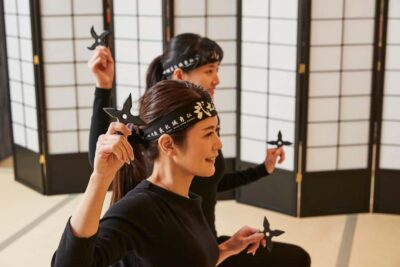
Samurai Ninja Museum Guided tour and Experience
Read our review →
Kendo and Samurai Experience with Uniform and Gear
Read our review →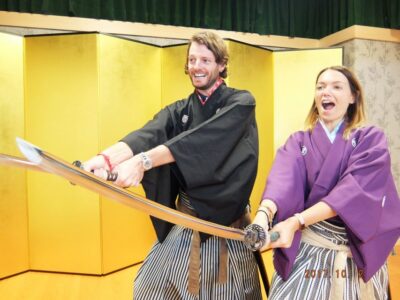
Samurai Sword Class by Experts in Traditional Arts
Read our review →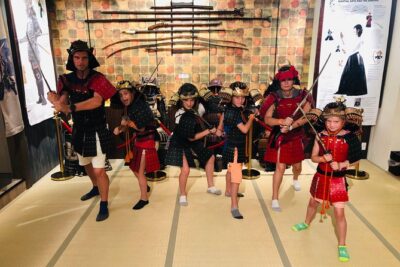
Skip the lines Basic Ticket at SAMURAI NINJA MUSEUM KYOTO
Read our review →
Samurai Sword & Archery Class from Samurai Descendant
Read our review →
Browse the lists this tour appears in