
Reviewed · SAMURAI & NINJA EXPERIENCES
Kyoto: Samurai Sword Class by Experts in Traditional Arts
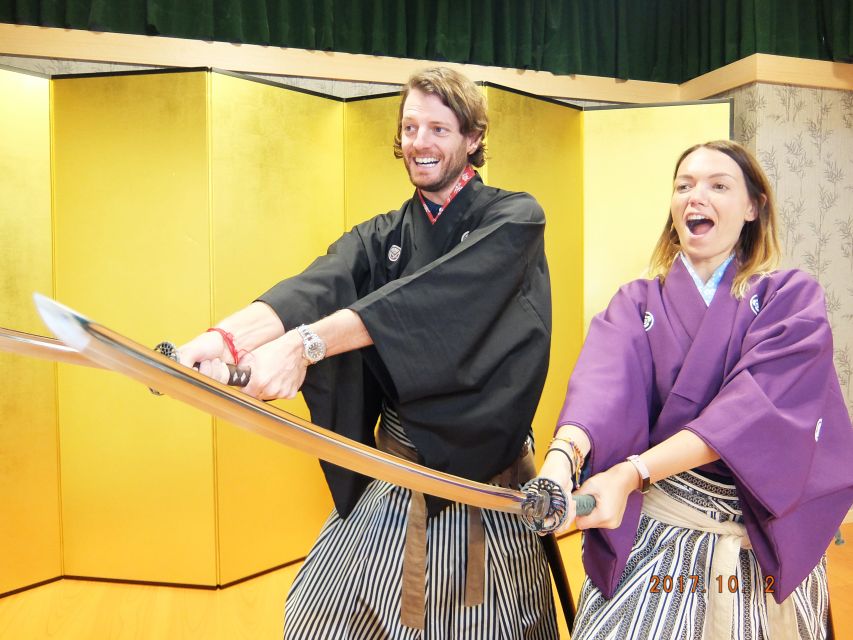
Kyoto’s Samurai Sword Class is less about pretending to be a movie warrior and more about learning the controlled movements of Kenbu, a traditional sword dance. You bow to the sword, practice drawing and returning it to its scabbard, and learn stylized strikes under an instructor’s watch. I like the blend of hands-on practice and cultural context, plus the costume photos give you a keepsake beyond another temple snapshot.
I also like the small group size, capped at 10, and the instructors’ friendly teaching style. Guides including Kazu, Hoga, Kashin, Rui, and Hisyo have been praised for patience, humor, and clear demonstrations. The main drawback is that this is a short introduction, not serious martial-arts training. You will practice set movements, not spar or handle a sharpened weapon.
Key points at a glance
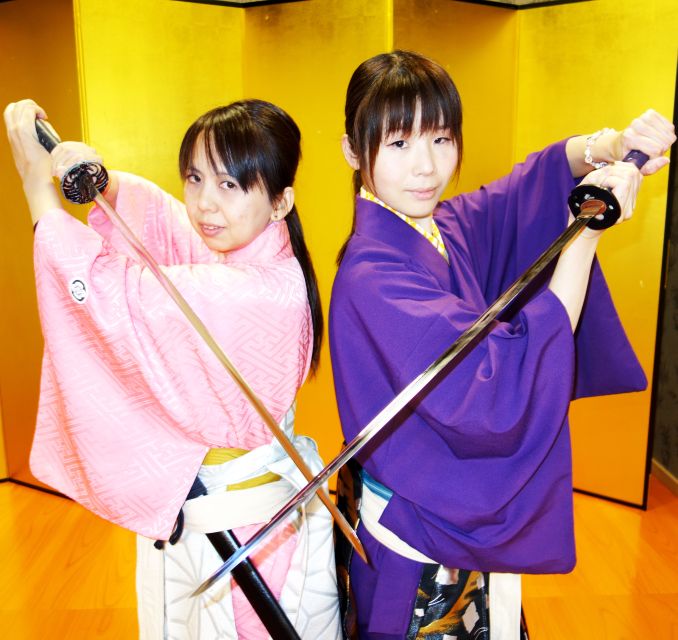
- Kenbu, not wild sword swinging: Learn formal bowing, drawing, striking, and choreographed movements.
- Traditional clothing included: Choose a samurai-style outfit, then pose for an organized photo session.
- A performance adds context: Depending on your option, watch a 10-minute or 30-minute Kenbu performance with commentary.
- Small classes help: Groups are limited to 10, allowing instructors to correct basic movements.
- A useful Kyoto souvenir: You receive a completion certificate and a traditional Japanese tenugui towel.
- Plan for movement: Wear exercise-friendly clothes, avoid large bags, and do not arrive expecting to watch without participating.
What this Kyoto samurai class really teaches
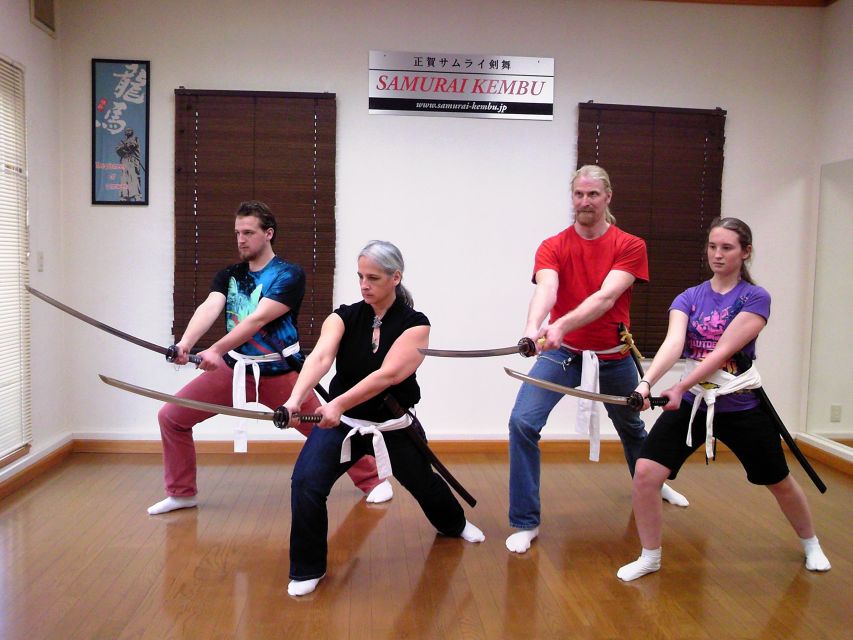
The word samurai can suggest armor, battlefield combat, and theatrical sword fights. This class offers something more measured. It introduces the etiquette and physical vocabulary of samurai sword performance, known as Kenbu.
You learn how to bow before beginning, how to hold the sword, how to draw it with control, and how to return it to its protective scabbard. The strikes are stylized rather than competitive. You are building a short sequence of movements, paying attention to posture, timing, and respect.
That difference matters. If you want a practical self-defense lesson or a full course in Japanese swordsmanship, this will feel too light. If you want a clear, active introduction to an old Japanese performance tradition, the format works well.
A short introductory film, about four minutes, gives you the basic setting before you begin. It helps frame the activity so the sword work does not feel like an isolated costume exercise. You get a simple explanation of the samurai warrior class and the tradition being presented.
Other swordplay and stealth sessions in Kyoto:
- Kyoto Samurai Experience
★ 5.0 · 1,294 reviews - Kyoto: Kendo and Samurai Experience with Uniform and Gear
★ 4.9 · 815 reviews - Skip the lines Basic Ticket at SAMURAI NINJA MUSEUM KYOTO
★ 4.5 · 632 reviews
Meeting the instructor at Samurai Kembu Theater
The class takes place at Samurai Kembu Theater, at 35-7 Sanchome, Higashi-iru, Sanjo-hanamikoji, Higashiyama-ku, in the basement of the Gozan Building. The location is in Kyoto’s Higashiyama district, an area many people already visit for traditional streets and cultural sights.
You should arrive ready to move. The room has no waiting area, and people without appointments cannot wait inside. Large luggage and travel bags are not allowed, so this is best treated as a planned stop rather than something to squeeze in while carrying all your shopping.
The class is offered in English and Japanese. The English-speaking instruction is especially useful because the lesson depends on small details, such as when to bow, how to position the hands, and how to move the sword safely. Several instructors are praised for making corrections without turning the class stiff or intimidating.
Kazu is frequently singled out for patience and humor. Hoga has been appreciated for his skill and clear instruction, while Kashin has been described as humble and careful with beginners. Rui and Hisyo have also led sessions that balance explanation with entertainment. Your instructor depends on the schedule, but the teaching style is designed for people with no previous experience.
Choosing your samurai costume
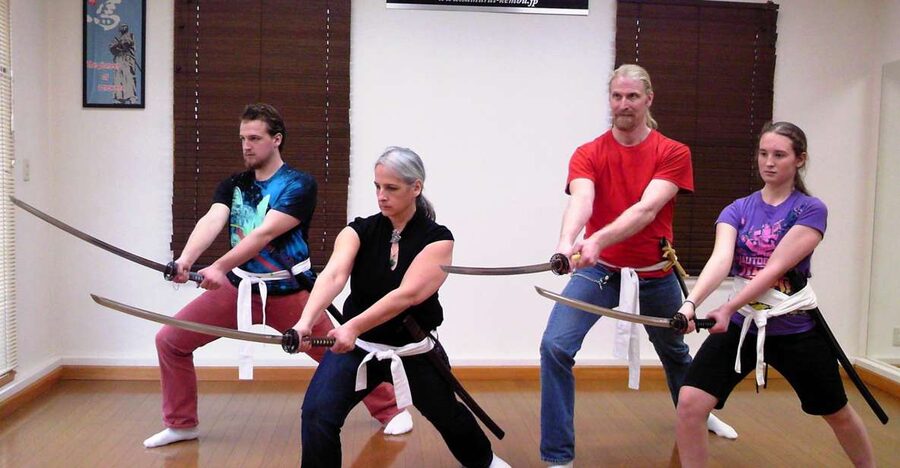
One of the class’s most enjoyable turns is the costume change. You select traditional clothing before taking up the practice sword. The outfit makes the activity feel more like a cultural lesson and less like a quick demonstration for tourists.
You do not need to bring special clothing, but choose what you wear to the appointment with care. A single hoodie or tights are not suitable for changing into the costume. Clothes that let you bend, step, and rotate comfortably are the practical choice.
The costume is also important for the photos later. Instructors and staff arrange a short shoot so you can pose with the sword in the traditional clothing. The organized approach is helpful because you do not have to ask a stranger to take rushed pictures or spend the whole session trying to manage your phone.
Some participants have also appreciated receiving small traditional items, including a tenugui towel, and in some sessions socks or other costume-related keepsakes. The confirmed included item is the tenugui towel, so think of it as a useful souvenir rather than expecting a full costume to take home.
Learning to bow, draw, and strike
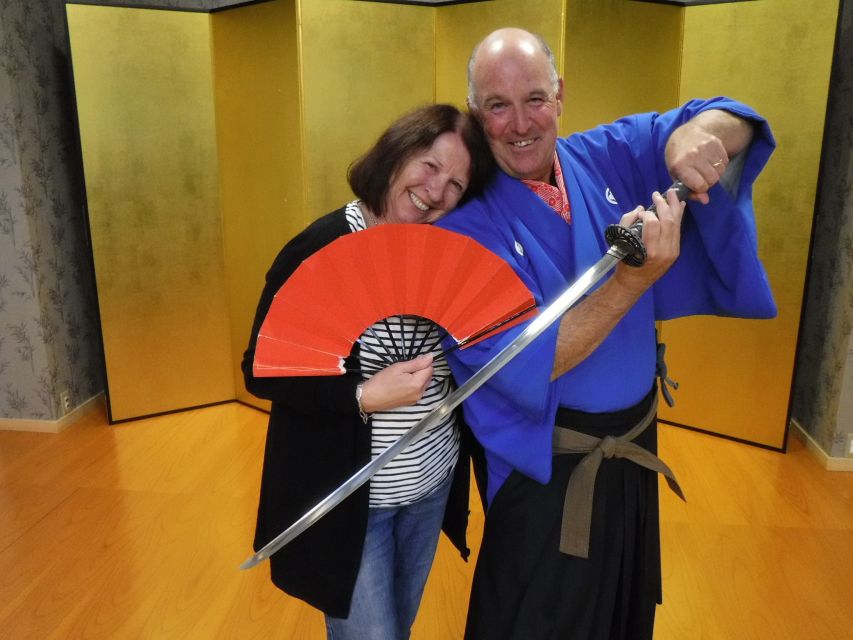
The practical lesson begins with respect. You learn how to bow before the sword training starts and how to show respect to an opponent. These gestures give the class its tone. The sword is presented as an object that demands control and attention, not as a prop for random swinging.
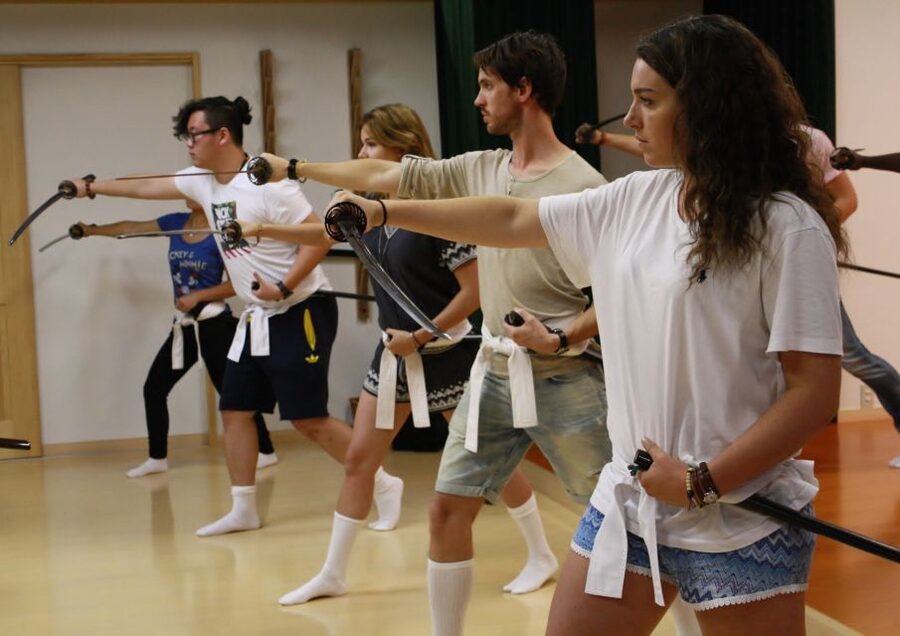
Next comes the draw. You practice removing the sword from its scabbard in a deliberate motion, then returning it safely. After that, the instructor introduces basic strikes and stylized positions.
The pace is beginner-friendly, but you still need to pay attention. Several movements ask you to coordinate your feet, hands, posture, and gaze at the same time. That is why the class can feel more challenging than it first appears. You are not simply copying a dramatic pose. You are trying to remember a sequence while keeping the movement clean.
The instructor demonstrates each step, then gives you time to repeat it. In a full group, the level of individual correction naturally depends on how many people attend. With a quieter time slot, you might receive unusually close instruction. One participant had a one-to-one lesson, while another small group praised the individual attention.
There is no observation-only option. Everyone booked for the session is expected to take part, which keeps the class active but is worth knowing if someone in your party only wants to watch.
Same base, a different sort of day:
- PERFECT KYOTO 1-Day Bus Tour
★ 5.0 · 13,518 reviews - Kyoto: Fushimi Inari, Kinkakuji, Bamboo Grove 1 Day Bus Tour
★ 4.8 · 4,316 reviews - Kyoto: Tea Ceremony in a Traditional Tea House in Kiyomizu
★ 4.9 · 3,519 reviews - Kyoto Geisha Walking Tour: Gion District & Hidden Gems
★ 4.7 · 3,273 reviews
The photo session, and why it works
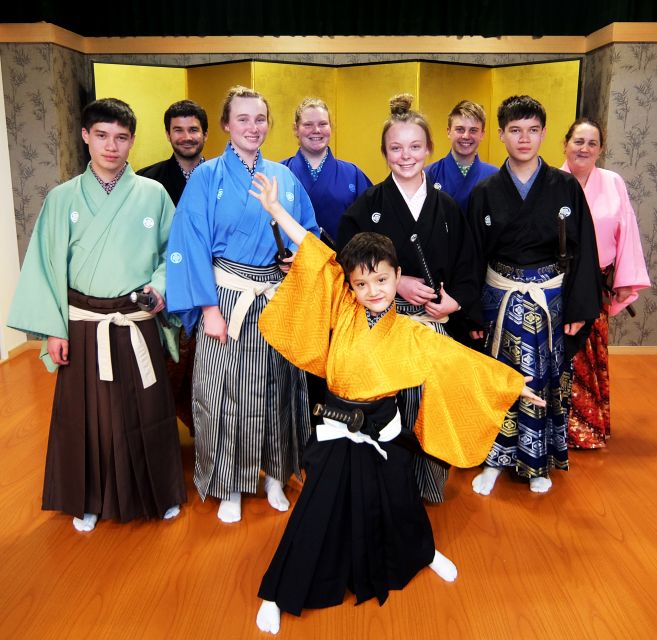
The photo session is not an afterthought. It gives you a pause between learning the movements and watching the performance. You get time to pose in the costume with the sword, and staff help make sure each participant has photos or video.
This is one of the strongest reasons to choose the class over a simple stage show. You are not only watching a specialist perform. You are given a safe, guided chance to feel the weight, posture, and form of the tradition yourself.
Keep your expectations sensible. The photo session is short, not a full professional portrait appointment. The value comes from having a few well-organized images of the experience, not from receiving a large edited photo package.
The costume also helps children and teenagers connect with the lesson. Families with children around school age have found the activity enjoyable, though the class is taught alongside adults. For children between 5 and 10, prior martial-arts experience or some experience learning a structured activity is considered desirable. Children under 4 are not accepted.
The Kenbu performance puts the lesson in context
Depending on the option you book, you watch either a 10-minute or 30-minute performance. It may take place before the lesson or at the end. A sword-dance instructor provides commentary, explaining what you are seeing and how the movements relate to the tradition.
This is often the most polished part of the visit. The masters move with control, precision, and a sense of drama that beginners cannot reproduce in a first class. The performance also makes an important point: Kenbu is an art form, not simply a display of fighting techniques.
You may also see fans used alongside the sword tradition. The movements can shift from sharp strikes to quieter, more formal gestures. This contrast helps explain why the class appeals to people who are not normally interested in swords. The performance shows balance, timing, and expression as much as force.
The 30-minute option gives you more time with the performance and is a sensible choice if the artistic side interests you most. The 10-minute version suits a tighter Kyoto schedule and still gives you a clear sample of the craft.
How authentic is the experience?
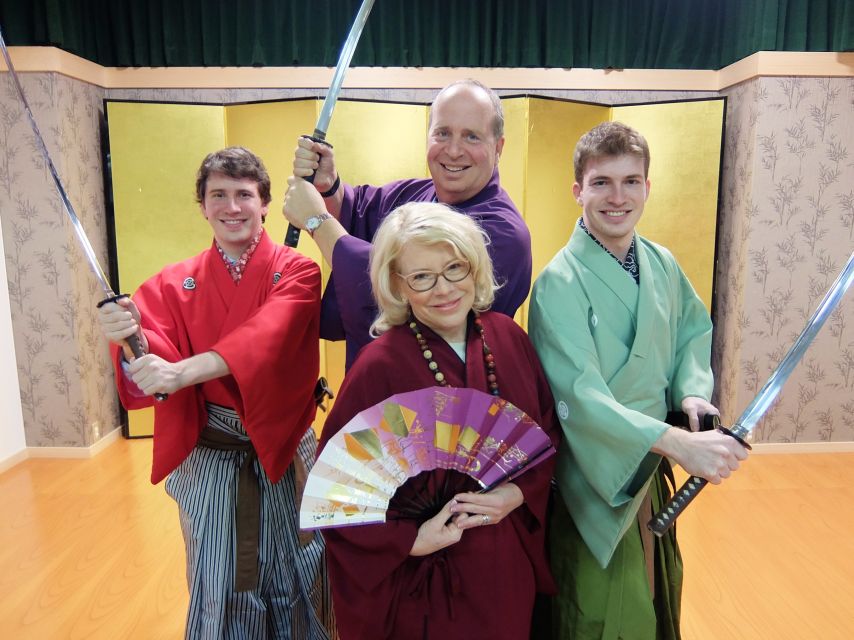
This is a staged cultural activity, but that does not make it empty. The class is presented by people trained in Kenbu, and the teaching focuses on etiquette, controlled movement, costume, and the meaning of the performance.
At the same time, you should not confuse it with historical combat training. The sword used for the lesson is handled under strict instruction, and the movements are choreographed. There is no sparring, no competition, and no claim that you will become a samurai in 90 minutes.
I find that honesty useful. The class succeeds because it gives you a manageable way to engage with a traditional art. You learn just enough to understand the performance better, and you leave with a sense of how much discipline sits behind movements that look simple from the audience.
The instructors also add human warmth. Humor is part of the lesson, which helps beginners relax when their arms, feet, and memory do not cooperate. The combination of seriousness and lightness keeps the class from becoming either a dry lecture or a shallow photo opportunity.
Is $64 a fair price?
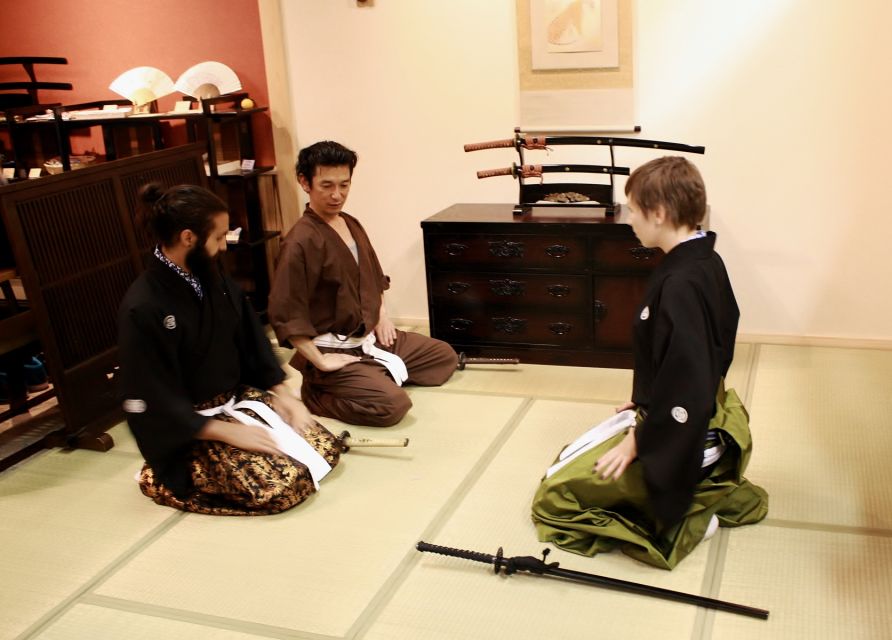
At $64 per person, the price is reasonable for a 90-minute to two-hour experience that includes instruction, costume use, a photo session, a tenugui towel, a completion certificate, and a performance depending on the option selected.
The strongest value comes from the number of different elements packed into the session. You receive a short cultural introduction, hands-on instruction, costume time, photos, and live entertainment. A simple stage show might offer a better performance, while a martial-arts school might offer more serious training. This class combines both at an introductory level.
The certificate is a pleasant finishing touch rather than the main reason to book. The real value is the chance to connect the performance you see with movements you have tried yourself.
Food, drinks, and transportation are not included. That is not a major concern because the class is in central Kyoto, but you should allow time to reach the theater and arrange your own way there. The meeting point is specific, so check the building and basement location before setting out.
Who will enjoy this most?
I would recommend the class to first-time visitors who want an activity with more participation than a museum visit. It suits couples, families, teenagers, solo visitors, and anyone curious about Japanese performing arts.
It is especially good for:
- Families with children old enough to follow adult-level instructions
- People who want memorable Kyoto photos without booking a separate photo experience
- Visitors interested in traditional clothing and performance
- Anyone curious about samurai culture but unsure about committing to a martial-arts course
- People with a spare half-day or a flexible 90-minute block
It may not suit you if you dislike costume changes, physical participation, or structured group instruction. You also need to follow safety directions closely. The venue does not allow weapons or sharp objects from outside, smoking, food, alcohol, drugs, fireworks, explosive substances, pets, or large bags.
The activity is not designed for spectators. If one member of your party wants only to watch, contact the provider in advance about chaperone arrangements. The number of people admitted cannot exceed the number booked.
Timing, booking, and useful preparation
The duration ranges from 90 minutes to two hours, depending on the option and performance length. Check the available starting times before booking, especially if you are fitting the class between temple visits or dinner plans.
You can cancel up to 24 hours in advance for a full refund, and the reserve-now, pay-later option keeps your schedule flexible. If you need to cancel, you must do it yourself through GetYourGuide.
Bring as little as possible. There is no room for large luggage, and the venue is not a place to wait around before the appointment. Wear comfortable clothes that allow movement and can be changed easily.
If the participant’s name differs from the reservation, notify the provider in advance. The same applies if you need an extra chaperone. Arrive sober and ready to follow instructions. That sounds obvious, but it matters when you are handling a sword, even in a carefully controlled class.
Should you book the Kyoto Samurai Sword Class?
Book it if you want a friendly, compact introduction to Kenbu with real participation. The class gives you a useful balance: enough explanation to add meaning, enough practice to make the performance more interesting, and enough costume and photo time to create a lasting memory.
I would choose the longer performance option if you care most about the art. I would choose the shorter option if you are building a packed Kyoto day and mainly want the lesson and photos.
Skip it if you are seeking advanced sword training, combat practice, or a quiet historical talk. For most visitors, though, the $64 cost is justified by the mix of instruction, costume, live performance, certificate, and personal attention in a group of no more than 10.
FAQ
Where does the samurai class take place?
It takes place at Samurai Kembu Theater, Kyoto dojo, at 35-7 Sanchome, Higashi-iru, Sanjo-hanamikoji, Higashiyama-ku, in the B1F Gozan Building.
How long does the activity last?
The experience lasts from 90 minutes to two hours. The exact length depends on the option selected and the performance included.
Which languages are available?
Instruction is available in English and Japanese.
Is the class suitable for children?
Children under 4 are not suitable for the activity. Children between 5 and 10 may participate, but prior martial-arts experience or experience learning a structured activity is desirable because the class is taught alongside adults.
Do I have to participate, or can I only watch?
Observation only is not allowed. Participants are expected to take part in the lesson.
What is included in the price?
The experience includes an English-speaking instructor, the photo session, a traditional Japanese tenugui towel, and a completion certificate. Food, drinks, and hotel transfers are not included.
Can I cancel the booking?
You can cancel up to 24 hours before the activity for a full refund. Cancellations must be made by you through GetYourGuide.
Just added in Kyoto
- Kyoto: Private Photoshoot Service★ 5.0 · 158 reviews
- Kyoto Rickshaw Tour★ 5.0 · 210 reviews
- Izakaya Style Cooking Class★ 5.0 · 219 reviews
- Kyoto: Traditional Concert at Townhouse or Bathhouse★ 4.9 · 224 reviews
- Ninja 2-hour Hands-on Lesson by Japanese master in Kyoto -Medium★ 5.0 · 218 reviews
- Kyoto: Arashiyama Bamboo, Temple, Matcha, Monkeys & secret spots★ 5.0 · 219 reviews
- Kyoto: Gion & Pontocho Food Tour with 13 Dishes★ 4.9 · 235 reviews
- Kyoto: Afternoon Japanese Izakaya Cooking Class★ 4.9 · 241 reviews
Samurai & Ninja Experiences, compared.
Samurai Ninja Museum Guided tour and Experience
Read our review →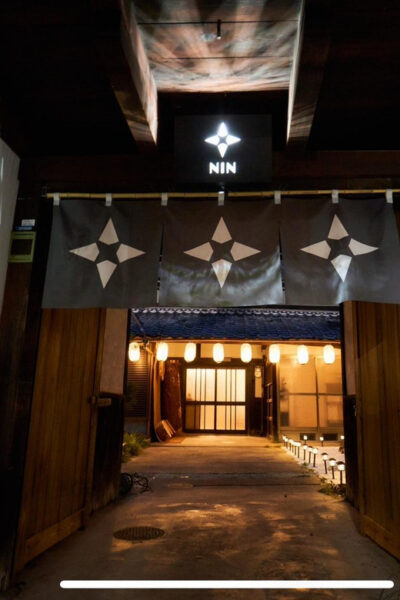
Kendo and Samurai Experience with Uniform and Gear
Read our review →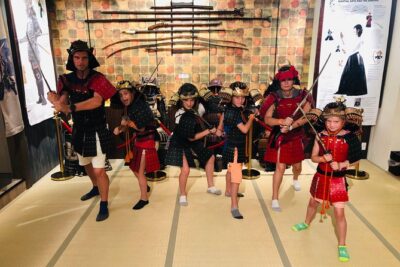
Skip the lines Basic Ticket at SAMURAI NINJA MUSEUM KYOTO
Read our review →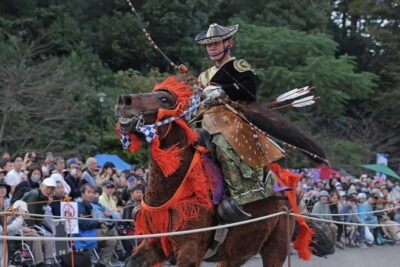
Samurai Sword & Archery Class from Samurai Descendant
Read our review →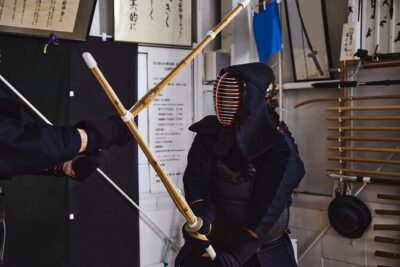
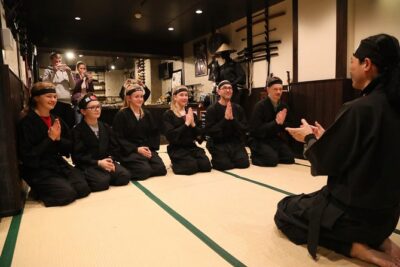
Ninja 1-hour Hands-on Lesson by Japanese master in Kyoto -Entry
Read our review →Browse the lists this tour appears in