
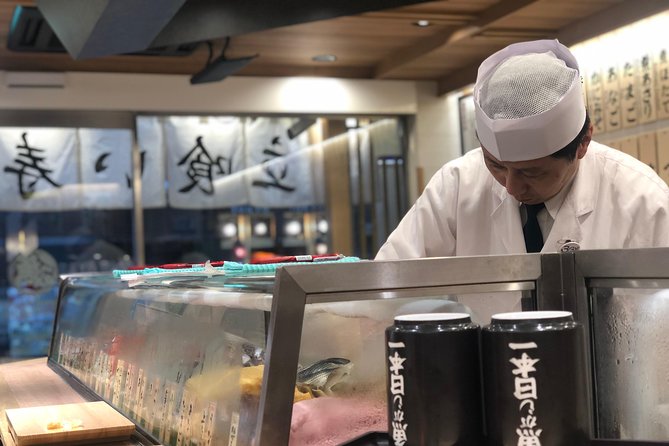
Reviewed · FOOD TOURS
Best of Shibuya Food Tour
Shibuya looks flashy from the crossing, but the better food often hides one street back. This three-hour evening walk takes you from Hachiko and Center-gai into small eateries, food halls, and side streets for sushi, ramen, yakitori, regional dishes, dessert, and one drink. The food variety and the local guidance are the big draws.
I like that you get more than a parade of famous landmarks. Your guide explains Japanese customs, points out places you could easily miss, and helps with ordering and food etiquette. The generous portions are another plus, especially if you arrive hungry. The main caution is the price: at $217 per person, this is expensive if your group is mainly paying for the food.
Key points to know before booking
- Five food stops: Expect several Japanese dishes, dessert, and one included drink during the roughly three-hour route.
- Shibuya after dark: The walk begins at Hachiko and explores side streets, Center-gai, Nonbei Yokocho, and local food spots.
- Guides make the difference: Guides including Jacob, Alex, Saika, Jane, Melissa, and Sandra have been praised for food advice, cultural context, and family-friendly help.
- Come very hungry: Portions can be large, with sushi, ramen, skewers, gyoza, wings, or other dishes depending on the evening.
- Small group format: The maximum is 10 people, which helps the guide manage restaurant visits and dietary needs.
- Some flexibility is essential: Restaurants and dishes can change because of schedules, holidays, weather, or other unexpected problems.
Starting beneath the Hachiko statue
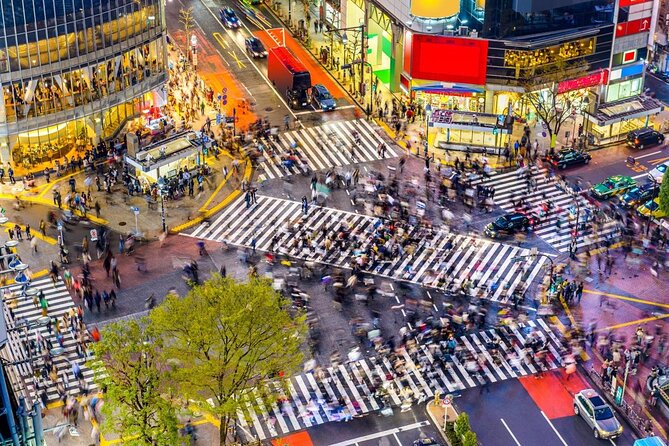
Meet at 4:00 p.m. in front of the Hachiko mural near Hachiko Exit. The exact landmark is the Hachiko Family area at 2 Chome-1 Dogenzaka. This is a sensible starting point, but it is also the tour’s trickiest detail.
Hachiko Square is crowded, and a taxi driver may not recognize a wall mural as a meeting point. Give yourself extra time and use the written meeting instructions carefully. Do not arrive late. The group moves between food stops, and a late arrival may mean you cannot catch up.
The opening moments introduce Hachiko, Shibuya, and a few Japanese customs. You also pass the Myth of Tomorrow mural and Shibuya 109 before settling into the food-focused part of the walk. These early stops are brief, so do not book this mainly as a sightseeing tour. The food and neighborhood commentary are the main event.
Other food tours in Tokyo people book:
- Tokyo: Shinjuku Food Tour (13 Dishes at 4 Local Eateries)
★ 5.0 · 6,603 reviews - Tokyo: Shinjuku Food Tour (15 Dishes and 4 Eateries)
★ 4.9 · 2,033 reviews - Best of Shinjuku: Izakaya Food Tour (4 Stops, 14+ Tastings)
★ 5.0 · 1,863 reviews
From Center-gai to Shibuya Crossing
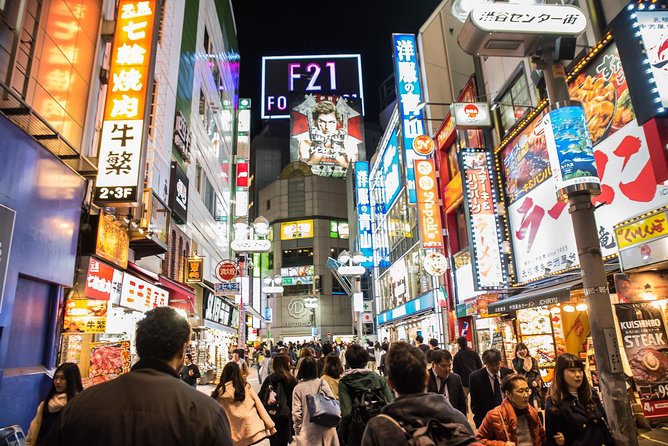
Center-gai is where Shibuya’s big-city energy comes into focus. Bright signs, packed lanes, arcades, shops, and restaurants make this a fun place to learn how the district works. Your guide can help you read the area beyond the famous crossing and point out entrances and streets that are easy to pass without noticing.
Shibuya Crossing itself gets only a short stop on the published route. That is enough for orientation and photographs, but not enough for a long viewing session. If you want a particular crossing photo, arrive early or return another day.
The useful part is the contrast. You see the Shibuya image that most visitors know, then turn into quieter streets for food. That change gives the tour its shape. You are not simply eating in a restaurant for three hours. You are using food to read the neighborhood.
Five food stops, with dishes that can change
The route includes five food stops, but the exact restaurants and menu can change. Restaurant schedules, public holidays, weather, and other problems may require substitutions. That flexibility is normal for a walking food tour, but it means you should not book with one exact dish as your only goal.
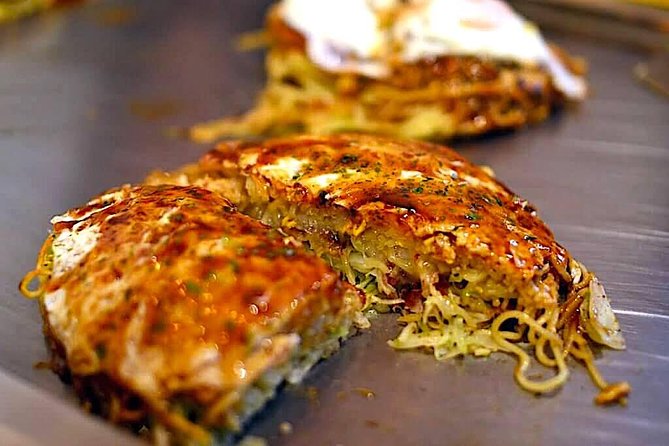
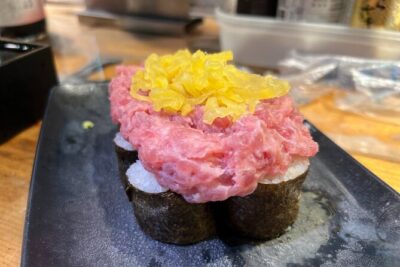
The foods may include Hiroshima-style okonomiyaki, several kinds of sushi, Wagyu beef yakitori, ramen, gyoza, chicken wings, seasonal dishes, and dessert. One drink is included. The supplied details also indicate that children receive chicken skewers instead of beef.
A typical evening moves through several styles of eating rather than presenting one large meal. You might start with sushi, sample grilled skewers, visit a ramen stop, and finish with something sweet. One detailed account described a very full meal with ramen, eight pieces of nigiri sushi, a vegetable and egg dish with bacon, chicken wings, gyoza, and sliced cucumber. That should tell you to eat lightly beforehand.
Not every stop will feel special to every person. Some people find the food average for the price, and one account described several venues as uninspiring. If you already know Shibuya well and can comfortably choose your own restaurants, you may get better value by eating independently. If you want help finding places and trying several dishes without making decisions, the package becomes more useful.
Sushi, ramen, and the value of a guided meal
The strongest part of this experience is the range. In a single evening, you can compare raw fish, grilled meat, noodles, regional savory food, and sweets. That is hard to organize on your own, especially if you are visiting Japan for the first time and do not read menus with ease.
Ramen seems to be a favorite stop for many people who enjoyed the tour. Your guide may also show you how to season it, which matters because ramen shops often offer condiments and adjustments that are not obvious at first glance. Sushi can be especially useful for a first-night orientation, since a guide can explain what you are eating and help you understand how different styles fit into Japanese dining.
The regional element adds value. Hiroshima-style okonomiyaki is not just another pancake. It gives you a taste of food associated with a particular part of Japan, even while you remain in Tokyo. The same idea applies to the wider mix of foods from across the country.
Still, $217 is a serious price for three hours. The cost covers the guide, five food stops, dessert, and one drink, but it does not cover extra food or drinks, hotel transfers, or transportation. Think of it as a food-and-orientation service, not a cheap dinner. I would consider it worthwhile for a first evening in Tokyo if you value guidance and variety. I would hesitate if your main goal is simply to eat the largest amount for the least money.
More eating your way round Tokyo:
- Tokyo Night Foodie Tour in Shinjuku – Seasonal Sushi, Wagyu Beef
★ 5.0 · 1,161 reviews - Eat and Drink Like a Local: Tokyo Ueno Food Tour-Taverns&Ramen
★ 5.0 · 957 reviews - Tokyo: Shibuya Food Tour (13 dishes and 4 Eateries)
★ 5.0 · 770 reviews - Tsukiji Fish Market: Street Food & Culture Walking Tour
★ 5.0 · 669 reviews
The department store food hall finale
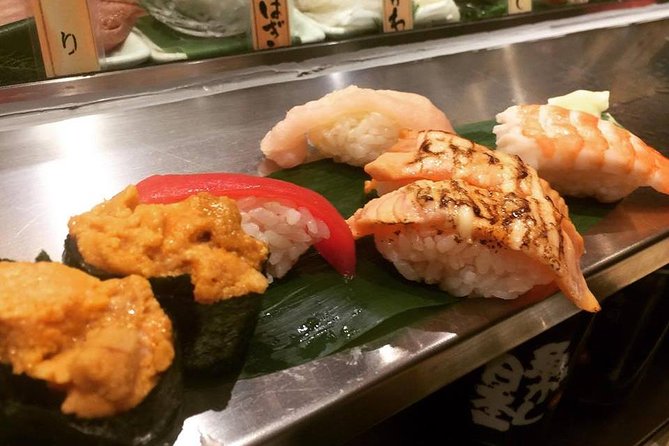
The tour ends at the Tokyu Food Show, in the basement of the Tokyu Department Store beneath the station. This is a useful final stop because Japanese department store food halls, called depachika, offer a different view of local eating.
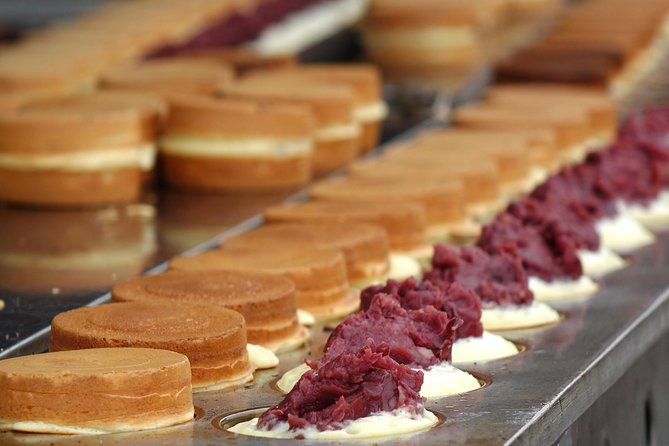
Here you can look at prepared foods, sweets, gifts, and carefully presented dishes from many parts of Japan. You may not receive a full meal here, but the stop helps explain how city residents shop for food and how much care goes into presentation.
The finish is practical too. You end near the station rather than in a distant residential pocket. That makes it easier to continue your evening in Shibuya, return to your hotel, or revisit an area you saw during the walk.
Nonbei Yokocho and the streets most people miss
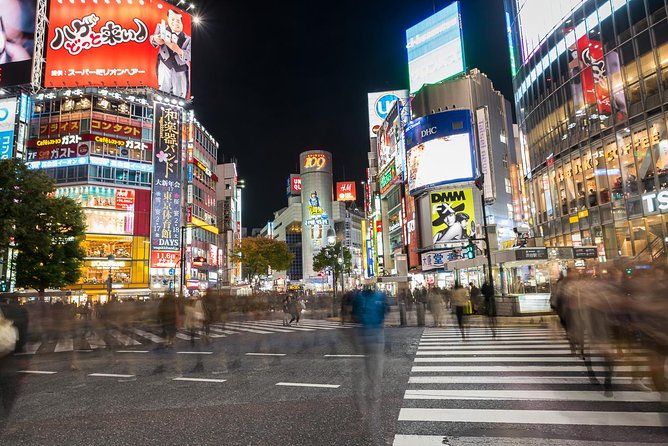
Nonbei Yokocho adds a small-scale contrast to the large signs and broad pedestrian spaces around the crossing. It is one of the places that helps the route feel more local, even though the wider district remains a major entertainment center.
The tour also takes you through back alleys and side-street restaurants favored by people who live and work in Tokyo. This is where a guide earns the fee. Restaurant entrances can be tiny, menus may be limited, and the best choice is not always the place with the biggest sign.
The route is still a walking tour, not a seated meal. You should expect several short walks between stops, crowded streets, stairs or uneven surfaces where present, and time on your feet. A moderate fitness level is recommended. The pace can be adjusted for a slower member of your group, but tell the guide early if someone needs more time.
Guides who add more than food
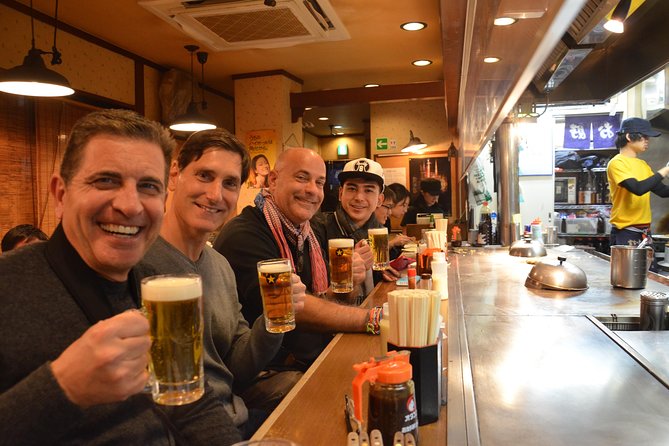
The guides are central to the experience. Names connected with especially strong tours include Jacob, Alex, Saika, Melissa, Jane, Sandra, Claire, Daniel, Vanessa, Ray, Maya, and Yu. You cannot select a particular guide from the information provided, so book for the format rather than for one individual.
The best guide style here is conversational and practical. Jacob has been praised for Japanese language ability, local history, restaurant recommendations, and showing a good view of Shibuya Crossing. Alex is noted for food suggestions and knowledge of the district. Saika has helped arrange non-pork choices, while Sandra has handled family groups and restroom needs along the route.
That range matters. A good guide does not just name the dish. They explain why it is eaten, how the restaurant fits the area, and what you should do with it. For families, the guide can also make the evening easier by keeping an eye on children, arranging suitable food, and managing the pace.
The maximum group size is 10. That is small enough for a more personal feel, but not the same as a private tour. You may share the evening with other couples, families, or solo visitors.
Dietary needs and family planning
The tour is family-friendly, but children must be with an adult. Children aged 10 and above require a copy of passport information. The minimum drinking age is 21, so younger participants will not receive the alcoholic option if the included drink is alcoholic.
Vegetarian and vegan requests are supported, and the tour can work with some other restrictions. The clearest specific substitution is chicken skewers for children instead of beef. If you avoid pork or have a serious allergy, provide the information when booking and repeat it to the guide at the start.
Do not assume every dish will be available in a preferred form. The menu can change, and food stops are shared as part of a group route. If you require strict control over ingredients, a private or specialty dietary tour may suit you better.
What the afternoon timing means
The 4:00 p.m. start gives you a useful transition from late afternoon into evening. You begin with sightseeing and move into dinner hours as Shibuya lights up. That timing also explains the tour’s appeal: you see the district before the meal, then experience its night atmosphere while moving between venues.
The duration is about three hours. The listed stops are short on paper, but the food stops make up the real time. Restaurant seating, walking, ordering, and explanations all take longer than a quick photo stop.
Because food venues can be busy, the route is not perfectly fixed. The guide may substitute a venue or dish. Keep that in mind if you are planning another reservation immediately afterward. You may finish with a full stomach, and the walking time can stretch if the group needs to wait.
A karaoke after-party is available, but it is an optional extra rather than part of the core three-hour food experience. Treat it as a possible way to continue the evening, not as a guaranteed feature of the standard route.
How this tour compares with eating on your own
You can eat well in Shibuya without a guide. The district has ramen shops, sushi counters, department store food halls, izakaya, and casual restaurants at many price levels. Independent eating gives you more control over cost, timing, and menu.
This tour earns its place when you want several kinds of food in one evening and do not want to research every stop. You also gain cultural explanation, help with ordering, and a route through streets you might otherwise ignore. That can be especially useful on your first night in Tokyo.
The weak point is the fixed price. At $217, the food alone does not automatically justify the booking. You are paying for access, organization, conversation, and the chance to avoid trial and error. The value rises if your guide is strong and the stops match your tastes. It falls if you already have a restaurant plan or expect premium dining at every stop.
Who should book the Best of Shibuya Food Tour?
I would book this for a first-time Tokyo visitor who wants a broad food introduction without spending days studying restaurant options. It also suits families, couples, and small groups who prefer a planned evening and appreciate help with local customs.
It is a good choice if you:
- Want sushi, noodles, grilled food, regional dishes, and dessert in one outing
- Prefer small restaurants and side streets to a single formal meal
- Like hearing the story behind what you eat
- Are comfortable walking for about three hours
- Can accept restaurant and menu changes
- Value a guide enough to pay more than you would for an independent dinner
I would skip it if you are a serious budget eater, already know Shibuya, or want a precise tasting menu. The experience can be generous, but the price is high and the quality of individual stops may vary.
Final call: book for guidance, not just dinner
The Best of Shibuya Food Tour gives you a useful first look at Tokyo eating. Its best features are the five-stop variety, the side-street route, the practical help from the guide, and the chance to finish at a department store food hall. You can leave with a full stomach and a better sense of where to eat next.
Book it if you want a friendly food orientation and are willing to pay for convenience. Skip it if you only want the cheapest or most refined meal in Shibuya. If you do book, arrive early at Hachiko, come hungry, state dietary needs clearly, and leave room in your evening for a flexible finish.
FAQ
Where does the Best of Shibuya Food Tour start?
It starts at 4:00 p.m. in front of the Hachiko mural near Hachiko Exit, at Hachiko Family, 2 Chome-1 Dogenzaka, Shibuya, Tokyo.
Where does the tour end?
It ends at the Tokyu Food Show in the basement level beneath the station, at the Tokyu Department Store location on Dogenzaka.
How long does the food tour last?
The walking and food experience lasts about three hours.
What is included in the price?
The price includes a local guide, five food stops, dessert, and one drink. Additional food and drinks, transportation, and hotel pickup or drop-off are not included.
Can children join the tour?
Yes. The tour is family-friendly, but children must be accompanied by an adult. Children receive chicken skewers instead of beef, and passport information is required for children aged 10 and above.
Can the tour accommodate dietary restrictions?
Vegan and vegetarian requests are supported, and non-pork options may be arranged. Restaurants and dishes can change, so provide your dietary information when booking and confirm it with the guide at the start.
Just added in Tokyo
- Nikko: Edo Wonderland Edomura Cultural Theme Park Ticket★ 4.3 · 205 reviews
- 《MEMBERS-ONLY-BAR-HOPPING》Discover Your Special Whiskey in Tokyo!★ 5.0 · 29 reviews
- Japanese Whisky Hunting《HIGH-QUALITY-ONLY》Rare Tasting Class★ 5.0 · 20 reviews
- Luxury Tokyo Sake, Cocktail, Whisky and Pairing Tour★ 5.0 · 18 reviews
- Wagyu & Sake Pairing in Shinjuku – Steak, Shabu-Shabu & More★ 5.0 · 112 reviews
- Small-Group Wagyu Beef and 7 Japanese Dishes Tokyo Cooking Class★ 5.0 · 190 reviews
- Tokyo Cyberpunk Street Photo Tour★ 5.0 · 165 reviews
- From Tokyo: Private Tour to Fuji/Hakone – Onsen, Art, Nature★ 5.0 · 116 reviews
Food Tours, compared.
Shinjuku Food Tour (13 Dishes at 4 Local Eateries)
Read our review →
Osaka Food Tour: 13 Dishes at 5 Local Eateries
Read our review →
Best of Shinjuku: Izakaya Food Tour (4 Stops, 14+ Tastings)
Read our review →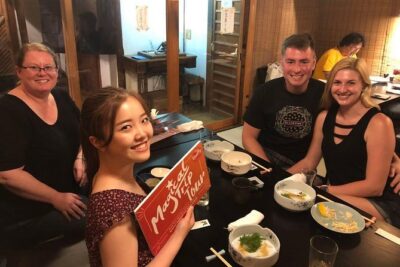
Kyoto Night Foodie Tour in Gion (9+ dishes + 6 Sake tastings)
Read our review →
Hungry Osaka Street Food Tour:15 Tastings & 3 Drinks with a Local
Read our review →
Tokyo Night Foodie Tour in Shinjuku – Seasonal Sushi, Wagyu Beef
Read our review →
Osaka Local Foodie Walking Tour in Dotonbori and Shinsekai
Read our review →
Eat and Drink Like a Local: Tokyo Ueno Food Tour-Taverns&Ramen
Read our review →Browse the lists this tour appears in