
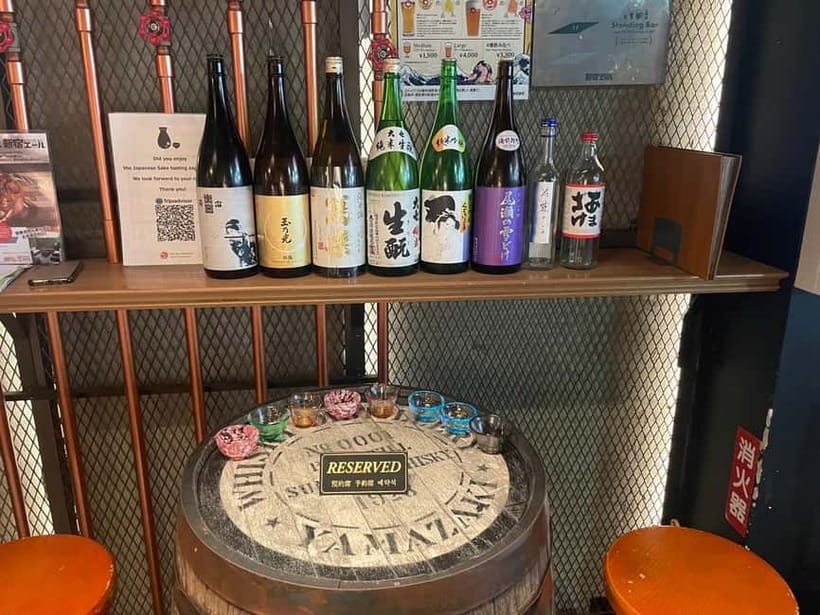
Reviewed · SAKE TASTING
Casual Japanese sake tasting and snack experience, Kabukicho
The fun here is the side-by-side comparison. Instead of ordering one bottle and hoping you like it, you taste eight carefully selected Japanese drinks, including cold and hot sake, a cocktail-style drink, and sweet amazake. I like the gentle progression from simple alcoholic drinks to sake, and I like that traditional snacks are included rather than left as an afterthought.
The small group, capped at six people, gives the host room to answer questions. That makes this a friendly first step for beginners. The catch is the setting: you meet on the second floor of a bar in Kabukicho, the sign can be hard to spot, and the stairs mean this experience is not wheelchair accessible.
Key points at a glance
- Eight drinks to compare: Taste several sake styles instead of settling for one glass.
- Beginner-friendly pacing: Start with a lower-alcohol sake before moving into broader comparisons.
- Traditional snack pairings: Small Japanese bites help show how food changes the taste of sake.
- Hot, cold, cocktail-style, and sweet drinks: The lineup offers more range than a standard sake flight.
- Small group of six: You have a better chance to ask questions and get personal help.
- Easy Kabukicho location: The meeting point is about five minutes from Shinjuku Station, though the entrance sign may be easy to miss.
Eight Japanese drinks, one useful comparison
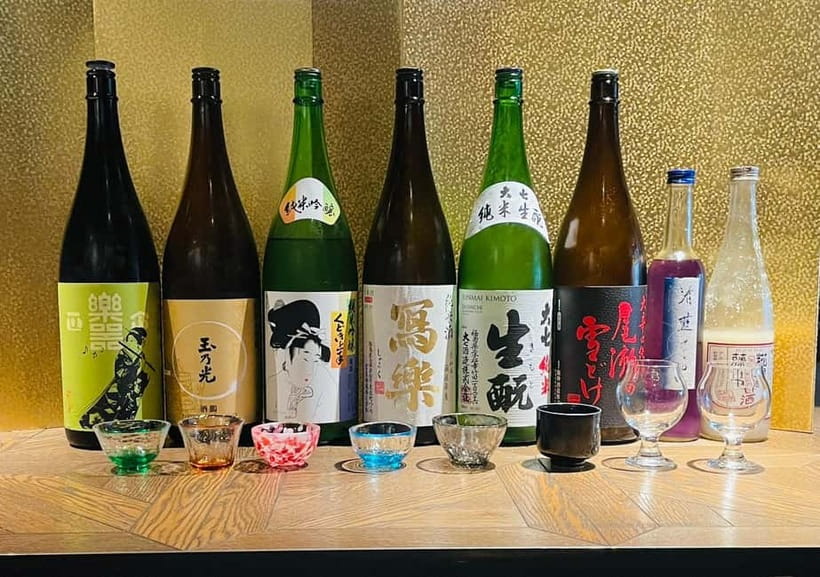
The heart of this experience is simple: taste several drinks in one sitting and notice the differences. That sounds basic, but it is a much better way to approach sake than ordering a random bottle from a large menu.
You begin with an introduction to common alcoholic drinks and a lower-alcohol sake. Standard sake often sits around 15 to 16 percent alcohol, though individual drinks can be lighter or stronger. Starting on the gentler side gives you time to adjust before sampling the rest.
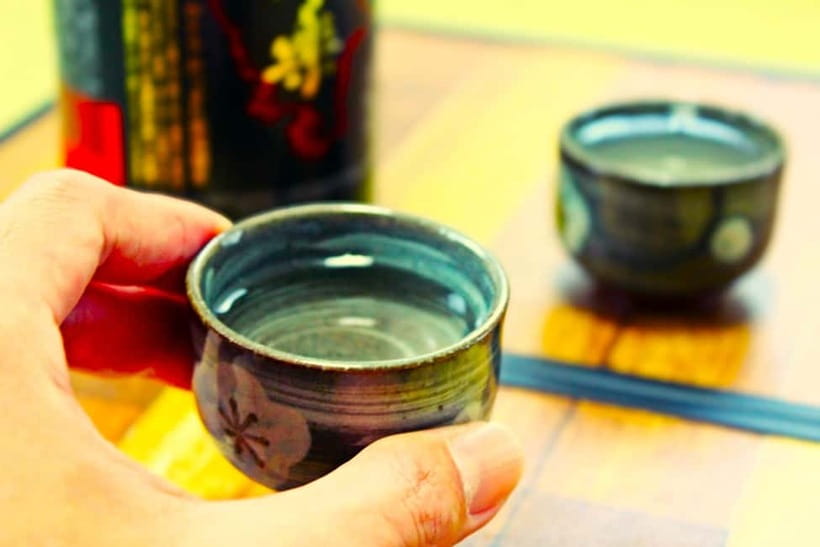
The eight-drink lineup includes carefully selected sake and other Japanese drinks. You can expect cold and hot pours, a cocktail-style option, and amazake at the end. The point is not to turn you into a sake expert in one sitting. It is to help you notice what you like.
I find this format especially useful if sake menus leave you puzzled by unfamiliar names and labels. You can compare the drinks while the taste is still fresh. One may seem clean and light, another fuller, another more aromatic, and another easier to enjoy warm. The experience gives you a few reference points for the next restaurant or izakaya visit.
The exact order and selection may vary, so do not arrive expecting a fixed list of eight named bottles. The important promise is the comparison itself, with drinks selected for variety.
Other tasting rooms and breweries in Tokyo:
- Ramen and Sushi Cooking Class with Sake Pairing Set in Tokyo
★ 5.0 · 291 reviews - Sake Tasting Masterclass in Shinjuku (8+ Varieties with a Pro)
★ 5.0 · 271 reviews - Sake Omakase in Tokyo: Guided Tasting by Certified Sommeliers
★ 5.0 · 239 reviews
Why the snacks matter
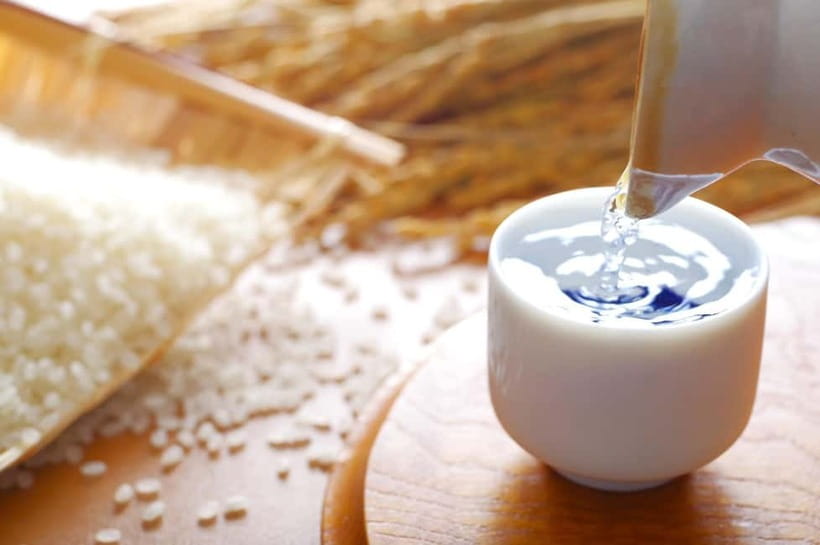
The tasting comes with traditional Japanese snacks. These are small pairings, not a full meal, so plan to eat beforehand if you are hungry. Still, the food serves an important purpose.
Sake does not taste the same on its own as it does beside salty, savory, or fermented foods. A snack can soften a sharp edge, bring out sweetness, or make a drink feel rounder. You get a practical lesson in pairing without needing to study a long food menu.
This also keeps the event from feeling like eight unrelated samples. You can take a sip, try a bite, and take another sip. That small change often makes it easier to spot which drinks work best with food.
The snacks are included in the price, but additional meals and drinks are not. I would treat the food as part of the tasting lesson, not as dinner. For a fuller evening, plan a separate meal in Shinjuku after the session.
A welcoming first lesson for sake beginners
You do not need prior sake knowledge. The host introduces the drinks in simple stages, beginning with accessible material before moving through the broader selection.
That gradual approach matters. Sake can seem intimidating because the labels are often in Japanese and the categories are unfamiliar. Here, you can ask what you are drinking as you taste it, rather than trying to decode everything alone.
The small-group limit also helps. With no more than six participants, the host can pause for questions and keep the conversation informal. English and Japanese are offered, though some staff members may rely on a translation machine. If you need highly technical explanations in English, keep that limitation in mind.
One host named Mai has been praised for being friendly, welcoming, and able to answer questions. Guides can change, so I would not book solely on the expectation that Mai will lead your session. Still, the feedback gives you a useful sense of the tone: this is meant to be social and approachable, not a formal lecture.
The experience also works for someone who already knows whisky or other spirits. One participant with strong whisky knowledge still found the presentation worthwhile. If you are an experienced drinker, the value will come from comparing Japanese styles and learning how hot, cold, and mixed preparations change the experience.
The final glass: amazake as dessert
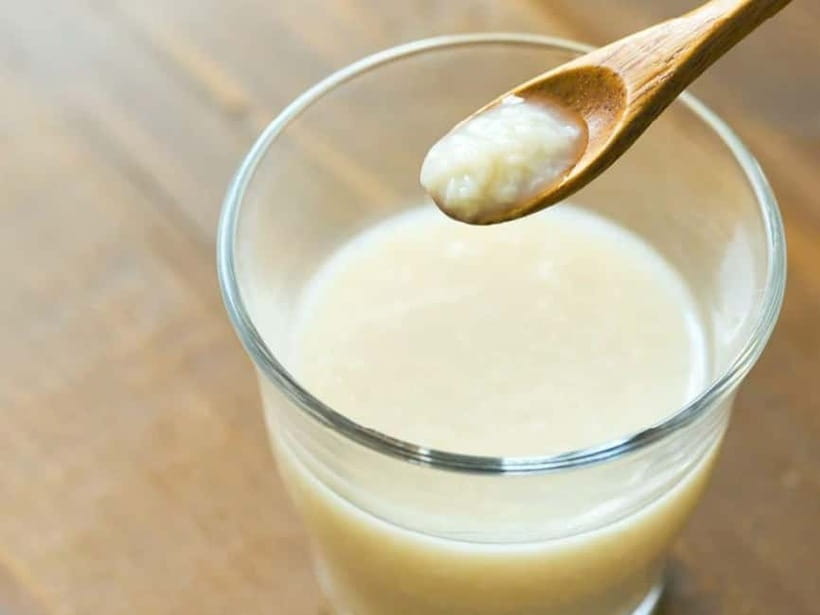
The tasting ends with amazake, a sweet fermented rice drink. It is often served as a non-alcoholic or low-alcohol rice-based drink, depending on how it is made, so do not think of it as simply another sake sample.
Here, amazake functions as dessert. Its sweetness gives the tasting a clear finish after the alcoholic drinks and savory snacks. It also shows that Japanese rice fermentation is not limited to dry or strong drinks.
This final taste is one of the more distinctive parts of the experience. Many basic tastings stop after several similar pours. Adding amazake gives you a different texture and flavor, and it makes the session feel like a small food-and-drink lesson rather than a string of shots.
If you are pregnant or under 20, this experience is not suitable. It is specifically designed for tasting and enjoying Japanese sake and related drinks.
Same base, a different sort of day:
- Mt Fuji and Hakone 1-Day Bus Tour Return by Bullet Train
★ 5.0 · 26,383 reviews - 1-Day Tokyo Bus Tour
★ 5.0 · 14,250 reviews - Tokyo: TOKYO SKYTREE® Admission ticket
★ 4.5 · 11,192 reviews - Tokyo: teamLab Planets TOKYO Digital Art Museum Entry Ticket
★ 4.6 · 9,779 reviews
Finding the meeting point in Kabukicho
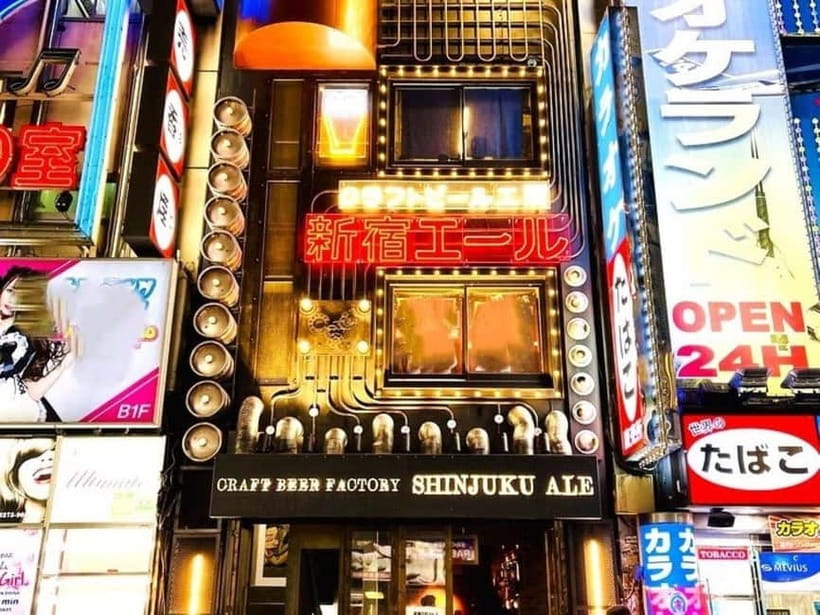
The meeting place is about a five-minute walk from Shinjuku Station on the JR Yamanote Line. Walk along Kabukicho Central Road toward TOHO Cinemas. The venue is next to Karaoke 747, and the location is listed as Shinjuku Ale on the second floor.
The Google Plus Code is MPV2+VR Shinjuku City, Tokyo. Save it before you leave your hotel, since the sign may not be as large or clear as you expect. One practical detail matters here: you are looking for a bar entrance in a busy entertainment district, not a large tour office with an obvious reception desk.
Kabukicho can feel confusing at first, especially after dark. One French participant found the street approaching the venue a little unsettling. That does not mean the meeting point is unusable, but I would allow extra time and follow the directions carefully rather than wandering around with your phone out.
There is no hotel pickup or drop-off. Transportation to the meeting point is also your responsibility. The station access is convenient, but the venue has no elevator and is not wheelchair accessible.
What the $38 price covers
The price is $38 per person. That includes the eight-drink tasting, traditional snacks, and all fees and taxes.
The value depends on how you use it. If you want a full dinner, several large pours, or a long technical class, this is not the right purchase. Additional food and drinks cost extra, and the included snacks are not meant to replace a meal.
For someone new to sake, the price is easier to justify. You are paying for selection, guidance, pairings, and a low-pressure setting where you can compare drinks without ordering several full glasses on your own. In a city where an unfamiliar sake menu can lead to expensive trial and error, that structure has real value.
The small group improves the equation. A six-person limit means the host can keep the session conversational rather than rushing through a large crowd. I would see the $38 as a compact introduction, followed by dinner elsewhere in Shinjuku if you want more food.
Be aware that souvenir purchases are separate. One participant bought a drinking glass afterward and found it expensive, though memorable. That is optional and not part of the advertised price.
Who will get the most from this tasting
This experience suits you best if you want a relaxed introduction to Japanese sake and do not need a full-day cultural program. It also fits neatly into a Shinjuku evening because the meeting point is close to the station and the Kabukicho entertainment area.
I would recommend it for:
- First-time sake drinkers who want clear guidance.
- Couples or friends looking for a small food-and-drink activity.
- Experienced whisky or spirits drinkers curious about Japanese fermentation.
- Visitors who want to compare hot, cold, cocktail-style, and sweet drinks.
- Anyone who prefers a small group over a large guided class.
It may not suit you if you want a full meal, a detailed brewery visit, or a wheelchair-accessible venue. It is also not appropriate for pregnant people or anyone under 20.
Because alcohol is involved, pace yourself. Eight comparisons can add up, even when each pour is modest. Eat before the session, drink water when possible, and avoid planning a demanding activity immediately afterward.
A relaxed format with a few practical limits
The strongest part of the experience is its tone. You are not expected to know the difference between sake categories before you arrive. You can taste, ask, compare, and decide what appeals to you.
The main limitation is the uneven language support. English and Japanese are available, but some staff may use a translation device. That is fine for basic explanations and questions, though you may not get a detailed technical discussion about brewing methods or regional differences.
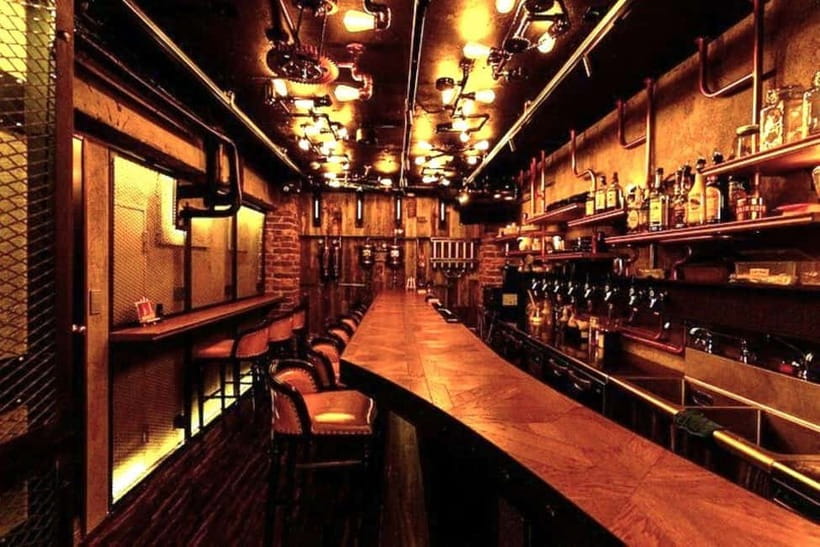
The venue itself is another consideration. The tasting takes place upstairs in a bar, and the entrance can be easy to overlook. Use the TOHO Cinemas landmark, check for Karaoke 747, and look for Shinjuku Ale next door. Arriving early is sensible.
The booking terms are flexible: you can reserve now and pay later, and cancellation is free up to 24 hours before the experience for a full refund. Availability and starting times should be checked for your chosen date, since the duration is presented as one day while the specific session time is selected through availability.
Should you book the Kabukicho sake tasting?
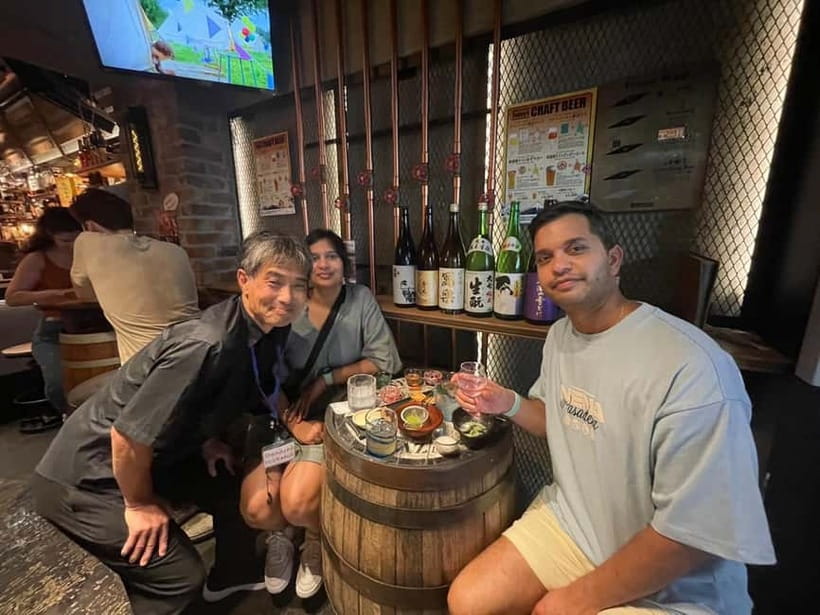
Book it if you want a small, casual introduction to sake with snacks and enough variety to discover your preferences. The eight-drink comparison, amazake finish, and six-person group give you more substance than a single bar order, while the relaxed approach keeps the experience easy for beginners.
Skip it if your priority is a full dinner, a brewery tour, or advanced sake study. Also think twice if stairs, a hard-to-find entrance, or translation-machine communication would cause problems.
For most visitors spending an evening around Shinjuku, this is a useful first sake experience. Go with a light meal already in you, allow time to find the upstairs venue, and treat the tasting as an introduction rather than the entire night.
FAQ
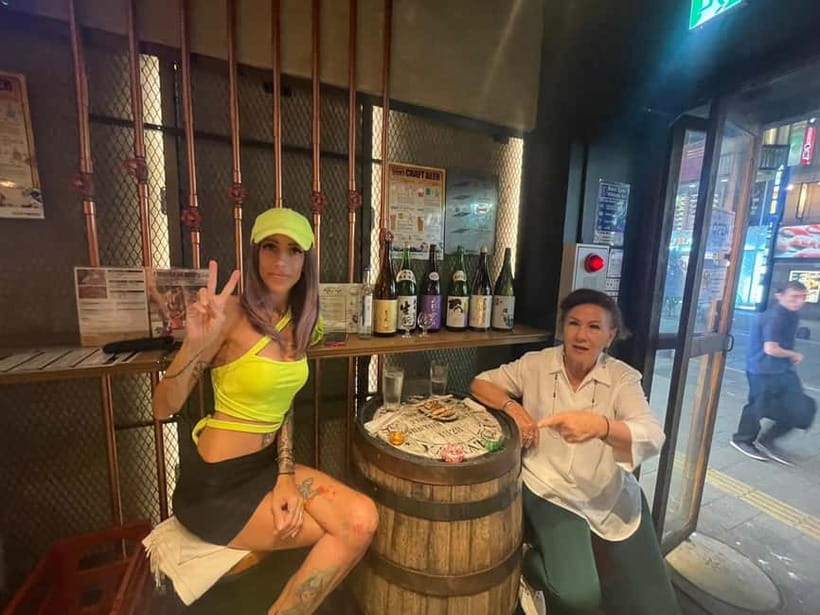
How many drinks are included?
The experience includes eight carefully selected Japanese drinks, with sake and related drinks presented for comparison.
Is this suitable for someone who has never tried sake?
Yes. The tasting begins with simple alcoholic drinks and a lower-alcohol sake, making it suitable for first-time sake drinkers.
What alcohol level does sake usually have?
The experience explains that average sake alcohol content is about 15 to 16 percent, though some varieties are lower and some are higher.
Are snacks included?
Yes. Traditional Japanese snacks are included as pairings. Additional meals and drinks are not included.
Is amazake included?
Yes. Amazake is served at the end as a sweet, fermented rice drink and dessert-style finish.
Where is the meeting point?
It is about a five-minute walk from Shinjuku Station on the JR Yamanote Line. Walk along Kabukicho Central Road toward TOHO Cinemas. Shinjuku Ale is next to Karaoke 747.
Is the venue easy to find?
The meeting point can be easy to miss because the sign may not be very large. Use the listed Google Plus Code, MPV2+VR Shinjuku City, Tokyo, and look for the landmarks provided.
Is the experience wheelchair accessible?
No. The venue is upstairs and has no elevator.
Are English explanations available?
English and Japanese are available. Some staff members may use a translation machine if they are not comfortable speaking English.
Can I cancel for a full refund?
Yes. You can cancel up to 24 hours in advance for a full refund.
Can I pay later?
Yes. The reserve-now, pay-later option lets you book without paying immediately, subject to the booking terms.
Who cannot join the experience?
Pregnant women and people under 20 are not suitable for this alcohol tasting.
Just added in Tokyo
- The 10 Tastings of Tokyo With Locals: Private Street Food Tour★ 5.0 · 48 reviews
- Small Town in the Big City: Tasting Tokyo’s Kichijoji★ 5.0 · 195 reviews
- Small Town in the Big City: Tasting Tokyo’s Kichijoji★ 5.0 · 16 reviews
- EXCLUSIVE Tokyo Secret: Kichijoji Small-Group Food & Bar Hopping★ 5.0 · 29 reviews
- Explore Kichijoji: Walk Through One of Tokyo’s Beloved Districts★ 5.0 · 21 reviews
- :Tokyo,Shibuya/ Pro Photography in Kimono / English-Friendly★ 5.0 · 26 reviews
- 【R34】Tokyo:Private Daikoku tour in Modified R34★ 4.9 · 92 reviews
- Tokyo:Calligraphy &Make your original folding fan in Asakusa★ 5.0 · 62 reviews
Sake Tasting, compared.
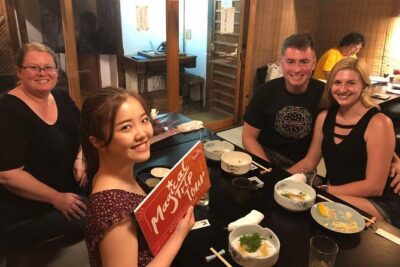
Kyoto Night Foodie Tour in Gion (9+ dishes + 6 Sake tastings)
Read our review →
1-Day Snow Monkeys, Zenko-ji Temple & Sake in Nagano
Read our review →
3-Hour Kyoto Insider Sake Brewery Tour with Tastings & Pairings
Read our review →
Arashiyama Bamboo, Temple, Monkeys, or Secret Sake Brewery
Read our review →
Insider Sake Brewery Tour with Sake and Food Pairing
Read our review →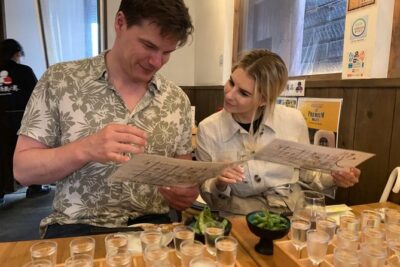
1.5-Hour Kyoto Insider Sake Experience with 7 Tastings & Pairings
Read our review →Browse the lists this tour appears in