Reviewed · TOURS IN KYOTO
Early Bird E-biking through East Kyoto
Kyoto is at its best when you can move between its temples, canals, quiet lanes, and crowded sights without waiting for a bus. This six-to-seven-hour e-bike tour starts early and links southern and eastern Kyoto in one long loop, from Fushimi Inari to Gion and back near Kyoto Station.
I like the small group limit of eight people, which makes it easier to keep a steady pace and ask questions. I also like that lunch, a café stop, an e-bike, and a helmet are included, so you can focus on the city rather than planning every leg yourself.
The main drawback is the length and riding conditions. You need moderate fitness and confidence around traffic, crowds, uneven ground, and a few uphill sections. One poor experience also involved bikes that were too small and a guide who provided limited historical explanation, so confirm your bike size and expect guide quality to vary.
Key points to know before booking
- Start early at 8:00 a.m.: You reach major sights before the day is at full volume, though some stops can still be crowded.
- Ride far more than you walk: The e-bike helps cover Kyoto’s eastern and southern districts in one day.
- See nine very different places: The route combines shrines, Zen temples, a riverside path, Gion lanes, and a major wooden temple.
- Lunch and coffee are included: The meal is taken near Ginkakuji, with a café stop later at Higashi Honganji.
- Groups are capped at eight: This is more personal than a large bus or walking tour.
- Check your cycling comfort: You ride near busy roads and pedestrians, and the tour lasts most of the day.
Why an e-bike works so well in Kyoto
Kyoto’s sights are spread across a broad basin. Fushimi Inari is southeast of the center, while Ginkakuji, Nanzenji, Heian Shrine, and Gion sit farther east. Walking between them would eat up much of your day, and public transport does not always take you directly from one temple gate to the next.
An e-bike gives you a practical middle ground. You cover distance without the effort of a standard bicycle, while still using riverside paths, back streets, and smaller lanes that a bus cannot reach. Several guides, including Jay, Juan, Indra, Julian, and Paul, are praised for keeping a comfortable pace and mixing local tips with background on Kyoto.
Do not mistake electric assistance for effortless sightseeing. You still need to steer, brake, watch other cyclists, and stay with the group. Some roads are busy, and a few slopes can be tiring. If you are comfortable riding in a city, the bike is a major advantage. If you rarely cycle, this may feel like a long physical activity rather than a gentle sightseeing ride.
The meeting point is Cycle Kyoto at Higashikujō Nishisannōchō in Minami Ward. The tour returns there at the end. It is near public transportation, but allow time to find the shop, since one rider found the meeting location slightly tricky to locate.
Other experiences people book in Kyoto:
- PERFECT KYOTO 1-Day Bus Tour
★ 5.0 · 13,518 reviews - Kyoto: Fushimi Inari, Kinkakuji, Bamboo Grove 1 Day Bus Tour
★ 4.8 · 4,316 reviews - Kyoto: Tea Ceremony in a Traditional Tea House in Kiyomizu
★ 4.9 · 3,519 reviews
Fushimi Inari before the crowds build
The first major stop is Fushimi Inari-taisha, reached after about 25 minutes of riding along the river. You spend around 30 minutes walking around the shrine grounds.
Fushimi Inari is famous for its seemingly endless rows of orange torii gates climbing Mount Inari. A short visit cannot cover the full mountain route, but an early arrival gives you a better chance to see the lower shrine area before the busiest hours. The stop is free, which also helps keep the tour’s overall value strong.
The schedule is tight here. You will not have time for a long mountain hike, extended photography session, and detailed shrine visit all at once. Think of this as an introduction to one of Kyoto’s signature sights, not a complete Fushimi Inari expedition.
Tofukuji and the first taste of temple Kyoto
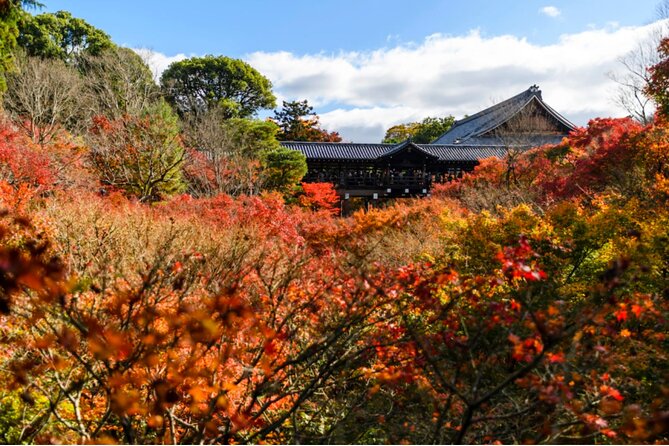
From Fushimi Inari, it is about 15 minutes by bike to Tofukuji Temple. The planned stop lasts about 30 minutes and includes time on a picturesque bridge.
Tofukuji is one of Kyoto’s major Zen temples, best known for its seasonal maple colors and elegant temple architecture. Even outside autumn, the bridge and surrounding grounds give you a strong first look at Kyoto’s temple style. The short visit works well after Fushimi Inari because it adds a quieter, more structured setting without requiring another long ride.
Admission to the listed stop is free. The route does not promise a long guided walk through every building, so ask questions as you go. Guides such as Juan and Indra have been praised for adding context about religion, customs, and local life, but the amount of explanation can depend on who leads your group.
A longer ride beside the Kamogawa River
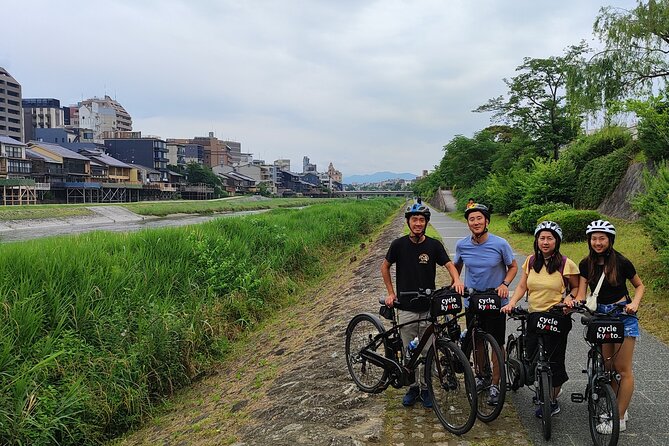
The route then turns toward the Kamogawa River for an extended 30-minute ride. This is one of the tour’s most useful stretches because it gives you a break from temple courtyards and lets you see Kyoto at street level.
Riding beside the river makes the city feel less like a checklist of famous sights. You pass open space, bridges, and ordinary parts of Kyoto while the guide handles the route. This is also where the e-bike earns its keep. You can make steady progress without burning energy before the afternoon stops.
The river path may feel busy at times, and you need to stay alert around pedestrians and other cyclists. Keep your hands ready on the brakes and do not assume the group can move at the same speed as an empty road.
Same base, a different sort of day:
- Kyoto Geisha Walking Tour: Gion District & Hidden Gems
★ 4.7 · 3,273 reviews - Kyoto: Tea Ceremony Ju-An at Jotokuji Temple
★ 4.9 · 3,207 reviews - Kyoto: Gion Magical Night Walking Tour with Geisha Trivia
★ 4.9 · 2,393 reviews - Kyoto: 45-Minute Tea Ceremony Lesson Experience
★ 4.3 · 2,378 reviews
Ginkakuji, lunch, and the Silver Pavilion grounds
Ginkakuji Temple, also called the Silver Pavilion, is the longest central sightseeing stop, with about 45 minutes including lunch at a nearby restaurant. Admission to the temple grounds is included.
Ginkakuji is not actually covered in silver. Its appeal comes from its restrained design, carefully arranged gardens, moss, sand formations, and hillside setting. The grounds reward a slow walk, even though the schedule gives you limited time.
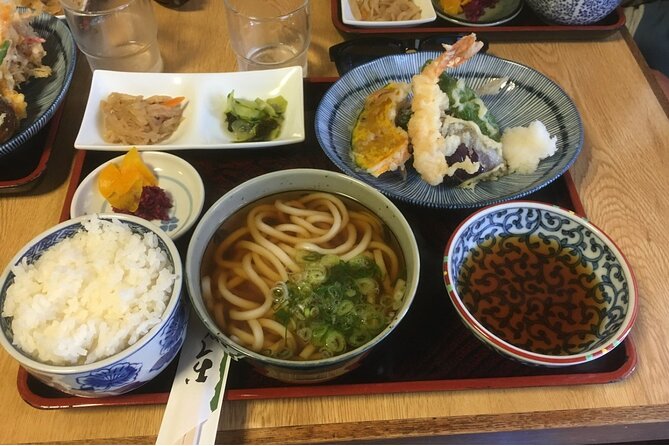
Lunch is a useful inclusion on a full-day ride. You do not need to stop the group to search for food, and dietary requirements can be shared ahead of time. The practical catch is that the restaurant is near one of Kyoto’s busiest sightseeing areas. At peak times, choices may be shaped by crowds and seating availability rather than by a quiet, carefully chosen local setting.
One group found the lunch ordinary and wished for a more unusual place. That is fair criticism. The meal solves a logistical problem, but food is not the main reason to book this tour.
The Philosopher’s Path at a slower pace
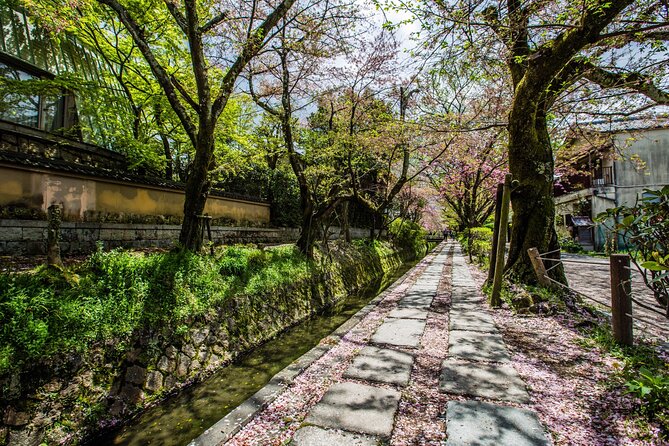
After lunch, you cycle along the Philosopher’s Path for about 45 minutes. This narrow canal-side route connects the northern and southern eastern temple area and is especially attractive when cherry trees are in bloom.
The path is a welcome change from city streets. You can enjoy water, trees, small bridges, and temple-side lanes while keeping the pedals turning. It is one of the sections most likely to make the tour feel like an outing rather than a string of transfers.
Crowds can change the experience. During blossom season, the path may be packed, and you may need to slow down or walk the bike in tighter sections. One group had to ask for extra time to stop for blossom photographs, so speak up if seasonal scenery matters to you. The planned 45 minutes includes movement along the path, not unlimited time at every attractive view.
Nanzenji and Heian Shrine bring the afternoon together
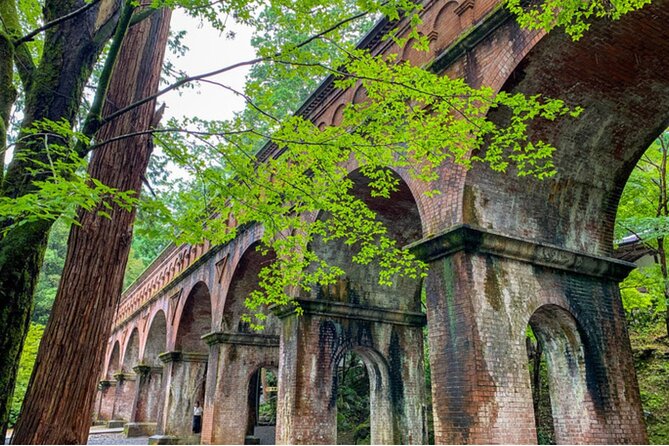
Nanzenji comes next, with about 45 minutes to walk the grounds. This large Zen complex is known for its imposing Sanmon gate, temple buildings, gardens, and the striking brick aqueduct that crosses the grounds.
Nanzenji is a good place for a guide to explain how Zen temple compounds are organized. It also gives you room to stretch after the bike ride. The stop is free according to the tour details, though particular sub-gardens or buildings may have separate arrangements at some temples in Kyoto. Follow your guide’s instructions on what the group is entering.
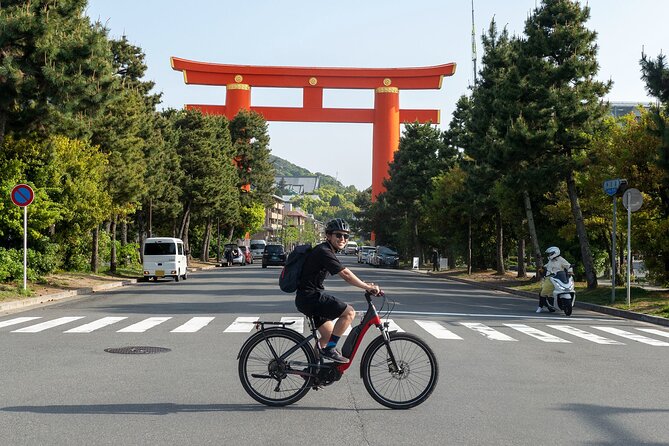
The route then moves to Heian Shrine for about 35 minutes. The shrine’s huge torii and broad courtyard give you a different visual scale from Nanzenji. Instead of a shaded temple compound, you get a spacious Shinto setting with bright vermilion buildings and a large open approach.
These two stops work well together. Nanzenji shows the calm, layered design of a Zen complex, while Heian Shrine feels grand and ceremonial. The limitation is that neither stop is long enough for a leisurely visit to every garden or building.
Gion by bicycle, not just by postcard
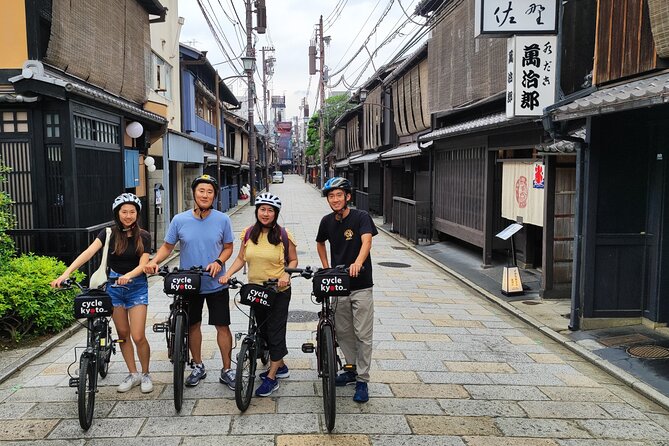
The ride through Gion lasts about 45 minutes and uses the backstreets of Kyoto’s traditional entertainment district. This is one of the more atmospheric sections because you see the area from moving through it, rather than only arriving at a famous street, taking a picture, and leaving.
Gion is associated with teahouses, traditional architecture, and geiko and maiko culture. You might catch a glimpse of one, but this is not a guaranteed sighting and should never be treated as the purpose of the stop. Keep your distance, avoid blocking lanes, and follow local etiquette.
The backstreets can be narrow and busy. The group needs to stay together without frustrating people who live and work there. A guide can add value here by pointing out the difference between public streets, working entertainment areas, and places where photography is not welcome.
Higashi Honganji and a final café stop
The last sightseeing stop is Higashi Honganji Temple, about 15 minutes from the end of the tour. The listed time includes a stop at a favorite café.
Higashi Honganji is known for its enormous wooden prayer halls and its place in Jodo Shinshu Buddhism. After a day of smaller lanes and temple gardens, the scale of the wooden interiors makes a strong final impression. The visit is brief, but it gives you one last look at Kyoto’s religious architecture before returning to the starting point.
The café stop is a thoughtful touch after several hours on a bike. Guides named Juan and others have been praised for taking groups to favorite local cafés that are easy to miss on your own. Since the stop is short, it is best viewed as a refreshment break rather than a full coffee experience.
Guides, pacing, and the value of a small group
The guide can make or break a long tour. Jay is praised for humor, historical knowledge, and adapting the day to the group. Juan is described as warm and deeply familiar with Kyoto’s food, neighborhoods, and customs. Indra is praised for history and insider tips, while Paul is noted for clear English and a well-planned route. Mayco is praised for good English, a comfortable pace, and a fun manner.
Those positive accounts point to the tour’s strongest feature: you are not only following a route. With the right guide, you get help understanding what you are seeing and suggestions for food and later sightseeing.
There is an important qualification. One group found its guide friendly but light on temple information, sometimes checking details on a phone. That experience shows why you should not assume every guide will provide the same level of historical explanation. If temple background is your top priority, ask questions directly and consider carrying your own short guidebook or notes.
The cap of eight people helps. A small group can stop more easily, adjust the pace, and avoid the anonymous feel of a large sightseeing vehicle. It does not remove the need to keep moving, especially during busy seasons.
Price, included extras, and who gets good value
At $138.74 per person, this is not a cheap bicycle rental. You are paying for the e-bike, helmet, guide, route planning, lunch, café stop, and a full day linking sights that would take careful planning to combine independently.
The value is strongest if you want an efficient first look at Kyoto. In one day, you can visit Fushimi Inari, Tofukuji, Ginkakuji, the Philosopher’s Path, Nanzenji, Heian Shrine, Gion, and Higashi Honganji. You also get the quieter pleasure of riding along the river and through back streets.
The value is weaker if you already know Kyoto well, prefer to spend an hour or more at each temple, or mainly want a quiet cycling trip. You could rent a bicycle and choose your own stops for less, but you would give up the guide, included meal, prepared route, and group support.
The experience is recommended by 99 percent of the supplied ratings and has a rating of 5 from 114 reviews. That strong record fits the tour’s design, but the lower-rated experience is worth taking seriously: bike fit, guide quality, lunch expectations, and the ability to pause for photos all affect your day.
Practical details for a smoother ride
The tour begins at 8:00 a.m. and ends back at the starting point. It lasts roughly six to seven hours, so wear clothing suited to cycling and walking, and bring whatever personal items you need for a full morning and afternoon outdoors.
The minimum age is 13, and riders must be at least 145 centimeters tall. A moderate level of physical fitness is required. Tell the operator about dietary needs in advance, rather than waiting until lunch.
Bike size deserves special attention. One group had to request replacements because two bikes were too small for taller teenagers. If you are tall or between sizes, confirm the fit at the start and do not accept an uncomfortable bike for a six-hour ride. Smaller riders can request the smaller bicycle, which one rider found stable and secure.
The tour depends on good weather. If poor weather cancels it, you are offered another date or a full refund. You can also cancel for a full refund up to 24 hours before the start time. The operator may cancel if the minimum number of participants is not reached.
Should you book the East Kyoto e-bike tour?
Book it if you want to see a large slice of eastern Kyoto in one day and you are comfortable cycling in traffic and around pedestrians. It is especially useful early in your Kyoto stay, when you want an overview of major sights, neighborhood routes, food ideas, and places to revisit.
I would choose it for active couples, families with older teenagers, and first-time visitors who dislike spending the day waiting for buses. I would be more cautious if you need long temple visits, require a very quiet ride, or are uncomfortable on a bicycle.
Before paying, confirm your height and bike fit, share dietary needs, and ask the guide questions throughout the day. If you do that and accept the brisk pace, this is a practical, friendly way to meet Kyoto by moving through it rather than simply stopping at it.
FAQ
What time does the tour start?
The tour starts at 8:00 a.m.
Where does the tour begin?
It begins at Cycle Kyoto, Higashikujō Nishisannōchō, Minami Ward, Kyoto, 601-8003, Japan.
Where does the tour end?
The activity ends back at the meeting point.
How long does the tour last?
The tour lasts approximately six to seven hours.
How many people can join the tour?
The group has a maximum of eight participants.
What equipment is provided?
An e-bike and helmet are provided.
What age and height requirements apply?
The minimum age is 13, and the minimum height is 145 centimeters.
Is lunch included?
Yes. The schedule includes lunch at a nearby restaurant during the Ginkakuji stop. Dietary requirements should be provided ahead of time.
Can I cancel for a refund?
Yes. You can cancel at least 24 hours before the start time for a full refund. Poor weather or failure to meet the minimum number of participants may also lead to a different date or a full refund.
Just added in Kyoto
- Private Cooking Class Udon in Kyoto Japan★ 5.0 · 23 reviews
- Your Private Vacation Photography Session In Kyoto★ 5.0 · 110 reviews
- Kyoto: Zen Meditation at a Private Temple with a Monk★ 5.0 · 25 reviews
- Private Pewter Sake Cup Experience with a Kyoto Artisan★ 5.0 · 31 reviews
- Kyoto Wagashi(Japanese sweets) Cooking Class near Fushimiinari★ 5.0 · 60 reviews
- Kyoto:Family-Friendly Kimono & Yukata Experience at WARGO★ 5.0 · 147 reviews
- Private Guided Traditional Buddhist Cooking in Japan★ 5.0 · 16 reviews
- Kyoto: Gion Geisha District & Sake-in-Hand Walking Tour★ 5.0 · 37 reviews
Tours in Kyoto, compared.

Tea Ceremony in a Traditional Tea House in Kiyomizu
Read our review →
Kyoto Geisha Walking Tour: Gion District & Hidden Gems
Read our review →


Gion Geisha District Walking Tour – Stories of Geisha
Read our review →
Best of Kyoto: Gion, Geisha, Pagodas & Cobblestones
Read our review →