Reviewed · TOURS IN KYOTO
Early Half Day to Kyoto Highlights
Kyoto’s three headline sights fit into one well-planned morning here: Fushimi Inari’s red torii gates, Arashiyama’s bamboo, and the gleaming Golden Pavilion. I like the early 8:00 am start, which gives you a better chance of seeing the first two sites before the day becomes crowded. I also like the small maximum of eight people and the way the tour uses public transport instead of hiding you behind a coach window.
The trade-off is pace. You spend about 90 minutes at each major stop, with train or other public transport between them, so this is a smart first look rather than a slow, lingering visit. Add ¥1,300 for transport and ¥500 for Kinkakuji, on top of the $94.71 tour price.
The morning at a glance
- Three famous Kyoto sights before lunch: Fushimi Inari Shrine, Arashiyama Bamboo Forest, and Kinkakuji are all covered in roughly five hours.
- An 8:00 am start near Kyoto Station: Meet at the Starbucks in Kyoto Tower Sando, a practical central point for getting around.
- A small group of no more than eight: You have a better chance to hear the guide and ask questions than on a large coach tour.
- Public transport is part of the experience: The guide handles the route while you see how Kyoto actually connects its major districts.
- Indra is praised for pacing and storytelling: His role includes explaining Shinto, Buddhism, Japanese society, and local history in clear English.
- Your afternoon stays open: The tour returns to Kyoto Station after about five hours, leaving room for lunch or another activity.
Why this half-day route works
Kyoto is easy to admire and surprisingly hard to organize. Its most famous sights sit in different parts of the city, and the best order depends on opening hours, transport, and crowd levels. This tour takes care of that planning while keeping the group on foot and on public transport.
The route also gives you three different views of Kyoto. Fushimi Inari introduces Shinto worship and the famous torii gates. Arashiyama brings nature and questions about Japanese society. Kinkakuji finishes with a formal Buddhist temple setting and the image most often associated with Kyoto.
I like that the tour does not fill the whole day. Five hours is enough to cover the big names, but you still have time afterward to choose your own lunch, visit another temple, shop, or simply rest. If you have only one day in Kyoto, this route gives you a strong first layer of the city.
You should know that this is not a private car tour. Walking and public transport mean stairs, station corridors, street crossings, and time spent moving between districts. That is part of the value, but it also means you need comfortable shoes and a willingness to keep the schedule.
Other experiences people book in Kyoto:
- PERFECT KYOTO 1-Day Bus Tour
★ 5.0 · 13,518 reviews - Kyoto: Fushimi Inari, Kinkakuji, Bamboo Grove 1 Day Bus Tour
★ 4.8 · 4,316 reviews - Kyoto: Tea Ceremony in a Traditional Tea House in Kiyomizu
★ 4.9 · 3,519 reviews
Meeting at Kyoto Station at 8:00 am
The group meets at Starbucks Coffee in Kyoto Tower Sando, at Kyoto Tower beside Kyoto Station. The listed address is 7211 Higashi-shiokoji-cho, Shimogyo Ward, Kyoto, postal code 600-8216. Booking details include a meeting-point picture, which should help you identify the correct café.
Kyoto Station is one of the city’s main transport points, so the location makes sense for a morning route. Still, I would arrive early. Large stations can take a few minutes to navigate, especially if you are staying elsewhere in Kyoto and need to find the right exit.
The first stop lasts about 15 minutes and has no admission charge. This is mainly a gathering and orientation point, not a sightseeing stop. Your guide can confirm the group, explain the morning, and get everyone moving before the busiest part of the day begins.
The tour ends back at the same meeting point. That is useful if you want to continue from Kyoto Station, catch a train, or leave your luggage at a nearby hotel.
Fushimi Inari and its thousand red gates
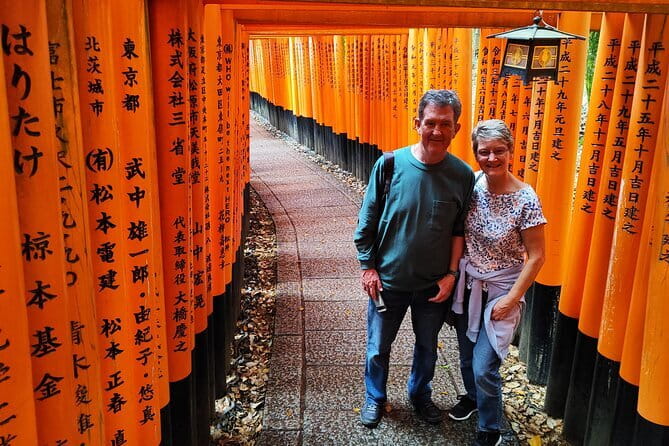
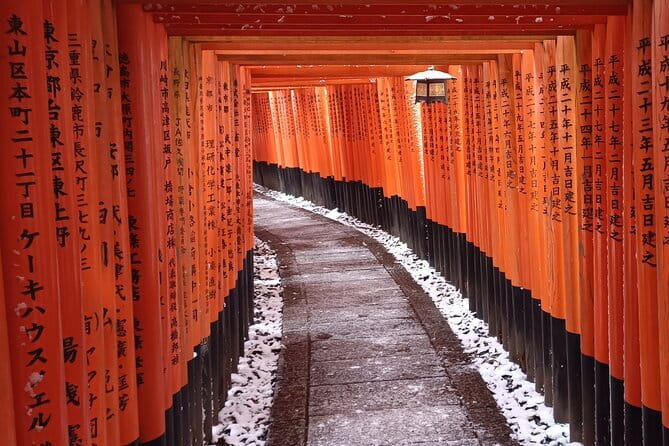
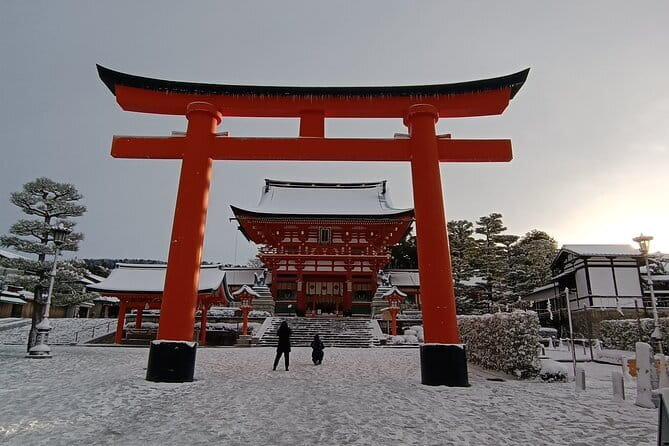
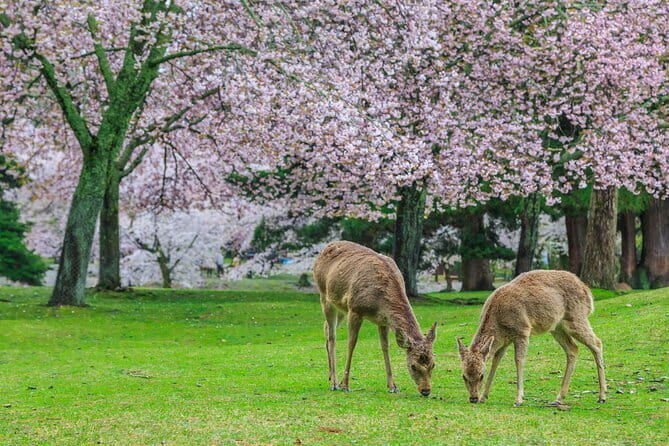
Fushimi Inari-taisha is the first major stop, with about 90 minutes set aside. The shrine is famous for its long rows of red-orange torii gates, donated over time by individuals and businesses. They create one of Kyoto’s most recognizable scenes.
The tour uses this stop to explain Shinto, one of Japan’s key religious traditions. That context matters. Without it, Fushimi Inari can look like a beautiful tunnel of gates and little else. With a guide, you can learn why the shrine matters, what the gates represent, and how Shinto fits into Japanese culture.
The early timing is especially useful here. Fushimi Inari is among Japan’s best-known sights, and the paths can become crowded later in the day. Starting early does not guarantee an empty shrine, but it gives you a much better chance of seeing the gates with more breathing room.
Ninety minutes is enough for a strong introduction. It is not enough to explore every path or treat the entire mountain as a long hike. If you want to walk far beyond the main gate sections, you may need to return on your own another time.
This is also where the walking element becomes clear. You are not simply stepping off a bus, taking a picture, and getting back on. You move through the shrine area on foot, so comfortable shoes and a reasonable level of mobility matter.
Arashiyama Bamboo Forest and the natural side of Kyoto
The second major stop is Arashiyama Bamboo Forest, also for about 90 minutes. The bamboo grove is a narrow, striking path surrounded by tall green stalks that filter the light and create a very different mood from Fushimi Inari.
The appeal is visual, but the guide adds a wider frame by discussing Japanese society and the relationship between nature and daily life. That makes this more useful than a quick photo stop. You get time to see the grove, but also a chance to connect it with broader ideas about the country.
Arashiyama is a popular area, so an early visit helps. The tour’s schedule is designed to reach the major sights before the heaviest crowds. Even so, do not expect complete quiet at a famous bamboo path. The practical benefit is that the group gets there at a better time, not that the site becomes private.
The 90-minute visit gives you time to walk through the bamboo and take in the surrounding scenery. It may feel short if you want to explore every nearby attraction in Arashiyama. The tour is focused on the bamboo forest rather than offering a full district tour, so you will need another visit for a slower look at the area.
I like the contrast with Fushimi Inari. One stop is strongly shaped by religious symbols and human craft. The other puts you among towering plants and open natural scenery. That variety keeps the morning from feeling like a sequence of similar temples.
Same base, a different sort of day:
- Kyoto Geisha Walking Tour: Gion District & Hidden Gems
★ 4.7 · 3,273 reviews - Kyoto: Tea Ceremony Ju-An at Jotokuji Temple
★ 4.9 · 3,207 reviews - Kyoto: Gion Magical Night Walking Tour with Geisha Trivia
★ 4.9 · 2,393 reviews - Kyoto: 45-Minute Tea Ceremony Lesson Experience
★ 4.3 · 2,378 reviews
Kinkakuji, the Golden Pavilion
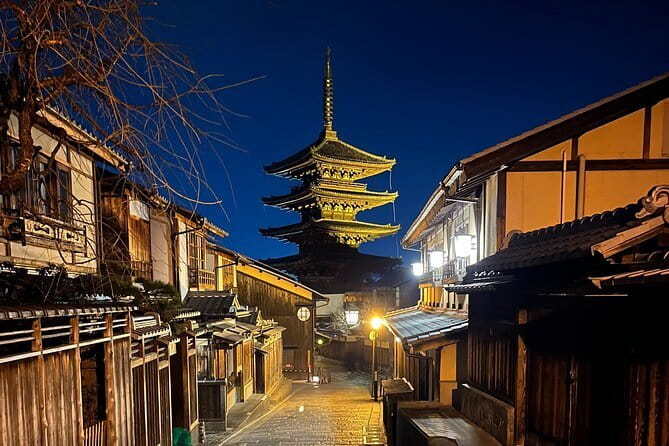
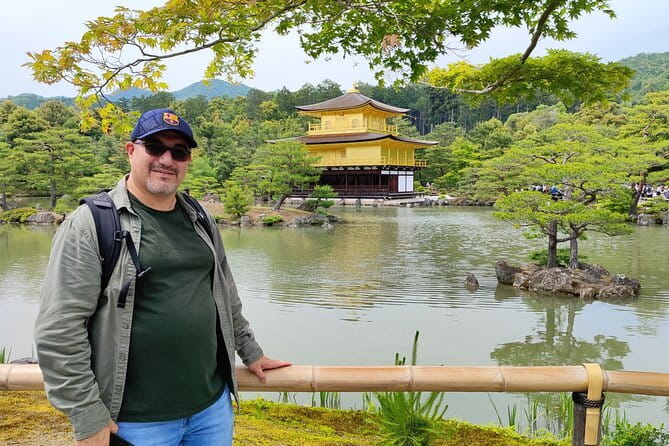
Kinkakuji is the final major stop, with about 90 minutes planned. The temple is widely known as the Golden Pavilion because of its bright gold exterior, reflected in the pond beside it. It is one of Kyoto’s most photographed sights, and the view is worth seeing in person.
Admission is not included. You pay ¥500 per person at the temple. The guide uses this stop to explain Buddhism in Japan and the temple’s history, giving you a better sense of why the building matters beyond its famous appearance.
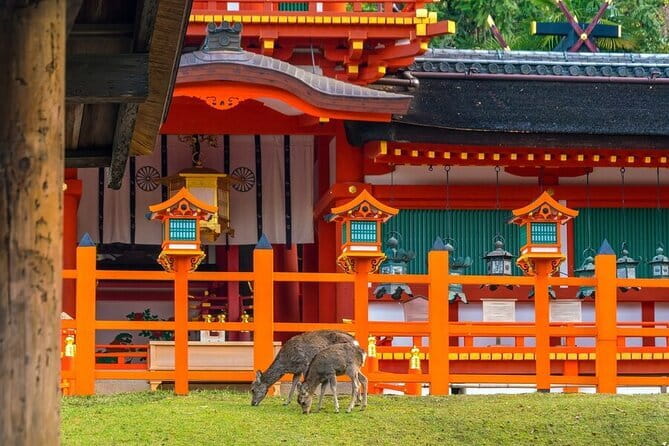
The setting is more formal than the bamboo grove and more polished than the winding paths at Fushimi Inari. You follow the visitor route, stop at the main viewing areas, and take in the pavilion from the garden. The experience is primarily visual, but the guide’s explanation helps place it within Kyoto’s religious and cultural life.
Again, 90 minutes is a sensible first visit, not a leisurely study of every detail. You will have enough time to see the pavilion and grounds as part of the group schedule. If you prefer to sit quietly, sketch, or examine each garden feature at length, the fixed pace may feel brisk.
Kinkakuji is also the one stop with a separate entrance cost. It is a modest fee, but you should count it in the real price before booking.
Indra and the value of a small group
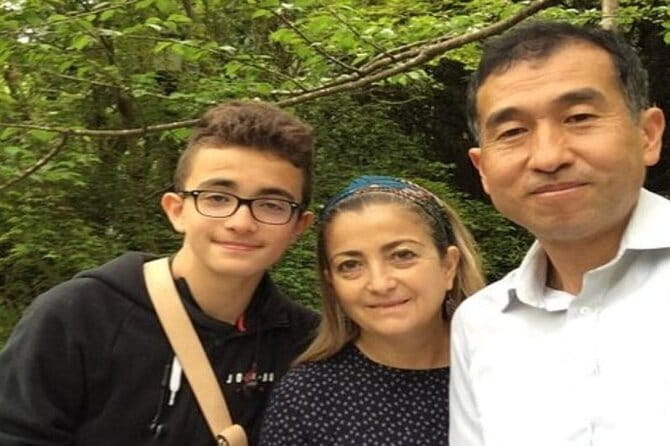
The experience includes an English-speaking local guide, and Indra is the guide most closely associated with the tour information. He is described as friendly, efficient, enthusiastic, and a strong storyteller. His particular strength appears to be making the schedule work without making the morning feel frantic.
That matters on this route. You are crossing Kyoto between three major districts, and a small delay at the first stop can affect the rest of the morning. A guide who knows where to go and watches the clock can save you a great deal of effort.
The group limit is eight people. That is small enough for direct questions and a more personal feel, while still keeping the listed price below what a private tour usually costs. You should be able to hear explanations and ask about Shinto, Buddhism, Japanese society, or the practical details of getting around.
The guide also adds value by handling the transitions. On your own, you would need to decide the order, find the transport connections, estimate walking time, and keep an eye on the clock. Here, you can focus on the sights and let the guide manage the morning’s structure.
The exact guide may vary, so I would not book solely on the expectation of one person. Still, the experience places clear weight on local guiding, and Indra’s reported approach gives you a useful picture of the standard to expect.
What the $94.71 price really covers
At $94.71 per person, the tour is not the cheapest way to see Kyoto’s famous sights. The important question is what you would spend in time and effort arranging the same morning.
The price includes the local English-speaking guide and the planning behind a route that links three distant highlights in five hours. It does not include public transport, listed at ¥1,300 per person, or Kinkakuji admission at ¥500. Gratuity is also not included.
That puts the direct extra cost at ¥1,800 per person, before any tip. You should budget for that from the start rather than treating the advertised tour price as the full cost.
I think the price makes the most sense for a first visit, a short stay, or anyone who values structure. If you are comfortable navigating Kyoto’s trains and buses, you could spend less by doing the route yourself. The tour’s value lies in the guide, the route planning, the small group, and the time saved.
It is also useful for a pair or small family that wants help without hiring a private vehicle. You are paying for access to local explanations and a carefully timed morning, not for luxury transport.
Who will enjoy this tour most
I would choose this tour if you want to see Kyoto’s signature sights but do not want to spend your whole day organizing them. It suits first-time visitors, people with limited time, and anyone who wants cultural context along with photographs.
It is also a good match if you enjoy asking questions. The small group makes that easier, and the subject matter gives you plenty to discuss, from Shinto practice to Buddhism and Japanese social life.
You should think twice if your priority is a slow, private visit. The schedule is fixed, the three major stops are separated by public transport, and each receives about 90 minutes. You may feel rushed if you want extensive photography or long periods of quiet observation.
The walking and transport also make this a better fit for people who can manage a morning on foot and through stations. The activity information says most people can participate, but it does not promise a step-free route or special accessibility arrangements.
Practical details before you book
The tour begins at 8:00 am and lasts about five hours. It uses walking and public transport, with the route returning to Kyoto Station at the end.
A mobile ticket is provided, and booking confirmation is received at the time of booking. The maximum group size is eight people.
Admission is free at Fushimi Inari and the Bamboo Forest. Kinkakuji costs ¥500 per person. Public transport costs ¥1,300 per person, and gratuity is not included.
The experience depends on good weather. If poor weather forces cancellation, you are offered another date or a full refund. You can cancel for a full refund up to 24 hours before the local start time. Changes or cancellations made within 24 hours are not accepted for a refund.
Should you book this Kyoto morning?
I would book it if you want an efficient introduction to Kyoto and value a guide who can explain what you are seeing while keeping the day on schedule. The strongest points are the early start, the small group, the well-spaced route, and the free afternoon afterward.
I would skip it if you already know Kyoto’s transport system, prefer wandering at your own speed, or want to spend half a day at just one temple district. The extra transport and admission costs also matter when you compare the total price.
For most first-time visitors with limited time, this is a practical way to cover three major sights without giving up the rest of the day. Arrive early, wear comfortable shoes, budget the ¥1,800 in extra costs, and treat the morning as a well-guided overview rather than an unhurried temple tour.
FAQ
Where does the tour start?
It starts at Starbucks Coffee in Kyoto Tower Sando, located in Kyoto Tower beside Kyoto Station.
What time does the tour begin?
The start time is 8:00 am.
How long does the experience last?
The tour lasts approximately five hours.
Where does the tour end?
It ends back at the starting point near Kyoto Station.
Which attractions are included?
The route visits Fushimi Inari-taisha Shrine, Arashiyama Bamboo Forest, and Kinkakuji Temple, also called the Golden Pavilion.
Is Kinkakuji admission included?
No. Kinkakuji admission costs ¥500 per person and is paid separately.
Is public transportation included?
No. Public transportation costs ¥1,300 per person and is paid separately.
Is a guide included?
Yes. An experienced local guide with a good command of English is included.
How large is the group?
The tour has a maximum of eight people.
Can I cancel for a full refund?
Yes. You can cancel at least 24 hours before the local start time for a full refund. If poor weather causes the tour to be canceled, you are offered another date or a full refund.
Just added in Kyoto
- Kyoto: Zen Meditation at a Private Temple with a Monk★ 5.0 · 25 reviews
- Private Cooking Class Udon in Kyoto Japan★ 5.0 · 23 reviews
- Your Private Vacation Photography Session In Kyoto★ 5.0 · 110 reviews
- Private Pewter Sake Cup Experience with a Kyoto Artisan★ 5.0 · 31 reviews
- Kyoto Wagashi(Japanese sweets) Cooking Class near Fushimiinari★ 5.0 · 60 reviews
- Kyoto:Family-Friendly Kimono & Yukata Experience at WARGO★ 5.0 · 147 reviews
- Private Guided Traditional Buddhist Cooking in Japan★ 5.0 · 16 reviews
- Kyoto: Gion Geisha District & Sake-in-Hand Walking Tour★ 5.0 · 37 reviews
Tours in Kyoto, compared.
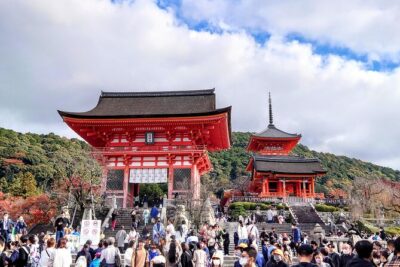
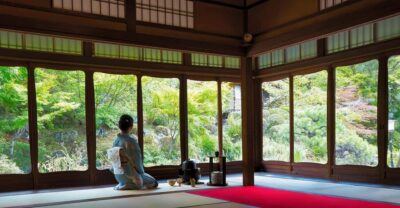
Tea Ceremony in a Traditional Tea House in Kiyomizu
Read our review →
Kyoto Geisha Walking Tour: Gion District & Hidden Gems
Read our review →

Gion Geisha District Walking Tour – Stories of Geisha
Read our review →
Best of Kyoto: Gion, Geisha, Pagodas & Cobblestones
Read our review →