Reviewed · TOURS IN KYOTO
Explore Hidden Alleyway with a Local Expert (Morning tour)
Kyoto’s best moments are often found between the major sights, and this private e-bike tour gives you a practical way to reach them. You pedal through geisha districts, quiet lanes, the Imperial Palace grounds, and along the Kamo River without spending the morning marching from one distant sight to another.
I like the small-group format, which lets your guide adjust the pace and answer questions as you go. I also like the battery-assisted bikes, especially in Kyoto’s summer heat or for anyone who wants to cover more ground without turning the morning into a workout. The main drawback is the weather: rain does not automatically cancel the tour, and the bus or walking alternative may feel less satisfying than cycling.
Key points at a glance
- Three hours on an e-bike: A useful first or second day introduction to Kyoto.
- Five carefully chosen areas: Miyagawacho, Gion, Tatsumi Bridge, Kyoto Imperial Palace, and Kashiwayacho by the Kamo River.
- Private group of 2 to 6: Your guide can respond to your interests and riding speed.
- Guides with strong personal style: Rich, Yuichi, and Annie are among the guides named in the tour feedback.
- Rain plan included: You can continue by bike with a free poncho or switch to public transportation.
- Good value for active sightseers: The price is $103.04 per person, including the e-bike and equipment.
Why an e-bike works so well in Kyoto
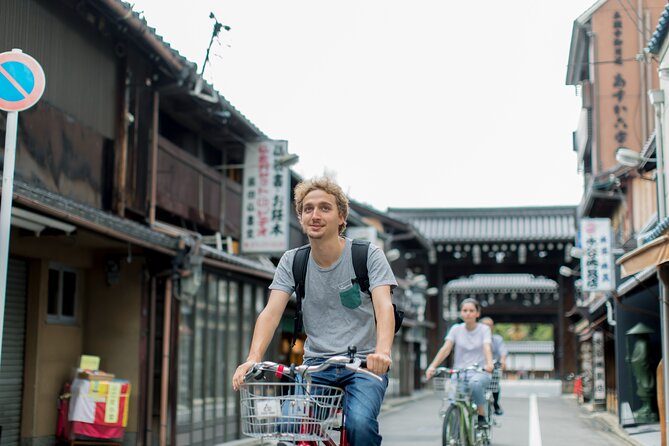
Kyoto spreads its important districts across a wide area. Gion is southeast of the Imperial Palace, while the Kamo River provides a natural route through the city. Walking between all these places takes time and energy. A standard sightseeing bus is easier on your legs, but it cannot slip into narrow lanes or pause beside a stream.
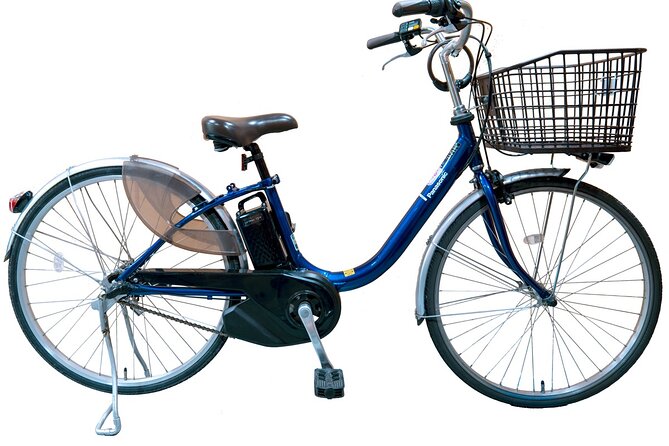
The e-bike offers a middle ground. You still move under your own power, but the battery helps on longer stretches and in hot weather. One person described the ride as comfortable even on a very warm day, while another advised padded shorts if you are not used to bicycle seats. That is sensible advice. Three hours is not an all-day ride, but you will spend much of the morning seated.
You need to be comfortable riding on the road without help. Children must be at least 10 years old, at least 145 centimeters tall, and able to ride safely. The tour accepts two to six people per guide. A group of seven to twelve can be arranged with an extra guide.
The meeting point is at 552-13 Higashiaburanokōjichō in Shimogyo Ward. The tour begins at 9 a.m. and returns to the same place. Allow a little extra time to find the starting point, since a calm arrival is better than beginning a cycling tour in a rush.
Other experiences people book in Kyoto:
- PERFECT KYOTO 1-Day Bus Tour
★ 5.0 · 13,518 reviews - Kyoto: Fushimi Inari, Kinkakuji, Bamboo Grove 1 Day Bus Tour
★ 4.8 · 4,316 reviews - Kyoto: Tea Ceremony in a Traditional Tea House in Kiyomizu
★ 4.9 · 3,519 reviews
Miyagawacho, Kyoto’s old wooden lanes
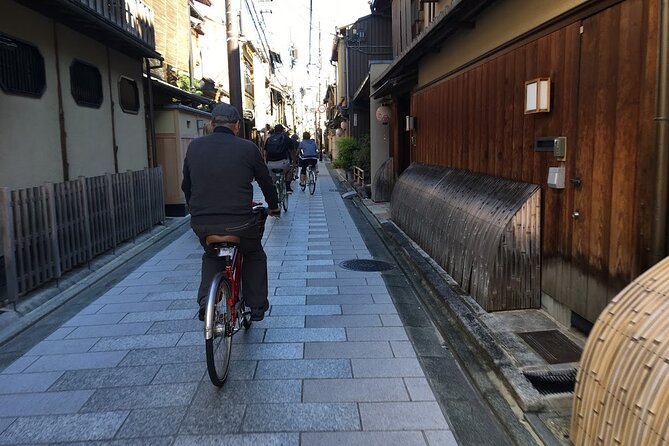
The first stop is Miyagawacho Kaburenjo, in one of Kyoto’s five traditional geisha districts. Miyagawacho is the second largest of those districts, and its narrow lane is lined with traditional wooden townhouses.
This is a quiet beginning. You are not entering a grand temple or standing before a famous gate. Instead, you get a close look at the type of street that gives old Kyoto its particular feel. The wooden façades, restrained design, and narrow roadway make the area feel removed from modern city traffic.
Your guide can provide context about geiko and maiko culture, the traditional performing arts, and the role of the district. The stop lasts about 15 minutes, so think of it as an introduction rather than a full cultural visit. You will not have time for a long exploration here, and the focus is on seeing the streets respectfully rather than treating the neighborhood as a photo set.
That distinction matters. These are working districts, not theme parks. Follow your guide’s lead, keep the bike under control, and avoid blocking the lane.
Gion and the surviving character of old Kyoto
From Miyagawacho, the route continues to Gion, Kyoto’s best-known geisha district. Gion developed around the work of maiko and geiko, and its traditional atmosphere remains one of the city’s strongest draws.
The tour gives you a short 15-minute look at the district. That is enough to see the old streets and understand how Gion connects with the nearby entertainment quarters, but it is not a substitute for spending a full evening in the area. The short stop is one reason this tour works best as an orientation. You see several parts of Kyoto in one morning, then can return later to the places that catch your interest.
Your guide is an important part of this section. Rich, Yuichi, and Annie are among the guides named in the tour feedback, and the strongest praise goes to guides who explain local customs, history, religion, and daily life in clear language. One of the route’s pleasures is being able to ask questions while you ride, rather than waiting for a formal talk at a single site.
The pace is also more personal than on a large group tour. You can ask to pause, request more detail, or simply keep moving if the streets are crowded. Since this is a private booking, your group is not trying to match the speed of twenty other people.
Tatsumi Bridge and the quieter side of Gion
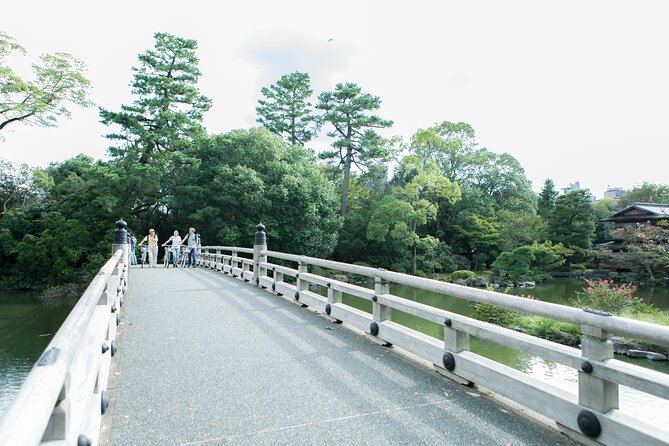
Tatsumi Bridge brings a change of mood. The route follows a narrow stream, with willow trees moving in the breeze. It is a small place, but it gives you a break from the more famous streets and a chance to see why Kyoto’s appeal is not limited to temples and palaces.
The stop is scheduled for about 15 minutes. You may find this one of the most restful parts of the morning, especially after riding through the city. The stream and trees create a simple setting for photos, though the space is limited and you should take care not to obstruct the path.
This is also a useful point to judge the tour’s style. It is not racing from landmark to landmark. The route mixes cultural districts with short pauses in attractive ordinary spaces. If you want a checklist of major interiors, this is not the right format. If you want a broad first look at Kyoto’s streets and neighborhoods, it makes good sense.
Same base, a different sort of day:
- Kyoto Geisha Walking Tour: Gion District & Hidden Gems
★ 4.7 · 3,273 reviews - Kyoto: Tea Ceremony Ju-An at Jotokuji Temple
★ 4.9 · 3,207 reviews - Kyoto: Gion Magical Night Walking Tour with Geisha Trivia
★ 4.9 · 2,393 reviews - Kyoto: 45-Minute Tea Ceremony Lesson Experience
★ 4.3 · 2,378 reviews
Kyoto Imperial Palace by bicycle
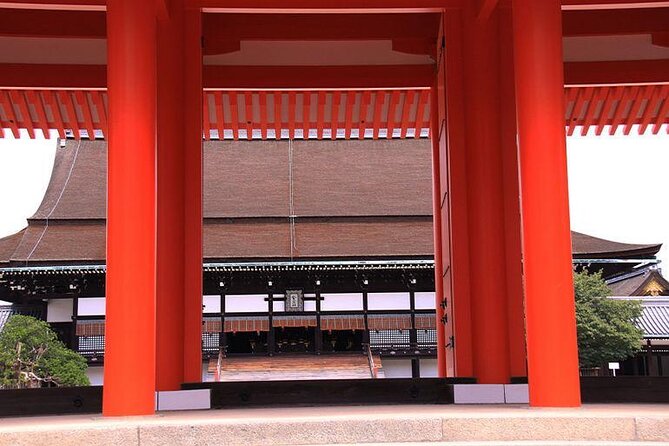
The Imperial Palace was once the residence of Japan’s Imperial Family. Today, the surrounding area is open to the public as a national garden, with seasonal flowers and broad paths.
The tour spends about 20 minutes cycling along gravel paths near the palace grounds. This is the longest listed stop, and the open space provides a welcome contrast to Gion’s tight lanes. You can stretch out, enjoy the greenery, and hear about the palace’s place in Kyoto’s past.
Do not expect a full palace tour or a long interior visit. The experience described here is a ride through the grounds and garden area. That limitation is also part of the appeal. You cover more of the city without stopping for a lengthy admission process.
The gravel surface may feel different from paved streets, so follow your guide’s instructions and keep your speed comfortable. The e-bike makes the distance easier, but it does not remove the need for care around pedestrians and other cyclists.
A break beside the Kamo River
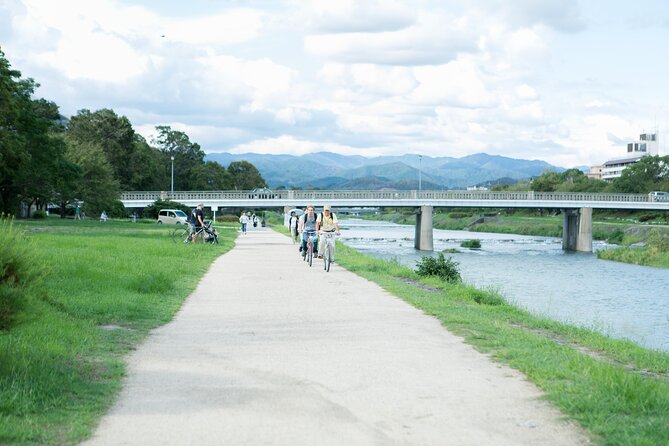
The final listed stop is Kashiwayacho, where you can rest beside the Kamo River. This is a favorite local place for relaxing, and the stop lasts about 20 minutes.
A river pause may sound modest, but it gives the tour a good finish. You have spent the morning moving through historic districts and city streets. Sitting near the water lets you slow down, talk with your guide, and take stock of what you have seen.
The route is flexible enough that a coffee break can sometimes be fitted in if your group requests one. That depends on timing and the guide, so treat it as a possibility rather than a promise. The river stop itself is included, while the tour details do not promise food or drinks.
The Kamo River is also a useful place to ask for suggestions for the rest of your Kyoto visit. Guides such as Rich have been praised for answering questions about culture, religion, and local life, not just pointing out monuments. This is where the private format can pay off.
What the $103.04 price really buys you
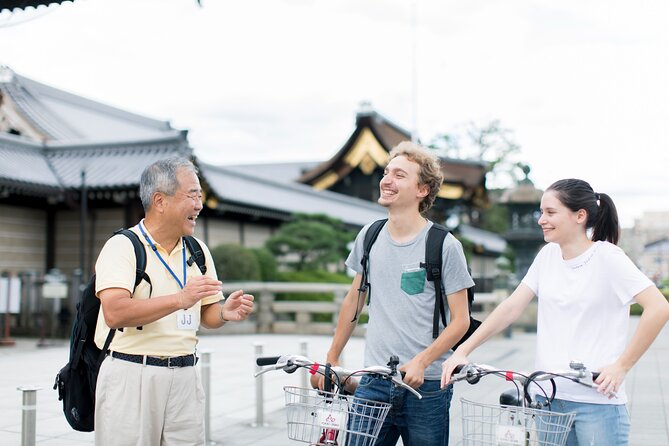
At $103.04 per person, this is not the cheapest way to see Kyoto. You can rent a regular bicycle, walk through Gion, or use city buses for less. The comparison changes when you count the e-bike, equipment, guide, route planning, and private service.
For two people, the total cost is significant, but you receive a guide dedicated to your group. For four to six people, the per-person price may feel more reasonable, particularly if you value local explanation and do not want to spend time planning a route.
The tour is also efficient. In three hours, you reach five distinct areas that are spread across Kyoto. That can save you a full day of piecing together transport and directions. Several people found that the tour felt like several walking tours combined, without the strain of covering the same distance on foot.
I would place the tour’s best value on your first or second day in Kyoto. It helps you understand the city’s layout and identify places worth revisiting. If you already know Kyoto well and want a slow, specialist visit to one neighborhood, a focused walking tour may serve you better.
Rain, heat, and the limits of the plan
The tour operates in rain. You can continue by bicycle with a free rain poncho, or switch to a walking tour using buses or the metro, with public transportation included in the tour fee.
That is useful flexibility, but it does not make a wet day ideal. If heavy rain is forecast, the transport option may turn the experience into a less connected series of stops. One person found the substitute disappointing because the weather made cycling impossible, although the guide remained pleasant.
The e-bike is more helpful in heat. The route still requires effort, and you should bring water and dress for the weather, but the battery reduces the strain. A coffee stop may be possible by request, yet you should not count on a long break.
The supplied booking information contains two different cancellation statements. One says you can request a refund by 6 p.m. Japan time at least three days before the tour date. Another says the experience is non-refundable and cannot be changed. Check the terms shown at checkout and confirm the policy with KCTP before paying, especially if rain could affect your plans.
Who will enjoy this Kyoto bike tour
I would choose this experience if you:
- Want a quick but meaningful introduction to several Kyoto districts
- Prefer a private guide to a large group
- Like asking questions about Japanese culture and history
- Are comfortable riding a bicycle on city roads
- Want to save your legs while still moving at street level
- Are visiting Kyoto for the first or second time
- Have a group of two to six people
I would think twice if you dislike cycling, have difficulty riding safely on roads, or want long visits inside major buildings. The route is about seeing Kyoto from the saddle, not collecting admission stamps.
It is also less suitable if your only free morning has a high chance of heavy rain. The alternate bus and walking plan exists, but it may not deliver the same feeling as riding through the lanes and along the river.
Should you book it?
Book this tour if you want personal guidance, broad coverage, and an active morning. The strongest part is the combination of Gion and Miyagawacho with quieter places such as Tatsumi Bridge and the Kamo River. You get a sense of Kyoto as a lived-in city, not only as a collection of famous sights.
The $103.04 price makes the most sense for a small group that will use the guide’s local knowledge and flexibility. Ask questions, request a comfortable pace, and mention if you want time by the river or a coffee stop.
Skip it if you are seeking a deep palace visit, a full geisha district program, or a guaranteed dry-weather ride. For most first-time visitors who can cycle safely, though, this is a smart way to get your bearings and see a wide slice of Kyoto before the day gets crowded.
FAQ
How long does the Kyoto e-bike tour last?
The tour lasts approximately three hours. It begins at 9 a.m. and ends back at the original meeting point.
Where does the tour start and finish?
It starts at 552-13 Higashiaburanokōjichō, Shimogyo Ward, Kyoto, 600-8235, Japan. The activity finishes at the same meeting point.
What places does the tour visit?
The route includes Miyagawacho Kaburenjo, Gion, Tatsumi Bridge, Kyoto Imperial Palace, and Kashiwayacho beside the Kamo River.
Is the tour private?
Yes. Only your group participates. One guide can accept a minimum of two and a maximum of six people. Groups of seven to twelve can arrange an additional guide.
Are the e-bike and equipment included?
Yes. The tour includes e-bike equipment rental.
Can children join the tour?
Children must be at least 10 years old, at least 145 centimeters tall, and able to ride a bicycle safely on the road without assistance.
What happens if it rains?
You can continue cycling with a free rain poncho, or switch to a walking tour using buses or the metro. Public transportation is included in the tour fee.
Can I cancel the tour and receive a refund?
The supplied terms conflict. One section says you should notify the operator at least three days before the tour date by 6 p.m. Japan time for a refund. Another says the experience is non-refundable and cannot be changed. Confirm the applicable rule with KCTP before booking.
How much does the tour cost?
The listed price is $103.04 per person.
Just added in Kyoto
- Private Cooking Class Udon in Kyoto Japan★ 5.0 · 23 reviews
- Your Private Vacation Photography Session In Kyoto★ 5.0 · 110 reviews
- Kyoto: Zen Meditation at a Private Temple with a Monk★ 5.0 · 25 reviews
- Private Pewter Sake Cup Experience with a Kyoto Artisan★ 5.0 · 31 reviews
- Kyoto Wagashi(Japanese sweets) Cooking Class near Fushimiinari★ 5.0 · 60 reviews
- Kyoto:Family-Friendly Kimono & Yukata Experience at WARGO★ 5.0 · 147 reviews
- Private Guided Traditional Buddhist Cooking in Japan★ 5.0 · 16 reviews
- Kyoto: Gion Geisha District & Sake-in-Hand Walking Tour★ 5.0 · 37 reviews
Tours in Kyoto, compared.
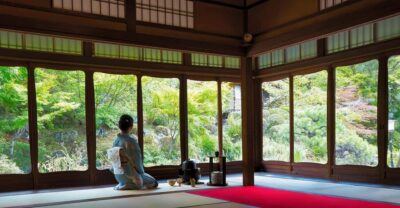
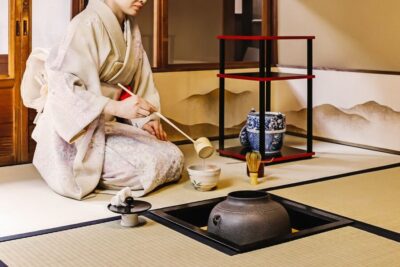
Tea Ceremony in a Traditional Tea House in Kiyomizu
Read our review →
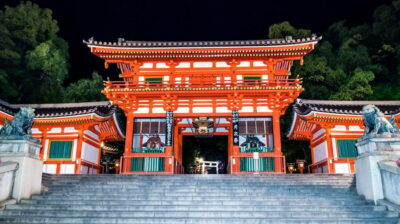
Kyoto Geisha Walking Tour: Gion District & Hidden Gems
Read our review →
Gion Geisha District Walking Tour – Stories of Geisha
Read our review →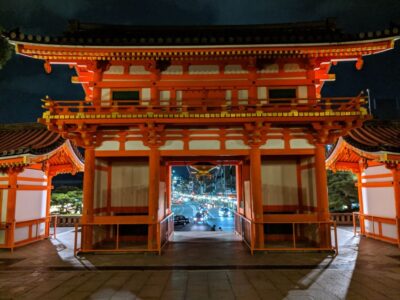
Best of Kyoto: Gion, Geisha, Pagodas & Cobblestones
Read our review →