
Reviewed · MOUNT FUJI DAY TRIPS
From Tokyo: Must-Visit Mount Fuji Highlight Full-Day Tour
Mount Fuji is famously shy. On a clear day, this tour gives you several chances to catch it from different angles, from the red Chureito Pagoda to lakes, tea fields, and small rural villages. At $69 per person, it packs a lot into one long day and removes the headache of figuring out rural buses and scattered viewpoints.
I like the choice of two scenic routes, and I like the practical round-trip coach from central Tokyo. Guides such as Kei, Goldie, Yui, and Yuichi have been praised for keeping large groups organized and making photo stops easy to manage. The main catch is time: this is a full 11-hour day, sometimes stretching to 12 or more in traffic, and Mount Fuji may hide behind clouds.
Quick reasons to consider this Fuji day trip
- Two different ways to see Fuji: Choose a photo-heavy route with Lake Kawaguchi, Shiraito Waterfall, and a tea plantation, or a calmer route with Oshino Hakkai and Lake Yamanaka.
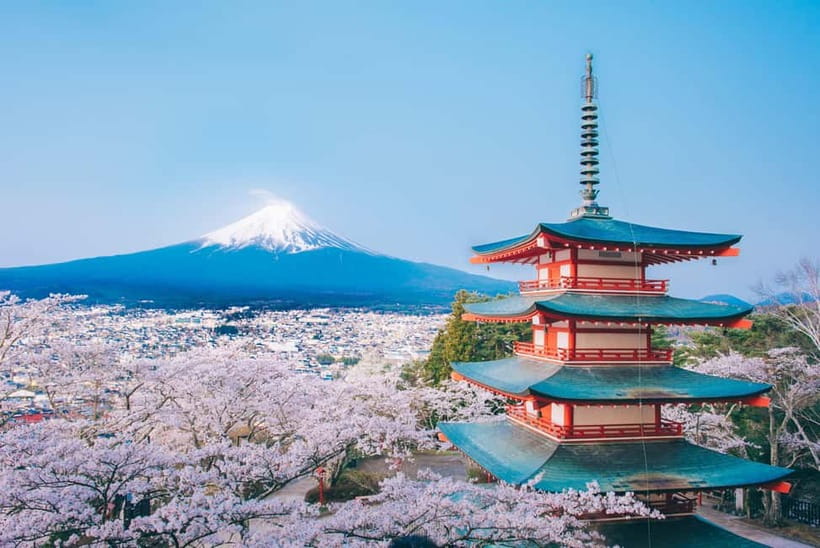
- The classic pagoda view: Arakurayama Sengen Park gives you the famous five-story Chureito Pagoda and Mount Fuji in one frame.
- A useful alternative to driving: You can reach several distant sights without renting a car or working out connections between lakes, falls, villages, and viewpoints.
- A real countryside day: Expect tea fields, spring-fed ponds, lakeside walks, waterfalls, and small-town streets, not just one crowded lookout.
- Large but comfortable transport: Groups can reach 49 people, yet the coach is described as comfortable with good legroom.
- Weather decides the prize: Clear skies can make this an exceptional photography day. Clouds can cover Fuji, although the other stops still offer plenty to see.
Why this tour works from Tokyo
The hard part of a Mount Fuji day trip is not finding one beautiful view. It is connecting several good ones without spending half your day waiting for a bus. This tour handles the long-distance movement by coach and links sights on different sides of the mountain.
The route from Tokyo can take about two and a half hours at the start, followed by another long return journey. That sounds slow, but the Fuji area is spread out. A private car would still cover substantial distances, and a self-drive day would require careful planning, parking, and navigation.
You should also know what kind of tour this is. It is not a small van outing with long, leisurely stops. The group may approach 49 people, and the schedule depends on traffic, weather, and road conditions. One exceptionally bad traffic day turned the outward journey into five hours and forced the group to miss two stops. That is unusual, but it shows why flexibility matters.
In exchange, you get a well-organized day with a guide, a driver, regular rest opportunities, and several chances to see the mountain. A strong guide can also change the order when clouds move in. Kei was specifically praised for adjusting the sequence to find clearer views and reflections.
Other days out to the mountain from Tokyo:
- Mt Fuji and Hakone 1-Day Bus Tour Return by Bullet Train
★ 5.0 · 26,383 reviews - Mt Fuji & Hakone Cruise, Drum Show Bullet Train 1 Day from Tokyo
★ 4.0 · 7,413 reviews - Tokyo Mt Fuji 5th St & Hakone Cruise Bus Tour w/Bullet Train
★ 4.4 · 5,024 reviews
Arakurayama Sengen Park and the Chureito Pagoda
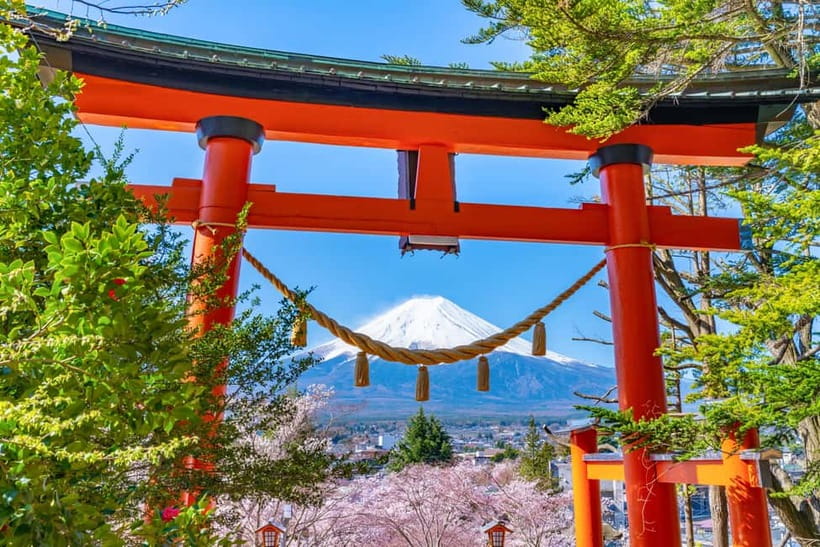
For many people, this is the main event. Arakurayama Sengen Park offers the classic composition: Mount Fuji behind a red five-story pagoda, with the slopes of Fujiyoshida below. It is the image most closely linked with a first visit to the Fuji area.
Getting to the pagoda requires a climb of roughly 400 steps. The walk is short enough for many people, but it is not flat or effortless. Wear shoes with a firm grip, especially in wet or cold weather. The reward is a broad view that explains why this stop is included on nearly every Fuji photo route.
The schedule gives roughly 45 minutes at the park, with about 1 hour 30 minutes to 1 hour 40 minutes including nearby Honcho Street. That can feel tight if you want several photographs, a slow climb, and time to pause at the top. A few people have wished for more time here, so move with purpose and do not linger too long at the lower steps.
Mount Fuji is not guaranteed from the pagoda. In cloudy weather, you may see only part of the summit or no mountain at all. The pagoda and town are still worthwhile, but your best images depend heavily on visibility.
Shimoyoshida Honcho Street and the Lawson photo stop
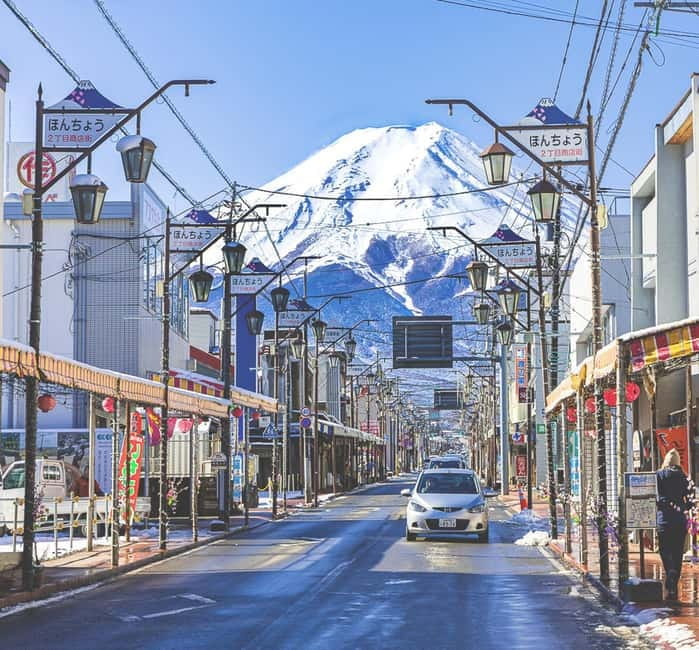
Shimoyoshida Honcho Street adds a different feel. Instead of a formal park, you get a nostalgic town street with local shops, overhead views toward Fuji, and the chance to frame the mountain above everyday Japan. It is a good place to slow down briefly and notice the contrast between old-style streets and the enormous peak beyond.
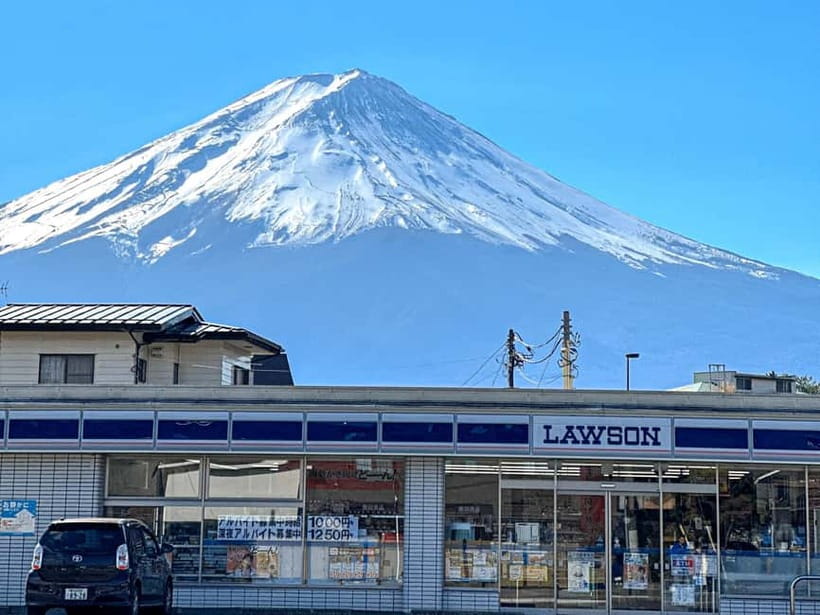
The Lawson Fujikawaguchiko Town Hall stop is a quick photo break, usually about 15 to 30 minutes depending on the route. The appeal is simple: the convenience store, town street, and Mount Fuji can create a very recognizable modern Japan photograph.
I would keep expectations in check. This stop is popular because the image is easy to recognize, not because the convenience store itself is a major attraction. One person would have preferred more time exploring Fujiyoshida instead. If your interests lean toward local streets and longer walks, this may feel like a short and slightly staged stop.
Lake Kawaguchi and Oishi Park
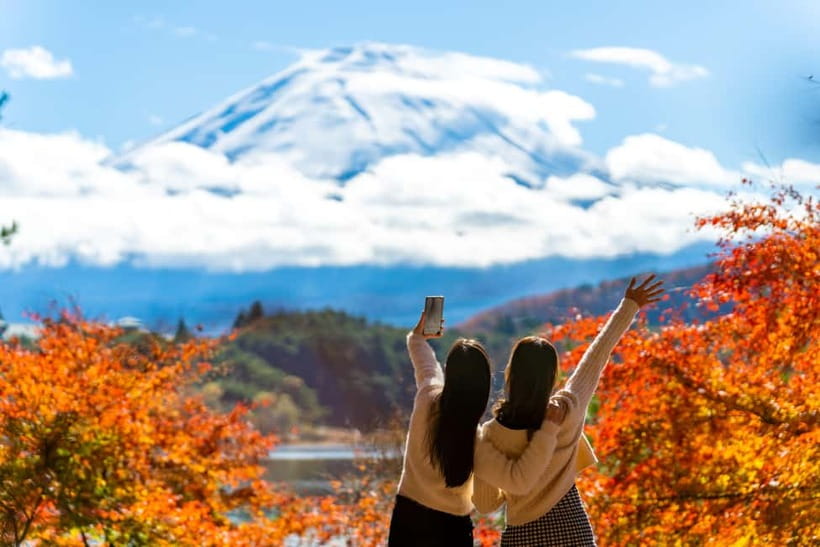
Lake Kawaguchi is one of the best all-around places to appreciate Fuji. The broad water, mountain backdrop, and open shoreline give you more room than the pagoda viewpoint. On a clear day, you can look for the mountain’s reflection and take photographs with fewer visual distractions.
The listed schedule includes about 20 minutes passing by Lake Kawaguchi and around 20 minutes at Oishi Park on the photo-focused route, while the fuller course description gives Lake Kawaguchi and Oishi Park about 40 minutes together. In practical terms, this is a scenic pause, not a full lakeside afternoon.
Oishi Park is especially appealing during flower seasons, when planted beds add color in front of Fuji. The exact display changes through the year, so do not expect the same view in every month. There are also opportunities to buy snacks, drinks, ice cream, and simple food at designated stops, but lunch is not included.
This is one place where weather can transform the day. In clear conditions, the lake and flowers make a polished postcard. Under cloud, the park remains pleasant, but the main subject may disappear.
Same base, a different sort of day:
- 1-Day Tokyo Bus Tour
★ 5.0 · 14,250 reviews - Tokyo: TOKYO SKYTREE® Admission ticket
★ 4.5 · 11,192 reviews - Tokyo: teamLab Planets TOKYO Digital Art Museum Entry Ticket
★ 4.6 · 9,779 reviews - Tokyo: Sumo Show Experience with Chicken Hot Pot and a Photo
★ 4.8 · 6,678 reviews
Shiraito Waterfall and the route’s quiet side
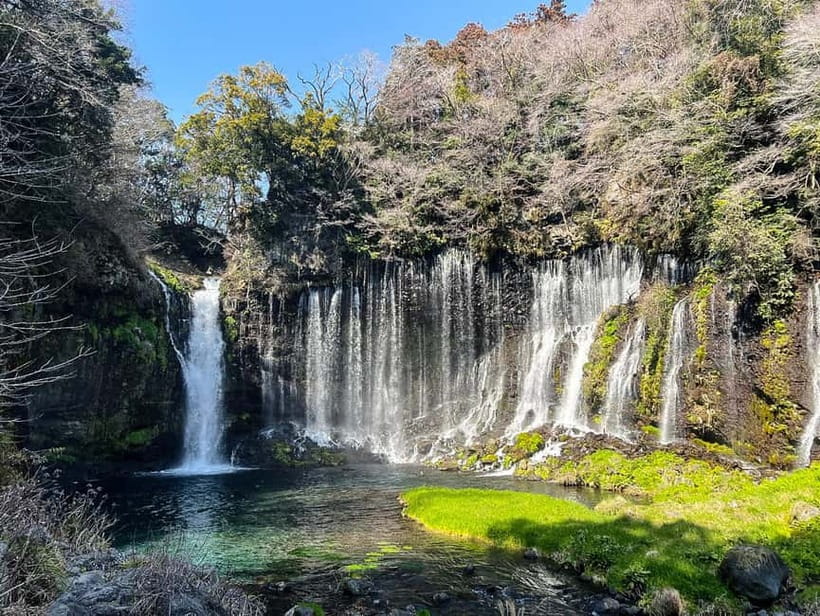
Shiraito Waterfall gives the day a welcome change of pace. Instead of looking for a distant summit, you watch thin white streams run across a broad rock wall. The cool mist and sound of falling water make this one of the more sensory stops.
The visit lasts about 50 minutes and includes a simple lunch break, but you should not count on a provided meal. Bring snacks or a light lunch, or buy something along the way. The tour does not include meals, so arriving prepared will save you from using precious sightseeing time looking for food.
Shiraito is valuable even on a cloudy Fuji day. That matters because the mountain may be hidden, while the waterfall remains a worthwhile sight in its own right. It also breaks up the long coach rides and gives you a chance to stretch your legs.
Obuchi Sasaba tea fields
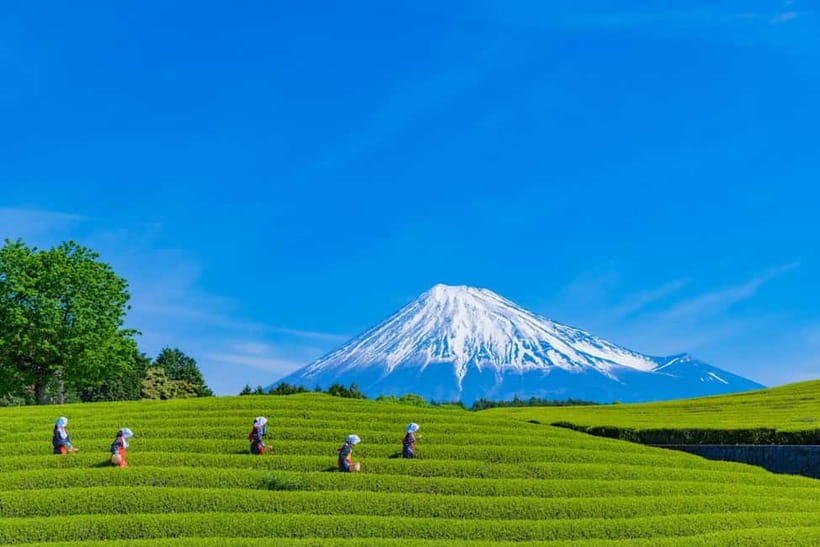
Obuchi Sasaba is the most distinctive stop on the photo-focused route. Here, rows of tea plants form neat green lines across the foothills, with Mount Fuji rising in the distance when the air is clear. It offers a more local and agricultural view than the famous pagoda or lake scenes.
You get about 40 minutes here. That is enough to take photographs and enjoy the open setting, though not enough for a long walk through the fields. The value of the stop lies in showing how Fuji appears in ordinary working countryside, surrounded by tea rather than tourist facilities.
If you want a classic Fuji photograph with a strong sense of place, this is one of the better stops. If the mountain is covered, the tea fields still provide an attractive rural setting, but the composition loses its signature focal point.
Oshino Hakkai’s clear spring ponds
Oshino Hakkai is included on the signature scenic route and may also appear in the broader day schedule. The village is known for eight clear spring ponds fed by water from Mount Fuji. Small bridges, traditional features, waterwheels, and ponds make this an easy place to explore at your own pace.
The stop lasts about an hour. That gives you time to walk between the ponds, take photographs, and buy food or drinks. The area has several places to sample local snacks, and guides can point you toward popular choices.
Oshino Hakkai is a useful stop for understanding the mountain beyond its outline. Fuji is not only a photograph. Its snowmelt and underground water shape the communities around it. The ponds also provide a good alternative when the summit is hidden.
Expect some walking on uneven paths and a busy village atmosphere at peak times. You will get more from the visit if you focus on the water, old structures, and views rather than rushing from pond to pond.
The Fuji World Heritage Centre and optional matcha break
The Fuji Museum, also called the Mt. Fuji World Heritage Centre, gives the day an indoor cultural stop. It explains the mountain’s geology and importance through an interactive presentation. This is helpful when weather blocks the view, since you can learn about Fuji even when you cannot see its peak.
The stop lasts about an hour. Depending on the booking and day’s arrangement, you may instead have the option of visiting a nearby matcha café. The café choice suits you if you would rather rest with a drink than spend more time indoors.
This part of the tour adds useful context, but it may not be the highlight for someone focused only on photographs. The option is a good feature because it lets you match the stop to your mood and the weather.
Lake Yamanaka and Hirano Beach
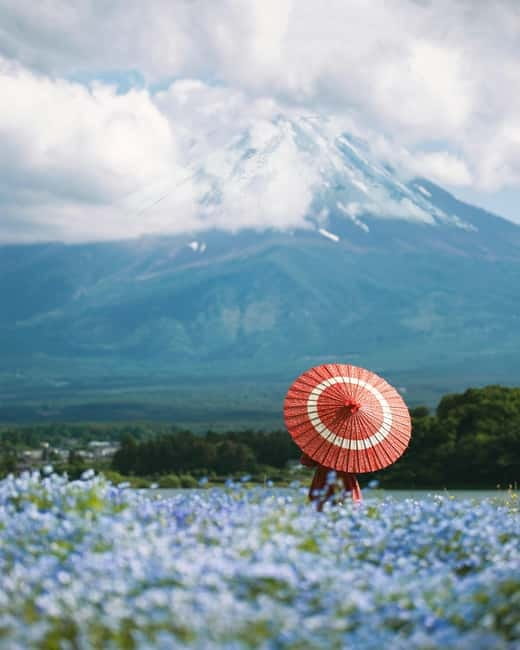
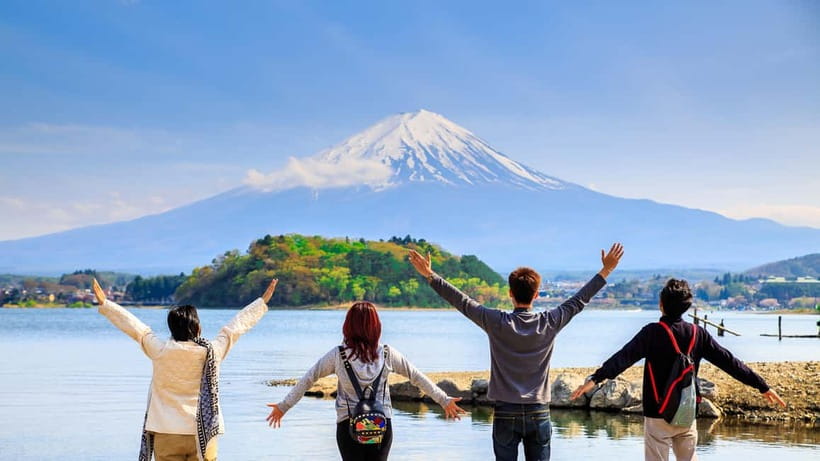
Lake Yamanaka is the highest and largest of the Fuji Five Lakes, according to the tour information, and the stop focuses on a relaxed lakeside walk. Hirano Beach offers broad views across the water and, on a calm clear day, the possibility of seeing Fuji reflected on the surface.
You get roughly 50 minutes to one hour here. That is enough for a walk, photographs, and a quiet pause after the busier stops. This is a better choice for you if you prefer open space and natural views to tightly packed photo points.
The lake also shows another side of Fuji. At Kawaguchi, the setting can feel more polished and visitor-focused. At Yamanaka, the appeal is the spacious shoreline and slower rhythm. Again, cloud cover may remove the mountain, but the water and surrounding scenery remain enjoyable.
Transport, group size, and the long clock
Round-trip transport from central Tokyo is included, with pickup options listed near Starbucks Coffee at Shinjuku L Tower and Tokyo Station’s Marunouchi North Exit 2. Your exact meeting point depends on the option booked, so check it carefully before the morning of departure.
The bus is comfortable, and one particularly useful detail is the reported legroom. That matters on a day with long highway stretches. There are also bathroom breaks and chances to buy hot or cold food, snacks, and drinks.
The coach can carry up to 49 people. A large group means you will need to listen for meeting instructions and return on time. Guides use group chats and send meeting-point details in some cases, which can make it easier to find the bus after exploring.
The advertised duration is 11 hours, but actual days can run longer. One outing lasted about 12.5 hours, and heavy traffic can extend the ride dramatically. Japanese law limits vehicle operation to 10 hours, so the guide may change the order or adjust the itinerary to stay within legal limits.
What the guides add
The guide is important on a day like this because there are many stops and a lot of timing to manage. English, Korean, and Chinese guiding is available, although the exact language mix depends on the departure.
Guides named Kei, Goldie, Yui, Jun, Jeffrey, Hooni, and Yuichi have been praised for clear directions, friendly energy, and careful attention to the group. Several guides have helped with photographs, recommended food, shared small treats, or provided an instant photograph or origami figure.
The strongest practical quality is schedule control. A good guide explains the next step, watches the clock, and gives clear instructions before you leave the bus. That is especially important when a large group is spread across a park or village.
Communication can vary when several languages are being used. One person felt the guide worked hard to communicate across a multilingual group, which shows both the effort involved and the possible limitation. If you need detailed historical interpretation in one language, confirm the language offered for your departure.
Is $69 good value?
At $69, this is strong value if you want variety and do not want to drive. The price covers transport and a guide, while independent travel to a pagoda, lake, waterfall, tea field, spring village, and second lake could require several separate tickets and careful connections.
The price is less attractive if you want a slow, private day. You are paying for access and convenience, not long stays at every stop. Meals, insurance, and personal purchases are extra, so budget for food and drinks.
The weather question is the biggest value risk. No tour can guarantee a clear view of Mount Fuji. You may get several perfect angles, one partial glimpse, or no mountain at all. The route remains worthwhile in poor weather because of the waterfall, ponds, museum, lakes, and tea fields, but the tour’s emotional payoff is highest on a clear day.
Cancellation is flexible up to 24 hours before departure for a full refund, and you can reserve now and pay later. The activity is stroller-friendly if you notify the provider, but it is not wheelchair-accessible. The pagoda steps also make comfortable shoes essential.
Who should book this Mount Fuji tour?
I would choose it if you have limited time in Tokyo and want one organized day outside the city. It suits first-time visitors, photographers, solo visitors who want help getting pictures, and anyone who would rather not rent a car.
It is also a good match for people who want more than one Fuji viewpoint. The mountain looks different from a pagoda, a lake, a tea field, and a village, and the route gives you that range.
I would hesitate if you dislike early starts, long bus rides, fixed schedules, or large groups. You should also think twice if climbing 400 steps is difficult, since the pagoda is one of the day’s main attractions.
Should you book it?
Book this tour if your priority is seeing many of the Fuji area’s famous sights in one day for a modest price. Choose the photo-focused course for classic views, Lake Kawaguchi, Shiraito Waterfall, and Obuchi Sasaba. Choose the signature scenic course for Oshino Hakkai, the Fuji Museum or matcha café, and Lake Yamanaka.
Do not book it expecting a quiet private outing or a guaranteed Fuji view. Go with snacks, comfortable shoes, a charged phone, and patience for traffic. If the weather clears, you may come home with the pagoda, lake reflection, and tea-field photographs you hoped for. If it does not, you still get a useful, varied look at rural Japan beyond Tokyo.
FAQ
How long does the Mount Fuji tour last?
The advertised duration is 11 hours. Actual days can be longer because of traffic, and some departures have lasted about 12 to 12.5 hours.
How much does the tour cost?
The listed price is $69 per person.
What transport is included?
Round-trip coach transportation from central Tokyo is included.
Where does the tour start?
There are two possible starting locations: Starbucks Coffee at Shinjuku L Tower and Tokyo Station’s Marunouchi North Exit 2. The meeting point may vary by booking option.
Which languages are available?
Live guiding is available in English, Korean, and Chinese. The exact language arrangement depends on the departure.
Are meals included?
No. Meals are not included. Bring snacks or a light lunch, although you will have chances to buy food and drinks during the day.
What are the two route choices?
The photo-focused course includes Arakurayama Sengen Park, Honcho Street, Lawson Fujikawaguchiko, Lake Kawaguchi, Oishi Park, Shiraito Waterfall, and Obuchi Sasaba. The signature scenic course includes Arakurayama Sengen Park, Honcho Street, Lawson Fujikawaguchiko, the Fuji Museum or a matcha café, Oshino Hakkai, and Lake Yamanaka.
Is the tour suitable for wheelchair users?
No. The activity is not wheelchair-accessible.
Can I bring a stroller?
Yes, the activity is stroller-friendly, but you should inform the provider if you are bringing one.
What should I bring?
Wear comfortable shoes and bring snacks. The climb to Chureito Pagoda includes roughly 400 steps, so practical footwear is especially important.
Just added in Tokyo
- Nikko: Edo Wonderland Edomura Cultural Theme Park Ticket★ 4.3 · 205 reviews
- 《MEMBERS-ONLY-BAR-HOPPING》Discover Your Special Whiskey in Tokyo!★ 5.0 · 29 reviews
- Japanese Whisky Hunting《HIGH-QUALITY-ONLY》Rare Tasting Class★ 5.0 · 20 reviews
- Luxury Tokyo Sake, Cocktail, Whisky and Pairing Tour★ 5.0 · 18 reviews
- Wagyu & Sake Pairing in Shinjuku – Steak, Shabu-Shabu & More★ 5.0 · 112 reviews
- Small-Group Wagyu Beef and 7 Japanese Dishes Tokyo Cooking Class★ 5.0 · 190 reviews
- Mt. Fuji & Hakone Cherry Blossom private One Day Tour★ 4.5 · 35 reviews
- Mt. Fuji, Hakone Private Tour from Tokyo – Onsen, Arts and Nature★ 5.0 · 79 reviews
Mount Fuji Day Trips, compared.
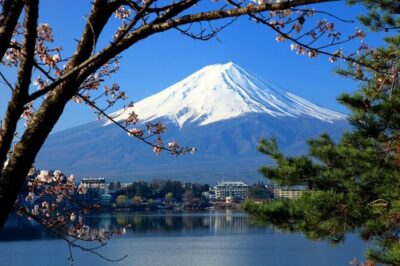
Mt Fuji and Hakone 1-Day Bus Tour Return by Bullet Train
Read our review →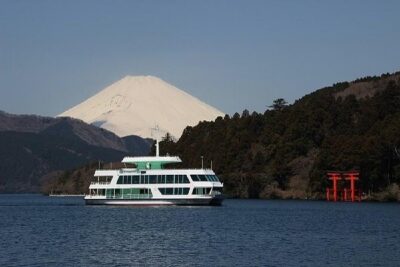
Mt Fuji & Hakone Cruise, Drum Show Bullet Train 1 Day from Tokyo
Read our review →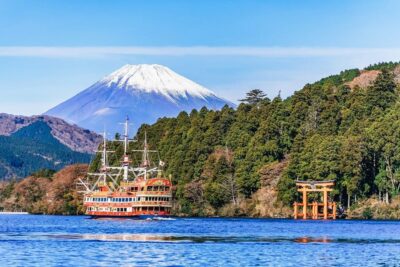
Tokyo Mt Fuji 5th St & Hakone Cruise Bus Tour w/Bullet Train
Read our review →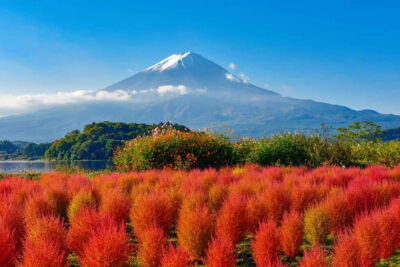

Mt.Fuji,Kawaguchiko Oishi Park,Arakurayama Sengen Park
Read our review →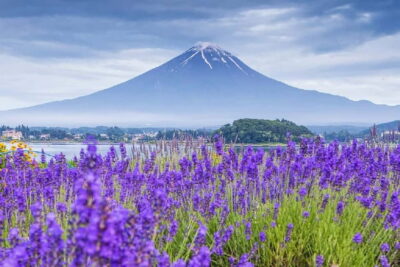
Mt Fuji Top 5 Spots Day Tour: Arakurayama Park,Oshino Hakkai
Read our review →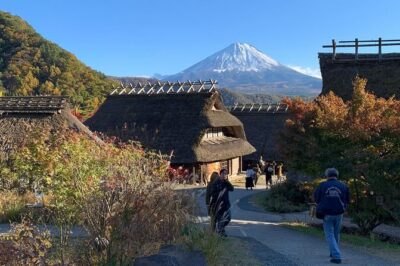
Private Tour to Mt. Fuji and Hakone (Fully Licenced Operator)
Read our review →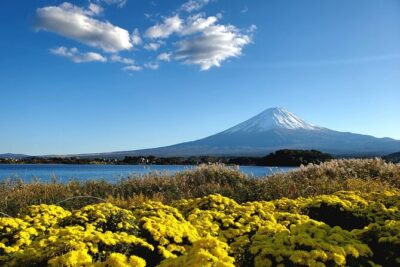
Mount Fuji Full-Day Private Tour from Tokyo (Customizable)
Read our review →Browse the lists this tour appears in