Reviewed · TOURS IN KYOTO
Kyoto: Beginner Knife Sharpening & Handle Fitting Workshop
The most useful souvenir from this Kyoto workshop is one you learn to maintain yourself. You choose a Santoku, Deba, or Yanagi knife, sharpen it on the shop’s whetstones, then fit a magnolia handle with help from the instructors. The finished knife goes home with you.
I like the small class, limited to three people, because you get real corrections instead of a quick demonstration. I also like the honest value: for $161, you receive the two-hour lesson, a knife, a handle, protective clothing, and engraving, rather than paying only for a cooking souvenir. The main consideration is that handle fitting uses fire, so your clothes may pick up a smoky smell.
Key points at a glance
- You make a working knife, not just watch a demonstration: The session covers sharpening and handle fitting, with hands-on practice throughout.
- Three knife styles are available: Choose a Santoku, Deba, or Yanagi for your workshop knife.
- The class is genuinely small: A maximum of three participants allows close attention from the English or Japanese instructor.
- The magnolia handle is included: Other handle types are available for an extra charge.
- Engraving requires advance notice: You can request up to four letters before the workshop.
- The shop is near Nishiki Market: Look for the white storefront curtain, and arrive five minutes early.
What makes this Kyoto workshop different
Many Kyoto souvenirs look good in a suitcase and then sit on a shelf. This one gives you a skill you can use at home. You leave with a knife you have sharpened and helped assemble, plus a better sense of how Japanese kitchen knives should be cared for.
The class takes place at Japanese knife shop HIRAI in central Kyoto, close to the Nishiki Market area. It is a shop visit, a practical lesson, and a small piece of Japanese craft in one two-hour appointment. The group limit of three matters here. Sharpening is all about small adjustments in pressure, angle, and movement, so personal guidance is far more useful than standing at the back of a large class.
English instruction is available, along with Japanese. Instructors such as Julio and Tatsu have guided beginners through the process, and the teaching style is aimed at people who may have never used a whetstone before. You do not need to arrive with knife-making experience.
Other experiences people book in Kyoto:
- PERFECT KYOTO 1-Day Bus Tour
★ 5.0 · 13,518 reviews - Kyoto: Fushimi Inari, Kinkakuji, Bamboo Grove 1 Day Bus Tour
★ 4.8 · 4,316 reviews - Kyoto: Tea Ceremony in a Traditional Tea House in Kiyomizu
★ 4.9 · 3,519 reviews
Finding the shop near Nishiki Market
You come directly to the shop rather than meeting a guide at a train station or hotel. The useful landmark is the white storefront curtain at the building. The Nishiki Market area can be busy and visually crowded, so allow extra time to locate the entrance.
Arrive at least five minutes early. That small cushion helps you find the shop, settle in, and begin on time. The workshop lasts two hours, and the session has enough steps that losing the first few minutes would be a nuisance.
The central location is convenient if you are already visiting Nishiki Market, but it also creates the one navigation issue worth noting. A shopfront among market streets is easy to miss. Keep the meeting instructions handy rather than assuming you will spot it immediately.
Choosing between Santoku, Deba, and Yanagi
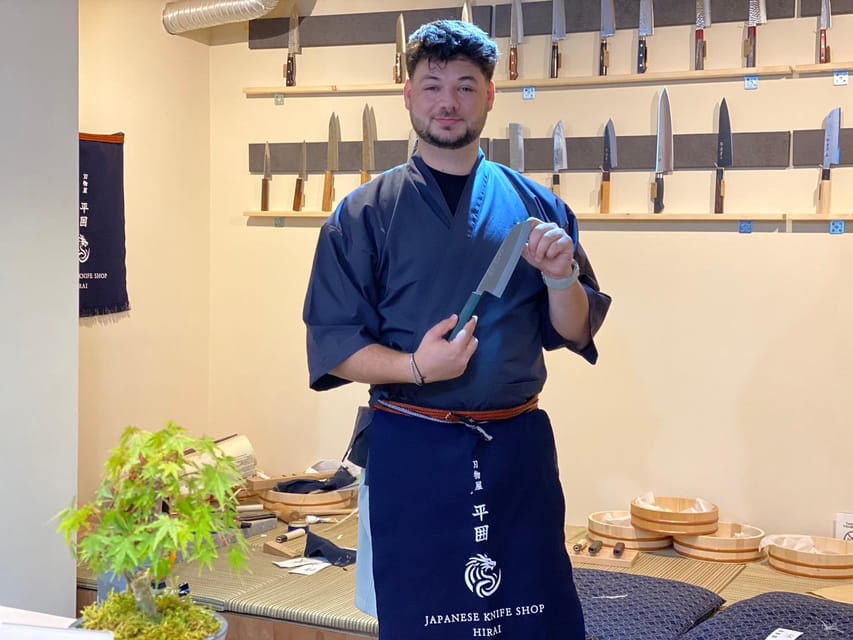
Before sharpening begins, you choose one knife for the workshop. The three options suit different kitchen habits.
A Santoku is the most broadly useful choice for a home cook. Its name is associated with three common kitchen tasks, and it is the sensible pick if you want one Japanese knife for everyday preparation.
A Deba is associated with fish preparation and has a more specialized purpose. Choose it if that style of cooking interests you, or if you already have an everyday kitchen knife and want something less ordinary.
A Yanagi is another specialized Japanese knife, commonly linked with precise slicing. It appeals to someone who wants a knife with a clear connection to Japanese food culture rather than a general-purpose blade.
The shop gives you a chance to select the style that fits your interests. You may also purchase additional knives in the shop, but those purchases are not part of the $161 experience. The standard knife choices are the practical value of the class. Upgrades can be tempting once you see the wider selection, so decide before you arrive how much you want to spend.
The opening lesson: Japanese knives and their purpose
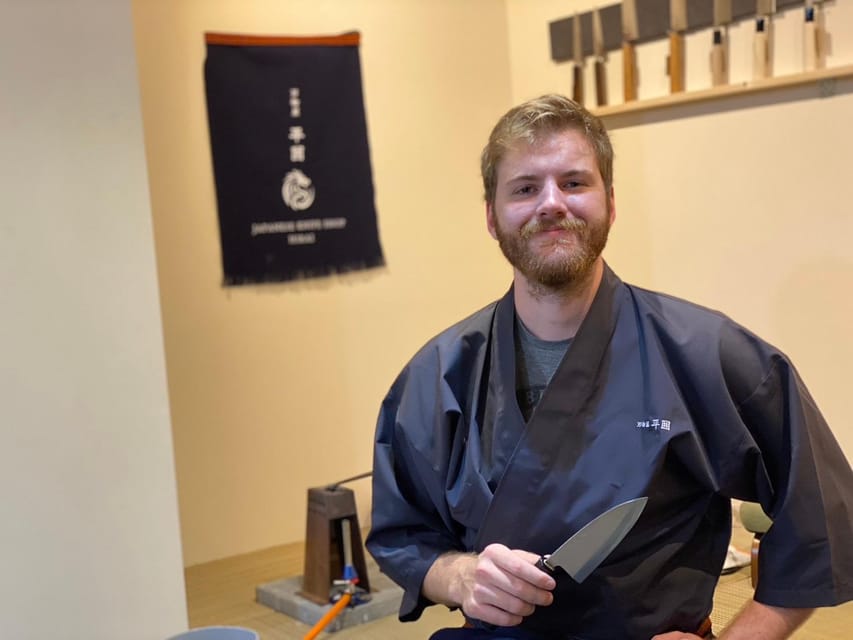
The session begins with an explanation of Japanese knives and their history. This is not just background decoration. It helps you understand why different blade shapes exist and why sharpening technique must match the knife.
You first receive an introduction to the tools and the process. The instructors demonstrate the basic movements, then let you practice with guidance. This order is helpful for beginners because you can see the full motion before trying to copy it.
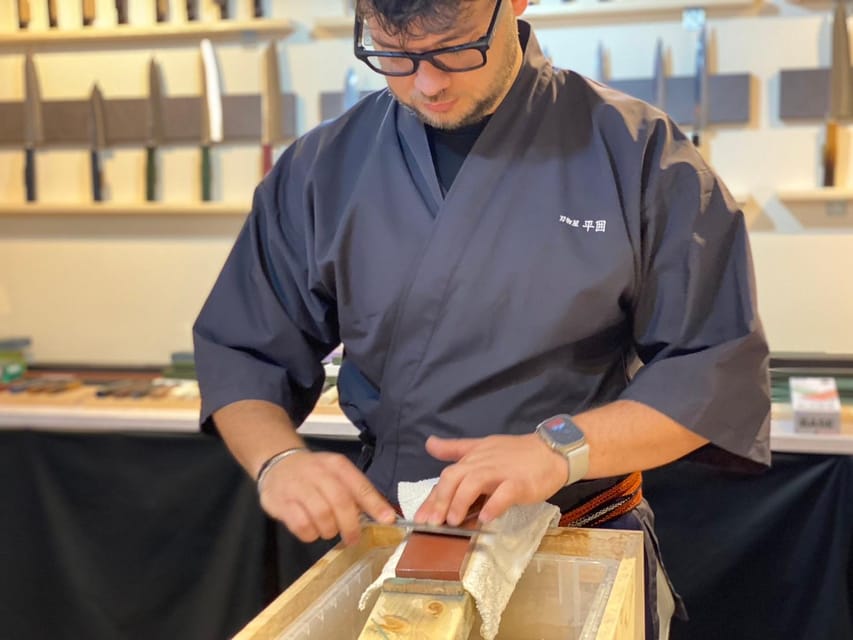
The lesson is hands-on rather than a lecture. You work with the equipment provided by the shop, including its whetstones. A few minutes of explanation can prevent the usual beginner problems: using the wrong angle, pressing too hard, or moving the blade without a consistent rhythm.
One useful feature is direct correction. Julio, named by several participants as an instructor, is described as patient and clear when helping beginners find the right technique. That matters because a video can show you what sharpening looks like, but it cannot tell you when your hand position is slightly off.
Same base, a different sort of day:
- Kyoto Geisha Walking Tour: Gion District & Hidden Gems
★ 4.7 · 3,273 reviews - Kyoto: Tea Ceremony Ju-An at Jotokuji Temple
★ 4.9 · 3,207 reviews - Kyoto: Gion Magical Night Walking Tour with Geisha Trivia
★ 4.9 · 2,393 reviews - Kyoto: 45-Minute Tea Ceremony Lesson Experience
★ 4.3 · 2,378 reviews
Learning to sharpen on a whetstone
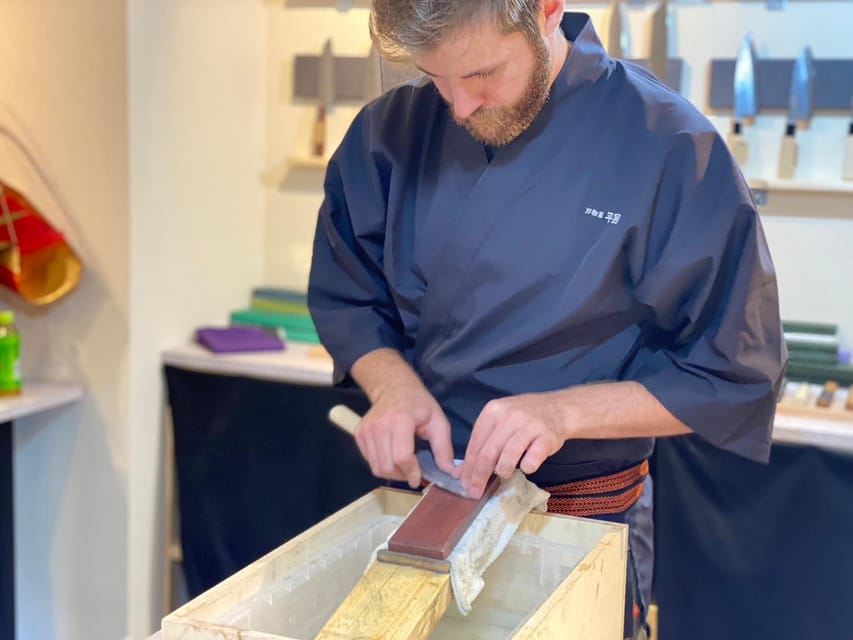
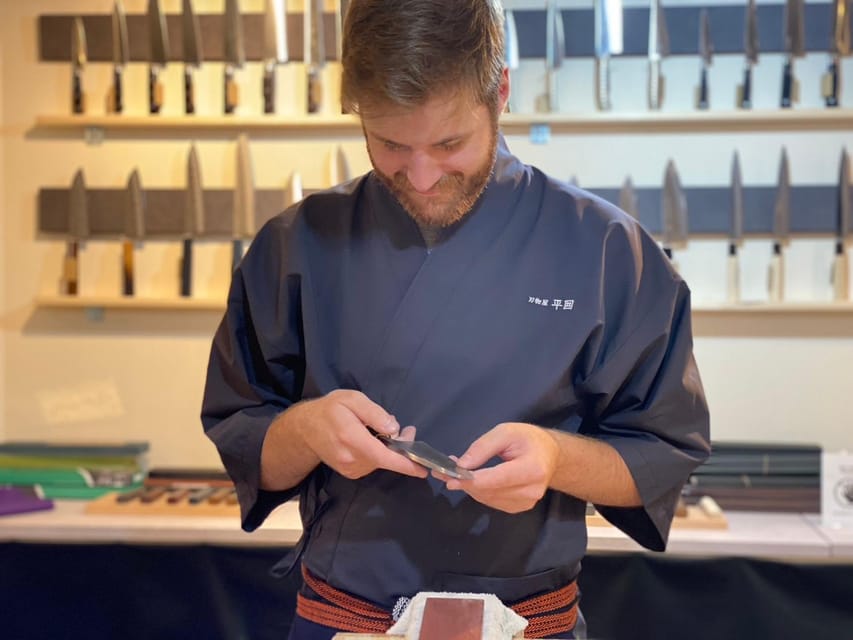
The sharpening section is the heart of the workshop. You work on a demonstration knife first, then move to your own selected blade. The instructor explains the steps, shows the motion, and checks your progress as you practice.
For many home cooks, the whetstone is the intimidating part of knife care. You may understand the idea but still feel unsure about the angle and pressure. Here, you get the benefit of repeated practice with someone watching your technique. That makes the skill easier to repeat at home.
The class is designed for beginners, not professional chefs. You are not expected to produce a perfect edge without help. The point is to understand the method well enough to maintain a knife responsibly and continue practicing.
Concentration is part of the experience. Sharpening is not a fast, flashy activity. It involves controlled movement and attention, which gives the workshop a calm pace. If you prefer a quick photo opportunity, this may feel slow. If you want a useful craft skill, the steady pace is a strength.
The whetstones belong to the shop and are used during the class. Purchasing a whetstone is not included. That is worth remembering when you judge the long-term value. You leave with the knowledge of how to sharpen, but you will need your own equipment later if you want to continue the practice at home.
Fitting the magnolia handle
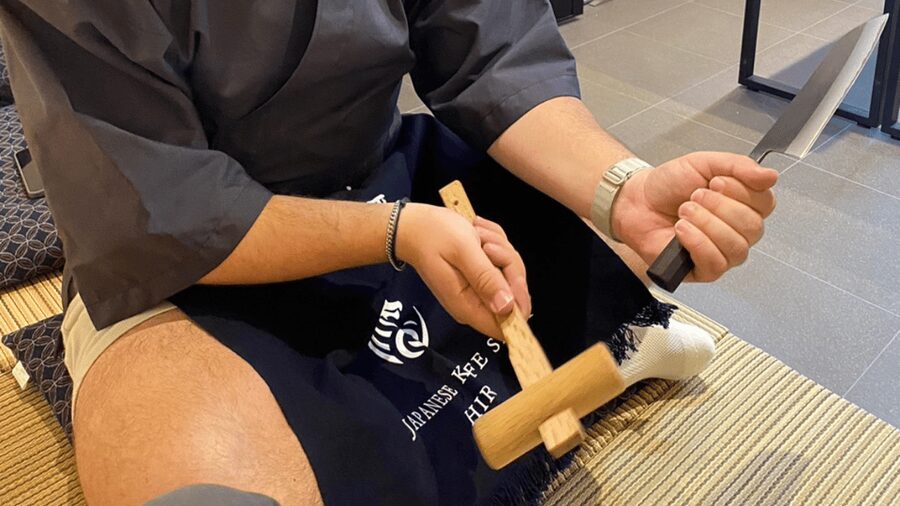
After sharpening, you move to handle fitting. A magnolia tree handle is included, and you select and attach it with guidance from the instructor. This changes the experience from a standard knife purchase into something you helped finish yourself.
The handle-fitting section uses fire. Smoke may come out during the process, and your clothing may smell smoky afterward. Wear something you do not mind exposing to smoke, especially if you have evening plans after the class.
This part also requires care and patience. You work with the shop’s makers rather than simply choosing a handle from a display and taking it away. The instructors help with the assembly, while you take part in the steps that give the knife its personal character.
Other handle types can be selected for an additional fee. The surcharge depends on the handle you choose, so ask about the price before agreeing to an upgrade. The included magnolia handle is enough to complete the workshop, and choosing it keeps the advertised price easier to understand.
Engraving and taking your knife home
Engraving is included, but you must request it in advance. You can have up to four letters added, so decide on the characters before the workshop and provide the details ahead of time. Do not wait until you are standing at the workbench if you want this option.
The finished knife is packaged for you after the workshop. This is helpful for carrying it through the rest of your Kyoto visit and for taking it home safely. The knife is also more than a shop purchase because you sharpened it and fitted the handle yourself.
The personal connection is the main reason I would choose this over simply buying a Japanese knife. A store-bought blade may be beautiful, but this one carries a memory of the lesson and the work. At the same time, you should be comfortable with the responsibility of owning a sharp kitchen tool and following airline and customs rules for transporting it home.
Is $161 a fair price?
At $161 per person, this is not a bargain activity in the usual sightseeing sense. You are paying more than you would for a short demonstration or a market visit. The value comes from the combination of instruction and the included knife.
The price covers:
- The two-hour workshop
- A knife to sharpen
- The magnolia handle you fit
- Use of the shop’s whetstones
- A Japanese working uniform and apron
- The experience fee
- Engraving
The knife itself is a major part of the calculation. If you were already planning to buy a Japanese knife, the class adds useful instruction and a personal finishing process for a relatively small increase over a simple purchase. If you have no interest in owning or maintaining a kitchen knife, the price may feel high.
The class also avoids one common problem with craft workshops: paying an entry fee and then finding that the finished object costs extra. Here, the basic knife and handle are included. You can buy additional knives or upgrade the handle, but those choices are optional.
I would treat the $161 as a combined lesson and souvenir price. It is strongest for cooks, serious food lovers, and anyone who wants to learn a skill that continues after the holiday.
Who will enjoy the two-hour format
This workshop suits adults and older teenagers who like practical activities. Children under 15 are not allowed, and the experience is not suitable for people over 80 or wheelchair users. Those limits are important because the class involves close work, hand control, and fire during handle fitting.
You will get the most from it if you enjoy learning by doing. The session includes explanation, but you spend much of the time sharpening and working with the handle. Someone who wants a relaxed cultural activity with no tools or concentration may prefer another Kyoto experience.
It is also a good choice for couples, friends, or a parent and older child. With only three participants, the group stays personal, and each person can receive help. The small size also means you should reserve ahead if your Kyoto dates are fixed.
The workshop works for both beginners and people who already cook often. Beginners gain confidence with whetstone technique. Experienced home cooks can focus on refining their angle and pressure, then choose a more specialized Deba or Yanagi if that suits their kitchen.
Practical details before you book
Book the knife style in advance or be ready to choose it when arranging the workshop. If you want engraving, send the requested characters ahead of time, limited to four letters.
Wear clothes that can handle smoke. The handle-fitting section uses fire, and smoke sometimes comes out. A working uniform and apron are provided, but those do not fully remove the need for sensible clothing underneath.
Pets, baby strollers, smoking, alcohol, drugs, and loud behavior are not allowed. These rules fit the small workshop setting, where safety and concentration matter.
The activity is available in English and Japanese. The English guidance is especially useful during the sharpening portion, when a small correction can make a large difference. You should still expect some focused listening and hands-on practice rather than a purely casual demonstration.
Free cancellation is available up to 24 hours before the workshop for a full refund. You can also reserve now and pay later, which helps if your Kyoto schedule is still moving.
Should you book the HIRAI knife workshop?
Book it if you want a useful Kyoto souvenir, enjoy food and craft, or have always wanted to learn how to use a whetstone. The best part is the combination of clear beginner instruction and a knife you take home, with no need to buy the basic blade separately.
Think twice if you dislike close manual work, cannot wear clothing that may smell smoky, or want a completely passive activity. The class asks you to concentrate, and the extra cost of upgraded handles or additional knives can change the final bill.
For most cooks, I think the value is strong. You receive a real knife, a magnolia handle, practical maintenance skills, and a small-group lesson led in English or Japanese. Choose the Santoku for everyday use, the Deba or Yanagi for a more specialized interest, arrive early, and give the workshop two quiet hours of your Kyoto day.
FAQ
How long does the knife sharpening and handle fitting workshop last?
The workshop lasts two hours.
How much does the experience cost?
The listed price is $161 per person.
Which knives can I choose?
You can choose a Santoku, Deba, or Yanagi knife for the workshop.
Is the knife included?
Yes. The knife you sharpen during the workshop is included, along with the magnolia tree handle you fit.
Is engraving available?
Yes. Engraving is included, but you must request it in advance and provide up to four letters.
Is the workshop available in English?
Yes. Instruction is available in English and Japanese.
Can I cancel the booking?
Yes. You can cancel up to 24 hours in advance for a full refund.
Just added in Kyoto
- Private Cooking Class Udon in Kyoto Japan★ 5.0 · 23 reviews
- Your Private Vacation Photography Session In Kyoto★ 5.0 · 110 reviews
- Kyoto: Zen Meditation at a Private Temple with a Monk★ 5.0 · 25 reviews
- Private Pewter Sake Cup Experience with a Kyoto Artisan★ 5.0 · 31 reviews
- Kyoto Wagashi(Japanese sweets) Cooking Class near Fushimiinari★ 5.0 · 60 reviews
- Kyoto:Family-Friendly Kimono & Yukata Experience at WARGO★ 5.0 · 147 reviews
- Private Guided Traditional Buddhist Cooking in Japan★ 5.0 · 16 reviews
- Kyoto: Gion Geisha District & Sake-in-Hand Walking Tour★ 5.0 · 37 reviews
Tours in Kyoto, compared.


Tea Ceremony in a Traditional Tea House in Kiyomizu
Read our review →
Kyoto Geisha Walking Tour: Gion District & Hidden Gems
Read our review →


Gion Geisha District Walking Tour – Stories of Geisha
Read our review →
Best of Kyoto: Gion, Geisha, Pagodas & Cobblestones
Read our review →