
Reviewed · FUSHIMI INARI TOURS
Kyoto Early Bird English Tour: Fushimi Inari & Gion(Private opt)
Kyoto is at its best before the tour buses and selfie sticks arrive. This early start takes you from Fushimi Inari’s red torii gates to Kiyomizu-dera and the old lanes of Gion, giving you a strong first look at the city in one morning.
I like two things here: the route packs several major sights into a sensible east Kyoto walk, and the guide does more than point at buildings. Ikki is praised for clear English, local knowledge, easy conversation, and taking a steady stream of good photos. The main catch is the pace and length: the advertised time is four to five hours, but one booking finished in about two and a half.
- Early access to Fushimi Inari: Begin at one of Kyoto’s most popular sights before the heaviest crowds.
- A local guide with strong English: Ikki is often singled out for his explanations, humor, patience, and practical advice.
- Seven useful stops in one route: Shrines, temples, historic lanes, a pagoda, and Gion all fit into a focused morning.
- Photos included: Your guide takes pictures during the walk, useful when you want everyone in the frame.
- Simple end point: The tour finishes at Yasaka Shrine, close to the sights and transport of Gion.
- A walking tour with real hills: Expect steps, slopes, public transport, and a moderate fitness requirement.
Starting Early at Fushimi Inari
Meet at Kyoto Station, then travel by public transportation toward Fushimi Inari. The transport fare is not included, and the listed cost is ¥390 per person.
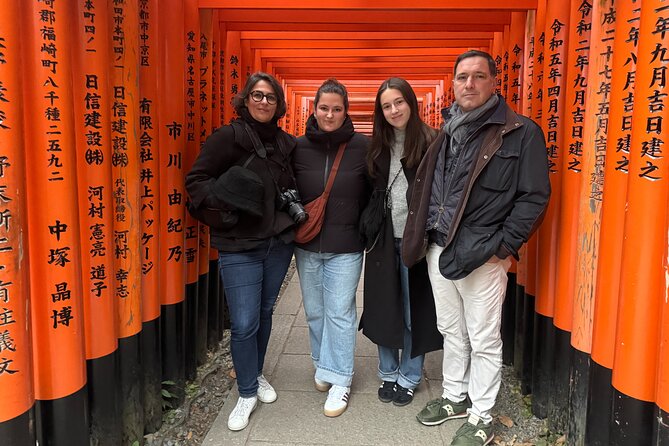
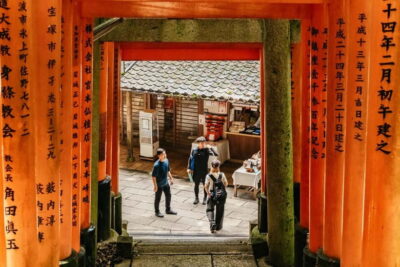
Fushimi Inari-taisha is the right opening act. Its famous orange-red torii gates climb into the wooded slopes of Mount Inari, forming long corridors that feel almost theatrical. The shrine honors Inari, associated with rice, prosperity, and business success. You will see fox imagery around the shrine because foxes are traditionally linked with Inari.
The planned visit lasts about an hour. That gives you time to see the lower shrine area, walk through a section of the torii, ask questions, and take photos without treating the place like a quick photo stop. You do not need to reach the summit to understand why this is one of Kyoto’s essential sights.
The early timing matters most here. Fushimi Inari is free to enter, which makes it easy for independent visitors to add to a Kyoto day, but its popularity can make the lower paths crowded later on. A guide can also explain how to behave at a Shinto shrine, including how to approach the worship area and what the symbols mean.
This is a walking experience, not a vehicle tour. If you have limited mobility or dislike steps and inclines, ask yourself how comfortable you are with an uphill shrine route before booking. The tour requires moderate fitness, and comfortable shoes are more important than smart clothes.
Kiyomizu-dera and Kyoto from Above
From Fushimi Inari, the group uses public transport and continues toward Kiyomizu-dera. The temple admission fee is ¥500 per person and is not included in the tour price.
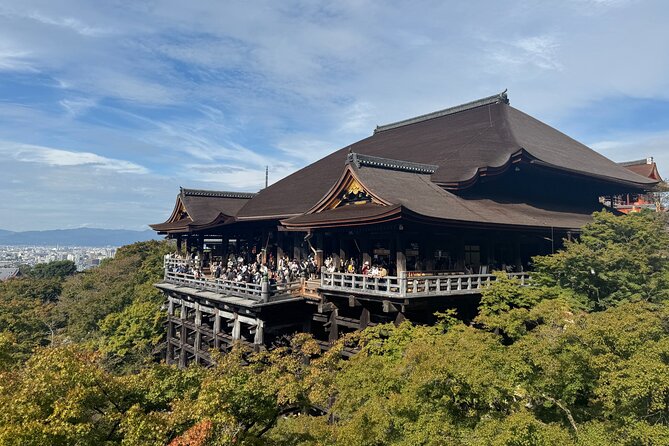
Kiyomizu-dera sits on the eastern hills above Kyoto and is famous for its broad wooden stage and views across the city. The setting gives you a useful sense of Kyoto’s shape: old temple districts climb the hills, while the city spreads out below. Your guide can add context about temple customs, architectural features, and the role of the site in Kyoto’s religious life.
The visit is scheduled for about an hour. That is enough for a guided overview and photos, though it is not an all-morning exploration of every corner. Kiyomizu-dera is a large complex, and the route through it includes slopes and steps.
The entrance fee is modest, but remember to carry cash or a payment method suitable for the temple entrance. Since it is the only paid admission listed, the tour remains fairly simple to budget. You pay the tour price, ¥390 for transportation, ¥500 for Kiyomizu-dera, and anything you choose to eat or drink.
I especially like this stop after Fushimi Inari because the two places feel different. Fushimi is about repeated gates and forest paths. Kiyomizu-dera gives you open views, large wooden structures, and a more expansive temple setting.
Other shrine walks around Kyoto:
- Kyoto: Fushimi Inari, Kinkakuji, Bamboo Grove 1 Day Bus Tour
★ 4.8 · 4,316 reviews - Fushimi Inari Hidden Hiking Tour (Private Option Available)
★ 5.0 · 1,750 reviews - Kyoto/Osaka: Nara, Fushimi Inari Taisha, Arashiyama Bus Tour
★ 4.7 · 1,275 reviews
Walking Sannenzaka and Ninenzaka
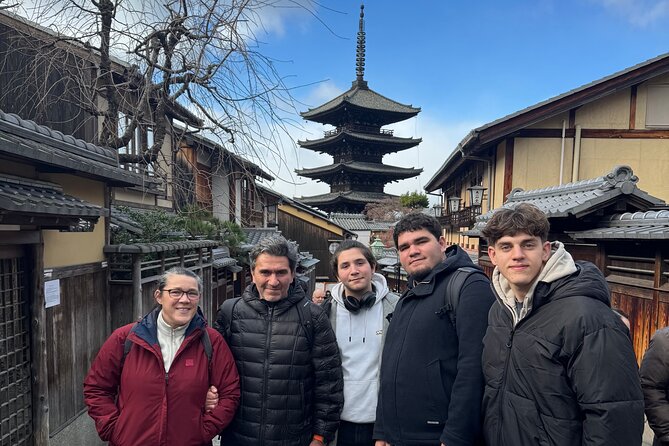
After Kiyomizu-dera, you move through Sannenzaka and Ninenzaka, two stone-paved streets lined with traditional wooden buildings, small shops, and restaurants. The scheduled stop is only 15 minutes, so think of it as a guided introduction rather than a shopping session.
These lanes are among the most photogenic parts of Kyoto. Their value is not just visual. They connect Kiyomizu-dera with the older parts of Higashiyama, and their narrow streets show how Kyoto’s visitor districts preserve the look of an earlier city.
You may want to return here later on your own if shopping or food is a priority. During the tour, the short stop lets you see the character of the area without losing too much time from the other major sights. Watch your footing on the stone paving, especially on slopes or when stopping for photos.
Yasaka Pagoda and Yasaka Koshin-Do
The next two stops are brief but distinctive. Yasakanoto, better known as Yasaka Pagoda, is the five-story pagoda of Hokanji Temple. It is described as one of Kyoto’s oldest wooden structures and is a familiar symbol of the Higashiyama area.
The stop lasts about 15 minutes. That is enough to view the pagoda from the surrounding street, hear its story, and take photographs. Do not expect an extended temple visit here. The point is the setting and the chance to understand how this historic structure fits into the old neighborhood.
Yasaka Koshin-Do follows. Its bright hanging decorations give it a very different mood from the restrained colors found at many Japanese temples. The temple is associated with colorful kukurizaru charms, though the supplied tour details focus on the striking decoration and its uncertain construction date.
Again, the visit is scheduled for 15 minutes. That sounds short, but it works as part of a route with seven stops. You get a quick look at a small, unusual religious site rather than spending your entire morning at only the most famous places.
Gion Without Treating It Like a Theme Park
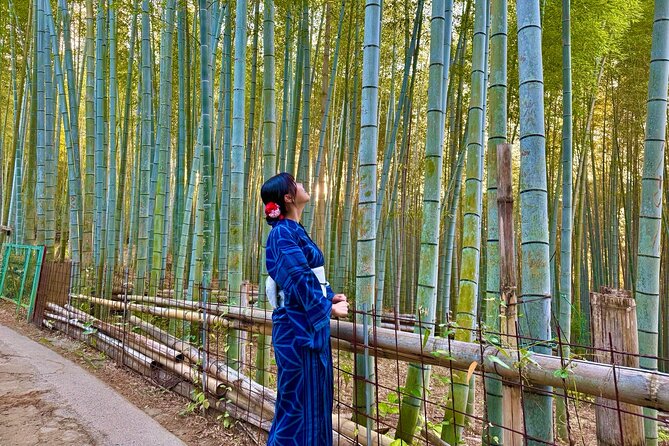
Gion is Kyoto’s best-known geisha district, with traditional machiya houses, teahouses, and preserved streets. The tour includes about 15 minutes here, enough for an introduction to the neighborhood and its role in Kyoto’s cultural life.
Your guide is useful in Gion because the district can be easy to misunderstand. It is not simply a backdrop of pretty buildings. It is a working neighborhood tied to traditional arts, entertainment, and hospitality. A respectful visitor keeps voices low, avoids blocking narrow lanes, and never treats people in the area as photo props.
The short visit also helps set expectations. This is not a long evening walk through every Gion street, and it does not promise access to a geisha performance or tea ceremony. You are seeing the historic district as part of a larger morning route.
The guide’s local perspective can add real value here. Ikki is described as having been born and raised in Kyoto, and his explanations are praised for connecting customs, religion, language, and local stories. His background outside Japan has also helped him explain Kyoto in clear English to people unfamiliar with Japanese traditions.
Other evenings in the old entertainment quarters of Kyoto:
- Kyoto Geisha Walking Tour: Gion District & Hidden Gems
★ 4.7 · 3,273 reviews - Kyoto: Gion Magical Night Walking Tour with Geisha Trivia
★ 4.9 · 2,393 reviews - Kyoto: Gion Geisha District Walking Tour – Stories of Geisha
★ 4.7 · 2,187 reviews - Best of Kyoto: Gion, Geisha, Pagodas & Cobblestones
★ 4.9 · 2,058 reviews
Ending at Yasaka Shrine
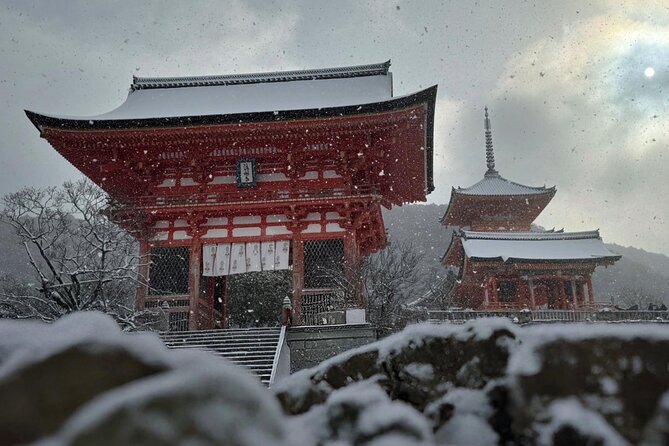
The final stop is Yasaka Shrine, where the tour ends after about 30 minutes. The shrine is dedicated to gods linked with prosperity and protection and is described as the headquarters of more than 2,300 related shrines across Japan.
This is a practical ending point. You are not dropped at an isolated bus stop or returned to Kyoto Station. Yasaka Shrine sits in the Gion area, so you can continue exploring, eat nearby, or take public transportation toward your hotel or another attraction.
Tell the guide your next plan before the tour ends. The experience specifically offers help with finding the best route from Yasaka Shrine, which can be useful if you are still getting used to Kyoto’s bus and train system.
The shrine itself also gives you a calm finish after a busy series of sights. You can look around, ask final questions, and get advice on food or the rest of your day. One guide, Ikki, has even helped people reach a recommended conveyor-belt sushi restaurant after the walk, though that kind of extra assistance should not be treated as a guaranteed part of the package.
What the Guide Adds
The biggest reason to choose this tour instead of following a map is the human explanation. Kyoto’s shrines and temples can blur together when you visit them quickly. A good guide shows you how they differ and explains what you are seeing before you move on.
Ikki is the guide most often named in the supplied feedback. Specific strengths include:
- Clear, fluent English
- Strong preparation and support material
- Explanations of shrine prayers and Japanese customs
- Local food recommendations
- Patience with children and older family members
- Friendly conversation for teenagers and adults
- Photos taken throughout the morning
One particularly useful touch is a booklet with pictures and notes about Japanese language, temple and shrine customs, and the meaning behind what you see. That kind of material helps you remember the difference between a Buddhist temple and a Shinto shrine after the tour ends.
The photography is another genuine benefit. Your guide can take group photos while you are at Fushimi Inari, Kiyomizu-dera, Yasaka Pagoda, and other stops. That saves one person from being left out of every picture. The photos are described as being sent at the end of the experience, though the exact delivery method is not specified.
Guide assignment may vary, so I would not assume Ikki is guaranteed unless the operator confirms it. Still, the repeated praise for his English, warmth, local background, and preparation gives you a useful idea of the standard this experience aims for.
Price, Pace, and What You Actually Pay
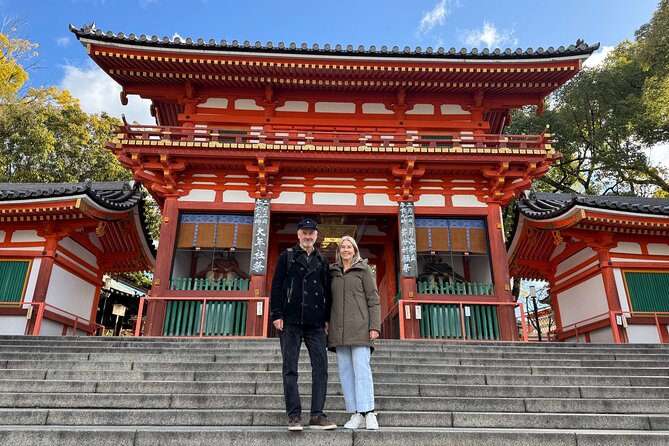
The listed price is $99.10 per person. For a private experience, that can be fair if you value personal attention, language help, photos, and the ability to ask questions throughout the route. It is less attractive if you only want transportation between sights or prefer exploring independently.
The tour includes an English-speaking local guide and professional photos. It does not include food, drinks, the ¥390 public transportation fare, or the ¥500 Kiyomizu-dera admission fee. Those extras are small, but you should add them to the advertised price when setting your budget.
The private format is important. Only your group participates, so the guide can adjust explanations, answer family questions, and keep an eye on different walking speeds. The route itself is fixed enough to cover the major stops, but a private group usually makes the morning feel less rigid than a large coach outing.
Pay attention to the duration. The official estimate is four to five hours, while one direct account described a tour lasting about two and a half hours. That difference could reflect pace, group size, or how long each stop receives, but you should not schedule a tight lunch reservation or train immediately afterward.
Who Should Book This Morning Walk?
I would recommend it for a first visit to Kyoto, especially if you want orientation before exploring on your own. The route covers the city’s most recognizable eastern sights and gives you cultural background that signs alone may not provide.
Families can also benefit. The guide has been praised for being kind and patient with an eight-year-old, and the private format lets you pause for questions or photos. Teenagers and older relatives may appreciate the variety: forest gates, a major temple, old streets, a pagoda, a small colorful temple, Gion, and a shrine.
This is also a good choice if you want photos of your whole group. The photography service is not a token extra. It is repeatedly described as a meaningful part of the experience, especially at spots where it is hard to frame everyone without asking another visitor.
I would hesitate if you want a slow, scholarly visit at each temple. Seven stops require movement, and several are brief. I would also hesitate if you dislike early starts, hills, public transit, or walking on uneven stone streets.
Cancellation is flexible up to 24 hours before the start time for a full refund. Arrive early at Kyoto Station, because late arrival means you cannot join and will not receive a refund. The meeting point is Kyoto Station, and the end point is Yasaka Shrine.
Should You Book It?
Book this tour if you want an efficient, personal introduction to Kyoto with an English-speaking local, useful cultural explanations, and photos you would not easily take yourself. The early start is worth it for Fushimi Inari, and the private format is especially helpful for families and first-time visitors.
Skip it if you prefer to set your own pace, linger for hours at one temple, or avoid a walking-heavy morning. Before paying, confirm the starting time, expected duration, and guide assignment if having Ikki matters to you. For most people seeking a focused first morning in Kyoto, the route offers a solid mix of famous sights and smaller details.
FAQ
Where does the Kyoto early bird tour start?
The tour starts at Kyoto Station in Shimogyo Ward, Kyoto.
Where does the tour end?
It ends at Yasaka Shrine in the Gion area. From there, you can continue sightseeing or take public transportation to another attraction or your hotel.
How long does the tour last?
The stated duration is approximately four to five hours. One direct account described a much shorter visit of about two and a half hours, so confirm the expected timing before making plans afterward.
Is the tour private?
Yes. Only your group participates in the activity.
Is the tour conducted in English?
Yes. It includes a local English-speaking guide.
Are entrance fees included?
Fushimi Inari, Sannenzaka and Ninenzaka, Yasaka Pagoda, Yasaka Koshin-Do, Gion, and Yasaka Shrine are listed with free admission. Kiyomizu-dera costs ¥500 per person and is not included.
Is public transportation included?
No. The listed public transportation fare is ¥390 per person.
What happens if I arrive late?
If you are late for the meeting time, you cannot join the tour and will not receive a refund.
Just added in Kyoto
- Private Cooking Class Udon in Kyoto Japan★ 5.0 · 23 reviews
- Your Private Vacation Photography Session In Kyoto★ 5.0 · 110 reviews
- Kyoto: Zen Meditation at a Private Temple with a Monk★ 5.0 · 25 reviews
- Private Pewter Sake Cup Experience with a Kyoto Artisan★ 5.0 · 31 reviews
- Kyoto Wagashi(Japanese sweets) Cooking Class near Fushimiinari★ 5.0 · 60 reviews
- Kyoto:Family-Friendly Kimono & Yukata Experience at WARGO★ 5.0 · 147 reviews
- Private Guided Traditional Buddhist Cooking in Japan★ 5.0 · 16 reviews
- Kyoto: Gion Geisha District & Sake-in-Hand Walking Tour★ 5.0 · 37 reviews
Fushimi Inari Tours, compared.
Fushimi Inari Hidden Hiking Tour (Private Option Available)
Read our review →
Kyoto/Osaka: Nara, Fushimi Inari Taisha, Arashiyama Bus Tour
Read our review →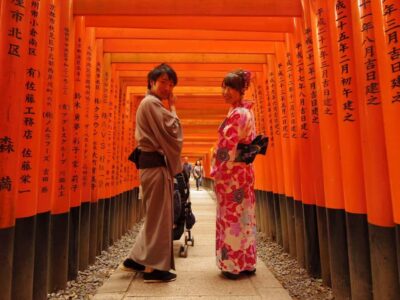
Osaka/Kyoto: Arashiyama, Nara & Fushimi Inari Shrine w/Lunch
Read our review →
Nijo Castle, Kiyomizu & Fushimi Inari Guided Tour
Read our review →
Nijo, Kinkaku-ji, Arashiyama, Kiyomizu & Fushimi Inari
Read our review →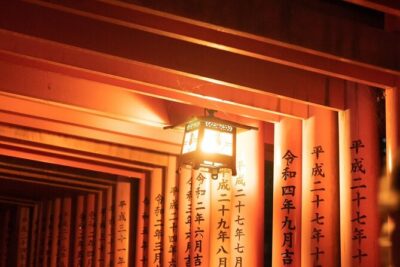
Kyoto Early Bird English Tour: Fushimi-Inari and Arashiyama
Read our review →Browse the lists this tour appears in