Reviewed · TOURS IN KYOTO
Kyoto Half Day Highlights Tour
Kyoto packs centuries of temples, shrines, old lanes, and local customs into a surprisingly small area. This 3.5-hour walking tour gives you a smart first look, starting in Gion and ending beneath the orange torii gates of Fushimi Inari. It covers two of the city’s best-known sights without asking you to spend days planning routes.
I like the small group limit of 12, which makes it easier to hear guide commentary and ask questions. I also like the route itself: Gion, Kiyomizu-dera, and Fushimi Inari give you three very different views of Kyoto. The catch is that this is an active outing, with plenty of walking, stairs, and time on your feet.
Key points
- Gion to Fushimi Inari in one afternoon: The route links several major Kyoto sights without requiring you to navigate the city alone.
- A guide who adds context: Mari, also identified as Marie and Maricel in tour details, explains geisha culture, Shinto practice, Buddhism, customs, and local history.
- A maximum of 12 people: The group size is small enough for a more personal pace and easier questions.
- Kiyomizu-dera admission included: You do not need to arrange the temple entry separately.
- The orange torii walk is the finale: Fushimi Inari gives you time to walk through one of Japan’s most recognizable shrine settings.
- Comfortable shoes matter: The route includes extended walking, slopes, and uneven historic streets.
Why this route works for a short Kyoto visit
Kyoto can be hard to tackle on your own because its best sights are spread across several districts. You can lose half a day figuring out train connections, entrances, and the most sensible order. This tour removes much of that friction by linking Gion and Higashiyama with Fushimi Inari.
The timing is useful, too. The tour begins at 3 p.m., so you can spend the morning on another part of Kyoto before meeting at Gion-Shijo Station. The afternoon schedule also gives the outing a natural flow: old entertainment-district streets first, temple lanes next, and a major shrine at the end.
This is not a slow, single-site tour. You will make several stops in a limited period, and some locations receive only a short visit. That tradeoff works well if you want orientation and a taste of Kyoto’s essential sights, but it will feel brisk if you prefer long periods of quiet contemplation.
Other experiences people book in Kyoto:
- PERFECT KYOTO 1-Day Bus Tour
★ 5.0 · 13,518 reviews - Kyoto: Fushimi Inari, Kinkakuji, Bamboo Grove 1 Day Bus Tour
★ 4.8 · 4,316 reviews - Kyoto: Tea Ceremony in a Traditional Tea House in Kiyomizu
★ 4.9 · 3,519 reviews
Starting among Gion’s old streets
The meeting point is outside Gion-Shijo Station at 1 Chome Miyagawasuji in Higashiyama Ward. From there, you begin with about 30 minutes in Gion, Kyoto’s famous geisha district.
Gion is best appreciated on foot. The lanes, traditional buildings, and carefully preserved streets give you a sense of how Kyoto presents its older face. A guide can also explain the difference between geisha culture and the many assumptions visitors bring with them. That context makes a short walk more meaningful than simply taking pictures of attractive wooden facades.
Keep your expectations sensible. Gion is not a museum set aside for sightseeing. It is a living district, and respectful behavior matters. Stay on public paths, avoid blocking doorways, and do not photograph people without permission.
The guide commentary is one of the strongest reasons to choose this experience. Mari is described as friendly, flexible, funny, and well informed about Kyoto customs and religious traditions. Her style appears to combine historical explanation with lighter local details, which helps keep the walk from becoming a string of dates and names.
A brief stop at Yasui-Konpiragu
The next stop is Yasui-Konpiragu Shrine, with about 10 minutes on site. It is known for its large power stone and the symbolic passageway through it.
Ten minutes is enough to see the central feature and hear what it represents, but not enough for a long visit. Think of this as a compact cultural stop rather than a major destination. The shrine adds variety to the tour by showing you a smaller religious site between the larger attractions.
This is also where guide explanation matters. Shinto shrines can look simple at first glance, but their symbols and customs are not always obvious to first-time visitors. A short explanation helps you understand what you are seeing instead of treating the site as another photo stop.
Yasaka Pagoda and the Higashiyama lanes
The walk continues to Hokan-ji Temple, better known as Yasaka Pagoda. The five-story pagoda is 46 meters high and is the last remaining structure from a sixth-century temple complex.
The stop lasts about 10 minutes. You should have time to appreciate the pagoda and its place in the surrounding streets, but the visit is not designed as an extended temple exploration. The real pleasure comes from seeing the pagoda in context, rising above the traditional Higashiyama district.
From there, you walk through Sannenzaka and Ninenzaka. These stone-paved slopes lead toward Kiyomizu-dera and are lined with traditional shops and buildings. The streets are among the most scenic parts of this route, but they are also a good reminder that Kyoto’s charm comes with physical effort.
The slopes can be tiring, especially in Kyoto’s humid weather. Wear shoes with a firm sole, and do not count on this being a flat city stroll. The itinerary gives this section about 20 minutes, so you will see the character of the lanes without having time for a leisurely shopping session.
Same base, a different sort of day:
- Kyoto Geisha Walking Tour: Gion District & Hidden Gems
★ 4.7 · 3,273 reviews - Kyoto: Tea Ceremony Ju-An at Jotokuji Temple
★ 4.9 · 3,207 reviews - Kyoto: Gion Magical Night Walking Tour with Geisha Trivia
★ 4.9 · 2,393 reviews - Kyoto: 45-Minute Tea Ceremony Lesson Experience
★ 4.3 · 2,378 reviews
Kiyomizu-dera and its famous wooden terrace
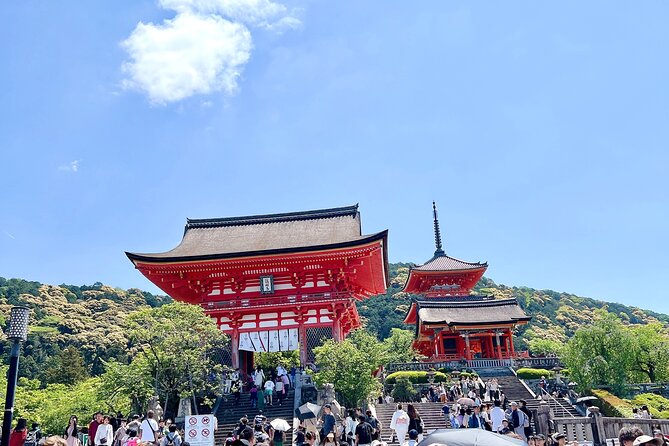
Kiyomizu-dera receives about 45 minutes, making it the longest temple stop before Fushimi Inari. Admission is included, which adds value to the $50 price and keeps you from handling another ticket during the tour.
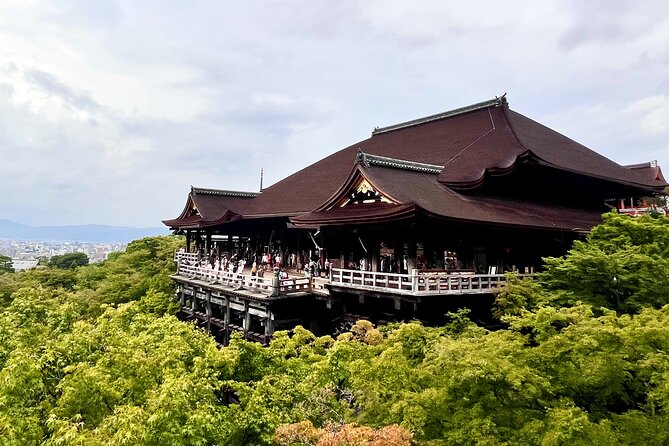
The temple is famous for its large wooden terrace and broad views over Kyoto. Its grounds also include pagodas, religious buildings, and sacred waterfalls. The guide can help explain the customs and beliefs attached to the site, including the role of the waterfalls.
Forty-five minutes is a useful amount of time for a first visit. You can see the main features, listen to the guide, and take in the views without giving up the rest of the route. Still, Kiyomizu-dera is large enough that you may want to return independently if you enjoy temple architecture or want more time for photography.
The order is practical. By the time you reach Kiyomizu-dera, the earlier walk through Gion and Higashiyama has prepared you to understand the setting. You are not simply being dropped at a famous temple with no background.
Finishing beneath Fushimi Inari’s orange torii
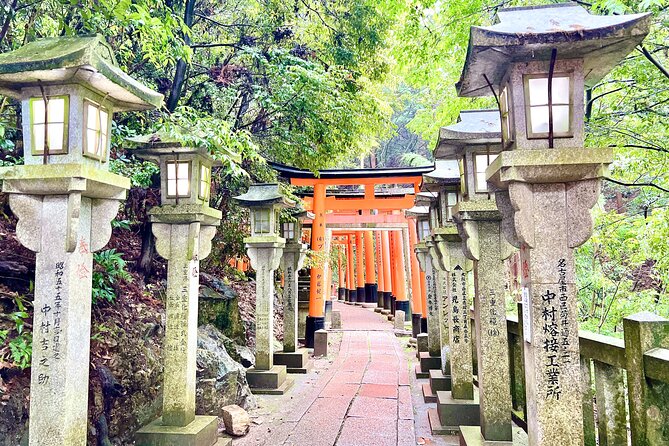
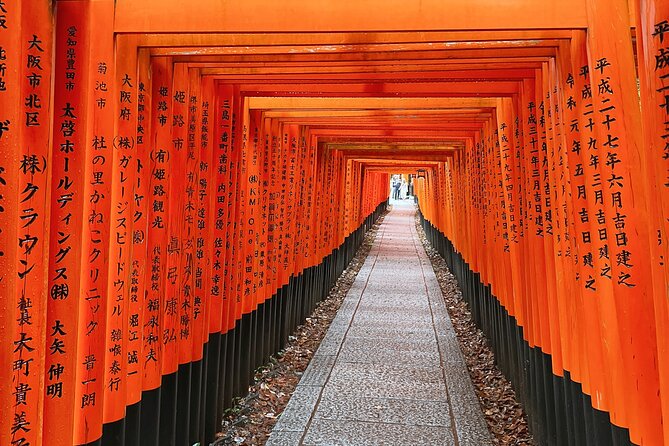
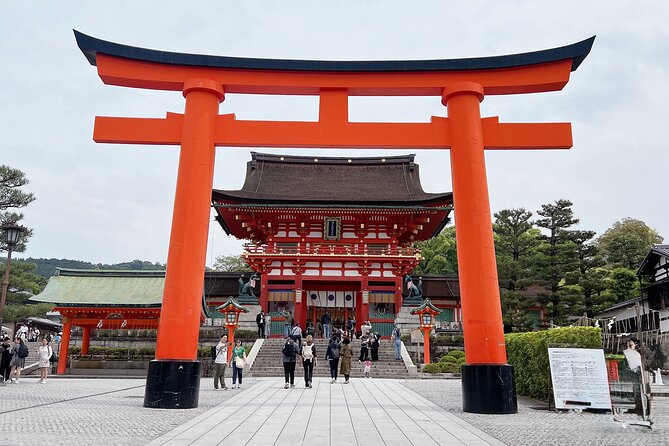
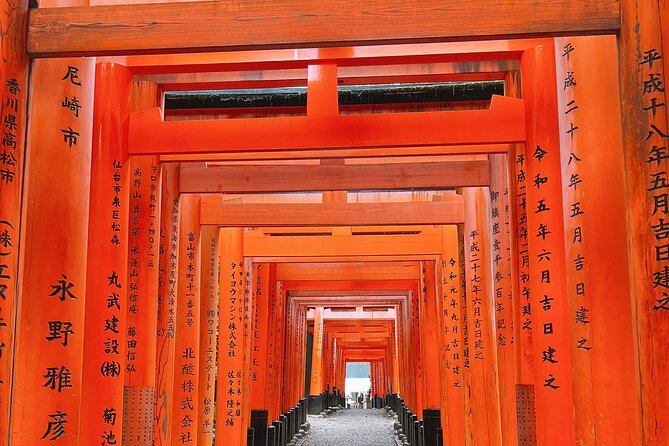
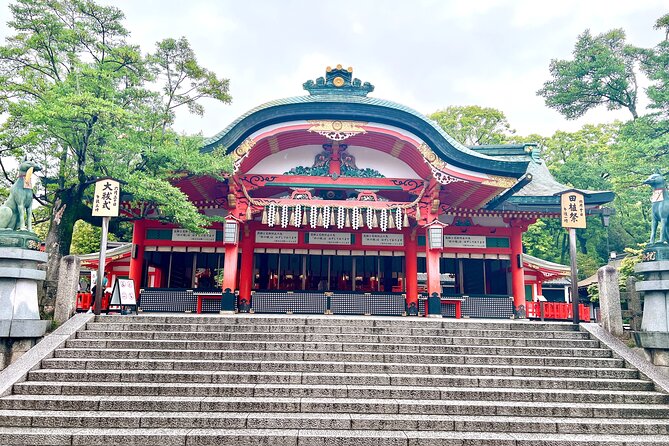
The final stop is Fushimi Inari-taisha Shrine, with about one hour allowed. This is the tour’s big visual finish: long lines of orange torii gates stretching along paths that rise into the wooded mountain area behind the shrine.
Fushimi Inari is dedicated to the god of rice and prosperity. The torii gates are central to the shrine’s identity, and walking through them gives you a strong sense of how the site changes as you move away from the entrance. You can expect an atmospheric walk, but the full mountain route takes much longer than the one-hour tour stop.
The hour is enough to experience the famous gate tunnels and learn about the shrine. It is not enough to explore every path. That limitation is worth knowing before you book. If your main goal is to hike far up the mountain, you will need to return on your own.
The tour ends in front of Fushimi Inari Shrine, close to both the Fushimi Inari JR station and the Keihan Line station. This makes the finish convenient. You can continue to another part of Kyoto, return to your accommodation, or stay longer at the shrine if your schedule allows.
What $50 buys you
At $50 per person, the tour is priced as a guided orientation rather than a simple walking route. You are paying for a guide, a planned sequence of sights, commentary, and included admission at Kiyomizu-dera. You also avoid spending time planning how to connect Gion, Higashiyama, and Fushimi Inari.
The value is strongest if you have limited time in Kyoto or feel uncertain about visiting religious sites on your own. A guide can explain the difference between Shinto and Buddhism, discuss geisha culture, and point out details you might otherwise pass without noticing.
The price does not cover the public transportation cost, listed as ¥220 per person. Snacks are also extra. That is a small additional expense, but it is worth including in your budget. Since the tour lasts three and a half hours and involves substantial walking, carry water and eat beforehand if you tend to need regular breaks.
How demanding is the walk?
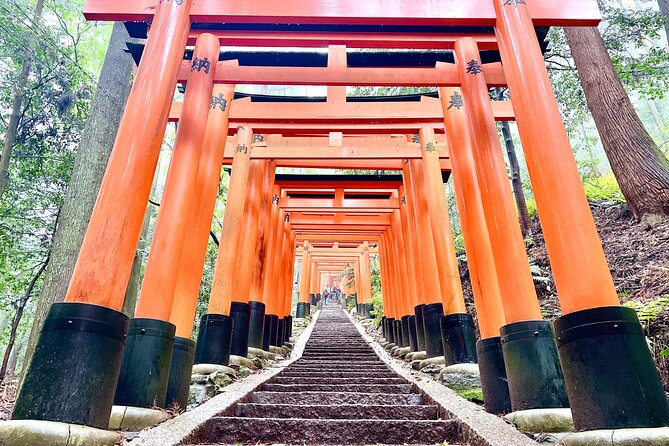
You should have a moderate level of physical fitness for this activity. The route includes long periods of walking, slopes in the Higashiyama area, stone streets, temple grounds, and the rising paths at Fushimi Inari.
There is no indication that the entire Fushimi Inari mountain route is covered. The tour focuses on the famous torii-gate section within the one-hour stop. Even so, the day can feel demanding in warm or humid weather.
The most useful preparation is simple:
- Wear comfortable walking shoes.
- Bring water.
- Allow for Kyoto’s humidity, especially in warmer months.
- Keep your hands free for stairs, slopes, and photographs.
- Eat before the 3 p.m. start or carry a snack.
The tour requires good weather. If poor weather forces cancellation, you are offered another date or a full refund. For a full refund when canceling yourself, you need to cancel at least 24 hours before the start time.
The guide makes the difference
A route like this can be useful even without commentary, but the guide is what turns it into more than a checklist. Mari is associated with explanations of geisha culture, Shinto shrines, Buddhism, local customs, and Kyoto’s past. She is also described as energetic and willing to adjust the pace or itinerary to suit the group.
That flexibility matters in a small group. One tour account describes a guide helping a late-arriving participant affected by travel problems. You should not rely on being able to arrive late, but it suggests a human approach rather than a rigid march from one stop to the next.
The tone also seems important. The guide is described as funny and able to add local facts alongside formal history. That combination works well in Kyoto, where a purely academic explanation can make a short walking tour feel heavy.
Because the group is capped at 12, you have a better chance to hear clearly and ask questions than on a large bus tour. The group may be smaller, too, but the stated maximum is the only figure you should count on.
Who should book this Kyoto walk?
I would choose this tour if you have only a short stay in Kyoto, want to cover several major sights in one afternoon, or prefer having a guide explain customs and religious sites as you go.
It is particularly useful for first-time visitors who want a clear introduction before exploring more independently. It also suits solo visitors who like the social ease of a small group without committing to a full-day tour.
You may want another option if you dislike walking, need a slow pace, or want to spend several hours at each temple. The schedule is carefully packed, and the main sights are famous for a reason, so some areas may feel busy. This tour gives you a strong overview, not hours of solitude.
Should you book it?
Book it if your Kyoto schedule is tight and you want Gion, Kiyomizu-dera, and Fushimi Inari connected in one well-organized afternoon. The guide commentary, small group, and included Kiyomizu-dera admission make the $50 price reasonable for an introduction to the city.
Skip it if your priority is a deep visit to one temple, a long Fushimi Inari hike, or a completely unhurried pace. For everyone else, this is a practical way to get your bearings, learn how Kyoto’s religious and cultural sites fit together, and finish the afternoon beneath those memorable orange gates.
FAQ
How long does the Kyoto Half Day Highlights Tour last?
The tour lasts approximately 3 hours and 30 minutes.
What time does the tour begin?
The tour starts at 3 p.m.
Where does the tour meet?
The meeting point is Gion-Shijo Station, at 1 Chome Miyagawasuji in Kyoto’s Higashiyama Ward.
Where does the tour end?
The tour ends in front of Fushimi Inari Shrine, near the Fushimi Inari JR Line and Keihan Line stations.
What sights are included?
The route includes Gion, Yasui-Konpiragu Shrine, Hokan-ji Temple and Yasaka Pagoda, Sannenzaka and Ninenzaka, Kiyomizu-dera Temple, and Fushimi Inari-taisha Shrine.
Is admission included?
Admission is included, including the listed admission fee for Kiyomizu-dera Temple.
Is public transportation included?
No. Public transportation costs ¥220 per person.
How large is the group?
The tour has a maximum of 12 participants.
Can I cancel for a full refund?
Yes. You can receive a full refund if you cancel at least 24 hours before the local start time. Cancellations or changes made less than 24 hours before the start are not refunded or accepted.
Just added in Kyoto
- Your Private Vacation Photography Session In Kyoto★ 5.0 · 110 reviews
- Kyoto: Zen Meditation at a Private Temple with a Monk★ 5.0 · 25 reviews
- Private Cooking Class Udon in Kyoto Japan★ 5.0 · 23 reviews
- Private Pewter Sake Cup Experience with a Kyoto Artisan★ 5.0 · 31 reviews
- Kyoto Wagashi(Japanese sweets) Cooking Class near Fushimiinari★ 5.0 · 60 reviews
- Kyoto:Family-Friendly Kimono & Yukata Experience at WARGO★ 5.0 · 147 reviews
- Private Guided Traditional Buddhist Cooking in Japan★ 5.0 · 16 reviews
- Kyoto: Gion Geisha District & Sake-in-Hand Walking Tour★ 5.0 · 37 reviews
Tours in Kyoto, compared.

Tea Ceremony in a Traditional Tea House in Kiyomizu
Read our review →
Kyoto Geisha Walking Tour: Gion District & Hidden Gems
Read our review →


Gion Geisha District Walking Tour – Stories of Geisha
Read our review →
Best of Kyoto: Gion, Geisha, Pagodas & Cobblestones
Read our review →