
Reviewed · TEA CEREMONY EXPERIENCES
Kyoto Japanese Tea Ceremony Experience in Ankoan
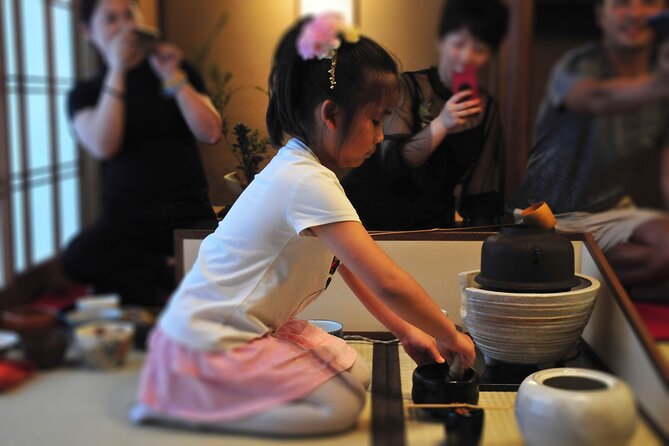
The most rewarding part of this Kyoto experience is that you do not just watch a tea ceremony. You prepare matcha yourself, then offer it to another participant, putting the ceremony’s ideas of care, attention, and shared time into practice. Yuka guides the process in clear English and keeps the tone friendly rather than stiff.
I like the gentle welcome tea, which gives you time to settle in, and the open conversation about Japanese customs beyond the tea room. The main consideration is the setting: you may sit in a traditional position, so this is not recommended if you have knee pain. The advertised duration also varies from about one hour to 90 minutes, with some sessions lasting closer to two hours.
Key points to know before booking
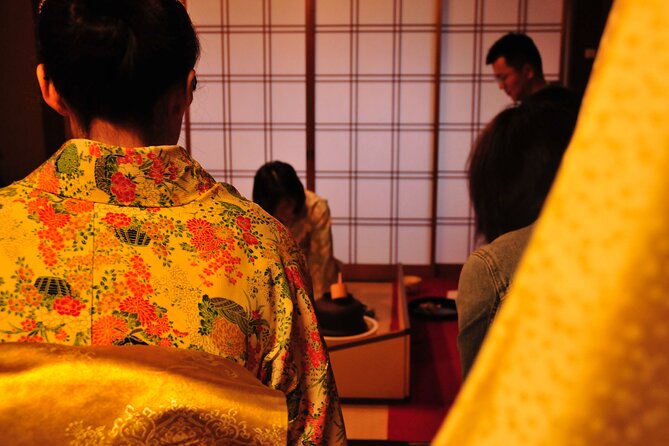
- You make and serve your own matcha: This is a hands-on lesson, not only a demonstration.
- Yuka leads the session: She explains tea customs in English and encourages questions about Japanese life and culture.
- The group is small: A maximum of eight people allows for personal instruction.
- Wagashi accompanies the tea: You taste Japanese sweets with the matcha.
- Ankoan is near public transportation: The studio is in Kyoto’s Kita Ward, at 63 Murasakino Monzencho.
- Plan for a calm cultural lesson: The session is not suitable for people with knee pain and does not include private transportation.
A tea ceremony that lets you take part
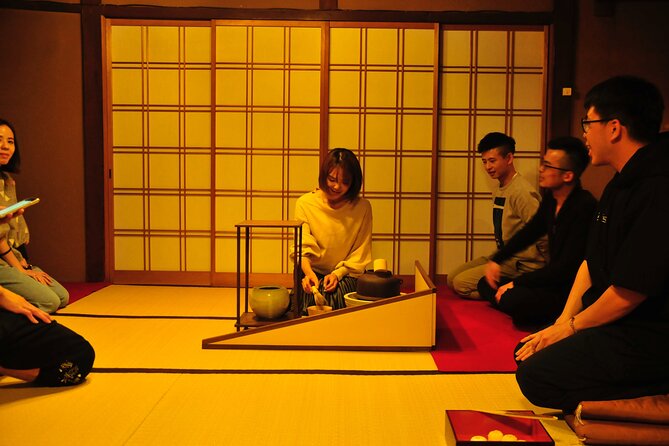
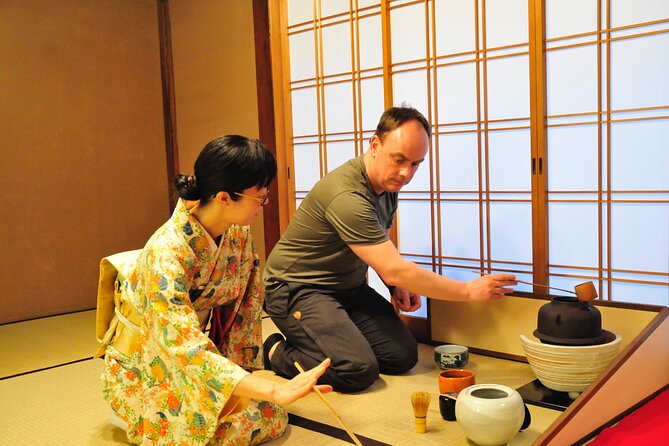
Many tea experiences ask you to sit quietly while an expert performs each movement. Ankoan takes a more useful approach. You first watch the tea master, then copy the basic steps with help from the instructor. This makes the ceremony easier to understand because your hands are involved, not just your eyes.
The session begins with a welcome tea and an informal chat. That opening matters. After a journey across Kyoto, you can sit down, catch your breath, and ask basic questions without feeling that you have interrupted a formal ritual.
Yuka uses this time to explain tea in Japan and in other places. The conversation can also move toward everyday subjects, such as how people live in Japan and how Japanese customs developed. This gives the activity more range than a simple lesson in whisking powdered tea.
The tone is welcoming, with clear English and plenty of room for conversation. If you are curious but know little about tea ceremony etiquette, you will not be expected to arrive with background knowledge.
Other tea ceremonies in Kyoto people book:
- Kyoto: Tea Ceremony in a Traditional Tea House in Kiyomizu
★ 4.9 · 3,519 reviews - Kyoto: Tea Ceremony Ju-An at Jotokuji Temple
★ 4.9 · 3,207 reviews - Kyoto: 45-Minute Tea Ceremony Lesson Experience
★ 4.3 · 2,378 reviews
From welcome tea to the matcha room
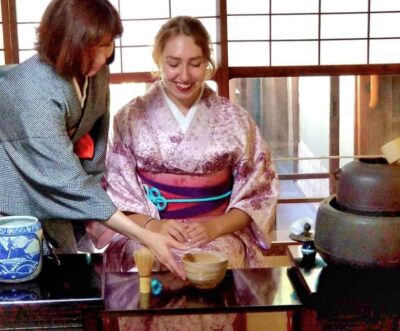
After the first chat, you move into another room for the matcha portion of the experience. Here, Yuka demonstrates how to prepare the drink and explains the purpose of the main movements and manners.
Matcha preparation looks simple until you try it. The amount of tea, the water, and the whisking all affect the final cup. The demonstration gives you a visual guide, but the real lesson comes when you repeat the steps yourself.
You also learn about specific parts of the tea ceremony and the ideas behind them. The focus is not only on producing a good bowl of matcha. It is on paying attention to the setting, the host, the guest, and the act of serving.
A Japanese sweet called wagashi is served with the tea. Its sweetness gives the slightly bitter matcha a useful contrast. You taste the matcha and wagashi before preparing your own, so you have a clear sense of what the finished experience should be like.
The most meaningful step: making tea for someone else
The hands-on section is the heart of the visit. Yuka guides you step by step as you prepare matcha, explaining what to do and why it matters. You do not need to worry about getting every movement perfect. The point is to understand the process and take part in it with care.
Once you have made your tea, you offer it to another participant. That exchange reflects one of the central social ideas of tea ceremony: the host prepares something thoughtfully for the guest, and the guest receives it with equal attention.
This small act also makes the session more social. You are not simply practicing a skill in isolation. You are sharing the result with another person, often from a different country and background. Conversation becomes part of the experience rather than an interruption to it.
Families can take part as well. Children have been included in the tea-making portion, including an eight-year-old, so younger members of a family do not have to sit through a long demonstration without touching anything. Parents should still consider the quiet, seated nature of the activity and the traditional manners involved.
Why the conversation matters
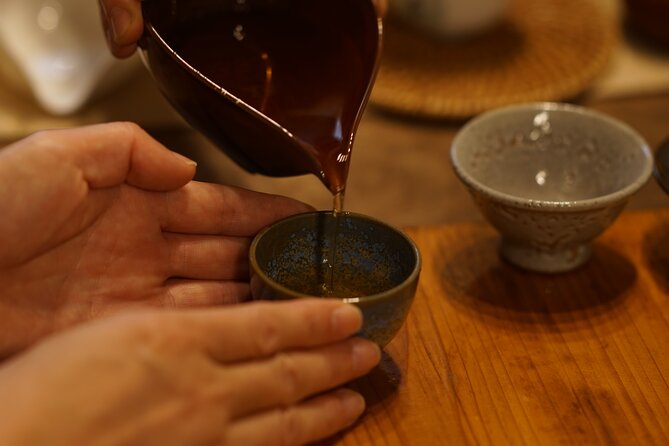
Tea ceremony can seem mysterious if you only see its formal movements. The discussion at Ankoan helps connect those movements to daily values such as respect, calm, hospitality, and awareness of the present moment.
You can ask about tea, matcha, Japanese customs, and everyday life. This makes the session useful for first-time visitors who want cultural context without signing up for a long lecture.
The English support is one of the strongest practical features. Yuka explains the procedure in a way that allows you to follow along, and the experience is designed for conversation. If you have questions about a gesture, phrase, or part of the serving process, you can ask during the lesson.
The activity also introduces a few Japanese words and phrases connected with tea ceremony. You will not leave with a full language lesson, but these small details help you notice the social side of the ritual.
Other tea rooms and ceremonies in Kyoto:
- Kyoto: Table-Style Tea Ceremony at a Kyo-Machiya
★ 4.9 · 1,211 reviews - Kimono Tea Ceremony at Kyoto Maikoya, NISHIKI
★ 5.0 · 911 reviews - Kyoto: Arashiyama Bamboo Forest, Monkeys, Matcha & Temple Tour
★ 5.0 · 759 reviews - Kyoto: Tea Museum Tickets and Matcha Grinding Experience
★ 4.9 · 739 reviews
A calm setting near Kyoto’s northern temples
Ankoan is at 63 Murasakino Monzencho in Kyoto’s Kita Ward, near public transportation. The location may require more effort than a studio in central Kyoto, but it places you in a quieter part of the city.
One useful planning idea is to pair the ceremony with nearby temple visits. You can make the trip worthwhile by visiting the temples around the area before or after your appointment. The experience itself is indoors, and indoor photography is allowed, so you can record the setting and your tea-making steps.
Private transportation is not included. You need to arrange your own route to the studio, and confirmation is provided within 48 hours of booking, subject to availability. Save the address and allow extra time for the journey, especially if your Kyoto schedule is tight.
The meeting point and end point are the same. This is helpful because you do not need to figure out a second location after the ceremony.
How long should you allow?
The headline duration is about one hour, while the fuller description presents the service as 90 minutes. Some sessions may run closer to two hours depending on the pace of the group and the amount of conversation.
I would reserve at least 90 minutes in your day, with some extra space around it. That gives you time for the welcome tea, the explanation, the demonstration, your own preparation, tasting, and conversation without having to rush away.
This is not an experience to squeeze between two tightly timed attractions. The relaxed pace is part of its appeal. If you hurry in late or need to leave early, you lose much of the quiet exchange that makes the visit worthwhile.
The group limit is eight people. That is large enough to create a friendly social setting but small enough for Yuka to watch your technique and offer individual help.
What the $32.84 price delivers
At $32.84 per person, this is reasonably priced for a small-group cultural activity with instruction, tasting, and participation. You are paying for more than a cup of matcha. The fee covers access to the studio, the tea ceremony explanation, the demonstration, your own practice, the welcome tea, and wagashi.
The value is strongest if you want context and participation. A short tea tasting elsewhere may cost less, but it may not give you the chance to prepare matcha or serve it to someone else. Conversely, if you only want to observe a formal ceremony in silence, this experience may offer more conversation and practical instruction than you need.
The small group improves the value. With no more than eight people, the instructor can help you through the whisking and serving steps. The experience is also suitable for families, couples, and solo visitors who want an easy way to meet others in a structured setting.
Coffee and tea are included. Private transportation is not, so include your own local transport costs when comparing the total price with other Kyoto activities.
Who will enjoy Ankoan most?
I would recommend this experience to you if you want to understand what happens inside a Japanese tea ceremony rather than simply take a few photographs. It suits first-time visitors, couples, families with older children, and anyone who enjoys learning by doing.
It is particularly useful for people who are unsure about etiquette. Yuka explains the manners before asking you to copy them, so you can participate with confidence.
The activity also works well as a pause in a busy Kyoto itinerary. The welcome tea and slower rhythm give you time to sit, listen, and focus on one activity. The discussion about Japanese life adds value for anyone who wants cultural insight beyond temples and food.
You should think twice if you have knee pain. The traditional style may involve sitting in a position that is uncomfortable for some people. The provided information does not promise a modified seating arrangement, so contact the provider before booking if this is a concern.
You may also prefer another activity if you want a large performance, a long historical lecture, or a fully private lesson. Ankoan is built around a small group, shared participation, and conversation.
Booking and cancellation details worth noting
The experience uses a mobile ticket, which is convenient for a day of sightseeing. Your booking confirmation arrives within 48 hours, subject to availability, so do not assume that a reservation is final until you receive confirmation.
You can cancel for a full refund up to 24 hours before the start time. Cancellations or changes made less than 24 hours before the activity are not refunded or accepted.
The experience requires good weather. If poor weather causes a cancellation, you are offered another date or a full refund. Keep that in mind if you are planning this close to the end of your Kyoto stay.
Should you book the Kyoto tea ceremony at Ankoan?
Book it if you want a hands-on introduction to matcha, clear English guidance, and a friendly conversation about Japanese culture. The chance to prepare tea and serve it to another participant gives the session a personal touch that a demonstration alone cannot provide.
I especially like the balance of structure and informality. You learn the manners and watch the proper procedure, but you also have time to ask questions, laugh at your first whisking attempt, and talk about life in Japan.
Skip it if sitting traditionally will be painful, if you need a tightly fixed one-hour appointment, or if you prefer a grand formal performance with no participation. For most visitors who want a small, thoughtful cultural activity, the price is fair and the format makes Japanese tea ceremony easier to understand.
FAQ
Where does the tea ceremony take place?
It takes place at Tea ceremony Japan, Ankoan, at 63 Murasakino Monzencho, Kita Ward, Kyoto, 603-8216.
How long does the experience last?
The activity is advertised as approximately one hour, while the detailed service description gives 90 minutes. Some sessions may last closer to two hours.
What happens during the experience?
You receive welcome tea, talk with the instructor, learn about Japanese tea customs and manners, watch a matcha demonstration, prepare your own matcha, taste it with wagashi, and serve tea to another participant.
Is the activity conducted in English?
Yes. The experience is described as suitable for Chinese and English speakers, and Yuka provides explanations and conversation in English.
How many people can join?
The maximum group size is eight people.
Is transportation included?
No. Private transportation is not included, though the studio is near public transportation. The activity begins and ends at the meeting point.
Can I cancel for a refund?
Yes. You can cancel at least 24 hours before the start time for a full refund. If poor weather causes the provider to cancel the experience, you are offered another date or a full refund.
Just added in Kyoto
- Private Cooking Class Udon in Kyoto Japan★ 5.0 · 23 reviews
- Your Private Vacation Photography Session In Kyoto★ 5.0 · 110 reviews
- Kyoto: Zen Meditation at a Private Temple with a Monk★ 5.0 · 25 reviews
- Private Pewter Sake Cup Experience with a Kyoto Artisan★ 5.0 · 31 reviews
- Kyoto Wagashi(Japanese sweets) Cooking Class near Fushimiinari★ 5.0 · 60 reviews
- Kyoto:Family-Friendly Kimono & Yukata Experience at WARGO★ 5.0 · 147 reviews
- Private Guided Traditional Buddhist Cooking in Japan★ 5.0 · 16 reviews
- Kyoto: Gion Geisha District & Sake-in-Hand Walking Tour★ 5.0 · 37 reviews
Tea Ceremony Experiences, compared.

Tea Ceremony in a Traditional Tea House in Kiyomizu
Read our review →

World Heritage Kyoto & Nara Uji Authentic Matcha Experience
Read our review →
Arashiyama Bamboo Forest, Monkeys, Matcha & Temple Tour
Read our review →Browse the lists this tour appears in