
Reviewed · TEA CEREMONY EXPERIENCES
Kyoto Newly Opened Tea Ceremony – Sanjo Chasuian
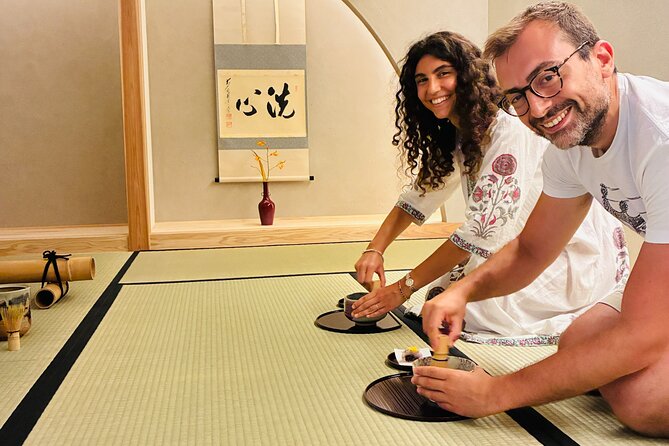
The most memorable part of this Kyoto experience is that you do not just watch matcha being made. You enter a tea room through a nijiriguchi, a small crawl-in doorway meant to leave the outside world behind, then prepare a bowl yourself. I like the clear, step-by-step teaching and the fact that you receive two bowls of matcha, one made by the host and one whisked by you. The main drawback is the strict timing: arrive even one minute late and you cannot enter or receive a refund.
I also like the seasonal Japanese confectionery, supplied by a Kyoto sweet shop with more than 100 years of history. The small group, capped at 10 people, keeps the setting quiet enough for questions. Just remember to wear or bring socks, and be ready for some floor sitting, although chairs are available.
Key points at a glance
- Two matcha servings: Watch the tea master prepare one bowl, then make a second yourself or with a companion.
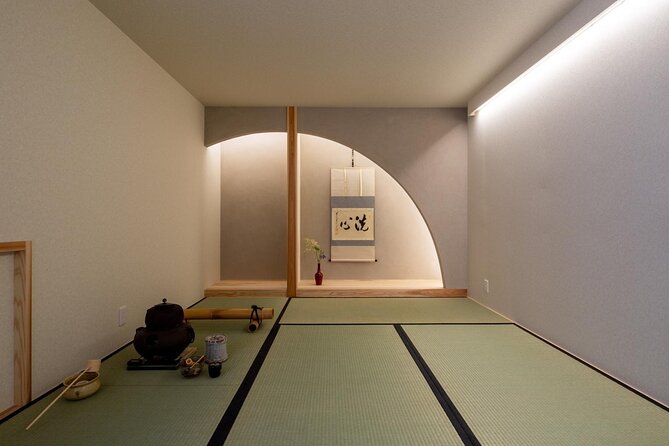
- A real nijiriguchi entrance: The crawl-in doorway gives the tea room a traditional sense of separation from ordinary street life.
- Seasonal Kyoto sweets: A beautiful confection from a long-established local sweet shop comes with the tea.
- Hands-on instruction: You choose a tea bowl and whisk matcha while copying the host’s movements.
- Small and quiet setting: The group limit is 10, with time for explanations and questions.
- Strict arrival rule: Entry begins five minutes before the start, and the door is locked once the session begins.
What happens during the one-hour ceremony
This is a compact cultural experience, not a long formal ceremony lasting half a day. In about one hour, you receive an introduction to tea ceremony customs, watch a full demonstration, drink matcha prepared by the host, and make your own bowl.
The session begins with an explanation of the ceremony’s background and purpose. Your host explains why the movements matter, not just what to do with the tea scoop or whisk. That distinction is useful. Without context, tea ceremony can look like a series of careful gestures. With context, the movements become a way of showing respect, attention, and calm.
English instruction is available, and the host is described as warm, patient, and comfortable answering questions. Yuko is named in several accounts of the experience and is praised for explaining both the history and the practical steps in a friendly way. English may include an accent, so listen closely during the more detailed explanations, but the hands-on demonstration makes the process easy to follow.
The quiet room matters here. This is not a noisy demonstration where you stand at the back and take a few photographs. The setting is designed for attention. You watch the host handle the bowl, scoop, whisk, and tea with care, then have a chance to repeat the process.
Other tea ceremonies in Kyoto people book:
- Kyoto: Tea Ceremony in a Traditional Tea House in Kiyomizu
★ 4.9 · 3,519 reviews - Kyoto: Tea Ceremony Ju-An at Jotokuji Temple
★ 4.9 · 3,207 reviews - Kyoto: 45-Minute Tea Ceremony Lesson Experience
★ 4.3 · 2,378 reviews
Entering through the traditional nijiriguchi
The tea room includes a nijiriguchi, a low entrance traditionally associated with tea ceremony. You enter by lowering yourself through the opening rather than walking through an ordinary full-height door. It is a small physical gesture, but it gives the experience a clear beginning.
The idea is to leave the outside world behind as you enter the tea room. You do not need to know the history of every tea ceremony custom to appreciate the effect. The doorway makes you slow down before the ceremony even starts.
This entrance may not suit everyone equally. If you have difficulty crouching or getting down low, ask about using the regular access or a chair before the session begins. The information provided says chairs are available, but it does not promise that every part of the experience can be adapted. The safest plan is to mention any concern when booking or on arrival.
Watching the tea master prepare the first bowl
The first bowl is prepared for you. This is the part where you can simply watch and take in the rhythm of the ceremony. The host uses traditional utensils and movements, explaining the process as it unfolds.
You will see how the tea is measured, combined with hot water, and whisked into matcha. The point is not speed. The controlled movements encourage you to pay attention to small details: how the bowl is held, how the utensils are placed, and how the tea is presented.
The ceremony has a serene quality, and several parts of the experience are intentionally quiet. That makes this a good pause in a busy Kyoto sightseeing schedule. You may be walking through crowded areas, visiting temples, and checking train times all day. An hour spent sitting quietly with tea can feel like a useful change of pace.
The host then serves the first bowl. Matcha has a distinct, grassy flavor and may be unfamiliar if you normally drink Western-style tea. The included seasonal sweet helps balance the tea’s bitterness and is part of the traditional rhythm of the serving.
Choosing a bowl and whisking your own matcha
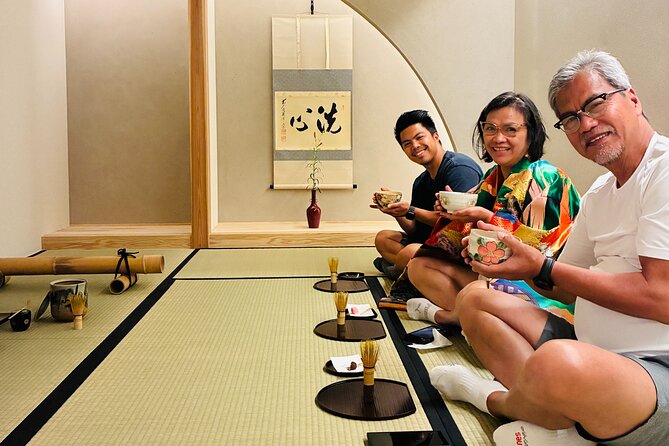
The hands-on section is the strongest reason to choose this experience over a ceremony that only asks you to watch. You select a tea bowl and receive guidance as you prepare your own matcha.
The host demonstrates the motion first, then you copy it. This is not a test, and you are not expected to produce a perfect bowl immediately. The value is in trying the technique and understanding how much care goes into a drink that can look simple once it reaches the table.
You can make the second bowl yourself or prepare it with a companion. That flexibility works well for couples, families, and small groups with different levels of interest. Children and teenagers may find this part more engaging than a longer explanation because they get a clear task to perform.
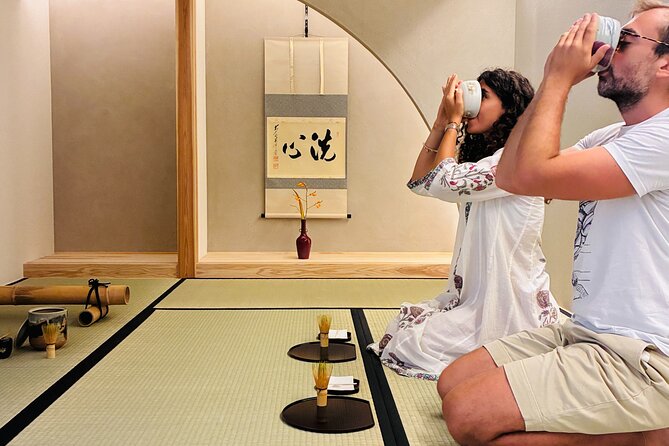
You then drink the matcha you prepared. Having two servings lets you compare the professionally made bowl with your own attempt. It also makes the $32.77 price easier to assess. You are receiving instruction, a full demonstration, two bowls of tea, a traditional sweet, and a small-group cultural setting rather than just a short tasting.
Other tea rooms and ceremonies in Kyoto:
- Kyoto: Table-Style Tea Ceremony at a Kyo-Machiya
★ 4.9 · 1,211 reviews - Kimono Tea Ceremony at Kyoto Maikoya, NISHIKI
★ 5.0 · 911 reviews - Kyoto: Arashiyama Bamboo Forest, Monkeys, Matcha & Temple Tour
★ 5.0 · 759 reviews - Kyoto: Tea Museum Tickets and Matcha Grinding Experience
★ 4.9 · 739 reviews
The seasonal sweet is part of the lesson
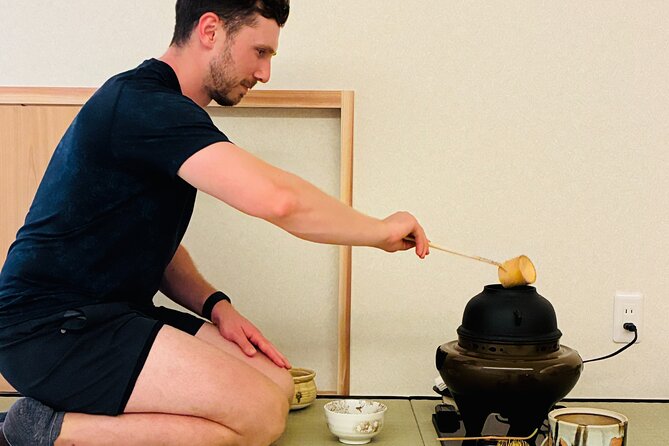
The confectionery is not an optional extra. A traditional seasonal Japanese sweet from a Kyoto shop with more than a century of history is included in the experience.
These sweets are often shaped and colored to reflect the season, so they add a visual element before you even taste them. Several descriptions highlight how carefully made and attractive the sweets are. They are also practical with matcha, since the sweetness softens the tea’s strong, earthy flavor.
Do not think of this as a full meal. The included sweet is a small accompaniment, not a substitute for lunch or a snack stop. If you are hungry, eat beforehand. The session is built around ceremony and tasting, not a multi-course food experience.
The combination of tea bowl, sweet, and quiet presentation helps you understand that Japanese tea ceremony involves hospitality as much as tea. The host is not simply showing you a beverage recipe. You are learning how objects, timing, food, and human attention work together.
How authentic is this Kyoto tea experience?
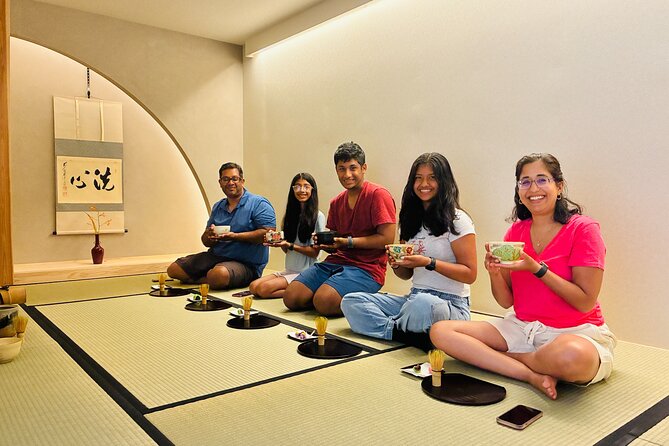
The experience gives you several traditional elements: a tea room, a nijiriguchi, formal utensils, seasonal confectionery, a demonstration, and the opportunity to prepare matcha. It is also clearly designed for international visitors, with English explanations and a practical one-hour format.
That balance is useful. A highly formal ceremony can be difficult to follow if you do not know the customs, and a heavily staged tourist demonstration can feel thin. Here, the explanation and hands-on portion give you a way into the tradition without requiring prior knowledge.
You should not expect to become a tea master in one hour. The experience offers an introduction, not professional training. You will learn the basic sequence, see why the movements are performed, and gain enough familiarity to whisk matcha at home. The deeper study of tea ceremony involves years of practice, and this session does not pretend otherwise.
The setting also appears clean and new, which matters when you are sitting close to the floor and handling shared equipment. Matcha, tea bowls, and selected items are available for purchase if you want a physical reminder of the experience, although purchases are not included in the price.
Who will enjoy Sanjo Chasuian most?
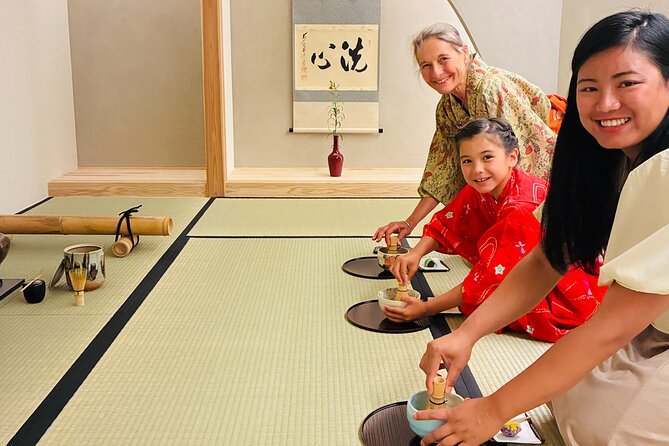
I would recommend this activity to first-time visitors who want one focused introduction to Japanese culture. It gives you history, ritual, food, and participation in a manageable one-hour block.
It also suits families. A family group of three adults found the chance for each person to make matcha especially worthwhile, and the host’s patient style helps keep the experience relaxed. Teenagers may appreciate the practical element, while older adults may prefer the calm pace and seated format.
Couples and solo visitors can enjoy it too, particularly if you like learning how things are made. The small group limit makes it easier to ask questions than in a large cultural show.
This may be less suitable if you want a long, highly formal tea ceremony with elaborate dress and many stages. An uchikake, a formal Japanese coat, may be available as an optional dress-up choice, but it is not listed as part of the basic price. If wearing traditional clothing is your main goal, confirm the current arrangements before booking.
Price, timing, and the practical details
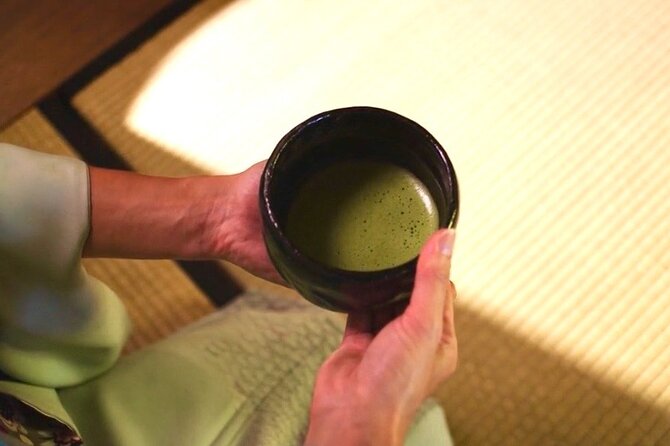
At $32.77 per person, this is a fair price for a short cultural activity in Kyoto. The value comes from the combination of teaching and participation. You receive two bowls of Kyoto matcha, a seasonal sweet, use of tea equipment, and direct guidance in a group of no more than 10 people.
The one-hour length is also easy to fit between major sights. The meeting point is Tea Ceremony & Sake Tasting Kyoto, Sanjo Chasuian, at 324-2 Sanjocho, Nakagyo Ward, Kyoto, postal code 604-8205. The activity ends at the same location, and it is near public transportation.
Allow extra time to find the entrance. One useful navigation tip is that map directions may lead you toward a smaller street at the corner. Stay on the main street and look for the green matcha ice cream cone outside. That landmark may save you from circling the block.
Entry is allowed from five minutes before the start time. Once the session begins, the door is locked. This is not a place to arrive casually after sightseeing, so plan your route with a buffer. A missed start means no participation and no refund.
Wear socks or bring a pair with you. The request is practical and fits the quiet, traditional room. Floor sitting is part of the experience for some of the time, although chairs are available. If sitting on the floor is uncomfortable, ask about the seating arrangement as soon as you arrive.
The booking includes a mobile ticket and confirmation at the time of booking. Private transportation and hotel transfers are not included, so you make your own way to Sanjo Chasuian.
A calm break from Kyoto sightseeing
The greatest strength here is the change in pace. Kyoto can fill your day with temples, markets, buses, shopping streets, and crowds. This tea ceremony gives you a quiet hour where the focus narrows to a bowl, a whisk, a sweet, and the host’s instructions.
The relaxed mood does not mean the activity lacks substance. You learn why the ceremony is performed in a particular way, then test your understanding with your own hands. That combination makes the information easier to remember than a lecture alone.
It is also a good option on a day when you want something indoors. The experience does not depend on weather, and the end point is the same as the meeting point, so you do not need to organize a complicated transfer afterward.
Some people may find the ceremony too restrained, especially if they prefer energetic cooking classes or longer food tours. The quiet is part of the point. Go in expecting a measured cultural lesson, not a fast-moving attraction.
Should you book the Sanjo Chasuian tea ceremony?
Book it if you want an accessible first tea ceremony with genuine participation. The strongest reasons are the two bowls of matcha, the chance to whisk your own, the seasonal Kyoto sweet, and the small group setting. You also get a traditional nijiriguchi and clear explanations of the customs behind the movements.
Think twice if you cannot sit low, cannot arrive early, or want an elaborate costume experience as the main event. The strict start rule requires care, and the one-hour format offers an introduction rather than a full study of tea ceremony.
For most visitors, this is a well-priced way to add a slower, more thoughtful hour to a Kyoto itinerary. Cancel at least 24 hours before the start for a full refund. Inside that window, the payment is not refunded and changes are not accepted.
FAQ
How long does the tea ceremony last?
The experience lasts approximately one hour.
How much does the experience cost?
The listed price is $32.77 per person.
How many people can join the session?
The activity has a maximum group size of 10 people.
What is included?
You receive two cups of Kyoto matcha, one prepared by the host and one you make yourself, plus a traditional seasonal Japanese confection.
Can I make my own matcha?
Yes. You choose a tea bowl and whisk a bowl of matcha yourself, either alone or with a companion, after watching the host’s demonstration.
Do I need to bring socks?
You should wear or bring socks for the experience.
What happens if I arrive late?
Entry is allowed from five minutes before the start. Once the session begins, the door is locked. Even one minute late means you cannot join, and no refund is given.
Just added in Kyoto
- Private Cooking Class Udon in Kyoto Japan★ 5.0 · 23 reviews
- Your Private Vacation Photography Session In Kyoto★ 5.0 · 110 reviews
- Kyoto: Zen Meditation at a Private Temple with a Monk★ 5.0 · 25 reviews
- Private Pewter Sake Cup Experience with a Kyoto Artisan★ 5.0 · 31 reviews
- Kyoto Wagashi(Japanese sweets) Cooking Class near Fushimiinari★ 5.0 · 60 reviews
- Kyoto: Gion Geisha District & Sake-in-Hand Walking Tour★ 5.0 · 37 reviews
- Kyoto:Family-Friendly Kimono & Yukata Experience at WARGO★ 5.0 · 147 reviews
- Private Guided Traditional Buddhist Cooking in Japan★ 5.0 · 16 reviews
Tea Ceremony Experiences, compared.

Tea Ceremony in a Traditional Tea House in Kiyomizu
Read our review →

World Heritage Kyoto & Nara Uji Authentic Matcha Experience
Read our review →
Arashiyama Bamboo Forest, Monkeys, Matcha & Temple Tour
Read our review →Browse the lists this tour appears in