
Reviewed · SAMURAI & NINJA EXPERIENCES
Kyoto: Ninja Weapon Forging Experience
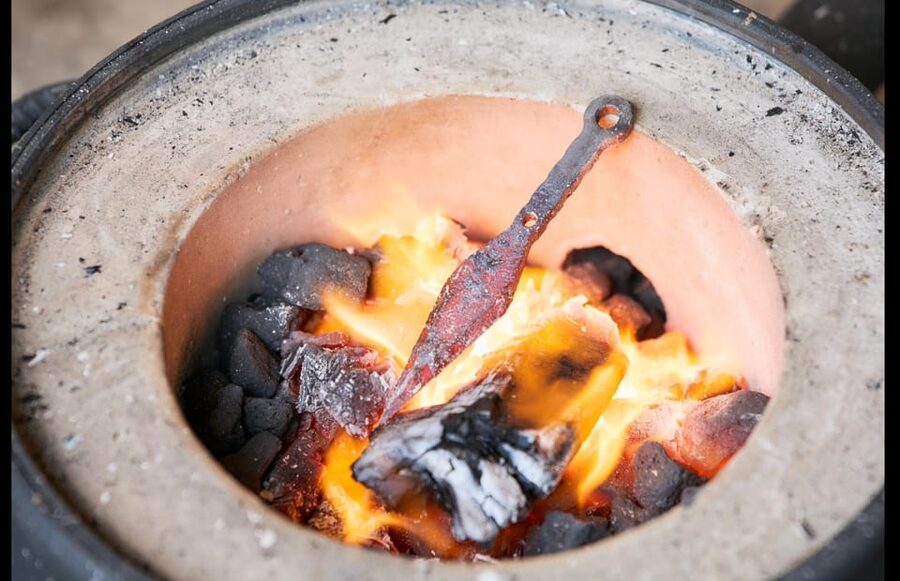
The hottest part of this Kyoto experience happens when your steel glows inside an 800°C furnace and you strike it with a hammer. You are not simply watching a demonstration. You help shape the metal, then sand, engrave, blacken, and polish it into a keepsake. I especially like the hands-on work and the fact that your chosen kanji gives the finished piece a personal mark.
I also like the friendly teaching style, particularly the energy brought by instructors such as Taka, along with the chance to leave with something you made yourself. The main consideration is location: Hieizanguchi Station is close to the studio, but reaching this quieter area from central Kyoto can take time, and the final approach includes a hill.
Key points at a glance
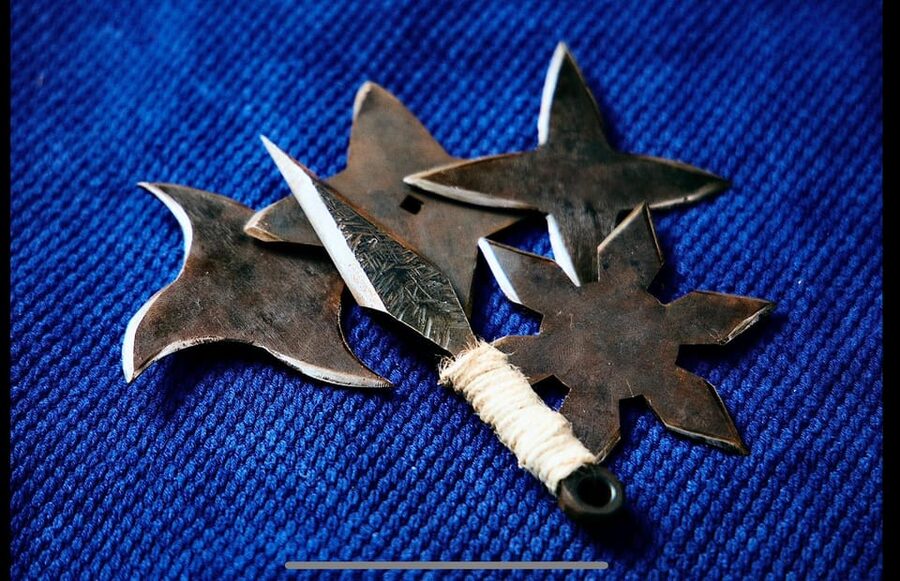
- Forge real steel: Heat, hammer, shape, sharpen, and polish your own shuriken or kunai.
- Choose your design: Pick from three shuriken styles, or pay an additional ¥3,000 for a kunai.
- Add a personal mark: Staff engrave a kanji character you select.
- Dress for the part: Change into samue and wrap a tenugui around your head.
- Bring home a display piece: Your finished weapon goes into a presentation box.
- Plan the return journey: Pack it in checked luggage only, never in your carry-on.
A Kyoto workshop where you make the souvenir
Many Kyoto activities give you a fine object to buy. This one asks you to help make yours. That difference matters. You feel the heat, hear the hammer, and watch a flat piece of steel slowly take on the shape of a shuriken or kunai.
The experience costs $148 per person. That is not a small add-on for a busy Japan trip, but the price covers a 150-minute class, an instructor, uniform, tools, the weapon itself, engraving, and final presentation. You are paying for time, materials, guidance, and an unusual cultural activity rather than just a finished product from a shop.
The value is strongest if you care about craft, Japanese history, or hands-on activities. If you only want an inexpensive souvenir, Kyoto has cheaper options. If you want a story attached to the object in your suitcase, this makes a stronger case.
Other swordplay and stealth sessions in Kyoto:
- Kyoto Samurai Experience
★ 5.0 · 1,294 reviews - Kyoto: Kendo and Samurai Experience with Uniform and Gear
★ 4.9 · 815 reviews - Kyoto: Samurai Sword Class by Experts in Traditional Arts
★ 4.9 · 657 reviews
Finding the studio near Hieizanguchi Station
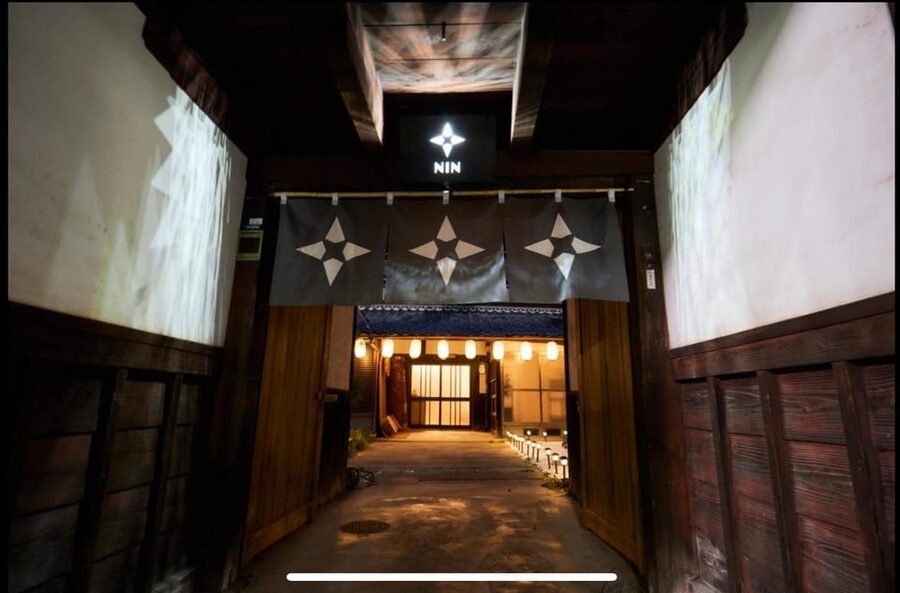
The meeting point is about a one-minute walk from Hieizanguchi Station. Look for the red postbox in front of the station, then go up the hill. That final instruction is important because the setting is not a flat, central Kyoto shopping street.
From central Kyoto, the journey can take around 40 minutes by bus according to the practical accounts provided. One person also noted needing a taxi because public transport did not bring them close enough without a hill walk. Build extra time into your schedule, especially if you are coming straight from a major sightseeing area.
The out-of-the-way setting can be part of the appeal. The area feels quieter and more residential than central Kyoto, and one solo visitor described feeling comfortable waiting nearby for a taxi after the activity. Still, do not book this for a tight connection or squeeze it between two fixed reservations.
The booking information gives free cancellation up to 24 hours before the start, and you can reserve now and pay later. Starting times vary, so check availability before planning transport.
Changing into samue sets the mood
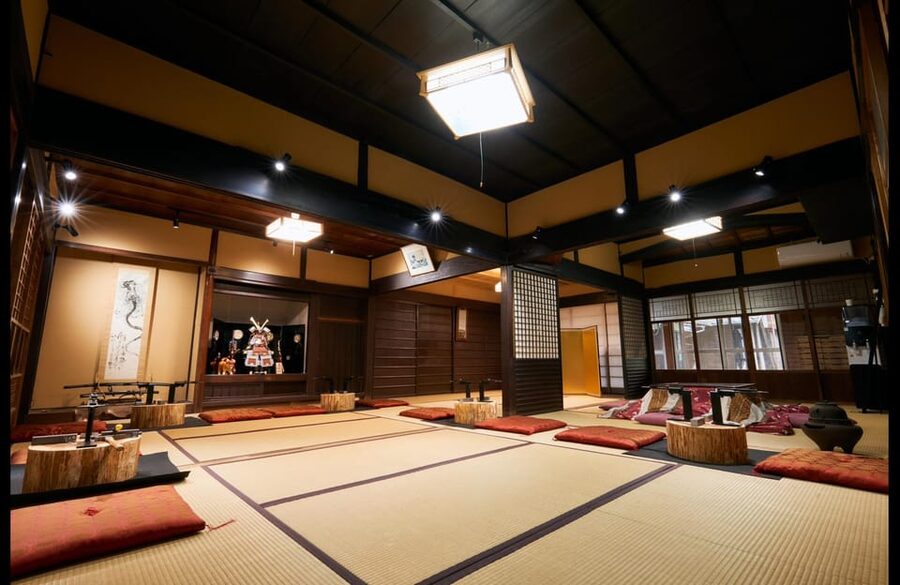
You begin by changing into samue, the traditional work clothes associated with Japanese craftspeople. A tenugui head wrap completes the outfit. It is a simple touch, but it changes the feel of the session from a quick tourist demonstration to a workshop with a clear ritual.
The clothing also makes photographs more fun. Photos and videos are encouraged as part of the experience, so you can record the glowing furnace, hammer work, and final reveal. Bring your camera or phone, but follow staff instructions around the hot equipment.
The class is taught in English. The instructors explain each step before you try it, then help you as the metal changes shape. That format suits beginners because you are not expected to arrive with blacksmithing skills.
Pick a shuriken or pay extra for a kunai
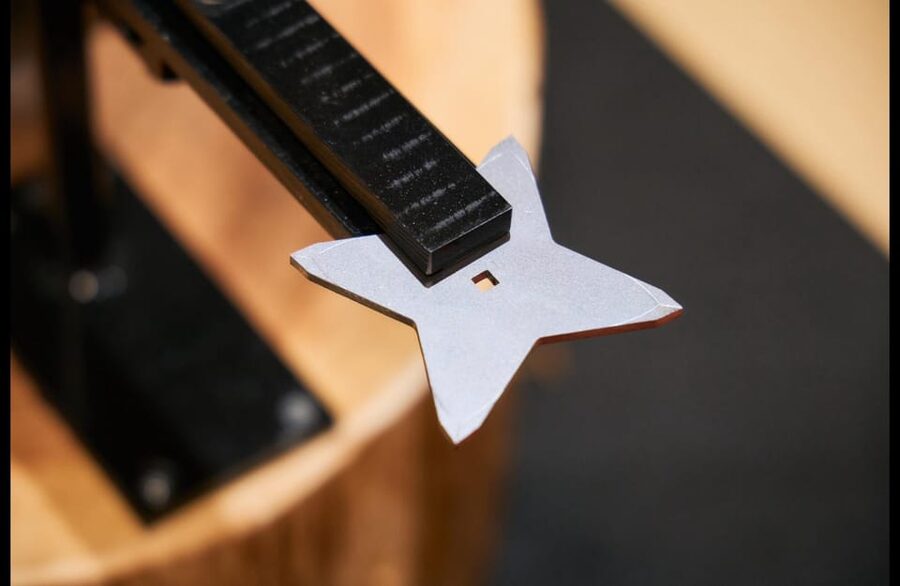
You can choose among three shuriken styles. Each has a different look and balance, so take a moment to decide which shape appeals to you. The standard booking includes the shuriken options.
A kunai is available for an additional ¥3,000. You must select the Kunai option when booking, rather than assuming you can change your mind at the studio. The extra charge covers processing and materials.
The choice affects the look and feel of your final souvenir, but neither option turns you into a working ninja. The finished pieces are made for display and personal keepsake value. One participant appreciated being able to choose how sharp the object became, making a duller version suitable for classroom display. Ask the staff about the finish you want.
Replica swords are also sold separately. They are not included in the class price, so treat those as an optional purchase rather than part of the workshop.
Same base, a different sort of day:
- PERFECT KYOTO 1-Day Bus Tour
★ 5.0 · 13,518 reviews - Kyoto: Fushimi Inari, Kinkakuji, Bamboo Grove 1 Day Bus Tour
★ 4.8 · 4,316 reviews - Kyoto: Tea Ceremony in a Traditional Tea House in Kiyomizu
★ 4.9 · 3,519 reviews - Kyoto Geisha Walking Tour: Gion District & Hidden Gems
★ 4.7 · 3,273 reviews
The furnace and hammering are the main event
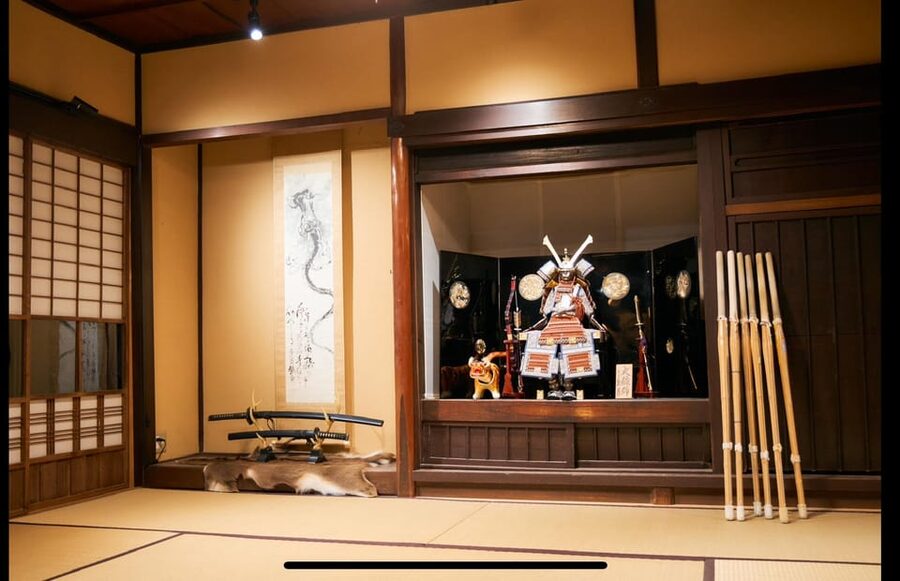
The forge is the moment most likely to stay with you. Steel is heated in a furnace at about 800°C, then you strike the hot metal under close instruction. Sparks and heat turn an abstract history lesson into something physical.
You may not spend the entire session hammering. The basic shape is prepared enough to keep the class moving, and some of the work is shared among participants and instructors. That is worth knowing if you expect a full professional blacksmithing session.
Even so, you take part in the key stages. You feel the weight of the hammer, see the metal respond, and learn why heat and repeated strikes matter. The process is controlled and supervised, and families with children as young as eight have taken part with staff support. Parents should still stay attentive and follow every safety direction.
This is also the best part for photographs and short videos. The furnace gives you the dramatic image, while the hammering shows that you did more than pose in costume.
Sanding turns a rough form into a blade
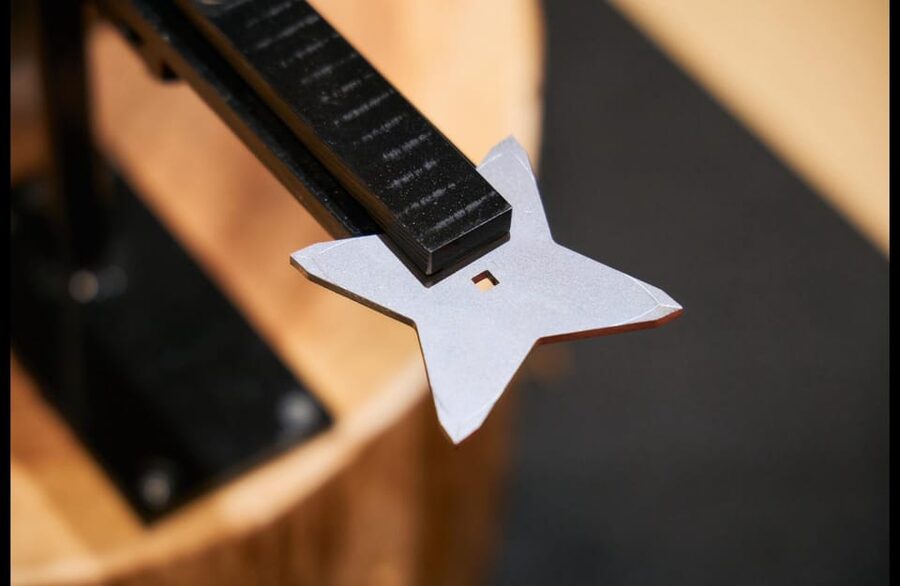
After forging, you refine the shape with a professional belt sander. This stage requires more patience than the forge. You work along the metal, smoothing edges and cleaning up the outline until the shuriken or kunai looks deliberate rather than roughly hammered.
Several people found the sharpening and sanding especially satisfying because this is when the object visibly takes form. You can watch the surface change under your hands. It is a good reminder that blacksmithing is not only about heat and sparks. Much of the craft lies in careful finishing.
The belt sander is powerful equipment, so staff guide you closely. The instructors demonstrate first, then give you a chance to work. You should expect help rather than complete independence at every moment. That is sensible here: the aim is to learn and finish a good object safely, not to prove you can manage industrial tools alone.
One fair limitation is that some people wished for more individual time with the instructors, especially during the forging stage. If the class is busy, you may occasionally wait while another person receives direct guidance.
Kanji engraving gives the piece a story
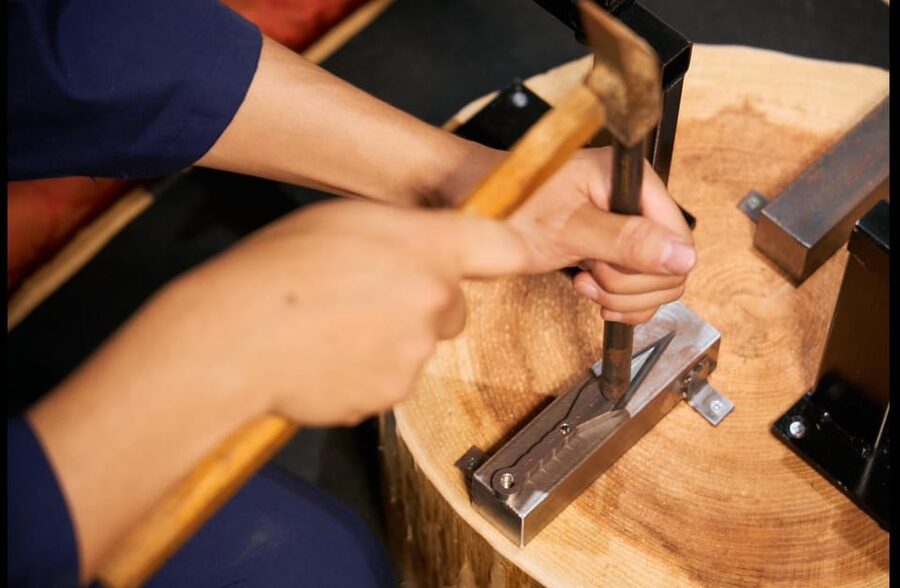
Once the form is ready, you choose a kanji character to be engraved. Staff handle the precision engraving, turning your selection into a permanent detail on the metal.
Choose a character for its meaning, not simply because it looks attractive. If you are unsure, ask what different options mean before committing. The engraving is one of the best reasons to keep the object for yourself rather than treating it as a generic ninja prop.
The staff do the fine engraving work, but the choice remains yours. That balance works well. You get a personal object without being asked to perform a delicate task beyond the class level.
Blackening and polishing complete the transformation
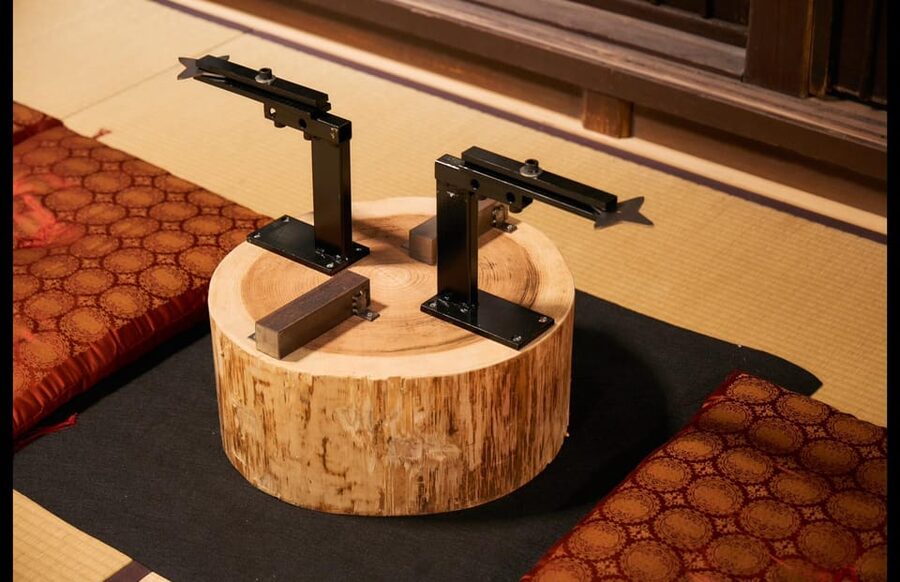
A special solution darkens the steel and helps protect it from rust. The blackened finish gives the piece a shadowy appearance that fits the ninja theme, while also making the metal look less like a raw workshop blank.
The final polishing brings back selected areas of shine. This contrast between darkened steel and polished surfaces gives the weapon its finished look. You can see the result of each previous stage: forging created the shape, sanding cleaned it, engraving added meaning, and the final treatment gave it character.
Your weapon is then placed in a beautiful box for the journey home. That packaging is useful, not just decorative. It turns the piece into a display object and helps protect it while you pack.
A history lesson without a long lecture
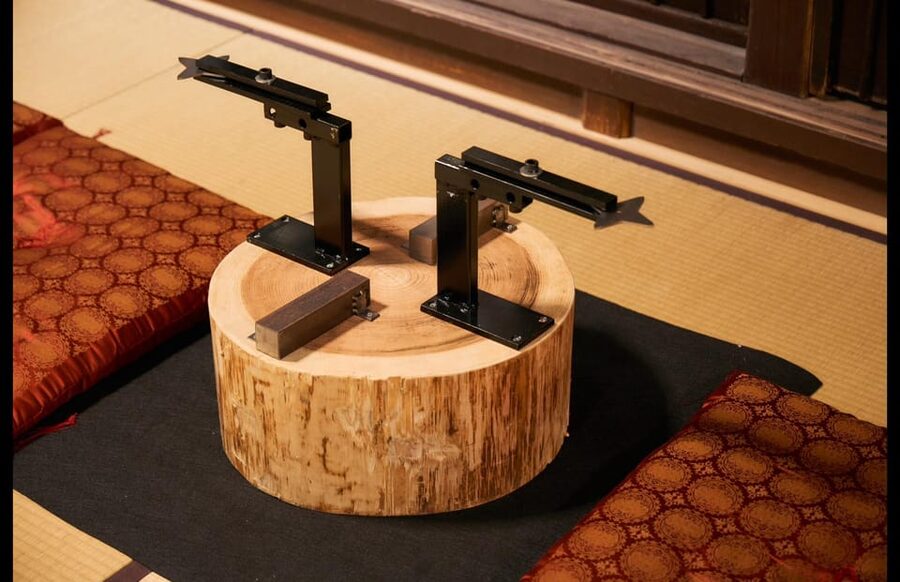
The class includes information about ninja history, symbolism, and hidden techniques. The history works best because it is tied to the object in your hands. You learn about the subject while heating, shaping, and finishing a related tool.
Instructors such as Taka are known for keeping the tone lively and easy to follow. Other staff help with shaping, engraving, and individual guidance. English is used throughout, and the teaching style is energetic rather than formal.
You should not expect a full academic study of ninja culture. This is a craft class first, with a history session woven into the work. For most people, that balance is a strength. You get enough context to understand the theme without losing time that could be spent making the piece.
Who will get the most from this class
This suits families, couples, solo visitors, and anyone who wants a break from temples and museums. Children and teenagers can take part, and families with children around eight to 17 have found the process manageable with staff assistance.
It is also a good choice for solo visitors. The shared work gives you a natural way to meet other participants, and one solo participant even made friends and went for drinks afterward. You do not need a group to make the class worthwhile.
I would book it for someone who likes:
- Japanese craft and traditional skills
- Hands-on learning rather than passive sightseeing
- Anime, ninja stories, or historical weapons
- Personal souvenirs with a story behind them
- Family activities that keep older children involved
I would think twice if you dislike heat, workshop noise, safety instructions, or working in a group. The process is guided, but it is still a real craft setting. You also need to allow for the longer journey to the studio.
Packing your finished weapon for the flight
You can take the weapon home, but it must go in checked luggage. It cannot travel in your carry-on bag. Check your airline and destination customs rules before you fly, and declare the item where required. One family returning to Australia reported getting through customs after declaring the weapons, but you remain responsible for checking your own rules.
The presentation box makes packing easier, but do not leave the item loose in your suitcase. Keep it protected and accessible if airport staff need to inspect it. Replica swords bought separately will also need careful packing and airline compliance.
Is $148 a fair price?
At $148, this is a premium activity. You could buy a mass-produced ninja souvenir for much less. The price makes more sense when you count the instructor time, steel, tools, safety supervision, uniform, engraving, blackening, polishing, box, and the finished piece.
The class also gives you something that a standard souvenir cannot: a memory connected to a series of actions you performed yourself. If you are building a trip around temples and food, this adds a different kind of experience. If your budget is tight, or you already have several paid craft activities booked, compare it carefully.
The ¥3,000 kunai supplement is reasonable to factor in from the start. Select it during booking if that is the shape you want. Do not assume the standard price includes every weapon option.
Should you book the Kyoto Ninja Weapon Forging Experience?
Book it if you want a hands-on Kyoto activity with a clear finished result. The furnace, hammering, sanding, kanji engraving, dark finish, and polished surface give the session a satisfying beginning-to-end arc. The friendly English-speaking team adds confidence, especially for families and first-time makers.
Skip it if you need a central Kyoto location, a low-cost souvenir, or a completely independent blacksmithing session. The trip to Hieizanguchi takes planning, and some stages are supervised closely.
For most visitors, I would make the booking, especially if you have already seen the main temples and want something you cannot easily repeat at home. Allow more time than the stated 150 minutes if your day is tight, choose your weapon in advance, and pack the finished piece in checked luggage.
FAQ
Where does the ninja weapon forging experience take place?
It takes place near Hieizanguchi Station on Honshu, in the Kyoto area. The studio is described as a one-minute walk from the station. Go up the hill where you see the red postbox in front of the station.
How long does the activity last?
The stated duration is 150 minutes. Some participants described the full experience as taking about three hours, so allow extra time if you have another fixed booking afterward.
What weapons can I make?
You can choose from three shuriken styles. A kunai is also available, but you must select the Kunai option when booking and pay an additional ¥3,000.
Is the class taught in English?
Yes. English is the listed language for the instructor and activity.
What is included in the price?
The price includes the instructor, weapon-making class, uniform, tools, and the weapon you make to take home. The weapon is placed in a presentation box.
Can children take part?
Families with children have taken part, including children around eight years old. The instructors provide step-by-step help and supervise the workshop process.
Can I choose the kanji engraving?
Yes. You choose a kanji character, and staff engrave it onto your weapon.
Can I bring the weapon on my flight?
You can take it home in checked luggage only. It is not allowed in carry-on luggage. Check the rules for your airline and destination, and declare it when required.
Can I cancel the booking?
You can cancel up to 24 hours in advance for a full refund. A reserve-now, pay-later option is also available.
Just added in Kyoto
- Kyoto: Private Photoshoot Service★ 5.0 · 158 reviews
- Kyoto Rickshaw Tour★ 5.0 · 210 reviews
- Kyoto: Arashiyama Bamboo, Temple, Matcha, Monkeys & secret spots★ 5.0 · 219 reviews
- Izakaya Style Cooking Class★ 5.0 · 219 reviews
- Kyoto: Traditional Concert at Townhouse or Bathhouse★ 4.9 · 224 reviews
- Ninja 2-hour Hands-on Lesson by Japanese master in Kyoto -Medium★ 5.0 · 218 reviews
- Kyoto: Afternoon Japanese Izakaya Cooking Class★ 4.9 · 241 reviews
- Samurai Training with Modern day Musashi in Kyoto★ 5.0 · 256 reviews
Samurai & Ninja Experiences, compared.
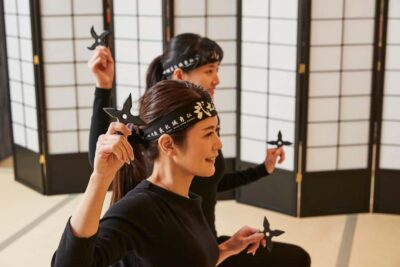
Samurai Ninja Museum Guided tour and Experience
Read our review →
Kendo and Samurai Experience with Uniform and Gear
Read our review →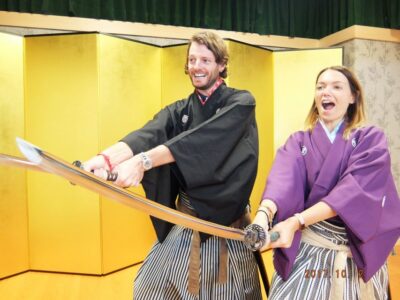
Samurai Sword Class by Experts in Traditional Arts
Read our review →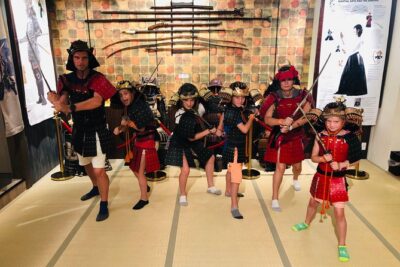
Skip the lines Basic Ticket at SAMURAI NINJA MUSEUM KYOTO
Read our review →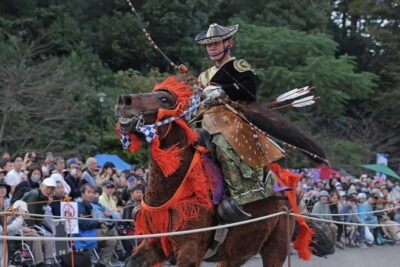
Samurai Sword & Archery Class from Samurai Descendant
Read our review →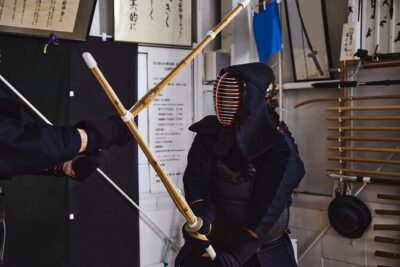
Browse the lists this tour appears in