
Reviewed · TOURS IN KYOTO
Kyoto: Private Customizable Day Tour with Guide and Vehicle
Kyoto is spread out, and its best sights do not sit in a tidy row. This private tour solves that problem with a clean vehicle, hotel pickup, and a flexible route linking temples, markets, old streets, and scenic areas in one long day. Guides such as Yash, Nisal, Sam, Sha, and Tom are frequently praised for good timing, patient pacing, and helping with family photos.
I especially like the freedom to swap stops around and the practical help for families, older adults, and anyone who does not want to spend the day changing trains and buses. A possible drawback is that the standard list is ambitious, and the guide may not accompany you inside every attraction, so you should agree on your priorities before setting out.
Key points at a glance
- A private vehicle covers Kyoto’s far-flung sights: Connect Arashiyama, Kinkaku-ji, Gion, Kiyomizu-dera, and Fushimi Inari without repeated public transport changes.
- Your day can change as you go: Add shopping, lunch, photo stops, or quieter places instead of following a fixed group schedule.
- Hotel and station pickup keep the morning simple: Pickup is available in Kyoto, with Osaka pickup and drop-off possible by contacting the provider.
- Family support is a real strength: Guides have adjusted walking speed, found convenient access, helped older relatives, and kept children engaged.
- Photo help comes free of charge: Several guides are praised for finding good viewpoints and taking family pictures with your phone.
- The price works best for a group: At $382 for up to six people, the per-person cost drops sharply when the vehicle is full.
Why a private car makes Kyoto easier
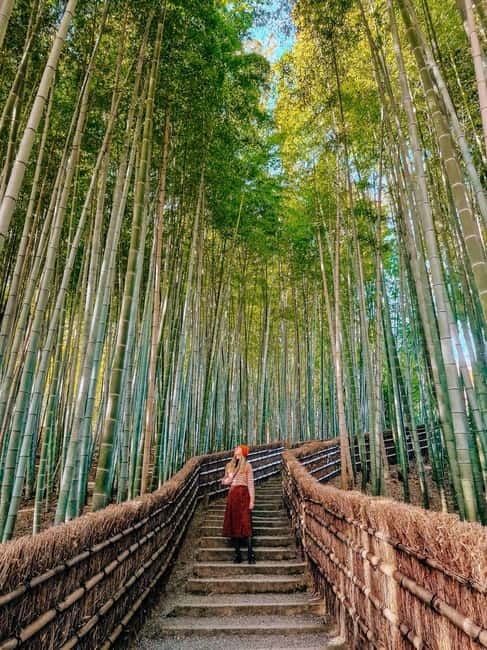
Kyoto is not difficult to visit, but it can be tiring. Arashiyama lies on the western side of the city, Fushimi Inari is southeast, and Kinkaku-ji, Gion, Nishiki Market, and Kiyomizu-dera all require their own connections or long walks.
A private vehicle turns those separate journeys into one moving base. You leave your hotel, see a major sight, return to the car, and continue without checking another train platform or figuring out which bus is full. The driver-guide can also choose convenient drop-off points, which matters at busy sights where parking and walking routes can eat up time.
The tour costs $382 per group of up to six. For six people, that is about $64 per person before optional admission fees and food. For two people, it is a much bigger spend, but the price buys privacy, door-to-door transport, and the ability to change the plan. If you are comfortable with trains and buses and have several days in Kyoto, public transport will cost less. If you have only one day, older relatives, children, luggage, or a long wish list, the value is easier to see.
The vehicle is air-conditioned, has spacious seating, and comes with WiFi. The company also promises that the vehicle will match the quality shown in its photos rather than being replaced with a lower-grade option at the last minute. That promise matters for a full day on the road.
Other experiences people book in Kyoto:
- PERFECT KYOTO 1-Day Bus Tour
★ 5.0 · 13,518 reviews - Kyoto: Fushimi Inari, Kinkakuji, Bamboo Grove 1 Day Bus Tour
★ 4.8 · 4,316 reviews - Kyoto: Tea Ceremony in a Traditional Tea House in Kiyomizu
★ 4.9 · 3,519 reviews
Starting the day from your hotel or Kyoto Station
Pickup is included from a Kyoto hotel or Airbnb lobby. The driver-guide is scheduled to arrive five minutes before the agreed start time, so keep your phone available and be ready in the lobby.
If you arrive by train, the meeting point is Kyoto Station’s Central Exit at the designated time. Osaka pickup and drop-off may be possible, but you need to contact the provider rather than assume it is part of every booking. Several people have used the tour while moving between Kyoto and Osaka, making it useful as both sightseeing and transport.
Before departure, tell your guide the three or four sights that matter most. Do not simply hand over an enormous list and expect every stop to receive equal attention. Kyoto’s attractions require walking, queues, and time inside the grounds. A clear priority list lets the guide protect the most important parts of your day.
Arashiyama Bamboo Forest and the western hills
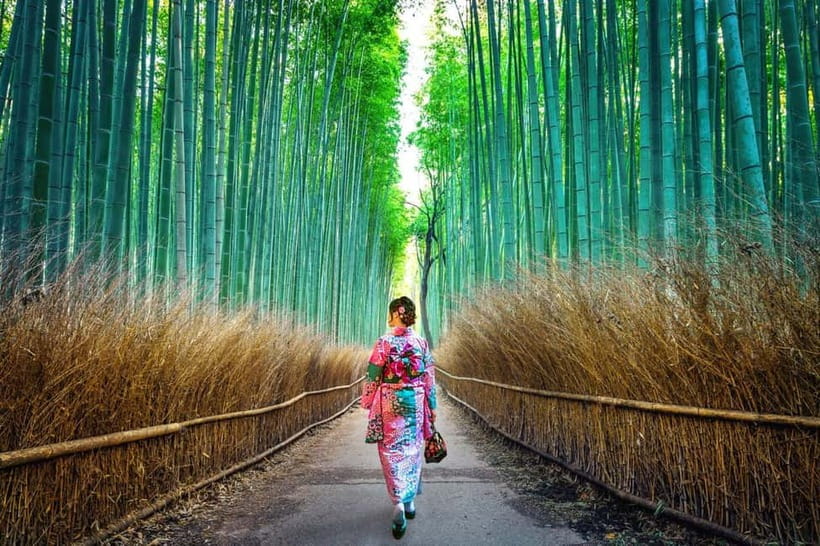
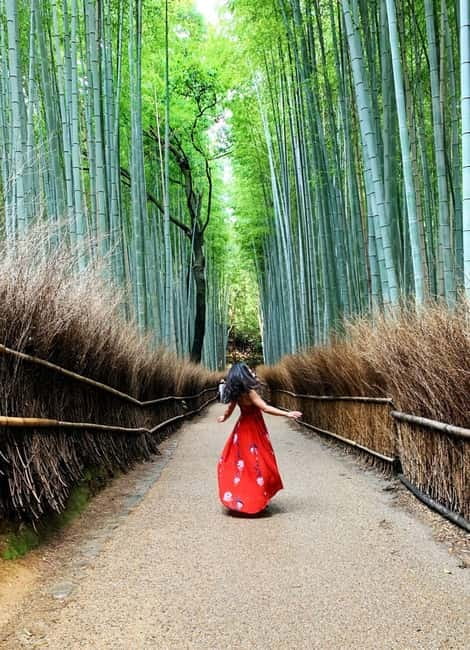
Arashiyama is often the first major stop because it sits well apart from the eastern and southern sights. The bamboo path is photogenic, calm in some sections, and crowded in others. Your guide can point you toward the main photo area and help you use the time well, but remember that this is not a private forest. Expect other people and keep your visit moving.
The itinerary allows about an hour here. That is enough for the famous bamboo walk and a quick look around, but not enough for every nearby attraction. If Arashiyama is your main interest, ask in advance about spending longer in the area. If your goal is to sample Kyoto’s leading sights, one hour gives you a useful introduction before moving on.
Several families appreciated guides who handled different walking speeds. Nisal, Yash, and others are praised for taking fit family members farther while letting older or less mobile relatives move more slowly. That flexibility is valuable here, where even a short visit includes walking and standing.
Kinkaku-ji, the Golden Pavilion
Kinkaku-ji is one of Kyoto’s unmistakable sights. The gold-covered pavilion reflects in the pond, creating the classic photograph most people expect. The route through the temple grounds is straightforward, and an hour gives you time for the main view, the gardens, and the exit area.
This is a place where a guide adds context, especially if you want more than a photograph. Ask about the building’s role, the grounds, and the design details you might otherwise pass without noticing. The entry ticket is not included, so budget separately for admission.
Kinkaku-ji is also a good example of the tour’s tradeoff. A car gets you there without a complicated transfer, but traffic can affect the day. Your guide may adjust the order of stops to keep the schedule moving. If you care most about avoiding crowds, say so early and ask for the best practical timing.
Same base, a different sort of day:
- Kyoto Geisha Walking Tour: Gion District & Hidden Gems
★ 4.7 · 3,273 reviews - Kyoto: Tea Ceremony Ju-An at Jotokuji Temple
★ 4.9 · 3,207 reviews - Kyoto: Gion Magical Night Walking Tour with Geisha Trivia
★ 4.9 · 2,393 reviews - Kyoto: 45-Minute Tea Ceremony Lesson Experience
★ 4.3 · 2,378 reviews
Nishiki Market and a useful lunch break
Nishiki Market brings a change of pace. Instead of temple grounds and formal gardens, you get a narrow shopping street lined with food stalls and small shops. It is a good place to browse, sample food, and look for souvenirs, though you should not expect a quiet market experience.
Food and drinks are not included. That gives you control over spending, and your guide can suggest a place suited to your group. Several families appreciated help with lunch, including an introduction to conveyor-belt sushi and advice on where to find particular items.
Give yourself enough time to eat. A rushed market stop can become little more than a walk past storefronts. If your group has dietary needs, mention them before the day begins so the guide can help with suggestions. The supplied details do not promise a specific restaurant or menu, so treat lunch as flexible rather than fixed.
Gion’s old streets and traditional tea districts
Gion offers Kyoto’s most recognizable old-street atmosphere. Wooden facades, narrow lanes, traditional teahouse streets, and carefully preserved architecture make this a rewarding walking stop, especially late in the day when the light is softer.
Your guide can explain local customs and point out the difference between a public street, a working restaurant district, and a private property. Be respectful with photography and do not block entrances. Gion is best enjoyed at a slower pace than the vehicle schedule might suggest.
An hour is enough for a guided introduction, but not for exploring every lane. If old Kyoto is your main interest, you may want to trade away one of the other stops. The strength of a private tour is that you can make that choice instead of accepting a preset route.
Kiyomizu-dera and the eastern hills
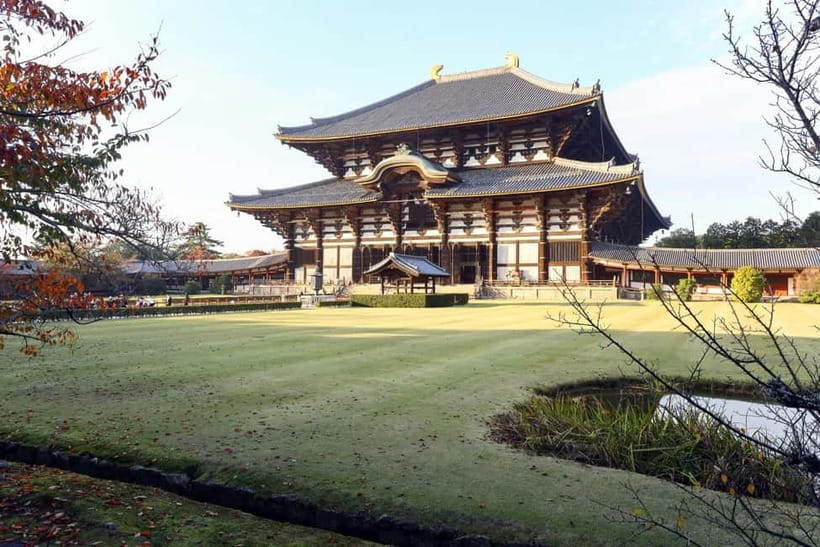
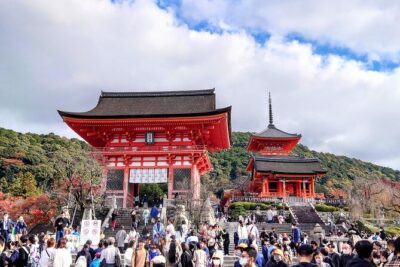
Kiyomizu-dera is one of Kyoto’s major temple visits, with broad views and a memorable approach through the streets near the temple. The visit involves walking, slopes, and time on your feet. Comfortable shoes are not a minor suggestion here. Wear them from the start.
The tour assigns about an hour, enough for the key areas and a guided explanation. It may feel short if you want to explore every corner or spend time browsing the approach streets. Older relatives may need extra time, and the guide can adjust the pace. One family specifically valued help finding wheelchairs, elevators, and easier access for a parent with a bad knee, but you should still discuss mobility needs when booking.
Admission is extra. The guide may explain the site and help with practical details, but the cost of entry remains yours. Ask whether the guide will join you inside, since the exact arrangement can vary and at least one booking described the guide providing information outside the attractions.
Fushimi Inari’s torii gates
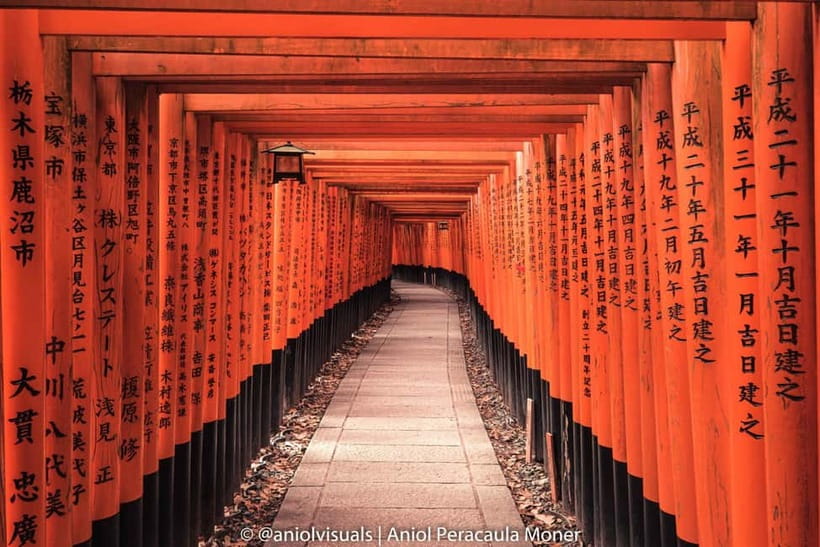
Fushimi Inari is famous for its long tunnel of orange torii gates climbing into the wooded hillside. It is one of Kyoto’s most memorable walks, but it can also be the most demanding stop on this route.
The listed visit lasts about an hour. That works for entering the shrine, seeing the lower gates, and walking partway uphill. Reaching the upper sections takes much longer, so do not assume the one-hour stop means you will complete the entire mountain route.
This is a good place to tell the guide how far your group wants to walk. A family with energetic teenagers may go farther while another group may prefer a shorter visit. The guide can keep the schedule realistic and help you find worthwhile photo spots without turning the final stop into an exhausting race.
What the guides add to the day
The guide quality is the most praised part of this experience. Yash is often described as patient, flexible, and especially good with photographs. Nisal receives similar praise for clear explanations, family-friendly pacing, and small adjustments to the route. Sam, Sha, Shan, Tom, Niall, and Ali are also singled out for good driving, local explanations, or friendly service.
Those names do not guarantee that you will receive a particular person. Ask if you have a preference, but book for the structure of the experience rather than one promised personality.
The best guide moments are practical. A guide can explain what you are seeing, suggest a lunch stop, point out a quieter photo location, find a sensible drop-off point, and help you decide when a stop has given you enough. Several people also appreciated having the guide take photos with their phones, a small service that can matter when nobody in the group wants to be left out of the picture.
Do not expect a formal lecture at every site. The guide may not enter every attraction with you, and some of the touring happens from the car or at the entrance. If detailed indoor guiding is your top priority, ask exactly how the day will operate.
Pacing, mobility, and the limits of one day
The advertised route lists six major areas, each with about an hour: Arashiyama, Kinkaku-ji, Nishiki Market, Gion, Kiyomizu-dera, and Fushimi Inari. Add driving, meals, parking, walking, and admission lines, and this becomes a full day.
You can see a lot, but you cannot explore everything thoroughly. That is not a flaw unique to this tour. It is the basic arithmetic of Kyoto. The private vehicle makes the route more efficient, but it cannot remove distance, crowds, or temple walking.
I would book this for families with young children, groups with seniors, couples who want comfort, and anyone visiting Kyoto for only a day or two. It is also a strong choice in cold, rainy, or snowy weather, when waiting for buses and walking between connections becomes less pleasant.
If you are fit, independent, and staying in Kyoto for several days, use trains and buses for some visits and reserve a private tour for the day when you want maximum coverage. The wheelchair-accessible listing is encouraging, but individual temple grounds and walking routes still require advance discussion.
Booking details worth knowing
The tour is private for your group, with space for up to six people. Pickup and drop-off are included within Kyoto, and Osaka arrangements require prior contact. English is the stated guide language.
Food, drinks, and optional entry tickets are extra. Comfortable shoes are the only stated item to bring, but you should also dress for the season because much of the day takes place outdoors.
You can cancel up to 24 hours before the start for a full refund, and reserve now while paying later. The activity is listed with a 4.9 rating from 334 reviews, and 94 percent of ratings give the transport a perfect score. Those figures point to a reliable overall experience, especially around cleanliness, driving, comfort, and flexibility.
Should you book this Kyoto private tour?
Book it if you want to cover Kyoto’s major sights in one day without turning your morning into a transport puzzle. The strongest reasons are the private vehicle, flexible route, hotel pickup, family support, and guides who often help with photos and lunch decisions.
Think twice if you want long, quiet visits at only two or three places, or if you prefer to keep costs low with public transport. The standard route is ambitious, entry fees are extra, and one hour at a major temple can feel brief.
For the best result, send your guide a short priority list, mention mobility needs, state how much walking your group wants, and decide if you prefer iconic sights or lesser-known stops. With those choices made early, this tour becomes a practical way to see a great deal of Kyoto while saving your feet for the places you most want to remember.
FAQ
How much does the private Kyoto tour cost?
The price is $382 for a private group of up to six people. Food, drinks, and optional entry tickets are not included.
What is included in the tour?
The experience includes Kyoto hotel pickup and drop-off, private air-conditioned transportation, free WiFi, and an English-speaking guide.
Can I be picked up or dropped off in Osaka?
Osaka pickup and drop-off may be arranged by contacting the provider. Kyoto Station arrivals meet at the Central Exit at the designated time.
Which places can I visit?
The planned route includes Arashiyama, Kinkaku-ji, Nishiki Market, Gion, Kiyomizu-dera, and Fushimi Inari Taisha. The itinerary can be changed to fit your interests.
Are entrance fees included?
No. Entry tickets are not included, although some attractions may offer optional or skip-the-line arrangements.
Is the tour suitable for wheelchair users?
The activity is listed as wheelchair accessible. Discuss your group’s mobility needs in advance because individual sights include different walking routes and surfaces.
What is the cancellation policy?
You can cancel up to 24 hours before the activity for a full refund. The reserve-now, pay-later option is also available.
Just added in Kyoto
- Kyoto: Private Photoshoot Service★ 5.0 · 158 reviews
- Kyoto Rickshaw Tour★ 5.0 · 210 reviews
- Kyoto: Arashiyama Bamboo, Temple, Matcha, Monkeys & secret spots★ 5.0 · 219 reviews
- Izakaya Style Cooking Class★ 5.0 · 219 reviews
- Kyoto: Traditional Concert at Townhouse or Bathhouse★ 4.9 · 224 reviews
- Ninja 2-hour Hands-on Lesson by Japanese master in Kyoto -Medium★ 5.0 · 218 reviews
- Kyoto: Afternoon Japanese Izakaya Cooking Class★ 4.9 · 241 reviews
- Samurai Training with Modern day Musashi in Kyoto★ 5.0 · 256 reviews
Tours in Kyoto, compared.
Tea Ceremony in a Traditional Tea House in Kiyomizu
Read our review →
Kyoto Geisha Walking Tour: Gion District & Hidden Gems
Read our review →
Gion Geisha District Walking Tour – Stories of Geisha
Read our review →
Best of Kyoto: Gion, Geisha, Pagodas & Cobblestones
Read our review →
Browse the lists this tour appears in