
Reviewed · TEA CEREMONY EXPERIENCES
Kyoto: Private Tea Ceremony at local home with tea master
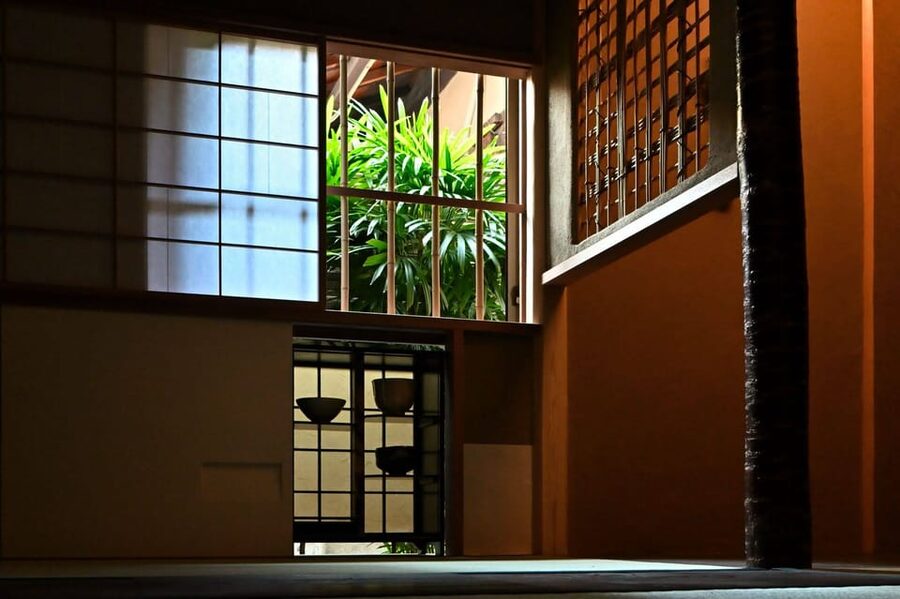
The most memorable part of this experience is its setting: a real Kyoto home near Nijo Castle, where a certified tea master explains the ceremony as you take part. You’ll learn why the bowl, cloth, whisk, and scoop matter, then prepare matcha yourself rather than simply watching.
I like the private format, which gives you room to ask questions, and the chance to taste high-quality Uji matcha with two kinds of seasonal sweets. The calm setting and careful explanations received especially warm praise. The main consideration is timing: the whole experience lasts one hour, and one previous participant found the ending a little rushed when another booking was due to begin.
Key points at a glance
- Local Kyoto home near Nijo Castle: The tea room is only about three minutes on foot from Nijo Castle and Nijojo-mae subway station.
- Led by a Kyoto-born tea master: Aya-san explains the ceremony in English or Japanese, including its history and philosophy.
- You prepare matcha yourself: After watching a demonstration, you handle the tea whisk and make your own bowl.
- Two cups and two seasonal sweets: Uji matcha is paired with two types of made-to-order traditional dried sweets.
- Private and accessible: The experience is for your own private group and is wheelchair accessible.
- Dress rules matter: Wear socks and long trousers or a long skirt. Leave perfume, jewelry, hats, and shoes outside the tea room.
A quiet tea room three minutes from Nijo Castle
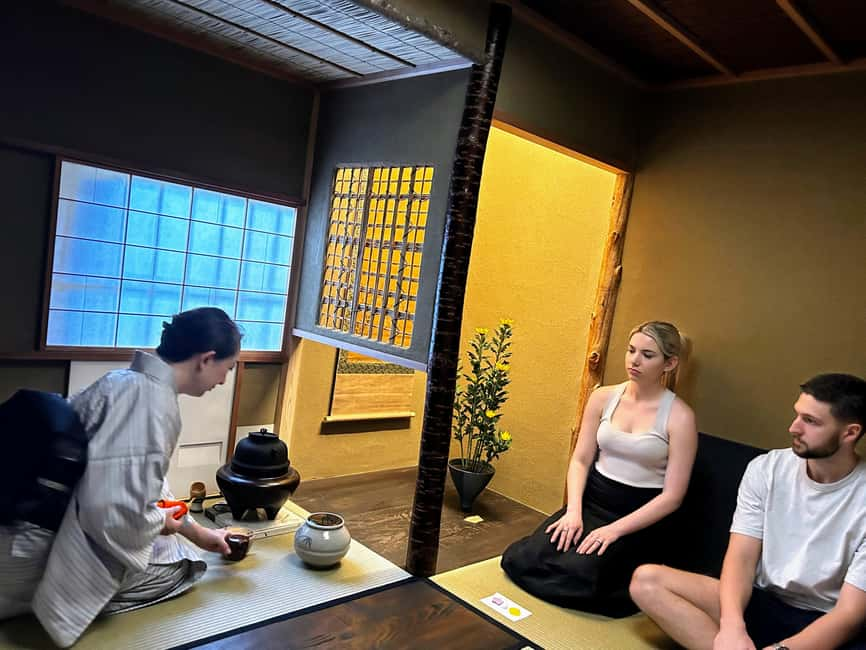
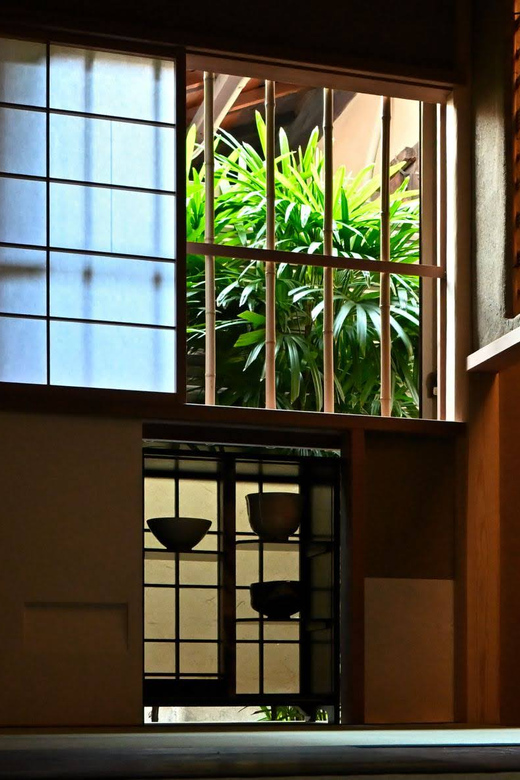
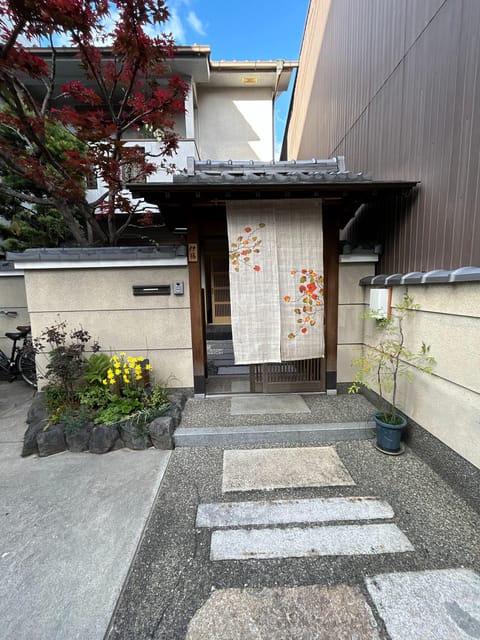
Kyoto has no shortage of tea ceremony options, but location and setting make a real difference. This one takes place in a local home near Nijo Castle, not in a large attraction built mainly for passing tour groups. You enter a small, traditional space where the ceremony can feel personal and focused.
The meeting point, さくら 日本文化体験, is about three minutes from Nijo Castle and Nijojo-mae Station on the Kyoto subway. It is also about three minutes from the Nijojo-mae city bus stop, 15 minutes on foot from Shijo Station on the Hankyu line, and around 10 minutes by taxi from Kyoto Station.
That makes this a practical stop on a day devoted to central Kyoto. You can visit Nijo Castle before the ceremony, then walk over without dealing with a long cross-town journey. If you are coming from Kyoto Station, a taxi is the simplest choice according to the stated travel time.
The tea room itself is part of the experience. You remove your shoes before entering, so plan to arrive in clean socks. Bare feet are not permitted, and the host can provide socks for an additional charge if needed.
Other tea ceremonies in Kyoto people book:
- Kyoto: Tea Ceremony in a Traditional Tea House in Kiyomizu
★ 4.9 · 3,519 reviews - Kyoto: Tea Ceremony Ju-An at Jotokuji Temple
★ 4.9 · 3,207 reviews - Kyoto: 45-Minute Tea Ceremony Lesson Experience
★ 4.3 · 2,378 reviews
The opening lesson gives the ceremony its meaning
The hour begins with an introduction to Japanese tea ceremony and its place in Japanese culture. This matters because the gestures can otherwise seem mysterious. You might see a host fold a cloth, turn a bowl, or pause before serving tea, but without context those actions are easy to mistake for simple formalities.
The tea master explains how the tradition developed and how it has been passed down. You also learn about the ideas behind the ceremony, including respect, attention, hospitality, and tranquility. The setting is designed for beginners, so you do not need prior knowledge of Japanese tea.
The instructor is a certified tea master born and raised in Kyoto. Aya-san is named as the welcoming host in the experience information, and the warm reception is one of the strongest parts of the program. English and Japanese instruction are available, making it easier to follow the cultural explanations as well as the practical steps.
I appreciate that the focus is not limited to drinking matcha. You learn why each movement matters and how the ceremony connects to everyday Japanese manners. The result is more useful than a quick photo opportunity, especially if you want cultural context to go with your sightseeing.
The tea utensils turn a short class into a hands-on lesson
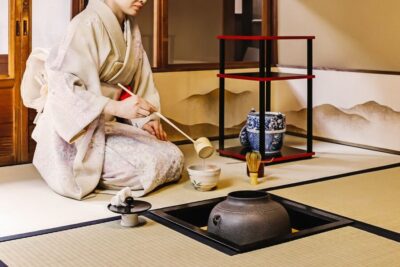
One part of the session introduces the tools used in tea preparation. You’ll see the chawan, or tea bowl, the chasen, or bamboo whisk, and the chashaku, or tea scoop.
The tea bowl is not simply a cup. Its shape, texture, and handling all affect the experience. The whisk turns powdered matcha into a smooth, foamy drink, while the scoop measures the tea. You learn how the utensils are used and cared for, with practical advice about their maintenance in daily life.
This explanation is useful because it slows the ceremony down. Instead of seeing a sequence of precise movements, you begin to understand the job of each object. The beautiful bowls also add visual interest, and the objects help communicate the care that goes into Japanese hospitality.
You are taught how to hold the bowl and how to appreciate the tea properly. The rules are not presented as a test. They are a way to show consideration for the host, the utensils, and the person who prepared the tea.
Watch the demonstration, then make your own matcha
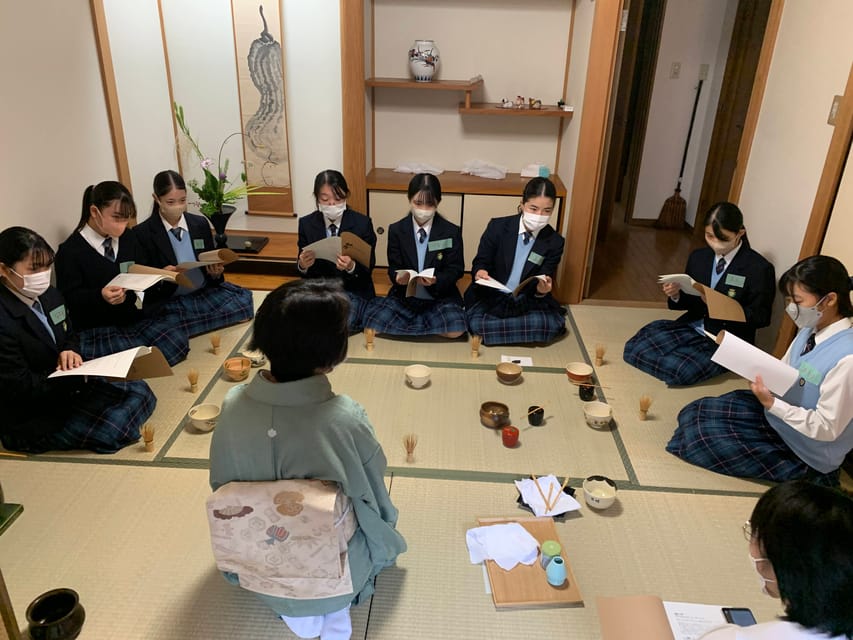
After the introduction, the tea master gives a demonstration. You watch the cloth being folded, the utensils being handled, and the matcha being prepared in a measured series of movements.
The calm pace is important. Tea ceremony is not about rushing to produce a drink. The preparation creates a quiet pause, and the repeated motions help you pay attention to small details. One of the most praised qualities of this experience is its peaceful atmosphere, supported by clear explanations and the traditional setting.
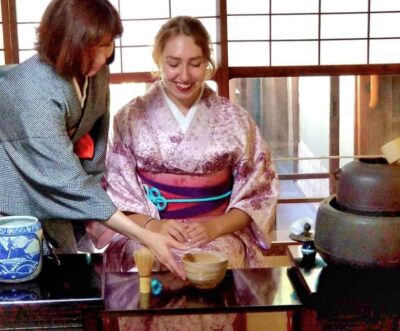
Then the lesson becomes hands-on. You prepare matcha yourself and experience the technique rather than only observing it. The instructor guides you through the process, so beginners can take part without worrying about getting every movement perfect.
You receive two cups of matcha in total. The tea is sourced from Uji in Kyoto, an area closely associated with Japanese green tea. Matcha has a strong, grassy taste that can surprise anyone expecting ordinary brewed tea. The sweets are an important partner because their sweetness balances the tea.
Other tea rooms and ceremonies in Kyoto:
- Kyoto: Table-Style Tea Ceremony at a Kyo-Machiya
★ 4.9 · 1,211 reviews - Kimono Tea Ceremony at Kyoto Maikoya, NISHIKI
★ 5.0 · 911 reviews - Kyoto: Arashiyama Bamboo Forest, Monkeys, Matcha & Temple Tour
★ 5.0 · 759 reviews - Kyoto: Tea Museum Tickets and Matcha Grinding Experience
★ 4.9 · 739 reviews
Seasonal Japanese sweets make the tasting feel complete
Two kinds of traditional Japanese dried sweets are included, and they are made to order with seasonal beauty in mind. The sweets are not just a snack placed beside the bowl. They help prepare your palate for the matcha and show how Japanese food presentation changes with the time of year.
The exact designs and flavors can vary, since they are seasonal. That uncertainty is part of the appeal, but you should not book this expecting a large meal. This is a small, carefully arranged tasting with tea, not a food tour or dessert course.
The combination gives you something to notice beyond taste. You can compare the sweets, observe their shapes, and see how their sweetness changes the flavor of the matcha. If you have dietary needs, the experience accommodates LGBTQ participants, halal and vegan requirements, and various allergies. It is wise to communicate your needs when booking so the host can prepare appropriately.
One hour is enough for an introduction, but not an extended course
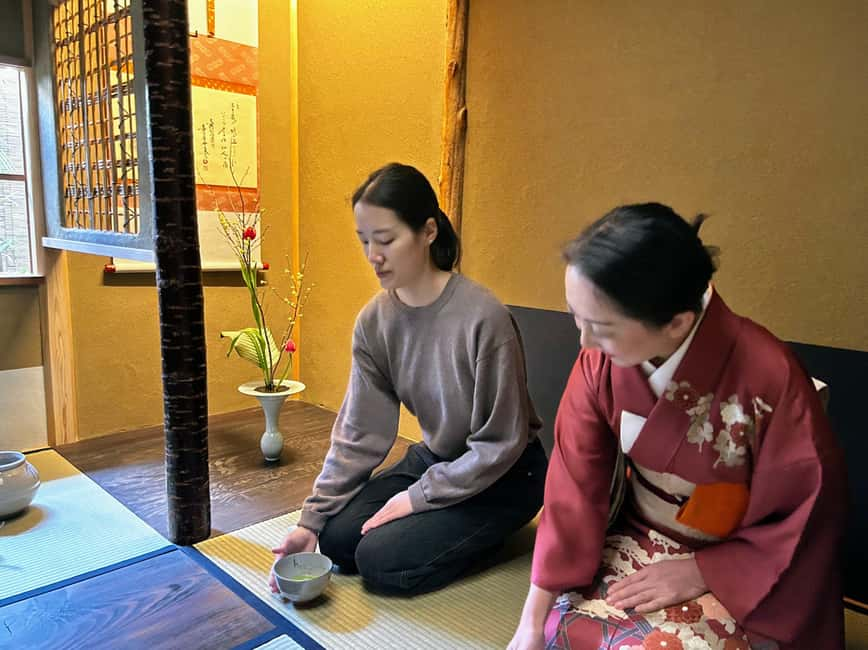
The duration is one hour from start to finish. That is convenient for a packed Kyoto schedule. You can fit it between Nijo Castle and the Imperial Palace, or use it as a quiet break from temples and city streets.
The short length also sets realistic expectations. You will receive an introduction to the history, utensils, etiquette, demonstration, hands-on preparation, and a chance to ask questions. You will not become a tea master in sixty minutes, and the session does not attempt to cover every school or variation of Japanese tea ceremony.
The final question-and-answer period gives you a chance to clarify anything that seemed unfamiliar. You can ask about the utensils, the meaning of a gesture, or the role of tea ceremony in Japanese culture. For a first introduction, the structure is sensible and easy to follow.
One practical caution is the schedule at the end. A previous participant found the conclusion slightly rushed because another booking was arriving. Since this is a private activity with set appointment times, arrive promptly and keep your own questions focused if you have another reservation afterward.
Dress and behavior rules are part of the experience
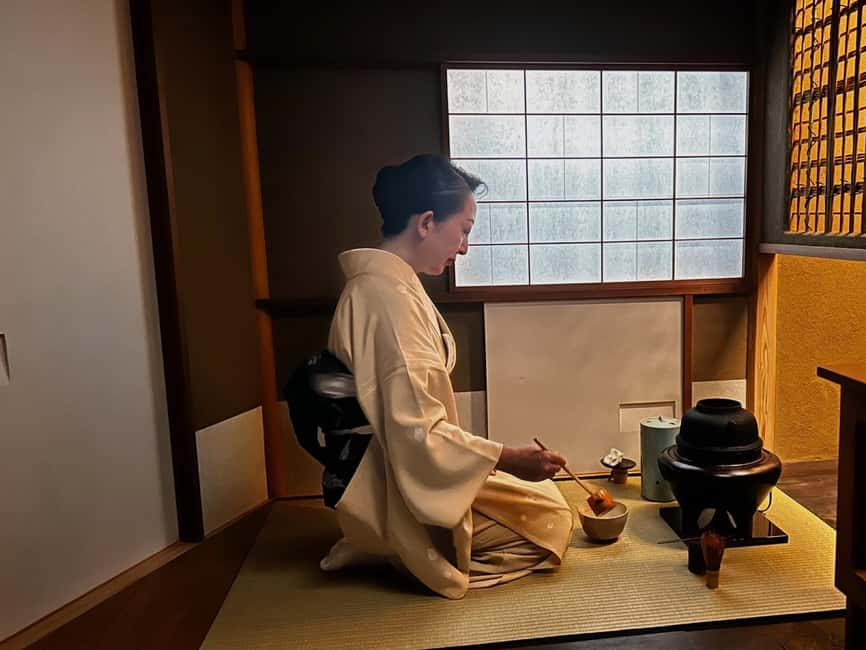
The clothing rules may seem strict, but they protect the tea room and make kneeling or sitting more comfortable. Wear long trousers or a long skirt and bring socks. Shorts and short skirts are not allowed, and bare feet are not permitted.
You should also leave the following at home or in your bag:
- Perfume and strong fragrances
- Hats
- Jewelry
- Sleeveless shirts
- Shoes inside the tea room
- Smoking and vaping materials
- Alcohol and drugs
Video and audio recording are not allowed. This is worth noting if you usually document every activity on your phone. The restriction keeps attention on the ceremony and avoids disrupting the host’s movements.
Comfortable clothing is best. The tea room may require sitting in a traditional position, and the supplied information specifically warns that shorts and short skirts can be uncomfortable in the room. Dress neatly, but do not wear anything that limits your movement.
What the private format means for value
The price is $101 per person for one hour. That is more than a casual cup of matcha, but you are paying for a private cultural lesson, a certified instructor, two cups of tea, two traditional sweets, and the chance to prepare matcha yourself.
The private-group format is the biggest value point. You are not simply watching a performance from the back of a crowded room. Your group can ask questions, receive guidance while whisking, and spend time looking closely at the utensils.
The price makes the most sense if you care about explanation and participation. If you only want to taste matcha or take a quick picture in a tea room, a less expensive café or public demonstration may suit you better. If you want to understand the manners and ideas behind the ceremony, this format offers more substance.
The private setting also works well for couples, families with older children, or small groups of friends. Children under 13 are not accepted, so this is aimed at teenagers and adults. Wheelchair access is available, which makes the activity more practical for visitors who need an accessible venue.
Who should book this Kyoto tea ceremony
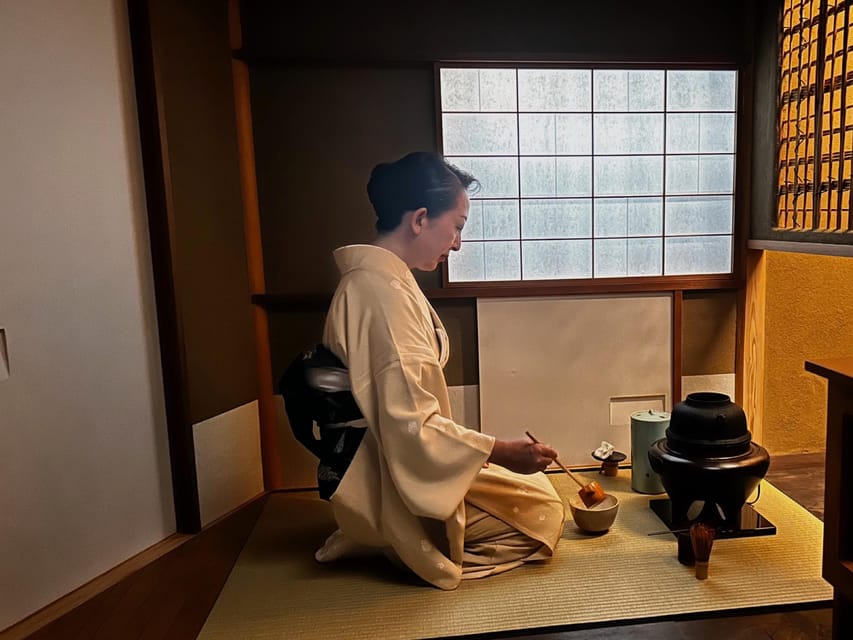
I would recommend it to first-time visitors who want a gentle introduction to Japanese culture without committing to a long class. It also suits anyone who has seen tea ceremony before but wants more explanation about the utensils, movements, and etiquette.
The setting near Nijo Castle is especially useful. You can combine the activity with one of Kyoto’s major sights and avoid spending half the day in transit. The English instruction is another strong reason to choose it if you want to understand the cultural background rather than simply watch the motions.
This is less suitable if you dislike formal rules, cannot wear socks, or want to record the entire session. It is also not the right choice for a large public group atmosphere, since the appeal is its quiet, private character.
The strongest parts are the calm mood, the detailed explanations, the beautiful bowls, and the welcoming approach associated with Aya-san. The experience has earned a 5.0 rating from 25 bookings, and the praise centers on those exact qualities: meticulous preparation, a pleasant host, useful history, and a peaceful setting.
Should you book it?
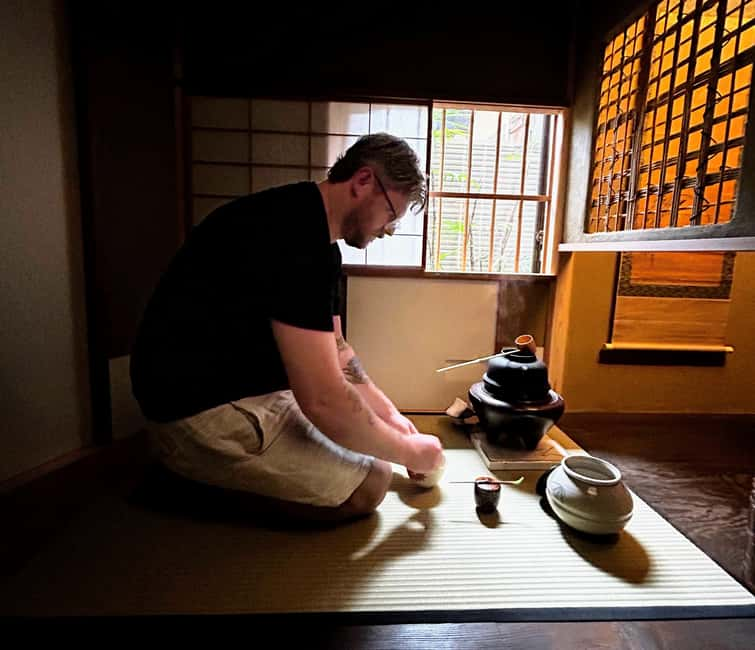
Book this tea ceremony if you want a short, personal cultural experience near Nijo Castle and are willing to follow traditional dress and behavior rules. The chance to make your own Uji matcha gives the hour more purpose than a simple tasting, while the private format lets you ask questions at your own pace.
Skip it if you need a child-friendly activity for under-13s, want a long masterclass, or prefer unrestricted photography and recording. For most adults looking for a calm and well-explained introduction to Kyoto tea culture, the location, small-group format, and hands-on preparation make the $101 price reasonable.
FAQ
Where does the tea ceremony take place?
It takes place at さくら 日本文化体験, a local home and tea room near Nijo Castle in central Kyoto.
How close is the meeting point to Nijo Castle?
The meeting point is about three minutes on foot from Nijo Castle and about three minutes from Nijojo-mae subway station.
How long does the experience last?
The tea ceremony lasts one hour.
Which languages are available?
Instruction is available in English and Japanese.
How many cups of matcha are included?
Two cups of matcha are included. The tea is sourced from Uji in Kyoto.
Are Japanese sweets included?
Yes. You receive two kinds of traditional Japanese dried sweets, prepared with seasonal presentation.
What should I wear?
Wear comfortable clothing, long trousers or a long skirt, and socks. Shorts, short skirts, sleeveless shirts, hats, jewelry, and bare feet are not permitted.
Can children join the activity?
Children under 13 are not accepted.
Just added in Kyoto
- Private Cooking Class Udon in Kyoto Japan★ 5.0 · 23 reviews
- Your Private Vacation Photography Session In Kyoto★ 5.0 · 110 reviews
- Kyoto: Zen Meditation at a Private Temple with a Monk★ 5.0 · 25 reviews
- Private Pewter Sake Cup Experience with a Kyoto Artisan★ 5.0 · 31 reviews
- Kyoto Wagashi(Japanese sweets) Cooking Class near Fushimiinari★ 5.0 · 60 reviews
- Kyoto:Family-Friendly Kimono & Yukata Experience at WARGO★ 5.0 · 147 reviews
- Private Guided Traditional Buddhist Cooking in Japan★ 5.0 · 16 reviews
- Kyoto: Gion Geisha District & Sake-in-Hand Walking Tour★ 5.0 · 37 reviews
Tea Ceremony Experiences, compared.
Tea Ceremony in a Traditional Tea House in Kiyomizu
Read our review →
World Heritage Kyoto & Nara Uji Authentic Matcha Experience
Read our review →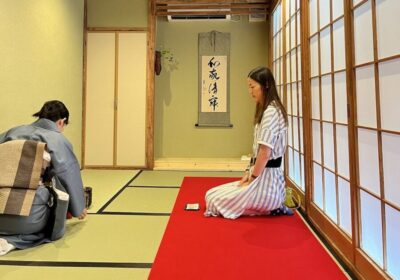
Arashiyama Bamboo Forest, Monkeys, Matcha & Temple Tour
Read our review →Browse the lists this tour appears in