
Reviewed · RICKSHAW RIDES
Kyoto Rickshaw Tour
Kyoto’s old streets make far more sense from a rickshaw seat. You glide through Higashiyama’s stone lanes and Gion’s wooden townhouses while your driver points out temples, shrines, customs, and the occasional geisha district detail. It is a lively introduction to old Kyoto, not just a ride around the block.
I like the flexible route, which lets you focus on Gion, temples, photography, or a shorter introduction. I also like the guides’ personal touch. Fumi, Yoshi, Kai, Kanta, Hina, and others are praised for clear English, good humor, local stories, and an impressive ability to pull two adults uphill. The main catch is the narrow seat, only 29.1 inches wide, and longer rides cost more than a simple sightseeing walk.
Key points to know before you book
- Higashiyama and Gion are the main stage: Expect wooden buildings, stone alleys, shrines, temples, and traditional neighborhoods.
- The route can be customized: Tell your guide if you care most about photography, temples, geisha culture, or a gentle overview.
- A 70-minute ride is a useful middle choice: It gives you time to see more than Gion’s immediate streets without committing to three hours.
- The seats are narrow: Two adults can ride together, but separate rickshaws may be more comfortable.
- Your guide is also your photographer: Guides often stop to take photos, and several have been praised for finding quieter backdrops.
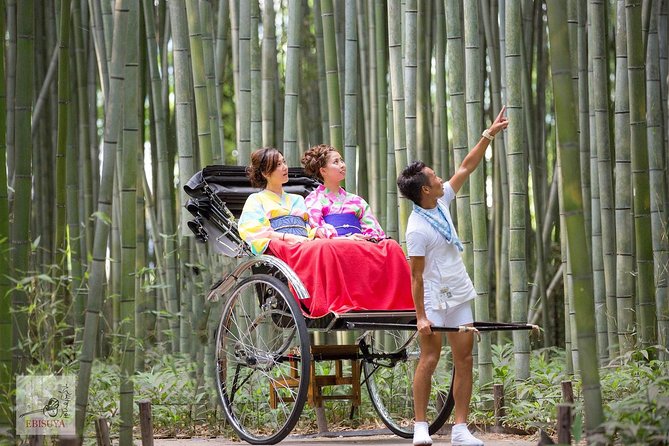
- Arashiyama is not included: This ticket is for the Ebisuya Higashiyama branch, not the bamboo forest area.
Why a rickshaw works so well in old Kyoto
Higashiyama is beautiful, but it can be tiring. The district is made up of sloping streets, stone lanes, temples, shrines, and busy pedestrian areas. You can walk it, of course, but a rickshaw gives you a moving seat, a local escort, and a chance to cover more ground with less effort.
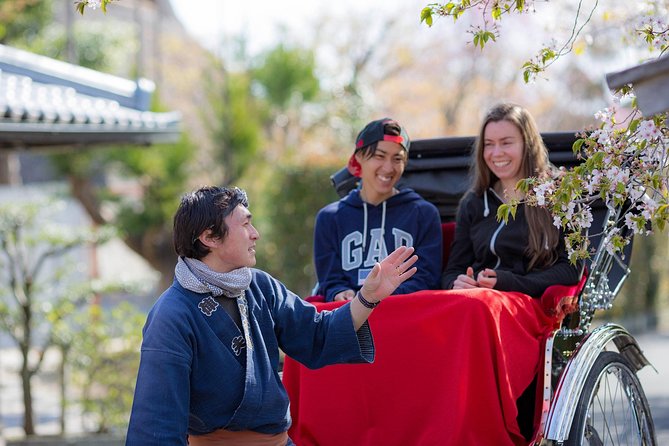
The best part is the running commentary. Your guide does not simply pull you from one photo stop to the next. Guides such as Kai, Fumi, Yoshi, and Kanta have been praised for explaining customs, folklore, temple traditions, and the character of the old neighborhoods in clear English.
This is especially useful early in a Kyoto visit. You get a quick sense of how Gion and Higashiyama fit together, then you can return later to explore the places that caught your eye. The ride also helps if you have limited walking stamina. It is not a formal mobility tour, and you should discuss your needs before booking, but the experience can reduce the amount of time you spend on foot.
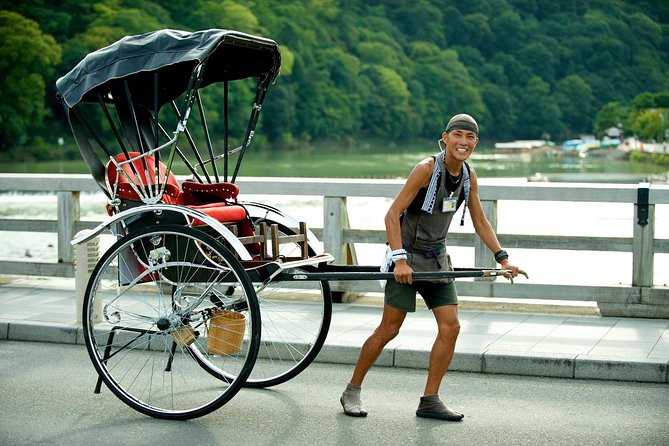
The drivers work hard. A rickshaw with two adults can be heavy, and the route may include hills. The physical effort is part of what makes the ride memorable, but it is also worth treating the guides with respect. This is not a motorized vehicle. Your driver is doing the hauling.
Other short rides through Kyoto:
- Kyoto: Arashiyama Customized Rickshaw Tour & Bamboo Forest
★ 5.0 · 432 reviews - Kyoto Arashiyama Rickshaw Tour with Bamboo Forest
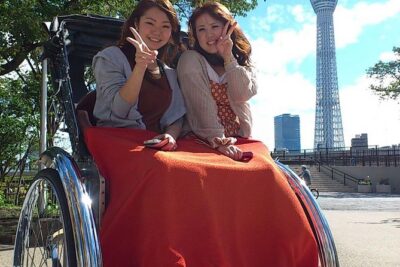
★ 5.0 · 354 reviews - Tokyo Asakusa Rickshaw Tour
★ 5.0 · 1,375 reviews
Choosing between 30 minutes and three hours
The duration changes the experience quite a bit.
A 30-minute ride is a quick taste of Gion or Higashiyama. It works well if you are fitting the activity between temple visits or simply want to try a rickshaw without giving up half a day. You should not expect to cover every stop in the suggested route at this length. Use this option for a compact introduction and a few photographs.
A 70-minute ride is a smart compromise. It gives your guide time to show you several streets, explain what you are seeing, and stop for photos without making the activity feel like a major block of your schedule. This length has worked well for people wanting to explore Gion, see temples and shrines, and still have time for the rest of the day.
A two-hour ride gives the route room to breathe. You can spend more time around the traditional streets, add several temple or shrine areas, and ask questions without watching the clock every few minutes. One two-hour route included a stop at Kennin-ji Temple for an extra charge, so ask ahead if you want a specific paid attraction included.
A three-hour ride is best for a fuller introduction to old Kyoto. You can cover more neighborhoods, stop at several landmarks, and take your time with photographs. Some people have even added time after enjoying the first three hours, but you should plan on the booked duration rather than assuming an extension will be available.
The operator lists prices from $39.79 per person, with the final value depending on duration, date, and seating arrangements. The shortest ride is reasonably priced as a novelty and orientation. Longer rides cost more, but you are paying for transport, a private guide, route planning, local interpretation, and photography help. For two people who would otherwise hire a private walking guide and cover the same area on foot, the longer option can make sense.
Starting at the Ebisuya Higashiyama branch
The meeting point is Ebisuya Higashiyama Rickshaw at 483 Shimokawaracho in Kyoto’s Higashiyama Ward. The activity begins and ends at this meeting point unless you arrange another finishing location and pay any required drop-off fee.
Arrive on time. The operator says late arrivals lose that amount of time from the ride, and a delay of 10 minutes or more results in automatic cancellation. That is strict, but it matters here because the next booking may already be waiting and the rickshaw itself is not a vehicle that can simply speed up to recover lost time.
The branch is near public transportation, which makes it practical to combine with a day in Gion or Higashiyama. Your ticket is valid only at this Kyoto Higashiyama branch. It does not work at the Ebisuya Arashiyama branch.
Higashiyama’s stone lanes and wooden houses
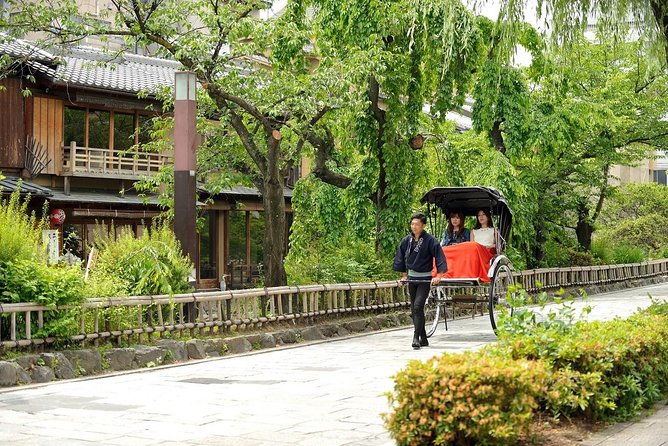
Once you are seated, the route moves through the old streets of Higashiyama. This is the part of Kyoto most people picture: wooden facades, narrow lanes, tiled roofs, stone paving, and small turns that reveal a shrine or temple entrance.
From the rickshaw, you sit high enough to see over some of the foot traffic. You also move slowly enough to notice details that disappear from a taxi window. Your guide can explain what makes a street or building important, then stop when a view deserves a photograph.
The old cobblestone streets are not perfectly smooth. The ride is generally described as comfortable, but you should expect some movement. The open design leaves you exposed to the weather, and the tour operates rain or shine. Dress for the forecast and protect phones or cameras if rain is possible.
Same base, a different sort of day:
- PERFECT KYOTO 1-Day Bus Tour
★ 5.0 · 13,518 reviews - Kyoto: Fushimi Inari, Kinkakuji, Bamboo Grove 1 Day Bus Tour
★ 4.8 · 4,316 reviews - Kyoto: Tea Ceremony in a Traditional Tea House in Kiyomizu
★ 4.9 · 3,519 reviews - Kyoto Geisha Walking Tour: Gion District & Hidden Gems
★ 4.7 · 3,273 reviews
Gion, geisha culture, and traditional townhouses
Gion gives the ride its strongest sense of place. The district is associated with geisha culture, traditional wooden townhouses, teahouses, and carefully preserved streets. Your guide can help you understand the difference between a general tourist street and an area that still serves as a working traditional district.
You might spot a geisha or maiko, but nobody should book this ride expecting a guaranteed sighting. Treat anyone you see with care and do not block lanes or take intrusive photographs. The value is the setting itself, along with the chance to ask questions about local customs.
The guides are a major part of this section. Kanta has been praised for strong English and clear explanations around Gion. Fumi, Hina, and Yoshi are also known for combining local information with humor and easy conversation. The exact guide depends on the schedule, so you cannot request a particular person with certainty unless the operator confirms it.
Temples, shrines, and stops along the way
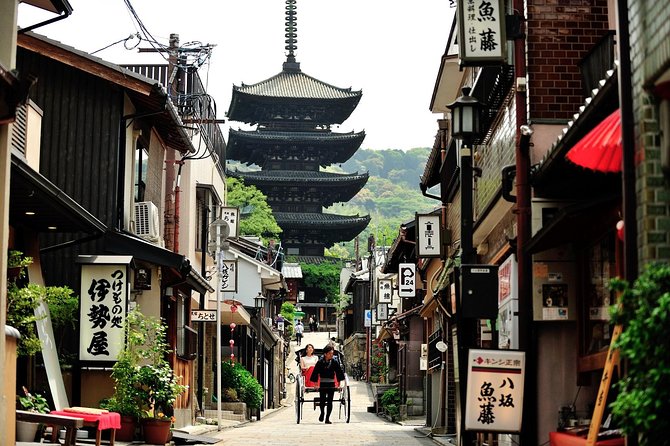
The route can include several well-known Higashiyama sights, though the shorter rides cannot cover every landmark. Discuss your priorities before setting off.
Yasaka Shrine is a natural reference point in the Gion area. It is a large Shinto shrine and a worthwhile place to visit around New Year, either before or after the ride. If you want time to walk through the shrine grounds, tell your guide early, since a brief photo stop is different from a proper visit.
Kodaiji Temple is another important Higashiyama stop. The temple and its garden offer a change from the narrow streets, with a more composed setting and space to take in traditional design. Admission or extra time may not be part of every short ride, so ask what is included in your selected duration.
Kennin-ji Temple can be added on some longer routes for an extra charge. This is a good example of why customization matters. If there is one temple you care about, do not wait until the last minute to mention it. Your guide needs to know how much time you want to spend there and what other stops you are willing to skip.
The route may also include a small bridge in a traditional district, quiet lanes, parks, and tucked-away temple or shrine areas. The bridge itself may not be a major sight, but it can provide the kind of setting that makes a rickshaw ride feel personal rather than programmed.
The guide makes or breaks the ride
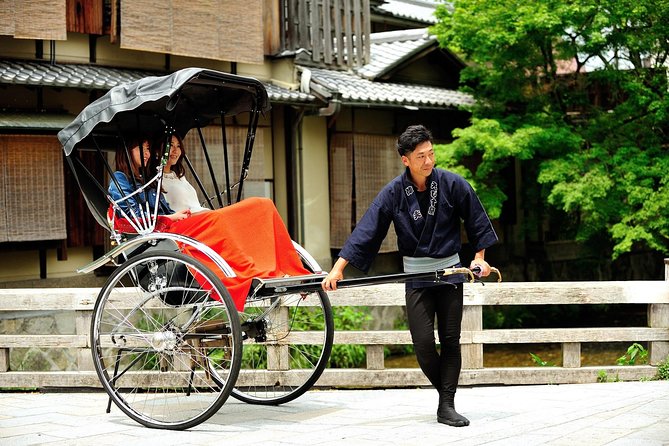
The strongest part of this activity is the person pulling your rickshaw. Guides are expected to drive, explain, answer questions, choose a workable route, and often take photographs. That is a lot to ask from one person, and the best guides make it look easy.
Fumi has been singled out for heartfelt stories, local insight, and remarkable strength. Yoshi is praised for his English, friendliness, and photo skills. Kai is described as funny and fit, including his ability to pull two tall adults for 90 minutes. Kanta is noted for clear explanations around Gion, while Hina is praised for patience and careful attention to comfort.
Those details point to the real character of the experience. You are not getting a recorded audio tour. You can ask why a shrine matters, how a district is used, or what a custom means, then receive an answer suited to your question.
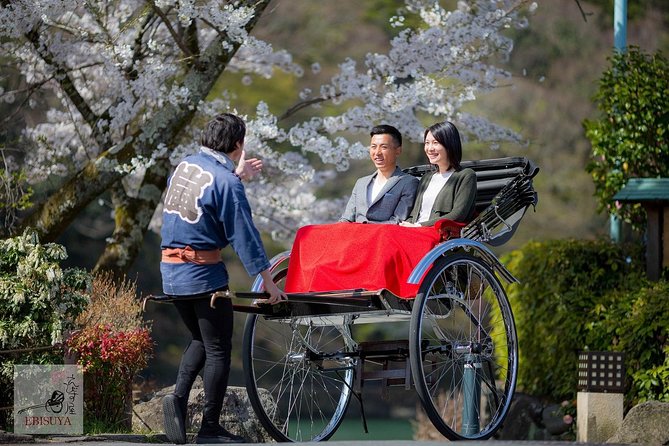
Photography is another strong feature. Guides often know where to pause and how to frame the rickshaw against Kyoto’s older streets. Bring your own phone or camera, and make it clear if you want several stops for pictures. The guide may take photos and videos for you, but the amount of time spent doing so depends on your route.
Seating, children, and comfort
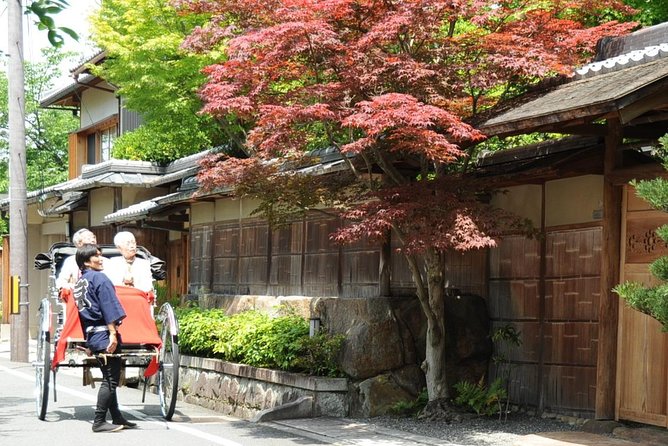
Each rickshaw can hold a maximum of two adults, but the seat is only 29.1 inches, or 74 centimeters, wide. Two average-size adults may fit, yet the ride can be more comfortable with one rickshaw per person. If two passengers cannot fit comfortably in one rickshaw, an additional one must be booked in advance, and an English-speaking rickshaw may not be available later.
Children age six and older pay adult prices. Children age five and under may sit on an adult’s lap, with one child per adult. Up to two small children can ride with two adults, but if a young child uses one of the two seats, that child must be booked as an adult.
The activity is private, meaning only your group participates. That is valuable for families and couples because you can set the pace and ask questions without keeping up with strangers. It also makes the narrow seating issue easier to plan around.
Who will enjoy this Kyoto experience
I would recommend this ride to first-time visitors who want a quick introduction to Gion and Higashiyama before exploring on their own. It also suits couples looking for a memorable way to see old Kyoto, families who need a break from walking, and photographers who want help finding attractive streets and viewpoints.
It is a good fit for anyone curious about Kyoto’s customs and older neighborhoods. The ride gives you context that is easy to miss when you move from temple entrance to temple entrance on your own.
I would think twice if you dislike open-air rides, have difficulty with narrow seats, or want a quiet, slow visit inside several temples. The rickshaw is best for seeing the streets and getting an overview. Temple admission, food, drinks, hotel pickup, and the Arashiyama Bamboo Forest are not included.
Booking advice and weather rules
Book the duration that matches your goals. Choose 30 minutes for a novelty and quick orientation, 70 minutes for a balanced first look, two hours for a fuller route, or three hours if you want to cover more ground and stop often.
If you need separate rickshaws, request them during booking. Do not assume the operator can add one on the day. Also state any preferred temples, photo stops, or finishing location in advance.
The tour runs in rain or shine, and weather can affect comfort. If the operator cancels because conditions are poor, you can choose another date or receive a full refund. You can cancel for a full refund up to 24 hours before the start time. Changes made after 5 p.m. the day before cannot be accommodated, and a late arrival of 10 minutes or more leads to cancellation.
Should you book the Kyoto Rickshaw Tour?
Book it if you want a lively, personal introduction to Gion and Higashiyama, especially if you value local stories and photographs as much as sightseeing. The guides are the reason this feels like more than a novelty ride, and a 70-minute or two-hour option offers the best balance for most people.
Skip it if you mainly want Arashiyama’s bamboo forest, a fully walking-based temple visit, or guaranteed geisha sightings. For everyone else, the ride offers an enjoyable way to get your bearings, save your legs, and see Kyoto’s old streets from a different angle.
FAQ
Where does the Kyoto Rickshaw Tour start?
The tour starts at Ebisuya Higashiyama Rickshaw, 483 Shimokawaracho, Higashiyama Ward, Kyoto, 605-0825, Japan.
Where does the activity finish?
The activity normally ends back at the meeting point. A different finishing location may be possible for an additional drop-off fee payable on the day.
How long is the rickshaw ride?
Available durations range from about 30 minutes to three hours. Shorter options cannot cover every suggested landmark.
Is the tour private?
Yes. Only your group participates in the activity.
How many people fit in one rickshaw?
A maximum of two adults can ride in one rickshaw. Up to two children age five and under may ride with two adults, with each child sitting on an adult’s lap.
Can children join the tour?
Children age six and older are charged adult prices. Children age five and under may sit on an adult’s lap under the stated seating limits.
Does the tour include Arashiyama Bamboo Forest?
No. This activity does not include the Arashiyama Bamboo Forest, and the ticket is valid only at the Kyoto Higashiyama branch.
What happens if the weather is bad?
The tour operates in rain or shine. If the operator cancels because of poor weather, you will be offered another date or a full refund.
Just added in Kyoto
- Kyoto: Private Photoshoot Service★ 5.0 · 158 reviews
- Kyoto: Arashiyama Bamboo, Temple, Matcha, Monkeys & secret spots★ 5.0 · 219 reviews
- Izakaya Style Cooking Class★ 5.0 · 219 reviews
- Kyoto: Traditional Concert at Townhouse or Bathhouse★ 4.9 · 224 reviews
- Ninja 2-hour Hands-on Lesson by Japanese master in Kyoto -Medium★ 5.0 · 218 reviews
- Kyoto: Afternoon Japanese Izakaya Cooking Class★ 4.9 · 241 reviews
- Samurai Training with Modern day Musashi in Kyoto★ 5.0 · 256 reviews
- South Kyoto in a Nutshell: Gentle Backstreet Bike Tour!★ 5.0 · 225 reviews
Rickshaw Rides, compared.
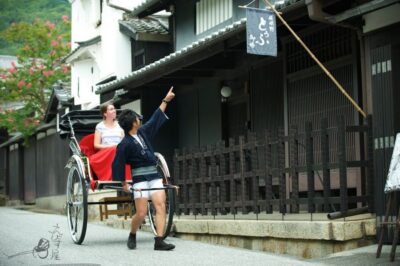
Arashiyama Customized Rickshaw Tour & Bamboo Forest
Read our review →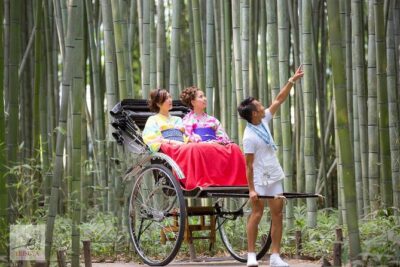
Kyoto Arashiyama Rickshaw Tour with Bamboo Forest
Read our review →Browse the lists this tour appears in