
Reviewed · RICKSHAW RIDES
Tokyo: Asakusa Sightseeing Tour by Rickshaw
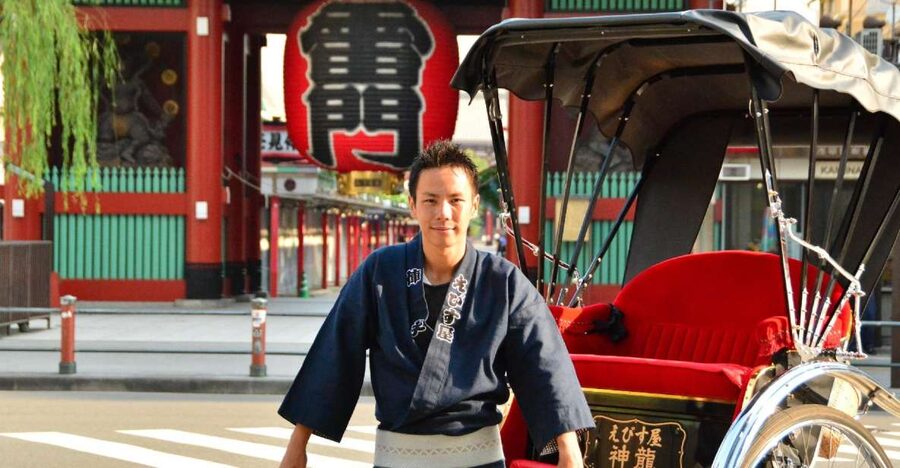
Asakusa is one of the best parts of Tokyo for a rickshaw ride because the district changes quickly from grand temple grounds to narrow shopping lanes and old entertainment streets. You sit above the traffic while your guide points out details you could easily miss on foot, from shrine rituals to small gardens and anime-related corners.
I like the private format, which lets you ask questions and adjust the route. I also like the guides’ mix of local facts, jokes, photo stops, and practical food suggestions. The main drawback is price for a short ride, and the narrow 74-centimeter seat may feel tight for two adults.
Key points to know before you book
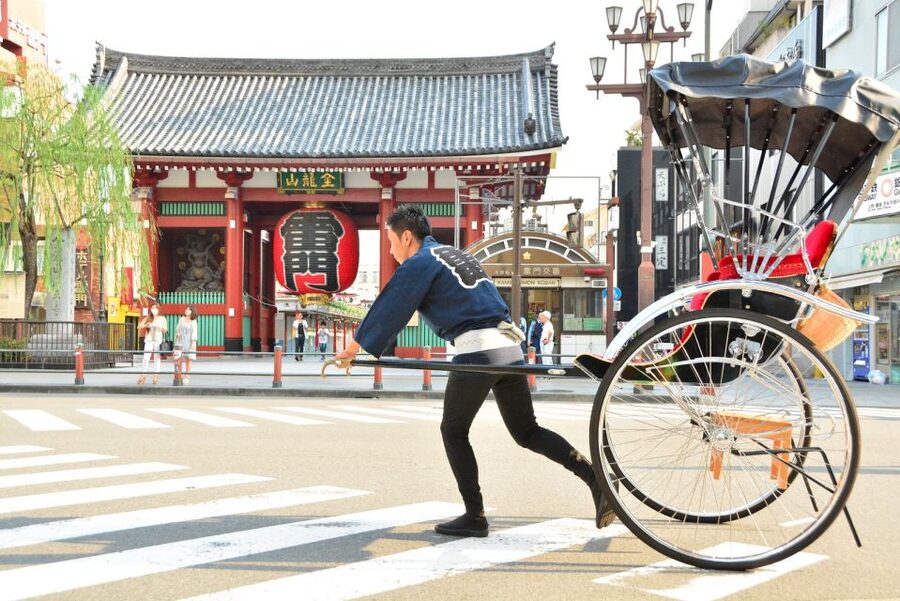
- Asakusa’s temples and side streets fit neatly into one ride: See Asakusa Shrine, the city’s oldest temple area, Bentendo Hall, Rokku, and Denpoin Street without covering the ground on foot.
- Your guide shapes the experience: Guides including Masa, Kazu, Shima, Yusuke, and Taku have been praised for English, humor, history, and taking good phone photos.
- Choose your duration with care: A 30-minute ride is a quick introduction, while 70 to 120 minutes gives you time for quieter shrines, gardens, and side streets.
- Spring is especially scenic: Sumida Park is at its best when its cherry trees bloom, but heated seats and blankets can help in colder months.
- The ride is private and family-friendly: Two adults fit in one rickshaw, with children aged five and under riding free on an adult’s lap.
- The longest option includes a keepsake: The three-hour choice lets you select a Hello Kitty doll or an original T-shirt.
Why a rickshaw is a smart way to see Asakusa
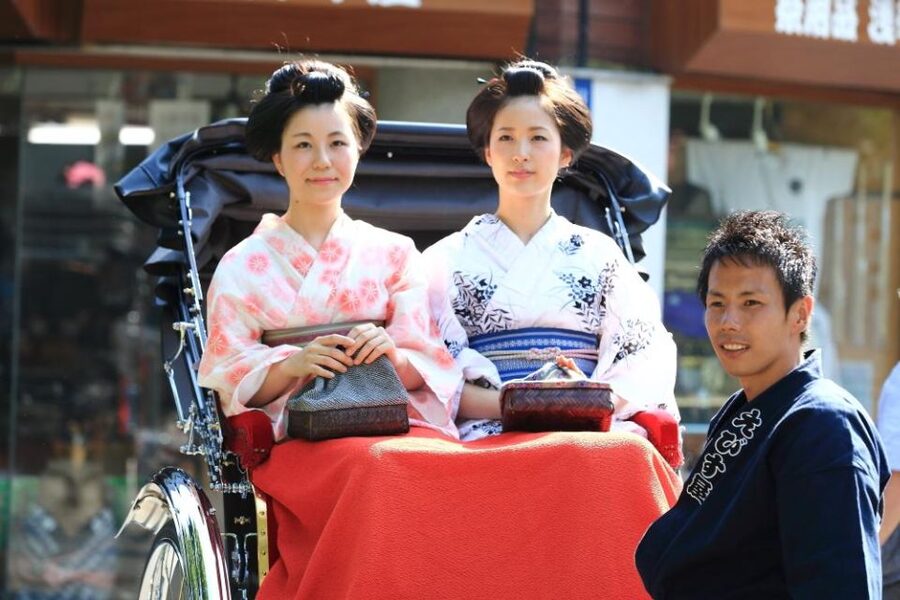
Asakusa is easy to explore on foot, but it is not always easy to understand on foot. The district has major religious sites, old commercial streets, amusement history, riverfront scenery, and small local lanes packed into a fairly compact area. A good rickshaw guide gives you the local map in story form.
You sit in your own private chariot while the driver pulls you through the streets. This is not a self-guided ride and not a large group tour. Your guide handles the route, explains what you are seeing, and can adjust the experience around your interests.
That personal touch is the real reason to book. Guides such as Masa, Kazu, and Shima have been praised for clear English, good humor, and strong local knowledge. Other guides, including Taku, Yusuke, Koko, Matcha, and Ryu Buchi, have made the ride more engaging for families by chatting with children, making anime references, and even singing along to pop songs.
The ride is also a useful first activity in Tokyo. You can ask your guide where to eat, what to try, or which parts of Asakusa deserve more time after the ride. Several people have used it as an introduction on their first or second day in the city.
Other short rides through Tokyo:
- Tokyo Asakusa Rickshaw Tour
★ 5.0 · 1,375 reviews - Kyoto: Arashiyama Customized Rickshaw Tour & Bamboo Forest
★ 5.0 · 432 reviews - Kyoto Arashiyama Rickshaw Tour with Bamboo Forest
★ 5.0 · 354 reviews
Starting beside Asakusa Station
The meeting point is the rickshaw stand just outside Exit 1 of Asakusa Station on the Tokyo Metro Ginza Line. This detail matters because Asakusa has more than one station with the same name, served by different subway lines. Check that you are going to the Ginza Line station, not simply a station marked Asakusa.
Exit 1 is close to the stand, but you still need to walk a few meters along the street. The operators have also met people with a sign, and one group was helped after coming out of the wrong station exit. Still, arrive with enough time to check your location rather than counting on a last-minute rescue.
The stand is a practical place to begin because you are already near the district’s main sights. Once you are seated, your guide can explain the route and confirm how long you have booked. Private rides make the departure feel more personal than a standard sightseeing bus.
Temples, shrines, and the rituals of Asakusa
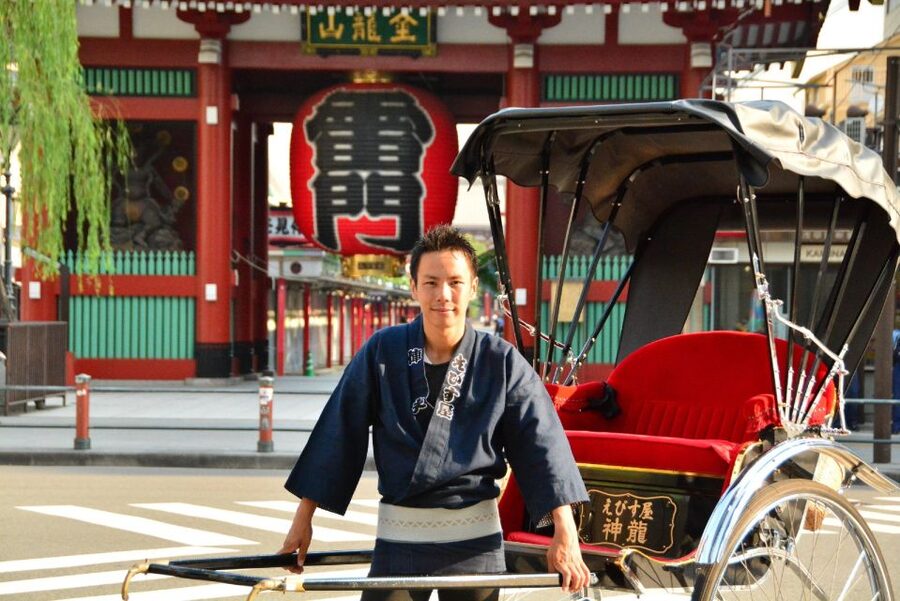
The classic route takes you near Asakusa Shrine and the city’s oldest temple area. These are not just photo stops. Your guide can explain the different roles of a Buddhist temple and a Shinto shrine, then show you how local visitors approach each place.
One especially useful explanation concerns the washing station. You may be shown how people rinse their hands and mouth before approaching a religious site, and why water is used to clean the small ladle between steps. Guides also explain the purpose of incense and the custom of drawing the smoke toward your body.
That sort of detail gives the ride more value than simply passing a famous gate. You can later return on foot and feel more comfortable with what you are seeing. At a smaller temple, the guide may have more time to explain the rituals without the rush found around the largest sights.
Bentendo Hall is another religious landmark included among the possible stops. It gives you a change from the larger temple grounds and adds variety to the route. Depending on your chosen duration and customized interests, the guide may also take you to a quieter shrine or a pretty garden behind a small temple.
The route is not fixed in the same way as a bus itinerary. A 70-minute or longer ride gives you a better chance to request specific sights, while a 30-minute ride is more of a highlights loop. Ask at the start if you have a particular temple, garden, or photo stop in mind.
Sumida Park and the riverfront view
Sumida Park brings a welcome change of pace. The park follows the Sumida River and is especially attractive in spring, when thousands of cherry trees bloom. If your visit lines up with the blossoms, this is likely to be one of the most memorable stretches of the route.
The river and trees also make a good contrast with the temple district. You get open views and a little breathing room after the tighter streets around the shopping areas. The rickshaw gives you a comfortable way to see the park without turning the outing into a long walk.
Season affects the ride here. Spring is the obvious choice for cherry blossoms, while autumn can offer more comfortable temperatures. Summer can be hot and humid, but the movement of the rickshaw provides a breeze. In colder weather, heated seats and blankets have been provided, which makes the experience more practical than you might expect.
A ride in rain or light snow has also been possible, with warmth supplied for comfort. Even so, check the forecast and dress sensibly. The rickshaw is open to the air, so you will feel the weather more directly than you would in a taxi or tour bus.
Other ways to see Tokyo in a day:
- From Tokyo: Mount Fuji Full-Day Sightseeing Trip
★ 4.5 · 4,970 reviews - Tokyo: Hop-On Hop-Off Sightseeing Bus Ticket
★ 3.9 · 4,207 reviews - Tokyo: Private City Highlights Tour with Local Guide
★ 4.8 · 1,433 reviews - Tokyo Private Sightseeing Tour by Car- English speaking chauffeur
★ 5.0 · 1,004 reviews
Hanakawado, Rokku, and Tanuki-doori
The ride does not stay only around the major temples. You also pass through everyday Asakusa, including Hanakawado, a well-known shoe shopping district. This gives you a look at the commercial side of the neighborhood and can help you find shops to revisit later.
Tanuki-doori adds a quirkier note. The lane is part of the old neighborhood character that makes Asakusa feel different from Tokyo’s newer business districts. Your guide can point out details that might otherwise pass in a blur.
Rokku is another change of mood. This historic entertainment district is linked with adult theaters and older forms of nightlife. It may not suit every family, and parents with young children should know that the area has a more adult character. For many adults, though, it helps explain how Asakusa developed beyond its temples and souvenir stalls.
Hanayashiki, Japan’s oldest amusement park, makes a fun photo stop. You may not enter the park during the ride, but the exterior gives you a quick connection to the area’s long entertainment tradition. A guide may take photos of you with the park as a backdrop, a service praised repeatedly during these rides.
Denpoin Street and old Tokyo character
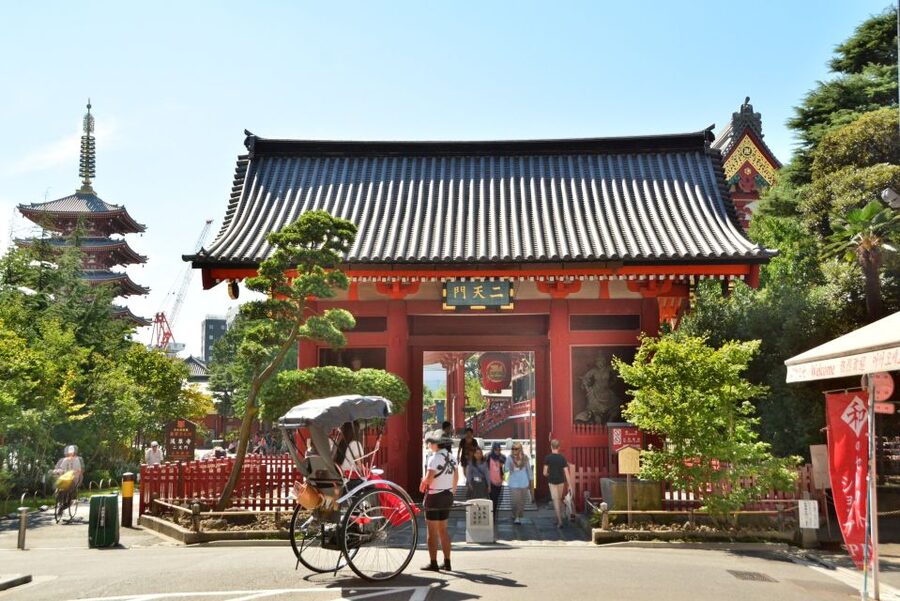
Denpoin Street is one of the most atmospheric parts of the route. The street has changed little since World War II, giving you a sense of older Asakusa as the rickshaw rolls back toward the starting point.
This is where the ride’s slower pace helps. From a car, you would pass too quickly to notice much. On foot, you might spend time navigating crowds and checking a map. From the rickshaw, you can watch shopfronts, signs, and street life while the guide explains what makes the area distinctive.
The street is also a reminder that Asakusa is not only a group of major monuments. Its appeal comes from the mix of religious buildings, small businesses, old entertainment, shopping, parks, and ordinary local streets. The rickshaw connects those pieces in a single outing.
Some rides include quieter lanes and small temples away from the main route. If you want a less obvious side of Asakusa, book enough time to let your guide take you beyond the standard highlights. The two-hour option is a good fit for that approach.
What the guide adds to the ride
The driver is also your guide, photographer, route planner, and sometimes your first source of Tokyo advice. That combination makes the quality of the person in front of you important.
English and Japanese tours are available. English ability can vary, so if detailed historical explanation is a priority, tell the operator when booking and ask questions at the start. One lower-rated experience specifically wished for stronger English and more history, while most of the available feedback praises the guides’ communication and explanations.
The strongest guides balance facts with conversation. Shima has been praised for explaining Asakusa clearly while keeping the ride funny. Masa has been described as both a good storyteller and a skilled photographer. Kazu, Koko, Yusuke, Taku, Matcha, and others have received similar praise for being friendly, attentive, and engaged.
Photo help is a genuine advantage. Guides regularly stop and take pictures with your own phone or camera, so you do not need to rely only on quick selfies. Selfie sticks are not allowed, but the guide can often frame a better shot from beside the rickshaw.
Picking 30 minutes, 70 minutes, or three hours
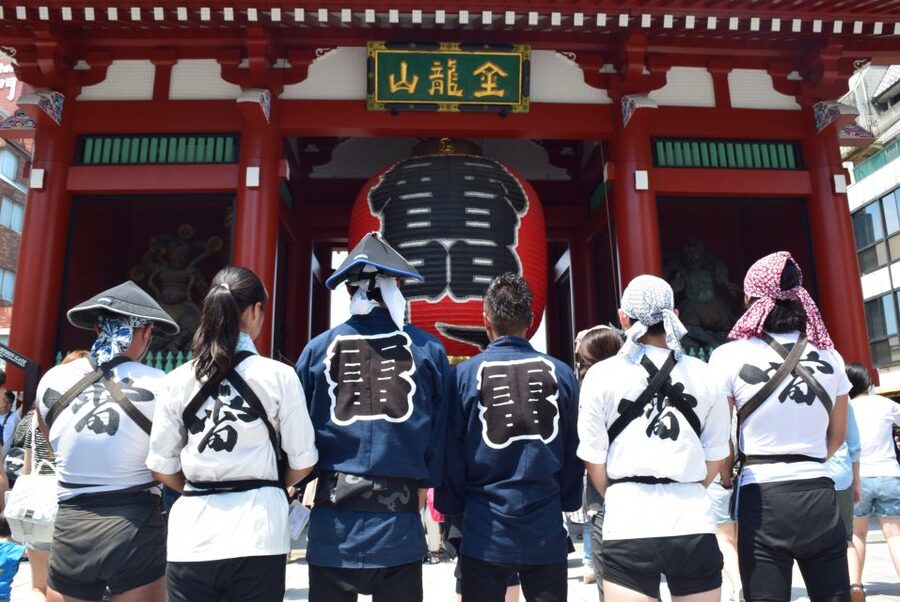
The shortest ride is best if you are testing the idea, traveling with limited time, or fitting Asakusa between other plans. Thirty minutes can still give you a fun introduction, several photo stops, and basic orientation. One person who booked only 30 minutes found it worthwhile, but a short route naturally limits how far you can go.
A 70-minute ride gives you a more useful look at the district. You have time for temple explanations, street scenes, and some customization without giving up half a day. For many first-time visitors, this is likely the best balance.
Ninety minutes to two hours works better if you want quieter religious sites, gardens, Sumida Park, and old entertainment streets in one outing. It also gives the guide more room to adapt the route to your interests.
The longest option lasts up to 190 minutes, described as the three-hour choice. This is for people who want a broad tour of Asakusa and the extra memento of a special Hello Kitty doll or original T-shirt. It costs more in time as well as money, so it makes the most sense if Asakusa is a major part of your day.
Price, comfort, and who gets the best value
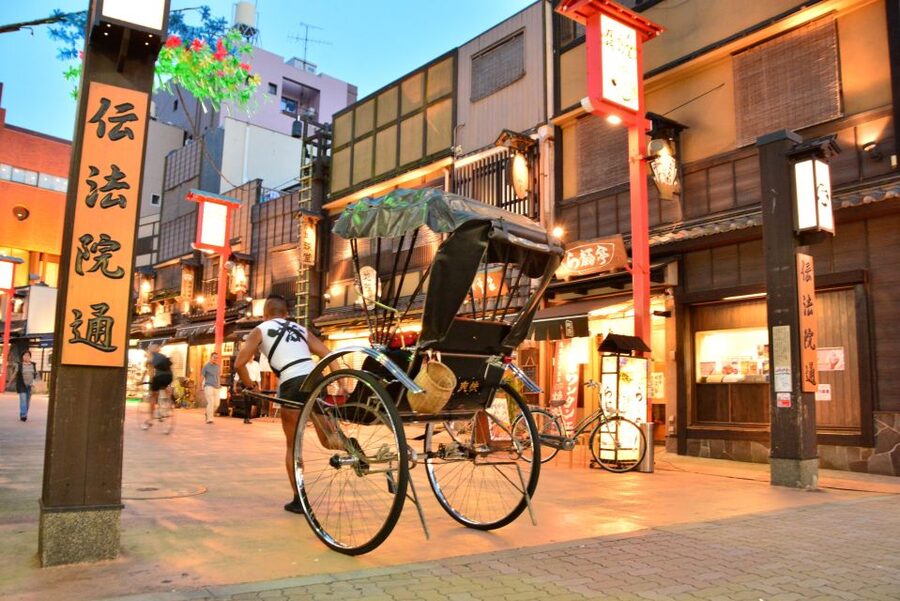
At $35 per person, the starting price is attractive for a private guided activity in central Tokyo. The value depends heavily on duration. For 30 minutes, you are paying for a memorable introduction, personal attention, and photos, not a full district tour. For 70 minutes or longer, the price becomes easier to justify because the guide can show you more than the obvious temple area.
Two adults can ride in one rickshaw. Each rickshaw is 74 centimeters wide, so two adults may find it snug, especially with bags or bulky clothing. If comfort matters, book individual rickshaws for each passenger.
Children aged five and under can ride free on an adult’s lap, with one child per adult. A child who needs their own seat must pay the adult fare. Children aged six and over are charged adult pricing.
The activity is wheelchair and stroller friendly, but the narrow seating area is still worth keeping in mind. You can ask about individual rickshaws if one person needs more space. The ride is not suitable for pregnant women according to the booking information, with particular caution during the first 16 weeks.
Free cancellation is available up to 24 hours before the ride, and you can reserve without paying immediately. That flexibility helps if your Tokyo schedule depends on weather or changing train plans.
Should you book the Asakusa rickshaw ride?
I would book this if you want local explanation, easy photo stops, and a quick way to connect Asakusa’s temples with its older streets. It is especially good for first-time visitors, families, couples, solo visitors, and anyone with a short Tokyo stopover.
Choose 30 minutes only if your schedule is tight. I would favor 70 to 120 minutes for the best balance of cost, comfort, and sightseeing. Choose the three-hour option if you want the broadest route and like the idea of taking home a Hello Kitty doll or original T-shirt.
Skip it if you dislike open-air rides, want to explore entirely on your own, or are pregnant. Also consider booking separate rickshaws if two adults would feel cramped. For everyone else, this is a lively and practical introduction to one of Tokyo’s most rewarding districts.
FAQ
Where does the Asakusa rickshaw tour meet?
Meet at the rickshaw stand just outside Exit 1 of Asakusa Station on the Tokyo Metro Ginza Line. You need to walk a few meters from the exit to reach the stand.
Is the meeting point at any Asakusa Station?
No. There are two stations with the name Asakusa on different subway lines. Use the Asakusa Station served by the Tokyo Metro Ginza Line and Exit 1.
How long is the rickshaw ride?
Available durations range from 30 to 190 minutes. Common choices include 30 minutes, 70 minutes, 90 minutes, two hours, and the three-hour option, depending on availability.
What sights can I see?
The route may include Asakusa Shrine, the city’s oldest temple area, Bentendo Hall, Sumida Park, Hanakawado, Tanuki-doori, Rokku, Hanayashiki, and Denpoin Street. The route can be customized around your interests.
Is the tour private?
Yes. The experience is offered as a private group activity, so you ride with your own party and guide.
What languages are available?
Live guides are available in English and Japanese.
How many people fit in one rickshaw?
A maximum of two adults can ride in one rickshaw. The rickshaw is 74 centimeters wide, so individual rickshaws may be more comfortable for some passengers.
Can young children ride for free?
Children aged five and under can ride free when seated on an adult’s lap. One child can sit on each adult’s lap. A child who needs their own seat must book and pay as an adult.
Is the ride wheelchair and stroller accessible?
Yes, the activity is listed as wheelchair and stroller friendly. Because the rickshaw is 74 centimeters wide, you may want to ask about seating arrangements in advance.
What is included in the price?
The price includes the rickshaw ride and a local guide. Snacks and drinks are not included.
Just added in Tokyo
- The 10 Tastings of Tokyo With Locals: Private Street Food Tour★ 5.0 · 48 reviews
- Small Town in the Big City: Tasting Tokyo’s Kichijoji★ 5.0 · 195 reviews
- Small Town in the Big City: Tasting Tokyo’s Kichijoji★ 5.0 · 16 reviews
- EXCLUSIVE Tokyo Secret: Kichijoji Small-Group Food & Bar Hopping★ 5.0 · 29 reviews
- Explore Kichijoji: Walk Through One of Tokyo’s Beloved Districts★ 5.0 · 21 reviews
- :Tokyo,Shibuya/ Pro Photography in Kimono / English-Friendly★ 5.0 · 26 reviews
- 【R34】Tokyo:Private Daikoku tour in Modified R34★ 4.9 · 92 reviews
- Tokyo:Calligraphy &Make your original folding fan in Asakusa★ 5.0 · 62 reviews
Rickshaw Rides, compared.
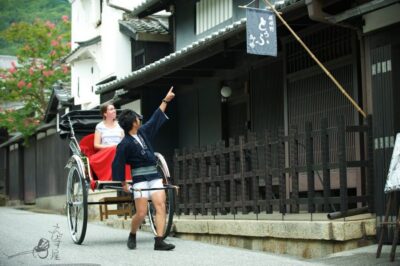
Arashiyama Customized Rickshaw Tour & Bamboo Forest
Read our review →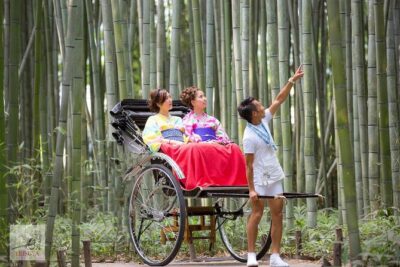
Kyoto Arashiyama Rickshaw Tour with Bamboo Forest
Read our review →
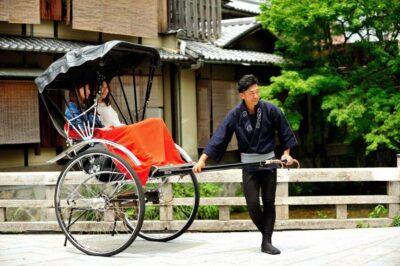
Private Rickshaw Tour of Gion and Higashiyama Area
Read our review →
Kyoto Sagano Insider: Rickshaw and Walking Tour
Read our review →Browse the lists this tour appears in