
Reviewed · TEA CEREMONY EXPERIENCES
Kyoto: Tea Ceremony Experience
Kyoto’s tea ceremony is less about drinking a cup of green tea and more about watching care, order, and quiet attention turn a simple drink into a cultural ritual. At Camellia Tea Ceremony, you’ll see the ceremony performed in a traditional machiya near Ninenzaka, then make your own bowl of frothy matcha with help from your host.
I like the clear English explanations and the chance to ask questions about matcha, utensils, room design, and the three main tea schools. I also like the small, hands-on format: you do not just sit and watch. You taste a seasonal sweet and whisk your own tea.
The main drawback is time and comfort. The session lasts only 45 minutes, and much of it may be spent sitting on the floor. Chairs and tables are available, but you should mention any difficulty sitting on the floor when you arrive.
Key points to know before booking
- A 10-minute ceremony demonstration: Watch the host perform the careful sequence before trying matcha yourself.
- Kyoto-grown matcha and seasonal sweets: The tasting gives context to the tea and balances its naturally strong, bitter flavor.
- An easy Higashiyama pairing: The tea house is close to Kiyomizu-dera, Kodai-ji, Yasaka-jinja, Maruyama Park, Chion-in, and Gion.
- English-speaking hosts: Guides such as Ikuko explain the movements, history, and symbolism in plain English.
- Small-group or private options: Private bookings work best if you need an interpreter or are bringing a baby under age three.
- A short but focused lesson: You learn the meaning and method of the ceremony, but not the complete training of a tea master.
What this Kyoto tea ceremony really offers
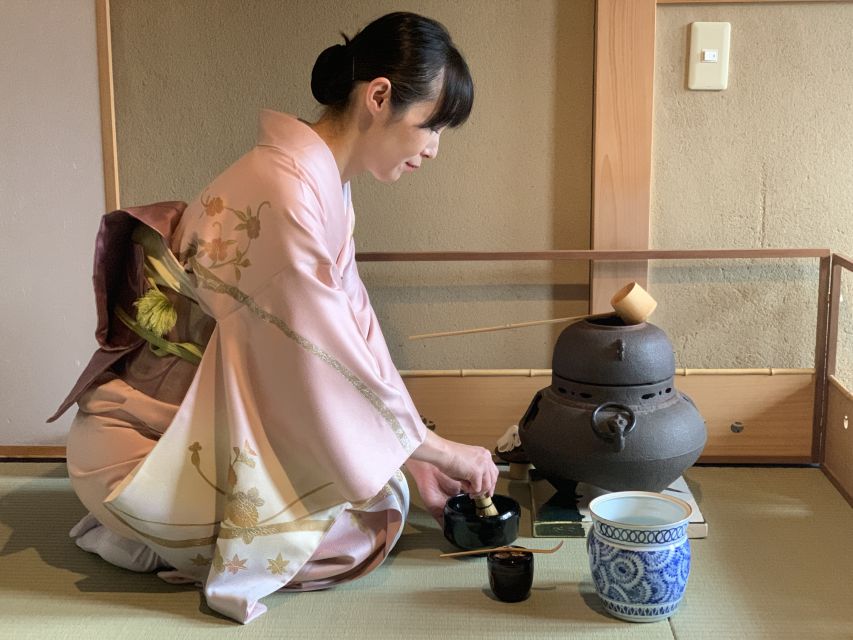
A formal Japanese tea ceremony can take years to study. In 45 minutes, you will not become a tea master or learn every movement in the full tradition. What you get is a well-paced introduction that lets you understand what you are seeing, rather than treating the ceremony as a silent performance with no explanation.
That makes this a good choice for a first visit to Kyoto’s tea culture. You get the setting, the demonstration, the explanation, and a practical activity without giving up half a day.
The session takes place in a traditional machiya in the Higashiyama district. A machiya is a traditional Kyoto townhouse, and the setting helps explain why the room matters so much in tea culture. The decoration, the arrangement of utensils, and the way the host enters and handles each object all form part of the experience.
This is not a large stage show. The private or small-group format keeps the focus on the host and gives you room to ask questions. You may hear about the three schools of tea ceremony, the role of matcha in Japanese culture, and the careful gestures used during preparation.
Other tea ceremonies in Kyoto people book:
- Kyoto: Tea Ceremony in a Traditional Tea House in Kiyomizu
★ 4.9 · 3,519 reviews - Kyoto: Tea Ceremony Ju-An at Jotokuji Temple
★ 4.9 · 3,207 reviews - Kyoto: 45-Minute Tea Ceremony Lesson Experience
★ 4.3 · 2,378 reviews
Finding the tea house near Ninenzaka
The meeting point is down a narrow alley branching from the main thoroughfare of Ninenzaka. The easiest landmark is the Park Hyatt hotel. Across from the hotel is a Studio Ghibli store. Look for the alley just to the left of that shop.
This location is convenient but not the sort of place you should search for at the last second. The alley is easy to miss, so allow a little extra time. Clear directions are sent before the visit, and there is a sign at the entrance. A staff member may also come to the door and show you where to go.
The tea house sits in one of Kyoto’s most visited areas. You can combine the session with Kiyomizu-dera and the shopping streets around Ninenzaka and Sannenzaka. Kodai-ji, Yasaka-jinja, Maruyama Park, Chion-in, and Gion are also nearby.
I would place this activity in the middle of a Higashiyama day, not at the start of a rushed temple visit. The ceremony offers a quiet pause after walking through crowded streets and gives you a calmer way to understand the district.
Buses run along Higashi Oji, about 10 minutes from the tea house. If you enjoy walking, central Kyoto is about 25 minutes away through Gion. Hotel pickup and drop-off are not included, so plan your route before booking.
The opening explanation: utensils, space, and etiquette
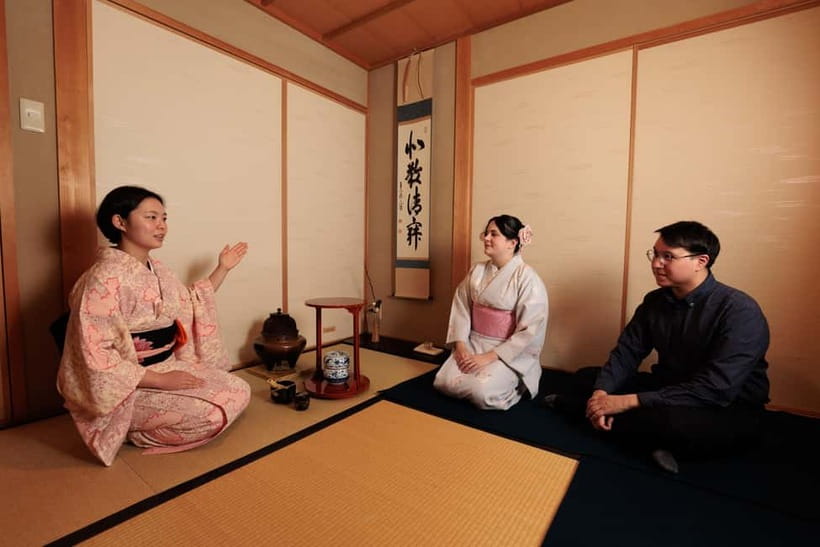
Once you settle into the tearoom, the English-speaking host begins with a short introduction to matcha and the tea ceremony. This part matters because many of the gestures can seem mysterious if you do not know what they mean.
You’ll learn about the basic utensils used to prepare the tea. You’ll also hear why the room’s decoration and layout are important. In Japanese tea culture, the setting is not random decoration. The objects chosen for the room and the way they are presented help shape the mood of the gathering.
The host explains the order of the ceremony and the reason for its precise movements. This gives you something to watch for during the demonstration. Instead of seeing only a bowl, whisk, scoop, and cloth, you begin to notice the care given to each object.
The explanations are designed for newcomers, not tea specialists. Guides such as Ikuko have been praised for making the subject easy to follow, patient, and engaging. The English is a major advantage if you want more than photographs and a quick taste of matcha.
You can ask about Japanese culture during this part of the session. Questions about the three tea schools, the background of matcha, and the meaning of the ritual fit naturally into the conversation.
Watching the ceremony in a traditional room
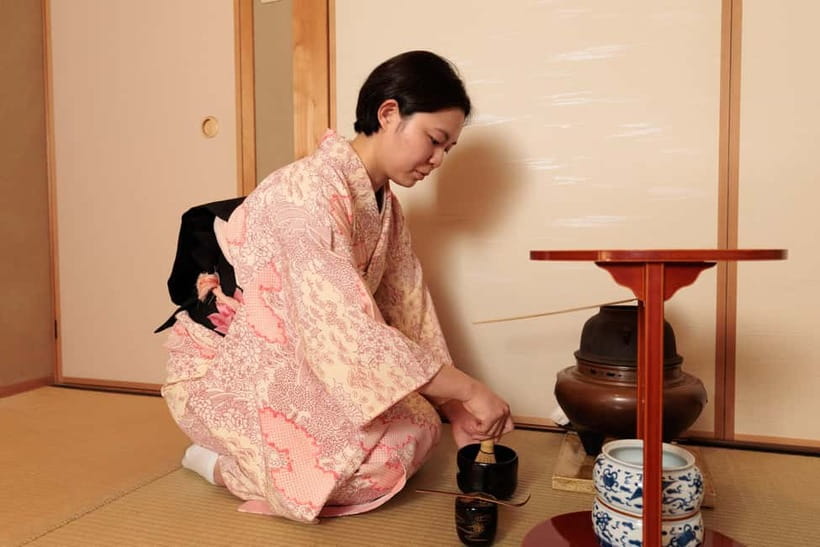
After the introduction, the host performs the tea ceremony. The demonstration lasts about 10 minutes, according to the experience details, and it is the most visually focused part of the visit.
Watch how the host handles each utensil and keeps the movements measured. The ceremony has a calm rhythm, and the quiet precision is part of its appeal. The host is not simply making a drink. Each action shows respect for the tea, the tools, the room, and the person receiving the bowl.
You will not be expected to copy the complete ceremony. That is an important point. One shorter session cannot teach the entire formal sequence, and this experience does not pretend otherwise. Instead, you watch the ritual first, then learn the basic practical skill of making matcha.
The room can feel peaceful even though you are close to one of Kyoto’s busiest sightseeing areas. That change of pace is one of the strongest reasons to include the ceremony in your plans. You step away from temple gates, souvenir shops, and foot traffic for a short period and focus on one carefully controlled activity.
Still photography without flash is allowed. Video recording is not permitted, so plan to watch rather than film the demonstration. I think that rule suits the atmosphere. You can take a few photographs, but the ceremony is better experienced with your attention on the host’s movements.
Other tea rooms and ceremonies in Kyoto:
- Kyoto: Table-Style Tea Ceremony at a Kyo-Machiya
★ 4.9 · 1,211 reviews - Kimono Tea Ceremony at Kyoto Maikoya, NISHIKI
★ 5.0 · 911 reviews - Kyoto: Arashiyama Bamboo Forest, Monkeys, Matcha & Temple Tour
★ 5.0 · 759 reviews - Kyoto: Tea Museum Tickets and Matcha Grinding Experience
★ 4.9 · 739 reviews
Seasonal sweets and the taste of Kyoto matcha
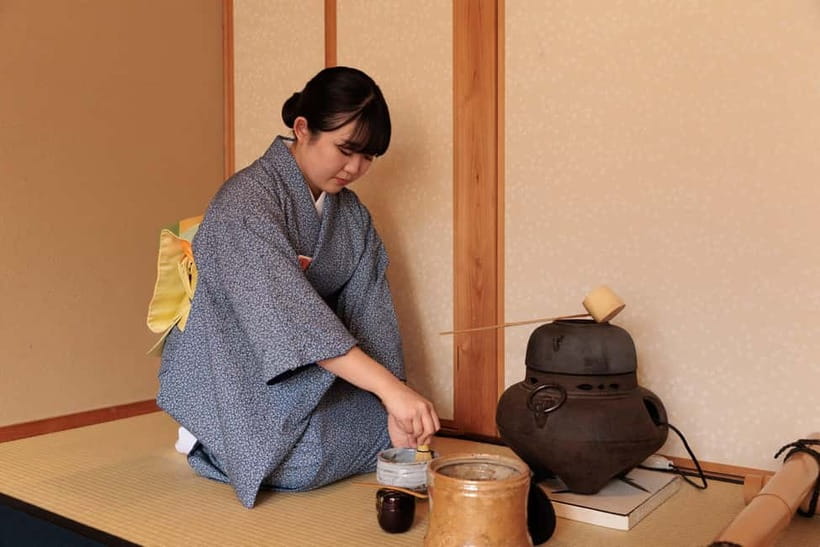
During the ceremony, you receive a traditional seasonal sweet with your tea. The sweet is not just a snack. Its flavor helps prepare your palate for matcha, which has a strong, grassy bitterness that may surprise you if this is your first taste.
The contrast is part of the lesson. The sweet softens the bitterness, while the matcha keeps its distinct character. You get to experience the pairing rather than hearing a general explanation about Japanese tea culture.
The matcha is grown in Kyoto, and the session gives you a direct connection to one of the region’s best-known products. The experience does not include a full meal, so do not book it as a substitute for lunch or dinner. Think of the sweet and tea as a cultural tasting within a lesson.
If you are new to matcha, the host can explain what you are tasting and how the tea is prepared. Some people love its strong flavor right away. Others find it bitter. Either reaction is fine, and trying it in this setting gives the taste some context.
Making your own bowl of frothy matcha
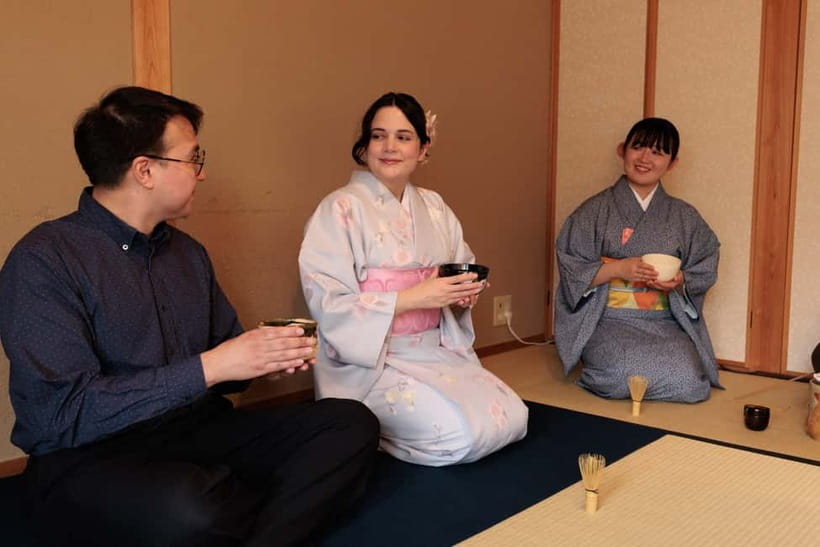
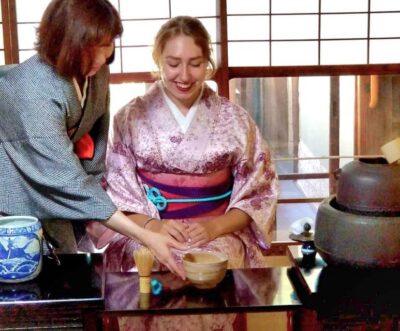
The hands-on portion follows the demonstration. You receive the utensils and make your own bowl of matcha with guidance from the host.
You will learn the basic process of adding and whisking the tea until it becomes frothy. This is simple enough for a first attempt, but the finished bowl may not look as smooth as the host’s. That difference is useful. It shows how much control and practice go into the host’s polished movements.
The activity is relaxed rather than competitive. You are not being tested, and the host can help you create a good foam. The chance to prepare and drink your own tea gives the session a clear finish and makes the ritual easier to remember.
This is also where the experience becomes more personal. You are not only hearing about matcha or watching someone else prepare it. You are handling the tools and taking part in a small piece of the tradition.
The 45-minute schedule keeps the activity efficient. It also means the instruction stays at an introductory level. If you want a full lesson in every formal gesture, this is too short. If you want a focused introduction during a busy Kyoto itinerary, the length works well.
Sitting on the floor and other comfort details
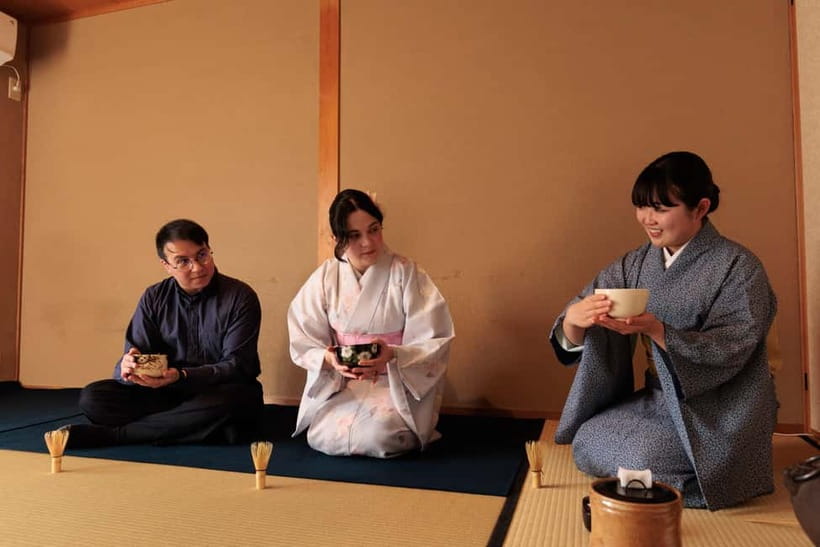
Traditional tearooms often involve sitting on the floor, and this session may require roughly 40 minutes in that position. Some people find kneeling or sitting on their knees uncomfortable, especially during a longer demonstration.
The hosts understand that visitors have different needs. You do not have to sit formally on your knees, and you are encouraged to make yourself comfortable. Chairs and tables are available for anyone who finds floor seating difficult.
The tearooms are upstairs. If you have mobility limitations, the Garden Teahouse is wheelchair accessible, so check the available option before booking. Restrooms are available.
If you plan to bring an interpreter, book a private tea ceremony. An interpreter joining a shared session could disrupt the other participants. Families bringing a baby or infant under age three are also asked to reserve a private ceremony at the Garden Teahouse.
These details do not ruin the experience, but they affect which booking is right for you. A private session gives you more control if comfort, interpretation, or a very young child is part of your plans.
How the $32 price measures up
At $32 per person, the experience offers good value for a short cultural activity in central Kyoto. The fee includes the matcha, seasonal sweet, utensils, and a personal English-speaking host.
You are paying for more than a drink. The price covers access to a traditional setting, an explanation of the ceremony, a live demonstration, and the chance to prepare your own tea. For a first introduction, that is a useful package.
The price is less attractive if you only want to taste matcha. Kyoto has many places where you can buy green tea or a matcha dessert for less. This activity makes sense when you want the background and ritual as well as the flavor.
The small-group or private format also matters. A large class might be cheaper, but this setup gives you a better chance to ask questions and receive help while whisking your tea.
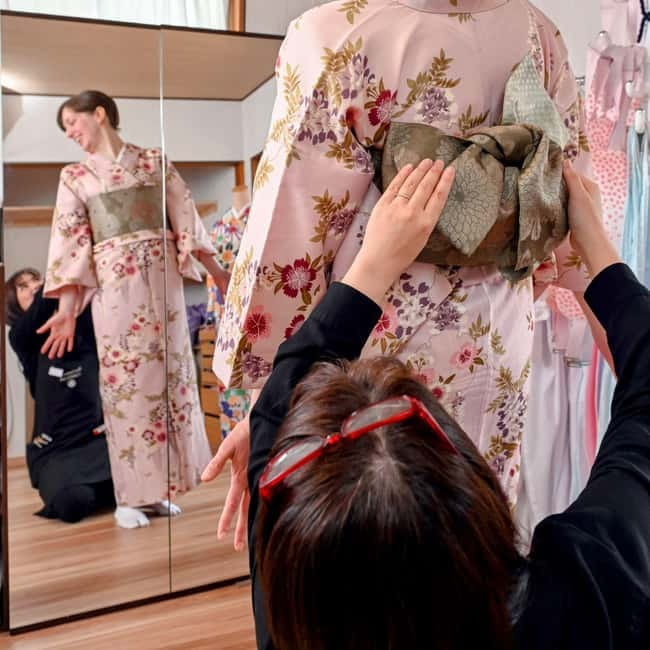
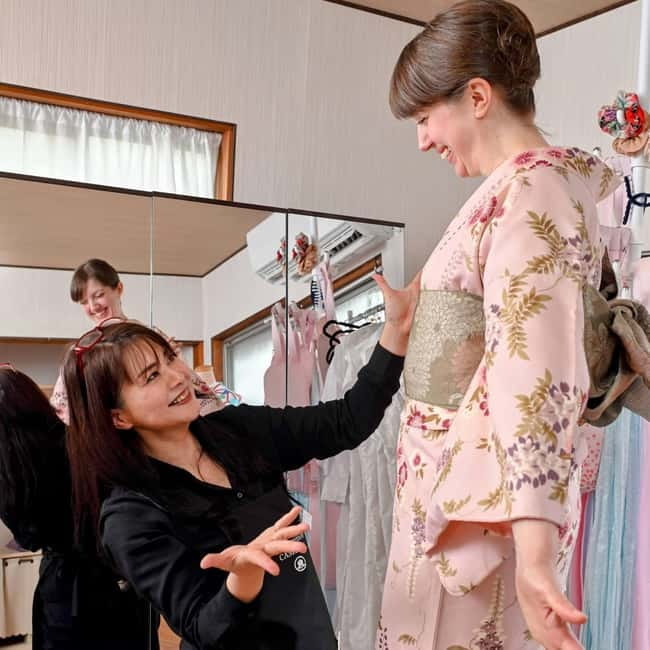
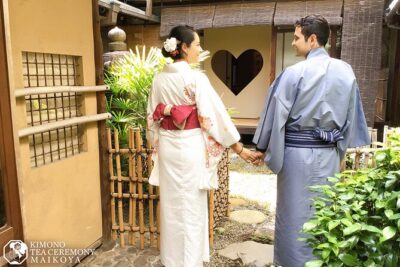
Kimono rental is not included. You may be able to arrange kimono hire nearby, and the area has rental shops close to the tea house. If you want to wear one, arrange it before the ceremony rather than assuming you can do it afterward. A kimono can add to the photographs and sense of occasion, but it is optional.
Some people also buy matcha-making sets as souvenirs after the session. That is an optional extra, not part of the $32 price.
Who will enjoy this best
I would recommend this experience to first-time visitors who want a clear introduction to Japanese tea culture. It suits couples, families with older children, solo visitors, and small groups looking for a calm activity between temples.
It is especially useful if you have never tasted matcha. The host explains the tea, lets you watch the proper preparation, and then gives you a chance to whisk your own bowl. You leave with a better idea of why the flavor and ritual matter.
This is also a good choice for anyone who enjoys crafts, food traditions, or quiet cultural activities. The session is not physically demanding, though floor seating may be uncomfortable for some people.
You may want a different activity if you are seeking a long formal ceremony, a full meal, extensive kimono photography, or a complete course in tea practice. This is an accessible introduction, not a professional training session.
The rating is 4.8 from 511 reviews, and the most consistent strengths are the hosts, clear English, peaceful setting, and hands-on matcha preparation. That combination explains why the activity works well for people who want cultural context without a complicated or lengthy commitment.
Plan the rest of your Higashiyama day around it
Because the tea house is near major sights, you can build a full day around the visit. Start with Kiyomizu-dera, explore Ninenzaka and Sannenzaka, attend the ceremony, then continue toward Kodai-ji, Yasaka-jinja, Maruyama Park, or Gion.
Check your walking pace before booking a tight schedule. Higashiyama streets can be crowded, and the narrow alley to the tea house may take a few extra minutes to locate. The tea ceremony itself is 45 minutes, but the total outing will take longer once you add walking and arrival time.
The session is also a good break during a hot or tiring sightseeing day. You get a seat, a drink, a sweet, and a calm room. Just do not mistake the tea for a full rest stop with a meal. Food is limited to the traditional seasonal sweet.
Free cancellation up to 24 hours before the start time and the reserve-now-pay-later option make it easier to fit into a changing Kyoto schedule. Starting times vary, so check availability when choosing the date.
Should you book the Camellia Tea Ceremony?
Book it if you want a short, well-explained introduction to matcha in a traditional Kyoto setting. The strongest reasons are the excellent English guidance, the live ceremony, and the chance to whisk your own tea rather than simply watch.
I would pair it with a visit to Kiyomizu-dera and the Ninenzaka area. The location saves you a separate cross-town trip, and the calm 45 minutes can refresh you after sightseeing.
Skip it if you dislike floor seating, want a complete formal ceremony, or are mainly looking for a meal. For most visitors interested in Japanese culture, though, $32 buys a thoughtful lesson, a seasonal sweet, Kyoto matcha, and a memorable hands-on activity.
FAQ
How long does the Kyoto tea ceremony experience last?
The experience lasts 45 minutes.
Where does the tea ceremony take place?
It takes place in a traditional machiya in Kyoto’s Higashiyama district, down an alley branching from the main thoroughfare of Ninenzaka.
How do I find the meeting point?
Head toward the Park Hyatt hotel. Across from the hotel is a Studio Ghibli store. The alley is just to the left of the store. A sign and staff assistance help identify the entrance.
Is the activity conducted in English?
Yes. The instructor and host speak English, and the ceremony explanations are given in English.
What is included in the price?
The price includes matcha, traditional seasonal sweets, tea-making utensils, and a personal instructor or host.
Can I make my own matcha?
Yes. After watching the host demonstrate the ceremony, you will make your own bowl of matcha with guidance.
Can I wear a kimono during the experience?
Kimono rental is not included. Kimono rental is available nearby, but you need to arrange it separately.
Is the tea ceremony suitable for someone who cannot sit on the floor?
Chairs and tables are available for people who have difficulty sitting on the floor. The tearooms are upstairs, while the Garden Teahouse is wheelchair accessible.
Can I take photographs or record video?
Non-flash still photography is permitted. Video recording is not allowed.
Just added in Kyoto
- Kyoto: Private Photoshoot Service★ 5.0 · 158 reviews
- Kyoto Rickshaw Tour★ 5.0 · 210 reviews
- Izakaya Style Cooking Class★ 5.0 · 219 reviews
- Kyoto: Traditional Concert at Townhouse or Bathhouse★ 4.9 · 224 reviews
- Ninja 2-hour Hands-on Lesson by Japanese master in Kyoto -Medium★ 5.0 · 218 reviews
- Kyoto: Arashiyama Bamboo, Temple, Matcha, Monkeys & secret spots★ 5.0 · 219 reviews
- Kyoto Geisha District Walking Tour in Gion★ 5.0 · 232 reviews
- The right way to know Kyoto★ 5.0 · 257 reviews
Tea Ceremony Experiences, compared.
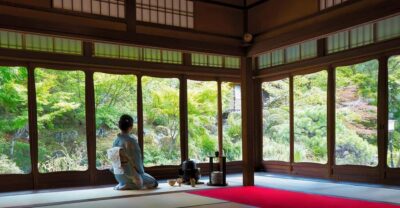
Tea Ceremony in a Traditional Tea House in Kiyomizu
Read our review →
World Heritage Kyoto & Nara Uji Authentic Matcha Experience
Read our review →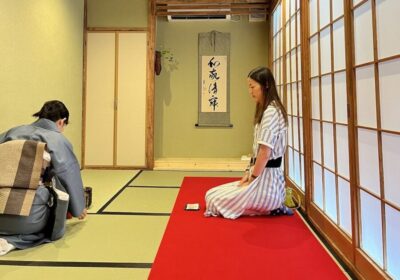
Arashiyama Bamboo Forest, Monkeys, Matcha & Temple Tour
Read our review →Browse the lists this tour appears in