
Reviewed · CALLIGRAPHY & CRAFT WORKSHOPS
Little EDO Sushi Making workshop in Kawagoe
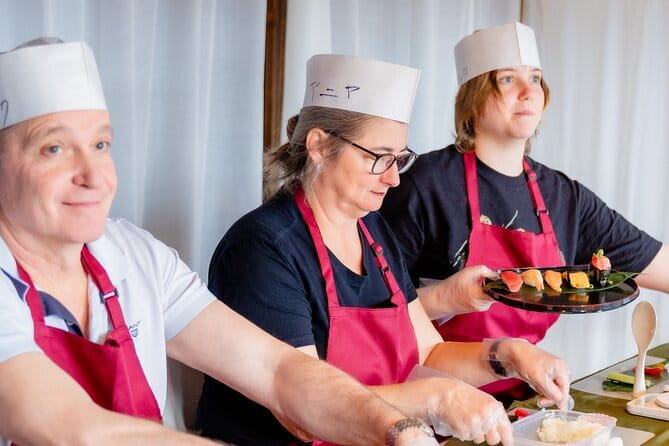
Kawagoe’s Little EDO Sushi Making workshop combines two good Japanese experiences in one small package: you learn to shape nigiri and roll maki, then eat your own work inside a 140-year-old former rice wholesale shop. The historic room matters here. Old staircase cabinets and heavy ceiling beams give the class a sense of place that a modern cooking studio cannot match.
I like the practical lesson on sushi rice, since that is the part you can most easily repeat at home. I also like the small maximum of six people and the English-speaking Japanese chef, who can focus on your hand movements instead of rushing through a large group. The main consideration is timing: the booking information lists about 90 minutes, while the class description also calls it a two-hour experience, so confirm the exact length when you reserve.
Key points at a glance
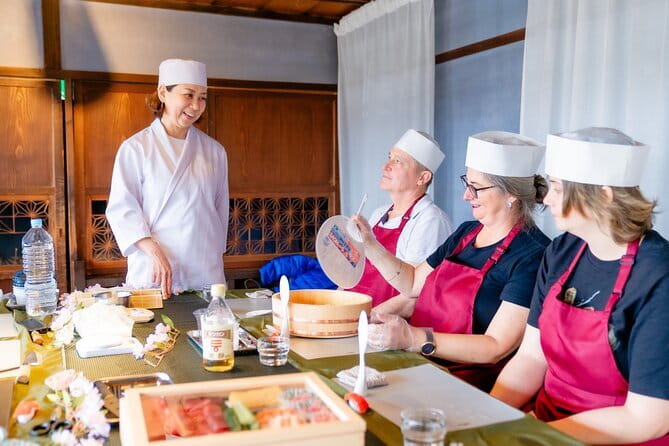
- A 140-year-old setting: Learn inside MUSUBIYA, a former rice merchant’s shop with staircase cabinets and exposed ceiling beams.
- Two sushi styles: Make traditional hand-formed nigiri and rolled maki sushi.
- Useful home skill: The chef explains how to prepare sushi rice, one of the most important foundations of good sushi.
- Small group size: The class accepts a maximum of six people, allowing close guidance.
- Dietary planning matters: Vegan, vegetarian, gluten-free, halal, and some allergy requests can be arranged before the class.
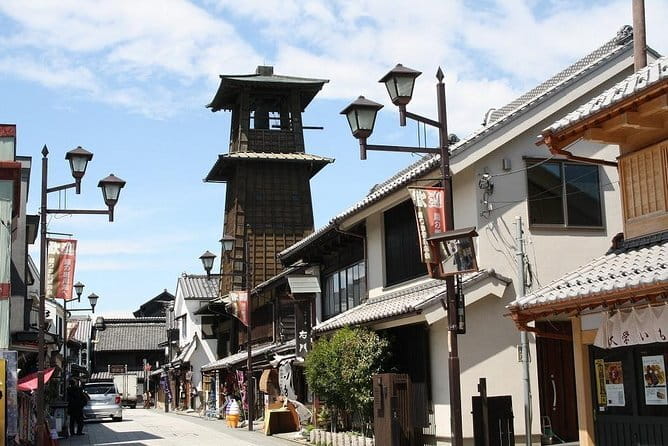
- Easy Kawagoe pairing: MUSUBIYA is about a three-minute walk from Kashiya Yokocho, the city’s well-known old-fashioned candy street.
A sushi class in old Kawagoe
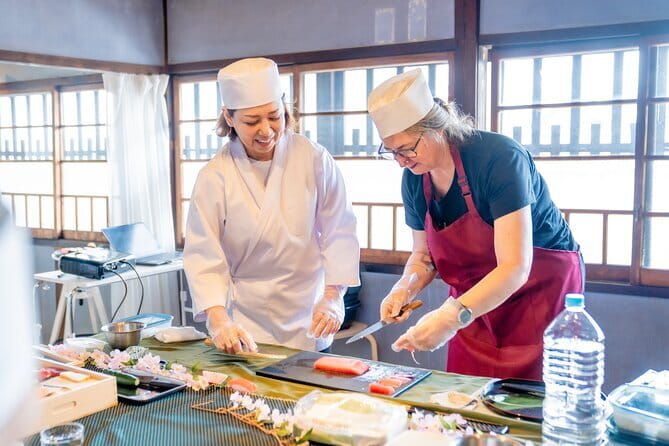
The setting is the first surprise. MUSUBIYA sits at 1-6-7 Ishiharacho, only about three minutes from Kashiya Yokocho. You enter a historic building that once served as a rice wholesale shop, not a purpose-built tourist kitchen.
Inside, look for the staircase cabinets and the broad ceiling beams. These details are more than decoration. They connect the food lesson to the building’s former trade, since rice was once handled and sold here. You get a small piece of Kawagoe’s working past while learning how rice became one of Japan’s best-known foods.
Kawagoe is often called Little Edo because parts of the city preserve the look and atmosphere of old Tokyo. This class fits that theme without requiring a long museum visit. You spend your time doing something active, but the room still gives you a feel for the town’s older character.
The venue does have stairs. If you prefer to avoid them, contact the operator in advance because alternative arrangements may be possible. This is worth sorting out before arrival rather than assuming the building is fully step-free.
Other classes behind the counter in Japan:
- Sushi Making Tokyo Roll and Authentic Japanese Sushi Class
★ 5.0 · 3,971 reviews - Tokyo: Roll and Authentic Sushi Making Class in Asakusa
★ 4.9 · 1,957 reviews - Tokyo: Sushi Making Class in a Happi Coat near a Famous Spot
★ 4.9 · 1,377 reviews
What happens during the 90-minute to two-hour class
The schedule is straightforward. Your chef introduces sushi and its place in Japanese food culture, then guides you through the preparation and shaping process. The advertised duration is approximately 1 hour 30 minutes, though the fuller class description refers to two hours. Allow some flexibility around the stated start and finish.
The class covers two familiar forms:
- Nigiri sushi: Fish or another topping is placed over a small hand-shaped portion of sushi rice.
- Maki sushi: Rice and fillings are rolled into seaweed and sliced into pieces.
The point is not simply to copy a finished shape. You work with the rice and practice the chef’s hand movements. That makes the class more useful than a demonstration where you only watch from the side.
The chef also explains how to make sushi rice. For most home cooks, this may be the most valuable part of the lesson. Sushi rice needs the right texture and seasoning, and it affects every piece you make afterward. Once you understand that base, nigiri and maki become much less mysterious.
The available information also notes lessons on cutting neta, the fish or other topping used for sushi. That gives you a better sense of the care involved in preparing each piece. You are not just placing ingredients together. You are learning how rice, topping, shape, and hand pressure work as one small portion.
At the end, you eat the sushi you have prepared. The meal is included, while beverages cost extra. Since this is a compact class, the meal is part of the lesson rather than a separate restaurant course. Your own uneven pieces are part of the fun, and they show exactly what the chef’s technique adds.
Nigiri and maki teach different skills
Nigiri is the more revealing exercise. A good piece looks simple, but shaping it takes control. The rice must hold together without becoming a hard lump, and the topping needs to sit neatly on top. The class gives you a chance to feel that balance under the chef’s direction.
Maki is more forgiving in some ways, but rolling brings its own challenge. You need to spread the rice, place the fillings, and create a firm roll without crushing it. Slicing then reveals whether the roll held its shape.
Learning both styles makes the session more useful. If you only make rolls, you may miss the hand control behind nigiri. If you only shape nigiri, you miss the rolling and cutting skills that are easy to practice at home.
The class also places sushi in time. Nigiri was created in Japan about 300 years ago, and that fact helps explain why the food looks so simple today. It began as a practical form of hand-shaped sushi, but careful technique remains at its core.
The chef’s teaching style and small group size

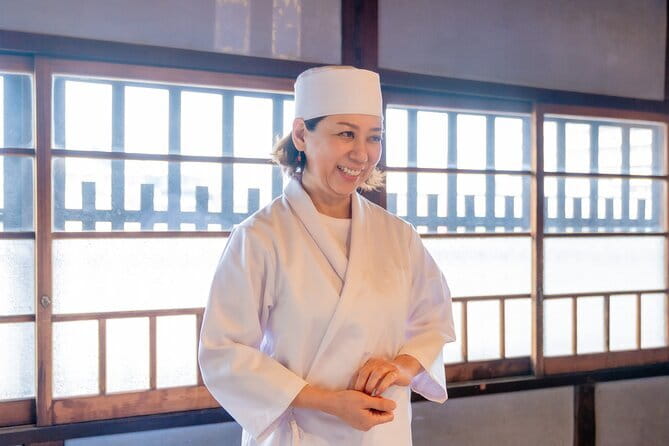
The class is led by an English-speaking Japanese female sushi chef with international experience. No individual chef’s name is provided, but the language support is important. You can ask questions and receive instructions without relying on a translator or guessing at a hand signal.
A maximum of six people keeps the lesson personal. That matters most when you are practicing rice pressure, cutting toppings, or rolling maki. The chef has a better chance of seeing where your technique needs adjustment, and you have more room to follow along.
The class is described as friendly and engaging, with a strong emphasis on participation. You are expected to make the sushi yourself, not simply watch a chef prepare it. One particularly positive account highlights lessons on sushi history, rice, cutting toppings, and nigiri technique, along with an enjoyable seasonal Ehomaki activity.
Ehomaki is a thick rolled sushi traditionally connected with the February Setsubun festival. The mention of this activity suggests the class may sometimes include a seasonal element, though you should not assume the same special activity will be offered at every session. If that matters to you, ask when booking.
Other things to make with your hands in Japan:
- Chopstick Making Workshop in Ginza
★ 4.8 · 1,366 reviews - Kyoto : Chopsticks Making Workshop in Gion with Engraving Option
★ 5.0 · 958 reviews - Tokyo Chopstick Making Workshop with Artisan
★ 5.0 · 466 reviews - Osaka Sushi Making Experience
★ 5.0 · 400 reviews
How much value do you get for $84.08?
At $84.08 per person, this is not the cheapest way to eat sushi in Kawagoe. You are paying for more than the ingredients. The price includes instruction, the food used in the class, and the meal you make. It also buys access to a historic private-feeling setting and a small class capped at six people.
I see the value most clearly if you want an activity rather than another meal. A restaurant gives you finished sushi. Here, you learn how the rice is made, how toppings are handled, and how the two main forms are shaped. That knowledge can stay with you after the trip.
The price is less compelling if you only want a quick introduction or a large tasting menu. The experience focuses on participation, not on sampling many types of premium sushi. You should book it because you want to make food and learn a technique, not simply because you want to eat sushi.
The class also works well as part of a Kawagoe day. Since MUSUBIYA is close to Kashiya Yokocho, you can pair the lesson with a walk through the old candy street. Check your timing carefully, since sessions are listed on Monday at noon to 1:30 p.m. and 3 to 4:30 p.m. The limited schedule may shape the rest of your day.
Dietary requests need to be made early
The kitchen can accommodate vegan, vegetarian, gluten-free, and halal menus. Some allergies can also be handled, but the stated exclusions include meat, nuts, fruits, and dairy allergies. That wording is unusual, so you should explain your needs clearly before booking and ask the operator to confirm what can be prepared.
Do not wait until you arrive. Menu changes cannot be made on the day of the class. This is especially important for vegan and halal participants, since the ingredients and preparation need to be planned in advance.
The class includes ingredients and the meal, but not drinks. If you want something to drink with your sushi, plan to purchase it separately. The available information does not specify which beverages are offered, so ask if you have a particular requirement.
Who will enjoy this Kawagoe activity?
I would recommend the workshop to you if you like hands-on food experiences, small groups, and historic buildings. It suits couples, families, and solo visitors who want to meet a local chef while learning a skill they can repeat at home.
It is also a good choice for first-time visitors who want more context around sushi. You learn that nigiri is not simply fish placed on rice, and you see how sushi connects to rice preparation, knife work, hand pressure, and local food customs.
Children may enjoy the making aspect, but the supplied information does not give a minimum age or specific child policy. Ask before booking if you are bringing young children. The same applies to anyone who needs step-free access.
You should think twice if you dislike structured instruction, have very little time between activities, or want a long meal with many courses. The experience is short and focused. Its strength is the close lesson, not a broad menu or an extended restaurant visit.
Practical details before you reserve
The meeting point is MUSUBIYA, listed as 結家, at 1-6-7 Ishiharacho in Kawagoe, Saitama. The activity ends back at the same location, and hotel pickup and drop-off are not included. It is near public transportation, but you will need to make your own way there.
A mobile ticket is provided, and confirmation is received at booking. The class is generally booked about 19 days ahead, so do not leave a preferred Monday time until the last minute if your Kawagoe schedule is tight.
Free cancellation is available up to 24 hours before the start time for a full refund. Changes made inside that 24-hour period are not accepted and the payment is not refunded. The cut-off uses local time.
The activity may be canceled if poor weather affects the operation or if the minimum number of participants is not reached. In those cases, you can choose another date or experience, or receive a full refund. Service animals are allowed.
The listed operating period runs from May 9, 2025, through February 11, 2027, with Monday sessions at noon and 3 p.m. Since the class description gives both a 90-minute and a two-hour duration, confirm the finish time before arranging a train or another timed visit.
Should you book the Little EDO Sushi workshop?
Book it if you want to make your own sushi, learn a repeatable rice technique, and spend time in an old Kawagoe building rather than just passing through the main sights. The small group, English-speaking chef, and two different sushi styles give the $84.08 price a fair basis, especially for food-focused visitors.
Skip it if you only want the lowest-cost meal, need a fully flexible schedule, or cannot manage stairs without advance arrangements. For everyone else, this is a focused and personal way to connect Kawagoe’s old rice trade with the sushi on your plate.
FAQ
Where does the sushi-making class take place?
The class takes place at MUSUBIYA, also listed as 結家, at 1-6-7 Ishiharacho, Kawagoe City, Saitama, Japan.
How long does the experience last?
The booking details list approximately 1 hour 30 minutes. The class description also refers to a two-hour class, so confirm the exact duration when booking.
What types of sushi will I make?
You will make nigiri sushi, which is hand-formed sushi, and maki sushi, which is rolled sushi.
Is the class taught in English?
Yes. An English-speaking Japanese female sushi chef leads the hands-on lesson.
Can dietary requirements be accommodated?
Vegan, vegetarian, gluten-free, halal, and some allergy requests can be accommodated when requested in advance. Menu changes cannot be made on the day of the class.
Is the venue accessible without stairs?
There are stairs to access the venue. If you need to avoid stairs, contact the operator in advance to ask about alternative arrangements.
Just added in Japan
- Nagasaki Private Customizable Half Day Tour★ 5.0 · 16 reviews
- Nagasaki Full Day Tour with Licensed Guide and Vehicle★ 5.0 · 27 reviews
- Nagasaki Like a Local: Private & Custom Experience (2-3 hrs)★ 5.0 · 14 reviews
- Nagasaki Private Tour with a Local – Highlights & Hidden Gems★ 5.0 · 24 reviews
- Nagasaki WW2 History and Culture Tour★ 5.0 · 19 reviews
- Snow Monkeys, Hokusai & Sake: A Perfect Day in Nagano★ 5.0 · 19 reviews
- Wasabi Farm Walking Tour & Lunch★ 4.5 · 20 reviews
- Nagasaki Street Food Adventure: Private Walking Tour with a Local★ 5.0 · 26 reviews
Calligraphy & Craft Workshops, compared.
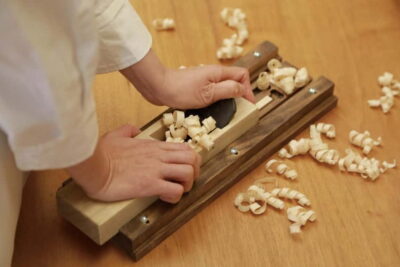
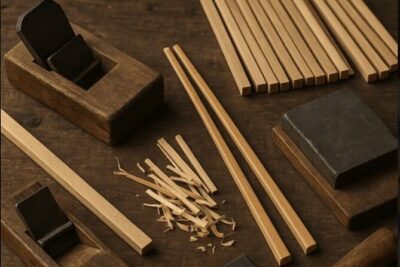
Chopsticks Making Workshop in Gion with Engraving Option
Read our review →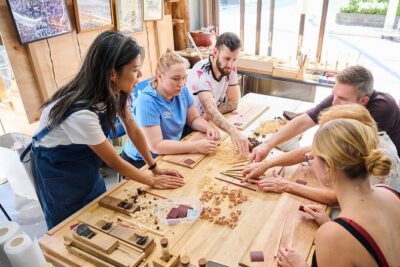

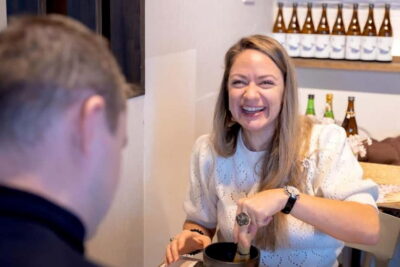
Matcha Making Experience with Mochi Sweets in Asakusa
Read our review →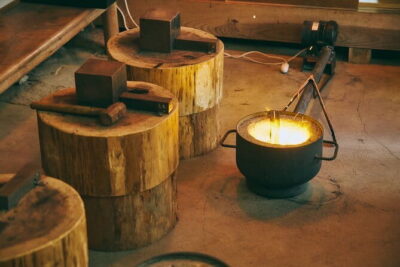
Authentic knife making experience at a blacksmith in Kyoto
Read our review →
Calligraphy class at Buddhist temple in city center
Read our review →Browse the lists this tour appears in