
Reviewed · SUSHI-MAKING CLASSES
Sushi Making Tokyo Roll and Authentic Japanese Sushi Class
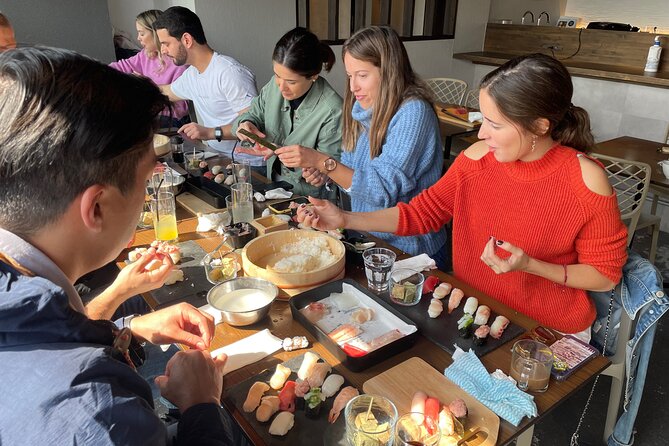
Making sushi in Tokyo is more satisfying than simply ordering another beautiful plate of it. In this hands-on Asakusa class, you prepare both maki rolls and nigiri, learn why the techniques matter, then sit down to eat your own work.
I like two things here: the clear English instruction and the useful setting near Senso-ji Temple. Instructors such as Moe, Ken, Kazu, Ellie, and Arisa have been praised for patient demonstrations, lively teaching, and good help at the table. The main consideration is timing. At about 1 hour 40 minutes, this is an approachable introduction, not a serious chef-training course, and a maximum of 30 people can be booked.
Key points at a glance
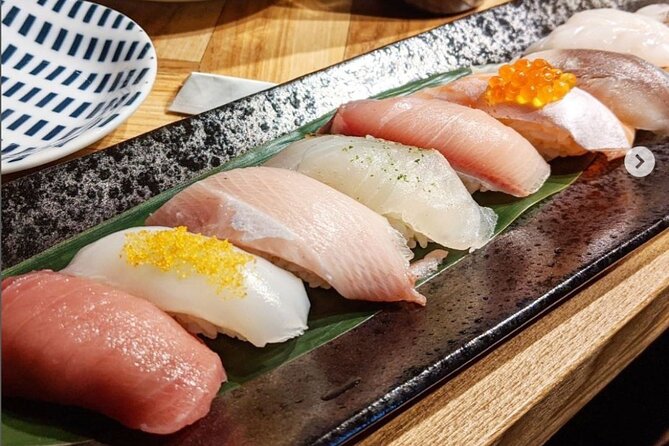
- Make a full meal: You prepare sushi rolls and authentic nigiri, then eat what you make.
- Learn near Senso-ji: The meeting point is in Tokyo’s traditional Asakusa neighborhood, a useful location for pairing the class with temple sightseeing.
- English-speaking instruction: Step-by-step demonstrations, visuals, and hands-on help make the class suitable for beginners.
- Good for families: Children and teenagers have taken part successfully, with instructors adjusting the pace when needed.
- Useful food context: You learn about sushi history, Japanese culinary culture, and words you can use during your trip.
- Simple planning: The class lasts about 1 hour 40 minutes, starts and ends at 2-chōme-17-9 Kaminarimon, and includes ingredients and the meal.
Why a sushi lesson belongs in your Tokyo plans
Tokyo can make sushi seem effortless. A chef places a neat piece of fish on rice, and the plate arrives before you have time to wonder how the rice stays together. This class slows the process down and lets you see the small steps behind that tidy result.
You learn how sushi is assembled rather than just how it looks on a menu. That matters if you want to take a practical memory home. The instructors focus on techniques you can try in your own kitchen, while also explaining the place of sushi in Japanese food culture.
The setting helps, too. The class takes place just steps from Senso-ji Temple in Asakusa, one of Tokyo’s most traditional districts. You can schedule it before or after a visit to the temple and nearby streets, so the activity does not require a separate cross-city trip.
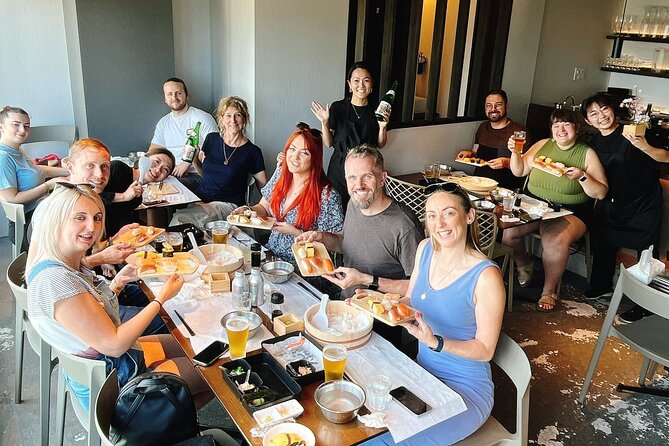
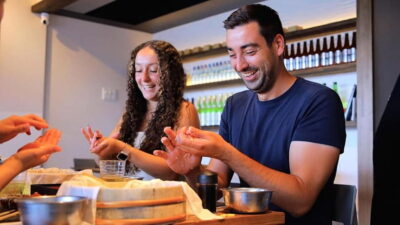
I also like the social side. You work alongside other people, compare your early rolls with your later ones, and sit down for a shared meal at the end. It is a good choice for couples, families, and friends who want an activity that gives everyone something to do.
Other classes behind the counter in Tokyo:
- Tokyo: Roll and Authentic Sushi Making Class in Asakusa
★ 4.9 · 1,957 reviews - Tokyo: Sushi Making Class in a Happi Coat near a Famous Spot
★ 4.9 · 1,377 reviews - Tokyo Sushi Making Class in Tsukiji with Professional Chef
★ 5.0 · 1,177 reviews
Arriving in Kaminarimon near Senso-ji
The meeting point is 2-chōme-17-9 Kaminarimon, Taito City, Tokyo 111-0034. The activity returns to this same location, so you do not need to arrange a separate ride back to your hotel or another neighborhood.
The area is close to public transportation, but the exact class location can be a little tricky to find. I would arrive about 15 minutes early, especially if you are navigating Asakusa for the first time. That small cushion is worthwhile in Tokyo, where a short address can still take a few minutes to locate.
Asakusa makes a smart base for this activity. You can visit Senso-ji, walk through the Kaminarimon area, and then attend the class without losing much sightseeing time. If your schedule is tight, check the class start time carefully rather than assuming the temple and cooking school are interchangeable stops.
The experience uses a mobile ticket, so keep your booking confirmation easy to access. Hotel pickup and drop-off are not included. You are responsible for reaching the meeting point.
The opening lesson: sushi, language, and food culture
The class begins with an introduction to sushi and its place in Japanese culture. This section is not meant to turn you into a food historian, but it gives useful context before you handle the ingredients.
You may learn terms that help during the rest of your trip. One activity review specifically praised picking up new Japanese words to use while sightseeing. That is a small benefit, but it makes the class feel connected to the wider experience of being in Japan.
The instructors also use clear explanations and visual demonstrations. A presentation or video has been used alongside table instruction, which is helpful when a technique is easier to understand by watching it than by hearing a description.
Different instructors may lead the class, including Moe, Ken, Kazu, Ellie, Arisa, Kyuto, and Kaori. The teaching style described across the experience is friendly, energetic, and easy to follow. That tone matters in a group class. Sushi-making can feel intimidating when you see a professional working quickly, but a slower demonstration gives you a fair chance to copy the movement.
Making maki rolls without the usual fear
The roll-making portion is likely the most playful part of the class. You work with sushi rice and fillings, then shape the ingredients into maki. The instructor demonstrates each stage before you try it.
The value here is not just the finished roll. You see how much rice to use, where to place the filling, and how to apply pressure without crushing the ingredients. These are the parts that are hard to learn from a picture.
Beginners should feel comfortable. No cooking experience is required, and the class is designed around direct guidance. The instructors can show you the movement, watch your attempt, and correct the shape before you move on.
Do not expect every roll to look like it came from a sushi counter. That is part of the fun. Your first pieces may be uneven, but the class gives you enough practice to understand what went wrong. By the meal, you should have something that looks presentable and tastes good, even if your technique still needs work.
Families have a particular reason to like this section. Children around elementary-school age and teenagers have taken part, and instructors have been able to keep the activity clear and entertaining. Younger children may need help with the rice and rolling, but the process gives them a real task instead of asking them to sit quietly through a lecture.
Same base, a different sort of day:
- Mt Fuji and Hakone 1-Day Bus Tour Return by Bullet Train
★ 5.0 · 26,383 reviews - 1-Day Tokyo Bus Tour
★ 5.0 · 14,250 reviews - Tokyo: TOKYO SKYTREE® Admission ticket
★ 4.5 · 11,192 reviews - Tokyo: teamLab Planets TOKYO Digital Art Museum Entry Ticket
★ 4.6 · 9,779 reviews
Shaping authentic nigiri by hand
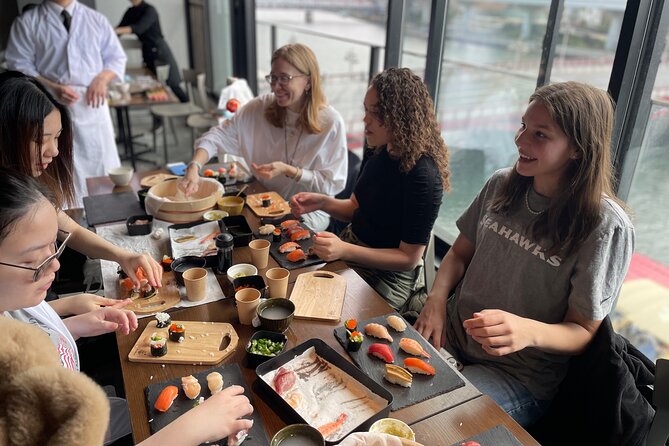
Nigiri gives the class a different challenge. Instead of wrapping the ingredients in seaweed, you shape rice and add fish or another topping. The form looks simple, but the rice needs the right pressure and size.
This is a useful contrast with maki. Rolls allow you to hide a little unevenness inside the seaweed. Nigiri puts the shaping directly on display. You learn why the rice must hold together while still keeping a light texture.
Food quality matters here. The activity includes the cooking ingredients and the meal, and several comments singled out the quality of the fish and rice. That does not turn the class into a premium sushi tasting, but it does make the lesson more satisfying. You are practicing with ingredients that are meant to taste good, not just serve as props.
The class also lets you understand the balance between rice and topping. At a sushi restaurant, you might focus only on the fish. After preparing nigiri yourself, you are more likely to notice the rice temperature, shape, seasoning, and portion.
Sitting down to eat what you prepared
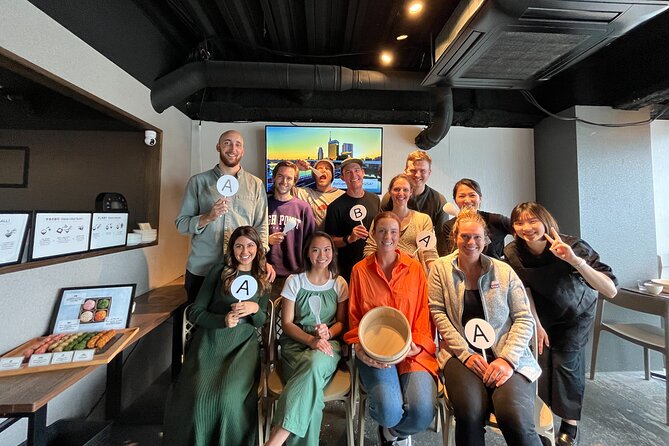
At the end, you eat the sushi you made. This is more than a convenient lunch. It gives the lesson a clear payoff and lets you judge your own work right away.
The portions have been described as generous enough for a full meal, and one family reported leaving full. That makes the $59.69 price easier to assess. You are paying for instruction, ingredients, and lunch rather than for a short demonstration with a tiny sample at the end.
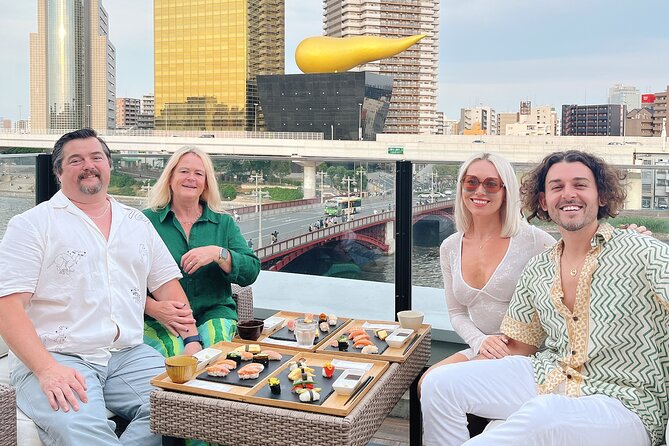
The meal also creates a natural pause for photographs. You can record the finished rolls and nigiri before eating, and the setting gives you a shared image from your time in Tokyo. If you are traveling with children or on a honeymoon, that personal result is likely to mean more than another restaurant receipt.
Still, keep your expectations in the right place. The price covers the class ingredients and meal, not hotel transportation or an elaborate restaurant experience. If your only goal is to eat the finest sushi in Tokyo, spend the money at a respected sushi counter instead. If you want food, instruction, and an activity in one package, this is the better fit.
What the teaching style gets right
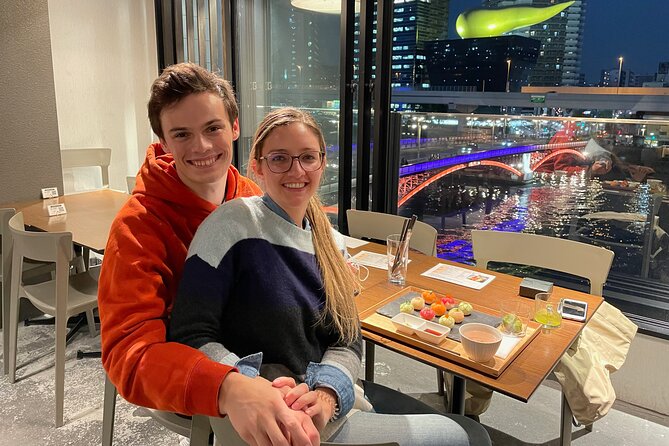
The strongest part of this activity is the teaching. Instructors have been praised for being patient, personable, and energetic without making the process hard to follow.
That is especially important in a group setting. A class can quickly become frustrating if the instructor moves on before everyone understands the step. Here, the format includes demonstrations and table-side assistance, giving you more than a one-way talk.
Some instructors use humor and lively phrases to keep the mood light. One class leader used hoi, hoi, hoi as a playful encouragement while teaching the group. That sort of energy will appeal to families and social groups, though visitors seeking a quiet, formal culinary workshop may find it a little theatrical.
The English is designed for international visitors. You do not need to know Japanese cooking vocabulary before arriving. The combination of spoken instruction, visual examples, and physical practice reduces the chance of getting lost.
The class has earned a two-time TripAdvisor Best of the Best award and has a 5.0 rating from 3,971 reviews, with 99 percent recommending it. Those figures do not guarantee that every session will match your personal style, but they support the practical points that matter most: clear teaching, enjoyable food, and a welcoming atmosphere.
How the group size may affect your experience
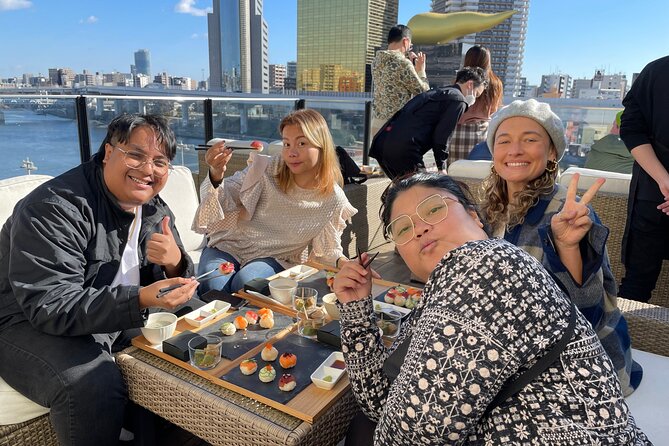
The maximum group size is 30 people. That is not a tiny private lesson, and you should not book it expecting an individual chef at your side for the entire class.
At the same time, the teaching format includes hands-on guidance, and several instructors may assist during a session. Some classes have felt small enough for personal attention, but the group size can depend on the date and booking level.
If you prefer a quiet, highly private lesson, check the group details before committing. For most couples and families, the group format is part of the appeal. You get a more social meal and a chance to share the activity with people from different countries.
The class has attracted people from Europe, North America, and Australia, so the setting is built with international communication in mind. That can make it easier for a mixed-language group to take part together.
Who should book this class
I would recommend it most strongly to:
- First-time sushi makers who want practical instruction
- Families with children or teenagers
- Couples looking for a shared activity in Tokyo
- Food lovers who want more context than a restaurant meal provides
- Visitors staying near Asakusa or planning to visit Senso-ji
- Anyone who enjoys eating a meal they helped prepare
It is also a good choice for a final day in Tokyo. The class is light, social, and not too long, and the completed meal gives the day a clear finish.
I would be more cautious if you want advanced knife work, market shopping, fish preparation, or professional culinary training. Those elements are not part of the supplied program. The focus is beginner-friendly sushi assembly, cultural background, and eating the finished food.
Price, timing, and cancellation details
At $59.69 per person, the value rests on three parts: instruction, ingredients, and a meal. You also get a central Asakusa location and a class that lasts about 1 hour 40 minutes. Compared with paying separately for lunch and a sightseeing activity, that is a fair package for many visitors.
The duration is long enough to learn several techniques without taking half a day. You can still visit Senso-ji and explore Kaminarimon before or after the class. Allow extra time for finding the address and reaching the meeting point.
Confirmation arrives at booking. Service animals are allowed, and the location is near public transportation. Hotel pickup and drop-off are not included.
Free cancellation is available if you cancel at least 24 hours before the local start time. Cancellations or changes made less than 24 hours before the start are not accepted for a refund.
My verdict: a useful and tasty Tokyo add-on
You should book this class if you want more than a meal and less than a full culinary course. The combination of maki, nigiri, food culture, English instruction, and a meal you prepare yourself gives the activity a clear purpose.
The best reasons to choose it are the accessible teaching, the family-friendly format, the generous meal, and the easy pairing with Senso-ji. The main cautions are the possible 30-person group and the beginner-level scope.
For a first visit to Tokyo, I like this as a practical Asakusa stop. You leave with a better sense of how sushi is made, a full lunch, and a skill you can try again at home. That is a better souvenir than another photograph of food you did not prepare.
FAQ
How long does the sushi class last?
The experience lasts approximately 1 hour 40 minutes.
Where does the class meet?
The meeting point is 2-chōme-17-9 Kaminarimon, Taito City, Tokyo 111-0034, Japan. The activity ends back at the meeting point.
Is the class taught in English?
Yes. An English-speaking instructor leads the class, with demonstrations and hands-on guidance.
Do I need cooking experience?
No. The class is designed for beginners, and no previous cooking experience is required.
What is included in the price?
The price includes the English-speaking instructor, the cooking-class ingredients, and the meal you prepare.
Can I cancel for a full refund?
Yes, if you cancel at least 24 hours before the experience start time. Cancellations or changes made less than 24 hours before the start are not accepted for a refund.
Just added in Tokyo
- Small-Group Wagyu Beef and 7 Japanese Dishes Tokyo Cooking Class★ 5.0 · 190 reviews
- Nikko: Edo Wonderland Edomura Cultural Theme Park Ticket★ 4.3 · 205 reviews
- 《MEMBERS-ONLY-BAR-HOPPING》Discover Your Special Whiskey in Tokyo!★ 5.0 · 29 reviews
- Japanese Whisky Hunting《HIGH-QUALITY-ONLY》Rare Tasting Class★ 5.0 · 20 reviews
- Luxury Tokyo Sake, Cocktail, Whisky and Pairing Tour★ 5.0 · 18 reviews
- Wagyu & Sake Pairing in Shinjuku – Steak, Shabu-Shabu & More★ 5.0 · 112 reviews
- From Tokyo: Private Tour to Fuji/Hakone – Onsen, Art, Nature★ 5.0 · 116 reviews
- Tokyo: KABUKI Show at Kabukiza Theatre Admission Ticket★ 4.8 · 152 reviews
Sushi-Making Classes, compared.
Roll and Authentic Sushi Making Class in Asakusa
Read our review →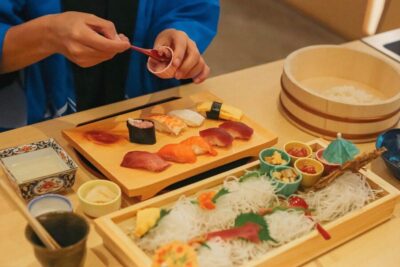
Sushi Making Class in a Happi Coat near a Famous Spot
Read our review →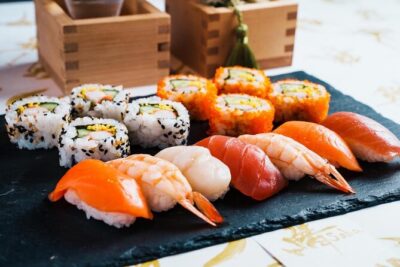
Sushi Making Osaka Roll and Authentic Japanese Sushi Class
Read our review →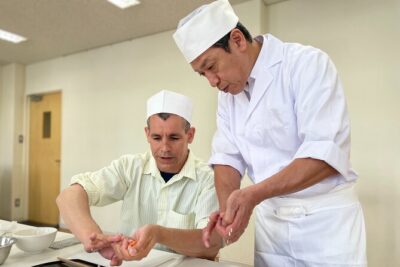
Tokyo Sushi Making Class in Tsukiji with Professional Chef
Read our review →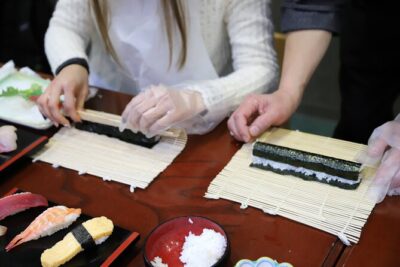
Tsukiji Fish Market Guided Tour and Sushi Making with Pro Chef
Read our review →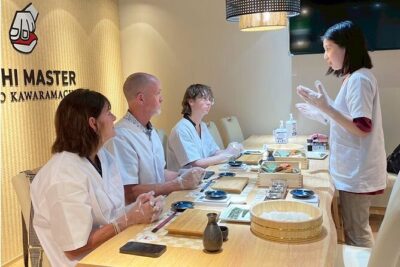
Sushi Making in Kyoto! Same-day bookings welcome!
Read our review →
Tsukiji Fish Market Sushi Making Class with Pro Chef
Read our review →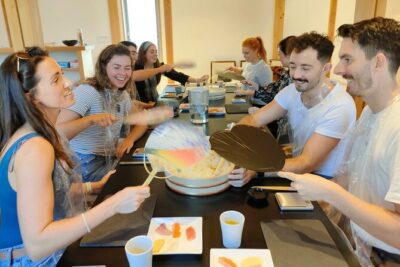
The Original Small-Group Sushi Making Class in Kyoto
Read our review →Browse the lists this tour appears in