
Reviewed · NARA & THE DEER PARK
Nara 8hr Private Tour – Kyoto DEP. with Licensed Guide
Nara’s great strength is its mix of giant Buddhist monuments, sacred forest paths, old merchant streets, and free-roaming deer. With a private guide, you can choose three or four places instead of racing through every major sight. I especially like the chance to pair Todaiji and Nara Park with a quieter stop such as Isuien Garden or Naramachi. I also like the local touch: guides such as Junichi, Taku, Ken, Yuka, and Masaaki have shaped days around guests’ interests, from ancient religion to ramen, sake, tofu, and family activities.
The main catch is that this is an eight-hour walking tour, not a chauffeured day trip. Transportation, admission fees, lunch, and personal costs are extra, and the Kyoto pickup means meeting your guide on foot in the designated area. You’ll get the most from it if you can walk steadily and are willing to help shape the plan before the day begins.
Key points at a glance
- Choose three or four Nara sights: Build the day around temples, deer, gardens, old streets, or Japan’s early capital.
- Todaiji delivers the big moment: See the enormous bronze Buddha inside one of Japan’s most famous temples.
- The guide makes the difference: English-speaking guides can explain Buddhist and Shinto traditions, local customs, architecture, and train routes.
- Nara Park is more than a deer stop: It also links Todaiji, Kasuga Taisha, Kofukuji, and the Nara National Museum.
- Walking shapes the day: There is no private vehicle, and the pace can feel demanding in heat, rain, or crowds.
- The price buys flexibility: At $201.51 per person, the value is strongest for families or couples who want a tailored day rather than a fixed group route.
Why a private day in Nara works so well
Nara is close enough to Kyoto for an easy day out, yet it feels different from the more polished temple routes around Kyoto. It was Japan’s capital during the Nara Period, from 710 to 794, and its religious sites preserve some of the country’s earliest major Buddhist art and architecture.
I like this tour because it gives you a local interpreter for a place that can otherwise become a blur of gates, statues, incense, and Japanese signs. A guide can explain why a site matters, point out architectural details, and help you understand the relationship between Shinto shrines and Buddhist temples.
The private format also helps families and small groups. One family had a guide shape the day around a teenager’s interests. Other guides adjusted plans for vegetarian food, tofu, sake tasting, shaved ice, old houses, or less familiar temples such as Yakushiji. You are not locked into a bus schedule or a fixed list of stops.
At the same time, the tour does not include a private car. The guide meets you on foot in the designated Kyoto area, and you travel around Nara by walking and public transportation at your own expense. That keeps the day flexible, but you should expect a full day on your feet.
Other day trips out of Kyoto:
- Kyoto/Osaka: Nara, Fushimi Inari Taisha, Arashiyama Bus Tour
★ 4.7 · 1,275 reviews - Osaka/Kyoto: Arashiyama, Nara & Fushimi Inari Shrine w/Lunch
★ 4.4 · 754 reviews - Kyoto and Nara Day Trip from Kyoto
★ 4.5 · 445 reviews
Choosing your four stops before you go
The advertised program offers a menu of 14 possible places, but the tour includes only three or four. That sounds limiting until you realize how much time each place can absorb. A serious visit to Todaiji, Kasuga Taisha, Nara Park, and Naramachi already makes a full day once you include walking, photos, lunch, and transport.
Contact with the guide before the tour matters. Tell the agency and guide what interests you most, along with your walking comfort, food needs, and any children or older family members in the group. A guide can then decide how much ground to cover and which sites fit together naturally.
For a first visit, I would consider:
- Todaiji Temple
- Nara Park
- Kasuga Taisha
- Naramachi
For a quieter, more art-focused day, consider:
- Todaiji Temple
- Isuien Garden
- Kofukuji Temple
- Naramachi
For serious students of early Japanese Buddhism, Horyuji, Yakushiji, Toshodaiji, or Shin-Yakushiji may matter more than the deer park. You will not fit every major temple into eight hours, so make your priorities clear.
Todaiji and the giant Buddha
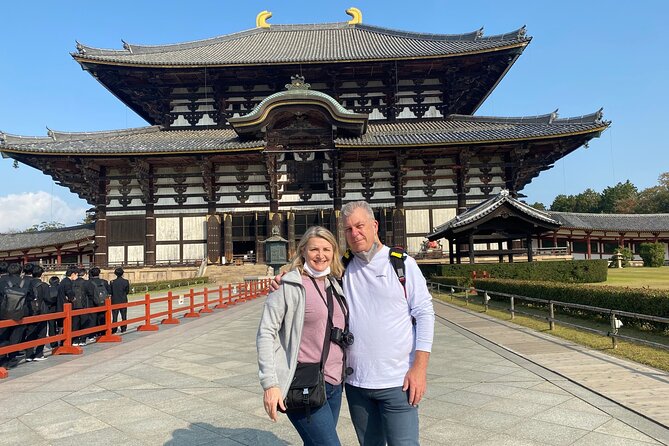
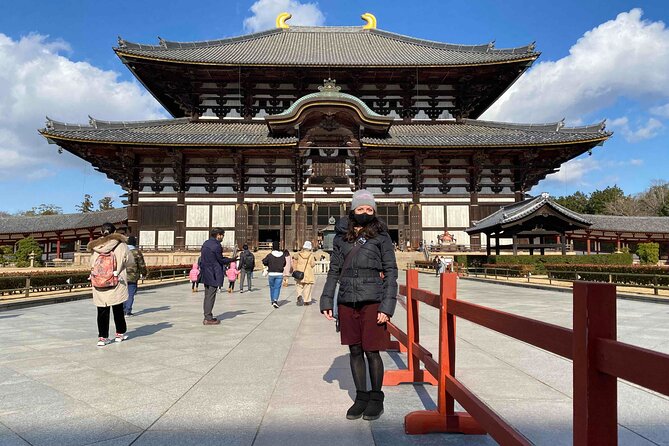
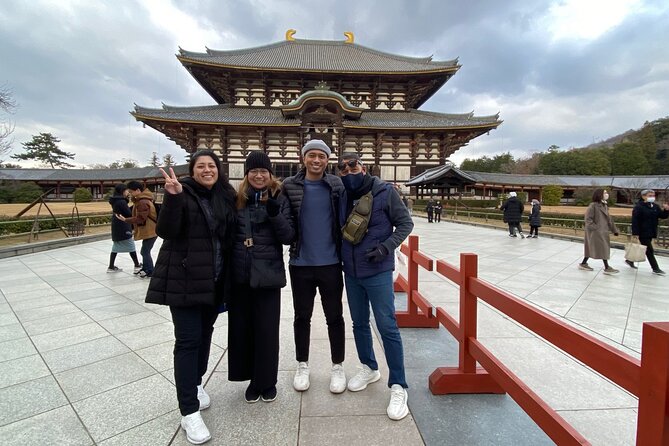
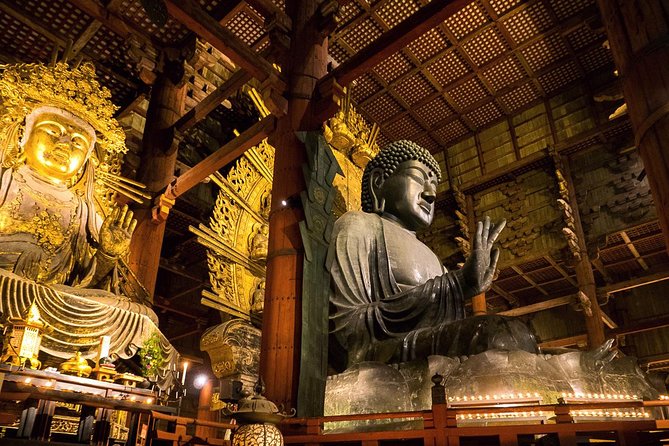
Todaiji is the natural centerpiece. Founded in 752 as the head temple of Japan’s provincial temples, it is famous for the Daibutsuden, or Great Buddha Hall, which houses a huge bronze Vairocana Buddha.
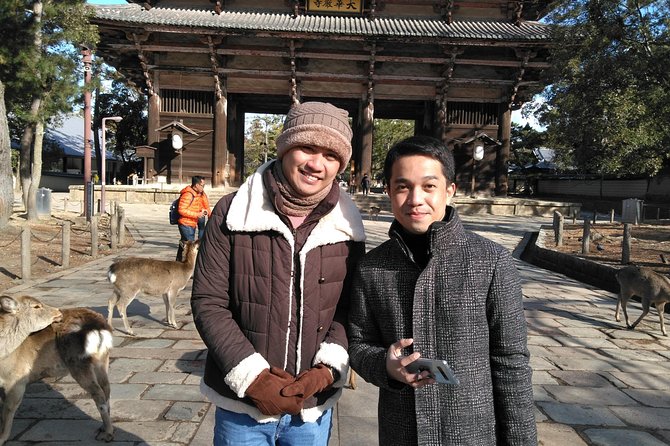
The approach begins at the Nandaimon Gate, a massive entrance guarded by powerful wooden figures. Inside the temple compound, the scale keeps building. The hall and Buddha give you a visual sense of the resources and ambition of Nara’s early government and Buddhist establishment.
The listed stop time is 30 minutes, but that is best understood as a guide, not a promise that you must rush. Admission is not included, so budget separately for the temple. The grounds can be crowded, particularly during school outings and major holiday periods. One family found the school groups made it harder to linger before the Buddha, though the sight of children trying to pass through the famous pillar opening added a distinctly Japanese touch.
Your guide can make this stop far more useful. Ask about the Buddha’s symbolism, the temple’s role in early Japanese Buddhism, and the rebuilding of the wooden hall. Guides such as Ken, Haru, Yuka, and Masaaki have been praised for explaining how religion, politics, architecture, and daily life connect.
Nara Park and its famous deer
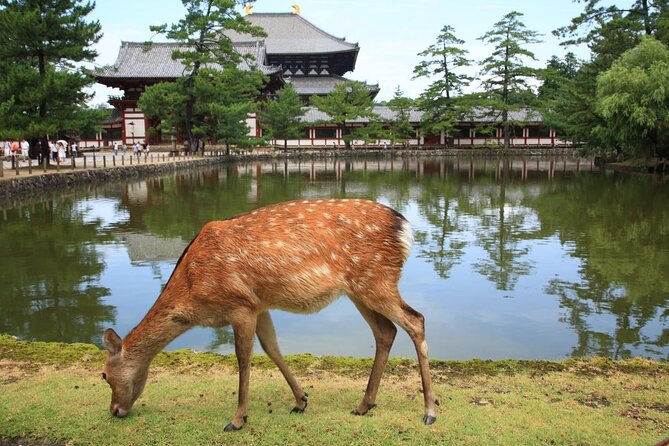
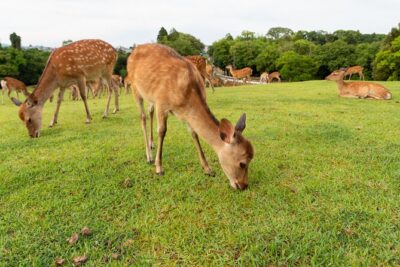
Nara Park is free to enter and spreads across the center of the city. It is home to deer, but it also links several of Nara’s biggest sights, including Todaiji, Kasuga Taisha, Kofukuji, and the Nara National Museum.
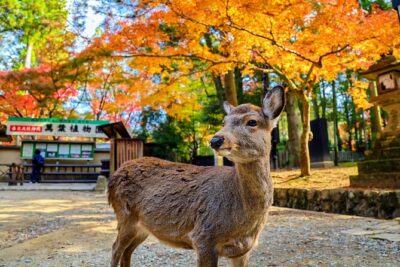
The deer are tame and accustomed to people. You can buy special crackers and feed them, but keep the interaction brief and follow local instructions. The deer may bow for food, which is charming, though they can also become persistent once they see the crackers in your hand.
I would not treat the park as a quick photo stop. The open space gives you a break between buildings, and the walk toward Kasuga Taisha changes from urban park to wooded shrine approach. In autumn, the trees add color. In hot weather, the distance and humidity can wear you down, so carry water and choose sensible shoes.
The listed visit time is 30 minutes, but the park is usually part of the walking route between other stops. That is one reason the private format helps. Your guide can decide when to spend time with the deer and when to keep moving toward a temple or garden.
Other tours with a licensed guide in Kyoto:
- Kyoto 6hr Private Tour with Government-Licensed Guide
★ 5.0 · 1,369 reviews - Kyoto 4hr Private Tour with Government-Licensed Guide
★ 5.0 · 629 reviews - Kyoto: Private Tour with Local Licensed Guide
★ 4.8 · 463 reviews - Private Kyoto Tour with Licensed Guide & Vehicle (Max 15 persons)
★ 5.0 · 417 reviews
Kasuga Taisha and the lantern path
Kasuga Taisha is Nara’s best-known Shinto shrine. It was founded around the time Nara became the capital and is dedicated to the deity associated with protecting the city.
The approach is one of the most atmospheric walks in Nara. Stone lanterns line the route, and the woods create a more secluded feeling than the broad spaces around Todaiji. At the shrine, you can see the connection between place, ritual, and the natural world that is central to Shinto practice.
The standard listed time is 30 minutes, though the approach itself adds walking. You do not need to be an expert in Japanese religion to enjoy it. A licensed guide can explain shrine etiquette, the meaning of the lanterns, and how Kasuga differs from the Buddhist temples nearby.
If you want a deeper shrine visit, ask about Wakamiya Shrine, a related sub-shrine, or Tamukeyama Hachiman Shrine near Todaiji. You may need to sacrifice another stop to make room, but that trade can be worthwhile for visitors more interested in religion than shopping.
Naramachi and old merchant houses
Naramachi was once Nara’s merchant district. Its narrow streets preserve traditional homes, warehouses, small shops, cafes, and boutiques.
This is where you see a more ordinary side of old Nara. Instead of monumental temple buildings, you get wooden facades, compact lanes, and homes designed for work and family life. Some traditional buildings are open to the public, including Nigiwai-no-Ie, where tatami rooms, alcoves, and staggered shelves show how domestic space was arranged.
Naramachi is a smart choice after a morning of temples. It gives your eyes a rest and leaves room for food or browsing. Guides can also help with ordering and local recommendations. Junichi, who was born and raised in Nara, has directed guests toward tofu and other local meals. Other guides have helped groups find vegetarian restaurants or discover modern cafes and sake tasting.
The district is free to walk through, though food, drinks, and any optional admissions cost extra. If you want an old-town experience rather than another major religious site, choose Naramachi.
Kofukuji, Isuien, and Yoshikien
Kofukuji was the family temple of the powerful Fujiwara clan. Its five-story pagoda is one of Nara’s familiar sights, and the temple complex helps explain how aristocratic families shaped religious institutions during the Nara and Heian periods.
Admission varies by building, and the basic tour does not include entrance fees. If you care about Buddhist sculpture and art, ask your guide which halls or museums are open and worth paying for on the day.
Isuien Garden is a fine choice when you want quiet beauty and a slower pace. Its design uses borrowed scenery, including Todaiji’s Nandaimon Gate and Mount Wakakusayama. That means the garden feels connected to the larger setting rather than sealed off from it.
Nearby Yoshikien is another pleasant garden, named after the Yoshikigawa River. These gardens are especially useful for a group with mixed interests. One person can enjoy landscape design and tea-garden details while another gets a break from large temples and crowds. Admission is not included, so confirm current fees with your guide.
Horyuji, Yakushiji, and Toshodaiji
Horyuji is the ambitious choice. Founded in 607 by Prince Shotoku, it is one of Japan’s oldest temples and contains the world’s oldest surviving wooden structures. Its early Buddhist art and buildings deserve more than a hurried look.
The tradeoff is distance. Horyuji is not part of the central cluster around Nara Park, so fitting it together with several central sights can create a tight schedule. One especially organized day made Horyuji the morning highlight, then used the remaining time for central Nara. If Horyuji is your priority, tell the guide early and accept fewer additional stops.
Yakushiji was built in the late seventh century for the recovery of Emperor Tenmu’s sick wife. Its strict symmetry and East Pagoda, first built more than 1,300 years ago, make it a strong choice for visitors interested in architecture and national treasures.
Toshodaiji was founded in 759 by Ganjin, a Chinese priest invited to Japan to train Buddhist priests and improve religious practice. Shin-Yakushiji, founded for an ailing emperor, is devoted to Yakushi Buddha, the Buddhist patron of medicine.
These temples are not the obvious first picks for a short Nara day, but they reward people who have already seen the main park sights or who care more about early Buddhist history than deer photos.
Wakakusayama and the museum
Wakakusayama is the grass-covered hill behind Nara Park, between Todaiji and Kasuga Taisha. The hill reaches about 350 meters and offers broad views over Nara.
Admission is not included, and the climb can make the day more physical. It is best for a group that wants an open-air view and does not mind giving up time at another site. Ask about the route and current access before choosing it.
The Nara National Museum focuses mainly on Japanese Buddhist art and sits inside Nara Park. It was established in 1889, and it can add meaning to the statues and religious objects you see in the temples.
The museum is a good rainy-day option, though it still competes with outdoor sights for your limited time. If your main interest is art rather than scenery, make that clear when planning the four stops.
What the $201.51 price gets you
At $201.51 per person, this is not the cheapest way to reach Nara. Train fares, admissions, lunch, and personal spending are extra. You are paying mainly for a private, customized day with a licensed local guide.
The value improves with two or more people because everyone shares the guide’s time. It is also stronger for first-time visitors who would otherwise lose time working out train connections, temple routes, ticket counters, and the order of sights. One family estimated that an organized guide saved roughly two hours, before counting the explanations.
You should not book this expecting luxury transport. There is no private vehicle, and the guide pickup is on foot. You are paying for planning, interpretation, flexibility, and local problem-solving.
The experience has a very strong overall record, with a 4.9 rating from 115 ratings and 98 percent recommendation. Still, communication can vary by guide. Government licensing confirms official qualification, not perfect accent or identical English style. Send clear questions before the tour and ask for a guide who fits your interests if that option is available.
Walking, weather, and timing
Eight hours is a long day. You may cover temple grounds, park paths, shrine approaches, shopping streets, and public transportation connections. Heat, humidity, rain, and crowds can change the feel of the day.
A rainy tour can still work, especially with museums, covered temple areas, and flexible planning, but outdoor walks will be less pleasant. In summer, plan for water and rest stops. In busy periods such as Golden Week or school excursion season, Todaiji and the main park may feel packed.
The guide can adjust the route, but cannot remove the walking built into Nara. If someone in your group has limited stamina, say so before the day and choose fewer, closer sites. Service animals are allowed, and most people can participate, but the operator describes it plainly as a walking tour.
Who should book this Nara day?
I would choose this tour for a couple, family, or small group that wants history explained in plain English and does not want to manage every detail alone. It suits people who have a short stay in Kyoto and want to see Nara’s major sights in one carefully planned day.
It is particularly good for families because the guide can adjust the pace, explain the deer etiquette, and keep younger visitors interested. It also works well for history-minded visitors who want to compare Buddhist temples, Shinto shrines, early capitals, and traditional homes.
I would look elsewhere if you want a low-cost independent day, a private car, or a fixed sightseeing schedule. You can visit Nara by train and walk the central sights yourself. The private tour earns its price when the guide’s judgment and explanations matter to you.
Should you book it?
Book it if you want to see Nara with three or four carefully chosen stops, rather than chasing a long checklist. Tell the guide exactly what matters to you, especially if Horyuji, Yakushiji, gardens, vegetarian food, or family needs are priorities.
Skip it if you prefer complete independence or if eight hours of walking sounds tiring. For most first visits from Kyoto, though, the combination of Todaiji, deer, Kasuga Taisha, and an old-town or garden stop gives you a rewarding look at Nara without turning the day into a race.
FAQ
How long is the Nara private tour?
The tour lasts approximately eight hours.
Where does the tour begin?
You meet the licensed guide on foot within the designated pickup area of Kyoto.
Is transportation included?
No. Transportation fees are not included, and the tour does not provide a private vehicle.
How many sites can I visit?
The tour includes a customized choice of three to four sites from the available Nara attractions.
Is the guide included in the price?
Yes. A licensed local English-speaking guide is included.
Are entrance fees included?
No. Entrance fees are generally not included. The operator notes that guide entry fees are covered for sights listed in the What to Expect section.
Is lunch included?
No. Lunch and other personal expenses are not included.
Is this a private tour?
Yes. Only your own group participates, and separate tour groups cannot be combined.
Can I cancel for a full refund?
Yes, if you cancel at least 24 hours before the experience start time. Cancellations or changes made less than 24 hours before the start time are not accepted for a refund.
Just added in Kyoto
- Private Cooking Class Udon in Kyoto Japan★ 5.0 · 23 reviews
- Your Private Vacation Photography Session In Kyoto★ 5.0 · 110 reviews
- Kyoto: Zen Meditation at a Private Temple with a Monk★ 5.0 · 25 reviews
- Private Pewter Sake Cup Experience with a Kyoto Artisan★ 5.0 · 31 reviews
- Kyoto Wagashi(Japanese sweets) Cooking Class near Fushimiinari★ 5.0 · 60 reviews
- Kyoto:Family-Friendly Kimono & Yukata Experience at WARGO★ 5.0 · 147 reviews
- Private Guided Traditional Buddhist Cooking in Japan★ 5.0 · 16 reviews
- Kyoto: Gion Geisha District & Sake-in-Hand Walking Tour★ 5.0 · 37 reviews
Nara & the Deer Park, compared.
World Heritage Kyoto & Nara Uji Authentic Matcha Experience
Read our review →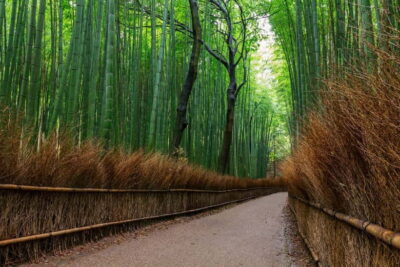
Kyoto/Osaka: Nara, Fushimi Inari Taisha, Arashiyama Bus Tour
Read our review →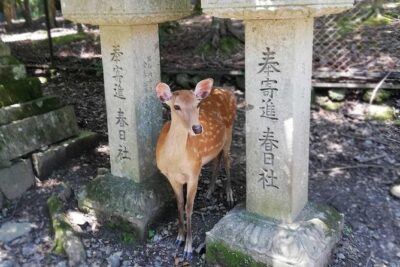
Nara Half Day Trip Walking Tour (Private Option Available)
Read our review →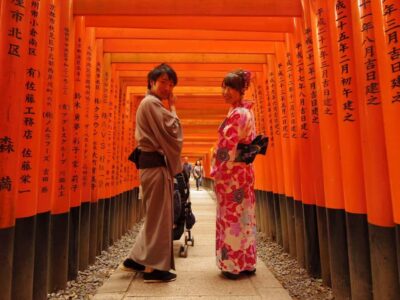
Osaka/Kyoto: Arashiyama, Nara & Fushimi Inari Shrine w/Lunch
Read our review →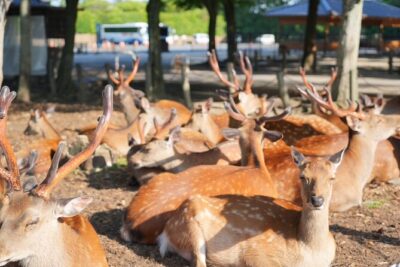
Nara Early Morning Tour (Kyoto or Osaka Departure Available)
Read our review →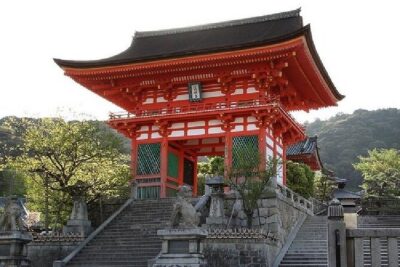
Full Day Guided Tour to Kyoto and Nara from Osaka by Van
Read our review →
Browse the lists this tour appears in