
Reviewed · TOURS IN KYOTO
One-Day Tour of Kyoto’s Highlights from Osaka/Kyoto
Kyoto packs centuries of shrines, temples, gardens, and wooded paths into a surprisingly compact city. This full-day bus tour gives you the big four in one sweep: Fushimi Inari, Kiyomizu-dera, Kinkaku-ji, and Arashiyama. It is an efficient first look, especially if you are staying in Osaka and do not want to puzzle out several train and bus connections.
I like two things here. First, the route covers four very different sides of Kyoto, from vermilion torii gates to a gold-leaf pavilion and a bamboo grove. Second, the air-conditioned bus is a real help in Japan’s heat and sudden rain. The catch is the pace: stairs, hills, crowds, and limited time mean this is a highlights tour, not a slow day of temple wandering.
Kyoto’s four headline sights in one long day
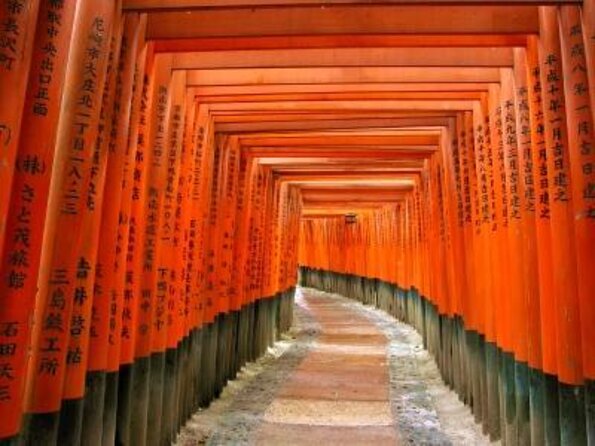
- Fushimi Inari’s torii gates: Walk beneath rows of bright vermilion gates at Japan’s main Inari shrine.
- Kiyomizu-dera’s wooden stage: See wide city views from a famous temple built with 139 pillars and no nails.
- Kinkaku-ji’s golden pavilion: Visit the Zen temple and UNESCO-listed site set beside peaceful gardens.
- Arashiyama’s bamboo paths: Stroll through the famous Sagano Bamboo Forest and see Togetsukyo Bridge.
- Cool transport between stops: Ride an air-conditioned bus with onboard Wi-Fi instead of managing Kyoto’s transfers.
- Optional lunch: Add the lunch plan for convenience, or skip it and bring your own food.
What this Kyoto day is really designed to do
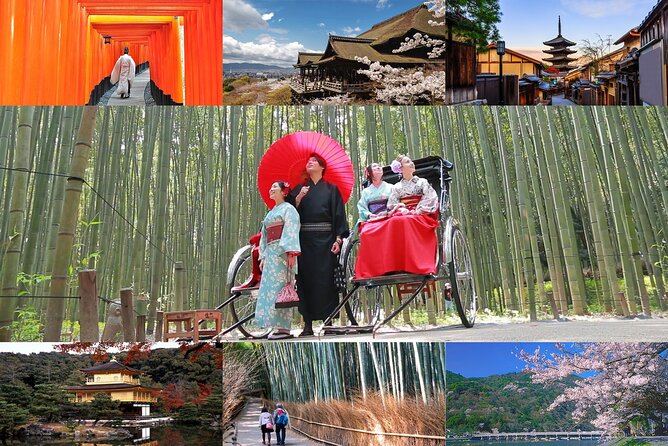
This tour is built for coverage. In roughly 10 hours, you travel from Osaka or Kyoto to four of the city’s most recognizable places, with entrance fees to Kiyomizu-dera and Kinkaku-ji included. You will not see every corner of any one district, but you will leave with a clear sense of Kyoto’s main visual and cultural landmarks.
That tradeoff matters. Fushimi Inari and Arashiyama can each fill half a day if you walk farther into the hills or explore beyond the most photographed paths. Here, each stop has a set window, and the bus must keep moving. I would choose this format if Kyoto is a short part of your Japan trip, or if you want a structured introduction before returning on your own.
The price is listed at $66.32 per person. For that amount, you get the bus, an English-speaking guide, and admission to two paid temple sites. The value is strongest if you are starting in Osaka, where a guided route saves planning time and connects sights spread across Kyoto. If you are already comfortable with Japanese trains and buses, a self-guided day may give you more freedom, but it will require more decisions and transfers.
Other experiences people book in Kyoto:
- PERFECT KYOTO 1-Day Bus Tour
★ 5.0 · 13,518 reviews - Kyoto: Fushimi Inari, Kinkakuji, Bamboo Grove 1 Day Bus Tour
★ 4.8 · 4,316 reviews - Kyoto: Tea Ceremony in a Traditional Tea House in Kiyomizu
★ 4.9 · 3,519 reviews
Fushimi Inari: a dramatic first stop
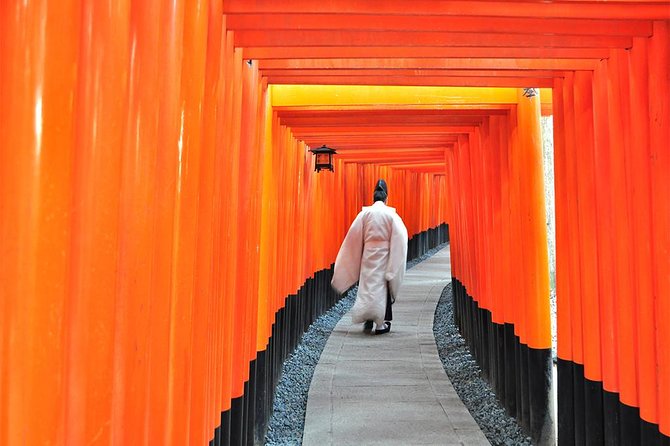
The morning begins at Fushimi Inari Taisha, the head shrine of more than 30,000 Inari shrines in Japan. The famous path runs through thousands of vermilion torii gates, donated over time by individuals and businesses seeking the favor of Inari, the deity linked with agriculture, business, traffic safety, and good harvests.
You have about 1 hour and 20 minutes here. That is enough to walk through the main gate section, take photographs, and get a taste of the uphill trail. It is not enough for a leisurely hike deep into the mountain. Keep that in mind if the torii tunnels are your main reason for visiting Kyoto.
The gates are most striking where they form dense, repeating corridors. They are also a magnet for crowds, so your guide’s meeting instructions matter. Wear shoes that handle slopes, and keep your return time in mind. Fushimi Inari is free to enter, but the physical effort begins quickly once you leave the flatter approach.
Kiyomizu-dera: views, woodwork, and steep paths
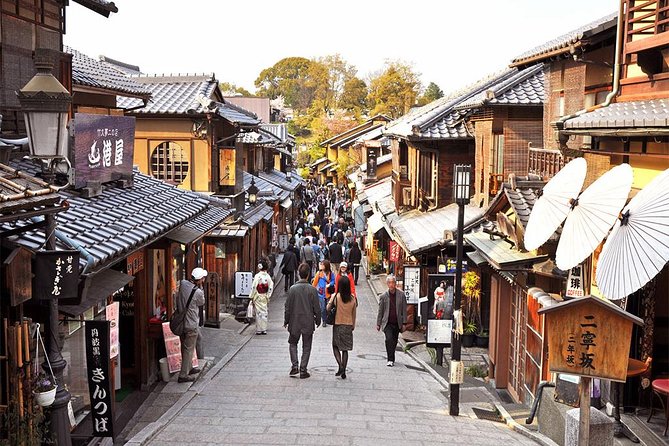
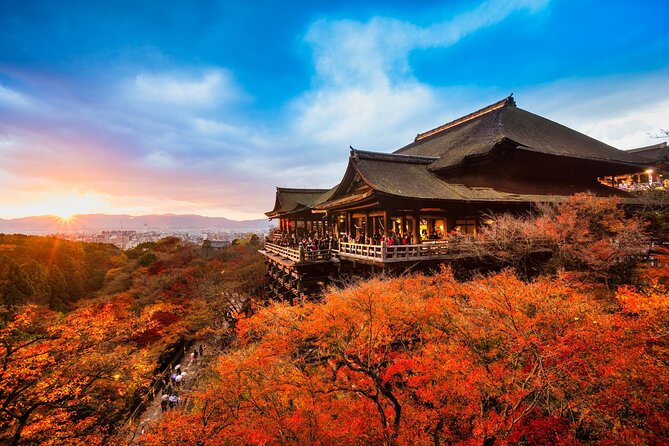
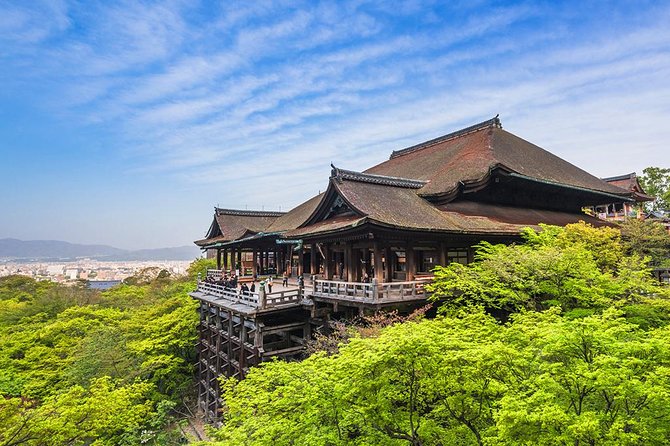
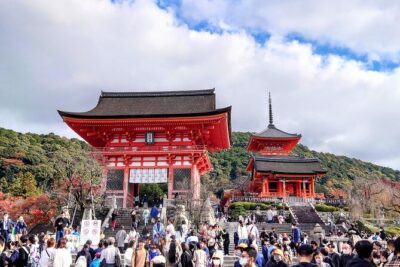
The next major stop is Kiyomizu-dera, one of Kyoto’s best-known temples. Its broad wooden stage projects from the hillside and offers views over Kyoto. The structure uses 139 pillars and was built without a single nail, an impressive piece of traditional construction even before you consider the view.
You have about 1 hour and 40 minutes here, the longest listed stop. That gives you time to see the main temple area, take in the city from the viewing platform, and follow some of the surrounding paths. The approach includes slopes and stairs, so this is not an easy flat walk.
The temple grounds can be busy, and the route may feel demanding in hot weather. One practical point is easy to miss: the bus provides shade and cooling between sites, but you are outdoors at each attraction. Bring water, sun protection, and shoes with good support. In July, temperatures can make the day much harder, while the bus offers a welcome break from the heat.
Lunch: convenience with a dietary limitation
There is a lunch break during the tour. You can choose a lunch-included option or bring your own. The included meal is useful when you want the day to run without searching for a restaurant during a tight schedule, and several guides have helped make the meal a pleasant part of the outing.
The lunch choice has limits. Halal and vegan meals are not available through the tour, so you should book the option without lunch and bring your own food if you need either. Vegetarian requests require direct contact with the operator at least three days before departure.
I would lean toward the lunch option if you want the simplest day, especially when traveling with children or a group. Bring your own if you have strict dietary needs or prefer full control over what you eat. Either way, do not assume that the lunch plan can handle every requirement.
Same base, a different sort of day:
- Kyoto Geisha Walking Tour: Gion District & Hidden Gems
★ 4.7 · 3,273 reviews - Kyoto: Tea Ceremony Ju-An at Jotokuji Temple
★ 4.9 · 3,207 reviews - Kyoto: Gion Magical Night Walking Tour with Geisha Trivia
★ 4.9 · 2,393 reviews - Kyoto: 45-Minute Tea Ceremony Lesson Experience
★ 4.3 · 2,378 reviews
Kinkaku-ji: Kyoto’s famous Golden Pavilion
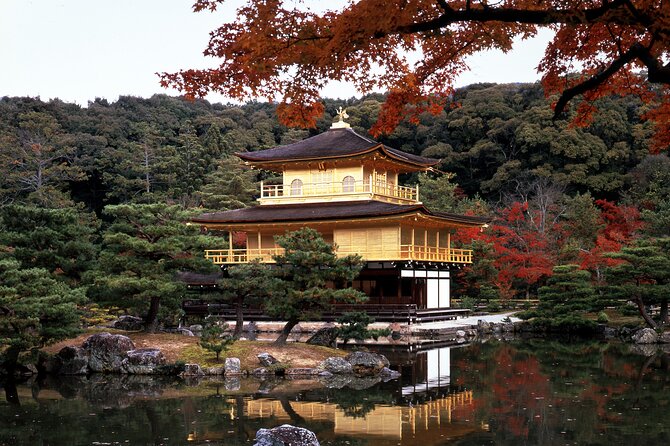
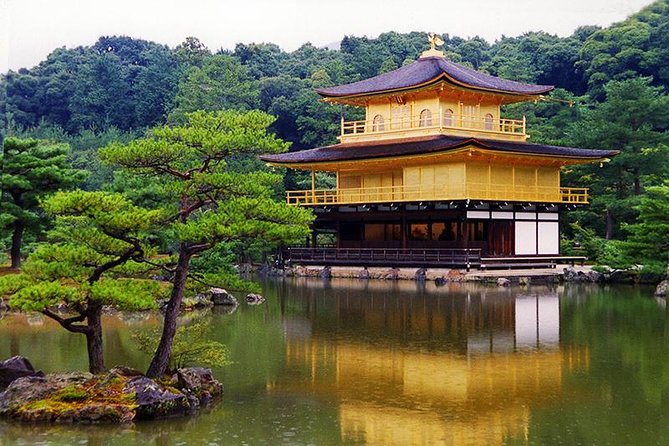
Kinkaku-ji, often called the Golden Pavilion, offers a sharp change of mood. The gold-leaf-covered building sits beside a pond and gardens and was once the villa of the Ashikaga Shogun. It is now a Zen temple and UNESCO World Heritage site.
The scheduled visit lasts about 45 minutes. That is enough to walk the set route, see the pavilion reflected in the water when conditions allow, and take photographs. It is a short stop, but the site is compact compared with the larger temple grounds at Kiyomizu-dera.
Do not expect to enter the pavilion. The main appeal is the exterior, the garden setting, and the clean view across the pond. This stop works well on a highlights itinerary because it delivers one of Kyoto’s most distinctive scenes without requiring a long walk. Your admission is included.
Arashiyama: bamboo, bridge, and a brisk finish
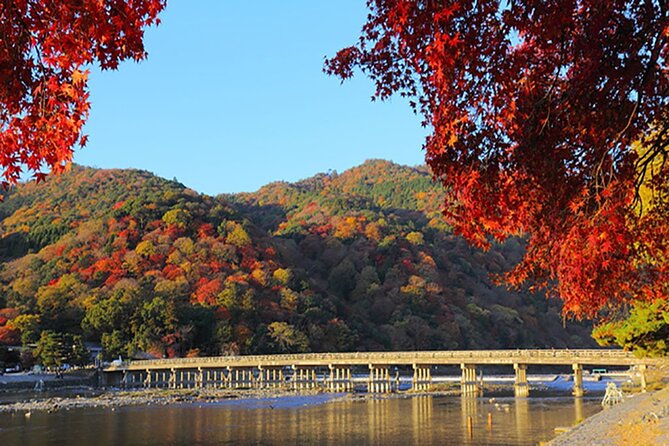
The final stop is Arashiyama, where you walk along the Sagano Bamboo Forest and see Togetsukyo Bridge, also known as the Moon-Crossing Bridge. The bamboo path can feel cool and shaded, which is especially welcome after a hot day of temple visits.
You have about 1 hour and 20 minutes. That allows a walk through the well-known bamboo section and time to see the bridge area, but it does not cover every attraction in Arashiyama. If you hoped to explore the district slowly, visit additional temples, or wander far beyond the main path, you will find the schedule restrictive.
Arashiyama is also one of the places where timing affects your experience. The most familiar bamboo paths draw plenty of people, and the narrow route can feel crowded. Still, the tall green stalks create a setting unlike the other stops, making this a worthwhile final contrast to Kyoto’s shrines and gold pavilion.
The bus makes the route practical
Kyoto’s highlights are spread out. Moving from Fushimi Inari in the south to Kinkaku-ji in the northwest, then to Arashiyama, can take planning and patience by public transport. The air-conditioned bus removes much of that work and gives you a place to sit between walks.
Free Wi-Fi is available onboard. The bus also matters in bad heat or rain. One recent departure used a large bus even with a small initial group, so vehicle size may not always feel perfectly matched to attendance. The benefit is room and cover; the drawback is that a large vehicle can feel less nimble on a packed sightseeing day.
The maximum group size is 42 people. That is large enough that you should not expect a private-tour feel. A good guide can keep the group moving and make meeting points clear, but you need to stay alert to instructions and return on time. The bus will not wait for late arrivals.
The guide can shape the whole day
The tour includes an English-speaking guide, and the strongest experiences depend heavily on how much useful explanation your guide provides. Guides named in highly positive feedback include Naomi, Maria, Hama, Maiki, Milo, Alice, Ma-chan, and Tet or Ted. Their reported strengths include clear instructions, good photo spots, cultural explanations, personal care in hot weather, and practical suggestions for the rest of a Japan trip.
Hama and Naomi were especially praised for clear English and useful site information. Maria was noted for balancing guided time with free exploration. Tet or Ted was remembered for a warm welcome, photographs, and recommendations. These details point to the best version of the tour: you get the convenience of a group route without being left to guess where to go.
There is some inconsistency in the guiding experience. A few departures had limited English explanation, or commentary that covered less history than expected. If learning detailed temple history is your main goal, bring your own notes or use a phone guide as backup. The tour still gets you to the sites, but the educational side may depend on the individual guide.
Walking, weather, and family considerations
You need a reasonable level of mobility for this day. The route includes temple stairs, sloping paths, and substantial walking at every stop. Kiyomizu-dera and Fushimi Inari can be tiring, while the heat may make a normal walking day feel much harder.
Folding strollers are allowed and are stored with luggage on the bus. The sites themselves may be awkward with a stroller because of hills, stairs, and crowded paths. Families with young children can join, but children ages 0 to 2 must sit on an adult’s lap, and seats and meals are not included for that age group.
Summer deserves special attention. A guide may help the group wait in shade, and the cooled bus provides relief, but outdoor sightseeing in July can be intense. I would choose a cooler season if you have flexibility. If summer is your only option, carry water, wear light clothing, and treat the bus intervals as recovery time.
The tour requires good weather. If poor weather forces cancellation, you are offered another date or a full refund. Normal cancellation is free up to 24 hours before the start time. Changes made within 24 hours are not accepted.
Meeting points from Osaka or Kyoto
You can join from either Osaka or Kyoto. The Osaka meeting point is at Namba, OCAT 1F, near Daiso, with an 8:50 AM meeting time. The Kyoto meeting point is at Kyoto Station Hachijo Exit Tourist Bus Parking, with a 9:05 AM meeting time.
Check in 10 minutes before departure. This is not a flexible hop-on experience, and the bus will not wait for late arrivals. If you are staying in Osaka, allow extra time to reach Namba. If you are starting in Kyoto, the station meeting point is practical, but you still need to identify the correct tourist bus parking area before departure morning.
Hotel pickup and drop-off are not included. You make your own way to the meeting point and return there at the end of the day.
Who should book this Kyoto tour?
I would recommend it to you if:
- You have only one day for Kyoto.
- You are based in Osaka and want one organized route.
- You want the four most recognizable sights without arranging several connections.
- You prefer a guide, included admissions, and an optional lunch.
- You are comfortable with a full day of walking and a fixed schedule.
I would hesitate if you want long, quiet visits at each site, plan to hike far into Fushimi Inari, or want to explore Arashiyama beyond the bamboo forest. Independent visitors with several Kyoto days will usually gain more by splitting these areas across separate outings.
The tour earns its strong overall rating because it solves a real problem: Kyoto’s top sights are beautiful but scattered, and a single day can vanish in transit. The most praised elements are the guides, the efficient route, the comfortable bus, and the chance to see four very different places. The main risks are the fast pace, hot-weather walking, crowds, and uneven English commentary.
For a first Kyoto look, I think it is good value at $66.32. Book it when coverage matters more than lingering. Skip it when you want Kyoto at a slower pace, with time to sit in a temple garden and let the city unfold around you.
FAQ
How long is the Kyoto highlights tour?
The tour lasts approximately 10 hours, including transportation and visits to four Kyoto attractions.
Where can I join the tour?
You can join in Osaka at Namba, OCAT 1F near Daiso, or in Kyoto at the Kyoto Station Hachijo Exit Tourist Bus Parking.
What time should I meet the bus in Osaka?
The Osaka meeting time is 8:50 AM. You should check in 10 minutes before departure.
What time should I meet the bus in Kyoto?
The Kyoto meeting time is 9:05 AM at the Kyoto Station Hachijo Exit Tourist Bus Parking. Check in 10 minutes early.
Is hotel pickup included?
No. Hotel pickup and drop-off are not included, so you must reach the selected meeting point yourself.
Is lunch included?
Lunch is included only if you choose the lunch-included option. You can also book without lunch and bring your own food.
Are vegetarian, vegan, or halal meals available?
Halal and vegan meals are unavailable. Vegetarian requests may be possible if you contact the operator at least three days before the tour.
Are entrance fees included?
Admission to Kinkaku-ji and Kiyomizu-dera is included. Fushimi Inari and Arashiyama do not require an admission ticket for the areas visited.
Is the tour suitable for young children?
Children ages 0 to 2 can join free, but they do not receive a seat or meal and must sit on an adult’s lap. Folding strollers are allowed but are stored with the luggage on the bus.
Can I cancel for a full refund?
You can cancel at least 24 hours before the experience starts for a full refund. Cancellations or changes made less than 24 hours before the start time are not accepted.
Just added in Kyoto
- Kyoto: Private Photoshoot Service★ 5.0 · 158 reviews
- Kyoto Rickshaw Tour★ 5.0 · 210 reviews
- Kyoto: Arashiyama Bamboo, Temple, Matcha, Monkeys & secret spots★ 5.0 · 219 reviews
- Izakaya Style Cooking Class★ 5.0 · 219 reviews
- Kyoto: Traditional Concert at Townhouse or Bathhouse★ 4.9 · 224 reviews
- Ninja 2-hour Hands-on Lesson by Japanese master in Kyoto -Medium★ 5.0 · 218 reviews
- Kyoto: Afternoon Japanese Izakaya Cooking Class★ 4.9 · 241 reviews
- Samurai Training with Modern day Musashi in Kyoto★ 5.0 · 256 reviews
Tours in Kyoto, compared.
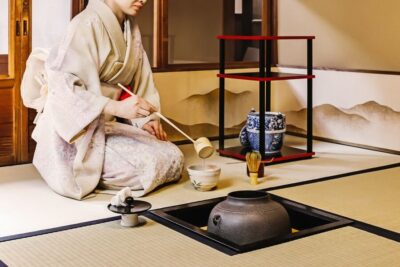
Tea Ceremony in a Traditional Tea House in Kiyomizu
Read our review →
Kyoto Geisha Walking Tour: Gion District & Hidden Gems
Read our review →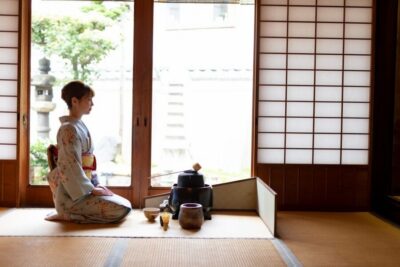
Gion Geisha District Walking Tour – Stories of Geisha
Read our review →
Best of Kyoto: Gion, Geisha, Pagodas & Cobblestones
Read our review →
Browse the lists this tour appears in