Reviewed · TOURS IN KYOTO
Private Art Sushi Roll Class in Kyoto
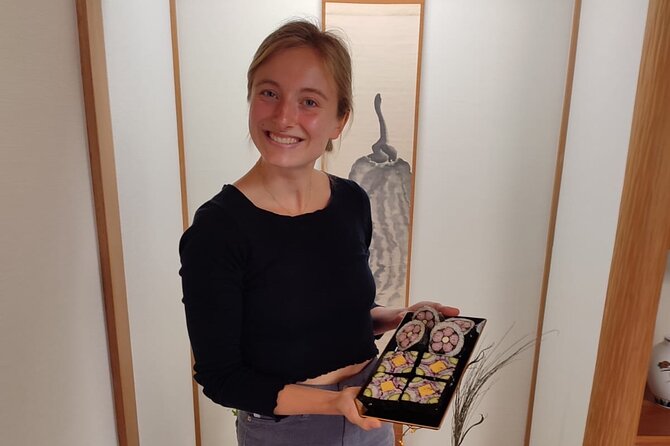
A sushi roll can be more than lunch. In this Kyoto class, you build a peach-flower design inside the roll, using rice, nori, and plant-based colors. Aya leads the lesson in English, while traditional clothing and a tatami room give the hour a distinctly Japanese setting. I like the clear, hands-on format and the chance to recreate the recipe at home. I also like that the class is private, so your group gets the instructor’s attention.
The main consideration is the pace. You have about 60 minutes to complete a design that can challenge even trained sushi makers without special instruction. Beginners are welcome, but you will get more from the class if you listen closely and accept that your first roll may look charmingly handmade rather than perfectly geometric.
Key points at a glance
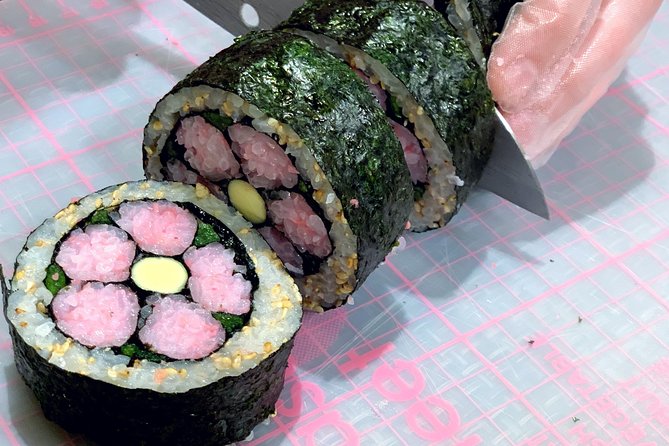
- A peach flower inside the sushi roll: You assemble the ingredients so the cut roll reveals a picture.
- Aya teaches in English: Her husband, Manabu Ito, may also help with photographs and cleanup.
- Traditional clothing is included: Women receive a kimono, while men and children can wear other traditional garments.
- A private one-hour lesson: Only your group participates, which suits families and small parties.
- Natural color and dietary choices: Plant-based pigments are used, with vegetarian and vegan options available.
- Come prepared for tatami customs: Socks are required, and arrivals more than 15 minutes late cannot join.
Making a picture inside a sushi roll
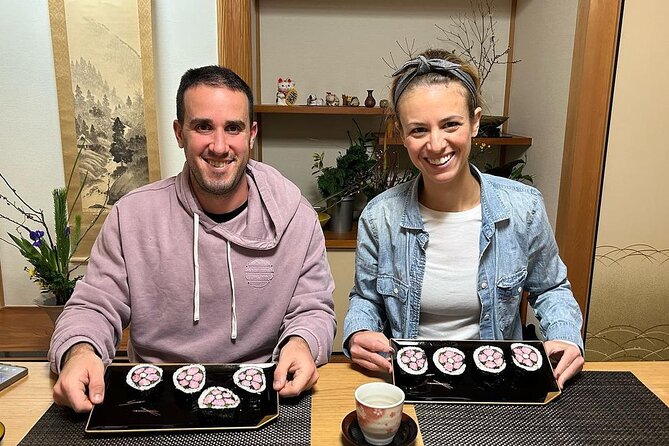
The appeal here is simple: you do not just roll sushi, you make a small edible picture. Kazarimaki means decorative sushi rolling, with the design formed from separate sections of rice and filling. Once the finished roll is cut, the pattern appears across the slices.
For this class, the target is a peach-flower pattern. You use edible pigments taken from plants to create color, rather than relying only on plain white rice. That gives the activity a creative angle without turning it into a difficult cooking course full of technical equipment.
I like this format for Kyoto because it connects food with craft. Japanese cuisine is often praised for presentation, but this lesson lets you see how presentation is built. You are not simply handed a pretty dish. You shape it yourself, step by step, and learn why the pieces need to sit in a certain order.
The result should be delicious, but the real reward is the process. You get a small lesson in proportion, placement, and patience. The roll must be built carefully so the flower appears in the right place when sliced. That makes the class more satisfying than a standard sushi lesson, though it also means you need to follow directions closely.
Other experiences people book in Kyoto:
- PERFECT KYOTO 1-Day Bus Tour
★ 5.0 · 13,518 reviews - Kyoto: Fushimi Inari, Kinkakuji, Bamboo Grove 1 Day Bus Tour
★ 4.8 · 4,316 reviews - Kyoto: Tea Ceremony in a Traditional Tea House in Kiyomizu
★ 4.9 · 3,519 reviews
Aya’s one-hour lesson in a Kyoto home
The class is operated by SAKURA Experience Japanese Culture at its Nijo Home location in Kyoto. Aya teaches the class in English and provides commentary as you work. Her teaching style, based on the details available, is patient and clear, but one important point remains: the lesson moves at a useful pace.
A previous sushi-making experience is not required. Still, you may find the class easier if you already understand basic sushi terms or have some comfort handling rice and seaweed. The design has several parts, and the hour is not meant for a slow, open-ended cooking session.
Aya’s husband, Manabu Ito, may assist during the class. He has helped with photographs and cleanup, which is useful when you want both hands free for the sushi. That small touch matters in a short activity. You can concentrate on the roll instead of worrying about documenting every stage or washing dishes afterward.
The private format is another strong point. You are not sharing the table with strangers, and only your own group takes part. That works well for a family with children or grandparents, a couple, or friends who want a relaxed activity together. It also gives you more room to ask questions and repeat a step if the arrangement of the rice becomes confusing.
Wearing a kimono on the tatami
The setting adds more than decoration. Women receive a kimono, while men and children can wear other traditional garments during the experience. You will work in a tatami room, so the activity feels closer to a home visit than to a large commercial cooking studio.
You must bring socks. This is not a minor suggestion. Shoes are not worn into the tatami room, and the class requires socks in keeping with Japanese custom. Put a clean pair in your day bag before setting out, especially if you are wearing sandals.
The traditional clothing can make the activity more memorable for families and first-time visitors to Japan. It also gives the class a clear sense of place. You are learning a Japanese food craft in a Japanese-style room, rather than making sushi in a generic classroom.
There are practical limits. A kimono or traditional garment can make movement a little less casual than your normal cooking clothes. You should be ready to sit and work on tatami for the lesson. Babies and toddlers may sit or sleep on the tatami mat, which helps families with very young children, although the experience itself is best suited to people who can take part in the food preparation.
What happens from 4:30 pm to the finished roll
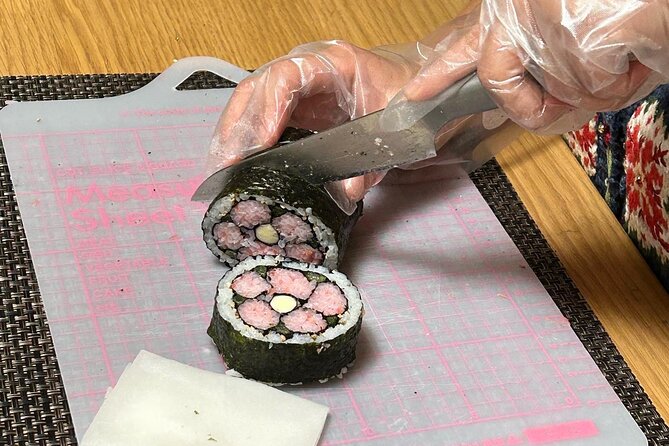
The class starts at 4:30 pm at 660 Izumicho in Nakagyo Ward, at SAKURA Experience Japanese Culture Nijo Home. The activity ends at the same location, so there is no second meeting point to find after the lesson.
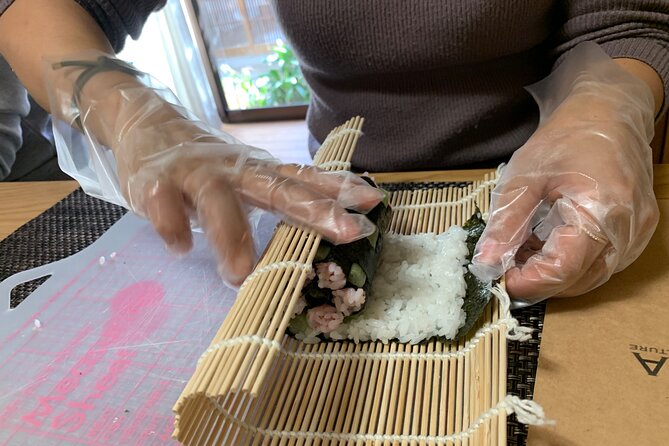
Once settled, you receive the clothing appropriate to your group and get ready for the tatami room. Aya explains the sushi art concept, the ingredients, and the design you will make. The class includes all sushi ingredients, so you do not need to shop for rice, nori, fillings, or coloring before arriving.
The central task is building the peach-flower pattern. You arrange colored and plain sections so the final roll carries the design from end to end. The work is practical rather than demonstrative. You should expect to handle the ingredients yourself, shape the roll, and follow the construction in sequence.
At the end, the roll is cut to show the pattern. This is the moment when the careful assembly pays off. A slice reveals whether the flower has formed as planned, but small variations are part of the fun. The class is about learning a repeatable technique, not producing factory-perfect pieces.
Tea or coffee and bottled water are included. You also receive a booklet and a certification at the end. The booklet is especially useful if you want to try the recipe later, since the lesson is short and there are several steps to remember.
Same base, a different sort of day:
- Kyoto Geisha Walking Tour: Gion District & Hidden Gems
★ 4.7 · 3,273 reviews - Kyoto: Tea Ceremony Ju-An at Jotokuji Temple
★ 4.9 · 3,207 reviews - Kyoto: Gion Magical Night Walking Tour with Geisha Trivia
★ 4.9 · 2,393 reviews - Kyoto: 45-Minute Tea Ceremony Lesson Experience
★ 4.3 · 2,378 reviews
Why the private format matters
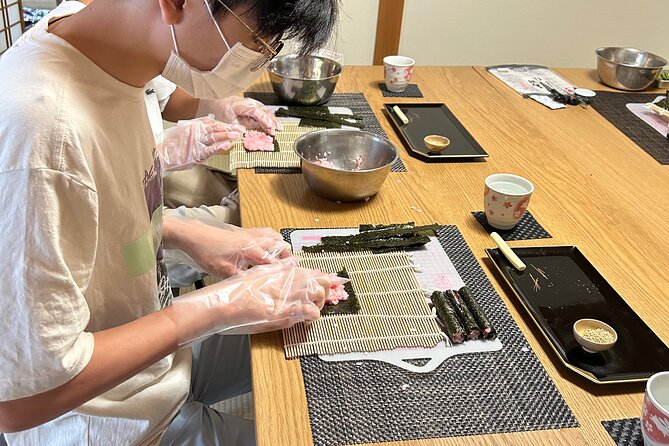
A private class costs $93.32 per person, with group discounts available. That is more than you would pay for a casual meal, so the value depends on what you want from the hour.
If you only want to eat sushi, this is not the best use of your budget. You are paying for instruction, ingredients, clothing, a private setting, drinks, a take-home booklet, and certification. The value rises if you want a practical memory from Kyoto and a recipe you can attempt at home.
The private arrangement also changes the feel of the class. Families can work at their own level, and a child who needs extra guidance does not hold up a larger group. Couples and friends can enjoy the activity without strangers watching their first attempts at decorative rolling.
Group discounts may make the price easier to justify for a larger party. Since the activity is private, check the final per-person cost for your group before booking. The class is also booked, on average, six days ahead, so leaving it until the last morning of your Kyoto stay may not work.
The food, colors, and diet choices
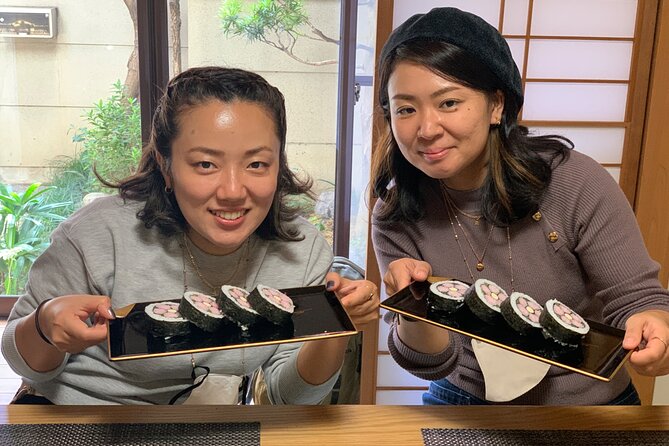
The class uses traditional sushi ingredients along with natural food colorings extracted from plants. This is a useful detail for anyone who prefers a less artificial approach to cooking. The colors are part of the design, not simply a garnish added at the end.
Vegetarian and vegan options are available. You should still communicate your needs when booking or before the class so the ingredients can be prepared appropriately. The provided information confirms the options, but it does not list every filling or substitution.
The food is also practical for home cooking. You learn authentic Japanese cooking skills rather than a trick that only works in the instructor’s kitchen. The booklet gives you a reference point, and the certification marks the completion of the lesson, though the real test comes later when you try to build another roll in your own kitchen.
Do not expect a full Japanese meal or a broad survey of sushi styles. The class focuses on one artistic roll, the peach-flower design. That narrow focus is a benefit if you want to finish with a clear project, but a limitation if you hoped to make several kinds of sushi.
Who will enjoy this class most
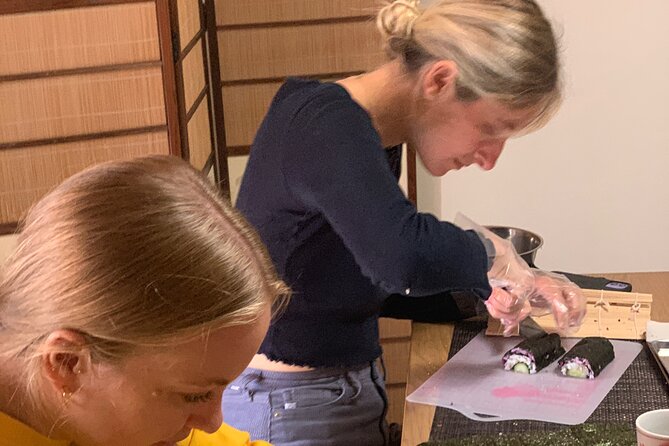
I would recommend this for families, couples, and small groups who want an activity they can do together. The private setting is particularly useful for mixed-age groups, since grandparents, teenagers, and adults can share one project without splitting up.
It also suits people who enjoy crafts, food photography, or hands-on cultural activities. The finished roll is colorful and made for photographs, but you are also learning a technique with enough substance to repeat at home.
Beginners can join. The class is not reserved for trained cooks, and Aya’s instructions are designed to guide you through the process. Still, you need to stay focused. If you prefer a long, leisurely cooking class with plenty of time for casual conversation, this one-hour format may feel brisk.
You may want to choose another activity if you dislike sitting on tatami, wearing traditional clothing, or working with seaweed and sticky rice. The class is intimate and practical, not a sightseeing tour. You will not visit several Kyoto landmarks during the hour.
Getting there and arriving on time
The meeting place is near public transportation in Kyoto’s Nakagyo Ward. The exact starting point is SAKURA Experience Japanese Culture Nijo Home, 660 Izumicho, Izumicho, Kyoto 604-0015. Keep the full address available on your phone, since the activity begins at a private home-style location rather than at a major station entrance.
Plan to arrive early. If you are more than 15 minutes late, you cannot join the class. That rule makes sense for a recipe built in stages: arriving after the rice sections have been assembled would leave you trying to catch up while the rest of the group works.
The activity lasts about one hour and returns you to the same meeting point. The 4:30 pm start can fit well after sightseeing, but allow enough time to cross Kyoto and find the address. You also need a few minutes to put on the appropriate clothing and prepare for the tatami room.
Cancellation is free up to 24 hours before the start time. Cancellations or changes made less than 24 hours before the class are not refunded or accepted. That is worth noting if your Kyoto schedule is still shifting.
The best reasons to book, and the main reasons to pause
I like this class because it offers something you cannot get from simply ordering sushi at a restaurant. You make the design, see how the hidden picture is assembled, and leave with instructions for trying it again.
I also like the welcome provided by Aya and Manabu. The home setting, clear English, help with photographs, and cleanup create a personal experience without adding extra work for your group. The traditional clothing and tatami room give the lesson a strong Kyoto character.
The main reason to pause is the one-hour limit. You need to concentrate, and the task may be slightly demanding if you have never worked with sushi rice. The experience is fun, but it is not completely effortless. Arriving late is not an option, and socks are mandatory.
Should you book the Private Art Sushi Roll Class?
Book it if you want a private, creative Kyoto activity with a finished project to show for your time. The class suits families and small groups especially well, and the combination of Aya’s English instruction, traditional clothing, natural color, and a home setting gives the experience a clear local character.
At $93.32 per person, it is best viewed as a cultural workshop rather than a cheap meal. You are paying for the lesson, food, clothing, drinks, booklet, certification, and private attention. If you want several sushi styles or a relaxed meal, choose a different class. If you want to learn one striking Japanese food craft and take the idea home, this is a strong choice.
FAQ
Where does the sushi class take place?
It takes place at SAKURA Experience Japanese Culture Nijo Home, 660 Izumicho, Nakagyo Ward, Kyoto, Japan, 604-0015.
What time does the class start?
The class starts at 4:30 pm.
How long does the experience last?
The class lasts approximately one hour.
Does the activity end at the meeting point?
Yes. The activity ends back at the same meeting point where it begins.
Is the class private?
Yes. Only your group participates in the private class.
Who teaches the sushi class?
Aya teaches the class in English. Her husband, Manabu Ito, may also assist with photographs and cleanup.
What sushi design will I make?
You will make a peach-flower pattern sushi roll using the kazarimaki technique.
Are vegetarian and vegan options available?
Yes. Vegetarian and vegan options are available.
Do I need to bring anything?
You must bring socks because shoes are not worn in the tatami room and socks are required.
What happens if I arrive late?
If you arrive more than 15 minutes late, you cannot join the class.
What is included in the price?
The price includes all sushi ingredients, bottled water, tea or coffee, traditional clothing, a booklet, and certification.
Can I cancel for a refund?
You can cancel up to 24 hours before the start time for a full refund. Cancellations or changes made less than 24 hours before the start time are not accepted or refunded.
Just added in Kyoto
- Private Cooking Class Udon in Kyoto Japan★ 5.0 · 23 reviews
- Your Private Vacation Photography Session In Kyoto★ 5.0 · 110 reviews
- Kyoto: Zen Meditation at a Private Temple with a Monk★ 5.0 · 25 reviews
- Private Pewter Sake Cup Experience with a Kyoto Artisan★ 5.0 · 31 reviews
- Kyoto Wagashi(Japanese sweets) Cooking Class near Fushimiinari★ 5.0 · 60 reviews
- Kyoto:Family-Friendly Kimono & Yukata Experience at WARGO★ 5.0 · 147 reviews
- Private Guided Traditional Buddhist Cooking in Japan★ 5.0 · 16 reviews
- Kyoto: Gion Geisha District & Sake-in-Hand Walking Tour★ 5.0 · 37 reviews
Tours in Kyoto, compared.
Tea Ceremony in a Traditional Tea House in Kiyomizu
Read our review →
Kyoto Geisha Walking Tour: Gion District & Hidden Gems
Read our review →

Gion Geisha District Walking Tour – Stories of Geisha
Read our review →
Best of Kyoto: Gion, Geisha, Pagodas & Cobblestones
Read our review →