Reviewed · TOURS IN KYOTO
Private Koto Lesson in Kyoto with a Professional Koto Performer
The most appealing part of this Kyoto activity is simple: you get to sit at a traditional koto and play it with guidance from a professional performer. You learn Sakura, hear about the instrument’s place in Japanese ceremonies, and finish with tea and a live performance. I like the private format and the fact that the lesson works for children as young as three through older adults.
I also like the all-in pricing. The koto, music notation, and teaching are included, so you can focus on the lesson rather than watching extra charges appear. The main consideration is timing: at about 80 minutes, this is a focused introduction rather than a full music course, and private transportation is not provided.
Key points to know before booking
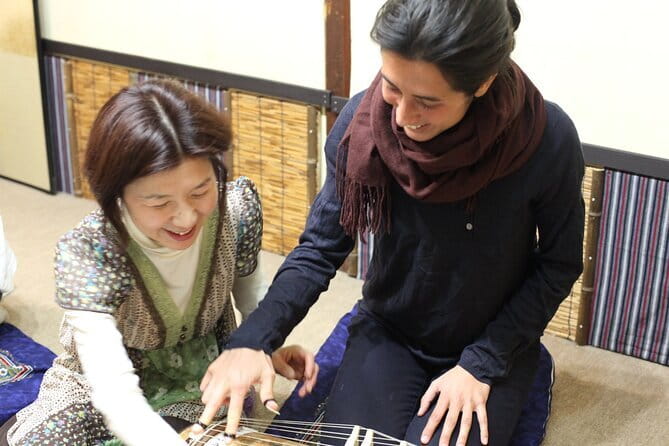
- Play Sakura yourself: The lesson centers on a well-known traditional Japanese song rather than only watching a demonstration.
- Learn from a professional performer: Your instructor teaches technique while explaining the koto’s history and ceremonial role.
- Private group setting: Only your party takes part, which gives the lesson a more personal pace.
- Suitable for a wide age range: Children from age three and older adults can participate.
- Tea and a performance follow the lesson: The activity includes time to relax and hear the teacher play.
- Convenient Kyoto meeting point: You meet at Soushunan, at 288-2 Higashishinmeicho in Kamigyo Ward.
Why playing the koto makes a memorable Kyoto activity
Kyoto offers plenty of chances to look at traditional culture. This lesson asks you to do something with it. The koto is a long Japanese zither with strings stretched over a wooden body, and learning even a short piece gives you a practical connection to an instrument often associated with formal ceremonies and classical music.
You do not need to arrive as a musician. The lesson is designed for beginners, with the instructor guiding you through the instrument and the notes needed to play Sakura. That makes the activity less intimidating than a formal concert or performance workshop where you are expected to know how to read music.
I like this kind of cultural activity because it gives you a story to carry beyond the afternoon. Afterward, a visit to a temple, a traditional garden, or a cultural performance has more meaning when you have already tried one of Japan’s own instruments.
Other experiences people book in Kyoto:
- PERFECT KYOTO 1-Day Bus Tour
★ 5.0 · 13,518 reviews - Kyoto: Fushimi Inari, Kinkakuji, Bamboo Grove 1 Day Bus Tour
★ 4.8 · 4,316 reviews - Kyoto: Tea Ceremony in a Traditional Tea House in Kiyomizu
★ 4.9 · 3,519 reviews
What happens during the 80-minute lesson
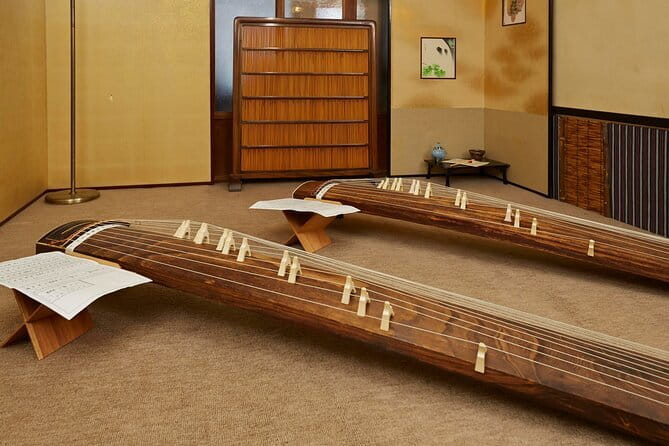
The activity lasts about one hour and 20 minutes. You meet at Soushunan in Kyoto’s Kamigyo Ward, then settle in with the instrument and the supplied music notation.
The opening part is an introduction to the koto. Your professional instructor explains how the instrument is used and why it has an important place in formal Japanese ceremonies. The lesson is not only about finger placement. You also learn something about the customs and traditions connected with the music.
Next comes the hands-on instruction. With the teacher’s help, you work toward playing Sakura, one of the best-known traditional Japanese melodies. The instructor helps you with the mechanics of playing and keeps the task within reach for beginners.
This is where the private setup matters. The teacher can concentrate on your group rather than dividing attention among strangers. If one member of your party needs more help, the lesson can give that person room to catch up. That should be especially useful for families with children, since younger participants may need more patient guidance.
The activity then includes a tea break and a performance by your teacher. This closing section changes the mood from lesson to listening. You have already tried to make the instrument speak, so hearing a professional performance gives you a clearer sense of what the koto can do in practiced hands.
The teacher’s performance also provides a satisfying finish. You are not sent away as soon as the song is complete. Instead, the lesson leaves time for a quieter cultural moment, with tea and music together.
The private format is valuable for families
This is a private activity, meaning only your group participates. That makes it a good choice for families or couples who want a calm introduction without joining a large class.
The age range is unusually broad. Children from age three can participate, and older adults are also welcome. That does not mean every three-year-old will have the same attention span or coordination, but the format gives a family a reasonable chance to share the activity rather than splitting up by age.
One parent-focused detail is especially encouraging: a child was able to work through the lesson and play Sakura by the end. The instructor was described as kind, patient, and highly talented, which suggests that the teaching style is supportive rather than stern.
I would still keep expectations sensible. A young child may enjoy touching the strings and trying the notes without mastering the whole song. That is fine. The value comes from taking part together, not from producing a polished concert.
For adults, the private arrangement avoids the pressure of performing in front of a room full of strangers. You can ask questions, repeat a technique, and enjoy the process at your own level.
What makes the instruction beginner-friendly
The experience supplies the items you need, including the koto and music notation. You do not need to bring an instrument or pay a separate rental fee.
The teacher’s role is central. This is not a casual demonstration where you are handed an instrument and left to copy someone. A professional performer guides you through playing and explains the background of the music as you go.
The song choice is also practical. Sakura is strongly associated with Japan and is recognizable as a traditional melody. Learning one complete piece, even a simple version, gives the lesson a clear goal.
I like having a defined target. An open-ended lesson about a complex instrument could feel scattered, especially in only 80 minutes. Here, you know what you are working toward.
The supplied notation should help keep the lesson organized. If you have never read Japanese music notation, you may need an explanation, but the instructor is there to help. The available information does not promise advanced instruction, multiple songs, or a printed souvenir, so book this as an introductory lesson rather than a full course.
Same base, a different sort of day:
- Kyoto Geisha Walking Tour: Gion District & Hidden Gems
★ 4.7 · 3,273 reviews - Kyoto: Tea Ceremony Ju-An at Jotokuji Temple
★ 4.9 · 3,207 reviews - Kyoto: Gion Magical Night Walking Tour with Geisha Trivia
★ 4.9 · 2,393 reviews - Kyoto: 45-Minute Tea Ceremony Lesson Experience
★ 4.3 · 2,378 reviews
Tea and a professional performance complete the visit
The tea break is a small but useful part of the design. It gives you time to pause after concentrating on the instrument and lets the activity feel like a cultural visit, not just a short class.
The teacher’s performance is another strong feature. You first hear about the koto, then attempt to play it, and finally hear an accomplished performer use it. That sequence helps you understand the gap between beginner practice and professional skill without making the lesson feel like a test.
For me, this is where the $60 price needs to be judged. You are paying for more than instrument access. The fee covers the lesson, use of the koto, all taxes and fees, the cultural explanation, tea time, and the teacher’s performance. Since the activity is private, the price can be reasonable for a couple or family sharing a session.
It may feel less economical for one person comparing it with a large group class. The tradeoff is personal instruction and a more intimate setting. If you value authentic contact with a traditional art, the cost is easier to justify than if you simply want a quick photo with an instrument.
Location and practical planning in Kyoto
The meeting point is Soushunan, at 288-2 Higashishinmeicho in Kamigyo Ward, Kyoto, postal code 602-8162. The activity ends back at the meeting point.
The venue is near public transportation, but private transportation is not included. Plan your route before the start time and allow enough margin to find the address. Confirmation is sent within 48 hours of booking, subject to availability, so it is sensible to reserve ahead rather than wait until the last day.
This activity is booked an average of 57 days in advance, a useful signal for anyone building a Kyoto schedule around a particular date. You do not have to assume a last-minute place will be available.
A mobile ticket makes access simple once your booking is confirmed. Keep the booking information ready on your phone and check the meeting details before leaving your hotel.
The activity is free to cancel up to 24 hours before its start time for a full refund. Cancellations or changes made less than 24 hours before the start are not refunded or accepted. The cut-off uses local Kyoto time.
Service animals are allowed, and most people can participate. The supplied details do not describe specific physical access features, so anyone with special mobility needs should confirm those points before booking.
Who will enjoy this koto lesson most
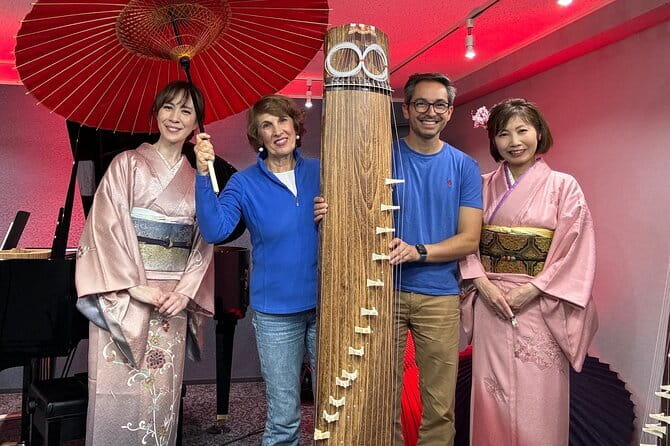
I would recommend this activity to families who want one shared cultural event in Kyoto. The broad age range and private format make it easier to include grandparents and young children in the same plan.
It also suits couples, solo participants, and anyone who prefers doing rather than only watching. You do not need a background in music, and you receive the equipment and notation needed for the lesson.
This is a good fit if you want:
- A short cultural activity between sightseeing stops
- A hands-on introduction to a traditional Japanese instrument
- Personal attention from a professional performer
- A family-friendly lesson with one clear musical goal
- Tea and a performance included in the visit
- A private setting instead of a large class
I would be more cautious if you want a long recital, a choice of many songs, or advanced musical training. The available information points to a beginner lesson focused on Sakura, not a multi-session study program.
How this compares with a typical Kyoto sightseeing stop
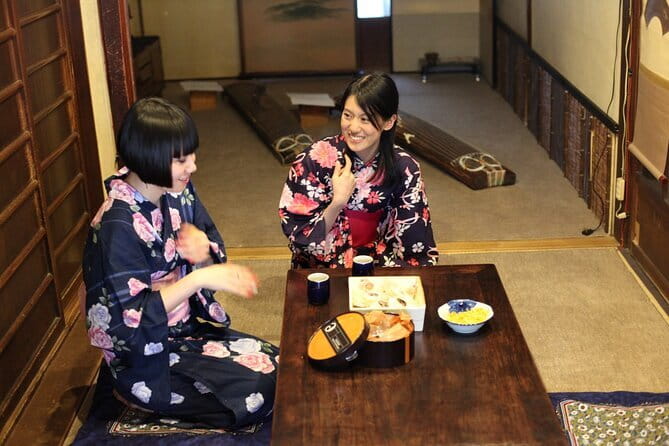
A temple visit gives you architecture and atmosphere. A koto lesson gives you participation. Neither replaces the other, but this activity offers a different kind of memory.
The lesson also adds context to formal Japanese culture. The koto is described as indispensable for ceremonies, so you are not learning an isolated craft with no connection to daily or ceremonial life. You are being introduced to an instrument with a recognized role in Japan’s musical traditions.
The private setting makes the activity feel more personal than a staged cultural show. At the same time, you should not expect a broad tour of Kyoto or transportation between attractions. This is a single-location lesson, and that is part of its appeal.
At 80 minutes, it fits neatly into a busy day. You can schedule it without giving up half a day of sightseeing, though you should allow extra time for getting to the meeting point and leaving afterward.
Booking verdict: Is the $60 lesson worth it?
I would book this if you want a genuine, hands-on introduction to Japanese culture and like the idea of learning a song rather than simply watching a performance. The strongest reasons are the professional instruction, private group format, family-friendly age range, included equipment, and tea with a closing performance.
The price is fair for a private 80-minute lesson when all fees, the instrument, notation, and performance are included. It is especially good value for a small group sharing the experience.
Skip it if your Kyoto plans are already packed with musical performances or if you want advanced training. For everyone else, this is a thoughtful way to spend part of a day, especially with family. You leave with more than a photograph: you have tried to play Sakura and gained a clearer sense of how a traditional Japanese instrument fits into ceremonial culture.
FAQ
Where does the koto lesson take place?
The lesson takes place at Soushunan, located at 288-2 Higashishinmeicho, Kamigyo Ward, Kyoto, Japan, postal code 602-8162.
How long is the activity?
The activity lasts approximately one hour and 20 minutes.
What song will I learn?
The lesson teaches you to play Sakura, a traditional Japanese song.
Is the activity private?
Yes. Only your group participates in the activity.
Is the koto provided?
Yes. Koto instrument use is included, along with the lesson and music notation.
Is tea included?
Yes. The experience includes a tea break after the lesson, along with a performance by the teacher.
Are children allowed to participate?
Yes. The activity is suitable for people from age three through elderly participants.
Is transportation included?
No. Private transportation is not included. The meeting point is near public transportation, and the activity ends back at the meeting point.
Just added in Kyoto
- Private Cooking Class Udon in Kyoto Japan★ 5.0 · 23 reviews
- Your Private Vacation Photography Session In Kyoto★ 5.0 · 110 reviews
- Kyoto: Zen Meditation at a Private Temple with a Monk★ 5.0 · 25 reviews
- Private Pewter Sake Cup Experience with a Kyoto Artisan★ 5.0 · 31 reviews
- Kyoto Wagashi(Japanese sweets) Cooking Class near Fushimiinari★ 5.0 · 60 reviews
- Kyoto:Family-Friendly Kimono & Yukata Experience at WARGO★ 5.0 · 147 reviews
- Private Guided Traditional Buddhist Cooking in Japan★ 5.0 · 16 reviews
- Kyoto: Gion Geisha District & Sake-in-Hand Walking Tour★ 5.0 · 37 reviews
Tours in Kyoto, compared.
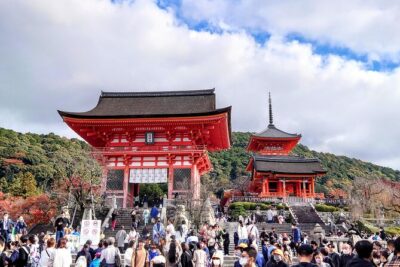
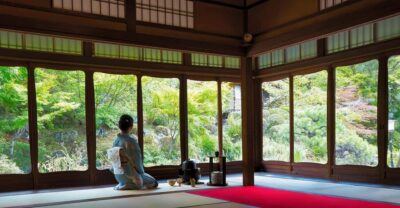
Tea Ceremony in a Traditional Tea House in Kiyomizu
Read our review →
Kyoto Geisha Walking Tour: Gion District & Hidden Gems
Read our review →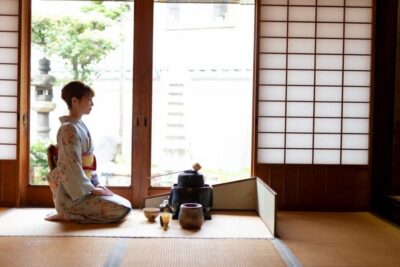

Gion Geisha District Walking Tour – Stories of Geisha
Read our review →
Best of Kyoto: Gion, Geisha, Pagodas & Cobblestones
Read our review →