Reviewed · TOURS IN KYOTO
Show Tickets at Non-Verbal Theatre GEAR
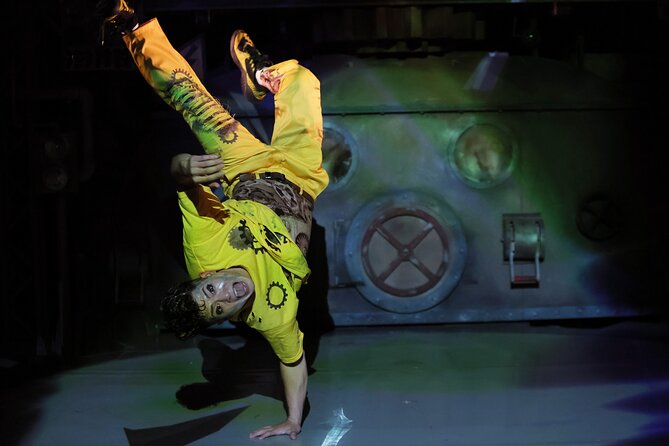
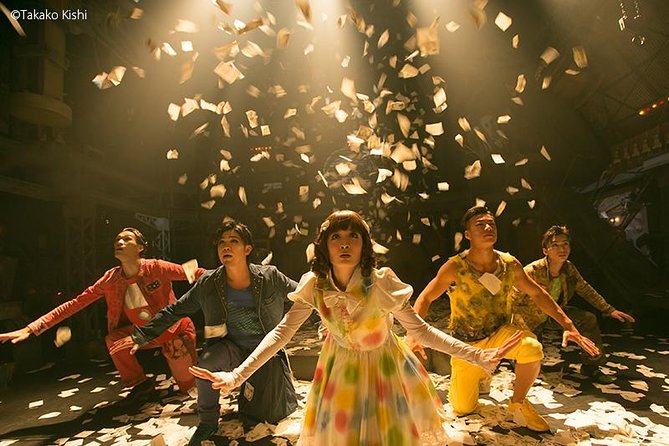
GEAR takes the usual rules of theatre and tosses them into the air with the juggling balls. Five performers use mime, break dancing, magic, comedy, and acrobatics to tell a story without spoken dialogue. The result feels part stage show, part visual fairytale, and part clever bit of Japanese technical wizardry.
I like two things right away: language is no barrier, and the small black-box theatre puts you close to the action. The 90-minute running time also fits neatly into a Kyoto evening after temples and shrines have closed.
The main caution is sensory intensity. Strong lights, loud sound, and a fully dark scene are built into the performance. The theatre also requires stairs to the third or fourth floor, with no elevator, so check the practical details before booking.
Key points about Kyoto’s GEAR theatre
- A wordless story: You do not need Japanese language skills to follow the action.
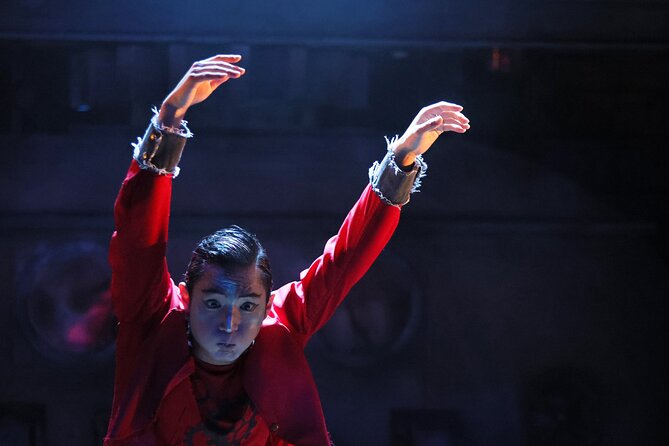
- Five distinct performance skills: Expect mime, break dancing, juggling, magic, and physical comedy.
- Technology on stage: Projection mapping, digital effects, strong lighting, sound, and a remote-controlled LED costume shape the show.
- A close-up setting: This is a small theatre, so the performers and stage effects feel near at hand.
- A useful evening plan: The show lasts about 90 minutes and offers something to do after Kyoto’s religious sites close.
- Important age and access rules: Children under four normally cannot enter, and the theatre has stairs but no elevator.
A wordless show with a very Japanese idea
GEAR is built around a simple image: different gears, with different sizes, colors, and shapes, connecting and working together. That idea gives the performance a clear visual backbone, even when no one speaks.
You follow the story through movement, facial expression, music, lighting, and stage design. This is useful in Kyoto, where many cultural performances depend on language, historical context, or knowledge of traditional arts. Here, you can sit down and let the action make its point.
The performance also connects old and new. Its staging draws on techniques associated with Japanese theatre, including Kabuki-style theatrical presentation, then places them beside projection mapping and an LED costume that changes color by remote control. You get a modern show with a distinctly Japanese setting and sensibility, rather than a standard imported stage production.
I would not treat GEAR as a traditional Japanese theatre lesson. You are not going to learn the rules of Kabuki or receive a guided explanation of Japanese performing arts. Instead, the show uses familiar visual ideas, high-level physical skills, and modern technology to create an accessible piece of theatre.
Other experiences people book in Kyoto:
- PERFECT KYOTO 1-Day Bus Tour
★ 5.0 · 13,518 reviews - Kyoto: Fushimi Inari, Kinkakuji, Bamboo Grove 1 Day Bus Tour
★ 4.8 · 4,316 reviews - Kyoto: Tea Ceremony in a Traditional Tea House in Kiyomizu
★ 4.9 · 3,519 reviews
What happens inside the 90-minute performance
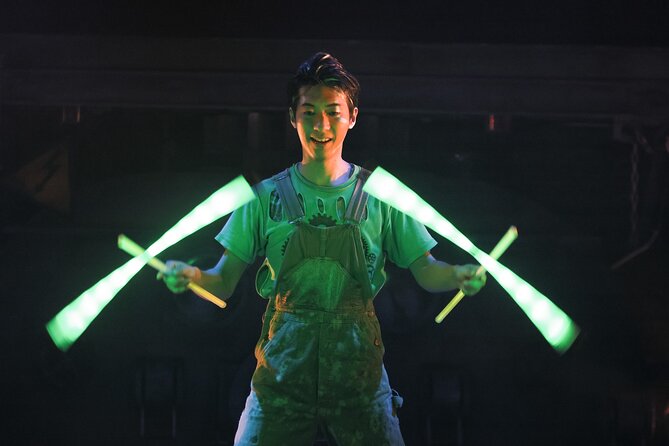
The single stop is GEAR Theatre, but the show moves through several kinds of performance. The cast includes a world-class championship break dancer, a mime performer who has won gold at a world tournament, a Japanese record-holding juggler, and a magician known through various media. The supplied information does not identify the cast members by name, and the lineup may vary, so you should focus on the skills rather than expect a named guide or host.
Mime carries much of the storytelling. That matters because mime can make a character’s feelings and intentions clear without translation. Facial expressions and precise gestures do the work that dialogue normally handles, while the other performers add speed, surprise, and physical humor.
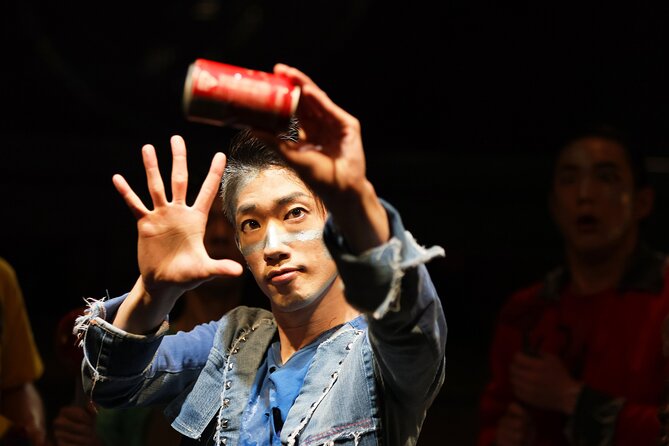
Break dancing brings force and energy to the stage. Juggling changes the pace and gives the performance a playful edge. Magic adds moments that are harder to predict, and the combination keeps the 90 minutes moving quickly. This is not a slow, solemn theatre piece. It is designed to hold your attention through frequent changes in movement and mood.
The show also uses comedy. You may find the humor broad and easy to read, which helps if you are attending with children or with people who do not share your language. The action is meant to be understood visually, so you do not need to worry about missing a joke because it was delivered in Japanese.
Why the small theatre matters
GEAR is performed in a small black-box theatre. That gives the show a different feel from a large concert hall or a grand Western-style theatre. You are close to the performers and can see the physical detail in their expressions, gestures, and timing.
The compact room also helps the lighting and sound effects feel immediate. A color change on a costume or a sudden stage effect has more impact when it happens only a short distance away. The trade-off is that the setting may feel less formal and less spacious than a major theatre. If you prefer a grand auditorium, sweeping scenery, and a large orchestra, this will be a more intimate experience.
The small room is also why seating arrangements matter. Every seat is described as close to the action, but you should still follow any instructions from the ticket office if you are bringing a preschool-age child or need a particular arrangement.
Projection mapping, LED clothing, and old stage tricks
The technology is not just decoration. Projection mapping changes the stage environment and helps create the future-set world. Digital imagery can make a small room feel larger, shift the mood quickly, and give the performers a changing backdrop without traditional scenery.
The LED dress is another signature element. It can change color through remote control, adding a strong visual marker to the performance. This kind of costume effect is especially useful in a wordless show, since color can signal a change in character, feeling, or scene without explanation.
The production also uses sound and lighting as part of the storytelling. You should expect bold colors, noticeable sound effects, and periods of complete darkness. The combination is one reason the show can appeal to people who want something more than a seated dance performance. It also explains why the experience may not suit anyone sensitive to bright light, loud sound, or dark spaces.
Same base, a different sort of day:
- Kyoto Geisha Walking Tour: Gion District & Hidden Gems
★ 4.7 · 3,273 reviews - Kyoto: Tea Ceremony Ju-An at Jotokuji Temple
★ 4.9 · 3,207 reviews - Kyoto: Gion Magical Night Walking Tour with Geisha Trivia
★ 4.9 · 2,393 reviews - Kyoto: 45-Minute Tea Ceremony Lesson Experience
★ 4.3 · 2,378 reviews
A good break from Kyoto’s temples
Kyoto can make you feel as if every day should be spent visiting one more temple, shrine, garden, or historic street. That is rewarding, but it can also become tiring. GEAR gives you a different kind of evening plan, with no need to study a map, read a long explanation, or squeeze in another religious site before closing time.
The theatre is in central Kyoto at 1928 Building, 3rd floor, 56 Benkeiishicho, Nakagyo Ward, Kyoto 604-8082. It is near public transportation, which makes it practical to pair with other central Kyoto plans. The experience itself lasts about an hour and a half, long enough to feel like a proper night out without taking over your whole evening.
At $47.57 per person, the ticket is not a bargain attraction in the way a free temple courtyard is. You are paying for a professional stage production, specialized performers, technical effects, and a fixed 90-minute experience. I think the price makes the most sense if you value live entertainment and want something that cannot be replicated by simply walking through a scenic neighborhood.
The value is also better for a group with mixed interests. One person may enjoy juggling, another may prefer dance, and someone else may come for the digital effects. Since the story does not depend on Japanese speech, the same ticket can work for an international family or a group with different comfort levels around language.
Who will enjoy GEAR most
I would recommend GEAR to several types of visitors:
- Families with school-age children: The show is colorful, physical, and easy to follow. Lower primary school children must be accompanied by an adult, with up to two children per adult.
- Couples and friends: The mix of magic, comedy, dance, and visual effects makes it a lively shared experience.
- First-time visitors to Japan: You get a polished piece of entertainment that joins Japanese theatrical ideas with modern stage technology.
- Repeat visitors to Kyoto: If you have already seen the major temples, GEAR gives you a fresh evening option.
- People who do not speak Japanese: The lack of dialogue removes a major concern.
- Anyone wanting a short cultural break: Ninety minutes is manageable after a full day of sightseeing.
I would be more cautious if you dislike loud music, sharp lighting changes, or dark rooms. The performance includes a completely dark scene, even though it lasts only part of the show. It is not the right choice for someone who feels strong anxiety in darkness.
Age rules and practical access details
Children under four are not normally admitted for security reasons. On the first and third Saturday of each month, the matinee welcomes children of any age, but you should contact the GEAR ticket office in advance if you plan to bring a preschool-age child. The staff may need to arrange suitable seating.
The theatre has no elevator. You need to climb stairs to the third or fourth floor, depending on the route and theatre arrangements. If you use a cane or have difficulty walking, contact the ticket office before booking rather than discovering the stairs at the door.
The activity is listed with a maximum of 10 participants for the booking, but the theatre itself is a performance venue rather than a guided walking tour. You are buying admission to the show, not joining a sightseeing group led by a guide.
Confirmation is sent within 48 hours, subject to availability. Since this is a timed performance, check the confirmed start time carefully and allow enough time to reach the building. The ticket redemption point is the theatre itself at the address above.
How cancellation works
You can cancel up to 24 hours before the start time for a full refund. A cancellation made less than 24 hours before the performance is not refundable, and changes inside that window are not accepted.
The experience also requires good weather under its operating conditions. If the performance is canceled because of poor weather, you are offered another date or a full refund. Even though the show takes place indoors, it is wise not to build an unchangeable chain of evening plans around it until your booking is confirmed.
My take on the strongest parts
The best feature is the way GEAR removes the language problem without making the show feel empty. Silence here does not mean stillness. The performers communicate through movement, comic timing, music, light, and stage images.
I also like the range of skills. A show based only on one discipline could begin to feel repetitive after 90 minutes. GEAR shifts between mime, dance, juggling, magic, and visual comedy, so the pace stays lively.
The staging is another major reason to book. Projection mapping and the LED costume give the performance a look that is difficult to find in a conventional theatre show. The small room makes those effects feel close, while the professional performers provide the human skill beneath the technology.
The weaker points are practical rather than artistic. Stairs may rule it out for some people, and sensory-sensitive visitors should take the lighting, sound, and darkness seriously. The story is communicated visually, but that also means you may need to accept a looser, more imaginative narrative than you would get from a dialogue-heavy play.
Should you book GEAR in Kyoto?
Book it if you want a polished, unusual night out that works across language barriers. It is especially useful after a day of temples, when you want entertainment rather than another cultural explanation. The combination of elite physical performers, close seating, projection effects, and a 90-minute running time gives the ticket solid value at $47.57 if live theatre is part of your Japan trip.
Skip it if your main goal is traditional Japanese theatre, historical instruction, or a quiet performance with soft lighting. Also skip it, or contact the theatre first, if stairs, loud sounds, bright effects, or total darkness could make the evening uncomfortable.
For most visitors who want something colorful, funny, and different from the usual Kyoto schedule, GEAR is a strong choice. It offers the rare pleasure of enjoying a Japanese production without needing a translator, and it gives your evening a welcome change of pace.
FAQ
Where is GEAR Theatre located?
GEAR Theatre is at 1928 Building, 3rd floor, 56 Benkeiishicho, Nakagyo Ward, Kyoto 604-8082, Japan.
How long does the performance last?
The performance lasts approximately 90 minutes.
Is the show performed in Japanese?
GEAR is a non-verbal performance, so there is no spoken dialogue required to follow the show.
What skills are featured in the performance?
The show includes mime, break dancing, juggling, magic, physical comedy, and professional stage effects.
Does the performance use modern technology?
Yes. The production uses projection mapping, strong lighting, sound effects, and an LED costume that changes color by remote control.
Can children under four attend?
Children under four are not normally allowed into the theatre for security reasons. On the first and third Saturday of each month, children of any age are welcomed for the matinee.
Do children need to be accompanied by an adult?
Lower primary school-age children must be accompanied by an adult, with up to two children per adult.
Is the theatre accessible by elevator?
No. There is no elevator, and you need to use stairs to reach the third or fourth floor. Anyone who uses a cane should contact the ticket office before booking.
Could the show be difficult for someone with sensory sensitivities?
Yes. Strong light, loud sound, and a scene of complete darkness are part of the production.
Can I cancel for a full refund?
Yes, if you cancel at least 24 hours before the experience starts. Cancellations within 24 hours are not refunded, and changes during that period are not accepted.
Just added in Kyoto
- Private Cooking Class Udon in Kyoto Japan★ 5.0 · 23 reviews
- Your Private Vacation Photography Session In Kyoto★ 5.0 · 110 reviews
- Kyoto: Zen Meditation at a Private Temple with a Monk★ 5.0 · 25 reviews
- Private Pewter Sake Cup Experience with a Kyoto Artisan★ 5.0 · 31 reviews
- Kyoto Wagashi(Japanese sweets) Cooking Class near Fushimiinari★ 5.0 · 60 reviews
- Kyoto:Family-Friendly Kimono & Yukata Experience at WARGO★ 5.0 · 147 reviews
- Private Guided Traditional Buddhist Cooking in Japan★ 5.0 · 16 reviews
- Kyoto: Gion Geisha District & Sake-in-Hand Walking Tour★ 5.0 · 37 reviews
Tours in Kyoto, compared.
Tea Ceremony in a Traditional Tea House in Kiyomizu
Read our review →
Kyoto Geisha Walking Tour: Gion District & Hidden Gems
Read our review →

Gion Geisha District Walking Tour – Stories of Geisha
Read our review →
Best of Kyoto: Gion, Geisha, Pagodas & Cobblestones
Read our review →